Google launches ‘Play with Art & Culture. #GoogleArts #Google #Arts #Culture

Google Arts & Culture launch a collection of interactive games that make art, culture and history accessible in a fun and educational way

Google have today launched ‘Play with Arts & Culture’, a collection of five interactive games that allow people to indulge in arts and culture with friends and family across the globe from the comfort of their own home. The games aim to make art, culture and history accessible in a fun and educational way and are an engaging way to get inspired and play while learning more about arts and culture.

It’s time to have some fun while immersing yourself in the history of the world’s culture and art!  Whether you want to solve artistic jigsaw puzzles together with family and friends using PUZZLE PARTY, discover more art through unexpected pairings in VISUAL CROSSWORDS, compare cultural moments in time on WHAT CAME FIRST, color your way through the palettes of famous paintings in the ART COLORING BOOK, or get cultured playing CULTURAL CROSSWORDS now you can all from the comfort of your couch.


Google Arts & Culture puts the treasures, stories and knowledge of over 2,000 cultural institutions from 80 countries at your fingertips. It’s an immersive way to explore art, history, wonders of the world  and stories about cultural heritage from Van Gogh’s bedroom paintings, Mandela’s prison cell to Ancient Temples, Dinosaurs, Indian Railways or Food in Japan. Google has been an innovation partner for cultural institutions since 2011 working together on developing and applying technologies that help to preserve and share culture in new ways.


The Google Arts & Culture app is free and available on the web, on iOS and Android.


CRU first to market with innovative Google Home & Alexa Campaign launch. #CRU #AI #Energy

Recent events have driven unprecedented levels of creativity and agility within the marketing sector, with brand communications teams and agency creatives pivoting rapidly to deliver transformational digital campaigns to address an entirely new set of consumer needs.

As such, CRU (The Commission for Regulation of Utilities) has launched the first ever Google Home and Alexa centred AI campaign in Ireland, aligned to the roll out of its ‘Switch On to Savings, Rights and Safety’ communications campaign.

This unique digital activation involves the development of an app which effectively ‘trains’ smart home devices, namely Google Home and Alexa, to deliver specific responses to any consumer questions on the theme of savings, switching energy suppliers, energy safety and rights, whilst also driving awareness of the role of CRU, its services and guiding consumers to CRU branded information portals such as the CRU website and social media channels.

This ‘smart home conversation skill’ activation is the first of its kind to be developed and rolled out in Ireland by any organisation and was developed by the CRU in close collaboration with PR agency AMPLIFY@Drury Porter Novelli and Granite Digital.

The Commission for the Regulation of Utilities ‘Switch On’ campaign calls on the public to switch on to their rights, safety and savings as an energy consumer, and is fronted by long standing Campaign Ambassador Maia Dunphy. As part of a broader communications campaign, Maia will work closely with several high-profile Irish influencers to engage in an online challenge to see how much money they can save, by following the simple steps suggested by CRU. Over the coming weeks the influencer collaboration campaign will see participants using their smart home devices to put the CRU app to the test, when comparing costs from different Irish energy providers. The influencer campaign will roll out across Instagram, but will be amplified across all channels.

The way people are connecting with businesses through technology is constantly evolving. Surveys from 2019, found that  15% of Irish households now have smart speakers, while over 50% of Irish people are expected to own a smart speaker by 2023.  In further research, ComScore forecasts that over half of all search will be via voice by 2020, showing that voice is poised to become the next big channel for marketers.

With the disruptive effects of the pandemic currently dominating our daily lives CRU was forced to pivot its ‘Switch On’ campaign online. CRU Head of Communications and Public Affairs, Karl Richardson said “The current COVID-19 pandemic has forced many businesses to stop in their tracks, quickly re-strategise, and change the ways in which they operate. Given how consumer behaviours to switching suppliers have been impacted due to Coivd, we are delighted to be the first to introduce this innovative AI technology and reach Irish consumers in a way that compliments their busy on and offline lifestyles and provide them with the information they need to switch on to savings, their right and safety.”

As Ireland’s independent energy and water regulator, the Commission for the Regulation of Utilities (CRU) is central in protecting Irish consumers’ energy savings, rights and safety, and wanted to scale the advice previously provided by its consultants.

Launching this latest digital activation, Nicky Crichton, Brand Communications Lead at AMPLIFY@DruryPN said “Like many brand communications agencies, we’re pushing boundaries and pivoting fast to ensure effective, impactful, digitally led solutions for our clients, and the campaign for CRU is one that we’re particularly excited about given that its first to market, and perfectly timed given the ever increasing use of in-home AI technology”

Ivan Adriel, Creative Strategy Director of Granite added “AI assistants are rapidly taking over consumers’ homes, soon to become the primary channel through which people get information, goods, and services. We were delighted to co-create this solution for CRU, anticipating the future and exploring a striking new opportunity for connection between brand & consumers.”

Switch On To CRU is now available on all Google Home and Amazon Alexa devices in Ireland. To start a conversation simply use the prompts below:

Google: Hey Google, start Switch with CRU

Or

Amazon: Alexa, start Switch on CRU.

To find out more about CRU visit www.cru.ie

New Data Shows Facebook & Google Ads Effectiveness Is Fueled By TV Advertising.

A consumer analytics company – passively measured consumer behaviour 24/7 including all their TV viewing (content and ads), online behaviour as well as offline store visits. The analysis on the impact of TV advertising on online platforms was conducted in sectors such as supermarkets, automotive, travel, insurance, financial services, lottery, gambling and online clothing, which represent a cross section of products associated with both impulse and considered purchases.

Overall, the data shows that consumers who clicked on an online ad or visited the advertisers’ website, watched on average 39% more TV ads by that advertiser in the previous week than users who did not click on an ad or visit the website. The study shows that TV’s effect on Facebook clicks was the highest and users who clicked on a FB ad saw 48% more TV adverts of that brand in the previous week than users who did not click on an ad. Users who visited the brands’ websites watched an average of 28% more adverts and users who clicked on a Google ad saw an average of 42% more TV ads. When embarking into the world of paid ads, it is important to source a reputable PPC management company to get the best results for your investment.

The best performing sectors were gambling and online clothes, where those who interacted online with brands – were exposed to 68% and 47% respectively – more TV adverts than those who hadn’t. Within these sectors, for brands such as Coral those who clicked on their adverts or visited their website were exposed to a massive 117% more Coral TV adverts than other gamblers. For Jacamo, in the online clothing sector, this figure was 85%.

The Facebook and Google duopoly now account for 60% of all digital advertising expenditure globally or USD $144.6 billion, but their success is clearly being propped by TV advertising who continues to be the most effective medium at brand building and driving online clicks

ViewersLogic’s single-source data shows unequivocally that TV drives online traffic but in recent years online advertising became the tool of choice for marketers because it offered better measurability than TV advertising. ViewersLogic technology can, for the first time, see the whole consumer journey both online and offline and measure accurately how our exposure to TV adverts results in consumers wanting to find out more about a product or a brand by following it through online up to the product purchase. Crucially, its technology can now also measure for the first time, how much brands really spend on generating clicks through online ads by factoring in the impact TV advertising had on generating each online interaction.

For Henry Daglish, the founder of boutique marketing agency Bountiful Cow this new data provides compelling evidence that marketing campaigns need to be more aligned across TV and online to drive sales effectively through advertising. Mr. Daglish said: ‘’Over recent years TV advertising expenditure has shrunk as brands have increasingly shifted their budgets online attracted by better measurability and segmentation but ViewersLogic’s data has now shown us that, if used correctly, TV drives the greatest improvement in online performance. This opened for us a new area of analytics and performance improvement that we are now sharing with our clients’’

Other studies have shown a clear correlation between a decrease in sales and a reduction in TV ad spend, not only TV advertising has an immediate impact on sales but it is also proved that it manages to significantly enhance the impact of digital advertising. Despite compelling evidence, recently released data by Media Audits shows that TV now account for less than a quarter of ad expenditure in the UK compared to online with over 50%, and this is predicted decline even further this year. With the cost of an advertising slot on TV becoming considerable cheaper, its proven effectiveness at brand building and driving online traffic is it time for smart brands to get back on TV?

DATA FINDINGS BY INDUSTRY SECTOR
Gambling •

Gambling was the best performing sector and those who interacted with the brands online saw an average of 68% more ads by the same brand in the previous week than other gamblers who did not visit the site (in this case we compared this just with other gamblers to neutralise other influence). • Coral performed particularly well – users who interacted with the brand online saw an average of 117% more of the brand’s TV ads in the previous week than other gamblers who did not interact with Coral. On the other hand, PaddyPower users saw only 30% more Paddy Power TV ads in the week before interacting with the brand, compared to other gamblers.

Online clothing  •

Of the sectors measured online clothing was the second best performing and those who went on to click on a Google or Facebook advert or onto a brand’s website had seen 47% more TV adverts by that brand in the week before the interaction than those who had not (in this case we compared this just with other online clothing shoppers to neutralise other demographic influence (e.g. if online clothes shoppers see more ads than the general population). • Jacamo was particularly successful compared to their competitors and people who interacted with the brand online either through an advert or by visiting their website saw on average 85% more Jacomo ads than other online shoppers.

Financial Services •

Out of all the sectors measured the financial services showed the lowest effect of TV on online behaviour and on average those who interacted with this sector online, saw 19% more ads in the previous week. • The data shows that Totally Money was by far the most successful financial brand in converting its TV audience into clicks and users who interacted with the brand online, saw 69% more Totally Money TV ads in the previous week. • Companies such as Experian, Money Supermarket and uSwitch had a poor cross-media performance and users who interacted with these brands saw only 2% more of their TV ads in the week before the interaction.

Lottery •

Online clickers on Facebook/Google ads and visitors to the lottery companies’ websites had watched 35% more TV adverts than those who did not, in the week before the interaction took place. • The Postcode Lottery adverts performed better than its competitors and people who clicked through online on Facebook/Google ads and visited the company’s website, saw 55% more Postcode Lottery TV ads.

Supermarkets •

Consumers that clicked through supermarket ads online saw 35% more TV ads in the previous week than users who did not click. • In this sector, Iceland had by far the most successful cross-media campaign, and overall, users who visited the brand’s site or app were exposed to 39% more Iceland TV ads in the previous week. Users who clicked on an Iceland ad on Google or Facebook were exposed to 64% more TV ads in the week before clicking. • Waitrose was the worst performer in this sector and users who clicked on its online ads were exposed to only 12% more Waitrose TV adverts in the week before clicking.

Automotive •

People who interacted with car brands online saw 24% more TV ads than users who did not interact with these brands. • People who clicked on a Ford or Vauxhall ad online saw 18% more TV ads in the week before clicking than other users. Nissan’s cross-media campaign was more effective and people who interacted with the brand online saw 45% more Nissan TV ads in the previous week. • For Vauxhall, users who clicked on a Google ad saw only 3% more TV adverts in the previous week, suggesting that their TV campaign wasn’t particularly successful in driving people to search for the brand.

Travel •

Because the travel industry has been severely affected over the last three months, ViewersLogic did the analysis until the end of February and saw that users who interacted with travel brands were exposed, on average, to 25% more TV ads in the week before, than those who did not interact with these brands. • Jet2 had the best performing TV campaign in this sector and those who interacted with the brand online had watched 45% more Jet2 TV ads. Their TV campaign has a specifically good effect on their FB advertising where people who clicked on a FB ad, were exposed to 77% more Jet2 TV adverts than other users. • Perhaps surprisingly, one the biggest travel brands internationally Booking.com, had a poor cross-media campaign and users who interacted with the brand saw only 7% more TV ads of this brand, compared to other users.

Insurance •

In this sector, those who interacted with insurance brands online had watched 26% more TV ads. • LV Insurance was especially successful in converting their TV audience into online activity and users who interacted with the brand online, saw 49% more LV TV ads in the week before. They did particularly well on Facebook where users who clicked on an LV FB ad were exposed to 115% more TV ads.

Most successful brands by online platform • Brands own website o Bet365 – +185%

• Facebook ads o Jacamo – 131%

• Google ads o Ladbrokes – +244%

• Overall Most successful cross-media campaign o Coral – +117%

Google to roll out support links for business profiles. #Google #Business

As you we all very aware now, COVID-19 has had a huge impact on local businesses throughout Ireland and it has been a challenging time and there is a long road ahead yet.  To make it easier for businesses to keep customers fully informed during this time, Google has recently added a range of tools and features which allow them to add extra information to their Business Profiles

From today, Google will be rolling out support links for businesses which they can post directly to their Business Profiles on Google, allowing them to add such features as donation or gift card links to their profile. As part of this initiative, Google has partnered with PayPal and GoFundMe for donations, allowing merchants to link directly to the relevant page on their website or to their gift card offerings with one of Google’s eligible partners, which include Square, Toast, Clover and Vagaro.

Businesses will also be able to share personal messages in their posts to inform customers how their donations will be put to use.

As many businesses around the world currently require financial support, the initial launch of new features will begin with a subset of businesses to protect against misuse, with plans to expand to more countries, merchants, and partners in a safe and responsible way over the coming weeks.

The support links will be available to customers later this month. Google will not charge merchants or consumers any fees, however there may be partner processing fees associated with campaigns.

For more information on Google support links please visit https://support.google.com/business/answer/9872059

WhatsApp popular in Europe but Irish prefer Zoom during the COVID pandemic. #Messaging #Apps #Zoom #WhatsApp

Over the last few weeks the use of Messaging apps has surged due to the covid pandemic and has changed the way we communicate for some and some apps in particular have seen an astronomical rise in use such as Zoom and Microsoft Teams. Video messaging is a huge thing today and may be the norm for some time to come yet and could be a new move going forward in how we communicate which might make some businesses rethink their strategy.

Our friends at picodi have sent over this study to showcase what apps are being used

In 14 countries — including Ireland — the most popular messaging client was Zoom. The interest in this app skyrocketed mostly in the northern European countries (United Kingdom, Norway), in some Baltic countries (Lithuania, Estonia), as well as in Ukraine and Moldavia.

Skype gained popularity in Poland, Slovakia, Hungary, and Greece. Similar to Skype, Viber and Microsoft Teams ruled only in four countries. The popularity of both messaging clients increased in the Balkans. Microsoft Teams won in Liechtenstein and Viber ranked first in Belarus. Denmark was the only country where Google Meet took first place among other messaging clients.

See the full report HERE 

This Week on Stadia. Get Serious… #Stadia #Gaming

The Serious Sam Collection launches today on Stadia. If you’ve never experienced the unique Serious take on the first-person shooter genre, you’re in for an absolute treat. Forget about taking cover or employing carefully-synergized squad-based teamwork… Serious Sam is all about speed, aggression, lightning-quick reactions, and blowing things up with very big guns. You’ll face truly vast swarms of bizarre enemies, absolutely colossal bosses, and huge stages crammed with secrets, traps, and monsters.

The Serious Sam Collection includes three classic Serious Sam games in one package:

  • Serious Sam HD: The First Encounter
  • Serious Sam HD: The Second Encounter
  • Serious Sam 3: BFE

Buy the Serious Sam Collection in the Stadia store today for $29.99 USD.

Learn more about the deranged minds behind Serious Sam and what makes it such an enduring classic in this recent dev diary with Chief Creative Officer Davor Hunski.

See more

Review – Ringke Fusion X cases for the Google Pixel 4. #Ringke #Cases #Pixel4

Ringke have sent us some cases to check out for the Google Pixel 4 which will add great protection to your device, We also have some cases done for the Pixel 3a if you missed that over HERE.

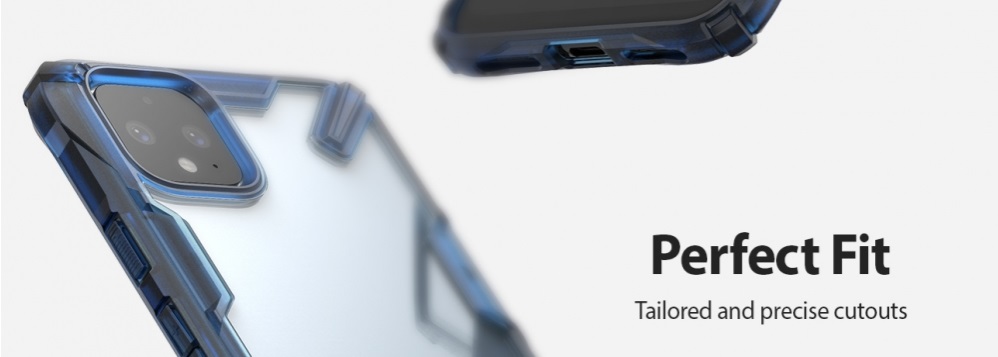
The Fusion cases are simplistic in design and not bulky yet add maximum protection a case should offer for your smartphone. With a tapered lip around the front of the device from top and and bottom inward the phone can be placed face down and on the rear the raised camera hump is well sorted here and this is below surface level which protects the entire hump so it is also great for those who like to keep their device face up.

IMAGE GALLERY

1 / 19

With the edges of the case also tapered it gives you better grip and is comfortable to hold and the keys are also angled inward making it easy to navigate them, With small bumpers on each corner you are fully protected. These also work with Wireless Charging.

Need a job in IT or tech click the image below

BUY

Infographic. Happy Birthday Google. #Google #Infographic #GoogleIs20

Here’s a scan for the development privileged insights of one of the world’s most energizing youthful organizations — an organization from which each organization can learn.

Google’s story is a recognizable one: Two Stanford doctoral understudies, Sergey Brin and Larry Page, built up an arrangement of calculations that in 1998 started a good lord jump in Web-seek execution. Essentially, they transformed pursuit into a fame challenge. Notwithstanding checking an expression’s appearance on a Web page, as different motors did, it evaluated significance by tallying the number and significance of different pages that connected to that page.

Like its internet searcher, Google is an organization overbuilt to be more grounded than it must be. Its lavishness of ability permits it vital adaptability — the capacity to analyze, to attempt numerous things without a moment’s delay. “Adaptability is costly,” says Craig Silverstein, a 30-year-old specialist who dropped his quest for a Stanford PhD to wind up Google’s first worker. “In any case, we feel that adaptability gives you a superior item. Is it accurate to say that we are correct? I believe we’re correct. More imperative, that is the kind of organization I need to work for.”

What’s more, the kind of organization that each organization can gain from. What takes after, at that point, is our push to “google” Google: to look for the development insider facts of one of the world’s most energizing development organizations. Like the rationale of the internet searcher itself, our hunt was profound and vote based.

Therefore, here is an infographic presents by Fullestop where we can see all about GOOGLE and also wishes a very Happy Birthday to GOOGLE.

Meet Uptime, watching YouTube videos will never be the same. #YouTube #iOS #App

In the world we live in, YouTube is one of the big Media elements in our lives, but the “Social” factor, even though is supposed to be part of the name sometimes is not actually true.

Whether is in your phone, laptop or tablet, sharing a video you found with your friends is never an “easy” task.

And there is where Uptime shines


Usually part of what makes it hard, is that they need to be next to you in order for you to show them.

But there’s no need of that any more (at least partially) thanks to the guys at Area 120, a Google project that invites its own employees to develop new ideas through startups.

The premise is simple , yet really useful. You simply need to sign in with your Google account and using a Snapchat look-a-like interface, you can watch a video and you’ll find a bubble image with your friends face (they need to have the app too) around the edges so you can connect with them and start interacting with them.

Lets hear from the creators..

https://twitter.com/uptimeApp/status/841733138338349056

There’s one down side at this moment, the app is only available on iOS which is really weird if you think that is a Google app.

Although it should be ready to hit the Android ecosystem soon.

You can get the app over the ITunes Store HERE

 What do you think about it? Will you give it a try?

Let us know your experience and share videos with us over twitter with the invite code.