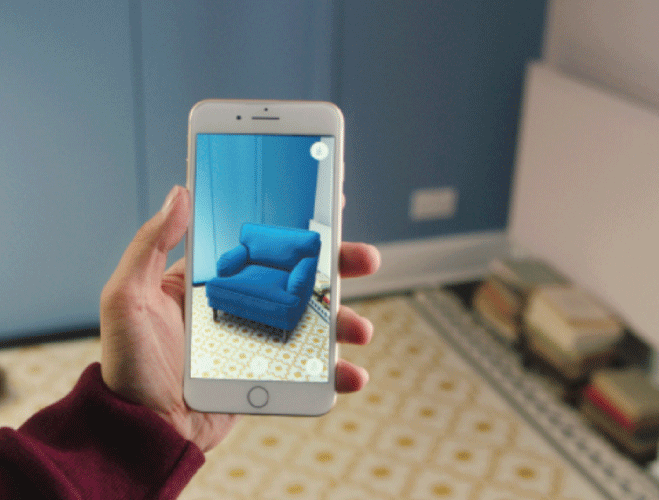
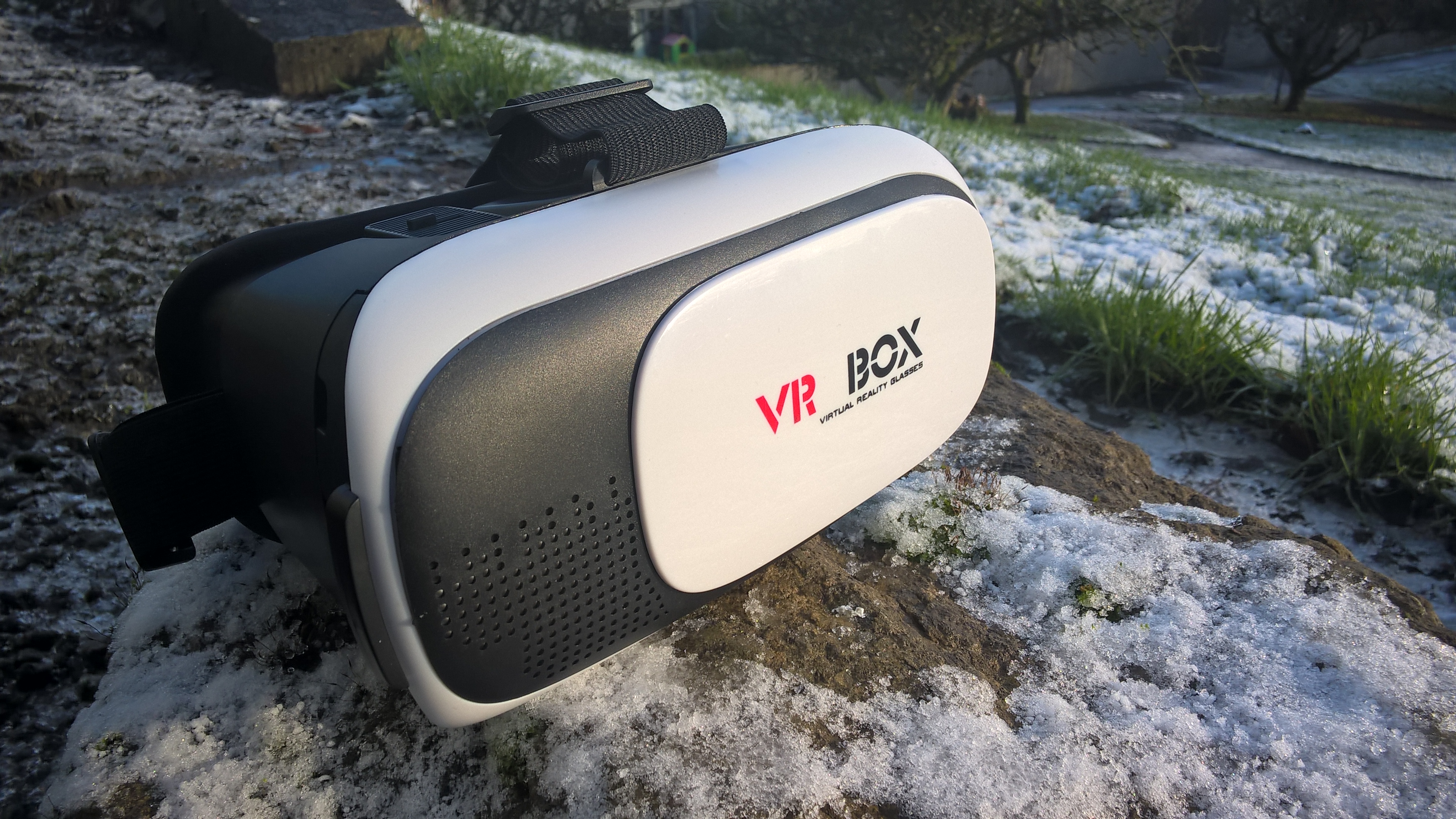
IKEA launches Augemented Reality app to place furniture in your home. #IKEAPlace #AR

Furniture giant Ikea have launced an app which will allows you to place furniture in your home via your smartphone or tablet. This is pretty cool and most likely will be adopted by other manufacturers or other retail outlets in the coming months ahead, This takes the stress out of pondering over items for your house and you can check out what they look like before you take a trip to a store. There is a problem though, It is only for iOS 11 and us Irish will get to try the app.. 

2000 products will be available at launch which is a decent portfolio of goods they have to offer.

“IKEA Place makes it easier to make buying decisions in your own place, to get inspired and try many different products, styles and colors in real-life settings with a swipe of your finger. Augmented reality and virtual reality will be a total game changer for retail in the same way as the internet. Only this time, much faster,” says Michael Valdsgaard, Leader Digital Transformation at Inter IKEA Systems.

How to use IKEA Place:

  • Make sure you have upgraded your device to iOS 11.
  • Download the IKEA Place app for free from the Apple App Store.
  • Scan the floor in your place.
  • Browse the list of products available in the app.
  • Select a product that you want to place.
  • Move and place the product into the space, it is as simple as that!

DOWNLOAD IKEA PLACE 

SOURCE

AR Wars, episode II: The return of Glass. #AR #IDTechEx #AugmentedReality

The announcement of the relaunch Glass EE brings Google back in the game it kick started -for all intents and purposes- back in 2013, and this time the AR headset finds itself in a battle of the (enterprise) niches. Major upgrades between the explorer and the enterpriseedition include a modular structure, a better camera (from 5 megapixels to 8), extended battery life, faster Wi-Fi and processor, and a new red light that turns on when recording video. Arguably, there’s not that many differences between the first iteration of Glass some 4 years ago and the new headset. In reality, and most critically, it’s not so much that Glass EE is a new device, it’s the playing field’s rules that are new.

AR in 2013:  a brave new world

Augmented reality (AR), although first demonstrated in headsets in the early 1990’s and implemented in consumer applications insimple ways from the late 2000s/ early 2010s, saw a dramatic rise in awareness of,  excitement, and hype with the launch of Google Glass in 2013. The headset, although criticized at the time of its launch and eventually pulled off the market in early 2015, lead to a precipitation of interest and investment in research & development in the space for AR, with tens of prototypes, demos and products hitting the market in the few years immediately after, with Pokemon Go!, the quintessential “killer app” and the pinnacle of global AR frenzy to date.


As discussed in the IDTechEx report on the topic “Augmented, Mixed and Virtual Reality 2017-2027: Technologies, Forecasts, Players – Headsets, components and enabling technologies for future AR, MR, & VR devices”, the launch of Glass impressed, disappointed andsent waves of alarm throughout the electronics industry all at once: it “forced” competition to launch non-ready, clunky products, for fear of being considered as late arrivals in the AR space. Products with limited functionalities, short battery life, dim displays, that overall offered a dissatisfying user experience were revealed too early to convince consumers of the vision of AR and the capacity to achieve it. Instead, technology developers took severe criticism and a step or two back from the ambition of their initial plans and refocused their efforts onto more achievable goals: niche markets with specific needs, and problems with solutions that can be implemented through an AR headset in sectors where a clear ROI is associated with deploying said solutions.

This oversimplified summary describes the basic process through which Glass EE as well as most other AR headsets came to serve enterprise applications.

Meanwhile in the VR market not that far away…

At the same time the first Glass hit the market in 2013, developers of VR headsets were only just digesting what is considered a seminal discovery for the VR industry: Valve’s discovery and sharing of the breakthrough of low-persistence displays in 2013, which made lag-free and smear-free display of VR content possible.

Today, and only 4 years later, the market for VR is a very different landscape, with over 25 million headsets forecasted to be sold in 2017. And although it’s very true that AR and VR are not quite the same thing, they do have as many similarities as they have differences; a lot of the challenges relating to form factor, ergonomics, power consumption or development of better, lighter componentry have similarities that can lead to a very useful cross feeding of critical breakthroughs, and as IDTechEx forecasts, a convergence in later years that will see headsets being capable of both AR and VR.

According to Jay Kothari’s promotional piece on Glass EE, on the left is an assembly engine manual that GE’s mechanics used to consult. Now they use Glass Enterprise Edition on the right. GE was one of the first businesses to utilize Glass in the workplace. Today the list includes AGCO, DHL, Dignity Health, NSF International, Sutter Health, The Boeing Company, and Volkswagen. Source: Google X

Niches within niches

Until then, AR headset developers are choosing their areas of focus, largely based on the form factor and capabilities of the headsets they’re launching. Some examples include:

  1. Hololens: Comparisons with Microsoft’s visor device are inescapable, but the differences between it and Glass EE almost ensure little competition between the two for the same chunks in the search of “niches within niches”, at least initially. Hololens, with its unusual look will probably remain deployed in indoors applications as it’s too “unexpected” for people walking down the street (that’s not a bad thing necessarily, as it  allows itself constant proximity to grid power and thus, the capability to tackle hjgh processing power tasks without concerns of running out of juice), whereas the diminutive in size EE can be discrete enough for the great outdoors but will probably steer clear of processing power intensive applications due to its small size.
  2. Snapchat spectacles: I love this example for two reasons: first, because it reminds everyone that AR content doesn’t necessarily have to be expensive and complex, but given the right application, it can be fun and engaging, even if it only allows you to film 10-second clips of yourself for your snapchat account. Second, because the spectacles’ marketing campaign and sales model has made them a global sensation and something for the textbooks for generations of marketeers to come.
  3. Oakley Radar Pace: Lastly, Oakley’s headset; a reminder that AR doesn’t have to be about visual content only: if you’re an athlete at the top of your game, you don’t have time to glance at your near eye display to see how fast your heartbeat is, or what distance you have to cover to get to the finish line: so Oakley did away with the power hungry display module and all information is accessed and exchanged with the wearer through voice commands.

So welcome back Glass.  We’ve definitely been expecting you. Let’s see how you fare, 4 years on.For more insights on the AR & VR markets please contact Dr Harry Zervos, principal analyst at IDTechEx Inc. at h.zervos@idtechex.com

Featured image source – Google

#SilentStreets -from @TheFunbakers ‏Is an Augmented Reality detective game made in Ireland #AI #Gaming

Silent Streets, an augmented reality adventure app developed in Ireland…

Download Now 

1867, the peak of Victorian era. You play a private detective from London who arrives in a grim coastal town of Snowport to investigate a distress call from your old friend. You find him brutally murdered, and a short visit quickly turns into a full-scale campaign against criminal masterminds, corrupt police and a secret science society.


Silent Streets gives players two augmented reality features:

  1. In-game crime evidence is scattered in your real world surroundings. You discover these objects with your phone camera and tap on them to collect and use in your investigation. A murder weapon could be lying right on your working desk, just look around.
  2. You physically walk with the phone in your pocket to get around Snowport. The game uses your phone’s accelerometer and GPS sensors to measure how close you are to your game destination, such as a crime scene or your detective’s office. You can use your daily commutes, shopping trips or fitness time to progress through the story.


  • The core of Silent Streets is a choose your own adventure gamebook, packed with memorable characters, puzzles, side quests and subtle humour. Inside game locations, you interrogate Snowport citizens, confront them with evidence, and build relationships. There are different ways to solve the case, and you can save let the criminal live – or pass your own judgement.
  • To further immerse player into the Victorian mystery world, Silent Streets is adorned with beautiful illustrations, an interactive map, full-scale voiceover by professional actors, ambient sound scenes and orchestral music.
  • Every Silent Streets episode is a self-contained detective case, and each case gets you closer to solving the big puzzle of Snowport. Who pulls the strings in the underground world? Will mysticism work where science fails? And finally, what is the Snow Queen project?
  • Episode One is scheduled for a limited release in Ireland on 23 June 2017, with more chapters to follow in July, August and September. The global release is planned for end of July this year. Smartphones with iOS and Android systems are supported.
  • Silent Streets Episode One will be available with a 100% discount in App Store and Google Play from 23 to 30 June.


SCREENSHOT GALLERY


1 / 12


About the team and who are they…

Silent Streets is developed by Funbakers, a small independent game studio based in Maynooth, co. Kildare. The project won the Competitive Start Fund programme run by Enterprise Ireland in 2016, and was well received at a number of game shows and contests, including EGX (Eurogamer Expo) 2016 in Birmingham, WexWorlds 2017 in Wexford and Meaningful Play 2016 in the US.


Demid Tishin – game design/CEO – demid@funbakers.com

Alex Nitz – art/game design – alex@funbakers.com

Ilya Moshkov – marketing/investor relations – ilya@funbakers.com


Сontrary to the popular “three is a crowd” group dynamics we strongly believe in a “three of a perfect pair” approach in everything we do as a company. Connecting Saint Petersburg, the cultural heart of Russia, with Samara, the heartland of Russian beer, we are steadily moving towards Dublin, the European beer capital of IT and good music.

Every boyband has a smart guy, a good-looking guy and a bad boy on board. We have Demid Tishin, an entrepreneur with 10 years of experience in IT as a CEO of a successful company, he’s at the bright side of the company. On the dark side we have Ilya Moshkov, who is trying to look bad-ass but still being a white collar business school alumnus. And on the side that actually works we have Alex Nitz, an American-educated medicine doctor, who is there because it’s cool to have a real doctor in your team and because he happens to be a talented art director.

We want to make cool games that actually do matter!   


What People are saying…

  • “It quickly hooked me in with the strong story and the interesting real-world walking mechanic” – Jon Martindale, KitGuru.net
  • “Maybe this will be more satisfying than PokemonGo was ;)” – AppUnwrapper.com @AppUnwrapper
  • “Recommended!” – Indigo Pearl @indigopearluk


Find them all at..


Augmented, virtual, annotated, mixed… A “$37 Billion reality” by 2027 #IDTechEx #VR #AR #MR

Augmented, virtual, annotated, mixed… A “$37 Billion reality” by 2027 By Dr Harry Zervos, Principal Analyst, IDTechEx

Augmented and virtual reality headsets are by now a reality (pun intended), and they bring about a paradigm shift in form factor for portable electronics. Despite a level of uncertainty about the terminology used to describe each device, with some developers introducing terms such as Mixed Reality (shown in the picture below), Annotated Reality, Augmented Virtuality and many others,  the new report on the topic by IDTechEx Research.

Augmented, Mixed and Virtual Reality 2017-2027: Technologies, Forecasts, Players”finds that the market for AR, VR, and “everything in between” headsets is already approaching $3.4 Billion in 2017 and is expected to reach over 10 times that by 2027 (for more information, please visit www.IDTechEx.com/glasses).


A revealing disagreement in terminology
The disagreement in terminology reveals several interesting points, one of the most important ones being that despite the fact that different companies will take a different approach to categorizing devices, is in essence a difference in how much of the real world is coming through a specific headset. A pure VR headset blocks out reality completely, while an AR one will only superimpose additional information, without obstructing the wearer’s view of the real world at all. What the future is bringing is a spectrum of eye-worn devices with varying amounts of reality and virtuality thrown in; for instance, a VR headset with a front facing camera can instantly become an AR headset, as it allows the wearer a full view of the real world, albeit through a display.


Virtual, augmented and all other types of headsets are in essence categorized based on how much of the real world is allowed through any specific headset; the amount of reality and virtuality will define where a device sits in the spectrum of virtual (VR), mixed (MR), augmented (AR) and any other sort of reality. Image source: IDTechEx


PC VR to propel market forward in the short term

In its newly launched report on the topic, IDTechEx categorizes headsets according to whether devices are tethered to an external computer or not (PC or standalone AR &VR) or whether they make use of the display and/or electronics of a mobile device such as a smartphone (e.g. mobile VR).


IDTechEx forecasts the value of the market for AR & VR headsets to 2027 is expected to grow to almost $37 Billion by 2027. The sustained growth of the market will be propelled forward in the short term by the growth of PC VR, as depicted in the forecasts below. As expected, the high volume of mobile VR will not contribute significantly to total revenues due to the low unit value. From 2021 onwards, growth will be transferred to stand alone AR, propelled forward by the launch of high performing headsets and reduced power consumption that will lead to longer battery life and independence from the grid. Standalone VR will also make its mark, although its exact value proposition is not fully clear or even distinctly separate from standalone AR; in standalone VR, the challenge of adequate energy storage that will allow longer times between charging is magnified due to the requirements for running a high endGPU computer along with a high resolution display. In fact, both energy storage and displays for AR & VR applications are both extensively discussed in the report, given how critical these components are for future generations of headsets.


Source: IDTechEx Report Augmented, Mixed and Virtual Reality 2017-2027: Technologies, Forecasts, Players – Headsets, components and enabling technologies for future AR, MR, & VR devices


In addition to batteries and displays, the report additionally includes insight on the research and development efforts on othercomponents that will become part of the next wave of devices and the improvements and benefits that they will bring. They include haptics, optical engines, but also the development of focus tunable displays, foveated rendering and other concepts that aim to improve the user experience in augmented and virtual reality systems.


For more information on the report please see www.IDTechEx.com/glasses or contact research@IDTechEx.com.

Design your own #AugmentedReality or #VirtualReality experience.

Innovation studio launches free AR/VR framework and workshop for businesses 


Is your company ready to explore the potential that Augmented Reality (AR) and Virtual Reality (VR) can bring to business? Connector, the studio that created the world’s first VR Instagram Gallery, is officially launching an open source canvas tomorrow (11.05.17) at the Innovate Reality conference at the RDS in Dublin.


Connector’s one-page canvas makes it easy for marketers, business owners and creatives to brainstorm, plan and design an innovative and special AR/VR experience in under thirty minutes. Globally the total number of active Virtual Reality users is forecast to reach 171 million by 2018, so it’s now set to become a major tool for marketers. In Ireland alone, forty per cent of people stated that they are interested in using AR or VR. (Global Web Index)


Launching the canvas, Head of Digital for Connector, Ivan Adriel said:  “Virtual Reality is nothing new. The concept was conceived in the 1960’s, but it wasn’t until just recently, with Facebook’s acquisition of Oculus in 2012, that the supporting technology around AR/VR has finally caught up to the concept.


“Marketers and creatives now have a new immersive and portable medium, which they can use to tell stories and engage with audiences in unexplored and unseen ways. At Connector, we’ve provided the framework for anyone who wants to create a great AR/VR experience, making their audience feel truly immersed in their experiences!


“Using this canvas, anyone can start their immersive marketing efforts and join the thirty per cent of consumer-facing companies in the Forbes Global 2000, who are planning on experimenting with AR/VR as part of their marketing efforts in 2017.”


Attendees at the Innovate Reality conference can pick up their own A0 canvas at the event tomorrow (11.05.17) and the framework is available for download now on the Connector website:  http://connector.ie/canvas/


AR/VR Experience Workshop

To compliment that launch of the canvas, the innovation studio will host a free workshop on 6th June 2017, at 7pm at The Chelsea Drugstore, 25 South Great George’s Street, Dublin 2.


CEO of Connector, Conor Lynch and Connector’s Head of Digital, Ivan Adriel will help attendees create a unique AR/VR experience and give them the blueprint to bring AR and VR to their business.


Anyone wishing to attend the workshop should register here: – https://www.eventbrite.com/e/arvr-experience-design-workshop-tickets-34499074661

#Snatch – The app that turns real life into a fast paced reality game. #AR #Gaming #UK

British AR gaming experience Snatches the crown from Pokemon Go!

  • Thousands of Brits are taking to ‘Snatch’ to steal and snatch real prizes from the streets and from each other – the craze has overtaken Pokemon Go for daily downloads in the App Store


Though Brits are still going crazy for Pokemon Go, with many chasing down the 80 new monsters available in their recent update, thousands of Brits are also going crazy for a new augmented reality (AR) gaming experience. Snatch, the game that rewards player’s virtual efforts with real prizes, has overtaken Pokemon Go in the UK App Store and now sits at number one in the adventure chart, as well as being in the top 20 for all apps and top 10 for all games – all within the first month of its launch.


Snatch combines augmented reality with geo-location technology and turns the world around players into a massive, virtual treasure hunt. Instead of hunting down virtual monsters, players hunt down virtual parcels that transform into real prizes. This month UK players have already walked away with prizes including: a share of £250,000, clothing for a year from high street brands like TopShop and TopMan, free food from JustEat, Nando’s and Pizza Hut Delivery among others.


The game has £15m worth of prizes ready to be won, with new rewards being added on a weekly basis. The game has landed 195,000 players one month into launch, with the average player spending more than an hour in-game every day.


The treasure hunt hasn’t just been a success with gamers – Unilever Ventures, the investment arm of Unilever, recently invested a significant sum into the start-up – a rarity for any company pre-series A funding. Snatch is also set to introduce the product to the US market in the next few months, with an exclusive preview this month in Austin, Texas at music, film, and technology festival – SXSW.

CEO and Founder, Joe Martin comments: “I had worked on Snatch for two years before the launch – and I was confident it would be a success but the amount of players already snatching is amazing. To reach more than 195,000 players and to overtake Pokemon Go in the App Store in our first month is just incredible and I’m so happy people are really going snatch-crazy. We’ve already given away £250k in cash, as well as hundreds of other prizes and we are just getting started.

“Players can expect us to introduce new features, new prizes, and new ways of playing the game that will change the way people see augmented reality.”


Download Snatch for free on iOS and Android

#Review -The VR BOX – #VirtualReality #VR from Mobile Fun. (@mobilefun)

Over the last year the VR – Virtual Reality game has exploded and will probably continue to do so in the coming year, However another thing to watch out for is Augmented Reality. For now we shall stick to VR. We have tried and tested some 20 headsets to date or HMDs (Head Mounted Displays). We can of course opt for the cheap Google Cardboard or similar which we have covered quite a few off too if you dont want to go all out on the expense just yet but most people by now would have had some contact with either. The VR BOX is a common offering today and we see quite alot of them in retail but perhaps re-branded but thats no issue here unless we see some outlandish prices which we have done..


The VR BOX is a simple cheap effective way to begin the VR journey if you will after those flimsy cardboard units we see,saying flimsy does not mean they are weak by any means,most of what we have tried have been solid and last but only for so long they just look flimsy..


The benefit of HMDs is you are hands free not having to hold the unit to your face because for long usage your arms get tired so with this type you have a nice headband to take the weight away and sit back and enjoy the experience. The VR BOX is basic though yet offers what you need to start off. Its got great padding and good head support too with adjustable elasticated bands so there is no issue here when it comes to comfort or adjusting to suit your needs or perhaps anyone else in your group when sharing the experience.


Adjusting focus is another are here where its kept simple but moving the multipurpose toggles placed atop of the headset it takes seconds to adjust and its a simple process,unlike real cardboard units where you have no focal adjustment at all this is where a headset like this will benefit  you more..

There is also quite a bit of breathing space for the phone itself too from the sides that also act as port inputs should you need to charge the phone or if you are using wired headphones for example, This is good because at time you can get carried away then you hear that dreaded “Low Battery Warning” they have this covered on the VR BOX. I like that most though for the best experience i normally go wireless all round but again not everyone has wireless buds or cans then again they can suffer low battery warning too.. You get the idea.


The headset is a tad on the bulky side but we have to start somewhere however its not heavy which is good, I have tried some that have been heavy and with long periods of usage can become annoying but thankfully this is not the case here its very light….


Simplicity is key here and this headset offers that with nice straps and cushioning and all the other options I have mentioned but check out the video below for a review. This kind of headset is a good way to begin the VR experience before you try the really immersive stuff on more expensive offerings like gear VR which though is the best priced option available offering real immersion and after that you may fork out hundreds for the PSVR if you happen to own a PS4. Beyond that its supercomputers and expensive hardware. The choice is yours.


Head over to HERE and check them out there and see what else thy have to offer in the meantime.. Any questions fire away below or get me on social.. Thanks for reading… And thanks again to Mobile For sending this over to check out, just search VR in our search bar for the countless reviews to date on other options available.


VIDEO REVIEW


#MergeVR announces new colours for its headset and the #AR HOLO CUBE. #CES2017

Last year we got our hands on one of the best iterations of the google cardboard viewing HMD Virtual Reality headsets out there that had a funky purple colour and it certainly stood out from the rest and it today still serves us well and is popular with visitors to my home, It is certainly the most comfortable headset out there ensuring users can actually wear it for long periods of time with no issues.The main difference with this headset than what we traditionally see its not made with plastic, it’s like a spongey material if you will and if dropped your device is still safe. 

Today Merge VR have announced new colours for their headset and some of these are actually quite nice even if you did not like the purple edition which I think is pretty cool…. Check out the new available colours below… You can also see our review over HERE   


One thing for sure here is now there is a choice of colour to match anyone’s taste these colours all look great and again make the headset stand out from the rest.  Merge VR goggles have been tried and tested and kids from the age of 10+ can safely use them…

Today Merge VR also announced a new AR toy called HOLO CUBE which will work with their current headset which is what was already know about their future thoughts on Augmented Reality, A few people asked why was there a cutout on the front of the headset,Well there is your answer and since then others have followed suit in having this option thinking forward… So what is HOLO CUBE ?? Its the world’s first interactive, holographic toy that you can hold in the palm of your hand. Watch the video below for more…

Find out more and check out the headset over at MergeVR   


Experience the White House in #AugmentedReality with your smartphone or tablet #1600

If you fancy checking out the White House from the comfort of your own home you can now do so with an app and a dollar bill with a new app called the 1600 on Android and iOS.. Augmented Reality is pretty cool and we are going to see some pretty cool apps coming on stream soon and we are currently working with a dev team on a new upcoming app which looks great.


Augmented Reality brings things to life on your smartphone if you have not tried and recently we reviewed a new kids book which works on the same premise you can check that out HERE 


Description.

The White House’s “1600” is a new way for kids and playful Americans of all ages to learn about what happens at 1600 Pennsylvania Avenue. All you need to do is tap “Start” and point your camera at George Washington (on the one dollar bill).

Built through a collaboration with the White House Historical Association and Nexus Studios, the app’s aim is to educate and inspire the youngest Americans to learn more about the White House’s role in our democracy. Our hope is that whether it is experienced on a teacher’s desk or dining room table, kids walk away from “1600” with a better sense of the institution and its purpose. Not to mention, a smile.


Source