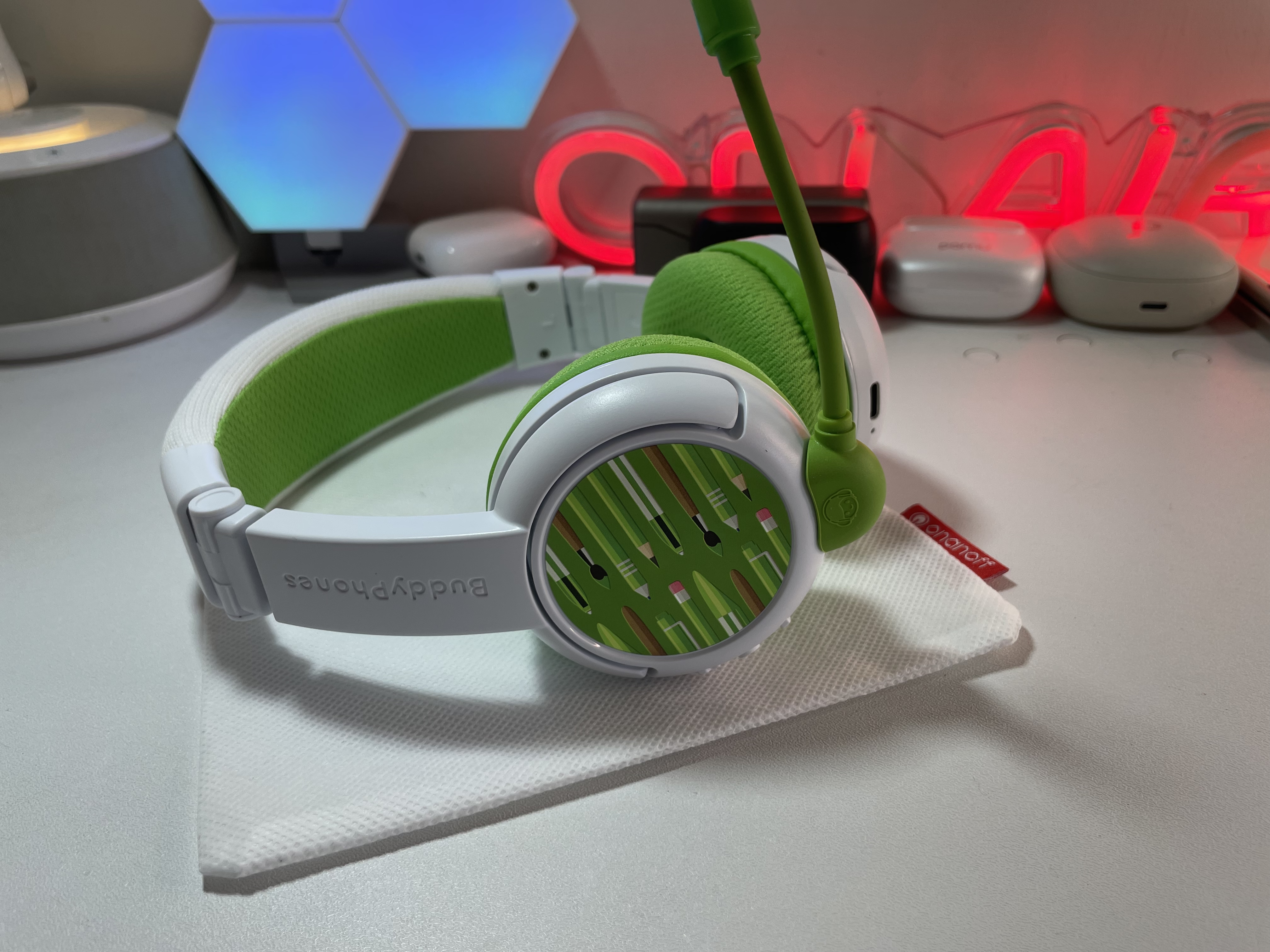
The BuddyPhones school plus headphones are ideal for kids who need headphones for either school or just listening to music playing games, these being the cheapest of the two pairs we have in are probably the best option to start them off with and get going and getting use to headphones but these also have a mic that is removable and unlike more expensive headsets out there the mic is detachable which for me is a real win.
This headset is super light and made with mainly plastic all round and is also a robust product which makes it ideal for kids who tend to drop things and throw them around the place, these are also easy to clean and have no parts that could fall off and overall a solid product, the cups are small on these being aimed at kids yet comfortable and do not clamp onto your head either..
There is raised buttons on one side to by way of three circles that controls the music which is very simple and not a complicated setup. You can play and pause, skip and reverse tracks and change the volume which is great, this headset can also be used for gaming too which also works really well and also be used with your tablet and mobile phone and all the controls work just fine all the time.
Buddyphones school plus wireless headphones for kids. Techbuzzireland
The mic also works well not that kids would be taking any calls however for gaming it does a decent job too and the fact it can be removed is a real bonus.
BuddyPhones School+ offers 3 SafeAudiosettings to choose from. With the special StudyMode it can be tailored to the child’s educational needs, at home or at school. The new look has super comfortable fabric headband and sports all new style housing with dedicated sticker area. Their patented StudyMode helps isolate voices from other sounds, producing crisper, clearer vocals for studying or watching lessons. With the dual connection feature, the headphones can be used both wirelessly or wired, meaning there’s no interruption from your favourite video or music if the battery runs low.
This product was sent to us to review with no input or compensation paid and are seeing the review the same time as you.
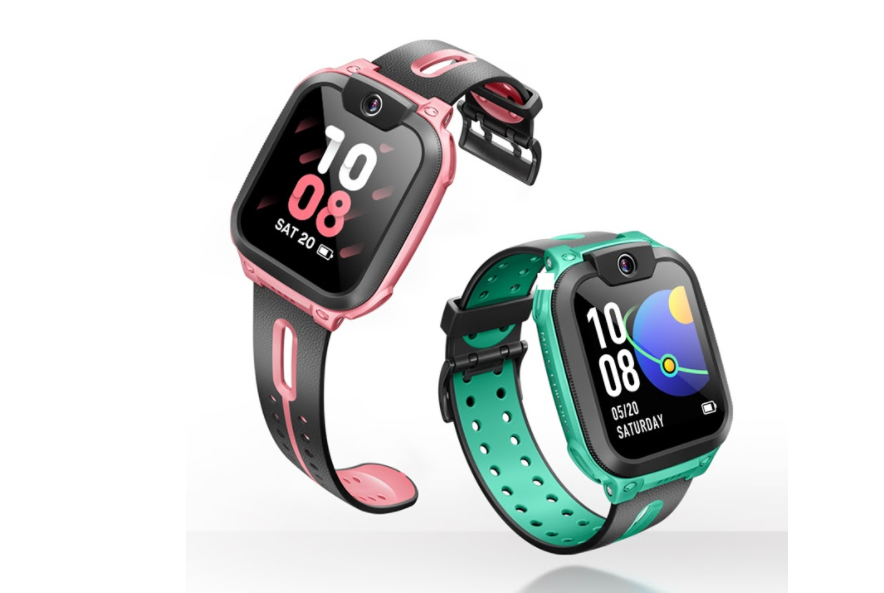
imoo, the world leading brand in the kids smartwatch market, has just announced the global launch of their new device. The new device is called imoo Watch Phone Z1 and is made for children ages 5-12. With an emphasis on safety and security, the IoT wearable technology promotes freedom and independence of children while allowing parents to keep track of their children. Through a suite of fun and innovative built-in features parents and children can enjoy features like video calling, audio messaging, location tracking, photo sharing and much more. The imoo Watch Phone Z1 will be available for open sales starting from July 26th. Special offer starts from July 26th to August 11th with discounted price starting at $99 /£99 /A$139 /€99.
Smart 4G Watch Phone with Powerful Video Call
An important goal of the imoo Watch Phone Z1 is its ability to provide easy and accessible communication for children. This is achieved with a mature high-speed 4G network that includes 4 modes and 13 frequency bands to ensure every ongoing communication is quick and stable. Not only can parents have a real time HD video call with their child, knowing where they are, but also can recognize clearly the surrounding environment with only a few simple touches to start calling. The imoo app’s chat features include privacy and security to make communication safe and more engaging for children when connected to the network at any time.
Safe And Secure Always Come First
With a safety tested and quality assured build, the imoo Watch Phone Z1 adopts skin-care and anti radiation materials to avoid any health concerns. After many rounds of rigorous testing, the imoo Watch Phone Z1 also meets product safety and data security standards with the German TüV SüD WT-Mark safety certification.
AI Precise Positioning
Thanks to the advanced GPS and its best-in-class GDPR compliant location-based services with a reliable 4G LTE data connection, Z1 always keeps parents up to date with GPS locating to let them know the whereabouts of their children through the precise tracking functionality on their own Android or iOS devices even without the need of a video call.
Wide Angle Camera For Video Calls And Photo Adventure
The front camera setup offers high quality HD video calls either by WiFi or 4G at any time. The 2MP 79° wide angle, f/2.4 camera supports fast auto focus, producing high quality video and images with 2 modes, Ultra HD and HD. It is a great opportunity to capture your relationship while taking a selfie to get into an adventure with sharing the photos between friends.
HD Retina Eye-Friendly Screen
Considering the eye safety, Z1 utilizes TFT and Super Retina Display, offering more refined resolution with richer and more accurate colors that is more friendly to children’s eyes.
IPX8 Water Damage Protection
Its water resistant outer shell fully protects the inside of the device with an impressive IPX8 water resistance rating along with an anti-fall protection.
Class Mode 0% Distraction, 100% Concentration
Parents can have children focused on study time by simply setting a designated schedule through the imoo app to restrict a child’s use during designated times, making sure their children won’t be distracted in the class.
Battery Power And Stand-By
With a capacity of 740 mAH on a single charge it can last up to 2-3 days and also triangulates location using GPS, cellular networks and Wi-Fi hotspots for the most accurate positioning.
Pricing and Availability
As announced initially, imoo global’s open sales at the price of GBP 99/EUR 99/AUD 139 will be officially available starting from July 26th, and end on August 11, 2021. Enjoy our Open Sales offers now and join theimoo Official Website.
Shipping countries and regions:
Europe: European Union, Australia and the United Kingdom
The Children’s Rights Alliance will launch their new online safety campaign tomorrow, Tuesday 13th July 2021 at 10am with a virtual event.
The campaign calls for Government action to make the online world safer for children and young people by appointing a well-resourced Online Safety Commissioner with an independent, individual complaints mechanism for when online platforms fail to adequately or appropriately deal with an individual’s complaint.
Commenting in advance, Tanya Ward, Chief Executive of the Children’s Rights Alliance, said: “It’s simply not good enough that Government is contemplating putting an Online Safety Commissioner in place with no teeth to help individual children and young people who are up against big tech. These companies are making massive profits and failing to invest in online safety measures. It’s time to stand up for children and young people and actually put an Online Safety Commissioner in place that has the power to take on and resolve individual complaints from children and young people.”
The speakers at the event include:
Julie Ahern, Legal and Policy Manager, Children’s Rights Alliance
Peter Tyndall, Ombudsman and Information Commissioner for Ireland
Karen McAuley, Head of Policy at the Ombudsman for Children’s Office
Noeline Blackwell, CEO of Dublin Rape Crisis Centre
The event will be chaired by children’s rights campaigner and former Senator Jillian van Turnhout
Online gaming has become a sensation. With billions of people playing at last count, the gaming industry grows every day. There are hundreds of new games and ways to play. It’s all literally fun and games, but safety concerns abound. If proper measures aren’t observed your security, personal information and privacy will be constantly threatened.
Check out these simple steps you can take to stay safe and secure while playing online.
Buy A Smurf Account
In the online gaming world, every player has a reputation, particularly skilled gamers. This is why smurf accounts have been popular since as early as the 90s.
A smurf account is a new different account that allows a player to play only under a name and account separate from their regular one. It’s like starting afresh, with no pressure or reputation to live up to. As a result, as explained at GooseSmurfs.com, players can go wild, play differently than their regular playstyle, practice their technique without messing up their original high score, playing with lower-skilled players as an ego boost, and elevating new accounts to expert level for sale to interested amateur players.
Because of the vagueness and anonymity of smurf accounts, there’s a significantly less chance of being targeted for security breaches such as hacking.
Beware Of Cheat Codes And Cheat Programs
One of the most fun parts of playing online is finding new games and progressing steadily to the top or the next level. Hitting a snag and struggling to make it to the next level when you’re playing is one of the worst feelings. This is why cheat codes are a thing.
A cheat code or program is one that is designed to give gamers shortcuts so that they progress a lot faster than average. For example:
In shooting games cheat codes are sold that improve a player’s shooting by doing things like marking their opponents’ heads bigger and thus easier targets.
There are cheats called ”wall hacks” which operate by allowing players to see the positions of opponents through opaque objects. Or to identify the location of the treasure.
”Lag switching” let players stutter around a game’s map so that they’re difficult targets
There are cheats that allow players to hide their avatars for the duration of the game until the very end, winning by default
Other cheat codes and programs give gamers the ability to heal their avatars over and over again
A cheat code may seem like a sweet deal, but the majority of codes and programs purporting to aid in cheating will do nothing but give your computer viruses.
If you must cheat, rely on popular cheat codes, like the Konami Code. Created by Kazuhisa Hashimoto who was developing the video game Gradius back in 1985, it is the most famous cheat code.
Beware Of Cyberbullies
Playing online exposes you to all manner of people. Online gaming platforms give you the ability to interact with other players. This is good and bad at the same time.
These interactions mean the chance to exchange tips and tricks with other players, create bonds, beautiful friendships, and be thoroughly entertained. On the flip side, being exposed to all types of people also means being a potential target for online bullies and trolls.
Gaming trolls do things like shouting at players in the middle of playing, constantly insulting everyone for making mistakes, and booing all the winners.
Almost every online playing site offers channels for reporting toxic behaviours and rude language so make sure to report users who behave badly online. Block and report.
Virtual Private Network
Discovering new ways to play online is fun, but all that surfing all over obscure parts of the internet exposes all your devices to not just viruses but spyware.
This is particularly true whenever you use public Wifi. When you use public Wifi anyone with the password and basic tech knowledge can monitor your online activity. This is where Virtual Private Networks come in handy.
A VPN is a piece of software that creates a secure connection over the internet by encrypting your information and shielding your online activity from cybercriminals and even your Internet Service Provider, or ISP.
Use A Firewall
For added double protection, use a firewall even if your network is secure and encrypted with a firewall.
A firewall is an electronic barrier that blocks unauthorized access to your computers and devices and is often included with comprehensive security software. Getting a firewall means that all of the devices connected to your network are secured. Did you know that most Internet of Things (IoT) devices are vulnerable entry points for hackers?
Playing online doesn’t have to spell danger to your safety and security if you take steps to protect yourself. Using firewalls, buying smurf accounts, and reporting bullies are all examples of how to protect yourself.
Need some headphones for your kids that are durable well these are certainly something to check out right now, even from my own perspective on them these are rather good in the audio department and pack some punch but keeping it safe for your kids ears and perhaps something I should look into myself maxing out my earbuds and headphones all the time.
My daughter has taken enough of my headphones and earbuds and they do not last long but she still has some of them intact now but this is why these are the ideal situation for kids being a durable product with not much tech know how need to operate as they are limited with functions as you will see in the video review below.
Why buy these ..
Designed To Promote Hearing Health
Built to ensure Volumes are always at a suitable level for children, the imoo Ear-care Headset’s volume maxes out at 85dB to meet World Health Organisation recommendations to protect children’s ears from early hearing damage.
Made To Keep Children Safe
Allowing children to hear their surroundings when they are using the headset so whenever they are on their way home, in the playground or at the park, the imoo Ear-care Headset always has safety in mind because it is designed to make sure children are aware of what is around them.
Clear And Precise Audio
The imoo Ear-care Headset gives the best quality sound of any audio device made exclusively for children, they will be expected to hear crystal clear sound sent directly to their ear canals while also ensuring their privacy when they use it. This is possible because of the exclusive soundbeaming speakers.
Built For Comfort
With a comfortable design, the imoo Ear-care Headset has a first of its kind outer ear design, especially built for children and made to directionally transmit sound to children’s ears for a truly unique experience that is always stable on their heads.
Key features and specifications:
16.2mm Large-size Soundbeaming Speaker
Infrared wearing sensor for automatic start and pause
IP54 Dust-proof and water-resistant
Extremely Lightweight and Anti-allergy Materials
Strong and sturdy design built to stay on children’s heads
It’s no exaggeration to say that we live our lives online. We’ve come a long way from the early days of the Internet when we used it to research high school book reports and email. These days, you can shop for clothes, buy your groceries, become an influencer with millions of followers on social media, or watch a live event with billions around the world.
We’ve learned and grown with the Internet, but it is learning too, about us.
Every site you visit online has cookies that collect information about you. The last ten years have been filled with frightening reports of data breaches at companies we give our banking information to. We also cannot forget scandals like Cambridge Analytica, which was an eye opening demonstration of the potential for misuse of data collected about us online.
Is Big Brother a reality of modern life that we just have to accept? While you may not be able to completely eliminate all forms of data collection, there are ways you can protect yourself and limit the reach of collection tools.
1. Consider switching search engines and browsers
Google has become such an unavoidable part of our lives it’s joined the English Language as a verb, complete with a dictionary definition. You can now be “googled” or searched. As much as we like the search engine and browser, the fact is Google is one of the biggest collectors of data online. Google records every single search item and site you visit. Moreover, information about your online activity is surprisingly detailed and stretches back over several years.
You can have this information deleted. You can also prevent it from being collected in the first place. Use alternative search engines that do not keep records. DuckDuckGo, Startpage, Qwant are privacy first search engines that offer varying degrees of freedom from tracking and collection. For alternative browsing, try Microsoft Edge or Safari.
2. Get an ad blocker
Most people see online ads as a necessary, if annoying, tradeoff we engage in for the content we love on the Internet. They can also be quite harmful. What most of us don’t know is that these ads are connected by a vast web of servers that allow you to be tracked once you click on them.
This is one way information is “stolen” from you through ads, as a profile of your interests, age, location among other things is built based on the ads you view.
The other is through the inclusion of malware and spyware on ad links. You can click on an ad and find yourself directed to a seemingly legitimate product website that prompts you to enter your financial information, only to have the data stolen and used by hackers.
An ad blocker will significantly limit the number of these “ads” you’ll be exposed to.
3. Install anti virus
To use your personal computer on the Internet without having anti-virus software installed on it is asking for trouble.
Viruses being released today are capable of causing far more damage to your machine and irrecoverable loss than any other time in the Internet’s history. Beyond that, the average user is dealing with sophisticated spyware and malware, software designed to spy and track on the user or cause the computer to behave in ways that are detrimental to it and the user.
Ransomware crimes have also become a significant problem. This is where the data on your device is encrypted and is not released back to you until the money is paid to the attacker. Having a backup of your data would help if this happens to you.
Backing up your data to the cloud is one method available to you. Therefore, it’s highly important to learn what is cloud security to find out how you can add an extra layer of security when you go online. You can never be too prepared or too protected online these days.
4. Take precautions when using public Wi-Fi
This one is for users of public wifi networks. In these quarantine times, it is especially good to get out and into the open, so you might take your laptop down to the local coffee shop. What you may not know is that your data can be stolen over these public networks. To stop this, you can install a VPN or Virtual Private Network.
This allows you to hide your IP address and block ads, which reduces the number of ways you can be tracked.
5. Use unique passwords for every online account
Having the same password for your online accounts may be convenient and easy to remember but it’s also dangerous. If hackers gain access to one of your accounts and try your password at the others, there are likely to be other security breaches. Consider getting a password manager, which will store all of your passwords.
6. Use two-factor authentication
This is another security measure that can add an extra layer of protection when you are online. Typically, two-factor authentication asks for a code, sent to a device only you have access to, along with a password. This way, even if someone steals your password, they can’t get into your accounts, as they don’t possess the code.
7. Password protect your phone
We tend to forget to password protect our phone, even though we are on it more often than our laptop or desktop throughout the day. This is like leaving your wallet on a public bus filled with cash. Think of someone having access to all of your contacts, your photos, your DMs, your social media accounts, all with the swipe of a finger.
Use the option to set up a password that comes with your phone, or take advantage of several security apps that do this as well.
8. Clear cache
Your browser knows you much better than you would like to think. Unfortunately, it can also help people looking to steal information about your buying habits or financial details because it stores so much information about what you do online. Clear your browser’s cache regularly to prevent this.
You won’t be able to completely eliminate online data threats, but you can significantly reduce them by taking these steps.
Read on to find out more about a few measures that have been designed to do exactly that.
Adaptive cruise control
Maintaining a safe distance between vehicles can be difficult when traffic is heavier. It requires constant attention and even a momentary lapse in concentration can result in an accident.
With adaptive cruise control, motorcycles will be able to adjust their speed based on traffic conditions, reducing the likelihood of rear-end crashes.
Even you feel like such a product gives you greater protection while out on the roads, it will still remain important to make sure you have the best motorcycle insurance for your needs.
Blind spot detection
It can feel like you need eyes everywhere when you take your bike on a busy road. Blind spot detection uses sensors to do that for you.
If you attempt to change lane and a vehicle is sensed to be nearby, you’re alerted to that by a warning light – usually on your wing mirror.
But you might not have to get a new bike to benefit from blind spot detection, with aftermarket solutions set to launch in the near future.
Emergency call systems
A feature in passenger vehicles for a number of years already, emergency call systems – also known as eCall – automatically send out an alert in the event of a crash.
In the EU, all new cars must be equipped with eCall, but the case is not the same for motorcycles.
For those still keen to benefit from such a system, Bosch have developed Help Connect. This programme uses your smartphone’s sensors and an algorithm to detect your accident and trigger an emergency call with Help Connect.
A member of their team will receive your location and accident data and contact the local emergency services in the event of a serious accident. If the incident is deemed minor, they will call you and discuss your options.
It works across 11 countries, including the UK and Ireland, and is available for just €39.99 per year.
High-tech helmets
Augmented reality (AR) technology has already been widely embraced in the car industry on heads-up displays and could soon make the jump to motorcycles.
Volvo Cars engineers call it “the ultimate driving simulator”, but it is not just an excuse for them to indulge their inner basement gamer. Instead, the Swedish company’s ground-breaking mixed-reality simulator is used to make new strides in safety and autonomous driving technology.
A setup with a moving driving seat, a steering wheel with haptic feedback and a crystal-clear virtual reality headset would make any serious gamer jealous, but Volvo Cars’ simulator takes this concept to the next level, making it hard to tell reality from simulation. Which is exactly the point.
Using cutting-edge technology from the leading real-time 3D development platform Unity and Finnish virtual and mixed reality experts Varjo, the simulator involves driving a real car on real roads. It combines life-like, high definition 3D graphics, an augmented reality headset, and a full-body Teslasuit that provides haptic feedback from a virtual world, while also monitoring bodily reactions.
This combination of software and hardware allows Volvo Cars engineers to endlessly simulate traffic scenarios on a real test track road while using a real car, all in total safety. Engineers can gain important insights on the interaction between people and the car for development of new safety, driver assistance and autonomous driving features.
Testers can be exposed to imagined active safety and driver assistance features, upcoming autonomous drive user interfaces, future car models and many other scenarios. It can be used on real test track roads or in the test lab, and every scenario is fully customizable. The possibilities are literally endless.
Volvo Cars “ultimate simulator” was demonstrated yesterday in an event live-streamed from Volvo’s Open Innovation Arena and hosted by a team of its innovation experts. You can watch the event on demand HERE.
Last year, together with Varjo, Volvo Cars became the first car maker to make it possible to drive a real car while wearing a mixed reality headset. Now that collaboration has been expanded to include Unity and full-body haptic suit maker Teslasuit.
According to Casper Wickman, senior leader of User Experience at Volvo’s Open Innovation Arena and one of the hosts of the livestream, this enables Volvo Cars to study authentic human reactions in a safe environment and at a fraction of the cost of a real test.
“Working together with great companies like Varjo, Unity and Teslasuit has allowed us to test so many scenarios that look and feel totally real, without having to physically build anything,” says Casper Wickman. “It lets us test drive actual cars in through traffic scenarios that look and feel real, but can be adjusted at the touch of a button.”
When developing safety systems for cars, like collision-avoiding technologies, testing is crucial. But testing these systems in reality can be dangerous, time-consuming and expensive. Virtual and mixed reality simulations, however, allow for perfectly safe testing in authentic environments, without having to build any physical prototypes or set up complex scenarios.
“By using this cutting-edge technology, we are exploring and leading the development for creating safe cars in the future. It’s great to play a part in that,” said Casper Wickman.
Watch the full livestream recording here and download the summary video of the event here.
1.3 million people die globally in traffic each year. Last year in Ireland there were *137 fatal collisions resulting in 148 fatalities on Irish roads. Leaders in safety, Volvo Cars,has saved a million lives since it first introduced the 3-point safety belt in 1959, which was invented by Nils Bohlin, a Volvo engineer. Now, Volvo Cars is committed to saving a million more lives and reducing road traffic deaths to zero through technological solutions.
Driver Monitoring Camera
Volvo Cars is working on new in-car solutions to help address intoxication and distraction in traffic, one of which is a Driver Monitoring Camera, which will be introduced on Volvo’s next generation SPA2 (Scalable Product Architecture) platform in 2022. The Driver Monitoring Camera, together with other sensors, will allow the car to intervene when a clearly intoxicated or distracted driver risks serious injury or death. This new system will keep track of the driver’s visual behaviour, (eye movements and control, pupil reactions, scanning behaviour), reaction times, and other driving control behaviours to monitor if the driver is engaged in driving. If the system detects a pattern of vision and attention impairment, (e.g. specific eye movements and eye closures), along with other serious loss of driving control, the car will then go through three phases of help.
Phase One: The car will first engage safety support systems to shield from consequences andencourage the driver to drive with care through information and warnings.
Phase Two: If there is no improvement for an extended period, the car will then interveneby slowing down and for example contacting Volvo On Call for assistance services, if it detects that the driver’s behaviour will lead to severe dangers.
PhaseThree: Lastly, the car will eventually intervene and safely park on the side of the road.
Please see further information below and a very moving campaign video which highlights the importance the safety belt and the fact that ideas that change the world are often the most controversial.
Data from the Road Safety Authority says that 2019 saw an increase in driver fatalities on the previous year, with the majority of fatalities occurring on higher speed roads. And, in a speed survey conducted by the RSA in 2018, *52% of drivers monitored were breaking the speed limit on urban roads, 27% on rural roads, and 23% on motorways. This year, to send a strong signal about the dangers of speeding, Volvo Cars has reduced the top speed of all new cars to 180 km/h, and it is looking at how smart speed control and geofencing technology could automatically limit speeds near schools and hospitals in the future.
Volvo Driver Assistance System
“It is easy to think that phones and screens are the only scourge of the modern driver, but life as a whole is distracting,” said Malin Ekholm, head of the Volvo Cars Safety Centre. “We know people do not get distracted on purpose, but it happens. You could be late for daycare and somewhat stressed. Or you get behind the wheel after a bad day at work. All this affects you as a driver. The reality is that people want to engage with friends, family, work and entertainment, and everyone responds differently to distraction. So, we want to meet our customers where they are, not where we want them to be. That is why our focus is on using technology in the right way, so we can use it to help you stay safe behind the wheel.”
The Volvo driver assistance system can detect and help avoid a collision with other vehicles, pedestrians, and cyclists. The systems support drivers with audible, visible, and brake pulse warnings when needed, and if a collision is imminent or if the driver should turn into the path of an oncoming vehicle in an intersection, the car can brake automatically.Also, inside the cabin of the new XC40 Recharge (expected in Ireland mid 2021), is an advanced voice control on Volvo Cars’ new Android-powered infotainment system, which allows drivers to control the temperature, set a destination, play their favourite music and podcasts or call their mum on her birthday – all while keeping their hands on the wheel.
“Being able to control key features on your Volvo by voice allows you to keep your hands on the wheel and your eyes on the road,” said Malin Ekholm. “Active safety systems such as City Safety, Run-off Road Mitigation and Oncoming Lane Mitigation with steer assist can act as an extra pair of eyes watching over you.”
Under its new company purpose, Volvo Cars aims to provide customers with the Freedom to Move in a personal, sustainable, and safe way. This purpose is reflected into a number of business ambitions: for example, by the middle of this decade it aims for half of its global sales to be fully electric cars and to establish five million direct consumer relationships. Volvo Cars is also committed to an ongoing reduction of its carbon footprint, with the ambition to be a climate-neutral company by 2040.