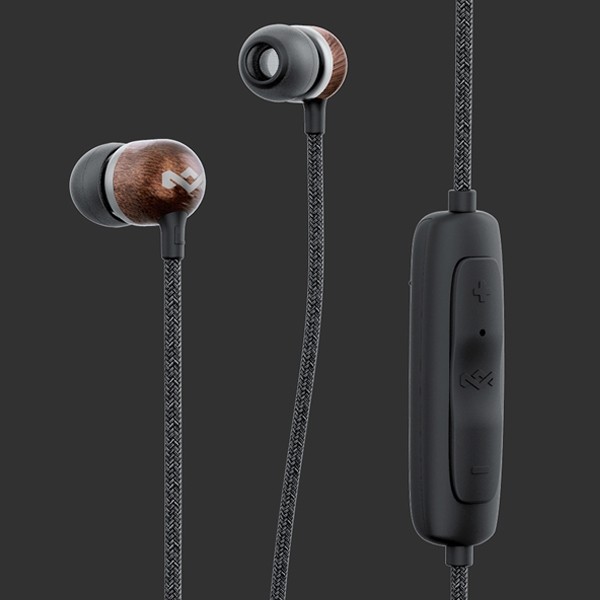
Review – The Tranya B530 Pro True Wireless. #TranyaB530Pro #TrueWireless

The Tranya B530 Pro true wireless are an affordable pair of earbuds which offer what you would expect for the price they come in at but deliver on sound too which is important. Having tested these for some time now the battery life is excellent just to start with and they have quick charge on board too giving you around an hour in a ten minute charge which is nice and they also have a total of ten or so hours on a single charge and up to 70-80 hours from the case in total which is at the higher end of the market here..

These offer really god balanced sound overall and users will be happy with the experience provided here with simple to use touch controls that can be a little sensitive at first but you will get use to this as you would any other earbud with touch controls over time. In general the controls work well with simple to use commands as you will see in the video review.

These also give good passive noise isolation when fitted with the correct tips which is also good and remain solid in the ears,what I did like is these did not press hard on your ears when using the touch controls as some can that I have tested in the past these are comfortable all over. When it comes to build they are made with plastic and light weight too and do not protrude so much when in the ears,there is bigger ones out there.. Trust me.

Sound is good you can use in mono or stereo and use individually which is nice,there is no app to give you extra enhancement but no need for it unless you are a true audiophile,the do have aptx though which is great, the bass is nice,highs lows and mids good and good separation across all genres of music, On using in my usual test path there was no lag latency on Netflix or You Tube which is nice and voice is crystal clear with good direction too so overall well balanced and a great listening experience and nice and loud too which for me is always a win.

Only things missing is not auto play/pause no wireless charging case and Micro USB charging but at the price you cant complain for the package as whole that delivers good audio.

GET A 30% DISCOUNT WITH THE CODE (TECHBUZZ)

BUY DIRECT 

BUY ON AMAZON

The Perfect MWC: Less Focus on the Latest Devices and More on the Future of the Mobile Industry. #MWC #5G #AI #MachineLearning

The perfect Mobile World Congress would focus less on the latest devices and more on the future of the mobile industry; it would be more of a collaborative forum where the entire mobile ecosystem comes together to define the state of the industry and identify what really needs to be done in order to move markets, solutions, and outcomes forward, states the MWC veteran analysts from global tech market advisory firm, ABI Research.

In its new whitepaper, The Perfect Mobile World Congress: 13 Visions for the Ideal Mobile Trade Show, ABI Research highlights that while MWC 2020 was a missed show, it’s not a missed opportunity. The cancellation was unavoidable, but “this pause may prove to be just what the mobile community needs: a chance to reflect, reengage, and, ultimately, reorient to most effectively chart the future of the industry,”  explains Stuart Carlaw, Chief Research Officer at ABI Research.

The Perfect Mobile World Congress visions from ABI Research’s analysts:

“Traditionally, most MWC events are inundated by noise-generating, but not revolutionary, announcements. This annual game of one-upmanship largely detracts from the meaningful discussions, dialogs, and negotiations that should be happening at the perfect MWC to build consensus around how to shape the future of the industry,” Carlaw propounds.

AI & Machine Learning: “The perfect MWC would have all telcos presenting at the event fully realize and embrace the importance of 5G and Artificial Intelligence (AI). The deployment of 5G already brings AI to radio access networks and backhaul optimization. Telcos will need to speed up their adoption curve by integrating AI into service-based architecture and utilize AI in various domains, such as customer service, inventory management, and network service orchestration,” offers Lian Jye Su, AI Principal Analyst at ABI Research.

5G and Mobile Network Infrastructure: “The perfect MWC would put the challenges facing the mobile telco domain in a market that is currently experiencing 5G deployments and mass market adoption of this new generation, including geopolitics, a declining economic environment, increased pressure on infrastructure vendors, and a transition to more open networks. An ideal MWC would have a forum to discuss all these aspects and become the central arena to move the industry forward,” advises Dimitris Mavrakis, 5G Research Director at ABI Research.

5G Markets: “The perfect MWC would have the telco market come together to identify and pursue SME requirements and create the platforms, services, and applications to cater to them. This may not mean doing everything alone, but to collaborate with the web domain to address this challenging market segment,” proposes Leo Gergs, 5G Analyst at ABI Research.

5G Devices, Smartphones & Wearables: “The perfect MWC would offer real insight into more collaboration in 5G. Indeed, a welcome prospect, with major vendors (yes, including perennial shunner Apple!) and component suppliers working closely with global carrier partners to create differentiated offerings taking 5G far away from the concept of being just another ‘G’,” advocates David McQueen, 5G Devices Research Director at ABI Research.

Digital Security: “The perfect MWC would have significantly more coverage of more cybersecurity-related issues. This is especially critical for any IoT-adjacent services, and with each IoT vertical holding its own unique security requirements (e.g., industrial, critical infrastructure, smart cities, etc.),” envisions  Michela Menting, Cybersecurity Research Director at ABI Research.

“One thing is for certain; the mobile industry is not learning lessons fast enough and is not answering the right questions at the right time.  The cancellation of MWC 2020 might seem a disaster, but the future is bleaker if the industry doesn’t pause, take some time to reflect, and radically retool its approach to be a fit-for-purpose entity, Carlaw sums up.

For even more visons of The Perfect MWC, download the whitepaper: https://abi.link/2VIMFRa.

Voice and legacy of MND sufferer will live on thanks to innovative solution by Irish software company #BigLifeFix #MND

Irish company Marino Software have developed an innovative solution to help an MND-sufferer who will eventually lose her voice. The solution was developed as part of RTÉ One’s ‘Big Life Fix’ programme, which brings together some of Ireland’s ground-breaking designers, engineers, computer programmers and technology experts to create tools that will radically improve people’s lives, and will be aired on RTÉ One at 9.35pm this Wednesday, 11th March 2020.

Marino Software were tasked with helping Róisín, a 32-year-old mother of three from Dublin, who had been diagnosed with Motor Neuron Disease (MND) just one month after her 30th birthday in September 2017. Her motor skills are increasingly deteriorating, making everyday tasks very difficult, and MND will eventually make her lose her ability to speak and communicate with her three daughters and family.


The team at Marino Software worked with Róisín to develop the technology that will allow her to communicate after she has lost her voice – in her own voice. They also developed an app which would allow her to record audio and videos in her own voice – recording her thoughts, experiences and feelings and allowing her to choose who to share them with.

Speaking ahead of the airing of Big Life Fix, Garrett Sheridan from Marino Software, said: “Róisín wants to be able to continue interacting with her daughters after her voice goes, but it was very important to her that she would be able to communicate in her own voice, and not in someone else’s.

“Róisín is a very sociable woman, who is not just the mother to her children, but she is also the mammy to all her brothers and sisters – and there are always people coming and going from her house. She told us about interests which she enjoyed until she was diagnosed such as meditation, music, going to gigs, hiking and going to the gym.

“Over the course of six months we worked with Róisín to map out the types of conversations she has most often and is most likely to continue having – from chatting with her children about school, to typical Irish discussions about the weather!

“We used a combination of recordings and AI-generated sentences for Róisín’s digital voice to be as close as possible to her own voice and built a solution she could start using on her tablet.”

In addition to the main soundboard app, Marino Software built a legacy app for Róisín to be able to record audio and videos and choose who she would like to receive these. This app will keep her voice alive, pass on her experience and capture her wisdom for her children and family.

Garrett Sheridan said “Working with Róisín was an inspiration for all involved. We aimed to positively impact her life and hopefully, we’ve done that. There’s a huge opportunity to enable people through design and technology and our team is excited about building awareness about this.”

Further information on Marino Software’s involvement with RTÉ’s Big Life Fix can be found here: https://www.marinosoftware.com/biglifefix

Manfrotto Announces The Chicago Collection – The New Collection of Premium Photography Backpacks

Vitec Imaging Solutions, world leader in the photography and videography, imaging equipment and accessories industry brings you Chicago, the new collection of premium photography backpacks: outstanding performance and premium design built to serve dynamic urban creatives as they live their best city life.


The Manfrotto Chicago collection consists of two photography backpacks and is the most desirable yet. The philosophy behind this assortment is to combine exclusive quality materials, ultra-stylish design, and exceptional technical features. Chicago is a multi-purpose, modular system devised to fulfil the needs of today’s most energetic promising city-based photographers.


If you’re an image-making mover and shaker or content creator and you love using the coolest, most powerful and versatile gear, including full frame mirrorless cameras, premium laptop, handheld gimbal or drone, the Chicago collection is for you: it’s a photography bag designed to stay with you throughout your day to day experiences of life in the city, on the most epic photo and video shoots, and on to exciting weekend getaways.

You’ll love the carefully selected materials and design details that make this pack built to last: Kevlar® yarn fabric on the bottom part of the bag for extreme protection and durability, coated fabric with matte finish, Duraflex® buckles and YKK zippers. Moreover, external fabric is treated to make it water repellent and a rain cover is also supplied in case of extreme weather conditions.


Both the Chicago camera backpack Medium and Small models feature a removable photo insert that enables a switch from 100% photography to 100% lifestyle in an instant. The internal camera unit slips out and works perfectly as a shoulder bag when only photography gear is needed. The packs feature symmetric dual-access organizer pockets, so you always know where to find your gear. And when you need a handy day pack that looks as cool as you are, simply remove the camera unit and convert to a city travel bag.

The Manfrotto Chicago camera backpack Medium and Small hold a full-frame mirrorless or DSLR camera with standard zoom lens attached. On top of this, the Medium holds 3-4 extra lenses, whereas the Small fits 2-3 additional lenses, depending on size.


Both models have a top compartment designed for personal gear. They also fit a DJI OSMO Mobile in a dedicated gimbal pocket on one of the double-sided flaps. Moreover, the Chicago Medium also features a media organizer pouch designed to keep your essentials media accessories to hand, including SD cards, cables and adapters.


A separate laptop compartment on the back of the packs’ main compartments store a 14’’ laptop in the Small, and 15’’ laptop in the Medium.

For your peace of mind, both models feature the Manfrotto Slim-Tech Protection System, which offers the benefit of more space for gear along with uncompromising protection from shock inside the bag, thanks to a slimmer, high-performance divider system. You can always have your trusty tripod with you thanks to the versatile tripod holder, designed to hold a tripod horizontally across the front or under the pack, or vertically on the front of the pack. Slip anything you need easy access to into the double-sided external stretch pockets on both sides.


The Manfrotto Chicago camera backpack small is available for £182.95,


The Manfrotto Chicago camera backpack medium is available for £213.45.


For more information see www.manfrotto.co.uk 


Irish business working remotely due to coronavirus? Here’s how to do it securely…#Cybersecurity #Sophos #Coronavirus

Many, if not most, organisations have already crossed the “working from home”, or at least the “working while on the road” bridge.

If you’re on the IT team, you’re probably used to preparing laptops for staff to use remotely, and setting up mobile phones with access to company data.

But global concerns over the current coronavirus (Covid-19) outbreak, and the need to keep at-risk staff away from the office, means that lots of companies may soon and suddenly end up with lots more staff working from home…

…and it’s vital not to let the precautions intended to protect the physical health of your staff turn into a threat to their cybersecurity health at the same time.

Importantly, if you have a colleague who needs to work from home specifically to stay away from the office then you can no longer use the tried-and-tested approach of getting them to come in once to collect their new laptop and phone, and to receive the on-site training that you hope will make them a safer teleworker.

You may end up needing to set remote users up from scratch, entirely remotely, and that might be something you’ve not done a lot of in the past.

So here are our five tips for working from home safely.

  1. Make sure it’s easy for your users to get started

Look for security products that offer what’s called an SSP, short for Self-Service Portal.

What you are looking for is a service to which a remote user can connect, perhaps with a brand-new laptop they ordered themselves, and set it up safely and easily without needing to hand it over to the IT department first.

Many SSPs also allow the user to choose between different levels of access, so they can safely connect up either a personal device (albeit with less access to fewer company systems than they’d get with a dedicated device), or a device that will be used only for company work.

The three key things you want to be able to set up easily and correctly are: encryption, protection and patching.

Encryption means making sure that full-device encryption is turned on and activated, which protects any data on the device if it gets stolen; protection means that you start off with known security software, such as anti-virus, configured in the way you want; and patching means making sure that the user gets as many security updates as possible automatically, so they don’t get forgotten.

Remember that if you do suffer a data breach, such as a lost laptop, you may well need to disclose the fact to the data protection regulator.

If you want to be able to claim that you took the right precautions, and thus that the breach can be disregarded, you’ll need to produce evidence – the regulator won’t just take your word for it!

  1. Make sure your users can do what they need

If users genuinely can’t do their job without access to server X or to system Y, then there’s no point in sending them off to work from home without access to X and Y.

Make sure you have got your chosen remote access solution working reliably first – force it on yourself! – before expecting your users to adopt it.

If there are any differences between what they might be used to and what they are going to get, explain the difference clearly – for example, if the emails they receive on their phone will be stripped of attachments, don’t leave them to find that out on their own.

They’ll not only be annoyed but will probably also try to make up their own tricks for bypassing the problem, such as asking colleagues to upload the files to private accounts instead.

If you’re the user, try to be understanding if there are things you used to be able do in the office that you have to manage without at home.

  1. Make sure you can see what your users are doing

Don’t just leave your users to their own devices (literally or figuratively).

If you’ve set up automatic updating for them, make sure you also have a way to check that it’s working, and be prepared to spend time online helping them fix things if they go wrong.

If their security software produces warnings that you know they will have seen, make sure you review those warnings too, and let your users know what they mean and what you expect them to do about any issues that may arise.

Don’t patronise your users, because no one likes that; but don’t leave them to fend for themselves, either – show them a bit of cybersecurity love and you are very likely to find that they repay it.

  1. Make sure they have somewhere to report security issues

If you haven’t already, set up an easily remembered email address, such as security911 @ yourcompany DOT example, where users can report security issues quickly and easily.

Remember that a lot of cyberattacks succeed because the crooks try over and over again until one user makes an innocent mistake – so if the first person to see a new threat has somewhere to report it where they know they won’t be judged or criticised (or, worse still, ignored), they’ll end up helping everyone else.

Teach your users – in fact, this goes for office-based staff as well as teleworkers – only to reach out to you for cybersecurity assistance by using the email address or phone number you gave them. (Consider snail-mailing them a card or a sticker with the details printed on it.)

If they never make contact using links or phone numbers supplied by email, they they are very much less likely to get scammed or phished.

  1. Make sure you know about “shadow IT” solutions

Shadow IT is where non-IT staff find their own ways of solving technical problems, for convenience or speed.

If you have a bunch of colleagues who are used to working together in the office, but who end up flung apart and unable to meet up, it’s quite likely that they might come up with their own ways of collaborating online – using tools they’ve never tried before.

Sometimes, you might even be happy for them to do this, if it’s a cheap and happy way of boosting team dynamics.

For example, they might open an account with an online whiteboarding service – perhaps even one you trust perfectly well – on their own credit card and plan to claim it back later.

The first risk everyone thinks about in cases like this is, “What if they make a security blunder or leak data they shouldn’t?”

But there’s another problem that lots of companies forget about, namely: what if, instead of being a security disaster, it’s a conspicuous success?

A temporary solution put in place to deal with a public health issue might turn into a vibrant and important part of the company’s online presence.

So, make sure you know whose credit card it’s charged to, and make sure you can get access to the account if the person who originally created it forgets the password, or cancels their card.

So-called “shadow IT” isn’t just a risk if it goes wrong – it can turn into a complicated liability if it goes right!

Most of all…

Most of all, if you and your users suddenly need to get into teleworking, be prepared to meet each other halfway.

For example, if you’re the user, and your IT team suddenly insists that you start using a password manager and 2FA (those second-factor login codes you have to type in every time)…

…then just say “Sure,” even if you hate 2FA and have avoided it in your personal life because you find it inconvenient.

And if you’re the sysadmin, don’t ignore your users, even if they ask questions you think they should know the answer to by now, or if they ask for something you’ve already said “No” to…

…because it might very well be that they’re asking because you didn’t explain clearly the first time, or because the feature they need really is important to doing their job properly.

We’re living in tricky times, so try not to let matters of public health cause the sort of friction that gets in the way of doing cybersecurity properly!

Curiscope & Multiverse launch new AR Poster Series. #AR #Curiscope

Curiscope has announced the launch of their next product, Curiscope Multiverse, in partnership with Future Tech Labs and San Shepherd, one of the creators of Star Chart, the astronomy app downloaded by over 40 million people worldwide.


Curiscope Multiverse will retail as packs for £39.99 / $49.95 and as individual posters for £24.99 / $34.95. Each poster covers a different Space topic, touching on the individual planets, the Solar System and the Earth. At launch there are 4 different designs with more to follow in the next couple of months. The posters pair with a free accompanying app that works on recent IOS & Android phones. 


When viewed through the app, the wonders of the Solar System come into your classrooms and homes through augmented reality and are brought to life with animations, facts and cross-sections that let you explore them in detail.

With the product, Curiscope are also announcing their initiative to become a net positive company. For every poster sold, they’ll be planting a tree. They have announced this initiative in partnership with Bristol based company, Offset Earth.


Curiscope are well known as one of the leaders in Augmented Reality, creating the award-winning Virtuali-Tee that has now been sold in over 100 countries. This series of posters represents their next major product launch and their continued vision to bring learning to life through their AR apps and products.


Future Tech Labs has worked across AR and VR, recently partnering with Oculus and National Geographic on new releases. Future Tech Labs was founded by San Shepherd who, as part of Escapist Games, created one of the top immersive apps of all time with over 40m downloads for Star Chart and over 500k installs for their AR/VR specific apps. 


Ed Barton, Co-Founder and CEO of Curiscope said “we’ve known San for about 4 years now and have followed his success with Star Chart. We’ve been really keen to create a new product around a new topic and to bring that to life. When we started thinking about Space, San was the natural partner.”


San Shepherd, Co-Founder and CEO of Future Tech Labs said “The quote, ‘Tell me and I forget. Teach me and I may remember. Involve me and I learn.’ has never been more true than today. Technology can now be used to make education immersive, fun, and social. Putting people at the heart, involving them, and letting them learn through playful osmosis.


As a result, Curiscope is the perfect long-term partner for us. With the success of the brilliant Virtuali-Tee, Ed has cemented Curiscope as a leader in providing innovative solutions for digital learning. We are pleased to have a partner of this calibre bring our vision of immersive education to a global audience and we’ll be working with one another on future posters, products and app updates.”


JOBY’s new Beamo LED light series provide creators with pro-grade lighting, improving the quality of videos and vlogs. #JOBY #Beamo

JOBY, creator of award-winning mounts, stands and grips  designed to elevate the world of vlogging is now widening its scope to a vital product for content creators: LED light. With Beamo™, JOBY now provides a complete ecosystem  of products for run-and-gun content creators,  further solidifying itself as a leader in smartphone accessories.

JOBY is proud to announce their first high quality LED light, Beamo. If you’re a mobile content creator, light management is just what you need to take your videos to the next level. Available in 2 models, the Beamo and the Beamo Mini empowers you to have pro- grade lighting in any condition. Its pocket-sized design makes it great for vlogging adventures. An aluminum shell renders this LED extremely durable and robust, plus it is waterproof up to 100 feet (30m). Rain or shine, night or day, underwater or on a summit – with Beamo™ your videos will be LIT!

A diffuser is included with Beamo to soften the light and give you flawless skin tones. So, whether you’re vlogging on a cloudy day or in a poorly lit room, you’ll have a perfect spotlight that makes you look incredible. Plus, each Beamo™ contains five modes of brightness – allowing you to find your perfect degree of lighting. To top it off, a unique cold shoe mount permits you to quickly slide the Beamo™ on to phones, clamps or cameras… or even attach up to four Beamo at once for extra brightness.

Beamo is the most powerful between the two models, with 1,500 lumens of brightness. Choose to use it at full power to illuminate super dark conditions or dim it to half for softer lighting effect. Use the diffuser to get that flawless skin tone everyone craves (it’s a must when recording videos!). Beamo also has wireless charging capability and can last up to 100+ minutes at 50% power*. This means more time creating and less time worrying about your gear.

Beamo Mini – With 1,000 lumens of brightness, Beamo Mini is super compact and the ideal LED light for mobile vlogging. A magnetic backing permits you to be even more creative and explore new angles and perspectives. Attach it to a fence, pole or any magnetic surface to get your perfect illumination. The Beamo Mini is the slimmest between the two models at just 1.5in (3.9cm) – it’s travel-friendly and ready to make you look good on any adventure!

Beamo series is equipped with Bluetooth and can be connected to the dedicated myJOBY app, making it convenient for you to adjust without losing that perfect position while in front of the camera. MyJOBY app gives you complete control of brightness and management of multiple Beamo at once. The app also saves exact light settings, allowing you to focus more on creating and less on setup.

See more 


Sonic is the first ultrasonic smart leak detector developed by Hero Labs. #Sonic #Water #IoT

Every year, Ireland is losing 43% of its drinking water in leaks, while £657million worth of domestic insurance claims in the UK are made to repair and replace possessions and property damaged by water leaks.

Fitted easily, in most cases under the sink, Sonic is the only product in Ireland and the UK to use ultrasonic technology to monitor water use and then spot anything unusual using AI algorithms. It sends an alert in seconds via a mobile app and you can shut the water yourself remotely or Sonic can automatically shut it off using Smart Shield technology, to prevent a water leak damaging possessions and property.

Sonic is the first product to be powered either from batteries or via a connection to the mains. This means there’s no need for complicated wiring, so it can be installed in basements or other difficult to access spaces where there is no WiFi signal, by any plumber or a Hero Labs-recommended installer.

Sonic is currently available for pre-order from the Hero Labs website. In addition to Sonic has been named the best IoT Hardware product for consumers at the 2019 IoT Innovator Awards. This follows Hero Labs being named Tech Starter Winner at the CEDIA Tech Starter FIVE awards and Best New Hardware Product EMEA at the CEDIA awards.

Redison announces Senstroke app 2.0 #Redison #Apps #Music

Redison, the French startup company that specialises in connected music, announces its latest app update – Senstroke 2.0. Available on iOS and Android the app works with the Senstroke music sensors to provide extra features to drummers who want to play anywhere, on anything.

Senstroke are the first Bluetooth enabled sensors for percussionists that allow drummers to reproduce the movements and impacts of authentic drumsticks as well as the footwork of a real drum kit. The Senstroke sensors allow amateur and professional drummer to practice their scales anywhere.

The latest app now includes a new play feature ideal for beginners – the learning mode. This mode allows users to have an in-app lessons as they play with a drum track that scrolls across the screen to aid learning. Users can practice being in sync with the drums and are then given a score at the end of the performance. Drummers can keep returning to the tracks to improve their skills.

Ready, get set, play

The Senstroke 2.0 application features an improved playing system allowing users to set up and be drumming quicker than before. Drummers can choose between a pre-configured drum layout to get going straight away or customise the kit to suit their needs.

In addition to this the app allows users to change the drum kit: simple snare drum, basic or complete kit, it’s now easy to create a drum kit that suits you and change it as needed.

A new pairing screen

When you connect a Senstroke sensor to the application in version 2.0, the pairing of the sensor has been improved to provide a more ergonomic set up.

A new setting screen now allows users to change the sensitivity of the sensors according to individual playing style.