First HP Work Relationship Index Shows Majority of People Worldwide Have an Unhealthy Relationship with Work

HP Inc. today unveiled findings from its first HP Work Relationship Index, a comprehensive study that explores employees’ relationships with work globally. The study, which surveyed more than 15,600 respondents across various industries in 12 countries, reveals the world’s relationship with work is at a breaking point – and its effects are pervasive.

Commenting on the research, Val Gabriel, Managing Director at HP Ireland, said “There are various ways to strengthen our collective ways of working globally that are mutually beneficial for people and for business. Our new global research highlights this and indicates how people’s relationship with work can impact their personal and working lives.

For another successive quarter, Ireland has reached a new record for the highest number of people employed across the country than ever before. With this comes opportunity, as leaders we must understand there are always improvements that can be made to bridge any gaps. Successful companies are built on cultures that enable employees to excel in their careers while thriving outside of work.”

The study analysed 50+ aspects of people’s relationships with work, including the role of work in their lives, their skills, abilities, tools and workspaces, and their expectations of leadership. The study also examined the impact work has on employee well-being, productivity, engagement, and culture. Through this, HP developed its Work Relationship Index, which is a measure of the world’s relationship with work to be tracked over time. It found that just 27% of knowledge workers currently have a healthy relationship with work; more details on the Index can be found here.

Unhealthy Relationships with Work are Impacting Employees’ Well-being

In this first-of-its-kind study, HP engaged with business leaders, IT decision makers, and knowledge workers to gain insights into the factors that drive meaningful, productive, and purposeful work experiences. The findings spotlight the negative impacts an unhealthy relationship with work has on an employee’s life and an employer’s business.

When employees are not happy with their relationship with work, it takes a toll on business:

  • Morale and Engagement: Knowledge workers report less productivity (34%), more disengagement at work (39%) and greater feelings of disconnection (38%).
  • Retention: Even when employees feel neutral about their relationship with work, more than 71% consider leaving the company. When they’re not happy at all, that number rises to 91%.

Unhealthy relationships with work can impact employees’ well-being:

  • Mental: More than half (55%) of these employees struggle with their self-worth and mental health, reporting low self-esteem and feeling like they are a failure.
  • Emotional: These issues naturally affect other aspects of their lives, with 45% noting that their personal relationships with friends and family suffer, and more than half (59%) are too drained to pursue their personal passions.
  • Physical: Mental and emotional health can make it harder to maintain physical well-being. 62% of employees report trouble with maintaining healthy eating, working out and getting sufficient sleep.


Identifying the Drivers Behind a Healthy Relationship with Work

Employees’ expectations of work have changed significantly, particularly over the past two-to-three years, according to nearly 60% of respondents. 57% surveyed noted their expectations of how they are treated at work and in the workplace also have increased.

The research examined more than 50 factors contributing to a healthy relationship with work, identifying 6 core drivers that represent critical focus areas – and key imperatives – for business leaders, and comprise the Index that will be tracked over time.

  1. Fulfilment:Employees yearn for purpose, empowerment, and genuine connection to their work, but just 29% of knowledge workers currently experience these aspects consistently. To adapt to evolving workforce expectations, businesses must prioritise employee fulfilment.
  1. Leadership:New ways of working demand new leadership styles, according to 68% of business leaders; yet only 1 in 5 workers feel leaders have evolved their leadership styles accordingly.  Cultivating emotional intelligence and transparent, empathetic leadership is crucial for today’s workplace.


  1. People-centricity:Only 25% of knowledge workers consistently receive the respect and value they feel they deserve, and even fewer are experiencing the flexibility, autonomy, and work-life balance they seek. To address this, leaders must put visible emphasis on putting people first and placing their teams at the centre of decision-making.
  1. Skills:While 70% of knowledge workers value strong power and technical skills, only 31% feel consistently confident in their proficiency in either. ‘Best-practice’ businesses have an opportunity to gain a vital skills-development and employee engagement edge by investing in holistic training and support.
  1. Tools:Today’s workers want a say in the technology and tools their employer provides– and want that technology to be inclusive. However, confidence that companies will implement the right tools to support hybrid work is low, at just 25%. No longer just a utility, the technology portfolio is emerging as an important driver of employee engagement, as well as connection and enablement.


  1. Workspace:Knowledge workers want a seamless experience as they move between work locations – and a choice in where they work each day. Effective hybrid workspaces, easy transitions, flexibility, and autonomy will be pivotal in demonstrating trust in employees and fostering a positive work experience.


Trust and Emotional Connection are Key in Attracting and Retaining Workers

The Work Relationship Index shows that this is a pivotal time to redefine the world’s relationships with work. Greater trust and emotional connection in the workplace were strong and recurring themes across the 6 core drivers.

Almost 3 in 4 business leaders acknowledge that emotionally intelligent leadership is the only way a leader can be successful going forward. Significantly, the study found that emotional intelligence – and increased trust and agency – hold considerable weight with employees: 83% say they’re willing to earn less money to find an employer that values these factors.

  • Strong workplace culture: Knowledge workers would take an 11% pay cut to work somewhere with empathetic, emotionally intelligent leadership, and above-average employee engagement and fulfilment.
  • Flexibility: The same group would give up 13% of their salary to work somewhere that lets them work where or when they want.

5 Organizational Hacks To Get Prompt In Your Homework

Going with the flow?

Well, it might seem like a fantastic idea for now, but it comes with a price that you may have to pay in the future. 

We are talking about the modern generation who likes to study late at night and complete things overnight. It’s fascinating initially, but it can be risky for you.

If your friend is doing that, you would also like to do the same. Some think of it as intelligence properties and competition. For instance, if your friend is studying overnight and completing homework or getting good marks and, in contrast, you are not getting up to the mark with a continuous routine, they consider it a brain distinction. 

This is not true, but something else can be behind your failure. We are not here to talk about failures but rather want you to get prompt with homework in your own ways.

Missing the deadline, getting physically and mentally exhausted, or getting worse grades cannot be your future. This is why following your own routine that can be prominent and suit your condition is the best solution for you.

Important Hacks To Complete Homework On Time

Homework in the modern study system is always a burden to the students. Especially the college students who know it better. While you are not alone in this mess, you may want to read overnight and complete tasks, but that cannot be a regular process for you.

Well, what is the solution?

Completing tasks and assignments and, on the other hand, dealing with the final semester examination become difficult for anyone. Well, the secret to success is worth considering. If you want to get the hacks, you have come to the right place. 

Set Up A Designated Study Area

It is important to have a designated study area for completing homework. This area should be prominently displayed in your home so that you can easily access it whenever you need to work. Having a specific study area can help you focus and improve your productivity. 

Ensure you have all the necessary supplies and resources nearby, and try to eliminate distractions. With a little bit of effort, you can create a comfortable and effective study environment that will help you excel in your academic pursuits.

Consider An Essay Writing Service To Reduce Homework

Essay writing is becoming a norm in homework and college assignments. If you want to get good grades in college, you must submit better essay assignments on time. 

This is an added pressure on students, but they need to deal with it. 

Well, don’t worry!

There is a hack to it!

Consider an essay writing service to complete your essay assignment before the deadline to grab good marks while you can easily complete another important task. 

Master The Highlighting Skill

Once you have started with the homework, dealing with the same mistakes may not help you to deal with things easily. If you want to get time efficient, you have to focus on your highlighting skills. 

Once you have done something wrong, highlight it! If you have found the quickest way, consider highlighting it!

Power Of Planning

Planning is a powerful tool that can help you stay organized and complete your homework on time. By setting aside dedicated time each day to work on your assignments, you can avoid the stress and anxiety that comes with last-minute cramming. 

Additionally, planning ahead allows you to break down larger projects into smaller ones. This will help you manage more tasks, making the workload feel less overwhelming. With planning, you can now take control of your academic success and easily achieve your goals.

Organize Your Study Materials

When it comes to completing homework on time, consider organizing the study materials. Not only does it save you time, but it also ensures that you have everything you need to get your assignments done. 

You can start by gathering all of your notes, textbooks, and any other resources you will need for your homework. After that, create a designated study space where you can focus and avoid distractions. Try to make a schedule that allows you to prioritize your homework and study time.

Dell Technologies study reveals that innovation leaders are 2.2X more likely to accelerate their way through economic uncertainty

The Dell Technologies Innovation Index, a new study polling 6,600 respondents across 45+ countries, including 100 from Ireland, reveals that Irish businesses are confident in the strength of their organisation’s innovation in the face of global challenges. Over three quarters (84%; Ireland: 78%) say that they agree their business has a vibrant culture of innovation, but the research shows a clear ‘innovation gap’ between perception and realisation.

To understand organisations’ innovation maturity across the globe, respondents were placed on an innovation maturity benchmark ranging from Innovation Leaders to Innovation Laggards. This reveals an innovation perception gap, as the results show, despite the positive view of innovative business cultures, only 18% (Ireland: 6%) of organisations worldwide can be defined as Innovation Leaders and Adopters.

This is important, as Innovation Leaders and Adopters are 2.2X more likely to accelerate their innovation during a recession than Innovation Followers and Laggards (who are more likely to decelerate). The good news is that the Innovation Index is a snapshot in time, and organisations can improve by priming their people, processes and technology for innovation.

People-primed innovation

Organisations need help to develop an innovation culture where all ideas can make a difference and learning through failure is encouraged. Businesses recognise this and are confident in their ability to deliver: over three quarters (78%; Ireland 68%) believe that, in part, people join their company because they believe they’ll be empowered to innovate, which is a major achievement.

However, they need to ensure that they fix the innovation gap. 59% (Ireland: 69%) of respondents believe people also leave their company because they haven’t been able to innovate as much as they hoped they would. And 64% (Ireland: 68%) say aspects of their company’s culture hold them back from being as innovative as they want to / can be.

The report also gives businesses a guide on how they can course-correct these issues, highlighting both opportunities to innovate more as well as the barriers that impact innovation.

Process-primed innovation

In addition to people-specific changes, businesses should also look at how they can improve their processes around innovation. The prime barrier to innovation for respondents’ teams is a lack of time to innovate, which underscores the importance of senior leaders modelling prioritisation. Presently, 68% (Ireland: 53%) of respondents say their leaders are more focused on the day-to-day running of the business than innovation. Without true, visible commitment at a leadership level, ambitious, skilled individuals can’t achieve their full potential on innovation.

Providing more structure around innovation can also lead to better outcomes. While by its nature, innovation may be seen as an organic, ad-hoc pursuit, 63% (Ireland: 50%) of Innovation Leaders and Adopters say their innovation is driven by special, dedicated projects.

Technology-primed innovation

The study findings point to the power of technology to enable innovation, and the consequences of falling behind. The vast majority (86%; Ireland: 80%) are actively seeking out technologies to help them realise their innovation goal. Conversely 57% (Ireland: 61%) believe their technology is not cutting-edge and fear they will fall behind their competitors.

The study also explores where organisations are making gains and facing obstacles, across five technology catalysts for innovation: multicloud, edge, modern data infrastructure, anywhere-work and cybersecurity. In nearly all areas, the greatest stumbling block to unlocking that potential is complexity.

These struggles are evident in the top cited global technology obstacles to innovation:

  1. Growing cloud costs
  2. Difficulties integrating the overall business architecture with the IT infrastructure architecture
  3. Time and money spent to migrate apps to new cloud environments
  4. Cybersecurity threats: can’t innovate with data and insecure edge devices
  5. Lack of IT infrastructure to meet and process data at the edge


In the context of non-stop change and uncertainty, it’s never been more important for Irish businesses to innovate. Resilient organisations with a culture of innovation are best placed to drive growth and compete internationally,” says Jason Ward, Vice President and Managing Director, Dell Technologies Ireland.

The new Dell Technologies Innovation Index showcases that businesses across Ireland can innovate at speed once they have the right people, processes and technology. It’s clear from the research that small, small, practical ideas can create a ripple effect that leads to greater productivity, profitability and purpose. By embracing breakthrough technologies, building a culture where learning through failure is encouraged and embedding data-driven processes at every level, Irish businesses can become global innovation leaders.”

To support organisations on their innovation journey, Dell Technologies will share “lessons from Innovation Leaders and Adopters”. Visit www.dell.com/innovationindex for more information and read our executive summary report.

Play hard, work hard – gamers make better managers, says study

There was a time, and not so long ago, when a propensity for video games was seen as the polar opposite of having what it takes to be successful in business. Now, however, as we enter the mid-2020, things are different. In key markets like Australia, where migration patterns are dictated by industry need, tech is now a top three sector, and gaming is one of the fastest growing niches. 

But even in careers that have no direct correlation with gaming, skill with a game controller can be an indicator of success in the board room. That at least, is the conclusion drawn by a study published by Alexander Simons of the University of Lichtenstein. Let’s dig a little deeper. 

Video gaming skills correspond to managerial skills

Dr Simons used the 2011 strategy game Civilization to explore whether gaming skills in this context are in any way indicative of managerial skills and, if so, of what specific skills. He and his team worked with 40 volunteer business students and asked them to play the game and participate in a set of exercises under controlled conditions. 

The study found that students with higher scores in the game were the same as those who exhibited better skills related to problem-solving, planning and organizational tasks in the context of their business studies. Dr Simons has also performed some analysis on more qualitative in-game data such as player interactions and in-game messages. He believes that these could provide further insights into personality traits. 

Dr Simons concluded that there is certainly value in using games like Civilization to assess specific management skills related to problem-solving, planning and organization. He recommended the gathering and analysis of in-game data to derive useful insights for profilers, head hunters and others searching for talent. 

The deeper analysis into more qualitative aspects is still ongoing, and Dr Simons commented that he intends not only to continue with the analysis of data from this study, but also to carry out more studies over the coming months. These will look at how Civilization, and indeed other games, can help with assessing management capabilities.

Taking the studies beyond the casino

This is not the first study to compare gaming performance with business success. However, past studies have usually focused on gambling games, especially in nations like Australia, where gambling is part of the national culture. There has been plenty of discussion over the past year or two in the Australian media about gambling, and not just the negative aspects that always seem to hit the headlines. We also see studies correlating poker success with business success in Australia or comparing the way someone plays online pokies in Australia to their risk appetite at work.

In addition, these studies have looked at how the more successful gamblers are the ones who are best at eliminating bias and seeing what is before them – whether it is a hand of cards, a set of symbols on a pokie or perhaps a draft contract drawn up by a potential client. This provides an interesting perspective, as it takes the study of gambling behavior beyond the usual formulaic territories of risk and return – important though these are. 

Saving time and money for recruiters

Dr Markus Weinmann, who worked alongside Dr Simons on the study, remarked that the assessment process employed was broadly similar to that which is already used by many large organizations in their recruitment processes, but with one notable difference. While they spend thousands developing specific games in-house, this method uses a real game that anyone can download for the price of a couple of cups of coffee. 

The next phase of results from the study will be released later this year, and we await their publication with interest.


PayPal study reveals top lifestyle changes Irish people are making during cost-of-living crisis

PayPal’s new Thrills & Bills study reveals that nearly six in ten (59%) of Irish people are extremely worried about the cost-of-living crisis, rising to 65 per cent for those between 25 to 44 years of age.

PayPal polled 1,000 adults across Ireland to explore changes in spending habits that people are making in order to navigate the crisis, from adjusting their lifestyles to savvy money management.

Lifestyle changes that help save money

The research revealed that two thirds (66%) of Irish people are planning to cut back on going out and eating out, making this the top lifestyle change in response to the cost-of-living crisis. Female respondents were found to be more open to this (72%) than male respondents (49%).

Irish people are also trying to make more conscious choices when it comes to their shopping habits, with 63 per cent planning to buy fewer items and less often, and 62 per cent opting to switch to cheaper brands.

Furthermore, the study found that some 31 per cent say they will buy second-hand items and nearly four in ten (37%) plan to change utility providers for the best deals on energy (including electricity and gas).

Switching to alternatives is also proving to be a popular trend in order to navigate inflation as a third (33%) plan to turn to online shopping for what they need to limit temptations instore, 32 per cent will host friends for drinks rather than going out, and 27 per cent intend to take up outdoor exercise rather than having a gym membership.

Importantly, savings were top of the list for what Irish people refuse to compromise on. Nearly half (44%) of consumers will continue to focus on building up their savings. Other priorities people are not prepared to eliminate are maintaining a healthy lifestyle such as a gym membership and healthy food options (24%), and buying coffee, drinks and snacks from cafés or coffee shops (23%).

Money well spent

Over three quarters of people (79%) agree that while changes to spending habits are necessary due to the cost-of-living crisis, it’s still important to occasionally spend money on a treat. Females agreed with this more than males – 83 per cent compared to 68 per cent.

While 72 per cent of Irish consumers have had to slow down or pause lots of plans which were making up for lost time during the pandemic, there are some niceties they will continue to spend on this year as a treat, such as:

  • Occasional meal at a restaurant (43%)
  • Food takeaways (42%)
  • Night outs with friends or family every now and again (37%)
  • Cinema trips (30%)
  • Beauty and grooming treatments (30%)

The survey reveals that nearly half (47%) of people are open to splitting costs with friends, family or housemates to enjoy more group experiences over the coming months. Those aged 16 to 24 are most likely to do this (58%), while those over 55 are least likely (17%).

Flexing money-management muscles

The report revealed that Irish people are doing more than simply cutting back and making thrifty swaps, with nearly six in ten (58%) planning to regularly track their spending and creating budgets to stick to (53%). In addition, almost two-thirds (65%) of people plan to look for discounts, coupons and promotions where relevant, and 39 per cent plan to track their spending habits via banks, credit card accounts and digital wallets like PayPal.

The survey found that nearly half (49%) of respondents are more likely to split the cost of a meal at a restaurant in response to the cost-of-living crisis. Some 44 per cent said they are more likely to split costs on taxis and transport fares, and 43 per cent are more inclined to do so on food takeaways. Nearly a third are even more likely to split the cost of a group drinks or dinner cooked at someone’s home (29%).

Speaking about the findings, Maeve Dorman, Senior Vice President, Customer Success at PayPal, shared: “The cost-of-living crisis is impacting everyone. Without a doubt, it’s a challenging time and people are adapting quickly and making changes. While some are taking more ownership of their spending, others are sharing expenses to enjoy shared experiences.

“Splitting bills appears to be the perfect antidote for a lot of people because it allows them to manage their budget and still do the things they love. Through PayPal, we make it easy with our send and request money feature. At times like these, it’s about people being able to have control of their money day-to-day and being better prepared for the future.”

New Study Reveals, Cyber Threats Within Digital Ecosystems May Be an Enterprise Blind Spot

Tata Consultancy Services (TCS) has today announced findings from its TCS Risk & Cybersecurity Study, which reveals that cyber executives may not be sufficiently prioritizing threats from vulnerabilities within the value chain, beyond the immediate boundaries of their own organizations.

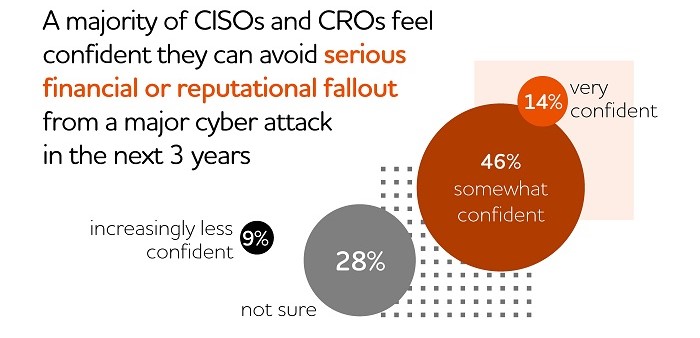
When asked to rank where companies will see the greatest number of cyberattacks between now and 2025, ecosystem partners came in last place (10th). At a time when enterprises are increasingly banking on digital ecosystems for their growth strategies, TCS’ survey shows that only 16% of chief risk officers (CROs) and chief information security officers (CISOs) ranked digital ecosystems as a concern when assessing expected cyber targets, and only 14% listed the risks from such ecosystems as the top priority arising out of board-level discussions.

Companies across the globe are increasingly turning to digital ecosystems of partners, vendors, and even competitors to reimagine and grow their business. Ignoring the threats originating from these ecosystems represents a blind spot which needs to be addressed urgently,” said Santha Subramoni, Global Head, Cybersecurity, TCS. “One way of reducing the probability of an attack within digital supply chains is to implement a ‘zero trust’ policy—a framework based on the principle of ‘never trust, always verify,’ applied not only to humans but also machines.”

When mapping out priorities between now and 2025, CISOs rank governance, strategy, and talent acquisition highly. Ranking highest is the prioritization of the security posture of the company and defining the controls and standards. Ranked second is establishing a more robust cybersecurity strategy, followed by investing in security talent acquisition and development.

TCS’ study also finds that talent retention directly correlates with how a company stores its information. Cloud-positive organizations were found to have a slight advantage in retaining and recruiting talent with the notoriously hard-to-find cyber skills, compared to those companies who think that on-premises or traditional data center security is preferable to what is available via the cloud. In fact, embracing cloud platforms gives companies a five-point advantage in recruiting and retaining talent with cyber risk and security skills.

As businesses look to keep up with rapidly evolving complexities in cybersecurity, the talent gap is widening,” said Bob Scalise, Managing Partner, Risk and Cyber Strategy, TCS“Demonstrating a serious commitment to cybersecurity by sustained attention from senior leadership, funding, and process changes will be vital to recruiting and retaining top talent.” 

Among other findings, the study also highlights:

Some corporate boards may not be sufficiently focused on cyber risks.

One in six respondents reported that their corporate board of directors considers issues related to cyber risk and security only “occasionally, as necessary, or never.” Companies with higher-than-average revenue and profit growth are more likely to discuss cybersecurity at every board meeting.

Cloud platforms are considered more secure than on-premises and traditional data centers.

Sixty-two percent of companies are now as or more comfortable with the security provided by cloud platforms than that of on-premises and traditional data centers—suggesting that the common concern about the cloud in its early days is fading.

The TCS Risk & Cybersecurity Study, published by the TCS Thought Leadership Institutehighlights the most pressing cybersecurity issues facing senior business leaders across Europe and North America. The study is based on results of a survey of more than 600 CISOs and CROs, from companies with at least $1 billion in annual revenue, across banking & financial services, utilities, media & information services, and manufacturing. Topics include global risk, cybersecurity, resilience, and ecosystem/cloud security.  The survey took place in February and March 2022.

To view the full report and receive more information, visit on.tcs.com/risk-cybersecurity.

PayPal study finds online spending within Ireland increases by 41%

Meitheal mentality: Irish spend more locally in 2021

The study of over 1,000 Irish consumers revealed the community spirit and Irish love for local, with the average annual spend increasing by 41 per cent on websites based in Ireland, rising to €503 in 2021 from €357 in 20202. The average spend on websites within Ireland was also more than the average spend on international sites, where the average spend was €329.

Female respondents spent considerably more with Irish websites, estimating an annual spend of €534 (compared to €351 spent by male respondents).

Wicklow consumers spent the most with websites in Ireland with an average of €972. Carlow came in second place (€915), with Meath (€819). Monaghan (€773) and Offaly (€634) finishing off the top five counties in this regard.

Áine Waldron (27), full-time gym instructor and part-time physiotherapy student from Mayo, said: “I work full time Monday to Friday and have college classes at the weekend, so online shopping is often my saving grace when I simply don’t have time to go anywhere. Lots of the local shops have rolled out delivery services and online shopping options since the pandemic began, and it’s made everything so much easier. I’m more inclined to shop local now and can see how important it is to give that support. Coming home to deliveries of books, groceries or clothes from local retailers always feels a bit more special – and it’s super convenient.”

When it comes to spending on websites outside of Ireland, over three quarters (79%) of consumers spent online internationally last year, with people from Carlow spending the most with an average of €678. This was followed by Wicklow (€561), Offaly (€508), Longford (€450) and Kildare (€425).

The most popular non-Irish destinations to buy from were found to be the UK (74%), Europe outside of the UK (48%) and China (28%). Meanwhile, some 16% of respondents bought from websites in the US.

Online spending becomes Main-stream

The study showcased the increasing appetite for online shopping, with 62 per cent of Irish people revealing they plan to shop online more this year. In fact, almost half (49%) agreed they would do all their shopping online if they could, equating to 1.7 million adults3. Those aged 25-34 are most keen on this idea (54%), in comparison to the near quarter (24%) of over 55s who said they would do all their shopping online if they could.

Interestingly, over half (56%) of Irish adults say the pandemic has permanently changed the way they pay for products and services, with almost three quarters (73%) preferring cashless transactions. Digital seems to be the preferred route as, 72 per cent of respondents indicated they prefer digital payment methods (such as paying with their smartphone), while 71 per cent like contactless checkouts (such as self-service tills).

Speaking about the findings, Maeve Dorman, Senior Vice President at PayPalcommented: “It’s great to see how Irish people are prioritising their online spending on Irish businesses. Regardless of where we buy from though, it’s clear that online shopping has become a critical convenience for Irish people, not only during the pandemic but as part of our regular, busy lives. 

“There is a real opportunity for online retailers to make a difference,” Maeve Dorman continues, “but businesses need to have an e-commerce platform in place that can meet their customers’ needs, wherever they are – online, on the go, or in-store. With a range of solutions designed to capitalise on the increasing reliance on digital spending and help serve the needs of Irish businesses, whether just getting started with e-commerce or already a thriving business, PayPal is here to help.”

Top 5 Technology Colleges in Ireland

Have you ever wanted to study in Ireland? It is a great country with interesting history, picturesque nature, and rich traditions. Studying here, you can become a part of compelling history, find friends and become a professional. What are the options to study in Ireland?

What university to choose? If you have already decided to enter university in this country, WriteMyPaperHub essay service is ready to help you in writing papers of any complexity, within the deadline you need it to be written from scratch. In the article, we are going to cover the topic and offer 5 colleges for studying technology. If you are looking for a place to study, our guide will help you. 


The Best Ireland Colleges to Study Technology

Ireland is a small country. However, it has a plethora of colleges for students who want to cover technology. Let’s see what you can get here. 

#1. Athlone Institute of Technology (AIT)

Let’s start with this college that is situated in Dublin. If you want to learn innovative skills and recent studies applying them during the classes, AIT is the best option for you. The college works with businesses and enterprises which is also a benefit for the students. 

More than 6,000 students take part in one of the programs. You can study business, engineering, IT, design, social science, and other fields. Why should you choose this college if you aren’t from Ireland? The percentage of overseas students is huge. 

#2. Dundalk Institute of Technology (DKIT)

The next option is DKIT. It is a great choice for young people who want to dedicate their lives to technology studying. The college offers different programs. There are both undergraduate and postgraduate programs. 

A great thing about the college is its small classes. Most of the time you will spend taking part in interactive activities. Moreover, the tuition is quite affordable. It is less than in other colleges for technology students. 

#3. Galway Mayo Institute of Technology (GMIT)

Why should you choose the college? More than 7K students entered the institution and felt happy with their choice. The college is situated on the West Coast. It has multiple campuses and can offer a plethora of programs for every student. Would you like to become a specialist in software development or wood technology? Or maybe your dream is to become a part of the agriculture sphere, tourism, or arts? 

You can also try yourself in accounting, engineering, or medical science. You will participate in accredited programs that are closely connected with the industry. You won’t struggle with irrelevant knowledge. Galway cooperates with global enterprises. Thus, you will be more engaged in the professional industry and will be able to try your skills in the workplace. 

#4. Institute of Art, Design, and Technology (IADT)

Studying here, you will benefit from a personal approach to each student. There are small classes. It ensures a particular focus on each trainee and more attention to the personal development of the students. You will practice a lot because the college is focused on practical knowledge applied during the studying process. However, theoretical knowledge is also studied at the highest level in the college. 

You will also benefit from a library, studio, and a computing room. There’s also a specific center where students can get acquainted with business enterprises and start their journey after college successfully. 

#5. Institute of Technology Carlow (IT Carlow)

What about another technology college in Ireland? Here we are with a great option for students who want to use innovative methods. You will work with noted professors who know their programs perfectly. The options for studying are endless. You can participate in undergraduate and postgraduate programs. Thousands of students come from different parts of the world trying to become a part of the community. By entering the institution, you will gain the necessary practical experience and find the focus for further research.

How to Get Ready For the College in Ireland

Being a student is funny. But you need to undergo a long and sometimes challenging procedure to enter the university. By reading this list of points, you will know what to pay your attention to:

Choosing a college is the first thing you should worry about. What place would you like to try? You can choose the college based on your preferences. What is the town? What location do you prefer more? What discipline would you like to study? You should ask yourself questions and find proper answers. 

When you decide on the college, you should take care of the documents. Each college has its particular entrance procedure. You need to learn about it beforehand so that you can prepare the documents. 

Ready with all the papers? Now you can apply for the college and wait for approval. When the college accepts your documents, it is time for the funniest part. Your next step is visiting the college, finding a room and communicating with your group mates. 

It is such a fascinating experience to study in college. If you want to spend your life as a student happily, you should choose the relevant college. 

Last Words 

Studying in Ireland can give you a lot of benefits. There are so many opportunities for students. When you are looking for a college, you should choose the best options. They will give you a chance to thrive and evolve professionally. By reading our list of colleges, you can choose the best variant and try yourself in the technology field of study. 

6 Benefits Of Studying Online In 2021

Studying online is not a new trend, it has been around for a few years now. However, the current pandemic has forced people to stay at home which made more and more students turn to online learning to continue their studies. Technological advancements facilitated the learning process for all students as more tools are available for them. You don’t need to go out of your house anymore to meet the instructor to ask them about something you don’t understand in the curriculum. You can simply open your laptop and log on to the learning platform and get all the help you need. In this list, we will discuss 6 benefits that you can get from studying online.

1. Comfort

Learning while you are in your pajamas is more convenient than wearing jeans. However, that is not the only reason studying online brings comfort. In a typical physical class, you carry all the materials with you if they are a hard copy, you have to go through traffic every day to arrive on time, and if the class is crowded, you may find it difficult to find legroom. Eliminating these factors will ease the stress on students which will improve the learning rate. Even if you became ill, you can still study without doing much effort or exposing others to your illness.2Scheduling.

2. Scheduling

How many times have we sacrificed family gatherings or social events because we had a class to attend? The answer is too many times. Everyone has had a rough day and then had to attend a class in which they almost learned nothing. Studying online removes the restriction of scheduling, as you study whenever you are ready. You can schedule your lesson times around your daily activities, whether they were working times, social events, or even a game of your favorite sport. When you have 24/7 access to class material, you will choose the time when you are ready to study to absorb more knowledge.

3. Career Advancement

Career advancement applies to both students and employees alike when studying online. A student will eliminate the commuting time and unproductive time spent on campus to pursue a job that will improve their working experience while studying. By the time the student gets their degree, they will have both knowledge and experience to be eligible for a better job. Employees who are taking courses to improve their skills will have the flexibility of different platforms online to access their courses whether at home or work when they are having a break. Physical classes can make employees lose precious work time while studying online offers them the chance to learn at their own pace whenever they can.

4. Computer Skills

Studying online will improve the necessary computer skills that you can use at work. Dealing with online platforms will prepare you to handle business software efficiently since many businesses are moving all their operations online. Conducting online business meetings, presenting online, handling cloud-based software and other on-the-job skills will be useful for students in the future.

5. Variety of Courses

There is nothing you can’t learn online nowadays; from how to tie a tie to rocket science. Sometimes you don’t find any learning centers near you to learn a specific skill you want, and students have to travel abroad to earn a certain degree. Studying online removed the distance barrier of learning, many universities offer their degrees online and if you need a particular certification to advance in your career, you will most likely find its course online. Online learning platforms offer a variety of courses ranging from computer programming and graphic design to accounting and customer service.

6. Value for Money

Studying at a physical location, whether it was a campus or a learning center, comes with several expenses. These expenses may include travel expenses, rent, lunch, and other expenses. Additionally, the value of courses taken at a physical location will be higher due to the upkeep of maintenance and personnel working at these locations. You get the same level of education online without the extra expenses and hassle that come with campuses. For employees, they will also save any lost time and resources while they fail to report to work due to a scheduled class.


Studying online became popular among people for its various benefits. The idea of studying from the comfort of your home is appealing to everyone and encourages people to acquire new skills. Students can study whenever they want without being restricted by a tight schedule, and they can have free time to pursue their career goals.