Solar Power: What is it and How Does it Work?

We’ve all heard of solar power before but how many of us actually know what it is and how it works? Probably not quite as many of us. I mean, most of us know the basics: solar technology generates energy from the sun that we can then use as power. But let’s dig a little deeper into the subject…

Brief History

It could be argued that solar energy has been used by our ancestors for centuries, starting way back in the BC days. Remember when they’d use the sun to bring fire to life with magnifying materials? That’s what we mean. However, solar energy that we know today, collected via silicon panels, was brought to life in the 1950s. Since then, the urgency for humans to choose renewable energy over fossil fuels has accelerated massively, as many countries are aiming to achieve net zero CO2 emissions by the year of 2050. 

Therefore, solar technology has come on leaps and bounds in the past few decades, with the mounting pressure of climate change and environmental issues at new highs. People are starting to wake up to the need for change, and can now see the multitude of benefits to solar energy – it’s typically much better for the planet as well as the people, animals, and plants on it. Solar PPAs (Power Purchase Agreements) are something that have made renewable energy all the more accessible in recent times – wondering ‘what is PPA?” Click the link to find out. Now, using a premier solar company is more affordable and cost-effective long term than it ever was before, for the individual as well as businesses.

How Does Solar Power Work?

Solar power is generated by energy from sunlight being absorbed by photovoltaic (PV) technology. Electricity can then flow through cells producing a current. This works as solar cells have a semiconductor within them made from silicon – when sunlight hits this, an electric field is created through one of the two silicon layers becoming positively charged, the other negatively. Electrons become loose and subsequently create power that can be converted into electricity for us to make the most of. In addition to efficiency advancements, the physical design and durability of solar panels have significantly improved, allowing them to better withstand environmental factors such as inclement weather and temperature fluctuations. This has been pivotal in their widespread adoption in various climates and regions around the world.

Will All Countries Make the Switch to Solar?

As it stands, many affluent countries are trying to encourage and increase the usage of not just solar power, but renewable energy in general. However, Ireland is experiencing a slow transition to renewable energy for a number of reasons, including a lack of confidence in the implementation efficiency and affordability in current times. However, plenty of countries are going full steam ahead, with China the country that produces the most solar energy out of any other country in the world – which is relatively good news, as they’re the country with the highest carbon footprint and population. China is followed by the EU and the United States. Cost and infrastructure can be something that holds many nations back when it comes to solar, but as it becomes more affordable and commonly found over time, we are likely to see a large shift.


Ireland ranks joint lowest of 13 countries on readiness to transition to renewable energy

A new independent report from The Association for Renewable Energy and Clean Technology (REA) has ranked Ireland joint lowest of 13 European countries, on its readiness to make the transition to renewable energy.  

The Energy Transition Readiness Index 2022 sponsored by Irish-headquartered global power management company, Eaton, and global law firm Eversheds Sutherland, analyses the readiness of Ireland’s energy market to support the progression towards net zero, comparing it to other key European markets. The report ranks countries on a scale of 1-5. Higher ranking countries scoring ‘5’ and ‘4’ have effective energy transition policies which encourage technological innovation and market access; while lower ranking countries present barriers to investment through existing policies and rules which are complex and slow to evolve. 

While the same report published last year awarded Ireland a score of 4 – showing that the country had a proactive approach to decarbonising electricity – this score has since fallen to 3, meaning that Ireland has been ranked joint lowest of all countries surveyed. Among other causes, the report cites the country’s failure to allow low or zero-carbon projects to connect to the national grid as a factor which is delaying the transition to renewable energy, noting that the situation is “becoming increasingly critical”.  

The report has also shown that the percentage of newly registered electric vehicles (EVs) in Ireland remains significantly lower, compared to its European counterparts. EVs accounted for 5% of all newly registered vehicles in Ireland in 2021, compared to 12% in the UK, 20% in the Netherlands and 65% in Norway. On EV charging specifically, Ireland has received a score of 2 – together with Poland, this the lowest score of any surveyed country. While acknowledging that “few commercial barriers exist”, the report nonetheless notes that the rollout of EV charging infrastructure across Ireland has been “slow” and “limited”. The widespread adoption of EVs is viewed as an essential component of Ireland’s plan to decarbonise the transport sector. There are approximately 1,900 charging points installed across the country at present. The EU expects that 3 million public chargers will be needed to service its overall target of having 30 million EVs on the road by 2030 – per the same calculation, Ireland would therefore need to install 100,000 chargers within the next eight years. 

One positive outcome, is the progress that has been made on smart meter penetration. A smart meter is a device that accurately measures electricity usage – eliminating the need for estimated bills and allowing households and businesses to become energy efficient and save on costs by shifting their usage to times with lower unit rates. While just 4% of Irish households had smart meters installed in 2020, the Energy Transition Readiness Index 2022 shows this figure is now closer to 34% – a marked improvement. 

The main barriers in Ireland include: 

  • Reduced confidence in the timely development and deployment of policies to implement the transition.  
  • Weakened political and public consensus for the energy transition owing to affordability/current energy crisis 
  • Delays in the deployment of renewable generation owing to the current energy crisis  
  • Grid accessibility constraints  
  • Slow electric vehicle and charging infrastructure rollout  


Dr Nina Skorupska CBE, CEO of Association for Renewable Energy and Clean Technology (REA), said: As ETRI 2022 makes clear, despite impressive progress from a number of European countries, warm words from many Governments around Europe are not being matched by action when it comes to preparing for the energy transition. We now need to see significant action to remove the barriers facing our industry: proper long-term planning; prioritising and accelerating market reforms; and urgently addressing current investment barriers – all are desperately needed to help put us on the right path.” 

Ms Phil Kane, Country Manager at Eaton Ireland, said: “While there is broad support for advancing the energy transition, ETRI 2022 demonstrates that there is a clear disparity between ambition and action. As a global power management company, we know that businesses around the world are embracing the opportunities presented by net zero and accordingly, they are investing in renewable energy technologies. Yet, in Ireland, this palpable enthusiasm must now be matched with practical policy solutions – such as allowing zero-carbon, energy efficient assets to connect to our national grid, without delay. This is especially true in the case of EV charging where it is imperative that both industry and Government works collaboratively to create a robust regulatory framework, that will unlock much-needed investment and boost consumer confidence in green mobility”. 

Mr Mark Varian, Partner & Head of the Construction, Projects & PPP Group at Eversheds Sutherland LLP said: “In a challenging economic and political environment this report shines a light on where opportunities lie for the savvy business operator. As the leading global law firm, we are seeing more large industrials stepping into these markets and more funds wanting to invest in this area. There are also many interconnectors between countries in development and having that flexible demand will be crucial across all jurisdictions to achieve a Net Zero future. Ireland has made good progress in the clean energy sector. We now have an output target of 55% renewables for 2030 so major investment in variable and flexible low-carbon electricity resources are needed to achieve this energy transition target, provide energy security and save consumers money. But in order for investment to continue, we need a speedier role out and implementation of policies and regulatory frameworks that support access to market sectors such as offshore wind. There are huge opportunities here and implementing the recommendations set out in this Index could make a big difference. 

Microsoft announces renewable energy contracts that contribute almost 30% of Ireland’s corporate power purchase agreement target by 2030

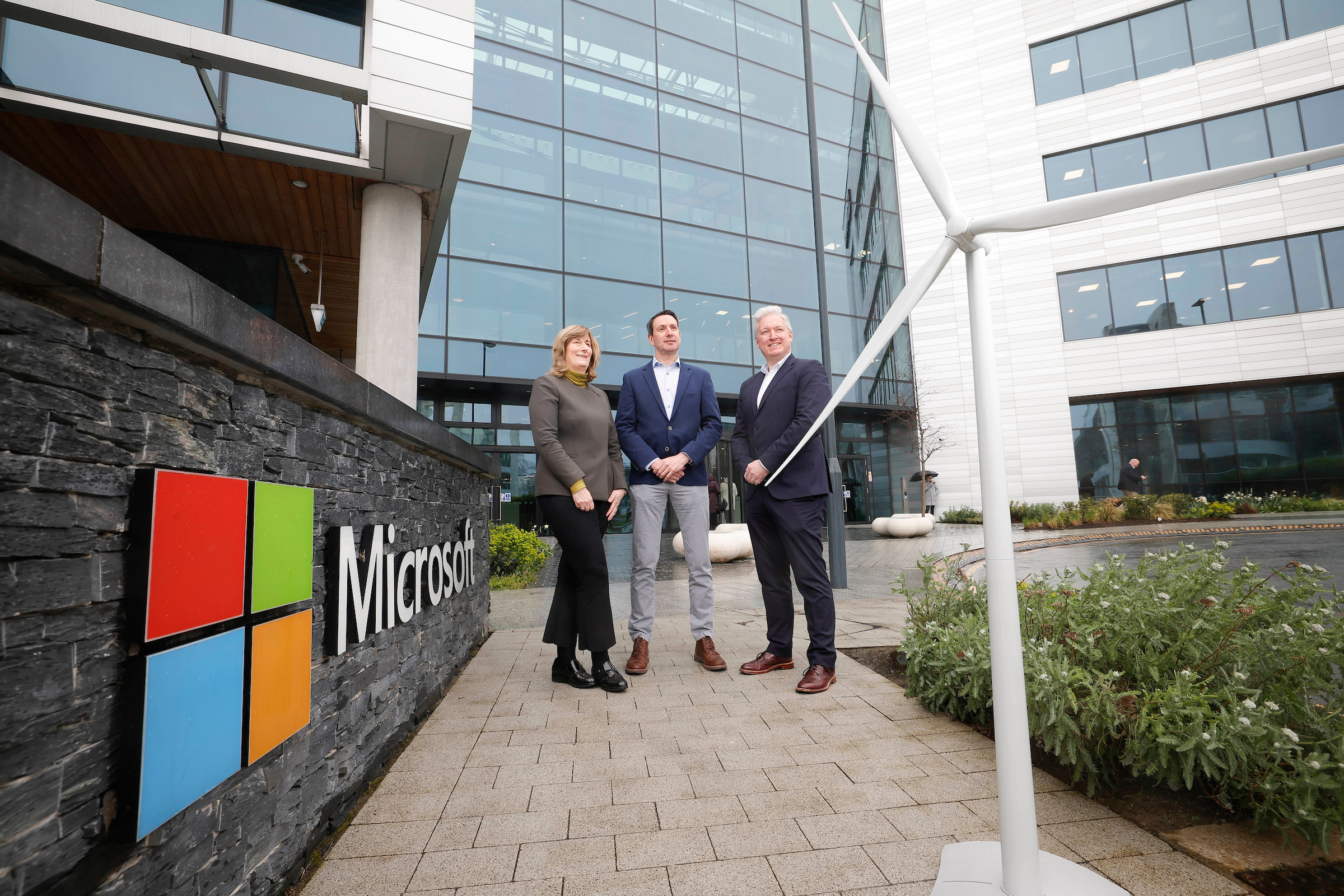
The Tánaiste and Minister for Enterprise, Trade and Employment Leo Varadkar TD today joined Microsoft as it announced new renewable energy contracts, which will see the company contribute close to 30% of Ireland’s corporate power purchase agreement target by 2030.

Microsoft entered into multi-year Corporate Power Purchase Agreements (CPPAs) with Statkraft, Energia Group, and Power Capital Renewable Energy, related to the development of more than 900 megawatts of onshore wind and solar energy projects across Ireland.

The new power purchase agreements will help support efforts to add additional clean energy capacity to the electricity grid. The Government’s Climate Action Plan includes a target of 15% of electricity demand to be delivered from renewable energy CPPAs by 2030. This equates to approximately 6 terawatt hours of additional electricity generation.

Microsoft’s procurement will contribute 28% of that target before the end of the decade. The company is seeking to make a material contribution to accelerating the country’s journey to a net-zero future.

In line with the company’s global sustainability goal, Microsoft forecasts that it will cover 100% of its data centre electricity load by 2025 with renewable energy.

Commenting on the announcement, the Tánaiste and Minister for Enterprise, Trade and Employment Leo Varadkar TD, said: “Data is an enabler of our digital world facilitating everything from remote working and online learning to e-commerce, e-health and online banking. As we position Ireland as a global digital leader and achieve our climate change objectives, Government is determined to progress both the digitalisation of our economy and its decarbonisation. Today’s announcement by Microsoft is very welcome news and will help to ensure that the company’s data centres play a more positive role in bringing new green power to the electricity grid and driving Ireland’s renewable energy transition.” 


Noelle Walsh, Corporate Vice President, Cloud Operations and Innovation, Microsoft said: “At Microsoft, we’re committed to becoming carbon negative by 2030, working with Governments globally to accelerate the journey to a net-zero future. That’s why I’m delighted to announce today that Microsoft has signed 900MW of onshore wind and solar renewable energy power purchase agreements, which will enable Microsoft to achieve our 2025 sustainability goals and to contribute close to 30% of Ireland’s corporate power purchase target by 2030. With these agreements, we support new renewable energy infrastructure in Ireland. We’re proud to be partnering with leading energy providers to bring this additional renewable energy on stream and help industry and Government and the broader energy sector to achieve its climate action ambitions.

 “This announcement builds on our efforts to make our data centres more sustainable and foster new innovations to support the growth of renewables on the energy grid here in Ireland. As we continue to support the growing demand for Cloud across public and private sectors, Microsoft is committed to partnering with all stakeholders to help Ireland on its grid decarbonisation journey while unlocking the opportunities of a digital economy and society.” 

Kevin O’Donovan, Managing Director, Statkraft Ireland said: “As Europe’s largest renewable energy company, Statkraft is already a key player in the Irish market. Given our rapidly growing wind and solar portfolio, as well as our market trading business, we are well-placed to support companies like Microsoft in achieving their renewable energy ambitions.

“Today’s announcement shows that our continued rollout of new wind and solar projects is not just having a significant impact on Ireland’s renewable targets, but helping to deliver affordable, green energy to homes, communities – and businesses – amid a fossil fuel-driven energy crisis.”

Ian Thom, CEO, Energia Group said: “As an Irish energy company with a proven history of delivering new renewable energy projects and for providing innovative solutions for our customers, today’s announcement with Microsoft highlights the benefit of collaboration in bringing about collective benefit for society, enterprise, and the economy.  Energia Group has set clear targets to promote Ireland’s energy transition and to facilitate the achievement of the Government’s 2030 targets that will be realised through a pipeline of almost 3,000 MW of new renewable projects across a range of technologies, including offshore wind, onshore wind and solar.  This agreement represents another step towards the achievement of these targets.”

Commenting on the announcement Power Capital Renewable Energy Co CEO Peter Duff said, “As an indigenous Irish company we are delighted to be partnering with Microsoft on such a landmark agreement. Solar is now a proven force in Ireland and has become increasingly viable for businesses and homes. We see Solar PV having a significant positive impact on the targets in Ireland’s Climate Action Plan. We very much look forward to playing an increasing role in the further decarbonisation of the grid here in Ireland.”

Today’s announcement reinforces Microsoft’s commitment to advancing sustainability through collaboration and innovation. In July this year, the company outlined its plans to use its uninterruptable power supply (UPS) batteries within its data centres in Dublin for real-time interaction with Ireland’s power grid. On days when wind or solar power production is fluctuating, Microsoft’s backup batteries can be used to help maintain a steady flow of energy to power customers. That means fossil-fuel burning powerplants will be needed less often to maintain steady power, cutting emissions and fuel costs.

Kingspan launches PowerPanel solution allowing users to Insulate and Generate in a single product

High energy consuming businesses can reduce carbon emissions and cut energy costs with today’s launch of Kingspan’s latest PowerPanel™ renewable energy solution aimed at commercial and office buildings. PowerPanel provides operational efficiencies and is up to 74% lighter than traditional systems.

Kingspan PowerPanel is a new generation of roof solution, combining high-performance QuadCore insulation with efficient monocrystalline photovoltaic (PV) technology in a single, factory-engineered panel, creating roofs that are quicker to install, and that work to power the building’s needs.

In Ireland, the Government committed to a target of net-zero greenhouse gas emissions no later than 2050, and a reduction of 51% by 2030. The construction and building materials sectors have a key role to play in delivering these reductions given that the built environment contributes about 40% of global carbon emissions. PowerPanel™ meets Net Zero Energy building requirements and helps buildings to achieve an A+ energy rating.

PowerPanel is suitable for many existing roof structures without the need for additional structural works or aesthetic compromises. By combining its energy saving technology and lighter structure it is a perfect solution for commercial and office spaces looking for an efficient and effective renewable energy solution.

In 2019, Kingspan opened the doors to IKON, its new global innovation centre at its headquarters in Kingscourt, Co Cavan. PowerPanel is one of the first products developed at IKON and it is installed on its nearby manufacturing building to enhance its energy credentials, and is reflective of Kingspan’s commitment to quality, innovation and sustainability.

Gene Murtagh, Chief Executive at Kingspan said:

“The built environment is responsible for nearly 40% of global carbon emissions, and high-performance insulation is one of the most important ways to increase energy-efficiency in buildings. Radical changes in the materials the construction sector uses can play a significant part in helping to slow and mitigate the impacts of climate change. Through Kingspan’s Planet Passionate programme, we are putting knowledge and expertise to use through the creation of innovative, energy-saving products. Developing innovative new products like PowerPanel is all part of delivery on Kingspan’s mission to accelerate a net zero emissions future.”

Marci Bonham, Managing Director Kingspan Insulated Panels, Ireland said:

“For the commercial property sector to embrace renewable technologies, they need solutions that not only make sense from an environmental viewpoint, but ones that are viable and attractive from an economic and a business perspective too. The single unit nature of PowerPanel makes it an easy to install product, that takes less time. PowerPanel is a means to reduce carbon emissions of the built environment and help meet Government targets for office and commercial energy ratings. It is also putting its knowledge and expertise to use through the creation of innovative, energy-saving products.”

Kingspan’s funding solution ‘Rooftricity’ allows owners to install PowerPanel on their buildings with no upfront capital investment. The funding option offers building owners the opportunity to maximise roof space to generate power for their own use without any upfront capital outlay.

The push towards zero emission buildings is part of Kingspan’s Planet Passionate programme, an ambitious 10-year global sustainability strategy that aims to impact on three big global issues: climate change, circularity and protection of our natural world.  The insulation systems Kingspan sold during 2021 are projected to save 193 million tCO2e during their lifetime, and Powerpanel is another addition to this energy saving range.

For more information about the product, visit: https://www.kingspan.com/ie/en/products/insulated-panels/roof-panels/powerpanel-pitched/

The gas network can enhance Ireland’s energy security

Gas is the trusted backbone of Ireland’s energy system, powering over 30% primary energy needs and generating half of the country’s electricity.”

That was the message from Gas Networks Ireland’s Senior Network Forecasting Engineer, Siobhán O’Halloran, at Ibec’s recent online business briefing event on Ireland’s energy security and emergency preparedness following Russia’s invasion of Ukraine.

Ms O’Halloran presented on Ireland’s energy security, emergency preparedness and the gas network of the future, and joined an Irish energy panel discussion alongside other leaders from the Department of the Environment, Climate and Communications; MaREI Centre for Marine and Renewable Energy at UCC; and Ibec.

With a background in mathematics and physics, Ms O’Halloran and her team lead the demand forecasting function within Gas Networks Ireland, assessing the future demand for gas and sources of supply on Ireland’s gas transmission and distribution systems.

Ms O’Halloran said the development of Ireland’s renewable gas industry and the important role of natural and renewable gases in Ireland’s energy transition and cleaner energy future cannot be overstated.

“Ireland’s €2.7bn, 14,617km national gas network is considered one of the safest and most modern gas networks in the world and is the cornerstone of Ireland’s energy mix. Our vision is to replace natural gas with renewable gases, such as biomethane and hydrogen, and further enhance Ireland’s energy security,” Ms O’Halloran said.

“The ongoing conflict in Ukraine has brought the topic of energy security and the safe supply of energy to the fore, resulting in both the Government’s recently published National Energy Security Framework and the European Commission’s new REPowerEU plan both calling for the reduction of dependence on Russian fossil fuels by diversifying gas supplies and speeding up the roll-out of renewable gases.”

“Gas Networks Ireland strongly supports this ambition, which will help to substantially reduce Ireland’s carbon emissions while ensuring a secure energy supply, in the least disruptive most cost-effective manner.”

Cut Business Energy Costs and Save Big With These Smart Tips

Are you looking for ways to save money on your business energy costs? If so, you’re in luck. There are a number of smart tips and tricks you can use to cut your business energy costs significantly. Here are just a few of the most effective.

Compare Different Rates to Get the Best Deal on Business Energy

One way to save on business energy costs is to compare different rates and providers. This will allow you to get the best deal on your energy costs, and save money in the process. According to the team behind www.compareyourbusinesscosts.co.uk, there are a few things to keep in mind when comparing rates. First, make sure that you are comparing apples to apples. This means that you should be comparing the same type of energy (electricity, gas, etc.) from different providers. Second, make sure that you are aware of any taxes or fees that may be associated with the energy provider you choose. Finally, make sure that you read the fine print before signing up for anything. 

Educate Your Employees About Energy Conservation

Your employees are your front line when it comes to conserving energy and saving money for your business. Make sure they know how important it is to conserve energy and what simple steps they can take to make a difference. Educate your employees about the importance of conserving energy. Show them how much money your business can save by reducing energy consumption. Offer training on energy conservation techniques and make it fun and engaging. The more your employees know about conserving energy, the more they will be willing to do their part.


There are many ways to educate your employees about conserving energy. You can start by hanging posters around the office or placing stickers in strategic locations. You can also send out regular email reminders or set up a competition with prizes for the employees who save the most energy. Whatever method you choose, make sure your employees are aware of the importance of conserving energy and are given the tools they need to make a difference.

Take Advantage of Government Incentives

The government offers a number of incentives for businesses to save energy, which can help you cut your business costs significantly. Many of these incentives are tax breaks, so be sure to speak with your accountant to see if you qualify. One popular incentive is the Enhanced Capital Allowance (ECA), which allows businesses to claim 100% first-year tax relief on investments in energy-saving equipment. This can be a great way to save money on energy costs, as you can effectively get all of your money back in the first year. 


There are also a number of grants and loans available to businesses that want to improve their energy efficiency. The Carbon Trust offers interest-free loans of up to £5 million for projects that reduce carbon emissions, while the Energy Efficiency Financing Scheme provides interest-free loans of up to £100,000 for energy efficiency measures. The government also offers a number of grants through its Energy Technology List (ETL), which can cover up to 30% of the cost of certain energy-saving technologies.

Switch to LED Lighting

One of the simplest and most effective ways to cut energy costs is to switch to LED lighting. LED lights use around 80% less energy than traditional incandescent bulbs and last up to 50 times longer, so they can save you a lot of money in the long run. They also emit very little heat, so they can help to keep your premises cool in summer. If you’re not ready to switch to LED lighting yet, there are still some things you can do to cut costs. For example, you could use energy-efficient light bulbs These may cost more upfront, but they use less energy and last longer, so they’ll save you money in the long run. 

Turn off lights when they’re not needed. This one seems obvious, but it’s often overlooked. Make sure all lights are turned off when they’re not needed, such as in unoccupied rooms or during daylight hours. Use timers and sensors. Timers and occupancy sensors are a great way to make sure lights are only turned on when needed. For example, you could use an occupancy sensor in a toilet so that the light is only turned on when someone enters the room. Use natural light. Where possible, make use of natural light instead of artificial light. This will help to cut costs and also boost employee morale as it has been proven to improve productivity.


There are many ways to cut business energy costs, but these are some of the most effective. Educating your employees about conserving energy, taking advantage of government incentives, switching to LED lighting, and making use of natural light are all great ways to save money. So take a look at your business energy costs and see where you can make some changes to save money.

Environmental Advantages of Using LNG Energy

Natural gas has numerous environmental benefits compared to oil, other gases, or coal-fired energy. There is a large reduction in CO2 emissions, but there are also other significant environmental benefits. Locally and globally, massive reductions in NOx and near-complete removal of sulfide, dust, and particles help a better climate.
Utility bidder will provide you with a deep insight into the topmost advantages of using LNG energy. They are as follows:

Efficient Storage Solution

LNG is a naturally occurring gas that has been cooled to roughly -162°C (-260°F), at which point it is liquid. As a result of the cooling, the volume of the gas is reduced by 6000 percent, allowing it to be carried and stored in vacuum insulated tanks on vehicles, containers, and ships. As a result, LNG is a more versatile and storage-friendly alternative to pipeline gas or compressed natural gas (CNG).

Less Risk

The risk of ignition is low in the event of a gas leak. Natural gas must have a gas/air ratio of roughly 5-15 percent to be combustible. If there is less than 5% natural gas in the mix, it is too thin to burn, and if there is more than 15% gas, it is too rich. Natural gas also requires a high-energy spark to ignite. The ignition temperature is 540 degrees Celsius (1004 degrees Fahrenheit).

If there is an LNG leak, the fluid/gas will be heavier than air as long as the temperature is below 100 degrees Celsius (212 degrees Fahrenheit). It will immediately vaporize to a gaseous state, rise to the surface, and combine with air to form a non-flammable combination.

In the incident of a leak or an LNG spill, there may be flammable areas above the leak or spill. Other, heavier gases are more likely to fall and remain close to the ground, where they can create a flammable zone. As a result, it’s critical to keep track of all ignition sources.

Lighter Chemical Composition

Other fuels, such as propane and oil products, are heavier and have more carbon atoms in their molecules. Propane (C3H8), for example, has three carbon atoms and eight hydrogen atoms. The more the carbon content of a molecule, the larger the CO2 emissions. Natural gas emits less CO2 than any other hydrocarbon since it is the lightest and simplest hydrocarbon. CO2 emissions will be decreased by about 25% in general.

Non-Toxic Gas

Natural gas is colorless, odorless, and non-toxic. A natural gas leak could still affect the amount of accessible oxygen in a contained space. If someone comes into close touch with the supercooled gas, it could be harmful. Natural gas is generally regarded as a very safe gas, and it is frequently utilized as a residential gas.

Leakage Impacts

With the exception of anything in direct touch with LNG/gas in a supercooled state, a natural gas or LNG leak will have a negligible impact on plant and animal life. Oil spills from shipping, transportation, or oil tanks, on the other hand, have a huge negative environmental impact and can result in significant expenses. Natural gas leaks, however, should be avoided.


Biomethane: a sustainable solution for Irish farmers and energy security

More than 270 interested parties, including farmers, developers and industry bodies, heard how agriculturally produced biomethane can be delivered sustainably and at scale to decarbonise Ireland’s energy system, during Gas Networks Ireland’s biomethane industry webinar on Monday.

Attendees received an update on the national and European biomethane policy landscape and learned of the importance of the ongoing consultation on the proposed Renewable Heat Obligation, which, if enacted, will support biomethane production at scale and help Ireland achieve its climate ambitions.

Speakers also discussed the process for producing and injecting biomethane into the national network, the proposed Mitchelstown Central Grid Injection (CGI) facility and how certification is attained and recorded in the national registry.

The line-up of experts included Gas Networks Ireland Innovation Engineer, Niamh Gillen, who last year represented Ireland at the international finals of Institution of Gas Engineers & Managers’ (IGEM) Young Professionals Competition.

Ms Gillen was joined by Gas Networks Ireland colleagues Declan O’Sullivan, Ian Kilgallon, Yvette Jones and Brendan O’Riordan, as well as KPMG’s Russell Smyth and Devenish Nutrition’s David Hagan.

“Ireland has the highest potential for biomethane production per capita in the EU according to the European Commission, providing a strong opportunity to develop a thriving indigenous biomethane industry, support energy security and, importantly for Irish farmers, reduce agricultural emissions,” Renewable Gas Project Manager, Yvette Jones, who is leading on the Mitchelstown CGI project, said.

A carbon-neutral renewable gas made from farm and food waste through a process known as anaerobic digestion (AD), biomethane has already begun to seamlessly replace natural gas in the national network.

Gas Networks Ireland’s Innovation and Business Development Manager, Ian Kilgallon, said that across Europe, biomethane is seen as a vital solution for decarbonising energy systems while also providing a more sustainable solution for farmers to reduce their waste and emissions.

“In countries around Europe, including the UK, Italy, France and Germany, biomethane is playing an important role in decarbonising sectors such as heat and transport,” Mr Kilgallon said.

 “Within both the EU’s Farm to Fork Strategy and Irish agri-food industry, the development of biomethane and the production of a nutrient rich bio-fertiliser digestate, which is a by-product of anaerobic digestion, is seen as a key element in decarbonising agriculture.”

By replacing natural gas with renewable gases such as biomethane and hydrogen, Ireland can sustainably deliver a net-zero carbon gas network to complement intermittent renewable electricity generation, meet its climate action targets and support a cleaner energy future while ensuring a secure energy supply.

Gas Networks Ireland introduced domestically produced biomethane into the national network in 2019, via the country’s first dedicated renewable gas injection point in Cush, Co. Kildare. A second renewable gas injection facility in Mitchelstown was approved by Cork County Council and An Bord Pleanála in 2020.

Together they have the capacity to heat 75,000 homes, while also supporting the decarbonisation of local agriculture.

A domestic biomethane industry would also provide significant opportunities for local communities from the sale of biomethane, feedstock used to produce the renewable gas, and a bio-fertiliser that is a by-product of the process, and facilitate sustainable circular economies, with businesses powering their operations via renewable gas made from their own waste.

To support the development of an indigenous biomethane industry in Ireland, Gas Networks Ireland has established a Renewable Gas Registry that records the volume of biomethane injected into the network each month and issues certificates to producers.

The Registry facilitates producers in monetising the renewable value of their gas and enables title tracking of the renewable value of biomethane in the network, guaranteeing that the equivalent amount of renewable gas has been injected into the gas network.

For more information, visit: https://www.gasnetworks.ie/business/renewable-gas/registry/.

CRU first to market with innovative Google Home & Alexa Campaign launch. #CRU #AI #Energy

Recent events have driven unprecedented levels of creativity and agility within the marketing sector, with brand communications teams and agency creatives pivoting rapidly to deliver transformational digital campaigns to address an entirely new set of consumer needs.

As such, CRU (The Commission for Regulation of Utilities) has launched the first ever Google Home and Alexa centred AI campaign in Ireland, aligned to the roll out of its ‘Switch On to Savings, Rights and Safety’ communications campaign.

This unique digital activation involves the development of an app which effectively ‘trains’ smart home devices, namely Google Home and Alexa, to deliver specific responses to any consumer questions on the theme of savings, switching energy suppliers, energy safety and rights, whilst also driving awareness of the role of CRU, its services and guiding consumers to CRU branded information portals such as the CRU website and social media channels.

This ‘smart home conversation skill’ activation is the first of its kind to be developed and rolled out in Ireland by any organisation and was developed by the CRU in close collaboration with PR agency AMPLIFY@Drury Porter Novelli and Granite Digital.

The Commission for the Regulation of Utilities ‘Switch On’ campaign calls on the public to switch on to their rights, safety and savings as an energy consumer, and is fronted by long standing Campaign Ambassador Maia Dunphy. As part of a broader communications campaign, Maia will work closely with several high-profile Irish influencers to engage in an online challenge to see how much money they can save, by following the simple steps suggested by CRU. Over the coming weeks the influencer collaboration campaign will see participants using their smart home devices to put the CRU app to the test, when comparing costs from different Irish energy providers. The influencer campaign will roll out across Instagram, but will be amplified across all channels.

The way people are connecting with businesses through technology is constantly evolving. Surveys from 2019, found that  15% of Irish households now have smart speakers, while over 50% of Irish people are expected to own a smart speaker by 2023.  In further research, ComScore forecasts that over half of all search will be via voice by 2020, showing that voice is poised to become the next big channel for marketers.

With the disruptive effects of the pandemic currently dominating our daily lives CRU was forced to pivot its ‘Switch On’ campaign online. CRU Head of Communications and Public Affairs, Karl Richardson said “The current COVID-19 pandemic has forced many businesses to stop in their tracks, quickly re-strategise, and change the ways in which they operate. Given how consumer behaviours to switching suppliers have been impacted due to Coivd, we are delighted to be the first to introduce this innovative AI technology and reach Irish consumers in a way that compliments their busy on and offline lifestyles and provide them with the information they need to switch on to savings, their right and safety.”

As Ireland’s independent energy and water regulator, the Commission for the Regulation of Utilities (CRU) is central in protecting Irish consumers’ energy savings, rights and safety, and wanted to scale the advice previously provided by its consultants.

Launching this latest digital activation, Nicky Crichton, Brand Communications Lead at AMPLIFY@DruryPN said “Like many brand communications agencies, we’re pushing boundaries and pivoting fast to ensure effective, impactful, digitally led solutions for our clients, and the campaign for CRU is one that we’re particularly excited about given that its first to market, and perfectly timed given the ever increasing use of in-home AI technology”

Ivan Adriel, Creative Strategy Director of Granite added “AI assistants are rapidly taking over consumers’ homes, soon to become the primary channel through which people get information, goods, and services. We were delighted to co-create this solution for CRU, anticipating the future and exploring a striking new opportunity for connection between brand & consumers.”

Switch On To CRU is now available on all Google Home and Amazon Alexa devices in Ireland. To start a conversation simply use the prompts below:

Google: Hey Google, start Switch with CRU

Or

Amazon: Alexa, start Switch on CRU.

To find out more about CRU visit www.cru.ie