Ireland Tops Energy Efficiency in Euromonitor’s first-ever Global Energy Vulnerability Index

Market research company Euromonitor International has released its first-ever Global Energy Vulnerability Index, as part of its ‘New Economic Reality: Rising Energy Pressures’ report, revealing individual countries’ exposure to energy shocks.

The Global Energy Vulnerability Index 2023 is designed to help leaders and businesses assess and benchmark a country’s energy security, providing insights into potential risks, challenges and opportunities in the markets where they operate or plan to expand into in the future.

Euromonitor International used six groups of indicators to measure each country’s level of energy vulnerability:

  1. Energy self-sufficiency (30% of total score (TS)),
  2. Alternatives to fossils (35% TS),
  3. Energy reserves potential (10% TS),
  4. Energy accessibility (5% TS),
  5. Energy efficiency (10% TS), and
  6. Economic resilience (10% TS)

Ireland ranks highest globally in energy efficiency. Norway, Canada, Australia and the US rank at the top of the index due to their strong energy self-sufficiency, ample energy resources, diverse energy mix and high economic resilience.

At the other end of the table¸ Belarus and Lebanon rank at the bottom as both countries lack energy resources and struggle with poor energy efficiency and economic uncertainty.

Singapore and Hong Kong also rank among the bottom 10 performers because of heavy reliance on energy imports despite their good score in energy efficiency and economic stability. The smaller size of Singapore and Hong Kong also limits renewables capacity, adding to the city-states’ weaknesses.


Aleksandra Svidler, Consultant for Economies at Euromonitor International, said: “Understanding a country or a region’s vulnerability to energy shocks will inform business strategy and enable an optimal plan for energy sourcing, as well as help to identify the white spaces for investment.

“Overall, economies that are heavily reliant on imports, with low adoption of renewables, weak energy efficiency and economic instability are more vulnerable to energy risks.

“Many African countries continue to grapple with underdeveloped infrastructure, poor access to reliable and affordable energy and low investment while developing Asian economies continue to struggle with low self-sufficiency rates, high dependency on fossil fuels and limited access to capital.”

Svidler said that European countries also face challenges ahead. “Although many European countries are better positioned to weather disruptions due to the rising renewables adoption and better access to capital, the region’s high reliance on energy imports raises its exposure to energy shocks.”

Euromonitor International selected six groups of indicators to measure each country’s energy vulnerability known as pillars. Low energy self-sufficiency, due to the weak domestic energy production and high reliance on imports, raises the exposure of an economy to disruptions in energy supply, global price shocks and geopolitical risks. High reliance on a single external energy supplier particularly undermines an economy’s energy security.


Alternatives to fossils pillar reflects the diversification of an energy mix away from fossil fuels by investing in alternative sources, such as green renewables or nuclear power, which can help to raise energy security, reduce exposure to global energy price and supply shocks, and enhance sustainability.

Energy reserves potential helps to assess the future availability of energy resources at current production rates. Reserves of oil, gas and coal can play a key role in boosting energy self-sufficiency of a country. Yet, high resource potential does not necessarily guarantee sufficient future supply due to economical, technological and environmental constraints.

Energy accessibility pillar illustrates the reliability and adequacy of power supply in a country and points to the state of energy infrastructure. Lack of access to power and underdeveloped energy infrastructure can lead to significant social and economic challenges.

Energy efficiency indicates the amount of energy needed to provide goods and services. Higher energy efficiency can help to reduce energy consumption, and therefore reduce costs and reliance on imports, boost competitiveness and environmental benefits.

Countries with greater economic resilience are better equipped to withstand energy price and supply fluctuations, as available mechanisms and reserves allow them to manage energy market shocks. Meanwhile, higher economic freedom fosters investment in innovation and diversification.

For more information, please read the full Euromonitor International report ‘New Economic Reality: Rising Energy Pressures’.

Bord Gáis Energy welcomes National Hydrogen Strategy as a keystone to Ireland becoming a green-energy powerhouse

Bord Gáis Energy today welcomed the publication of the Government’s National Hydrogen Strategy paper which sets out Government’s vision for how hydrogen will be produced and used in Ireland. The plan outlines how green hydrogen can help Ireland become a zero-carbon, secure energy system and an energy exporter. A key objective of the strategy was to provide certainty to investors and industry as to how hydrogen will be deployed in the Irish energy system. Bord Gáis Energy welcomed the signals to industry in the report.

Bord Gáis Energy, which was purchased by Centrica in 2014, strongly believes that green hydrogen is a keystone to Ireland becoming a clean, green-energy powerhouse, and is investing €300m in the construction of two hydrogen-capable power generation plants, which will be ready to support the grid at the end of 2024.

Speaking today, Emma Burrows, Legal, Regulation and Corporate Affairs Director at Bord Gáis Energy said:

“We welcome the government’s significant efforts to embrace green hydrogen as a safe and secure energy solution. Ensuring that industry is provided with the necessary certainty to inform future investment strategies is vital if Ireland is to unlock the potential that green hydrogen presents. 

“At Bord Gáis Energy we plan to deploy our significant expertise in engineering, innovation, and energy to support these plans. Centrica’s UK trials in the hydrogen sector bring significant learning opportunities and have enabled our teams to identify the areas where this technology can be effectively implemented in Ireland. 

“We are working with other like-minded investors seeking to deliver Ireland’s net zero ambitions to create an indigenous cluster that will use Ireland’s natural resources off the southwest coast to provide an abundant, flexible, and secure zero carbon energy source that can be used across Irish society and beyond. Indeed, Government’s recent Joint Declaration of Intent on cooperation in the field of green hydrogen with Germany demonstrates that green hydrogen has the potential to meet not just Ireland’s but Europe’s growing green-energy needs. 

Gillian Kinsella, Senior Policy Manager, Bord Gáis Energy and Co-Chair, Policy & Advocacy Working Group, Hydrogen Ireland said:  

The publication of the Government’s ‘National Hydrogen Strategy’ today outlines the strategic pathway for hydrogen’s role in decarbonising our economy, enhancing our energy security and creating industrial and export market opportunities. It will enable investment, increase skills, support regionally balanced economic growth and system resource efficiencies, thus providing a crucial pathway for delivering a future that will benefit the Irish people for generations to come.” 

Bord Gáis Energy sms scam is back

Another scam is back and this time it is Bord Gais, recently we had another one return and it was Guinness which again turned out to be rampant and claiming to give free full fridges of beer. This particular sms asks you to pay an overdue bill which you possibly might have due to the energy crisis going and again shows how these scammers operate. As always if you get the said sms just ignore and delete. Most importantly in today’s world of scams getting more realistic looking remain vigilant and feel free to ask us too as people do if they get a suspicious looking message.


Bord Gais Energy already have stated on their website

We’re aware of recent fraudulent messages that have been circulating via SMS and WhatsApp, which may look like they have been sent by Bord Gáis Energy. We’ll never send you a link asking for account details or personal information. If you receive a message like this, please delete it immediately.

We have asked the company for a comment on the matter.

Ireland maintains strong position in global renewable energy development attractiveness as market expands rapidly

Ireland has maintained its standing in the latest edition of the EY Renewable Energy Country Attractiveness Index (RECAI) remaining in 13th position overall at a time when global investment in renewable energy is soaring as Governments eye domestically produced, low-cost, low-carbon energy in a bid to reduce their dependence on imports.

The RECAI is EY’s biannual flagship global renewables report.  Now in its 61st edition, the index ranks the world’s top 40 markets based on the attractiveness of their investment in renewable energy and deployment opportunities.

Ireland’s overall global ranking of 13th remains unchanged since the last index, in November 2022. Notably, Ireland has climbed four places and is now ranked 19th in terms of use of Corporate Power Purchase Agreements (CPPA), an arrangement where a company procures renewable electricity through a direct contractual agreement with a renewable electricity generator. This reflects the significant increase in the use of CPPAs in Ireland over the past 24 months as major corporates advance on their decarbonisation agendas, and it bodes well for achieving the goal set out in the Climate Action Plan to generate 15% renewable energy through such agreements.

The global index also specifically references the success of Ireland’s recent Offshore Wind Auction, which saw some of the most competitive pricing for offshore wind deployment seen anywhere in the world. The pipeline of future projects is also flagged, and the opportunity for Ireland is clear in the context of competitive advantage in offshore wind development attractiveness.

Stephen Prendiville, EY Ireland Head of Sustainability said:

“The global drive for energy security and a recessionary environment means the renewables industry has never had a better opportunity to accelerate. Interdependent legacy market dynamics are no longer seen as sustainable, while domestically produced, low-cost, low-carbon – and in some cases, low-lead time – energy looks more attractive than ever. Globally, we are seeing that developing policies to encourage the buildout of renewables has risen to the top of government agendas right around the world.

“The EY Renewable Energy Country Attractiveness Index rankings once again confirm that Ireland is the Goldilocks among nations for renewable energy development, combining the right blend of policy, structures, available finance, talent, resources, and drive to succeed. The rankings and analysis point to significant upside potential across many of the renewable technologies currently being deployed, such as wind (onshore and offshore), solar, biomass and hydro. Our stable economy and geographical positioning in the flow of material supply chains combined with capital investment, educated and skilled workforce, and the Government’s ambitious climate action policy, make Ireland a leading nation in this space.

Notably, the report makes a particular reference to Ireland’s potential in offshore wind.  We also know that there is significant potential for Ireland in area of green hydrogen production and storage. If we can unlock our full potential as part of the planning system reforms currently under investigation, I expect Ireland will climb the rankings quickly – and more importantly – we’ll be leading the way for the energy transition and positive climate action.”

Commenting on the increased use of CPPAs, Anthony Rourke, EY Ireland Government and Infrastructure Advisory Director, said:

“The energy crisis of the past 18 months has accelerated the energy transition plans of many medium to large users. Equally, many more businesses are demonstrating their commitment to delivering on their decarbonisation plans. In many cases CPPAs are a critical component of these strategies. We have seen the commercial imperatives line up strongly with the climate action agenda. This is driving a marked increase in enquiries and transactions in this space as a result.”

US Inflation Reduction Act changes the game

The US maintains its top position in the Index, supported by the passing of the Inflation Reduction Act (the Act) in August 2022, which earmarks a combined US$369b for investment in energy security and climate change.

Ten months since its passing, this edition of RECAI seeks to explore how capital reallocation is impacting investment opportunities in markets outside the US. Among European politicians and policymakers, there are concerns that the Act is incentivising developers and manufacturers to locate investments in the US and away from Europe. And similar concerns have emerged elsewhere in the world, with governments examining the impact and formulating their responses at the policy level.

Arnaud de Giovanni, EY Global Renewables Leader, says:

“Legislation has sparked a race to the top among international markets eager to boost the competitiveness of their renewables industry. And with investment in green technologies benefitting from an impressive 19% rise last year, testament to the accelerating pace of the energy transition, a unique opportunity has emerged for the industry, worldwide, to double down on efforts to stimulate renewables supply and demand.”

To view the full RECAI top 40, the normalized RECAI ranking and the corporate power purchase agreement index, as well as an analysis of the latest renewable energy developments across the world, visit ey.com/recai

New Maynooth University project supports communities in the green energy transition

Researchers at the School of Business, Maynooth University, have received Science Foundation Ireland (SFI) funding for an innovative citizen engagement project to harness business and community participation in the green energy transition.

SFI’s National Challenge Fund has awarded the researchers €250,000 to advance this innovative project, with a further two researchers to join the team as a result of this funding.

The team aims to drive change towards green energy and climate action by bringing the local community into the research process, making their needs central to the project, and facilitating knowledge sharing with key MU academics, particularly in the area of renewable and smart energy systems.

Over the next 18 months, the researchers will work with local organisations to identify and address their energy transition needs, creating a suite of tools and resources, including a targeted micro-credential course.

The MU project is one of 47 competing in the National Challenge Fund – receiving initial funding totaling more than €13 million to work on solutions to major environmental and societal issues.

Commenting on the ambitious goals of the projectProf Fabiano PallonettoSchool of Business and lead researcher said:

“We are delighted that our project RENEW has been selected by SFI for funding. We see huge potential for our local community to show leadership in the green energy transition. Our aim is to work closely with the local community, and together explore how Maynooth and Kildare can become an active node of the electrical grid through the co-creation of smart energy management systems.”

Dr Amy Fahy, School of Business and co-lead on the project, noted the unique methods employed by the project that involve the community:

“This is a perfect example of engaged research at Maynooth University. We are taking a community first approach, addressing the research needs of our local community of Kildare, and creating a process where we can build tools and resources that specifically address community needs, while also providing us with valuable knowledge that can be shared both nationally and internationally.”

Speaking at the launch of the National Challenge Fund, Minister for Further and Higher Education, Research, Innovation and Science Simon Harris TD said:

“These teams have presented ingenious ideas and committed their talents to working for the benefit of the people of Ireland. We see examples in the news most days of why Ireland needs to work at the green transition and digital transformation and ensure that our innovation and research prepare the country for the future. In fact, the solutions being worked on in all eight challenges in the National Challenge Fund have the potential not just to improve life here in Ireland, but across Europe and around the world.”

The National Challenge Fund is supported by the EU’s Recovery and Resilience Facility.

Minister Dara Calleary joins Statkraft & Microsoft to turn sod on energy provider’s latest solar project

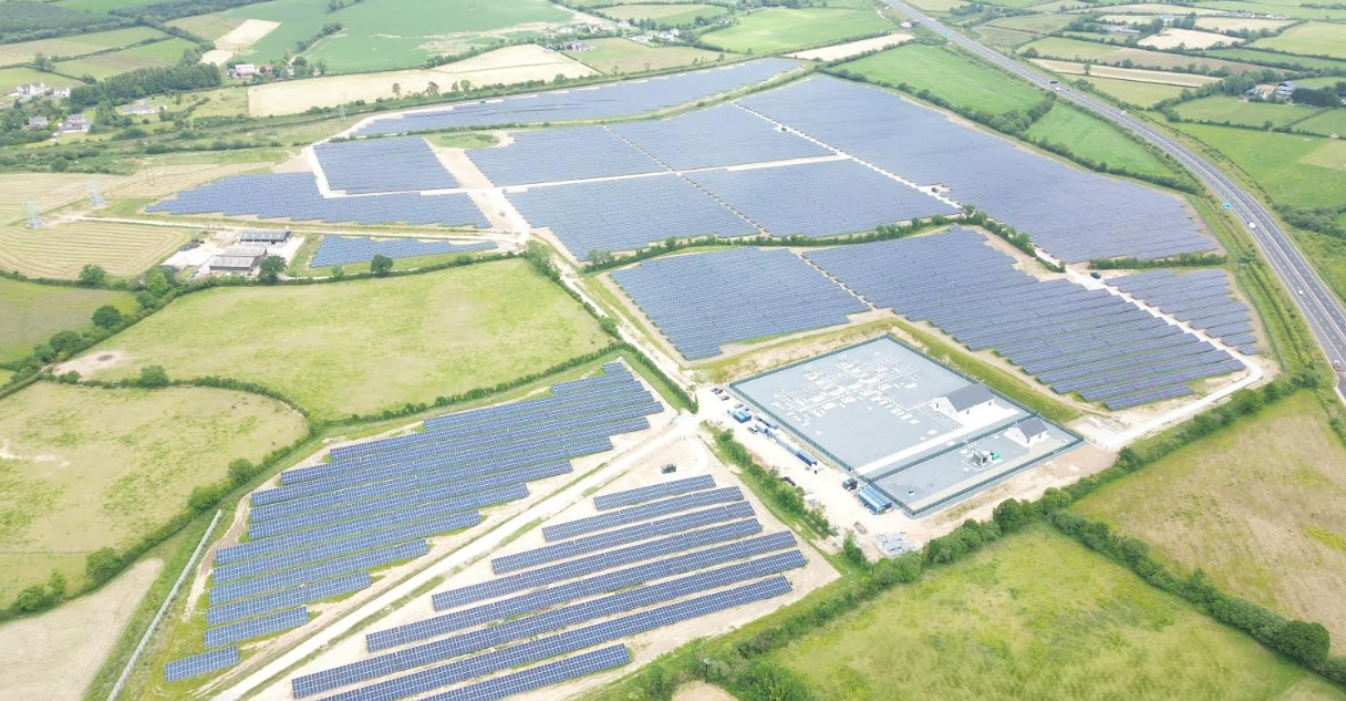
Minister of State for Trade Promotion, Digital and Company Regulation, Dara Calleary TD, joined Statkraft and Microsoft to turn the sod on Harlockstown Solar – Statkraft’s latest solar project in Ireland.

The 34MW solar project in Co. Meath, which could power the equivalent of almost 9,000 homes, is one of several renewable energy projects being delivered as part of a Corporate Power Purchase Agreement (CPPA) package with Microsoft which was signed last year. Under the multi-year deals, Statkraft Ireland will supply the technology firm with 366MW of clean energy from six of its wind and solar farms.

The CPPA establishes a Community Benefit Fund that will provide grants of approximately €1.3 million over the lifetime of the project to community-led clean energy and environmental justice initiatives to help create a brighter future, and make a difference in the communities that we operate in.

CPPAs enable corporations to procure renewable electricity directly from a renewable electricity generator and with these CPPAs, Microsoft is helping add additional clean energy capacity to the grid. The Government’s Climate Action Plan includes a target of 15% of electricity demand to be delivered from renewable energy CPPAs by 2030. This equates to approximately 6 terawatt hours of additional electricity generation.

Through its renewable energy contract with Statkraft and its other CPPAs announced in November 2023, Microsoft’s procurement will see the development of more than 900 MW of onshore wind and solar energy projects. The company is seeking to make a material contribution to accelerating the country’s journey to a net-zero future.

Speaking at the event, Minister of State for Trade Promotion, Digital and Company Regulation, Dara Calleary TD, said: “Our future is both green and digital, and how we manage data will be a crucial to our decarbonisation ambitions. Renewable energy has a really important role to play in our fight to protect the planet, and I want to congratulate Statkraft and Microsoft on this important initiative. This new solar project has capacity to power the equivalent of almost 9,000 homes – Corporate PPAs have a real role to play in supporting Ireland’s renewable energy and climate targets, and I believe can be an important mechanism to support the wider system changes necessary in the electricity sector to deliver lasting benefits to households, businesses, and local communities.”

Kevin O’Donovan, Senior VP for Statkraft, said: “There is a growing understanding among the public of the importance of solar power to meet the country’s energy needs and security of supply. Every single solar panel installed means importing less polluting and costly fossil fuel while at the same time, bolstering Ireland’s future energy security.

“There is no magic formula when it comes to climate action and meeting our 2030 targets. It will require a range of rapidly deployed technologies and solutions all working in harmony to decarbonise our electricity supply. For that reason, we are delighted today to be announcing the beginning of construction on Harlockstown Solar.”

Donal O’Sullivan, VP for Development and Offshore with Statkraft Ireland, added: “Between now and the end of the decade, we are going to have to use all the tools at our disposal to make the energy transition happen. Projects like Harlockstown contribute to Ireland’s ambition of delivering 15% of new renewable volumes via CPPA while showcasing Statkraft’s experience of sourcing alternative routes to market for its renewable energy projects.”

Eoin Doherty, Microsoft’s Cloud Operations + Innovation EMEA Regional Leader, said: “At Microsoft, we’re committed to becoming carbon negative by 2030. That’s why we’re proud to be partnering with Statkraft to bring additional renewable energy on stream and help the Irish Government to achieve its climate action ambitions. The development of the solar energy project at Harlockstown is one of many projects that are coming on stream as a result of 900MWs of renewable energy contracts that we announced last year, which is a significant contribution to Ireland’s renewable energy corporate power purchase agreement target. As the country works towards achieving a more sustainable future, Microsoft will continue to partner with the energy sector and Government to accelerate the growth of renewables on the energy grid.”

Dell Technologies helps UCC increase energy efficiency & reduce emissions on campus

Dell Technologies (NYSE:DELL) and University College Cork (UCC) have joined forces to harness the power of technology to bolster UCC’s position as a green university.

UCC is the world’s first Green Flag Campus and has a strong commitment to sustainable practices. Its recent five-year strategic plan puts people and the future of the planet at its centre with UCC committed to becoming a carbon neutral campus by 2040.

However, outdated IT infrastructure and minimal data storage capacity hindered the university’s ability to not only reduce its impact on the environment but also to provide a high-quality and flexible digital experience for its 25,000 students and 3,500 staff. This became clear at the onset of the pandemic and the pivot to hybrid ways of learning and teaching.

UCC turned to Dell to help put its technology at the heart of its student experience and ensure that IT transformation contributed towards its overall sustainability goals on campus. With the help of the Dell team locally and using Dell PowerEdge servers and modern storage and back-up solutions, UCC has been able to retire legacy systems and look at new ways in which technology can reduce carbon emissions and energy usage on campus.

Crucially, the new servers help UCC reduce energy consumption and Co2 emissions. Updating to Dell PowerEdge servers has reduced annual greenhouse gas emissions by nearly 70% year-on-year while reducing power usage by over 50% and requiring close to 40% less cooling.

Commenting on the collaboration, Gerard Culley, Director of Information Technology at UCC, said: “When we looked for a partner for our infrastructure needs, we wanted to work with an organisation that shared our values and strategic goals. UCC is committed to working towards a more sustainable future and with that comes an obligation to partner with an organisation that shares this commitment. That’s why we chose to partner with Dell Technologies.

 “With the help of Dell’s PowerEdge servers, we were able to put in place modern, resilient storage and compute solutions and achieve incredible results when it came to our energy and carbon footprints. With Dell’s solutions, we’ve completely modernised our IT infrastructure so that we can deliver more flexible, sustainable, secure and resilient digital services and solutions to our staff and students for years to come.”

Jason Ward, Vice President & Managing Director, Dell Technologies Ireland, said: “With remote and hybrid learning now the reality for most third level institutions, UCC reached out to us to deploy a modern digital infrastructure and help UCC staff and students avail of a central and functional IT system. At Dell Technologies, we are determined to meet the needs of today without compromising the ability to meet the needs of future generations. Since 2013, we have reduced the energy intensity in Dell PowerEdge servers powered by Intel processors by 83%[1]. By harnessing the power of modern storage solutions, we are able to support the university as it continues to thrive as an innovative, competitive and sustainable research-led hub.”

Why You Should Always Compare Energy Providers Before Signing a Contract

In the modern world, we have more options than ever before when it comes to energy providers. A comprehensive list can be accessed at https://businessenergycomparison.com/. As such, it is important to carefully consider your options before signing a contract to ensure that you are making the best decision for your home or business. Comparing energy providers can be a daunting task, but it is one that is essential if you want to make sure you are getting the most out of your energy contract.

In this blog post, we will discuss why it is important to compare energy providers before signing a contract and what to look for when making your decision. We will also provide tips and information on how to make the process of comparison easier and more efficient. By carefully considering the different energy providers and the various terms of their contracts, you can find the best option for your needs and save yourself money in the long run.


1. Shopping around for energy providers can save you money

Shopping around for energy providers can save you a considerable amount of money. With ever-increasing energy costs, it is essential to compare the different energy providers and make sure that you are getting the best possible deal.A great way to do this is to compare the different energy providers’ rates or the ppl electric rates over the course of a year. This will give you a good idea of which company is providing the best value for your money. Additionally, you can also compare things such as customer service, efficiency, and customer reviews in order to make sure that you are signing up with the best energy provider.


2. Different energy providers offer different services and incentives

It pays to compare energy providers before signing a contract, as different providers offer different services and incentives. For example, some may offer a discounted rate for signing up, while others may offer a loyalty reward system or a cashback bonus. Additionally, some providers may offer special services such as emergency callouts or green energy options. Comparing different providers and their offerings can help you find the best deal for your needs.


3. Selecting a provider that matches your energy needs can save you money in the long run

When selecting an energy provider, it is important to understand your own energy needs. Taking the time to compare the different providers and their offerings can save you money in the long run. Having an idea of the type of energy you need, the amount of energy you use and the amount of money you are willing to spend on energy services can help you narrow down your options and ensure that you make an informed decision. It is also important to consider other factors such as customer service, billing and plan flexibility. Comparing energy providers before signing a contract can help you find the best provider for your needs, enabling you to save money in the long run.


4. Comparing energy providers can help you find the best rate

It is important to compare different energy providers if you are looking for the best rate for your energy usage. By comparing the rates of different providers, you can find the most cost-effective option for your energy needs. In addition to comparing rates, you should also consider the types of energy sources and the environmental policies of each provider. By taking into account these factors, you can ensure that you are selecting the best energy provider for your needs.


5. Taking advantage of fixed-rate contracts can provide stability

When it comes to energy providers, it is always important to shop around and compare different plans before signing a contract. One important factor to consider is whether to sign up for a fixed-rate contract. Fixed-rate contracts can provide stability in energy prices because they lock in the rate for a certain period of time, usually between one and five years. This means that you will be able to budget your energy costs without worrying about rate increases during the contract period. However, it is important to note that these contracts are not always the cheapest option, so it is worth taking some time to compare plans to make sure you are getting the best deal.


6. Some providers offer special discounts for certain life events

It’s always a good idea to explore different energy providers before you sign a contract, as some providers offer special discounts for certain life events. These include discounts for transitioning to a new home, getting married or starting a family, or being an active duty military member or veteran. By comparing different providers, you can potentially save hundreds of dollars over the life of your contract.


7. Taking advantage of rewards programs can lead to lower energy bills

An important factor to consider when comparing energy providers is the rewards programs they offer. Taking advantage of these rewards programs can lead to lower energy bills and access to exclusive discounts and offers. For example, some providers offer discounts for paying bills on time, or for signing up for energy-saving programs. Additionally, many providers offer loyalty rewards programs that allow customers to accumulate points for every dollar spent, which can be used for discounts on future energy bills.


8. Comparing providers can help you find the best customer service

When considering a new energy provider, it is important to remember to compare customer service options. Doing so will help you choose the provider that offers the best customer service for your needs. Many providers offer different levels of customer service, from basic telephone support to a full-service customer service center. Additionally, some providers may even allow you to choose the type of customer service, such as online chat or email support. Comparing customer service options can help you select the provider who best meets your needs.


9. Enrolling in renewable energy plans can be more cost-effective

When comparing energy providers, it’s beneficial to consider renewable energy plans, as they can be more cost-effective than traditional ones. Renewable energy plans offer a cost-effective way to reduce your electricity bills, as they use renewable sources of energy that can be replenished, such as wind and solar power. Furthermore, some renewable energy plans may offer incentives or credits on your electricity bills, which can also help reduce costs. It is important to review all the available plans to determine which one is best suited to your needs and budget.


10. Looking into green energy options can help you reduce your carbon footprint

When comparing energy providers, it is important to consider the green energy options that are available. Green energy sources such as solar, wind and geothermal can be used to generate electricity, and using this type of energy not only helps reduce your carbon footprint, but also helps to reduce strain on the environment and can even save you money in the long run. By opting for green energy options, you can help support the move towards a more sustainable future for generations to come.

In conclusion, it is always important to compare energy providers to ensure that you get the best deal. By researching the different providers and understanding the different energy plans they offer, you can save money and prevent yourself from being stuck in an expensive contract. Taking the time to compare energy providers can also help you get access to better features and services, so it’s well worth doing your research.


Ørsted become first renewable energy sponsor of STEM showcase for young women

Leading global renewable energy company Ørsted, has become the first renewable energy company to sponsor the I Wish STEM showcase event which promotes careers in STEM to young women. The ninth annual I Wish STEM Showcase attracted 3,000 female students to the event in Dublin, with more than 15,000 attending virtually.

During the Girls in STEM 10 Fast Facts panel discussion, Olivia Roche, Project Developer at Ørsted spoke about her experience as a woman in STEM and the diversity of her role at Ørsted. She shared insights with those attending on the development of wind and solar farms in Ireland and globally, as well as the processes behind securing land, engaging with communities, and working with planners and environmental experts to assess projects’ possible impacts. Ørsted has to date invested over €500m in Irish renewables, managing 10% of the total wind assets across the island of Ireland which is equivalent to powering over 250,000 homes. Their Irish headquarters are based in Cork City, where it employs 90 people.