45% of Irish commuters stressed by their daily journey

KINTO Join – a provider of sustainable mobility applications – today reveals the findings of its survey which found that 45% of commuters in Ireland find their journey to work or university stressful.

The research – conducted by Censuswide and involving 1,000 people who commute to work or university in the Republic of Ireland – found that more than half (51%) have considered changing their commute method. However, 48% have never tried a different mode of transport for their commute.

Traffic delays and congestion were cited by 44% of commuters as one of their biggest frustrations. The other leading frustrations were fuel costs (30%), the time lost having to commute (30%), the weather (29%), and delays with services (15%).

Driving by car is the most popular primary mode of transport (51%) among commuters. However, only 16% prefer to travel this way. If available, the bus was the most preferred means of commuting (25%), followed by the train (24%) and walking (23%). One in ten (10%) respondents said they would prefer a company or university shuttle.

In urban areas, driving by car and getting the bus were tied for the top spot as the most popular primary mode of transport (at 32% respectively). In terms of generations, almost twice as many Generation X commuters drive by car (63%) than Generation Z commuters (32%).

Of those who commute by car, 91% always or mostly do so alone. Their top reasons for travelling to work or university by car are that it is more time-efficient (48%), it is the only option (43%), and inadequate public transport accessibility (34%).

The study found that the average daily commute time is around 1 hour and 10 minutes, whilst the average daily cost is €10. Train commuters have the most expensive journey to work or university (€13.14). At the other end of the scale, (excluding walkers) eBike commuters have the least expensive commute (€4.71).

As for the average distance of a one-way commute, this is just shy of 17km, with those in Roscommon (30.56km), Wicklow (24.97km), and Westmeath (23.76km) travelling furthest. Meanwhile, respondents in Longford (6.13km), Waterford (9.58km), and Donegal (11km) have the shortest distances to travel.

Patrizia Niehaus, CEO, KINTO Join Ltd, said: “It’s ironic that while so many commuters in Ireland drive alone out of necessity, a significant number would actually prefer not to. They’re frustrated – by traffic, rising fuel costs, and the stress of it all – but don’t feel they have another choice. Of course, large-scale infrastructure upgrades are vital, but they take time. In the meantime, the congestion worsens, and emissions reduction targets slip further out of reach. That’s why action at the micro-level is so critical.

“A large share of short-distance travel happens for work and education. Employers and institutions are uniquely positioned to support more sustainable commuting through initiatives like shared transport schemes, carpooling platforms, or incentives for walking and cycling. When organisations take the lead, they not only support their own sustainability goals, but also drive behavioural change that benefits entire communities — cutting emissions, easing traffic, and giving people what they clearly want: the freedom not to drive alone.”

Golden Ride launches innovative eBike and eScooter maintenance and servicing program

Golden Ride, the high-tech electric micro-mobility brand from globally renowned sustainable transportation pioneer Terravision Electric, has enhanced its operations in the UK following the launch of an innovative and wide-ranging maintenance and servicing program designed specifically for eBikes and eScooters.

The highly comprehensive package has been created to offer customers total ‘peace-of-mind’ throughout their eBike and eScooter ownership journey, eliminating concerns they might have on the safety and operational lifetime functionality of their eMobility products, encompassing all mechanical, electrical, hardware and software aspects.

Such a complete aftersales approach from Golden Ride serves to maintain the highest of safety levels of eBikes and eScooters while further enhancing reliability, performance and lifespan. The program is also available to customers with non-electric bikes of any brand as part of Golden Ride’s duty of care outlook for the wider micro-mobility community.

“The formation of Golden Ride was primarily driven by the need to create truly sustainable and affordable micro-mobility solutions that will help transform our urban areas,” says Niccolò Petroni, commercial director at Golden Ride. “But unlike so many other brands in this congested space, offering the market a high-tech but affordable product range is just one aspect to the Golden Ride eMobility vision, which is why we invested and opened a flagship store in London and today we’re delighted to launch our comprehensive maintenance and servicing eMobility program.

“We strongly feel that waving goodbye to the customer at a point of sale – be that for an eBike or eScooter; online or in the Golden Ride flagship store – just isn’t good enough. As a community-focused company we want to be with the customer throughout their ownership journey, making sure their chosen eMobility products remain at optimum operating levels across all key attributes – safety, reliability, functionality and performance. Our all-encompassing maintenance and servicing program guarantees total ‘peace-of-mind’ for the customer.”

Golden Ride implements total customer care

The new maintenance and servicing program launched by Golden Ride gives the burgeoning UK eMobility market access to a complete and high-tech aftersales service for eBikes and eScooters that is also dedicated to total customer care.

Overseen by leading eMobility technicians based at Golden Ride’s flagship store in London, the maintenance and servicing program has been designed to operate on a highly efficient yet detail-driven basis, offering customers access to high-level electric and mechanical eMobility engineering expertise.

A state-of-the-art electromechanical workshop – currently under development within Golden Ride’s flagship store – will soon become the brand’s hub for its all-encompassing aftersales, maintenance, servicing and customer care initiatives. When completed, the workshop will be equipped with advanced technologies and industry-leading tools.

The service, which has been designed to be rapid, launches with customers not needing to make any prior appointments – the Golden Ride technician team are on-hand each day during the flagship store’s regular business hours. Alternatively, customers can also message the technician team via WhatsApp on 07549 390 561.

A detailed diagnostic examination is performed on the customer’s eMobility product – the cost of which is just £25.00; this initial fee is then deducted from the price of the maintenance and service operations should the customer at that stage wish to proceed.

To maintain the highest safety standards of eBikes and eScooters, it’s advised that a safety inspection is undertaken between major mechanical services. As part of Golden Ride’s new aftersales customer care package, the brand’s complete safety inspection service sees the customer’s eBike or eScooter comprehensively assessed for state of health, functionality and performance.

Following the evaluation, the eBike or eScooter is then restored and advanced to optimal working conditions. This tailored customer care initiative comprises a full safety check of the frame, wheels and brakes – including a thorough inspection for damage and movement; frames and forks analysed for imperfections; wheels and tyres examined for wear; wheels and rims assessed for condition of use; chain tested and lubricated; and the gears and brakes optimally tuned.

‘Out with the old, in with the electric’ exchange

Golden Ride’s compelling ‘Out with the old, in with the electric’ offer has been extended in the lead-up to the busy Christmas period.

The exchange presents customers with the opportunity to take their old non-electric bikes into Golden Ride’s flagship store in London for an accurate pricing evaluation undertaken by the company’s expert eMobility tech team. The valuation of the old non-electric bike is then used as credit and exchanged for a new Golden Ride eBike or eScooter.

Philippe Grousset, director of operations for the Golden Ride flagship store in London, added: “Golden Ride’s journey into the UK market is only 12 months old but in that time we’ve made incredible progress: we’ve invested in a physical flagship store in London; we’ve launched a range of eBikes including our outstanding Classic Touring Bike; and we’ve recently introduced the A6 Pro, an eScooter that is already proving to be very popular. Today we’re adding the next element to the brand’s eMobility vision: comprehensive maintenance and servicing packages tailored for the customer.

“And by extending our ‘Out with the old, in with the electric’ exchange service, Golden Ride is continuing to support the growing eMobility community, helping as many people as possible to embrace sustainable micro-mobility solutions that will help revolutionize and revitalize our urban landscape.”

Driving less than 15,000 km a year? New report says you could save money by ditching your private car

Car owners who are driving less than 15,000 km a year could be losing out on substantial cost savings, according to a new report from Oliver Wyman, a global leader in management consulting and Bolt, Europe’s largest shared mobility company.

The report has found that while there has been a reduction of 1,700 km per year in the distance travelled by personal cars across Europe over the last decade, the number of vehicles registered per household has stayed the same, suggesting that cars are often sitting idle at home. In Ireland, the number of privately-owned vehicles on the roads rose by 215% between 1985 and 2020. Previous research from Bolt revealed that over one quarter (25.67%) of Irish drivers are likely to give up their car in the next five years if viable alternatives are made available, whilst over half (54.55%) cited the overall expense of running a car as a potential reason for giving up their car.

For those car owners driving less than 15,000 km a year, new data shows other modes of transport like ride-hailing, car subscriptions, scooter and e-bike rentals and car-sharing can be more affordable than owning a car.

The report looked at the total cost of ownership (TCO) in price per km for premium, SUV and compact cars, which decrease incrementally the more a car is driven, and compared them to the price per km of different types of shared mobility services, which carry no additional costs to the user, past the initial price.

In Ireland, though petrol and diesel prices dipped by two cents and one cent in October, the price of crude oil remains elevated at approximately $90 per barrel, an increase on the $70 barrels were valued at during the summer.

Car-sharing emerged particularly favourably as a cost effective transport mode, being cheaper than all three car types at an annual mileage of up to 15,000 km. Shared scooters and e-bike services were cheaper than a compact car at an annual mileage of 5,000 km, while even the most expensive shared mobility service, ride-hailing, proved cheaper than a premium car for an annual mileage up to 12,000 km. The analysis was conducted in Germany but applicable to all major European markets.

For those who cannot afford a car, the study also points out how shared mobility is a viable alternative, removing the key financial barrier of purchasing a car, scooter or eBike and connecting into public transport systems to provide better commuting access.

Fortunately for Irish citizens, the government is taking warmly received steps to ensure the country is well-positioned to transition away from a reliance on the private car. The recent Budget included an investment of €360m in cycling and walking infrastructure, as well as confirmation that the 20% fare reduction for all public transport (implemented last year as a temporary cost of living measure) will continue.

Notably, the government has also been taking great strides to enable an alternative transport mode which can ensure the cycling infrastructure is well used: the shared electric scooter. Legislation is expected to be finalised in the next couple of months. Given one third (33.4%) of private car journeys in Dublin are less than two kilometres according to the CSO, and over one fifth (20.9%) are 2 to 4 kilometres in length, the company with Irish headquarters in Dublin expect the two-wheelers to be a hit in towns and cities of varying sizes across the country.

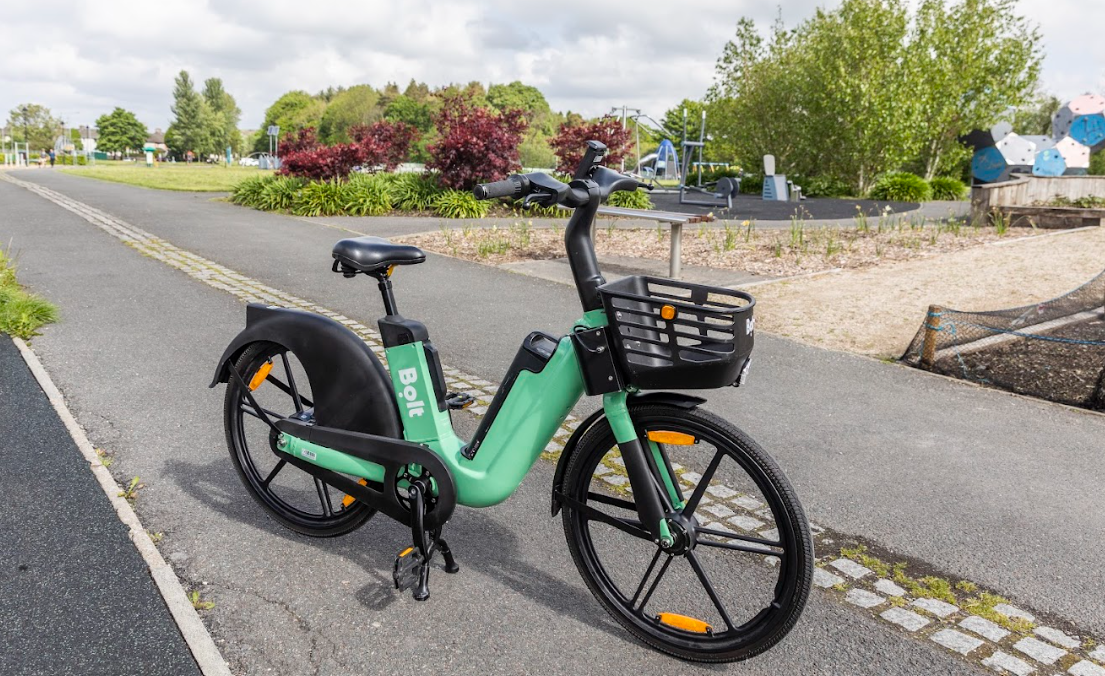
Indeed, Bolt already offers shared electric bikes in Sligo, Kilkenny, Wexford, Bray, Dún Laoghaire-Rathdown, and Carlow. The firm is the largest scooter provider in Europe with scooters and e-bikes in more than 250 cities across 25 countries.

Head of Public Policy for Bolt Ireland, Aisling Dunne, said: “This report comes at a time that has real potential to be a watershed moment for the environment and transport in Ireland. It exposes the poor value for money private cars represent for urban dwellers across the country, just when cities and citizens are understandably assessing how far their euro is going.

“Thankfully a viable alternative is well on its way in the form of the shared electric scooter. We strongly encourage the NTA to continue this positive momentum by evaluating if the supply of taxis – especially in hospitality hotspots like Dublin – is proportionate to the amount of demand from passengers. Many of us will have first-hand experience of struggling to get a taxi.”

Dr Andreas Nienhaus, Head of the Oliver Wyman Mobility Forum, who led the study, said: “The mobility sector has changed dramatically in recent years and in addition to cars there is now a range of different modes of transport available to people. Cars will still be a necessity for some depending on where they live or their job, but what this report shows is that switching away from private car ownership can have significant benefits for many, particularly those living in cities.”

In addition to saving people money, the new report also found that greater usage of services like scooters and e-bikes can have environmental benefits for cities and the people living in them.

An analysis of how people used Bolt scooters in Europe found that around 10% of e-scooter rides directly replaced car journeys. As a result, e-scooters on their own contributed a reduction of up to 120 million car kilometres travelled, helping to alleviate traffic congestion and air pollution in cities and to reduce car-related emissions by an estimated 23,000 tons CO2e across Europe. The study also highlights the potential for aligned multimodal approaches between operators and Cities to cut personal car usage by 20% in Cities like Berlin.

Bolt to ramp up regional ebike schemes and trial rider safety score initiative

Bolt, the European mobility champion, is adding additional electric bikes to each of its regional schemes in anticipation of demand this Spring and Summer. Sligo and Kilkenny will benefit from 30 additional electric bikes each, bringing the total in each town to 100 and 80 respectively.

Bolt Operations Manager for Rentals in Ireland, John Buckley, said, “We have been thrilled by the success of our shared electric bike schemes in Sligo and Kilkenny. Our team at Bolt assesses a location, we agree on a max number of bikes with its Local Authority, and we gradually ramp up supply based on how riders, pedestrians, and other road users become accustomed to the scheme. This allows for controlled and responsible operations. With the additional parking bays in place, Sligo and Kilkenny are ready for the final tranche of electric bikes. Since launching in the summer of 2022, over 120,000 KM has been travelled on our Electric Bikes across our locations and, with additional schemes to come in 2023, we hope to reach 300,000 KM by the end of the year.”

Bolt surveyed electric bike users in Sligo and Kilkenny that opted for this sustainable mode of transport over cars and found that the shared scheme has saved 16,913 km of car trips in Ireland to date, approximately 1,765 kg of CO2.

Each town has successfully utilised over 40 designated parking bays thanks to town councils and local businesses that recognised the demand for infrastructure. To ensure the continued growth of the schemes, 10 more parking bays have been earmarked for each town.

Sligo Councillor Marie Casserly said, “This initiative is so positive for Sligo town. The feedback has been universally positive from locals and visitors alike. To see these bikes being used so often is heartening. It also shows that Sligo County Council take our Active Travel and Climate Action plan responsibilities seriously and we are all playing our part.

There is a positive progressive image with the inclusion of the Bolt electric bike scheme.”

Gerard Moore, Director and General Manager of Sligo Park Hotel said, “We are thrilled with the news that Bolt bicycles are increasing the number of bicycles in Sligo up to its full complement of 100. The bicycles have been used and are being used by our guests and employees and the feedback has been fantastic. We’re delighted to be associated with Bolt and Sligo County Council on this initiative.”

Bolt has previously earmarked up to €5m in its bid to roll out electric bike operations across Irish cities and towns with up to 2000 bikes available to deploy immediately as required. The European Mobility Champion recently announced upcoming launches of shared electric bike schemes in Bray and Wexford.

The Government recently committed to promoting e-mobility solutions in cities and towns and will be relying on such schemes to provide essential alternatives for commuters as Demand Management solutions are considered in the coming year.

FREE NOW Europe is the is the first private mobility platform to integrate public transport tickets into its app

FREE NOW, Europe’s  Mobility Super App, announces at the Web Summit 2022 a major milestone: users can now book public transport services through its app as well as taxis, private cars, eScooters, eBikes, eMopeds, and carsharing. As a result, FREE NOW offers all modes of transport from a single source, strengthening its position as Europe’s leading mobility platform with the largest amount of travel options in one app.

The first cooperation enabling access to public transport via the FREE NOW app was signed with Rheinbahn in Germany. FREE NOW users will be able to book tickets for buses, trams, and underground trains directly in the FREE NOW app for all tariff zones of the Rhine-Ruhr Public Transport Association (VRR). The integration completes FREE NOW’s offering of on-demand mobility in one of Germany’s most important metropolitan regions. In fact, with almost 1,100 lines, around 7.8 million inhabitants, and an area of around 7,300 square kilometers, the cooperation with FREE NOW provides access to Europe’s biggest transport network and the largest urban transport area. That includes major German cities like Düsseldorf, Dortmund, Essen, Bochum, Wuppertal, and Duisburg.

To begin with, users will be able to buy single tickets, day passes, and 48-hour passes. The technical integration has already begun. The ticket sales are possible thanks to a partnership with the Dutch aggregator Tranzer.

Further partnerships with other transport companies in Germany and across Europe are planned for 2023.

FREE NOW: Having expanded since 2020, this public transport integration completes urban mobility offering

FREE NOW has continuously expanded its own mobility offering for its users since 2020, in partnership with leading mobility players in Germany and Europe. Through this, the FREE NOW app brings together more than 400,000 vehicles in Europe. This consists of  ride-hailing services like taxis and private cars, as well as carsharing, eScooters, eMopeds, and eBikes.

Thomas Zimmermann, CEO at FREE NOW, comments on the new partnership: “We’re pleased that we’re now the first private mobility platform to be able to offer our users public transport tickets in the biggest population and the largest urban transport area in Europe. This is an important next stage for us and, for the first time, we’re enabling end-to-end ticketing for different modes of transport in our app. Linking different mobility offers is crucial to succeed in transforming transportation in Europe. FREE NOW actively supports this as a partner of public transport. Our goal is to make urban mobility in Europe more sustainable, intelligent, and interconnected.”

Commenting on the announcement Niall Carson, General Manager for FREE NOW Ireland said, “The integration of public transport into the FREE NOW app in Germany is a key milestone for the business, and reflective of our ambitions to make multi-modal approaches to transport more accessible across the markets in which we operate. Our goal in Ireland is to mirror the multi-modal progress of our European counterparts like Germany moving forward – building on our first integration of micro-mobility in the Irish market this year with our TIER eBike partnership in Dublin. We intend to continue expanding our offering and transport solutions with eScooters on the horizon along with other mobility options, helping to support a shift in our national approach to daily transport – from car-centric to multi-modal, flexible and sustainable.

The new travel option is primarily aimed at remote workers who only travel to their place of work occasionally, as well as business travellers or tourists. For example, almost 30% of all FREE NOW passengers use the app in cities they travel to occasionally. As a platform that’s active across Europe, the company can  contribute to strengthening both public transport and the environmental alliance in the long term.

FREE NOW users do not need to create a new account to book and pay for public transport. They can simply use their existing customer account.

Bolt appoint John Buckley to Operations Manager for Rentals in Ireland

Bolt, the European mobility champion, continues to strengthen its Irish team with the appointment of John Buckley as Operations Manager for Rentals in Ireland. John joins Bolt following the launch of the firm’s first Irish electric bike rollout in Sligo, with a number of other cities and towns under consideration

Buckley joins from Bleeper, where he was responsible for the management and supervision of all aspects of daily operations for public bike share schemes throughout the administrative areas of Dublin City Council, Fingal County Council, and Dun Laoghaire-Rathdown County Council, whilst ensuring the service met the strict requirements as set out by the Local Authorities.

He joins Bolt as it prepares to invest €5m in expanding its e-bike and scooter operations in Ireland as part of a bid to build a multimodal platform that can provide a sustainable alternative to private car ownership. Bolt is the largest micromobility operator across continental Europe, with services in more than 200 cities and 20 European countries.

Announcing John Buckley’s appointment, Tomas Veloso  Director of Rentals for Bolt said, “As we aim to bring a multi-modal mobility app to cities across Ireland, John will be integral to guiding the strategy behind our electric bike and scooter roll outs, ensuring Bolt thoughtfully and safely integrates with the infrastructure, transport system and wellbeing of the public.”

On joining the team, John Buckley said; “Bolt is at an exciting point in its development in Ireland, with really ambitious plans for growth. I’m eager to unlock the positive benefits micromobility options can bring to the country, whilst staying acutely aware of any concerns held by Irish cities and towns about the introduction of new transport modes.”

John brings a wealth of experience in sustainable transport options and reaffirms Bolt’s long term commitment to the Irish market. He will be responsible for the management of Bolt’s first Irish e-bike rental service in Sligo and the rollout of further e-bike and scooter services throughout Ireland in the coming months.

More About Bolt’s Irish Plans

Bolt offers a range of mobility services including ride-hailing, shared cars, e-bikes, scooters, and food and grocery delivery to more than 75 million customers in over 45 countries across Europe and Africa.

Bolt currently offers ride hailing services in Dublin and Cork, and an e-bike rental service in Sligo. Ride hailing operations are headed by James Bowpitt, who manages a specialist team in Dublin.

Bolt recently announced that it will  commit up to €5m in its bid to roll out e-bike operations across Irish cities and towns. Up to 2000 bikes are available immediately following Bolt’s recent fundraise and investment in micromobility with founder Markus Villig recently committing €150m to expand its light vehicle fleet across Europe.

Launching a 100 e-bike rental service in Sligo in June, Bolt has confirmed it is in talks with several other councils keen to accelerate its active travel services in line with the National Development Plan and the Climate Action Plan. Should all current tender applications be successful, Bolt envisages an additional 50 employees, as well as a significant expansion of its head office facilities in Dublin.

Bolt is keen to add e-scooters to its operations when legislation is in place. Bikes and electric scooters cover a fuller range of travel options across most European cities and could help significantly move Irish transport users away from private car use.

The Bolt app is available on iOS and Android.

Bolt to launch pilot e-bike service in Sligo

Bolt, the largest micromobility operator in Europe, will launch its first Irish electric bike service in Sligo at the beginning of June. Representatives discussed the 100 bike pilot scheme for the town at today’s ‘Let’s Play Sligo’ event to mark National Bike Week.

Sligo has been one of the leading regional proponents of sustainable transport options and sees potential for commuting, recreation and tourism alike. The pilot will kick off in the coming weeks and will trial a range of parking options to both provide flexibility and ease of use for cyclists and ensure the scheme is mindful of pedestrians and other road users. This includes an investment by Bolt in lasting bike parking infrastructure for Sligo.

Bolt is a leading European mobility champion operating a range of services including e-bikes, e-scooters, ride-hailing and car clubs for over 100m people across 170 cities. The company currently operates ride-hailing taxi services in Dublin and Cork and is seeking to bring electric bikes and in time, electric scooters to cities and towns across Ireland. The launch in Sligo comes as part of a wider push for Bolt to deploy 16,000 e-bikes across Europe in 2022, following a recent fundraise.

Head of Public Policy for Ireland at Bolt, Aisling Dunne, said, “Sligo is an ideal town in which to launch Bolt’s e-bikes in Ireland; with the growing university, recently increased investment in cycling infrastructure and real public support for making sustainable choices. We’re excited to support a forward-thinking council determined to provide alternatives to private car use. 

We know from Bolt research that only 1 in 10 Irish car owners currently see themselves being able to give up their private vehicle. According to Sligo’s Vision 2030 survey, cycling constituted only 1% of transport for those attending education or work and only 2% in Sligo Town. We need to do more to help people make that change for the many short and accessible journeys made every day. Alternative options like electric bikes and shared micromobility services such as electric scooters are a crucial part of forming an ecosystem, which will change habits, improve air quality and translate into less congestion.”

The Cathaoirleach of Sligo County Council Councillor, Paul Taylor, said, “This is an excellent initiative which will enable us to promote the many benefits of sustainable travel to the people of County Sligo, and I would like to commend the Project Team for bringing it to fruition.”

Sligo County Council Chief Executive, Martin Lydon, said, “I expect the shared electric bike scheme to be hugely popular, and will provide the impetus for this Council to explore and introduce further sustainable travel initiatives in the future.”

How to rent a Bolt e-bike

To rent a Bolt e-bike, users need the Bolt app, available on app stores, and a payment card tied to an account.

Follow these steps to start riding a Bolt e-bike:


  • Open the app and tap on the e-bike icon to locate your closest bike;

  • Scan the QR code on the bike to unlock it;

  • Carefully read through the safety tips;

  • When you’re ready to roll, push off and go!

Bolt is the most affordable provider of shared electric bikes, thanks to having low rates and  no unlock fee. The per-minute rental price is the lowest on the market at just 0.15 EUR/minute during the launch campaign.

Cowboy helps riders stay safe on the road with Crash Detection, an e-bike industry first. #ebike #cycling

Cowboy, the Belgium start-up with a vision to transform urban mobility, is using technology to reshape bike safety by introducing the industry’s first software designed to detect crashes and collisions – Crash Detection. Cowboy is putting rider safety at the very core of their mission to transform urban mobility and cities for the better with the new feature helping to protect over one million kilometers ridden by Cowboy users all over Europe every month.

Currently available in beta for a thousand users, the industry-first feature will be rolled out to all Cowboy 2 and Cowboy 3 riders by the end of September at no charge.


Using highly sensitive built-in sensors combined with GPS signal tracking, the bike communicates with the Cowboy app to detect a fall. If an accident occurs and the rider doesn’t confirm they’re fine within 60 seconds, Cowboy instantly alerts the rider’s emergency contacts (up to 2) to check in and offer help, while sharing the real-time rider position so they can be quickly located.


To provide riders with complete peace of mind, the Cowboy bike is also equipped with a SIM card that is completely independent from the phone and will work in every scenario, e.g. if the phone is damaged in a crash. This allows Cowboy to notify the emergency contact(s) without having to rely on the user’s phone.

Safety. At the core of Cowboy’s mission.

The Crash Detection feature was created as a result of a first-hand experience. Last year, Cowboy’s co-founder Tanguy Goretti had an accident with his bike. “The road was icy and visibility was limited”, Tanguy says. “I crashed after the first turn and glided for at least five meters. Luckily, there were people nearby to make sure I was okay and to help me and my bike off the street.” Thankfully, Tanguy’s accident only resulted in a few bruises and scratches, for him and his bike.


But walking away safely and relatively unharmed from a bike accident is not the case for everyone. “In Europe, most serious accidents occur just outside urban areas. In that scenario, you don’t always have someone to help and you might be left for a long time awaiting assistance. That’s how the idea for Crash Detection was born”, Tanguy who is responsible for the software development at the Brussels-based start-up further elaborates.


When done right, technology can have a huge impact on people’s lives and the safety of communities. Crash detection is Cowboy’s latest addition to an already comprehensive list of safety-first related features and innovations now available on the recently launched Cowboy 3 as well as previous versions of the bike:


  • Flashing brake light. The rear light flashes when you slow your speed so you’re more visible to the traffic behind you.

  • Puncture-resistant tires. All-rounder tires handle the load and the road.

  • Integrated front and rear lights. Be seen by others on the road, ever aware of your surroundings.

  • Hydraulic disc brakes. Ride fast and in control with hydraulic brakes that provide total stopping power the second you make contact.


Cowboy introduces its third generation electric bike, at the edge of a new frontier in urban mobility. #ebike #Cowboy #Cycling

As people and governments around the world rethink city life and the daily commute, today Belgian start-up Cowboy unveils its third generation electric bike. With a vision to transform urban mobility, the Cowboy 3 is designed for commuters all across Europe to ride fast and free toward the city of the future.

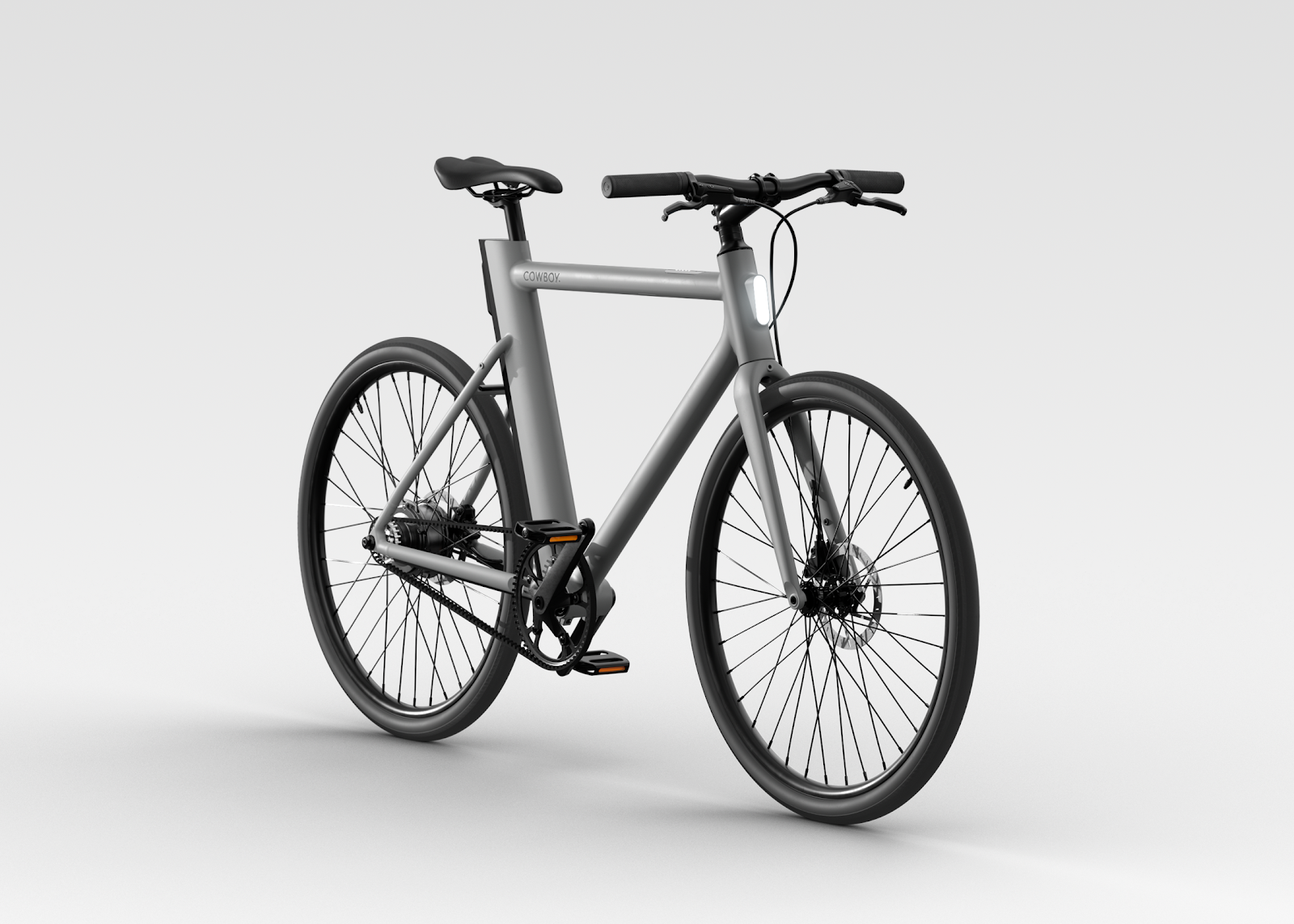
The Cowboy 3 model is engineered with several significant new hardware features including a single-gear automatic transmission to create the smoothest, simplest mode of transport on the streets today. With an obsessive attention to detail, including the removable battery built right into the frame, Cowboy continues to hold a distinct performance advantage in the market. Cowboy 3 uses the latest in design, smart technology, manufacturing excellence and is available for order now via cowboy.com at an RRP of €2.290 / £1.990. The first orders will be delivered at the end of July.

Cowboy also announces a major update to its app with features most desired by its rider community: auto-unlock, theft alert, crash detection, and air quality mapping now available for new and existing customers. These uniquely Cowboy features stack alongside a brand-new service offering: Cowboy Mobile Service. Rolling out in cities throughout the summer, any rider will be able to book a repair online and a local specialist will come to them to fix their bike, free of charge.

Bike Update Highlights

All-new:

Carbon belt transmission

No oily chain and no maintenance required for up to 30,000 kilometres.

Lower gear ratio

Ensures a faster start and easier ride when climbing uphill.

Custom mudguards

Fits the bike like a glove (available at an RRP of 89€ / 79£ inc VAT ).

Puncture-resistant tires

Has a flexible grip and a puncture protection layer in the tires.

Comfortable ride

Increased comfort with an increased tire surface along the rims.

Three colourways

Now available in Absolute Black, Anthracite Grey, Mineral Grey to suit the rider’s preference.

Cowboy 3 users will of course make the most of existing features like the aforementioned removable battery and a lightweight bike weighing only 16.9 kg.

App Update Highlights

The new Cowboy is connected to an app like its predecessors. In addition to the existing Cowboy app features (Find My Bike, Navigation, Live Dashboard, Siri Voice Control), four new features will complete the digital experience and transform the way one rides and navigates through cities:

Auto-unlock

The bike knows its rider. The app automatically senses when you’re nearby. Simply move the bike, and it will unlock so you can keep your phone in your pocket and be ready to ride in an instant.

Theft detection 

Your bike should move with you and only you. The owner gets notified as soon as someone tries to move or attempt to snag their bike.

Crash detection

The road is rough out there. So if a rider is ever in an accident, a sensor detects the fall so we can check in to make sure they’re alright. If the rider doesn’t answer, their emergency contact is alerted right away.

Air quality 

Be aware of the pollution level around you and let the app show you the healthiest way through the city.

Cowboy Mobile Service Highlights

The now introduced Cowboy Mobile Service program is a network of repair specialists who come to our customers wherever and whenever they need a repair—free of charge when under our 2-year warranty. This program, now active in 24 cities and expanding throughout the summer, was  inspired by our Test Ride program—a 67-city network of Cowboy experts who meet a prospective customer with the bike to try it before purchasing.

Adrien Roose, CEO of Cowboy said: “The success of our previous model has been tremendous across all of Europe. It’s been great to create an electric bike that really speaks to the modern commuter as they set to change the way they experience urban movement. We always knew that people would start to look at alternative ways to commute over the next few years, however with cities’ increased investment in bike infrastructure, we are thrilled to offer a perfect blend of convenience, technology and comfort.”

Technical specifications of the Cowboy 3 electric bike: 

Weight 16.9 kg total weight, including battery
Frame material Aluminium
Rider height One M/L frame size, optimized for riders between 170-195 cm tall
Tires Cowboy custom tires, puncture resistant tires with a flexible grip and a puncture protection layer at a width of 42mm
Brakes Tektro hydraulic disc brakes
Front lights Integrated LED front light can be turned on/off via the app
Rear lights Integrated LED rear light intensifies when decelerating and/or braking
Warranty 2 years
Range up to 70 km autonomy
Battery 2.4 kg removable battery. 360 Wh and 10.0 Ah
Mobile app iOS and Android. Secure, digital-key lock/unlock via personal app
Colours Absolute Black, Anthracite Grey, Mineral Grey
Belt Gates carbon belt, gear ratio 63/22 (2.86), offering a 30k km lifetime
Charger 100 W charger with a charging time of 3.5 hours
Motor Custom-designed 30 Nm / 250 W motor, integrated into the rear wheel
Maximum speed 25 km/h (15mph)