
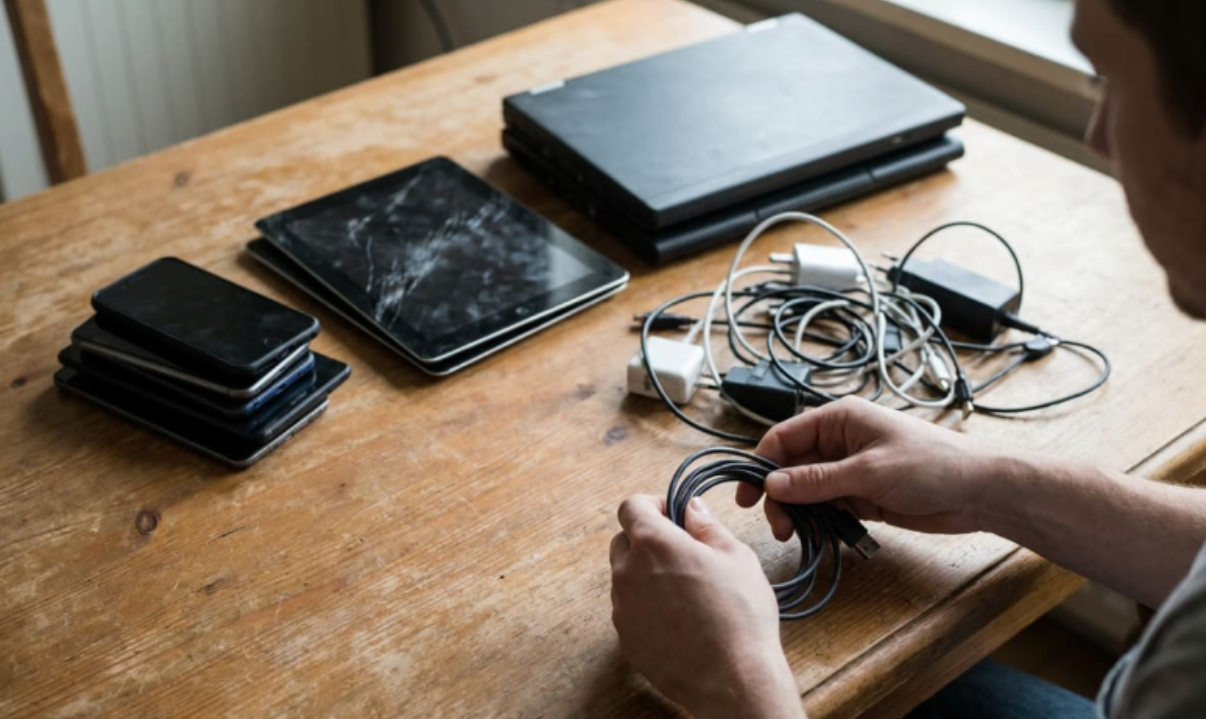
Most homes have one. A drawer, a box under the stairs or a corner of the attic where old tech goes to be forgotten. Three phones back, a tablet with a cracked screen, a laptop that takes ten minutes to boot, and a tangle of chargers for devices nobody can name any more.
It feels harmless until you go to clear it out. Then the questions start. Is my data still on that? Can I just bin it? Is any of it worth something?
Here’s a simple way to work through the pile without losing an afternoon to it.
Sorting the pile first makes every other decision faster.
Start With Your Data, Not the Bin
Before anything leaves the house, deal with what’s stored on it. An old phone or laptop can still hold photos, saved passwords, banking apps and years of messages. Throwing it out as-is is a bit like leaving a filing cabinet on the footpath.
For phones and tablets, back up anything you want to keep, then sign out of your Apple or Google account before you do a factory reset. That last part matters. Signing out removes the activation lock, so whoever gets the device next can actually use it. Pull out the SIM and any memory card while you are at it.
Laptops and desktops need the same treatment. Windows and macOS both have a reset option that wipes the drive and reinstalls the system. If a machine won’t turn on at all, the drive inside can usually be taken out and kept, or physically destroyed if it held anything sensitive.
Sort the Pile Into Three Groups
Once the data is handled, the rest gets much easier. Most old tech falls into one of three groups.
Still worth something. Phones and tablets from the last few years, game consoles, cameras and decent headphones often have resale or trade-in value. Many retailers and phone networks will give you credit against a new device, and second-hand marketplaces are full of people looking for a cheap working phone.
Still useful to someone. An older laptop that’s fine for email and homework can go a long way for a student, a neighbour or a local charity. Give it a quick clean and a fresh reset and it’s ready.
Done for good. Dead batteries, broken screens, cables with frayed ends and anything that hasn’t worked in years. This is the group that needs proper recycling.
Watch Out for Batteries
Lithium batteries are the one thing you really shouldn’t put in household rubbish. If they get crushed in a bin lorry or at a waste facility, they can spark and start fires. Swollen batteries, the ones that make a phone case bulge or a laptop sit unevenly, are the riskiest of all.
Tape over the terminals on loose batteries and keep them somewhere cool until you can drop them off. Most supermarkets and electrical shops have a battery collection box near the door, and it costs nothing to use.
Small Gadgets Are Easy. The Big Stuff Isn’t
Phones, chargers and small electricals are easy to carry to a shop or recycling centre in one bag. In Ireland, shops that sell electrical goods will generally take back an old item when you buy its replacement, and local recycling centres accept a wide range of household electricals.
The trouble is the bulky items. An old tube TV can weigh as much as a person. Desktop towers, printers, monitors and dead speakers add up fast, and they rarely fit in the boot of a small car. That’s usually why they sit in the garage for years.

The bulky pieces are the ones that tend to sit around for years.
If that’s where you’re stuck, it’s worth paying someone to collect it rather than letting it gather dust for another year. A good haul-away service will take the lot in one visit and pass it to a certified e-waste recycles instead of a landfill. In the US, for example, a Boise team called Top Shelf takes care of getting the old TVs and desktop towers out for homeowners in one trip and sends the electronics on for recycling. Before you book anyone, ask where the items actually end up. A reputable outfit will tell you straight away.
Why It Matters Beyond Your Own Home
Old electronics hold lead, mercury and other materials that shouldn’t end up in the ground. They also contain copper, aluminium and small amounts of precious metals that can be recovered and used again. The same logic applies to offices clearing out old equipment, which we’ve covered in more detail in why electronic waste recycling matters for Irish businesses.
At home, the stakes are smaller, but the habit is the same. Every phone that gets reused or properly recycled is one less sitting in a drawer or a landfill.
Make It a Once-a-Year Job
The easiest way to stop the pile coming back is to deal with it on a schedule. Pick a weekend, maybe right after the new year or before a spring clean, and go through the drawer. Reset what’s leaving, sell what’s worth selling, donate what still works and recycle the rest.
It takes an hour or two once you’ve done it the first time. And you’ll finally know which charger goes with what.