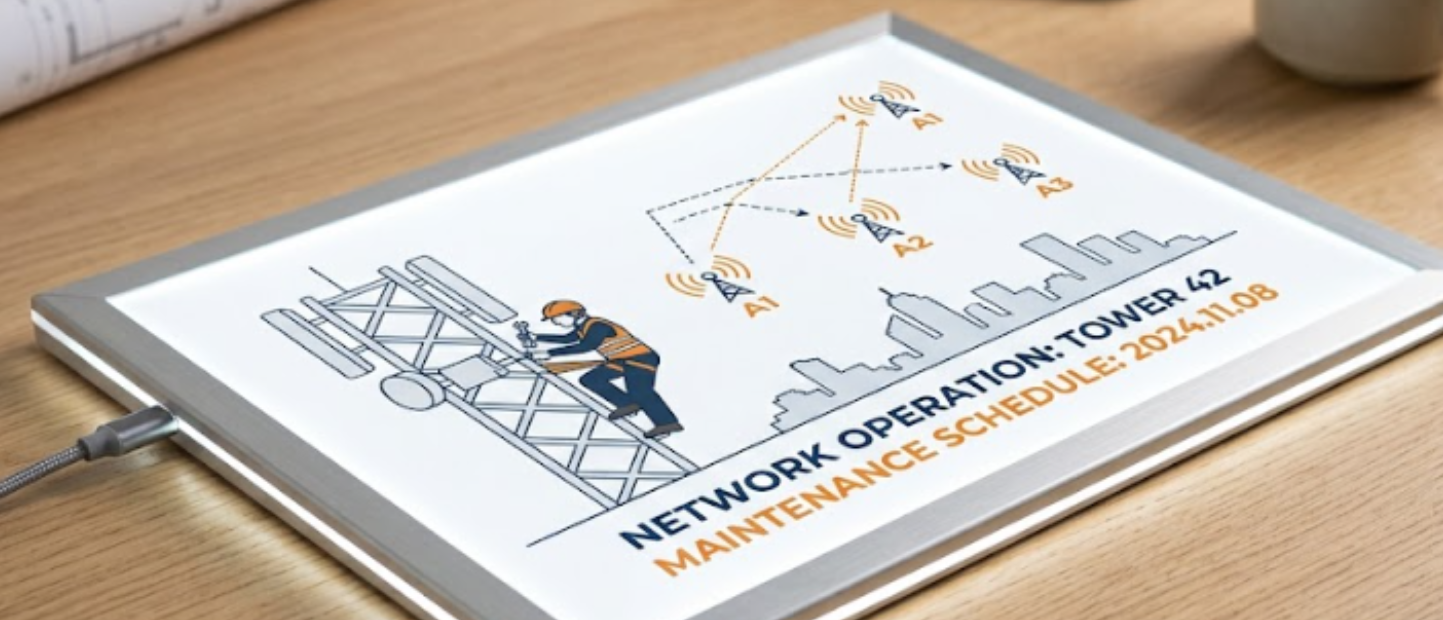
Product promotion is often treated as a messaging problem: the right slogan, the right offer, the right timing. But in physical spaces, visibility comes first. If people do not notice a product, they rarely move on to considering it. That is one reason lightboxes continue to hold their place in retail, exhibitions, hospitality, and showroom environments.
What makes them effective is not simply brightness. A well-used lightbox creates contrast, focus, and consistency. It helps a product or campaign stand out in crowded visual environments, and it does so without demanding the constant motion or sensory overload that can make some digital displays feel intrusive. For businesses trying to influence attention at the point of decision, that balance matters.
Why Lightboxes Still Work in a Screen-Saturated World
Walk through any shopping centre, trade show, or transport hub and you will see just how much visual competition businesses face. Static posters can disappear into the background. Full digital signage can be powerful, but it is not always practical or cost-effective for every setting. Lightboxes occupy the middle ground rather well.
They combine the clarity of print with the impact of illumination. That means sharper imagery, stronger colour reproduction, and better visibility from a distance. In lower-light settings, they perform even better, but even in well-lit spaces they can help a campaign hold its own.
Attention Without Aggression
One of the most useful qualities of a lightbox is that it draws the eye without feeling noisy. That matters in environments where customers are already processing a lot of information. A cosmetics display, a new menu launch, or a featured product wall does not always need animation. Sometimes it just needs presence.
This is especially true for premium products. Lighting can make packaging look more refined, textures more visible, and photography more aspirational. In-store teams often focus on pricing and promotions, but presentation influences perceived value more than many businesses realise.
Consistency Across Locations
For multi-site businesses, lightboxes can also help standardise campaigns. A printed poster in one branch may look different in another depending on ambient light, wall colour, or placement. Illuminated displays reduce some of that variation by controlling how the graphic is seen. The campaign feels more uniform, which is useful for brands that want tighter visual consistency across stores, venues, or pop-up locations.
That is one reason many companies exploring illuminated LED display solutions look beyond aesthetics and think in terms of operational consistency. If the same product launch needs to land equally well in a flagship store, a concession stand, and an exhibition booth, illumination helps level the playing field.
Where Businesses Use Lightboxes Most Effectively
The most successful uses of lightboxes are usually tied to a specific customer behaviour. They are not just there to “look good.” They guide attention toward a decision point.
Retail: New Launches, Seasonal Promotions, and Hero Products
In retail, lightboxes are often used to elevate one product among many. That could be a new skincare line, a limited-edition trainer release, or a seasonal food offer. Rather than covering every surface with competing graphics, businesses often get better results by creating one or two focal points.
A hero display works best when it does three things: it signals what is new, reinforces the brand mood, and makes the product easy to locate. Lightboxes are particularly strong here because they can frame a campaign visually without taking over the whole store.
Trade Shows and Exhibitions: Being Seen Quickly
At events, the challenge is different. Visitors move fast, attention is fragmented, and every exhibitor wants to stand out. In that context, lightboxes do more than decorate a stand; they improve legibility at distance. A brand message that might be overlooked on fabric graphics can become much more readable when backlit.
They also help smaller exhibitors punch above their weight. A compact stand with a strong illuminated backdrop can often appear more polished than a larger space with weak visual hierarchy. That is not just about appearance. It affects whether people stop, whether they remember the stand later, and whether the business looks credible.
Designing for Promotion, Not Just Decoration
A common mistake is to treat a lightbox as a nice-looking frame for an existing poster. In practice, graphics need to be designed specifically for illuminated presentation.
Strong Imagery Beats Busy Messaging
Backlit graphics reward simplicity. High-contrast imagery, limited copy, and a clear focal point usually perform best. If the message is too dense, the illumination can actually make clutter more obvious.
A useful rule is to decide what the display should achieve in three seconds. Should the viewer notice a new product? Understand a limited-time offer? Associate the product with a premium brand feel? Once that goal is clear, the design choices become much easier.
Placement Matters as Much as the Graphic
Even a strong display can underperform if it is positioned poorly. Businesses tend to get the best results when lightboxes are placed at transition points: store entrances, end caps, waiting areas, counters, and exhibition perimeters. These are places where attention naturally shifts.
It also helps to think about line of sight. Is the display visible from the main approach? Does it compete with too many neighbouring messages? Is the product itself close enough to the display that interest can turn into action? Promotion works best when visibility and access are linked.
Measuring the Impact
Not every business measures physical display performance with the same rigour as digital campaigns, but the better ones increasingly do. They compare sales uplift on featured products, monitor dwell time in key areas, and use staff feedback to understand which displays trigger questions or conversions.
This does not have to be overly technical. Even simple before-and-after comparisons can be useful. If a promoted item sees increased interaction after being moved into an illuminated display zone, that is a practical signal. Over time, those small observations help businesses refine what deserves visual emphasis and where.
The Real Value of Lightboxes
Lightboxes are not a magic fix for weak products or unclear marketing. What they do offer is a dependable way to improve visibility, shape perception, and support decision-making in physical environments. That makes them particularly valuable at a time when businesses are trying to create better in-person experiences, not just more noise.
Used thoughtfully, they help products feel more intentional. They make campaigns easier to notice and easier to remember. And in spaces where attention is hard won, that is often the difference between a product being glanced at and a product being chosen.