Some of The Modern Technologies Being Used In Pharmaceutical Production

The pharmaceutical industry has long been a pioneer in scientific advancement, bringing life-saving drugs and treatments to patients worldwide. But just as medicine itself continues to evolve, so too do the methods used to create them. Modern technologies are transforming every stage of pharmaceutical production, from drug discovery and design to manufacturing and distribution. This surge in innovation promises not only faster development of new medications, but also a future of personalized medicine, tailored to individual needs.

From Bench to Bottle: AI and Machine Learning Take Center Stage

One of the most transformative forces in pharmaceutical production is the rise of artificial intelligence (AI) and machine learning (ML). These powerful tools are fundamentally changing the way drug discovery happens. Traditionally, this process has been a slow and laborious affair, involving extensive laboratory testing and sifting through mountains of data. AI and ML algorithms, however, can analyze vast datasets of chemical compounds and peptides, patient information, and disease biology to identify potential drug targets and predict how molecules might interact with them. This not only accelerates the discovery process but also increases the chances of finding more effective and targeted therapies.

Imagine a researcher trying to find a key that fits a specific lock. Traditionally, they would have to test hundreds or even thousands of different keys one by one. With AI, however, the computer can analyze the structure of the lock and identify keys with a higher probability of fitting. This significantly reduces the time and resources needed to find the right drug candidate.

One example of AI’s impact is the work of Insilico Medicine. In 2019, they used AI to develop a molecule targeting a specific protein linked to fibrosis in just 46 days. This molecule, INS018_055, is now undergoing Phase II clinical trials, demonstrating the incredible potential of AI to expedite drug development.

Beyond Discovery: Optimizing Production with Automation and Data

The role of technology extends far beyond the initial stages of drug discovery. Modern pharmaceutical production facilities are increasingly automated, with robots and sensors taking over many of the repetitive tasks involved in manufacturing. This not only improves efficiency and consistency but also minimizes the risk of human error.

Furthermore, the Internet of Things (IoT) is playing a growing role in pharmaceutical production. Sensors embedded in equipment can continuously monitor critical parameters like temperature, pressure, and humidity. This real-time data allows for proactive maintenance, preventing equipment failures and ensuring optimal production conditions. Additionally, data analytics can be used to identify trends and predict potential issues before they occur, further streamlining the manufacturing process.

The Rise of Continuous Manufacturing: A Paradigm Shift

Traditionally, pharmaceutical production has relied on batch processing, where large quantities of drugs are manufactured in discrete batches. However, continuous manufacturing offers a more efficient and flexible alternative and is being increasingly used by vitamin manufacturers around the world. This approach involves the continuous flow of raw materials through a series of interconnected processing units, resulting in a smaller physical footprint and faster production times.

Continuous manufacturing also allows for greater real-time control over product quality. With continuous monitoring and data analysis, any deviations from specifications can be identified and addressed immediately, minimizing the risk of producing defective batches. This not only improves product quality but also reduces waste and production costs.

Personalized Medicine: Tailoring Treatments to the Individual

One of the most exciting applications of technology in pharmaceuticals is the emergence of personalized medicine. This approach aims to develop treatments that are tailored to the specific genetic makeup and biological needs of each patient. Advancements in genomics and bioinformatics are allowing researchers to identify genetic variations that influence how individuals respond to medications.

This information can be used to develop drugs that target specific patient populations or even create individualized treatment regimens. For instance, 3D printing technology has the potential to revolutionize personalized medicine by enabling the production of customized drug dosages and delivery systems. Imagine printing a pill with the exact dosage required for a specific patient, eliminating the need for imprecise cutting or multiple medications.

Figuring out the most suiting solution for your medication needs can be part of a personalised healthcare approach. British people treating thyroid disorders like to buy Cytomel online in the United Kingdom after learning how precise dosing can improve their treatment outcomes. This allows them to manage their health confidently while maintaining the correct hormone levels. It also supports the growing shift towards customised treatment options that align with each patient’s needs.

Blockchain: Ensuring Transparency and Security in the Supply Chain

The complex global supply chains of pharmaceutical products are susceptible to counterfeiting and diversion. Blockchain technology such as ServBlock, with its secure and transparent ledger system, offers a potential solution to these challenges. By creating a digital record of every step in the manufacturing and distribution process, blockchain can ensure the authenticity and traceability of medications.

This not only protects patients from counterfeit drugs but also allows for faster and more efficient recalls in case of product defects. Additionally, blockchain can improve logistics and inventory management, leading to a more secure and efficient supply chain for pharmaceutical products.

Virtual Reality (VR) and Augmented Reality (AR): Training the Next Generation of Pharma Professionals

The pharmaceutical industry relies heavily on a skilled workforce with a deep understanding of complex processes and equipment. VR and AR technologies are revolutionizing how this workforce is trained. VR simulations can immerse trainees in realistic, virtual environments where they can practice procedures, troubleshoot equipment malfunctions, and learn about complex manufacturing processes in a safe and controlled setting. AR, on the other hand, can overlay digital information onto the real world, allowing trainees to visualize data and interact with equipment in a more interactive way.

These immersive technologies not only improve the effectiveness of training but also make it more engaging and accessible. Trainees can learn at their own pace and practice complex procedures in a risk-free environment, leading to a more skilled and confident workforce.

The Future of Pharma: A Tech-Driven Landscape

The integration of modern technologies is transforming the pharmaceutical industry from the ground up. AI is accelerating drug discovery, automation is optimizing production, and personalized medicine is tailoring treatments to individual patients. These advancements hold immense promise for the future of healthcare, leading to the development of more effective, safer, and accessible medications for all.

As technology continues to evolve, we can expect even more groundbreaking innovations in pharmaceutical production. From the development of new drug delivery systems using nanotechnology to the use of virtual and augmented reality for training and remote monitoring, the future of pharma is undeniably tech-driven. This exciting new era promises to deliver a new wave of life-saving treatments, improving the lives of patients worldwide.


Dell Technologies unveils 2024 Partner Programme

Dell Technologies has launched its 2024 Partner Programme aimed at enabling greater collaboration with partners in Ireland and delivering enhanced profit potential in critical growth areas.

With partners playing a key role in supporting success at Dell for over forty years, the 2024 programme provides a new tiered programme structure to reward partners and enhance growth over the next 12 months.

Strategic updates to the programme to continue rewarding partners include streamlining the Dell APEX Infrastructure offerings into Storage+ and Server+ product categories. The full incentive-eligible Dell APEX portfolio now qualifies for base rebates and behavioural incentives, increasing profit potential for partners.

Partners that invest in and hold the PowerFlex Design 2023 Certification will now be eligible for a stackable 4% rebate kicker on New Business and Competitive Swap incentive opportunities.

Metal-tier partners with a Client+ competency that hit their client peripheral revenue gate can now benefit from a five times multiplier on the base rebate when selling Dell Client Peripherals and two times the base rebate when selling Precision Workstation, Dell Displays & Docks and Dell Latitude Rugged laptops and tablets.

Dell Technologies is also introducing new competencies in Data Science & AI, Edge Solutions, and Sustainability & ESG to align with evolving customer priorities and market opportunities. These competencies aim to validate partners’ expertise in Dell’s offerings and address the growing demand for sustainable technology solutions.

Commenting on the launch of the programme, Mark Hopkins, Channel Director at Dell Technologies Ireland, said: “Partners are critical to our success. That’s why we’ve launched Dell Technologies 2024 Partner Programme. It will further strengthen our collaboration by opening access to new market opportunities and financial rewards for partners. By building on the partnerships we have developed here in Ireland, we can further grow and modernize the core business in the year to come.”

Catherine Doyle, Managing Director of Dell Technologies Ireland added: “At Dell Technologies, our partners are a critical in helping us meet the diverse and rapidly evolving needs of our customers. By adding new capabilities to our newly enhanced Partner Programme, including data science & AI, we can support businesses across Ireland to accelerate their digital transformation plans and better harness the power of GenAI and other emerging technologies.”

For more information about the Dell Technologies Partner Programme visit: https://www.dell.com/en-us/blog/dell-technologies-partner-program-seizing-opportunities-to-win-together/

Dell technologies helps organizations create a modern workplace with new AI experiences

Dell Technologies will introduce the broadest portfolio of commercial AI laptops and mobile workstations designed to bring organizations and employee productivity into the AI era.

“The next generation of PCs is emerging at a pivotal time – with upcoming refresh cycles and new capabilities on the PC creating the perfect storm,” said Patrick Moorhead, founder and CEO of Moor Insights & Strategy. “Dell’s commercial AI PCs and workstations, coupled with its ecosystem of peripherals, software and services, offer an AI continuum designed to enhance the user experience today and set organizations up for success in the future.”

“Every company that wants to remain competitive will have to implement AI in some way, and AI PCs will be central to that,” said Sam Burd, president, Client Solutions Group, Dell Technologies. “From running complex AI workloads on workstations to using day-to-day AI-powered applications on laptops, the AI PC will be an important investment that pays dividends in productivity and paves the way to a smarter, more efficient future. Dell’s advantage starts with offering more AI PCs across the commercial portfolio from day one, giving customers the ability to start future proofing for AI today.”

AI PCs for hybrid work

The neural processing unit (NPU)–equipped AI PC will grow from nearly 50 million units in 2024 to more than 167 million in 2027, representing nearly 60% of all PC shipments worldwide.[ii] The NPU adds an AI acceleration engine that can take on more dedicated AI tasks, freeing up the CPU and GPU to do other things. This creates a more responsive experience and enhances performance, security, battery life and productivity.

Dell provides the world’s most intelligent, manageable and secure commercial PCs.[iii] With a new line-up of Latitude laptops and Precision mobile workstations, Dell will offer customers the broadest portfolio of commercial AI laptops and mobile workstations, from entry-level to ultra-premium laptops and workstation options. Powered by Intel Core Ultra processors with Intel vPro®, Dell commercial PCs drive AI workloads and unlock new levels of productivity and efficiencies. For example, employees can now:

  • Collaborate more effectively. Combining the benefits of the NPU to offload capabilities like auto-framing, background blur and eye-tracking with the power efficiency of Intel Core Ultra processors, gives workers up to 38% more battery life and valuable working time in a day packed with Zoom calls.[iv]
  • Create content faster. By distributing AI processing across the CPU, GPU and now NPU, users can create generative AI images over five times faster with Stable Diffusion,[v] a text-to-image model.
  • Work more securely in a hybrid work environment. More ISVs will continue to build applications for the AI PC. For example, Dell is working with CrowdStrike and Intel to offload security functions onto the device via the NPU. This provides more comprehensive threat detection, helping customers swiftly detect malicious sites and security vulnerabilities with reduced latency compared to cloud-based solutions.
  • Stay in the flow of work. The portfolio features Windows 11 and a Copilot key to make it even easier to get things done and stay in the flow of work. With the press of a key, you can have faster access to your everyday AI companion.

 AI-powered, automated services

Building on years of industry leadership in proactive, predictive automation as well as expert advice and managed services, new Dell Services capabilities help customers:

  • Maximize PC uptime and improve productivity with new self-healing capabilities through the ProSupport Suite for PCs. Customers who connect to Dell’s SupportAssist technology can leverage telemetry and AI to fix PC issues without human intervention. This lets IT activate Dell-authored scripts to autonomously correct blue screen errors, thermal issues and more across their entire fleet of PCs.
  • Keep PC fleet refreshes on track and on budget with Dell’s managed services. When customers need new AI devices, Dell provides detailed planning, forecasting and supply chain management to enable timely, targeted multi-vendor device rollouts.
  • Adopt and maximize GenAI investments with Digital Employee Experience Services for Gen AI. These services equip employees with the tools and technology tailored for their diverse roles.

Product spotlights

  • Dell’s new Latitude portfolio (link to blog) includes the Latitude 7350 Detachable, the world’s most collaborative commercial detachable,[vi] giving professionals the freedom to work fully docked at the desk or on-the-go as a tablet or laptop. It features the best user-facing 8MP HDR camera amongst other detachables[vii] for high-quality picture in challenging lighting conditions. The fully refreshed portfolio features updates across 5000, 7000 and 9000 series, including the Latitude 7350/7450 Ultralights, the world’s lightest 13.3” and 14” premium commercial laptops.[viii]
  • Dell’s new mobile and fixed Precision workstations (link to blog) meet the performance needs of power users, developers and beyond. As the global leader in workstations,[ix] Precision provides the power to run complex AI workloads securely and cost effectively on the PC. Integrated into  new Precision mobile workstations are NVIDIA RTX™ 500 and 1000 Ada Generation Laptop GPUs, helping deliver the AI capabilities and enterprise reliability to work from anywhere, while the Precision 3280 Compact Form Factor (CFF) is a new space-saving form factor built for light AI development and creative applications.
  • Dell’s most intelligent headset portfolio in its class[x] includes five new headsets. The Dell Premier Wireless ANC Headset (WL7024) features AI-based noise canceling microphones that distinguishes human speech signals from background noises from both the user and their audience and adjusts the level of noise cancellation based on the user’s environment. The advanced smart sensor intelligently performs tasks like mute/unmute, pause/play as long as either earcup is lifted, while intuitive touch controls tailor the audio experience.

Accelerating the circular economy

As a leader in circular design, Dell addresses the full lifecycle – from increasing the use of recycled materials and minerals in products, to making devices easier to repair and responsibly recycle.

  • The new Latitude devices are the world’s first commercial PCs to use recycled cobalt in their batteries.[xi]
  • Inspired by Concept Luna, the Latitude 7350 Detachable is the world’s most serviceable commercial detachable[xii] featuring a serviceable display panel and making it easier to repair and prolonging its use.
  • As organizations refresh their devices to optimize AI capabilities, Dell recovery and recycling services help customers properly retire their IT equipment to divert e-waste from landfills, keeping products and materials in circulation for longer.

Availability

  • Latitude 7350 Detachable will be available in Q2.
  • Precision 3280 CFF (Compact Form Factor) will be available on March 26.
  • Precision mobile workstations will be available on March 12.
  • Dell Premier Wireless ANC Headset (WL7024) will be available in China on March 29 and rest of world on April 14.
  • ProSupport Suite for PCs with self-healing capabilities is available globally by the end of April.
  • Digital Employee Experience Services for GenAI are available globally.
  • Managed Services for device refresh are available in the US and EMEA on March 15.

Dell Technologies Ireland unveils technology outlook for 2024

Dell Technologies has released 2024 predictions by Catherine Doyle, Managing Director, Dell Technologies Ireland highlighting emerging trends that are set to shape the future of business in 2024 and beyond.

The technology leader is forecasting how advancements in Generative AI (GenAI), Quantum Computing and Zero Trust technology together with a growing focus on sustainable IT will help organisations and their people to innovate, enhance productivity and remain secure.

As we look towards a new year, breakthrough technologies will help Irish businesses to navigate new challenges that may emerge in the coming months and to innovate at speed,” said Catherine Doyle, Managing Director of Dell Technologies Ireland.

Generative AI will be the centre of business focus next year. 2024 will be all about putting AI into action and implementing Generative AI projects that can be truly transformational. The first step on the AI journey should be to organise and structure data which will help avoid AI sprawl.

“With the global explosion of data, there will be an increasing need for organisations to manage that data effectively. Quantum computing will help to address this and bring about a massive leap in the computing power required to unlock AI innovation. By looking to the horizon and identifying the technology trends that will shape Ireland’s economy, Dell Technologies can support public and private sector organisations to adapt, grow and advance sustainability.”

1. GenAI will take centre stage, moving from theory to practice

Generative AI will take centre stage in 2024, moving from theory to practice. While GenAI has fostered many creative ideas in 2023 of how it will transform business, there are very few real-world examples of GenAI in action. As we enter 2024, Gen AI projects will start to be business-ready with visible productivity gains becoming evident. An increasing number of Irish businesses will adopt AI and scale it across their organisation. According to our latest GenAI Pulse survey, nearly half of IT leaders expect to see meaningful results from GenAI initiatives within six months to a year. One of the first steps that leaders can take to ensure successful AI adoption in the year ahead is to organise and structure data within their business.

2. AI will come to life in more powerful PCs

PCs will become more powerful as AI comes to life, enabling the technology sector to deliver on the promise of digital assistants. Over the next 12 months the PC experience will shift from searching to prompting, from reading to understanding, and from editing to directing. This will result in the emergence in a two-way human-machine partnership in workplaces across Ireland. Also, as AI becomes a key part of laptops and devices, it will unlock improved privacy and security while also advancing sustainable design.  


3. Quantum Computing and GenAI will become intertwined

With the global explosion of data and AI, there will be an increasing need for organisations in Ireland to put in place the computing power to manage it effectively. Quantum computing will begin to address this and bring about a massive leap in the computing power that is required to unlock AI innovation. If we were surprised by the GenAI advancements of the last year, leaders should expect to see a bigger jump forward when quantum computing becomes intertwined in the near future.


4. Zero Trust will become central to strengthening cyber resiliency

Although there has been much discussion about Zero Trust, 2024 will see Zero Trust will evolve from a concept to a real technology. Adopting a zero-trust approach helps organisations build a more resilient and responsive security infrastructure while ultimately lessening the impact of cyber-attacks. As the benefits of Zero Trust technology becomes evident, it is expected that Zero Trust will become the norm in a wider range of industries in Ireland.


5. Greater adoption of green tech as leaders prioritise sustainability

The role played by technology in advancing sustainability will grow in 2024. With larger companies being required by the EU to disclose their environmental, social and governance (ESG) performance and activity, business and IT leaders in Ireland will increasingly rely on technology to track their climate data and reduce emissions. Our latest Digital Pulse Survey revealed that almost half of companies are looking at upgrading technology in the coming year to cut rising energy costs and drive sustainable innovation.

Dell Technologies Launches New Services for Microsoft 365 Copilot to Speed Productivity and Efficiency

Dell Technologies is delivering a portfolio of professional services for Microsoft, including services for Microsoft 365 Copilot, to help customers adopt a consistent approach to implementing and managing their technology.

With Dell’s technology expertise, organisations can use leading assessment, advisory, operational readiness and implementation services that assist in adopting Microsoft 365 Copilot quickly and at scale.

“Dell is bridging the gap between aspiration and realization of generative AI,” said Scott Bils, vice president of professional services portfolio, Dell Technologies. “By coupling Microsoft 365 Copilot’s real-time intelligence and services from Dell, organisations can more easily implement and scale next generation AI capabilities.”

According to Gartner®, “by 2026, more than 80% of enterprises will have used GenAI application programming interfaces or models, or deployed GenAI-enabled applications in production environments – up from less than 5% in 2023.”

Dell’s new services help organisations develop the strategy, deploy, and test the solution and prepare teams to capitalise on Microsoft 365 Copilot functionality.

“Microsoft 365 Copilot is empowering our customers to accelerate their productivity and efficiency,” said TJ Devine, Sr. Director, Product Marketing, Microsoft. “Dell’s services are a valuable proposition for customers by ensuring they have an AI strategy and implementation plan for Microsoft 365 Copilot, while helping organisations establish user readiness for optimal scaling of this powerful GenAI capability.”

Additional Dell Services for Microsoft Customers

The services for Microsoft 365 Copilot accompany more than a dozen new services designed to help customers take advantage of the functionality and capabilities of their Microsoft technology investments.

The solutions include Dell’s professional services for Microsoft Azure and multicloud management with Azure Arc. These services allow customers to manage resources across multiple clouds to provide greater flexibility and control. New advisory services for Azure help customers strategically consume and optimize cloud resources.

New data platform services provide powerful data visualization and business intelligence to help customers manage, analyse and visualise their data in real time. Companies can make faster decisions about workload placement, cost, and optimisation of their environments. Businesses can protect their data with new security services for Microsoft Defender for Cloud and IoT, which provide advanced features to help protect cloud and IOT devices from potential threats.

Availability

Available globally and through traditional channels

Additional resources

2 in 3 Irish businesses to increase investment in cybersecurity according to Dell Technologies survey

A new survey undertaken by the Dell Technologies in association with the Executive Institute found that two-thirds (66%) of businesses in Ireland are planning to invest in their cyber security as cyber threats continue to increase. Moreover, 93% of organisations have already taken steps to enhance their data protection measures in the past twelve months.

The latest ‘Digital Pulse Survey’ from Dell and the Executive Institute of over 150 business leaders, shows that Irish businesses are struggling under the weight of increasing cyber-attacks. The majority of respondents (64%) say that the ever-growing number of attacks is the main barrier to enhancing their organisation’s cyber resilience, with 13% citing lack of in-house cyber skills and expertise and 9% citing outdated technology and upfront investment in cybersecurity solutions.

Highlighting the cyber dangers posed by hybrid working, 68% of businesses have already taken steps to mitigate the cyber risks of flexible and remote working models.

The Digital Pulse Survey also reveals that Irish businesses are increasingly turning to technology to help them achieve their sustainability goals. Over 8 in 10 business leaders (84%) say that technology has positively impacted their sustainability goals to date. Over one-third (37%) are using technology to increase energy efficiency, 24% are using it to facilitate hybrid or remote working, and 20% are using technology to help reduce carbon emissions.

In addition, almost half (49%) of Irish business leaders say they are considering replacing outdated technology in the next 12 months to reduce higher energy costs.

Commenting on the survey results, Catherine Doyle, Managing Director, Dell Technologies Ireland, said: “It’s clear that cyber risk continues to weigh heavily on business leaders as they advance their digital transformation plans. The vast majority have taken steps to enhance their data protection, and two-thirds are looking to increase this investment in the year ahead. Proactive and timely action will be vital to strengthening cyber defences.  

“As businesses work to enhance their cyber resilience, it’s also positive to see the role of technology in driving sustainable innovation. From using technology to increase energy efficiency and facilitate remote working to achieving operational efficiency, digital transformation can help leaders shape a more sustainable future.”

Conor Morris, Managing Director, Executive Institute, said: “The results of the survey suggests that the threat posed by cyber-attacks continues to grow and threatens the future success of our member organisations. These attacks are becoming more frequent and more sophisticated.  Planning for and adopting a security strategy that remains current and as up to date as new cyber threats themselves will be a key factor going forward.”

Dell Technologies and Meta to Drive Generative AI Innovation with Llama 2 On Premises

Dell Technologies (NYSE: DELL) is collaborating with Meta to make it easy for Dell customers to deploy Meta’s Llama 2 models on premises with Dell’s generative AI (GenAI) portfolio of IT infrastructure, client devices and professional services.

“We are at the beginning of a new era with generative AI transforming how industries operate, innovate and compete,” said Jeff Boudreau, chief AI officer, Dell Technologies. “With the Dell and Meta technology collaboration, we’re making open-source GenAI more accessible to all customers, through detailed implementation guidance paired with the optimal software and hardware infrastructure for deployments of all sizes. Now, customers can more easily deploy secure GenAI models on premises for powerful new approaches and insights.”

Open-source GenAI fuels innovation on premises

The collaboration simplifies the on-premises AI environment by bringing together Dell’s top-selling infrastructure portfolio and the Llama 2 family of AI models. Customers can accelerate their GenAI efforts on premises in a traditional data center or at edge locations. Dell has integrated Meta’s Llama 2 models into its system sizing tools to help guide customers to the right solution to power their Llama 2 based AI efforts.

The Dell Validated Design for Generative AI with Meta’s Llama 2 provides pre-tested and proven Dell infrastructure, software, and services to streamline deployment and management of on-premises projects. With fully documented deployment and configuration guidance, organisations can get their GenAI infrastructure up and running more quickly and operate Llama 2 with more predictability.

With Meta’s Llama 2 and the breadth of the Dell Generative AI Solutions technology and services portfolio, organisations of all sizes have access to more reliable tools to deliver GenAI solutions from desktops to core data centers, edge locations and public clouds.

Additional resources

● Blog: Dell and Meta Collaborate to Drive Generative AI Innovation

● Blog: Deploying Llama 2 on the Dell PowerEdge XE9680 Server

● White Paper: Llama 2: Inferencing on a Single GPU

● Design Guide: Generative AI in the Enterprise – Inferencing

Dell Technologies Growing Generative AI Portfolio Speeds Business Transformations

Dell Technologies (NYSE: DELL) expands its Dell Generative AI Solutions portfolio, helping businesses transform how they work along every step of their generative AI (GenAI) journeys.

“To maximize AI efforts and support workloads across public clouds, on-premises environments and at the edge, companies need a robust data foundation with the right infrastructure, software and services,” said Jeff Boudreau, chief AI officer, Dell Technologies. “That’s what we are building with our expanded validated designs, professional services, modern data lakehouse and the world’s broadest GenAI solutions portfolio.”

Customizing GenAI models to maximize proprietary data

The Dell Validated Design for Generative AI with NVIDIA for Model Customization offers pre-trained models that extract intelligence from data without building models from scratch.

This solution provides best practices for customizing and fine-tuning GenAI models based on desired outcomes while keeping information secure and on-premises. With a scalable blueprint for customization, organizations now have multiple ways to tailor GenAI models to accomplish specific tasks with their proprietary data. Its modular and flexible design supports a wide range of computational requirements and use cases, spanning training diffusion, transfer learning and prompt tuning.

Dell Validated Designs for Generative AI now support both model tuning and inferencing, allowing users to more quickly deploy GenAI models with proven infrastructure including the Dell PowerEdge XE9680, the industry’s best performing AI server, or the Dell PowerEdge XE8640, with a choice of NVIDIA® Tensor Core GPUs and NVIDIA AI Enterprise software, which offers frameworks, pre-trained models and development tools, such as the NVIDIA NeMo™ framework, and Dell software. By combining compute power with storage options, such as Dell PowerScale and Dell ObjectScale, customers can rapidly feed models with multiple storage data types with the validated design. The infrastructure is also available as a subscription via Dell APEX.

“We’re implementing Dell PowerEdge XE9680 servers with NVIDIA H100 Tensor Core GPUs into the high-performance computing cluster at Princeton for large language modeling to help drive new levels of discovery,” said Sanjeev Arora, the Charles C. Fitzmorris Professor in Computer Science, Princeton. “This system gives researchers in natural sciences, engineering, social sciences and humanities the opportunity to apply powerful AI models to their work in areas such as visualization, modeling and quantum computing.”

Preparing data, people and processes for GenAI

Dell is applying its process and expertise to help customers generate better, faster business results with expanded GenAI professional services capabilities:

  • Data Preparation Services provide customers with a clean, accurate data set in the right format enabling AI projects to move smoothly while simplifying data integration and delivering quality data output.
  • Dell Implementation Services establish an operational GenAI platform for inferencing and model customization, accelerating time to value. Paired with Dell Managed Services, Dell can operate the full NVIDIA-based GenAI solution, improving operational efficiency and allowing customers to focus on building their proprietary GenAI use cases.
  • Education Services help customers gain the critical skills to close the GenAI capabilities gap.

“Our recent study on Generative AI use in the enterprise made it clear organizations are adamant about being able to use their own data to customize key foundation models, but also need assistance in helping prep their data for that work,” said Bob O’Donnell, president and chief analyst, TECHnalysis Research. “Dell’s latest Generative AI solutions and partnerships offer a broad set of capabilities that help companies capitalize on this potential, bridging knowledge gaps and ensuring data drives discernible, impactful business results.”

Modernizing data infrastructure for AI and analytics

Dell and Starburst are strengthening their relationship to help customers accelerate AI and analytics efforts. This will culminate with an open, modern data lakehouse solution.

The solution will integrate Starburst’s analytics software with Dell’s PowerEdge compute platform, combined with Dell industry-leading storage,2 helping customers extract insights from data wherever it resides. Built with open software principles, customers will gain easy and secure access to multicloud data to get the most value for analytics and AI-driven workflows and deployments.

“Our customers have made it clear they need a robust data platform for accessing distributed data across multicloud environments to drive and operationalize AI efforts,” said Justin Borgman, CEO, Starburst. “By integrating our deep analytics capabilities with Dell’s leading infrastructure and global enterprise services, we can offer customers an open, multicloud data lakehouse solution that quickly and easily makes data available to AI workflows anywhere.”

Availability

  • Dell Validated Design for Generative AI: Model Customization is available globally through traditional channels and Dell APEX starting late October.
  • Dell Professional Services for Generative AI are available in select countries starting late October.
  • The Dell open, modern data lakehouse solution with Starburst has planned global availability in the first half of 2024.

New research unveiled at Dell Technologies Forum reveals Irish businesses see their people as their greatest asset in driving digital transformation

New researched published today at the Dell Technologies Forum in Dublin has shown the vital role that employees play in driving digital transformation projects for business in Ireland. The survey of 200 business and IT leaders in Ireland reveals 74% of Irish respondents regard their people as their greatest asset in unlocking the potential of technology.

 After two years of accelerated digital transformation, half of IT leaders in Ireland say their organisation knows what it takes to digitally transform a workforce, but after such rapid change, many employees are now facing a challenge to keep up the pace. What’s more, eight in ten (80%) believe their organisations underestimate how to engage with their people properly when planning transformation programmes.

The results undertaken by Vanson Bourne for Dell Technologies highlight how the recent period of rapid transformation is leaving businesses and their workforce in need of time to recharge, reflect and refine before embarking on new or iterating on projects. Despite the huge progress and efforts of the past few years, the research highlights how there is still a potential for transformation to stall as 59% of respondents believe it is their people’s resistance to change can lead to failure. While nearly half (49%) say they are still worried that they may be left behind due to a lack of senior vision/authority to now capitalise on the opportunity in front of them.

Commenting on the results of the study, Jason Ward, Vice-President and Managing Director, Dell Technologies Ireland, said: “While businesses need breakthrough technologies to transform, harnessing the potential of that technology relies on an engaged and innovative workforce. The results of our Breakthrough study unveiled at today’s Dell Technologies Forum demonstrate this very fact.

“We’ve all seen how employees working remotely and now in a hybrid format have been crucial in driving businesses’ momentum in the progress towards digital transformation. This momentum might be lost if organisations fail to recognise their people’s drive for change and to build on the progress made.

“That’s why it is vital that businesses should take a three-pronged approach. First, provide employees with consistent and safe work experiences, not defined by where they work. Second, help boost productivity by augmenting human capabilities with technology tools that allow employees to focus on what they do best. Lastly, inspiring employees through an empathic culture and authentic leadership. By enabling a people-first approach, Irish businesses can add immeasurable value to their operations and empower innovators across their workforce.”


  1. Connectivity

Irish businesses performed tremendous feats to connect, collaborate and conduct business online during the pandemic, with the trend continuing as testified by half of the responders (49%) who believe they’ll be more productive when working and collaborating remotely. But they’re not finished.

Despite working remotely these last two years, 60% of all respondents are not yet experiencing a better work-life balance. As a result, over half of business leaders (52%) believe their staff are wrestling with burnout and/or poor mental health that’s impacting their work.

Over half (55%) of respondents say they need their organisations to provide the necessary tools and infrastructure to work anywhere (along with the autonomy to choose their preferred working pattern). In fact, they worry their people might be left behind because they don’t have the right technology to shift to a highly distributed model (where work and compute are not tied to a central place but occur everywhere).

The technology alone isn’t sufficient. Businesses also need to make work equitable for people with different needs, interests, and responsibilities, including the 78% of respondents that would like their organisation to do any of the following:

  • Clearly define their ongoing commitment to flexible work arrangements and the practicalities of making it work
  • Equip leaders to effectively and equitably manage remote teams
  • Empower employees to choose their preferred working pattern and provide the necessary tools/infrastructure
  1. Productivity

People’s time is limited and there are now too few qualified candidates for open roles. To address these strains, businesses can delegate repetitive tasks to automated processes and free-up people to focus on enriching, higher-value work.

At present, 47% say their work is stimulating and not repetitive. With the opportunity to automate more repetitive tasks, 67% would look forward to learning new, sought-after skills and technologies, like leadership skills, courses in machine learning, or focusing on more strategic opportunities to elevate their role.

However, businesses with limited budgets are concerned they won’t be able to advance their workforce and compete. Approximately half (43%) of respondents fear they’ll be shut out of the highly distributed world because they don’t have the funds to invest in the right technology – this is when an as-a-Service model becomes a favourable option for many businesses.


  1. Empathy

At their heart, businesses must build a culture, modelled by empathetic leaders, that treats people as their greatest source of creativity and value.

The research shows there is still work to do and empathy has to inform decision making, from simplifying technology for nearly half (48%) of those who often feel overwhelmed by complex technologies, to tailoring change programs to individuals’ skills (27%) of employees believe their leaders do this.

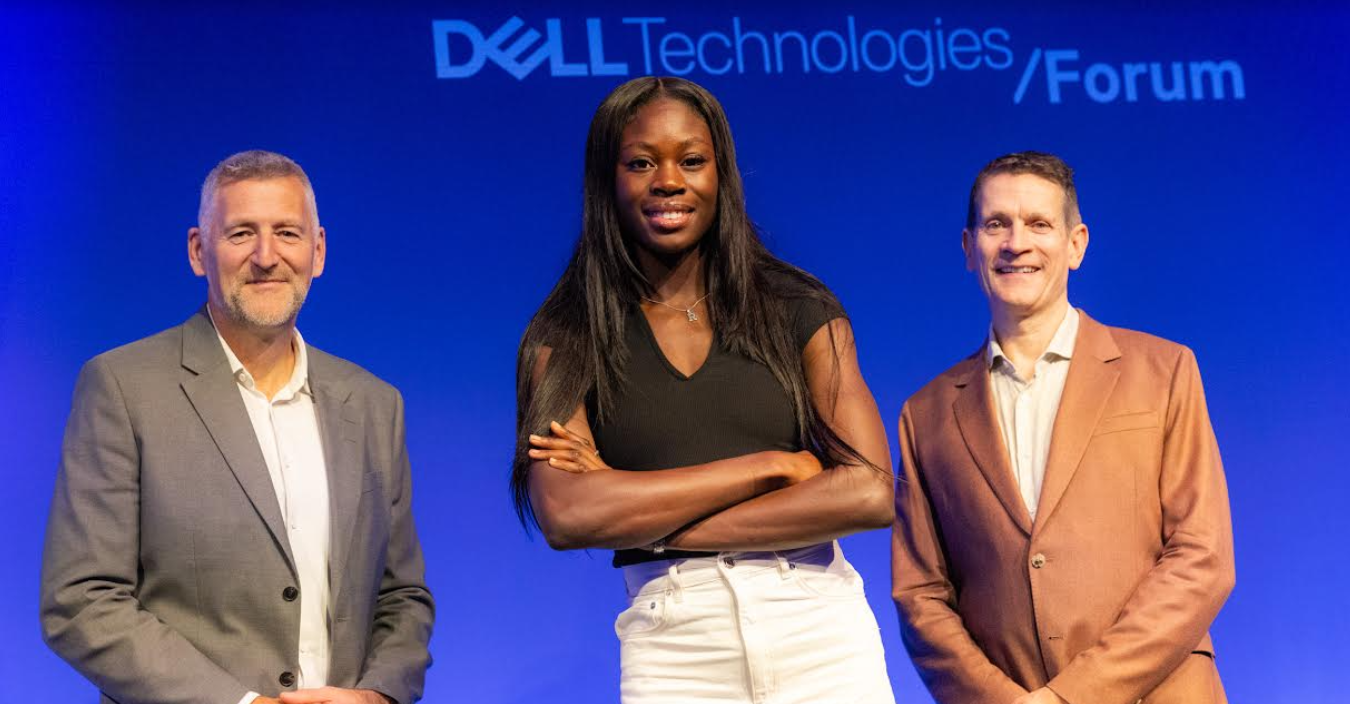
The research has been the focus of the Dell Technologies Forum in Dublin. The event, which took place at the Convention Centre today, gathered business leaders across Ireland with the aim of helping organisations harness new technologies to unlock new possibilities for growth. Wylie, Cambridge Analytica whistle-blower and Aongus Hegarty, President of International Markets at Dell Technologies were amongst the speakers at the Dell Technologies Forum.

For more information, visit www.dell.com/breakthrough and read our research report.