Dell Technologies Ireland unveils technology outlook for 2024

Dell Technologies has released 2024 predictions by Catherine Doyle, Managing Director, Dell Technologies Ireland highlighting emerging trends that are set to shape the future of business in 2024 and beyond.

The technology leader is forecasting how advancements in Generative AI (GenAI), Quantum Computing and Zero Trust technology together with a growing focus on sustainable IT will help organisations and their people to innovate, enhance productivity and remain secure.

As we look towards a new year, breakthrough technologies will help Irish businesses to navigate new challenges that may emerge in the coming months and to innovate at speed,” said Catherine Doyle, Managing Director of Dell Technologies Ireland.

Generative AI will be the centre of business focus next year. 2024 will be all about putting AI into action and implementing Generative AI projects that can be truly transformational. The first step on the AI journey should be to organise and structure data which will help avoid AI sprawl.

“With the global explosion of data, there will be an increasing need for organisations to manage that data effectively. Quantum computing will help to address this and bring about a massive leap in the computing power required to unlock AI innovation. By looking to the horizon and identifying the technology trends that will shape Ireland’s economy, Dell Technologies can support public and private sector organisations to adapt, grow and advance sustainability.”

1. GenAI will take centre stage, moving from theory to practice

Generative AI will take centre stage in 2024, moving from theory to practice. While GenAI has fostered many creative ideas in 2023 of how it will transform business, there are very few real-world examples of GenAI in action. As we enter 2024, Gen AI projects will start to be business-ready with visible productivity gains becoming evident. An increasing number of Irish businesses will adopt AI and scale it across their organisation. According to our latest GenAI Pulse survey, nearly half of IT leaders expect to see meaningful results from GenAI initiatives within six months to a year. One of the first steps that leaders can take to ensure successful AI adoption in the year ahead is to organise and structure data within their business.

2. AI will come to life in more powerful PCs

PCs will become more powerful as AI comes to life, enabling the technology sector to deliver on the promise of digital assistants. Over the next 12 months the PC experience will shift from searching to prompting, from reading to understanding, and from editing to directing. This will result in the emergence in a two-way human-machine partnership in workplaces across Ireland. Also, as AI becomes a key part of laptops and devices, it will unlock improved privacy and security while also advancing sustainable design.  


3. Quantum Computing and GenAI will become intertwined

With the global explosion of data and AI, there will be an increasing need for organisations in Ireland to put in place the computing power to manage it effectively. Quantum computing will begin to address this and bring about a massive leap in the computing power that is required to unlock AI innovation. If we were surprised by the GenAI advancements of the last year, leaders should expect to see a bigger jump forward when quantum computing becomes intertwined in the near future.


4. Zero Trust will become central to strengthening cyber resiliency

Although there has been much discussion about Zero Trust, 2024 will see Zero Trust will evolve from a concept to a real technology. Adopting a zero-trust approach helps organisations build a more resilient and responsive security infrastructure while ultimately lessening the impact of cyber-attacks. As the benefits of Zero Trust technology becomes evident, it is expected that Zero Trust will become the norm in a wider range of industries in Ireland.


5. Greater adoption of green tech as leaders prioritise sustainability

The role played by technology in advancing sustainability will grow in 2024. With larger companies being required by the EU to disclose their environmental, social and governance (ESG) performance and activity, business and IT leaders in Ireland will increasingly rely on technology to track their climate data and reduce emissions. Our latest Digital Pulse Survey revealed that almost half of companies are looking at upgrading technology in the coming year to cut rising energy costs and drive sustainable innovation.

Dell Technologies Launches New Services for Microsoft 365 Copilot to Speed Productivity and Efficiency

Dell Technologies is delivering a portfolio of professional services for Microsoft, including services for Microsoft 365 Copilot, to help customers adopt a consistent approach to implementing and managing their technology.

With Dell’s technology expertise, organisations can use leading assessment, advisory, operational readiness and implementation services that assist in adopting Microsoft 365 Copilot quickly and at scale.

“Dell is bridging the gap between aspiration and realization of generative AI,” said Scott Bils, vice president of professional services portfolio, Dell Technologies. “By coupling Microsoft 365 Copilot’s real-time intelligence and services from Dell, organisations can more easily implement and scale next generation AI capabilities.”

According to Gartner®, “by 2026, more than 80% of enterprises will have used GenAI application programming interfaces or models, or deployed GenAI-enabled applications in production environments – up from less than 5% in 2023.”

Dell’s new services help organisations develop the strategy, deploy, and test the solution and prepare teams to capitalise on Microsoft 365 Copilot functionality.

“Microsoft 365 Copilot is empowering our customers to accelerate their productivity and efficiency,” said TJ Devine, Sr. Director, Product Marketing, Microsoft. “Dell’s services are a valuable proposition for customers by ensuring they have an AI strategy and implementation plan for Microsoft 365 Copilot, while helping organisations establish user readiness for optimal scaling of this powerful GenAI capability.”

Additional Dell Services for Microsoft Customers

The services for Microsoft 365 Copilot accompany more than a dozen new services designed to help customers take advantage of the functionality and capabilities of their Microsoft technology investments.

The solutions include Dell’s professional services for Microsoft Azure and multicloud management with Azure Arc. These services allow customers to manage resources across multiple clouds to provide greater flexibility and control. New advisory services for Azure help customers strategically consume and optimize cloud resources.

New data platform services provide powerful data visualization and business intelligence to help customers manage, analyse and visualise their data in real time. Companies can make faster decisions about workload placement, cost, and optimisation of their environments. Businesses can protect their data with new security services for Microsoft Defender for Cloud and IoT, which provide advanced features to help protect cloud and IOT devices from potential threats.

Availability

Available globally and through traditional channels

Additional resources

2 in 3 Irish businesses to increase investment in cybersecurity according to Dell Technologies survey

A new survey undertaken by the Dell Technologies in association with the Executive Institute found that two-thirds (66%) of businesses in Ireland are planning to invest in their cyber security as cyber threats continue to increase. Moreover, 93% of organisations have already taken steps to enhance their data protection measures in the past twelve months.

The latest ‘Digital Pulse Survey’ from Dell and the Executive Institute of over 150 business leaders, shows that Irish businesses are struggling under the weight of increasing cyber-attacks. The majority of respondents (64%) say that the ever-growing number of attacks is the main barrier to enhancing their organisation’s cyber resilience, with 13% citing lack of in-house cyber skills and expertise and 9% citing outdated technology and upfront investment in cybersecurity solutions.

Highlighting the cyber dangers posed by hybrid working, 68% of businesses have already taken steps to mitigate the cyber risks of flexible and remote working models.

The Digital Pulse Survey also reveals that Irish businesses are increasingly turning to technology to help them achieve their sustainability goals. Over 8 in 10 business leaders (84%) say that technology has positively impacted their sustainability goals to date. Over one-third (37%) are using technology to increase energy efficiency, 24% are using it to facilitate hybrid or remote working, and 20% are using technology to help reduce carbon emissions.

In addition, almost half (49%) of Irish business leaders say they are considering replacing outdated technology in the next 12 months to reduce higher energy costs.

Commenting on the survey results, Catherine Doyle, Managing Director, Dell Technologies Ireland, said: “It’s clear that cyber risk continues to weigh heavily on business leaders as they advance their digital transformation plans. The vast majority have taken steps to enhance their data protection, and two-thirds are looking to increase this investment in the year ahead. Proactive and timely action will be vital to strengthening cyber defences.  

“As businesses work to enhance their cyber resilience, it’s also positive to see the role of technology in driving sustainable innovation. From using technology to increase energy efficiency and facilitate remote working to achieving operational efficiency, digital transformation can help leaders shape a more sustainable future.”

Conor Morris, Managing Director, Executive Institute, said: “The results of the survey suggests that the threat posed by cyber-attacks continues to grow and threatens the future success of our member organisations. These attacks are becoming more frequent and more sophisticated.  Planning for and adopting a security strategy that remains current and as up to date as new cyber threats themselves will be a key factor going forward.”

Dell Technologies and Meta to Drive Generative AI Innovation with Llama 2 On Premises

Dell Technologies (NYSE: DELL) is collaborating with Meta to make it easy for Dell customers to deploy Meta’s Llama 2 models on premises with Dell’s generative AI (GenAI) portfolio of IT infrastructure, client devices and professional services.

“We are at the beginning of a new era with generative AI transforming how industries operate, innovate and compete,” said Jeff Boudreau, chief AI officer, Dell Technologies. “With the Dell and Meta technology collaboration, we’re making open-source GenAI more accessible to all customers, through detailed implementation guidance paired with the optimal software and hardware infrastructure for deployments of all sizes. Now, customers can more easily deploy secure GenAI models on premises for powerful new approaches and insights.”

Open-source GenAI fuels innovation on premises

The collaboration simplifies the on-premises AI environment by bringing together Dell’s top-selling infrastructure portfolio and the Llama 2 family of AI models. Customers can accelerate their GenAI efforts on premises in a traditional data center or at edge locations. Dell has integrated Meta’s Llama 2 models into its system sizing tools to help guide customers to the right solution to power their Llama 2 based AI efforts.

The Dell Validated Design for Generative AI with Meta’s Llama 2 provides pre-tested and proven Dell infrastructure, software, and services to streamline deployment and management of on-premises projects. With fully documented deployment and configuration guidance, organisations can get their GenAI infrastructure up and running more quickly and operate Llama 2 with more predictability.

With Meta’s Llama 2 and the breadth of the Dell Generative AI Solutions technology and services portfolio, organisations of all sizes have access to more reliable tools to deliver GenAI solutions from desktops to core data centers, edge locations and public clouds.

Additional resources

● Blog: Dell and Meta Collaborate to Drive Generative AI Innovation

● Blog: Deploying Llama 2 on the Dell PowerEdge XE9680 Server

● White Paper: Llama 2: Inferencing on a Single GPU

● Design Guide: Generative AI in the Enterprise – Inferencing

Dell Technologies Growing Generative AI Portfolio Speeds Business Transformations

Dell Technologies (NYSE: DELL) expands its Dell Generative AI Solutions portfolio, helping businesses transform how they work along every step of their generative AI (GenAI) journeys.

“To maximize AI efforts and support workloads across public clouds, on-premises environments and at the edge, companies need a robust data foundation with the right infrastructure, software and services,” said Jeff Boudreau, chief AI officer, Dell Technologies. “That’s what we are building with our expanded validated designs, professional services, modern data lakehouse and the world’s broadest GenAI solutions portfolio.”

Customizing GenAI models to maximize proprietary data

The Dell Validated Design for Generative AI with NVIDIA for Model Customization offers pre-trained models that extract intelligence from data without building models from scratch.

This solution provides best practices for customizing and fine-tuning GenAI models based on desired outcomes while keeping information secure and on-premises. With a scalable blueprint for customization, organizations now have multiple ways to tailor GenAI models to accomplish specific tasks with their proprietary data. Its modular and flexible design supports a wide range of computational requirements and use cases, spanning training diffusion, transfer learning and prompt tuning.

Dell Validated Designs for Generative AI now support both model tuning and inferencing, allowing users to more quickly deploy GenAI models with proven infrastructure including the Dell PowerEdge XE9680, the industry’s best performing AI server, or the Dell PowerEdge XE8640, with a choice of NVIDIA® Tensor Core GPUs and NVIDIA AI Enterprise software, which offers frameworks, pre-trained models and development tools, such as the NVIDIA NeMo™ framework, and Dell software. By combining compute power with storage options, such as Dell PowerScale and Dell ObjectScale, customers can rapidly feed models with multiple storage data types with the validated design. The infrastructure is also available as a subscription via Dell APEX.

“We’re implementing Dell PowerEdge XE9680 servers with NVIDIA H100 Tensor Core GPUs into the high-performance computing cluster at Princeton for large language modeling to help drive new levels of discovery,” said Sanjeev Arora, the Charles C. Fitzmorris Professor in Computer Science, Princeton. “This system gives researchers in natural sciences, engineering, social sciences and humanities the opportunity to apply powerful AI models to their work in areas such as visualization, modeling and quantum computing.”

Preparing data, people and processes for GenAI

Dell is applying its process and expertise to help customers generate better, faster business results with expanded GenAI professional services capabilities:

  • Data Preparation Services provide customers with a clean, accurate data set in the right format enabling AI projects to move smoothly while simplifying data integration and delivering quality data output.
  • Dell Implementation Services establish an operational GenAI platform for inferencing and model customization, accelerating time to value. Paired with Dell Managed Services, Dell can operate the full NVIDIA-based GenAI solution, improving operational efficiency and allowing customers to focus on building their proprietary GenAI use cases.
  • Education Services help customers gain the critical skills to close the GenAI capabilities gap.

“Our recent study on Generative AI use in the enterprise made it clear organizations are adamant about being able to use their own data to customize key foundation models, but also need assistance in helping prep their data for that work,” said Bob O’Donnell, president and chief analyst, TECHnalysis Research. “Dell’s latest Generative AI solutions and partnerships offer a broad set of capabilities that help companies capitalize on this potential, bridging knowledge gaps and ensuring data drives discernible, impactful business results.”

Modernizing data infrastructure for AI and analytics

Dell and Starburst are strengthening their relationship to help customers accelerate AI and analytics efforts. This will culminate with an open, modern data lakehouse solution.

The solution will integrate Starburst’s analytics software with Dell’s PowerEdge compute platform, combined with Dell industry-leading storage,2 helping customers extract insights from data wherever it resides. Built with open software principles, customers will gain easy and secure access to multicloud data to get the most value for analytics and AI-driven workflows and deployments.

“Our customers have made it clear they need a robust data platform for accessing distributed data across multicloud environments to drive and operationalize AI efforts,” said Justin Borgman, CEO, Starburst. “By integrating our deep analytics capabilities with Dell’s leading infrastructure and global enterprise services, we can offer customers an open, multicloud data lakehouse solution that quickly and easily makes data available to AI workflows anywhere.”

Availability

  • Dell Validated Design for Generative AI: Model Customization is available globally through traditional channels and Dell APEX starting late October.
  • Dell Professional Services for Generative AI are available in select countries starting late October.
  • The Dell open, modern data lakehouse solution with Starburst has planned global availability in the first half of 2024.

New research unveiled at Dell Technologies Forum reveals Irish businesses see their people as their greatest asset in driving digital transformation

New researched published today at the Dell Technologies Forum in Dublin has shown the vital role that employees play in driving digital transformation projects for business in Ireland. The survey of 200 business and IT leaders in Ireland reveals 74% of Irish respondents regard their people as their greatest asset in unlocking the potential of technology.

 After two years of accelerated digital transformation, half of IT leaders in Ireland say their organisation knows what it takes to digitally transform a workforce, but after such rapid change, many employees are now facing a challenge to keep up the pace. What’s more, eight in ten (80%) believe their organisations underestimate how to engage with their people properly when planning transformation programmes.

The results undertaken by Vanson Bourne for Dell Technologies highlight how the recent period of rapid transformation is leaving businesses and their workforce in need of time to recharge, reflect and refine before embarking on new or iterating on projects. Despite the huge progress and efforts of the past few years, the research highlights how there is still a potential for transformation to stall as 59% of respondents believe it is their people’s resistance to change can lead to failure. While nearly half (49%) say they are still worried that they may be left behind due to a lack of senior vision/authority to now capitalise on the opportunity in front of them.

Commenting on the results of the study, Jason Ward, Vice-President and Managing Director, Dell Technologies Ireland, said: “While businesses need breakthrough technologies to transform, harnessing the potential of that technology relies on an engaged and innovative workforce. The results of our Breakthrough study unveiled at today’s Dell Technologies Forum demonstrate this very fact.

“We’ve all seen how employees working remotely and now in a hybrid format have been crucial in driving businesses’ momentum in the progress towards digital transformation. This momentum might be lost if organisations fail to recognise their people’s drive for change and to build on the progress made.

“That’s why it is vital that businesses should take a three-pronged approach. First, provide employees with consistent and safe work experiences, not defined by where they work. Second, help boost productivity by augmenting human capabilities with technology tools that allow employees to focus on what they do best. Lastly, inspiring employees through an empathic culture and authentic leadership. By enabling a people-first approach, Irish businesses can add immeasurable value to their operations and empower innovators across their workforce.”


  1. Connectivity

Irish businesses performed tremendous feats to connect, collaborate and conduct business online during the pandemic, with the trend continuing as testified by half of the responders (49%) who believe they’ll be more productive when working and collaborating remotely. But they’re not finished.

Despite working remotely these last two years, 60% of all respondents are not yet experiencing a better work-life balance. As a result, over half of business leaders (52%) believe their staff are wrestling with burnout and/or poor mental health that’s impacting their work.

Over half (55%) of respondents say they need their organisations to provide the necessary tools and infrastructure to work anywhere (along with the autonomy to choose their preferred working pattern). In fact, they worry their people might be left behind because they don’t have the right technology to shift to a highly distributed model (where work and compute are not tied to a central place but occur everywhere).

The technology alone isn’t sufficient. Businesses also need to make work equitable for people with different needs, interests, and responsibilities, including the 78% of respondents that would like their organisation to do any of the following:

  • Clearly define their ongoing commitment to flexible work arrangements and the practicalities of making it work
  • Equip leaders to effectively and equitably manage remote teams
  • Empower employees to choose their preferred working pattern and provide the necessary tools/infrastructure
  1. Productivity

People’s time is limited and there are now too few qualified candidates for open roles. To address these strains, businesses can delegate repetitive tasks to automated processes and free-up people to focus on enriching, higher-value work.

At present, 47% say their work is stimulating and not repetitive. With the opportunity to automate more repetitive tasks, 67% would look forward to learning new, sought-after skills and technologies, like leadership skills, courses in machine learning, or focusing on more strategic opportunities to elevate their role.

However, businesses with limited budgets are concerned they won’t be able to advance their workforce and compete. Approximately half (43%) of respondents fear they’ll be shut out of the highly distributed world because they don’t have the funds to invest in the right technology – this is when an as-a-Service model becomes a favourable option for many businesses.


  1. Empathy

At their heart, businesses must build a culture, modelled by empathetic leaders, that treats people as their greatest source of creativity and value.

The research shows there is still work to do and empathy has to inform decision making, from simplifying technology for nearly half (48%) of those who often feel overwhelmed by complex technologies, to tailoring change programs to individuals’ skills (27%) of employees believe their leaders do this.

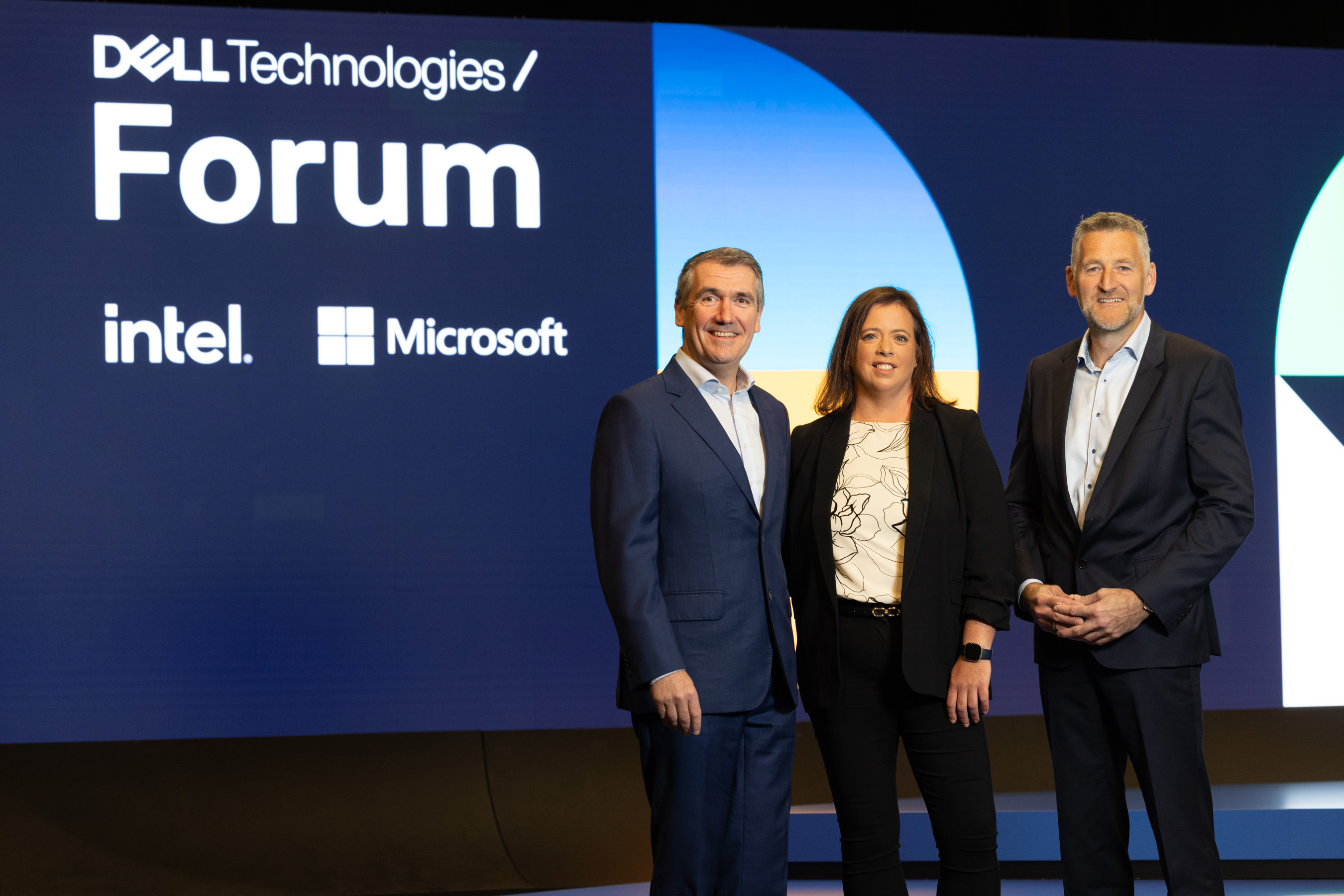
The research has been the focus of the Dell Technologies Forum in Dublin. The event, which took place at the Convention Centre today, gathered business leaders across Ireland with the aim of helping organisations harness new technologies to unlock new possibilities for growth. Wylie, Cambridge Analytica whistle-blower and Aongus Hegarty, President of International Markets at Dell Technologies were amongst the speakers at the Dell Technologies Forum.

For more information, visit www.dell.com/breakthrough and read our research report.

Park Place Technologies Bolsters Ireland Tech Investment

Park Place Technologies, the world’s largest global data centre and networking optimisation firm, has opened its long-awaited Support & Operations Centre at Blarney Business Park, Cork.

This project is supported by the Irish Government through IDA Ireland.

“I am delighted to welcome the official opening of the new Park Place Technologies facility in Blarney, a very positive development for Cork and for the broader region” Taoiseach Micheál Martin said. The opening of the new facility is testament to the Park Place Technologies continued commitment to Ireland and the growth and success of the company here. The Government will continue to work to support our thriving technology sector, and leading companies such as Park Place Technologies, as we build on the record 2.5 million people now in employment in Ireland and ensure continued opportunities in the future.”

Park Place’s new flagship facility consists of 24,500 square feet. The new facility 6km north of Cork’s city centre, will accommodate Park Place’s growth, allow employee expansion (projected to double by 2024), offer a landmark facility for clients, and provide a high-quality meeting space for prospects and channel partners.

Work positions are filled with local talent, and recruitment will continue for highly skilled engineering and technology positions. These include multiple roles including Support Centre Representatives, Advanced Engineering Technical Support and Buyer Planners. Customer support at the facility is available in all European languages.

Park Place has a long history of investment and philanthropy in Ireland and the wider EMEA region. Its STEM efforts have included partnerships with CoderDojo, a non-profit that teaches children fundamental aspects of computer coding; and a laptop donation programme, TechForGood, with I Wish, an Ireland-based non-profit committed to showcasing the power of STEM to teenage girls.

Ian Shearer, Park Place Managing Director, EMEA & APAC, said, “Park Place Technologies opened its first office in Cork in 2018. Our growth, commitment to the people of Ireland, and investment in local Irish communities through our STEM philanthropy has been consistent, dedicated and a tremendous addition to Cork’s tech presence. Ireland is a prime destination from which to serve our European and global customer base.”

“Park Place represents a modest investment for Ireland, but Ireland represents a major piece of our global investment in customer and employee experience,” said Park Place President and CEO Chris Adams. “As Park Place gains more experience in nearly every region of the globe, it is clear to us that Ireland is a special strategic partner; and the people and business community of County Cork are truly world class in their collaboration, tech skills and vision for the future. We offer tremendous gratitude to IDA Ireland, which has offered insight, guidance and access to resources that have been invaluable to our investment.”

The new Park Place building in Blarney Business Park represents a direct investment in Ireland. Park Place plans to host business and local community events in the facility, so it’s a premises that will benefit the wider community in County Cork in an interactive and accessible way.

“Park Place does not want to be viewed as another U.S. business setting up shop for itself,” said Chris Adams, Park Place President and CEO. “We do things differently when we invest in a community, and we want to prove ourselves as a part of the lives of the people of County Cork.”

Department Manager, Technology Division at IDA Ireland Anne-Marie Tierney Le-Roux said, “Congratulations to Park Place Technologies on the opening of its Support & Operations Centre in Blarney Business Park.  Since first announcing its arrival to Ireland in 2018, Park Place Technologies has developed into an important member of the South West Region’s established Tech cluster.  I wish the team at Park Place Technologies every success as it continues to grow its presence here in Ireland.”