Some more fathers day tech ideas just in case you have no ideas this is our second pick of what might be a good idea to pick up on the special day coming very soon. Unexpected and unique, these are the excellent gadgets fit for any father figure who loves music. Whether it’s an award winning music streamer, speakers or true wireless earbuds,here is a great selection.
NAD M10 Streaming Amplifier
The audio world has shifted. Where once available solely on discs, the best quality of music is now delivered over the internet. Not only does it sound better, but entire catalogues of recorded music are more accessible than ever before. Curated playlists make music selection and discovery easy and fun, while multi-room wireless audio multiplies the possibilities. With the NAD Masters M10 it will combine all of this goodness with state-of-the-art amplification to make it an all-in-one solution that will transport you to your favourite musical destination.
CLCKR: The Handy Tool for Dads
Whether your Dad is a DIY king or not, this CLCKR phone stand and universal grip is the handy tool that all Dads need. CLCKR handily holds your device in different viewing positions so you can use your phone to stay in touch with family and friends, binge watch your favourite tv series or videos or teach Dad how to take a selfie! SEE OUR REVIEW
Bluesound Flex 2i Hi-Res Music Speaker
The Bluesound Pulse Flex 2i is an Award Winning, portable wireless multi-room music streaming speaker. Pair them together for stereo sound. Simply plug it in and connect it to your WiFi and control from anywhere in your home. Connect to your Amazon Echo or via AirPlay 2, letting you play music direct from your voice/device. Compatible with all your favourite streaming services including; Spotify, Tidal, Amazon Music, Deezer – all in 24-bit, high resolution.
For the Keep Fit Dads Urbanista Athens
Whilst your Dad might not be able to go to the gym this Father’s Day, he may like to enjoy running, cycling or some entertainment on his daily walk. Urbanista Athens true wireless sports headphones are the perfect workout companion. They have a IP67 fully waterproof rating so you can sweat, swim or shower with these headphones and they have 8 hours of charging time and a total of 32 hours charge from the case, that means Dad won’t need to look around for his charger for a while. SEE OUR REVIEW
Urbanista, the Swedish lifestyle audio brand, releases the campaign ‘Sound and Silence’ created in collaboration with London-based artist, rapper and creative talent, Kojey Radical. ‘Sound and Silence’ celebrates the launch of their latest product; Urbanista London, an active noise cancelling, true wireless earphone.
Image: Kojey Radical wearing Urbanista London
Priced at £129 MSRP, London is available in four stylish colours and boasts full compatibility with iOS, Android and Windows devices.
The campaign film, directed by Gustav Stegfors, tells a story about how we are inspired by the sights and sounds of our urban surroundings, through the leading features of the product. The film reflects how we need the silence of our own space to be creative and express ourselves, while living in busy urban environments.
“We are shaped by the city. In its silence, we find rhythm. In its sounds, we find inspiration. Sound is the most important tool for expression. Silence is where music is created from scratch. When there is sound, there is silence.” The emotive and illustrative words heard on the campaign film, that support and build its storyline, were created and recorded in collaboration with London-born Kojey Radical. The genre defying rapper offers an important, urgent and crucial voice for our musical landscape. The ferocious young artists most recent project ‘Cashmere Tears’ explored an acutely personal journey of topics, and cemented his unapologetic approach to his artistry, vision and output. Kojey, who has previously worked with Adidas, Burberry and Hennessy, explains: “I have been really inspired by this project because I create my work from my life and my experiences. I am often using my city and surroundings as a source of inspiration and the idea of finding my sound during moments of quiet, is something which is close to my heart.”
Music and sound are a very important parts of our daily lives and with Urbanista London, you can choose to make surrounding sounds disappear, to relax, to breathe and to have full focus on the music that you are listening to with ‘Active Noise Cancelling’ (Silence), or enhance important sounds that you wish you to let in, whilst still being able to hear the audio on the earphones using ‘Ambient Sound Mode’ (Sound).
These two opposing features are cleverly represented by the models in the video, their styling and the film’s surroundings.
Image: Urbanista London ‘Sound and Silence’ campaign
Urbanista aptly named their new product after London as a vibrant city full of contrasting spaces, from the bustling streets to the peaceful parks. The city in itself acts as a place that reflects sound and silence. Tuomas Lonka, Brand and Marketing Director at Urbanista, comments: “We wanted to work with Kojey on the campaign as he represents what London is to us through his individual style, music and creativity. Kojey’s input and contribution to the campaign have been essential in bringing to life the look, feel and soundscape of the Urbanista London campaign film.”
Urbanista London is available in four colours: Midnight Black (Black), Rose Gold (Pink), White Pearl (White) and Dark Sapphire (Blue) and is now available for pre-order at www.urbanista.com/london. Priced at £129 / SEK1499 / EUR149 / USD149 / 269 AUD MSRP.
Research commissioned by Synctuition indicates the Republic of Ireland is on the verge of a mental health crisis as they make their mindfulness and relaxation app free for everyone in the country
With the world on the brink of a mental health crisis due to the COVID-19 outbreak, Synctuition, the most advanced mindfulness and mind relaxation app backed by 106 scientific studies, today announces that their platform will be made free to people in 14 countries, in June and July 2020. The announcement comes as new research from Synctuition indicates that over three quarters (76%) of adults in the Republic of Ireland have experienced severe anxiety since the start of the pandemic, whilst the company reports a surge in demand and usage over the past few months, becoming one of the top three highest grossing mindfulness apps globally.
This new offering comes at an important crossroads in the way society examines how various global events, such as COVID-19, mass unemployment and global riots, has affected the mental health of people worldwide. With psychiatrists and psychologists calling for research into the impact of COVID-19 on our mental health, Synctuition polled 1,011 adults aged 18+ from across the Republic of Ireland between 12-22 May 2020, and found that 18-35 year-olds are experiencing greater anxiety than over 55s (84% vs. 65%). Three out of five Irish adults (58%) are most concerned about the economy, followed very closely by the health of their family (57%). Three in 10 (30%) cited concern for the Government to be able to get us through the pandemic. This is felt more strongly by older respondents (aged 55+) where 40% said this, compared to only 27% of those aged 18-34.
With a responsibility for us all to support those in need, today’s research also paints a poor picture for employers. Only two in five workers (40%) feel supported by their employer with younger workers struggling more with isolation than their older counterparts. More than two fifths (40%) cited lack of socialising as one of the most stressful parts of working remotely, compared to 32% of those aged 55+. 21% say their employer is more concerned about their bottom line than their employees’ wellbeing, 11% say their employer is making more demands on employees and 10% think their employer has treated their employees poorly.
The research also indicated that:
When it comes to how employers could be doing more to support their employees’ mental well-being at work, over a third (34%) want more communication with their teammates and nearly a third (29%) would like access to well-being solutions like mindfulness apps.
Interestingly demand for wellbeing solutions such as mindfulness apps outstripped demand for access to financial advice (18%) and this is despite that two fifths (41%) of workers are fearful that they will lose their jobs.
Despite high levels of anxiety throughout the population, there are rays of sunlight, with the majority of people feeling productive (96%) and feeling optimistic about the future (95%).
Developed over 10 years, Synctuition is the world’s most advanced audio relaxation program. Backed by 106 scientific studies, Synctuition has already reached 4 million users. Whilst being entirely self-funded, the platform has become the third biggest mindfulness app in the US since launching 18 months ago. Dr. Prudence Hall, an author, and Synctuition mental health advisor said:“Being a part of the development of Synctuition was such a unique experience — incorporating so many disciplines and striking a balance of scientific studies and mindfulness modalities. For listeners to be completely transported to a different world in just 25 minutes could truly transform their state of mind and improve mental health. Personally, integrating the program’s journeys into my own self-care regimen has brought me peace and serenity throughout the current lockdown on numerous occasions.”
Urmas Reinsalu, the Estonian Minister for Foreign Affairs, sees Synctuition as a vital tool for the current time. He said: “I’m proud that Estonia is leading the way in developing so many different technologies to combat the challenges of the current time, and one of the most pressing of these challenges is the mental health crisis. People are struggling to cope with the effects of staying indoors, and people are worried about spreading the virus if they do go out, and their recent research has shown that people are very concerned about their loved ones and their friends. It is vital that people are given all the available materials to help them deal with the stress and anxiety they are currently feeling, which is why Synctuition’s global announcement today is so important.”
Michael Burich, the Co-Founder and COO of Synctuition, said: “Increased loneliness, isolation, anxiety, stress and worry about an economic recession are creating significant dangers to people’s mental health and wellbeing. We are very worried about the future and the mental health crisis that is emerging. Unemployment in the Republic of Ireland has already jumped to record rates over the pandemic period, and unemployment has a direct increase in mental health crises, suicide rates and drug overdose death rates. It is deeply concerning that millions of people’s mental health could be affected for years to come due to the pandemic, and we want to save the lives of those that may be experiencing severe mental hardship due to the current situation. This is why we’re offering our platform for free, with no strings attached. I’ve been touched by how the international community has come together to offer their support for those in need, but there is almost nothing being offered by the government to support mental health. We want to raise awareness around this neglected issue and offer a helping hand to those in need.”
He added: “Neurological studies over the past decade have shown the positive impact mindfulness can have on helping combat stress and anxiety, giving people a new perspective on stressful situations; building skills to manage stress; focusing on the present; and increasing patience, tolerance, and imagination. As our research shows, the majority of people in the Republic of Ireland are feeling optimistic about the future. We would like to use this as a platform to build on to keep people feeling safe, supported and happy.”
“2020 has been a challenging year for many reasons, with anxiety heightened, loss, pain and injustice all afoot. It’s clear that community and connection is more vital than ever. It’s great to see that Synctuition are working to help others during this time of uncertainty and I am so pleased they are in partnership with the Happy Place Virtual Festival,” Fearne Cotton, Synctuition User.
The app has now been made available for free from the now until 31st July 2020 to the United Kingdom, Ireland, United States, Canada, Amsterdam, Australia, Belgium, Dubai, Israel, Finland, Sweden, Norway, and Denmark.
In a move that will help businesses and organisations across Ireland enhance and simplify their communications and collaboration ability, Avaya has appointed Aidan Furlong as its Country General Manger of Ireland. In his new role, Aidan will champion the evolution of new and existing customers and partners to cloud-centric communications and build momentum in the adoption of Avaya solutions as businesses across the island of Ireland increase their digital transformation.
As a previous Channel Manager and Client Director at Avaya Ireland, Aidan has extensive experience in working with the Avaya Partner community to drive growth and mutual success in meeting customer needs.
Speaking for the first time in his new role as Country General Manager of Avaya Ireland, Aidan Furlong said, “I am thrilled to be moving into this position and I look forward to focusing on enterprise and mid-market customers as Avaya transitions to its cloud product portfolio. I anticipate my role to be instrumental in helping to solve customer’s business challenges, together with the extensive Avaya Partner community ecosystem,”
The news follows the announcement of Avaya’s recent Q2 earnings, where the company experienced strong growth across its cloud and SaaS business; with software and services reaching a record 88% of Avaya’s $682 million in revenue, and cloud and subscription revenue increasing to 23% of total revenue. As organisations become more agile in today’s digital and distributed business environment, there will be an increased need for flexible cloud solutions, and Aidan’s appointment will help accelerate the success of Avaya’s global cloud strategy in Ireland.
Aidan concluded, “I am proud to work for a company like Avaya, which has a 150 year heritage in business communications technology and is one of the only vendors with this extensive experience of the complexity of today’s UC communications and contact centre solutions built on open systems.”
Commenting on Aidan’s promotion, UK and Ireland Managing Director Steve Joyner, added: “It has been a period of significant investment and growth for us and Aidan’s promotion demonstrates the depth of his experience and expertise. His work is strategically important to our clients and their digital transformation journeys and directly impacts upon the growth of their businesses. I wish him all the very best of luck in his new role.”
Aidan Furlong has worked for Avaya UK & Ireland for over 9 years and brings 35 years of experience in the ICT market to his new position. He is an MBA qualified senior executive with multinational experience of leading sales, channels, marketing, consulting, services and commercial and client operations teams.
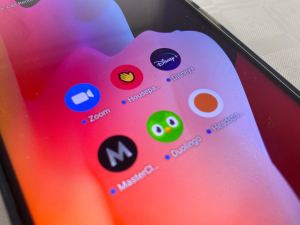
With the introduction of the COVID-19 lockdown seeing nearly all aspects of our lives migrating to our home, our dependence on digital connectivity has never been more prevalent. Thankfully, there has been no shortage of apps that can help us through this strange time – from keeping in contact with family and friends to connecting with colleagues and customers.
New research from Carphone Warehouse used a social media listening tool to discover which apps are helping us to cope with the lockdown. From learning a new hobby, keeping connected or sharing your own lockdown experience on social media, many of us are using apps to keep us going:
Houseparty
A relatively new app that has made a name for itself during lockdown, Houseparty has increased in popularity since social distancing has become the new norm. It allows you to make video calls with friends and family while challenging them to a variety of different games. Recent research has revealed that the app is most popular at 10pm on Wednesdays, proving it to be the go-to for a mid-week gathering.
Zoom
Another video-based app, Zoom is perfect for both professional and social calls. It is used for business meetings and webinars and can accommodate up to 10,000 viewers through its presentation feature. On the social side, it is also great for hosting virtual pub quizzes or birthday parties. You can also jazz up a Monday morning meeting or Friday night drinks with a variety of fun backgrounds.
Headspace
With radical changes to our lifestyles, many of us have had to wave goodbye to well-honed routines – and this can be stressful and mentally draining. Mental health app Headspace focuses on mental wellbeing and relaxation, while providing access to resources such as anxiety-reducing meditation and sleep exercises that help keep users’ mental health in tip top shape.
Disney+
Wondering what to do with all this extra time on your hands? You can binge all your favourite Disney movies and programmes, from princesses to Jedis and everything in between. In fact, the new movie streaming service has proven a threat to streaming giant Netflix, as millions of users have signed up after its launch in the US, Canada, UK and the majority of Europe.
Stand Up!
Working from home is the reality for many of us, and being cooped up at home can make it difficult to find the motivation to keep active. It can be easy to slip into sedentary behaviour, but sitting for too long can come with some serious health risks. Stand Up! is an app that prompts you to stand up and move around every so often so you can stretch and get those muscles moving.
Duolingo
Many people are using self-isolation as an opportunity get a new language under their belt – and Duolingo has been popular for this. It makes learning French, Greek or even High Valyrian easy and fun with games and tests against the clock. Why not fulfil your wanderlust by attempting to grasp the language of a country you’d love to travel to once this is all said and done?
MasterClass
If a language doesn’t interest you, you can get to grips with a new skill instead. MasterClass offers the help of a leading professional in their field so you can come out of lockdown with a new hobby. Whether it’s cooking classes with Gordon Ramsay or tennis lessons with Serena Williams, it’s as close as you can get to a private lesson with these professionals.
In today’s digital landscape, there are a plethora of apps that you can use to help keep you entertained and connected during this time at home.
Jam Audio have several pairs of true wireless on offer at several price point to suit peoples pockets which is nice and in this game in most instances you get what you pay for when it comes to feature set and so on but these do well in the audio department more so than being a fully featured pair of true wireless earbuds which for most will be just right.
The Live free comes in at around 80 euro which is a hard area to find good earbuds as the cost to performance ratio has come down in the earbuds department but as I said they excel in the sound department but lack some features on the control department but having said that it is the common features missing like many others and not a huge caveat overall for the majority of people looking to buy some new earbuds.
These have a small profile yet fit tight and snug giving you some noise isolation but these have no ANC on board but when these are turned up to full volume you wont be hearing anyhting outside anyway as they are quite loud which is my prefrence and probably bad for my ears but that is how I like my earbuds and headphones.
You have an IPX 4 rating so that is welcome and a two year warranty on top of that and the build quality is good, they have a rubber cover on top of the housing and a pleasing clicky button to change tracks and take calls and you have access to siri which I could not get working on my iPhone 11 sometimes, when you turn them on you get the usual jingle from jam products which is nice.
You can use these in mono mode so one side will work with the other on charge which is the left side charging the right will work but not the other way around, On the usual testing here they do a great job on You Tube and Netflix with no lag latency and calls are fine too both ends they do have some bass too and overall perform solid with the usual music attributes so there is not much to complain about here. There is no volume control on these earbuds but like I said it is a common feature left out with many earbuds even ones costing more than these.
The charging case is one of the better ones I have seen in a while that has micro USB charging and a hang tag and also some LED lights on the front to give you a battery status level,the battery life is on par with the claims which is good but not the highest battery life out there however these have a much smaller profie than others so overall a solid performer for the money and worth a look.
A consumer analytics company – passively measured consumer behaviour 24/7 including all their TV viewing (content and ads), online behaviour as well as offline store visits. The analysis on the impact of TV advertising on online platforms was conducted in sectors such as supermarkets, automotive, travel, insurance, financial services, lottery, gambling and online clothing, which represent a cross section of products associated with both impulse and considered purchases.
Overall, the data shows that consumers who clicked on an online ad or visited the advertisers’ website, watched on average 39% more TV ads by that advertiser in the previous week than users who did not click on an ad or visit the website. The study shows that TV’s effect on Facebook clicks was the highest and users who clicked on a FB ad saw 48% more TV adverts of that brand in the previous week than users who did not click on an ad. Users who visited the brands’ websites watched an average of 28% more adverts and users who clicked on a Google ad saw an average of 42% more TV ads. When embarking into the world of paid ads, it is important to source a reputable PPC management company to get the best results for your investment.
The best performing sectors were gambling and online clothes, where those who interacted online with brands – were exposed to 68% and 47% respectively – more TV adverts than those who hadn’t. Within these sectors, for brands such as Coral those who clicked on their adverts or visited their website were exposed to a massive 117% more Coral TV adverts than other gamblers. For Jacamo, in the online clothing sector, this figure was 85%.
The Facebook and Google duopoly now account for 60% of all digital advertising expenditure globally or USD $144.6 billion, but their success is clearly being propped by TV advertising who continues to be the most effective medium at brand building and driving online clicks
ViewersLogic’s single-source data shows unequivocally that TV drives online traffic but in recent years online advertising became the tool of choice for marketers because it offered better measurability than TV advertising. ViewersLogic technology can, for the first time, see the whole consumer journey both online and offline and measure accurately how our exposure to TV adverts results in consumers wanting to find out more about a product or a brand by following it through online up to the product purchase. Crucially, its technology can now also measure for the first time, how much brands really spend on generating clicks through online ads by factoring in the impact TV advertising had on generating each online interaction.
For Henry Daglish, the founder of boutique marketing agency Bountiful Cow this new data provides compelling evidence that marketing campaigns need to be more aligned across TV and online to drive sales effectively through advertising. Mr. Daglish said: ‘’Over recent years TV advertising expenditure has shrunk as brands have increasingly shifted their budgets online attracted by better measurability and segmentation but ViewersLogic’s data has now shown us that, if used correctly, TV drives the greatest improvement in online performance. This opened for us a new area of analytics and performance improvement that we are now sharing with our clients’’
Other studies have shown a clear correlation between a decrease in sales and a reduction in TV ad spend, not only TV advertising has an immediate impact on sales but it is also proved that it manages to significantly enhance the impact of digital advertising. Despite compelling evidence, recently released data by Media Audits shows that TV now account for less than a quarter of ad expenditure in the UK compared to online with over 50%, and this is predicted decline even further this year. With the cost of an advertising slot on TV becoming considerable cheaper, its proven effectiveness at brand building and driving online traffic is it time for smart brands to get back on TV?
DATA FINDINGS BY INDUSTRY SECTOR
Gambling •
Gambling was the best performing sector and those who interacted with the brands online saw an average of 68% more ads by the same brand in the previous week than other gamblers who did not visit the site (in this case we compared this just with other gamblers to neutralise other influence). • Coral performed particularly well – users who interacted with the brand online saw an average of 117% more of the brand’s TV ads in the previous week than other gamblers who did not interact with Coral. On the other hand, PaddyPower users saw only 30% more Paddy Power TV ads in the week before interacting with the brand, compared to other gamblers.
Online clothing •
Of the sectors measured online clothing was the second best performing and those who went on to click on a Google or Facebook advert or onto a brand’s website had seen 47% more TV adverts by that brand in the week before the interaction than those who had not (in this case we compared this just with other online clothing shoppers to neutralise other demographic influence (e.g. if online clothes shoppers see more ads than the general population). • Jacamo was particularly successful compared to their competitors and people who interacted with the brand online either through an advert or by visiting their website saw on average 85% more Jacomo ads than other online shoppers.
Financial Services •
Out of all the sectors measured the financial services showed the lowest effect of TV on online behaviour and on average those who interacted with this sector online, saw 19% more ads in the previous week. • The data shows that Totally Money was by far the most successful financial brand in converting its TV audience into clicks and users who interacted with the brand online, saw 69% more Totally Money TV ads in the previous week. • Companies such as Experian, Money Supermarket and uSwitch had a poor cross-media performance and users who interacted with these brands saw only 2% more of their TV ads in the week before the interaction.
Lottery •
Online clickers on Facebook/Google ads and visitors to the lottery companies’ websites had watched 35% more TV adverts than those who did not, in the week before the interaction took place. • The Postcode Lottery adverts performed better than its competitors and people who clicked through online on Facebook/Google ads and visited the company’s website, saw 55% more Postcode Lottery TV ads.
Supermarkets •
Consumers that clicked through supermarket ads online saw 35% more TV ads in the previous week than users who did not click. • In this sector, Iceland had by far the most successful cross-media campaign, and overall, users who visited the brand’s site or app were exposed to 39% more Iceland TV ads in the previous week. Users who clicked on an Iceland ad on Google or Facebook were exposed to 64% more TV ads in the week before clicking. • Waitrose was the worst performer in this sector and users who clicked on its online ads were exposed to only 12% more Waitrose TV adverts in the week before clicking.
Automotive •
People who interacted with car brands online saw 24% more TV ads than users who did not interact with these brands. • People who clicked on a Ford or Vauxhall ad online saw 18% more TV ads in the week before clicking than other users. Nissan’s cross-media campaign was more effective and people who interacted with the brand online saw 45% more Nissan TV ads in the previous week. • For Vauxhall, users who clicked on a Google ad saw only 3% more TV adverts in the previous week, suggesting that their TV campaign wasn’t particularly successful in driving people to search for the brand.
Travel •
Because the travel industry has been severely affected over the last three months, ViewersLogic did the analysis until the end of February and saw that users who interacted with travel brands were exposed, on average, to 25% more TV ads in the week before, than those who did not interact with these brands. • Jet2 had the best performing TV campaign in this sector and those who interacted with the brand online had watched 45% more Jet2 TV ads. Their TV campaign has a specifically good effect on their FB advertising where people who clicked on a FB ad, were exposed to 77% more Jet2 TV adverts than other users. • Perhaps surprisingly, one the biggest travel brands internationally Booking.com, had a poor cross-media campaign and users who interacted with the brand saw only 7% more TV ads of this brand, compared to other users.
Insurance •
In this sector, those who interacted with insurance brands online had watched 26% more TV ads. • LV Insurance was especially successful in converting their TV audience into online activity and users who interacted with the brand online, saw 49% more LV TV ads in the week before. They did particularly well on Facebook where users who clicked on an LV FB ad were exposed to 115% more TV ads.
Most successful brands by online platform • Brands own website o Bet365 – +185%
• Facebook ads o Jacamo – 131%
• Google ads o Ladbrokes – +244%
• Overall Most successful cross-media campaign o Coral – +117%
In collaboration with Microsoft in Ireland and in Brussels, UCD has established the Microsoft-UCD Digital Policy Programme at UCD with the goal of building digital policy capability amongst the public and private sector in Ireland and across the wider European Union.
In today’s rapidly-evolving digital world, it can be a challenge for legislators and policy makers to keep abreast of the pace of change and its potential impact. This programme is designed to support those in government with the skills and knowledge necessary to amend existing legislation and plan for new legislation that will protect society and provide a relevant framework in which organisations can operate.
The features of the programme will fill a short term need while also building a sustainable pipeline of skills for long-term impact. It will build on existing expertise and curriculum already offered at UCD, while also recruiting leading academics to develop and oversee its success.
Under the direction of Programme Director, Professor Kalpana Shankar, the programme aims to fulfil this demand for digital policy knowledge and skills in the policy ecosystem. The Digital Policy Programme, which will welcome its first intake of students in September, includes the establishment of new educational programmes, including a Certificate course and a Masters in Digital Policy as well as the opening of the UCD Centre for Digital Policy under the leadership of Professor Eugenia Siapera. Elizabeth Farries has been appointed Assistant Professor for the programme and there are plans to appoint a Microsoft Newman Fellow in Digital Policy in September.
The last few weeks and months have demonstrated in a very real way, the transformative impact of technology. Digital solutions have been at the heart of the healthcare and societal response that we have seen – not just in Ireland and Europe but across the globe. The technology led response, driven by innovation and the creative thinking of public servants, has been done at a pace not previously imagined. The reality is that the policy environment and legislation are not, by their nature, as responsive. In addition to the need to create a policy environment that caters for a digital future, it is likely that there will need to be amendments to policy to reflect the rapid change that has already happened. This Digital Policy Programme will help equip those in decision making positions with the skills and capabilities that they need to help inform this important work.
Cathriona Hallahan, Managing Director, Microsoft Ireland said: “Microsoft is proud to have worked with industry partners, the public sector and leading academics to help inform the development of a programme that will build digital expertise into existing policy making frameworks. This much needed and timely programme will help to advance capabilities amongst Irish and EU policy makers on legislative and policy matters that arise in the context of digital technologies. Irish policy makers have the potential to take the lead in Europe on the evolution of laws and policies that remain relevant in a digital world while also fostering innovation and building trust. The Microsoft team here in Ireland and in Europe are delighted to partner with UCD in the development and delivery of this new academic programme.”
Professor Kalpana Shankar, Professor in UCD School of Information and Communication Studies said: “This MSc in Digital Policy is the first of its kind in Ireland. It is designed to offer graduates the opportunity to learn more about some of the core policy issues that are arising with the prevalence of digital and data technology in all dimensions of life. The course will build on the rich offerings in the School of Information and Communication Studies as well as the wider College of Social Sciences and Law through taught modules, independent projects, and interactions with policymakers and evaluators in the public and private sectors.”
For details on the Microsoft-UCD Digital Policy Programme log on here.
As the Corona curves are slowly but surely starting to flatten, the focus is gradually shifting towards the next challenge: relaunching the economy. Whilst national governments and international institutions across Europe and the world are announcing unprecedented crisis measures, it remains to be seen if these will be enough, and especially, whether the aid can be deployed quickly enough to save those in need today. Therefore, decisive action needs to be taken today rather than tomorrow.
Already, Loyaltek is in talks for well over a million cards in several countries including Belgium, France, Spain and Portugal, the first few municipalities having already confirmed they will be adopting the solution.
With a view to this, European FinTech pioneers and veterans Loyaltek and Paynovate are teaming up in a unique proposal to political leaders, with the aim of offering citizens much needed and rapid financial support by means of the Unity Card. As innovative as it is useful, this debit card can be limited for use in a certain geographical area (e.g. one municipality) as well as a certain types of predetermined shops or businesses, in this case those that have been forced to close during the current crisis: hotels, restaurants, bars, hairdressers, DIY-stores, clothes stores… As such, it is the perfect instrument to stimulate the local economy and prevent the money disappearing to foreign e-commerce websites, being sent to family abroad, or saved.
“Whether it’s to support merchants who have had to close their business or to help a mother feed her children: our leaders, from municipal to national level, are looking for ways to mitigate the effects of the lockdown and prepare for a return to normal life and economic recovery,” explains Robert Masse, founder and CEO of Loyaltek and expert in the field of card payments. “But time is running out, and the question arises as to how to allocate these various resources as quickly and efficiently as possible, while at the same time avoiding any risks of fraud and ensuring that public money serves its intended purpose, to the extent of creating a win-win situation and benefiting society as a whole.”
The Unity Card can be loaded and reloaded with any desired amount of money and works just like a regular debit card on payment terminals. The validity period can be adapted in function of the needs and intended support. Users can check the remaining value thanks to a QR code on the back, while an extranet allows the issuing authority to monitor, analyse, manage and even adjust the way its cards are being used, all in real-time. And thus, once again in this crisis, it’s new technologies that are offering relief in a situation which at first seemed insoluble.
“In a spirit of social commitment, our R&D teams wanted to make themselves useful against the horrors of the Corona virus. Ultimately, it’s the pragmatism and the potential of this solution which convinced us to set up the necessary partnerships to deploy it throughout Europe,” concludes Robert Masse. “The name, which of course stands for solidarity, came naturally, and we have decided to offer the first 5,000 cards to each of the municipalities that want to work with it, given that they’re the ones closest to the situation on the ground. Implementation costs are kept to a minimum and amount to a fraction of the usual costs of similar ‘traditional’ measures. Moreover, we do not take any margin on the transactions. Two years ago, we already delivered 12.000 cards to the World Food Program for humanitarian aid.”
The solution proposed has proven its worth before in Germany at the time of the migration crisis, when Loyaltek distributed tens of thousands of cards to local authorities to manage the allowances of Syrian refugees, allowing them to provide in their most basic needs by purchasing from local merchants.
The appearance of the Unity Card can be personalised if necessary. It is distributed either directly to the beneficiaries or by group transmission to the competent authority, which can then further distribute it. The payments made by citizens with the card are managed together with the rest of the merchants’ payment traffic, while cardholder support is ensured by Loyaltek or the ‘customer’ himself, i.e. the issuing authority.