Wearable Wellness: Boosting Sobriety with Technology

A detox, offered by an Alcohol Detox Clinic in Surrey, is often a critical first step in the recovery journey for individuals struggling with addiction. While the physical withdrawal symptoms can be daunting, the psychological challenges that follow are equally significant. In this context, wearable technology has emerged as a valuable ally in the fight against alcohol dependence. By providing real-time data, promoting healthy habits, and fostering connections, wearables can play a crucial role in helping individuals maintain their sobriety.


  1. Monitoring Physical Health

One of the primary benefits of wearable technology is its ability to monitor various aspects of physical health. Devices like fitness trackers and smartwatches can track heart rate, sleep patterns, and physical activity levels. For individuals in recovery, these metrics can provide insights into how their bodies are responding to sobriety.

During alcohol detox, the body undergoes significant changes, and monitoring these changes can help individuals understand their health better. For instance, irregular heart rates or poor sleep quality can indicate stress or anxiety, which are common during recovery. By using wearables to track these metrics, individuals can identify patterns and take proactive steps to address any issues, such as adjusting their exercise routines or seeking professional help when necessary.


  1. Encouraging Healthy Habits

Wearable technology can also encourage individuals to adopt healthier lifestyles, which is essential for maintaining sobriety. Many devices come equipped with features that promote physical activity, such as step counters, activity reminders, and exercise tracking. Engaging in regular physical activity has been shown to improve mood, reduce stress, and enhance overall well-being—all of which are vital for those in recovery.

Additionally, some wearables offer guided breathing exercises and mindfulness prompts. These features can help individuals manage stress and anxiety, reducing the likelihood of relapse. By integrating these healthy habits into their daily routines, individuals can create a more balanced lifestyle that supports their sobriety.


  1. Enhancing Emotional Well-Being

The emotional challenges of recovery can be overwhelming, and wearable technology can assist in managing these feelings effectively. Many wearables now include features that monitor stress levels and provide feedback on emotional well-being. For example, devices may use heart rate variability (HRV) to gauge stress and suggest relaxation techniques when elevated stress levels are detected.

By being aware of their emotional state, individuals can take proactive steps to manage their feelings before they escalate. This awareness can be crucial in preventing relapse, as emotional triggers are often significant contributors to substance use. Furthermore, some wearables offer access to mental health resources, such as guided meditations or cognitive behavioral therapy (CBT) exercises, helping users develop healthier coping mechanisms.


  1. Building Accountability and Support Networks

Accountability is a key component of successful recovery, and wearable technology can facilitate this process. Many fitness trackers and smartwatches allow users to connect with friends and family, creating a support network that encourages accountability. For instance, individuals can share their progress, such as meeting daily activity goals or practicing mindfulness exercises, fostering a sense of community and support.

Moreover, some wearables are designed specifically for addiction recovery. These devices can send alerts to designated contacts if a user is at risk of relapse, providing an additional layer of support. This feature can be particularly beneficial during challenging moments, reminding individuals that they are not alone in their journey.


  1. Utilizing Data for Personal Insights

Wearable technology provides users with valuable data that can inform their recovery journey. By tracking metrics like sleep quality, physical activity, and stress levels over time, individuals can identify trends and make adjustments to their routines as needed. For example, if a user notices that their stress levels spike after a poor night’s sleep, they can prioritize improving their sleep hygiene, which may, in turn, enhance their overall well-being.

Additionally, some wearables allow users to set personal goals related to their recovery, such as committing to a certain number of sober days or engaging in a specific number of healthy activities per week. This goal-setting feature can provide motivation and a sense of accomplishment, reinforcing the positive changes they are making in their lives.


  1. Promoting Mindfulness and Self-Reflection

Many wearables now include mindfulness features, such as guided meditation sessions and breathing exercises. These tools can help individuals cultivate mindfulness, which is essential for managing cravings and emotional triggers. Practicing mindfulness allows individuals to become more aware of their thoughts and feelings, enabling them to respond to cravings with healthier coping strategies.

Self-reflection is another critical aspect of recovery, and wearable technology can facilitate this process. By encouraging users to track their moods and triggers, wearables can help individuals identify patterns and develop insights into their behaviors. This self-awareness can empower individuals to make informed choices and strengthen their commitment to sobriety.

Conclusion

Wearable technology represents a powerful tool in the fight against alcohol addiction. By monitoring physical health, encouraging healthy habits, enhancing emotional well-being, building accountability, utilizing data for personal insights, and promoting mindfulness, wearables can significantly support individuals on their journey to sobriety. As technology continues to evolve, its potential to aid in recovery will likely expand, offering new opportunities for those seeking to reclaim their lives from addiction. Embracing these innovations can be a vital step toward lasting change and improved mental health.


Raising the Bar for Wearable Fitness

Smartwatches have soared in popularity in recent years, with their motion and heart rate sensors tracking the activity of millions worldwide. However, not all activity can be monitored using step counts – limiting the appeal of existing wearable technology to many gym-goers and amateur athletes.

Monitoring specific exercises

Running is one of the most popular activities tracked by motion sensors in watches. They are used to keep track of the distance and speed covered by a runner, complemented by some with heart rate data to show calorie burn and effort level.

Whilst these systems are excellent at measuring the overall movements of a watch wearer in two dimensions, to date they cannot accurately determine movements in a third – height.

Changes in the height of a watch are crucial for monitoring many exercises and movements. Consider sit-ups and push-ups, or a tennis serve and a golf swing. Moreover, consider the impact of gradient during running or climbing that is too subtle to be determined using GPS.

Third-party apps are available to process motion data – and with the right algorithms, this can be successful. In fact, Apple use software to specifically allow users to input data while rowing and swimming.

However, it is well known that many apps to augment wearable sensor data are deleted shortly after download. Moreover, many of the popular features by Apple are still focused on two-dimensional insights; lengths completed in the pool or the number of rowing strokes, for example.

This creates an opportunity for sensor technology capable of accurately determining the height of wearables to disrupt the industry. We are already seeing some companies seek to capitalize on this gap in the market, with Bosch Sensortec adding a miniaturized pressure sensor to its suite of MEMS for wearables. Capable of determining changes in height as small as 50 cm, and small enough for integration into wrist-worn and in-ear devices. Successful implementation is marketed as allowing for the number of push-up reps, length of pull-up extensions, and overall form during strength training to be directly measured.

The smartwatch and fitness tracker industry is becoming more crowded, and as prices for the latest tech continue to increase, so does the expectation of the consumer. Differentiation in the wearable fitness space will be crucial for success in the coming years, and device manufacturers should raise the bar of their sensor’s capabilities so that their users can too.

Beyond the smartwatch

For many sports wearing a watch at all during play isn’t feasible, safe, or permitted. A rigid wrist-worn device is too dangerous to wear whilst playing contact sports like football and rugby, and too valuable to risk during hockey or squash.

As such, a large proportion of amateur and professional sportspeople are removing their smartwatch just as they are about to exercise the most. For this market, understanding their performance during a match is arguably as important if not more essential than tracking fitness during a training run.

Innovations in wearable sensor technology, specifically e-textiles are a promising solution to this problem. Traditional textiles integrated with electronics, or e-textiles, have been under development in different forms by many universities, start-ups, and larger companies alike. Conductive components embedded within clothes have shown promise for the measurement of heart rate and activity level, alongside other biometrics valued in the wellness and even healthcare space.

To date, the major hurdle facing e-textiles has been washability, durability, and cost. The integrity of the clothing often fails within a few cycles in the washing machine, which is unlikely to tempt many consumers to part with very much money at all. This has led to some disenchantment with e-textiles, with them written off as the perpetual technology of the future.

However, the gap in the market for wearables for sports creates a unique opportunity. Match-day tops are not worn as frequently as other clothes, and buyers are already used to spending more on sport-specific equipment and local club apparel. Furthermore, professional footballers are increasingly seen sporting chest straps tracking their performance, making wearable technology of this kind much more socially acceptable.

E-textile technology is slowly improving, with some companies now capable of creating garments that can survive more than a hundred washes and cost a few hundred pounds. Whilst still a way off being commercially viable to the mass market, it is iterating closer to promising niches such as contact sports.

The most promising companies are creating fundamental components for e-textile integration: wiring, electrodes, and interconnects; that can be easily incorporated into existing mass manufacturing methods for clothing. It is also popular to see companies create fully realized shirts, headbands, bras, and socks as marketing tools with which to generate interest and engage with more established players. As early-stage companies focus their energies on scaling up and collaborating with big-name brands, it wouldn’t be surprising if we see high-end smart shirts for the prosumer emerge onto the market within the foreseeable future.

Those looking to compete in the wearable technology space would be remiss to overlook users for whom the form factor of the watch will always be inappropriate. This could be through flexible electronics and e-textiles, new locations on the body or even sensors integrated within wirelessly connected sports equipment.

Outlook and market forecasts

There is no denying that major players like Apple, Fitbit, Garmin, and Samsung currently dominate the wearables market. However, whilst the industry looks set to split between consumer and medical devices – the opportunity remains for sensor innovations to create more space in the market for activity monitoring.

IDTechEx has been covering wearable technology for almost a decade, and our dedicated portfolio of reports provides a detailed overview of fitness tracking, smartwatches, skin patches, augmented and virtual reality hardware, e-textiles, hearables, and more. Our granular ten-year forecasts segment each industry by application and technology, and together, they include hundreds of company profiles from interviews with both major manufacturers and start-ups. Also included in the reports are multiple use-case examples, SWOT analysis, and technological/commercial readiness assessments. Further details and downloadable sample pages for each report can be found on the IDTechEx website.

Garmin launches the D2 Mach 1 aviator smartwatch

Garmin International, has announced the D2  Mach 1 GPS aviator smartwatch with classic pilot watch styling and a bright AMOLED touchscreen display that offers advanced tools for flying – plus health and fitness features – to help pilots and aviation enthusiasts accelerate their adventures. With a battery life of up to 11 days, pilots can rely on the D2 Mach 1 around the clock to keep tabs on the weather, receive automatic alerts for changing conditions, help navigate with the moving map and horizontal situation indicator (HSI) and so much more. Coupled with a full suite of health monitoring and activity tracking features, the D2 Mach 1 offers unmatched utility both in and out of the cockpit.

“Whether you’re climbing into the cockpit for a fun weekend flight, practicing or shooting instrument approaches to minimums or flying professionally, the new D2 Mach 1 delivers the latest and most advanced aviation functionality and smartwatch capabilities right to your fingertips,” said Carl Wolf, Garmin vice president of aviation sales and marketing. “With its new, sophisticated design, the D2 Mach 1 proves that professional gear can also be a great statement piece no matter your destination.”

Enhanced style and utility

Designed for everyday wear, the D2 Mach 1 combines a durable design and premium materials like sapphire and titanium with a vibrant, sunlight-readable 1.3’’ AMOLED display. Trusted button controls are matched with a responsive new touchscreen interface for dual utility, improving daily smartwatch interaction and access to selections and map features. The watch face includes a UTC pointer, which can also display and help pilots manage multiple time zones, including Zulu time, and a 24-hour clock around the bezel, along with seven customizable data fields. Leaving your hangar or FBO to head to the gym? Quickly change out the D2 Mach 1 watch straps – available with oxford leather or vented titanium options – with the included QuickFit black silicone band.

A dedicated flight system on your wrist

The D2 Mach 1 includes preflight, in-flight and postflight features and tools to assist pilots in navigation and enhance situational awareness, along with multi-band frequency and multi-GNSS support for better and more accurate GPS positioning. Direct-to navigation lets pilots navigate straight to an airport or waypoint in the preloaded worldwide aeronautical database directly from the watch, or choose the Nearest function to activate a direct course to a nearby airport. Pan across the moving map with a touch, and tap on waypoints for more information. Plus, see NEXRAD radar overlaid on the route. The instrument-like horizontal situation indicator (HSI) course needle makes it easy for pilots to see if the aircraft is left or right of the desired flight path, and the barometric altimeter can alert when a desired altitude is reached. Aviation alerts like time, distance, altitude and a fuel timer are also available on the D2 Mach 1 during flight.

Know what’s ahead with airport information like runway orientation and wind components runway lengths and airport frequencies—all preloaded and easily accessible from the watch. The D2 Mach 1 offers aviation weather reports, including METARs and TAFs that allow pilots to see winds, visibility and barometric pressure and more before takeoff. New graphical indications of MOS forecasts for specific airports, including projections for temperature trends, wind, dewpoint, sky cover, precipitation probability and more, are also available. Customizable notifications can be set for new METAR and TAF reports, so pilots will stay in-the-know when things like destination airport conditions change or when crosswind components exceed a threshold. And in case of emergency, the D2 Mach 1 can show the best glide speed, estimated glide distance and glide time during an engine-related issue, along with a bearing pointer to the nearest airport and a list of alternate airports.

Flight logging is a breeze with the D2 Mach 1, which automatically starts tracking flights on takeoff, then automatically transfers the date, duration, total flight time and route to the user’s flyGarmin.com logbook Pilots can also seamlessly transfer flight plans from the Garmin Pilot app to the D2 Mach 1 and view the list of waypoints included in their route.

Advanced health, wellness and fitness features

With the broadest range of 24/7 health monitoring features available from Garmin, the D2 Mach1 offers: wrist-based heart rate (with user-configurable alerts for high or low readings, advanced sleep monitoring with sleep score, breathwork activities, fitness age, respiration, Pulse Ox4, all-day stress tracking, hydration, and women’s health tracking. Body Battery energy monitoring shows users how “charged” their body is as well as the draining effects of stress and exercise. During a flying activity, pilots can quickly access the health stats menu to track their heart rate, Pulse Ox, respiration, Body Battery and more. Plus, a new Health Snapshot feature logs a two-minute window of key health stats and generates a report users can share with a health care provider—a great tool for capturing physiological data anytime you’re feeling off your baseline.

The D2 Mach 1 features 30+ built-in indoor and GPS sports apps with favorites that include walking, running, cycling, pool swimming, hiking, advanced strength training and more. It’s even preloaded with SkiView maps and more than 42,000 golf courses from around the world. Keep fitness feeling fresh with preloaded workouts on the watch, preset workouts available for download from the Garmin Connect app, or create customizable workouts by choosing from over 1,400 exercises.

All-day connection and convenience

Pilots can keep essentials on the wrist with built-in music (download up to 650 songs including playlists from Spotify®, Amazon Music, and Deezer), Garmin Pay contactless payments, and smart notifications for calls, texts, calendar reminders, social media updates, breaking news stories and more.1 No service? No problem. Stay connected by pairing the D2 Mach 1 with a Garmin inReach® device to send preset messages to loved ones, toggle tracking or to initiate an SOS to the Garmin IERCC, a 24/7 staffed professional emergency response coordination center.

Like all Garmin smartwatches, the D2 Mach 1 can be used with either Android or Apple® smartphones. With a battery life of up to 11 days in smartwatch mode and up to 24 hours with the Fly activity (GPS + Pulse Ox), pilots can prepare for takeoff without worrying about their next charge.

Available now, the D2 Mach 1 is offered with a vented titanium bracelet or an oxford brown leather band for suggested retail prices of $1299.99 and $1199.99, respectively. Both styles include a trial subscription of the Garmin Pilot app. Learn more at garmin.com/aviation.

Top 5 Health Tracking Smartwatches

A reliable fitness tracking watch can help you get better sleep, become more active, and become more aware of your physical activity and habits. But finding the best one for your needs, your budget, and your fitness goals can be as overwhelming as trying a new sport or getting back into shape!

The best health or fitness smartwatch for you will depend on these and other factors but can help guide you into the best options for how you get in steps or activity. The advancements in the tracking and monitoring abilities of these watches can also help guide your shopping decision.

1. Apple Watch Series 6

Apple promises to make your health journey a lot simpler with a few new features and some upgraded existing ones. First up is their Blood Oxygen Level monitor which works with infrared and LED lighting on the sensor to measure your levels through the layers of skin! The second cool new feature for the Apple Series 6 is its ECG monitor. And when you combine the two new features with the upgraded existing ones, you are left with a smartwatch that can handle 32 GB of music, audiobooks, or podcasts; sleep tracking; underwater workouts; and customization.

2. FitBit Sense

This sleek fitness tracker is top of the list for the number of features included compared to the starting price of $399.95. With this investment into your health you will receive numerous helpful features. Some of the Senses’s nifty health tracking features include a stress management app, sleep tracking, skin temperature reader, guided exercises, and the ability to track your activity all day down to the floors, steps, or calories. The technical features also make this a great choice with 6-day battery life, tap-to-pay capabilities, Google and Alexa connectivity, and reliable GPS.

3. Samsung Galaxy Watch 3

While the name says Samsung, this new Galaxy device is compatible with certain other Android and iOS operating systems/devices. The smartwatches from Samsung are the trackers which resemble real watches the most in appearance, but which come with a load of features focused on your health. One drawback is that this smartwatch is not waterproof, but rather water-resistant. But to make up for this, Samsung created a “military-grade” shell to protect your watch on your most active days. This smartwatch includes all your basic fitness tracking capabilities with reliable GPS.

4. FitBit Versa 3

For a smaller investment into your health and well-being, the Fitbit Versa 3 is a great choice with helpful and motivational tracking features. It also makes for a stylish piece on your arm with several customization options. This smartwatch can get you up and moving with workout GPS maps, heart-rate monitoring, and access to your Spotify controls. The Versa 3 is a great balance of smartwatch and fitness tracking capabilities, is a bit cheaper than some of its counterparts, but is known to be easier to break and to be less durable.

5. Samsung Galaxy Watch 2

The Galaxy makes a good smartwatch option for the same reasons Apple does: they each have a huge existing user-base. There is a good chance any of Samsung’s newer smartwatches are compatible with your phone, and the Galaxy Watch 2 is a more economic option than the newer Apple smartwatches. The Galaxy smartwatch can auto-track your fitness, has decent sleep-tracking abilities (not always the most reliable).


Read more here for a comprehensive breakdown of the best fitness smartwatches available in 2021.

AirPop, the World’s First Air Wearables Company, Launches in the UK with New Line of Face Masks

AirPop is bringing its expertise in creating high-performance air wearable products to the UK, with the launch today of their new line of face masks. Three AirPop mask models are available for purchase – the Light SE, the Pocket, and the AirPop mask for kids – with Original and Active models coming later in Q4 2020. These masks are part of a bigger category of air wearable products that AirPop pioneered to create better fit and more comfortable breathing for millions of mask consumers worldwide.

Air quality has been a problem for decades, in fact the World Health Organisation estimates that 4.6 million people die each year from causes directly attributable to air pollution. AirPop recognised that for too many people, wearing a mask was a daily necessity to combat the detrimental effects of air pollution from both manmade sources and natural causes. In addition, the threat of dangerous pathogens – from SARS to H1N1 to the flu and now a global COVID-19 pandemic – increased the need for a barrier of defence for consumers. With that AirPop was born.

Since 2015, AirPop has harnessed filtration science and technology innovation to build high-performance products that deliver unrivalled comfort & breathability – revolutionising the mask wearing experience for consumers. AirPop masks provide a serious line of defence against airborne threats carried by particles and droplets and they are designed to be breathable, stylish and wearable. They offer the same, highly-effective two-way barrier as the best medical and industrial-grade masks, but are specifically engineered for consumers to be comfortable all day on a variety of face shapes and sizes.

“Masks provide the first line of defence from airborne threats, but they’ve been largely unregulated, under-designed and ineffective for the consumer market. So we at AirPop set out to change that.” said Chris Hosmer, Founder of AirPop. “Because we all have a vital role to play in reducing the spread of COVID-19 through our communities, choosing an appropriate mask means it has to both fit and filter well to reduce transmission from airborne particles and droplets. With AirPop there is finally an option that protects the rest of us, doesn’t divert critical N95s from healthcare professionals, yet meets the same high quality standards and 2-way filtration as the best medical & industrial respirators.” 

The AirPop Difference

AirPop delivers superior performance by solving three key issues that plague most masks: fit, filtration and breathability. All of the materials used to manufacture our masks are tested by accredited 3rd party labs to exceed the World Health Organisation and FDA medical mask material performance standards.

•                     Fit: An accurate, close fit is essential to prevent the inhalation and exhalation of small particles and droplets. AirPop masks feature a patented soft-seal and frame that responds to different fit profiles to help ensure a snug, but comfortable fit. And the tented, 3-D Air Dome shape keeps the filter away from the face, increasing airflow and improving breathability and comfort.

•                     Filtration: When it comes to harmful pollutants, size matters. Anything smaller than 2.5 microns is known as “fine particulate matter” (PM 2.5) – think airborne bacteria, for example.  AirPop masks create a barrier down to 0.3 microns with greater than 99% effectiveness at this scale. Our unique combination of 4-layer filter material provides an effective 2-way barrier against particles and droplets.

•                     Breathability: Superior breathability is also vital – consumers won’t wear what isn’t comfortable or doesn’t work. AirPop masks “give and take” in sync with your natural breath. And they have four layers of protection – from the droplet-resistant, non-woven outer layer to the filter and skin-friendly inner layer to ensure security and comfort.

Introducing the AirPop Mask Portfolio

AirPop masks come in two options – multi-use disposable masks (Pocket, Lightweight & Kids models, available today) or reusable/washable masks with disposable filters (Original & Active models, coming soon).

Available Today: AirPop multi-use disposable masks provide 99.3% particle filtration and 99.9% bacterial filtration, plus fluid resistance, to deliver a robust two-way defence for up to 40 hours.

•                     AirPop Light SE:  The patented design of the Light SE creates a “lighter than air” feel with a 3D domed structure that enables effortless breathability. Ergonomic wings, adjustable ear loops and a cushioned nose seal provide superior comfort and fit

•                     The Light SE comes in black or white colours and retails for £9.99 (£29.99 for 4-pack; £139.99 for 20-pack).

•                     AirPop Pocket and Pocket Case:  The Pocket is a light mask that comes with a compatible carrying case – great for using on the go. The Pocket’s Ergo-Foam seal conforms to the nose bridge and its top vent allows for moisture to evaporate between wears. Its convertible structure provides compression strength during wear while still being flexible enough to fold down to 25% of its original size — perfect for tucking away into its case and fitting in a back pocket, backpack or handbag.

•                     The Pocket also comes in black or white colours and retails for £14.99 for 2-pack; (£24.99 for 4-pack; £99.99 for 20 pack)

•                     AirPop Kids:  We used the same patented design principles that make the AirPop Light SE superior to create a one-of-a-kind children’s mask. The AirPop Kids mask is light and breathable, giving kids the defence they need against airborne threats while providing comfort and ease for all-day wear. Pocket case sold separately, in either black or white, for £9.99.

•                     AirPop Kids masks come in blue, pink or white colours and retail for £14.99 for a 2-pack; £24.99 for a 4-pack. Compatible with Pocket carrying case

 Coming Soon: AirPop reusable/washable masks feature disposable, snap-in filters that block 99.97 PM0.3, including dust, bacteria, and viral matter, and deliver up to 40 hours of use. Both the Original and Active models feature AirPop’s patented 3D Air Dome design that creates a canopy of clean air and balanced air circulation for the wearer, resulting in better breathability and wearability. They are made with cutting-edge fabrics that deliver strength and flexibility while remaining lightweight and easy to clean. These masks will also deliver up to 40 hours of wear time per filter. More details to come later in Q4.

You can find all AirPop multi-use disposable masks at Amazon.com or the AirPop website (www.airpophealth.com). AirPop reusable masks with disposable filters are coming soon.

#Garmin introduces the vívofit 4 activity tracker, Slimmer with an always-on colour display and 1+yr battery life

Garmin International Inc. has announced the vívofit 4, a daily activity tracker with an incredible 1+ year battery life – no charging necessary – and a sunlight-readable, always-on colour display. Designed for 24/7 wearability, the vívofit 4 is swim- and shower-safe and features a sleek, comfortable band. The vívofit 4 is ready to go right out of the box, and can be paired with a smartphone for additional features. Easy to set up and simple to operate, all that’s left is to put it on and go.


“An activity tracker is only as effective as how often you wear it, and this is where the vívofit 4 really shines – you can set it and forget it,” said Andrew Silver, EMEA Product Manager, Fitness. “It’s the ideal device for customers who want something reliable that they don’t need to hassle with or take off to recharge.”

Right out of the box, the vívofit 4 starts tracking steps and encourages users to stay active with a coloured move bar that fills up when a user has been stationary for too long. It also assigns daily step goals based on current activity levels, which automatically adjust to the user, gradually nudging them toward a healthier, more active lifestyle.

For those customers looking for more than just basic activity tracking, the vívofit 4 can be paired with a smartphone, adding even more functionality and options, such as tracking sleep, intensity minutes and more. Forget to start or stop a timed activity? Thanks to Move IQ, the vívofit 4 is able to detect changes in a user’s movement and automatically capture and classify activities such as walking, running, biking, swimming and using an elliptical.

Users can use the vívofit 4 as their everyday watch, complete with a countdown timer, stopwatch and multiple alarms. A weather widget gives a quick, illustrated look at the day’s weather. The vívofit 4 even includes Find My Phone for those who need a little extra help keeping track of their smartphone.

Through the Garmin Connect app, users can customize the vívofit 4 with various watch faces, colour themes and personalized text, such as an emergency contact or motivational phrase. Interchangeable accessory bands (sold separately) make it easy to switch up colours and styles to match any mood or outfit.

Within the newly redesigned Garmin Connect, a free online community, it is easier than ever to get an at-a-glance look at important stats like steps and sleep. Users can filter and customize their data so that they are only seeing what is most relevant. Users can connect with friends and family to motivate one another, join challenges, engage in friendly competitions and more. And speaking of competitions, vívofit 4 users with children who own vívofit jr. 2 devices can compete against one another using the Toe-to-Toe timed step competition feature to determine who is clearing the table that night. The vívofit 4 will periodically sync with Garmin Connect throughout the day.

The vívofit 4 is available in White (S/M), Black Speckled (S/M) and Black (S/M and L) for a suggested retail price of £69.99/ €79.99. Interchangeable accessory bands are available in a Speckled Merlot and Speckled Navy combo pack (S/M) for £27.99/ €30.99. Accessory bands in Speckled Black (S/M), White (S/M) and Black (S/M and L) are available for individual purchase for a suggested retail price of £17.99/ €19.99.

Follow at facebook.co.uk/garmintwitter.co.uk/garmin, or youtube.co.uk/garmin

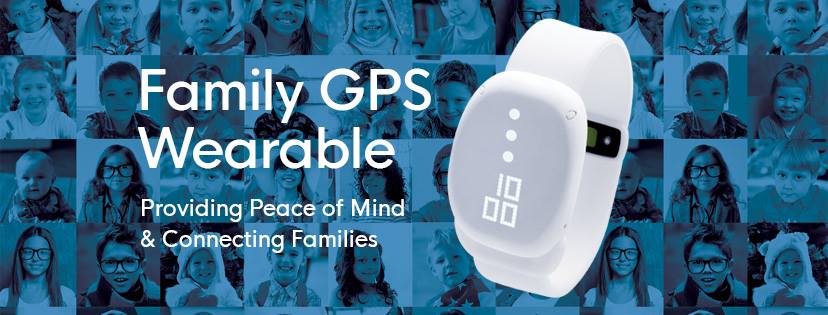
Distree – A family GPS wearable keeps you all connected. @RealDristee #wearables #safety

Parenting is about attention and care. A child must be guided and protected from infancy to independence. Caretaking of any kind is about responsibility and awareness. People with special needs or ageing parents require thoughtful and protracted oversight. In the world of the vulnerable, even the mundane can become perilous. A child can fall in a swimming pool, be locked in a car on a hot day, become lost in the woods or even abducted.


Dristee’s technological design offers a unique and comprehensive device to address a broad spectrum of these problems. Dristee is a wearable device providing realtime detection coupled with wireless 4G Network and GPS, Bluetooth connection to locate, sense, and monitor a wide variety of safety and health perimeters.

Let’s take a look at some of dristee’s unique advantages..

Features:
All features listed below are fully integrated and connected between the device and caretaker via smartphones and other electronic devices. The connections between the device and monitoring receptacles can be made with up to five users.

Detects contact with water utilizing sensors without the need of any additional system installations.

Dristee’s detection capabilities monitors ambient temperature continuously effectively warning of excessive heat or cold.

The device utilize an accelerometer to alert of abrupt changes in the wearer’s movements and speed.

Pre-programmable SMS/MMS sends Notification to all designated phone numbers during any and all alert situations.

The device also incorporated heart rate monitor which might prove critical in a variety of situations.

A unique locking mechanism integrated with the wristband prevents unauthorized removal of the device. The locking mechanism has dual operating mechanism – Unlocking via the app or a special key that is provided with each device.

Additional temperature sensors monitor body temperature to alert for hyperthermia or hypothermia.

Connectivity and wireless capabilities include 4G LTE, GPS and Bluetooth.

The device is water proof and water resistance to a depth of 30 to 50 m.

Dristee employs stainless steel wires embedded in the band to withstand attempts at removal with knife or scissors.

The Dristee app displays a user profile, employing such data as recent photo, birthday, hair color, weight, height, eye color.

Operating system compatibility,  Windows – Android – Linux –  iOS

Dristee has the capability to predefine as needed up to five geo-fence locations, each of which can incorporate date, daily schedules and this feature can employ the designation precise distances as required.

Dristee Device Dimensions: 34mm x 45mm x 15mm

Subscription based technology..
Retail Price: $299.00 – Retail Monthly subscription: $12.95/Month.

The water sensor technology employs a novel design that utilizes the conduction property of water. The Water Sensor has two electrodes, one transmitting and the other receiving the signal pulses so that in the presence of significant water transmission between the electrodes is disrupted and an alert is sent. Partial or minor exposures to water, for example rain, is insufficient to disrupt transmission and hence false alarms is avoided.

The device is fully patented and employs the latest semiconductor and information technology. A critical challenge in dristee’s development was to design advanced miniaturization required for its small size and tightly integrated systems. To meet these challenges we developed and tested prototypes such as an ASIC (Application Specific Integrated Circuit) suitable to a small wearable and a programmable logic, FPGA (Field Programmable Gate Arrays) platform.

The systems hardware does not dependent on a single component but changes as needed to provide optimal GSM and GPS functionalities. Whatever communication system is used (GSM, CDMA, 4GLTE etc.), our design capabilities are flexible enough to employ the specific component used for notifications to smartphones in the event of an emergency.

Dee Narla, Inventor, Co-founder

I am a mother, I am socially active and I am deeply engaged with the rights and safety of children, of our fragile fellow humans with special needs and a deep loving concern for the aging members of our society. Though born and educated in India, my life was somewhat privileged but even from that relatively secure position I could see societal failings that put the very young, the very needy and the very old at risk.

Trained as an engineer, I wanted to utilize design and technology to serve the needs of the vulnerable. Repeatedly asking myself, what can I offer to those in need, two issues seemed
apparent. First, specific needs, risks and dangers must be identified and second, once recognized, one must offer effective technology to counter two basic enemies of success – disregard and unawareness. Important keys to societal and family safety are precise information, quick communication and responsive support between everyone involved.

Even in the U.S., I am occasionally disquieted by undertones of isolation, impersonality and even danger, that threaten our society’s vulnerable, from the disappearance of young children to the unintended neglect of the elderly and those with special needs. Such thoughts, along with my own personal concern for the wellbeing and safety of my children and loved ones, lead me to develop Dristee, a system-based product to help meet the increasingly complex safety needs of coming generations. For me, Dristee is not only professionally gratifying in its comprehensive
design and technology but personally satisfying in answering the needs of my own heart and conscience.

www.dristee.com  https://www.facebook.com/RealDr /https://www.instagram.com/dristeegpswearable/    https://twitter.com/realdristee

Infographic – Wearable Technology – Myriad Aspects You Need To Know #Wearables #tech

One of the most challenging issues of the present century is public healthcare. While many countries have made a positive development in different fields the public healthcare is one of the most pertinent issues that create a cause for worry. There are a number of countries where the poor state of public healthcare poses challenging situation to the government. However, it is not only the poor section of the society who is afflicted by health issues. Apart from malnutrition the unregulated lifestyle also invites health issues. However, the wearable technology now seems to be poised to join hands with healthcare sector helping in forming a better world.

What are wearables?
Wearables indicate the functional technology that can be worn over the body in the form of accessories or apparel. For example, your Smartphone watch can be called a wearable. In the field of healthcare constant monitoring, accuracy of data and communicating any vital changes are paramount for the positive results. So, by the use of wearales the vital body data of an individual is collected and sent to the healthcare professional using enhanced communication methods.

Werables are here to stay
The popularity of wearables can be established from the fact that a palpable surge in the sales of Wearales can be seen. For example the Smartwatches that sold worth $15 million in 2014, are expected to touch the figure of $373 million by the end of this decade. And this is not the isolated case. Many wearales are experiencing surge in the total sales

Practical benefits of wearables
Ironically, a huge portion of poverty-ridden population lives in far flung areas that are generally inhospitable and thus it is not conducive for the healthcare professionals to reach there. Devoid of regular health checkups and consultant, the underprivileged population start experience deterioration in their health. However, if such population is encouraged to use the wearables, it would be easier to consistently monitor their vital health stats like heartbeat, BP and pulse rate. Besides, it will help in storage of such data and help in forming digital medical history.
The use of wearables helps in proper monitoring of the lifestyle and thus aims at preventing the diseases or disorders rather than finding a cure when the diseases has already attacked and weakened the immune system.

This info-graphic tells some interesting facts about Wearable Devices which collects the health stats like Heart rate, Blood Pressure, Sleep time and similar health data. Know some more interesting facts in the infographic attached with thanks to NEERJA SOFTWARES

Casio announces new smartwatch with Android Wear 2.0. #CES2017 #Smartwach #Android #Casio 

We still have more news from CES2017 although there’s no the same amount of smartphones as before, we knew we could find some wearable tech.

When Google announced Android Wear 2.0 we weren’t sure about which company will show out of the ordinary, but Casio made an interesting presentation by giving us the second gen of their previous rugged Smartwatch, enter the WSD-F20 or :

Pro Trek

As its predecessor, comes with MIL-STD-810G rating, which means that is capable of withstand almost anything you’re willing to do with it.

After all, is specifically made for outdoors adventurers.

The same impressive and interesting Dual-Layer Display makes a comeback with more faces to choose and an additional GPS Sensor (something we miss on the previous generation) that offer low power consumption and Offline and Colored maps to use even if you phone ran out of battery.

It will come with Casio’s apps to track and keep control on your activities, but we a new one call Location and Traveler that became available thanks to the new components.

But there’ll be more apps to expect thanks to Android Wear 2.0 (also compatible with iOS despite some limitations)

There’s only one flaw, and is that is only going to be available on April 21st and we still have no information about pricing, but we can assume it’ll be pretty close to previous offers.

What are your thoughts on the new iteration from Casio? Adding that GPS will make you decide for this model over other options out there?

Let us know in the comment section below or joint the conversation on twitter with more #CES2017 coverage.

Source