Sennheiser’s new IE 900 flagship audiophile earphones set a new benchmark for portable audio fidelity

 With the new IE 900 audiophile earphones, Sennheiser has brought together technical innovation, portability, meticulous attention to detail, and an uncompromising demand for perfection to deliver a listening experience without compromise. With high-res audio one step closer to hitting the mainstream, and 5G leading to higher quality streaming, audiophiles can enjoy the best of their music collection on the IE 900, wherever they are.

The IE 900 are designed for a decade – striking the perfect balance of form and function. Manufactured at the audio specialist’s headquarters in Germany, every aspect of the in-ear headphones has been engineered to work in harmony to achieve the desired acoustic tuning and to reduce resonances and masking effects. The new IE 900 boasts Sennheiser’s proprietary X3R transducer, a refined version of the audio specialist’s 7mm audiophile Extra Wide Band transducer featuring a unique triple-chamber absorber system. This ensures brilliant, natural high-end sound reproduction and reveals even the finest details in the music.
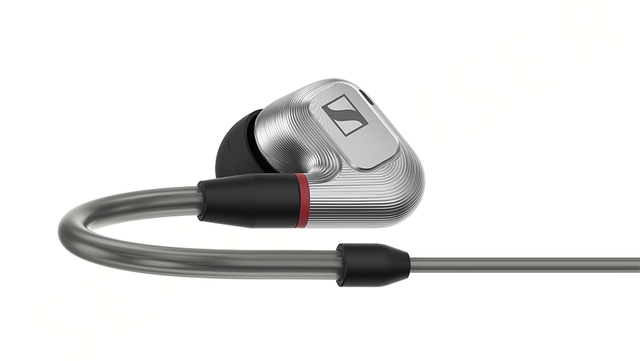
Sennheiser’s IE 900 flagship audiophile earphones set a new benchmark for portable audio fidelity

A unique triple-chamber absorber system
Sennheiser’s quest for delivering highest-fidelity sound begins with the housings of the
IE 900’s earpieces. They are milled from a single block of aluminium to create the earphones’ unique triple-chamber absorber (T3CA) system. Originally developed for the audio specialist’s acclaimed IE 800, the IE 900 features the next generation of the patented absorber system, which uses three chambers and an acoustic vortex milled into the nozzle to counter the masking effect. This acoustic phenomenon arises as the human ear cannot perceive high frequency sounds at a low volume if louder sounds in a lower frequency range occur at the same time. By removing the energy from masking resonances, the absorber system prevents undesired peaks, making even the subtlest nuances of sound audible.


“No detail is too small when you’re striving to set a new benchmark in portable audio fidelity. We designed every component of the IE 900 to work together to deliver extraordinary audio performance,” said Jermo Köhnke, Product Manager at Sennheiser. “Whether in long listening sessions at home or on the go, listeners will never have to compromise on their music experience.”

Sonic expertise and manufacturing precision
Compared to traditional multi-driver concepts, single-driver technology promises greater fidelity for listeners. The IE 900 therefore features Sennheiser’s new X3R transducer, a refined version of the audio specialist’s 7mm audiophile Extra Wide Band transducer, engineered for tighter tolerances and expertly tuned to achieve even greater fidelity. The IE 900 transducer is coupled with the acoustic back volume in the fully automated transducer manufacturing facility at the audio specialist’s headquarters in Germany, resulting in the lowest unit-to-unit variations in miniature, dynamic drivers.

A specialist team in Wedemark, Germany designs, engineers, and manufactures the IE 900 to the highest production standards in the audio industry. Its unique housings are precision milled from high-performance aluminum alloy to retain its pristine appearance for years to come. Precision cameras examine the transducer components closely during production, and completed transducers are tested before and after pairing. For optimal performance, the assembled left and right-side earphones are paired by hand to work together.

Extremely light and pliable, the audio specialist’s broadband transducers prevent distortion, deliver natural, balanced sound, and ensure audio transparency, regardless of listening volume. A newly developed membrane foil provides a high degree of inner dampening, ensuring minimized natural resonances and distortion (THD: 0.05% at 94 dB, 1 kHz). With a frequency response of 5 Hz – 48,000 Hz, the IE 900 reveals even the finest details in the music.

Supreme convenience and comfort
Thanks to the high-performance Fidelity Plus MMCX connector, audiophiles have the freedom of cable choice with the IE 900. Deeper integration into the housing provides better stability for the gold-plated connector. The earphones come with an unbalanced cable with a 3.5mm connector and balanced cables with 2.5mm and 4.4mm connectors. Tested and improved for robustness and longevity, the para-aramid-reinforced cables can withstand thousands of bending cycles. For a comfortable and secure fit, the IE 900 offers ergonomic features, including individually adjustable ear hooks as well as silicone and memory foam ear adaptors in three sizes, perfect for extended periods of personal music enjoyment.

The Sennheiser IE 900 will be available from June for £1,099 in the UK and for 1,299 EUR in Ireland (MSRP).

How 3D Printers Took Over And What Makes Them So Special

Data shows that 3D printing was happening as early as the 1980s. However, the commercial use of 3D printers was not widely adopted until the late 2000s. In the late 90s and early 2000s, the focus of making 3D printers shifted to address small commercial needs. This meant that the printers had to be more user-friendly and, most importantly, affordable. 

In 2007, 3D Systems released the first sub $10,000 3D printer. In hindsight, this looks expensive, but back in the days, it was a great deal that placed the entire industry under immense pressure to develop affordable commercial printers,There is a business printer supplier for Adelaide that offers to rent a printer for small businesses.


Just under two years later, the first commercial 3D printer entered the market. The machine, BfB Rapman, was based on the RepRap (replicating rapid prototyping) technology developed at the University of Bath in England by Dr. Adrian Bowyer. In a few months, Makerbot and dozens of other companies released consumer printers, with the prices falling to less than $1000. 

Today, additive manufacturing has become mainstream, with the machines being super affordable, more efficient, and versatile. You can get a superb 3D printer for as low as $300 for printing home toys and other models. On the other end of the spectrum, scientists are pushing the limits with 3D-bioprinting of functional human organs like the bladder and kidneys. 3D printers are expected to get even better with the current technological advancement. The $13 billion+ industry is also looking at significant growth, with data projecting a CAGR of over 26% by 2024. 


Types Of 3D Printers


Below are three of the most popular types of 3D printing:

1. Stereolithography (SLA)


Stereolithography printing started with original 3D printing back in the 80s, and it’s still relevant to date. The printers work through a process known as photopolymerization to create hardened plastic structures from liquid resin. The models from these printers have incredibly high levels of detail. They usually have tight tolerance and smooth surface finishes making the printer ideal for functional parts, molds, and patterns. SLA printers are commonly used in short-run production, dental application, functional prototyping, rapid prototyping, jewelry prototyping, and concept modeling.

2. Selective Laser Sintering (SLS)


Selective Laser Sintering printing forms solid structures from nylon powders using a high-power laser. SLS printers work really well to produce the desired structures without the need for dedicated supports. Selective laser sintering printing does a great job of showing complex geometries. The structures from this printer also have excellent mechanical characteristics.

SLS is widely used for functional prototyping and custom manufacturing 

3. Fused Deposition Modelling (FDM)


This is the most popular 3D printing technology at the consumer level, thanks to its cost-effective nature. The printers exclude plastic filaments through a hot nozzle where the plastic is melted before it’s applied layer-by-layer to create a platform and ABS and PLA are the commonly used materials in FDM printers. FDM is commonly used for basic models and simple prototyping.

What Are The Benefits Of 3d Printing?


1. Cost-Effective


The upfront cost of acquiring a 3D printer may be high, but the running expenses are usually affordable. This is one of the most significant benefits of 3D printing, and it sets printers apart from formative manufacturing processes. You don’t need operators to monitor the process at all times. You could set up the machine and let it do the job on its own. This effectively cuts down on unnecessary wages and expenses. 3D printing also minimises wastage. The machines use materials accurately on each part.

2. Rapid Prototyping


Compared to machining prototyping, 3D printing is so much faster. This makes it both convenient and cost-effective. It’ll speed up your prototyping process allowing you to create structures in a matter of hours.

3. More customization options


3D printing allows designers to create more complex and detailed models. Besides the basic structures like toys, you can print detailed gaming miniatures and architectural models. This is especially true when you are using printers like Selective Laser Sintering and Stereolithography.

4. Accessible


3D printers are becoming more accessible by the day. There are so many consumer-level printers retailing for less than $1000. Additive manufacturing companies also provide detailed printing services using some of the best machines in the industry at very competitive prices.

5. Environmentally friendly 


Wastage of materials is little to non-existent when using 3D printers. The same cannot be said for traditional manufacturing processes.

6. Risk Reduction

3D printing allows companies to acquire prototypes of projects like complex buildings before investing their funds. This reduces the risk of pouring millions of dollars on a project only to find out that it doesn’t meet the desired expectations at a later stage.

Additive manufacturing has come a very long way. Not only are the current printers affordable, but the performance has also increased tremendously. It’ll be very interesting to see what the future holds for this industry.

Dell Technologies and i2b2 tranSMART Foundation Create “Digital Twins” to Treat Long-Haul COVID-19

Dell Technologies is helping i2b2 tranSMART Foundation, a non-profit open-source research organization, mobilize huge amounts of global de-identified patient data to create virtual models of patients – known as digital twins – to treat impacts of long-haul COVID-19.

Through Dell Technologies’ modern infrastructure, the i2b2 tranSMART community will use de-identified patient data to produce digital twins. Researchers can then perform millions of individualized treatment simulations on the digital twins to determine the best possible therapy option for patients, based on genetic background and medical history.

To make this possible and provide the computational, artificial intelligence, machine learning and advanced storage capabilities to generate digital twins, Dell Technologies built a data enclave – a secure data storage network – comprised of Dell EMC PowerEdge, PowerStore and PowerScale storage systems, as well as VMware Workspace ONE and Boomi integration services. In the data enclave, researchers gather, store and analyze data scattered across various monitoring systems and electronic health records and in the future will have the capability to update the digital twins with real-time clinical data collected through ventilator and cardiac monitors.

“This project is a perfect example of the global research and technology community coming together to support people who are suffering from a condition that is not well understood,” said Jeremy Ford, vice president of strategic giving and social innovation, Dell Technologies. “Working together with the i2b2 tranSMART Foundation, we will apply our expertise and technology to build digital twins, share data, conduct simulations and analyses – using these insights to help understand and better treat patients with long-haul COVID.”  

Initially, researchers will use the data enclave to power 70,000 patients’ tests, simulations and analyses, which will be shared with the 4CE Consortium, an international coalition of more than 200 hospitals and research centers including data collaboratives across the US, France, Germany, Italy, Singapore, Spain, Brazil, India and the United Kingdom. This effort has the potential to expand with data for up to two million digital twins in the next four years.


Understanding and treating long-haul COVID

An estimated 1 in 20 people with COVID-19 are likely to experience long-term symptoms, ranging from profound fatigue, brain fog, headaches, cardiac arrhythmia, fevers and shortness of breath. So-called long haulers suffer from what is known formally as Post-Acute Sequelae of SARS-CoV-2 (PASC). Little is known about why some continue to be affected after the virus has left the body or about the long-term impacts.

To learn more, The National Institutes of Health recently announced the first phase of a four-year, billion-dollar initiative to support PASC research.

Research on this condition requires colossal amounts of patient data. Working directly with the 4CE Consortium, the i2b2 tranSMART Foundation has supported the mobilization of data from a network of more than 200 institutions worldwide. To protect the privacy of patients, all data is de-identified before it is submitted to the 4CE Consortium.

“At this stage, healthcare professionals are breaking new ground by developing and evaluating the efficacy of COVID-19 treatments,” said Dr. Shawn Murphy, i2b2 tranSMART Foundation board member. “This new AI-driven platform will help them use the explosion of research findings to deliver better care and precision treatments for their patients. By creating these digital twins, we are taking clinical research to a whole new level.”

Web Designing Do’s and Don’ts According to the Experts

Are you a web designer or a beginner dabbling in the design world? Web designing is growing, especially during the pandemic as more and more businesses move online. The need for a well-designed website has increased, which means there is a lot more demand for quality designers. If you’ve been looking for an easy guide to what to do and what not to do when designing a website, you’re in the right place. 


Here are the web designing do’s and don’ts according to the experts. 

Do – Scan 

When visitors look at a site, they are more likely to scan the page than read everything. This is why you must make the site easy to scan. Visitors who are looking for a specific page will usually scan the site to find it. To make it a better user experience, design the site in a way that makes this possible. 

You want to avoid chunks of text. Large volumes of text will make it difficult for a reader to digest and may lead to them clicking away due to the overload of information. Instead, break up the texts into bullet points or use headers. 

To increase the visitor’s ease and increase interaction, make any important buttons such as a call to action stand out. Ensure it is in line with the rest of the design but make sure it is prominent and easy to see on the page. 

Do – Test 

Your design may look amazing but without real feedback and testing, it may not work well. Try and have two unbiased users check the site out, so they can give you their unfiltered feedback. One of the most important things to keep in mind is how the user will interact with the end product. The effectiveness of the site often translates into sales, and this is why it’s so important that each function and page is tested to ensure everything is working smoothly. 

Do – Minimalism 

Maybe it’s just banging on-trend right now but minimalism is the way to go when designing a site. This way, you can create an aesthetically pleasing, value-providing site. Users are much more likely to enjoy navigating around the site if it is pleasing to the eye. Ensure the colors are on brand and complement the content on the site. A seamless look is much more pleasing to visitors. 

Stick to a colour palette and don’t get overzealous with it. Too many colours can make the site look messy and uncoordinated. This makes it more difficult for visitors to navigate. 

Don’t – Slow Loading Times 

In these times of instant gratification, users are likely to close or click off the site if it takes too long to load. When building the site, it is important to prioritise speed as this will contribute to the success and effectiveness of the site. According to Surrey web design experts, your website is your first digital handshake with a prospective new client, which is why your first impression is so important. If the first impression is of a site that fails to load, this is a big no-no. 

Don’t – Ad Overload

Our attention spans have decreased thanks to social media and ever-evolving technology. People are much less likely to sift through advertisements that are cramming a website. In fact, this may even put them off. It is difficult to navigate a site like this and the information they have come for may get missed in all the commotion of ads, especially as ads tend to be designed to stand out. 

Ads can often be an important part of a revenue stream, however, this needs to be balanced with the need to create a great website. Visitors tend to come for the content not to be bombarded with ads. 


Don’t – Play Music 

Background music only works on a certain type of site. Most of the time, background music or auto-playing videos will irritate visitors, and they are more inclined to click off. Visitors could be on the site in public or at work, so an unexpected music or sound will be sure to irritate them and affect their experience on the site. 

If there are auto-playing videos on the site, it’s a good idea to set it to mute by default. This gives the user control and allows them to listen to the sound if they want to. 

Designing a site can be a super fun and creative process. Don’t let the creative juices sway you away from the important do’s and don’ts outlined above. Ensure the site is easy to scan and navigate. Remember, the end-user should always be at the forefront when designing.

How To Layout A Media Room, And What Equipment Should You Get

A media room is a multifunctional room outfitted with assorted equipment. It is majorly for entertainment and relaxing purposes; friends and family gather here to watch movies, favorite Television shows, watch awards, and many more. Different media rooms have different setups that may include a bar area, pool table, and more informal seating. Sometimes people confuse a media room with a home theatre room. 

However, a home theatre room is specifically dedicated to TV and for watching movies while a media room is less specialised. A media room is a multipurpose room and this is what makes it ideal for small homeowners who don’t have an extra room that they can dedicate for one use only.

Media rooms have several advantages which include boosting the value of a home in case you decide to sell it in the future and they are also unique and luxurious rooms. These rooms are also good for families that love to host people and families with young people. Families can use media rooms for bonding with their children and getting to know them better since the environment in the media room is so calming. Media rooms give you a home theater experience at less space and cost. The procedure of how to layout a media room and the equipment that you require are explained in more detail below.

How to Lay Out a Media Room

1. Identify a Room

When laying out a media room, a rectangular room with as few windows and doors as possible is preferred. It is important to pay attention to the location of the room as well, for example, setting up a media room next to a baby’s bedroom will disturb the baby due to the loud music, games, or movies.

2. Clear the Room

The room should be as free as possible for it to be able to accommodate all the equipment. Clearing the clutter in the room also makes it presentable and you will be more comfortable when seated in a clean media room than in a disorganised one.

3. Use Dim Lighting

While watching movies, a lot of people prefer either no lights or dim lights. Dim lights prevent straining of eyes when watching. It’s not advisable to watch movies in a dark room since it reduces the glare on the Television. Employing the smart lightning technology not only allows for a low level of lighting but incorporating a voice-activated helps the movements in and out of the room and enables adjustment of the lights at the comfort of your seat.

4. Using Rags and Carpets

Using the wall to walk carpets makes the media room more attractive and also offers unique comfort when in there. Carpets and rugs also play a critical role in the insulation of sound in the room and also prevents too much noise from coming from the media room 

Equipment to Get for your Media Room

1. Install Audio Visuals

A smart TV is highly recommended since it saves you the hustle of using additional projectors, it is also easier to find your favourite channels from a smart TV. A projector is recommended for families with small playful kids who are likely to break the smart TV. Getting the best home entertainment systems for your media room will help you enjoy spending time there. It is good to mount the TV on a wall so that you are able to conceal some unnecessary components as well as the wiring. 

To get more depth for seating, it is advisable to put the TV or projector on a shorter wall. Select an appropriate technology for your media room for example an all functioning soundbar.  Including acoustic panels and inline speakers can be mind-blowing to the users.

You want to make sure that you have a fast and high-speed internet connection in your entertainment room. This will help you stream those new and exciting movies and shows from streaming platforms. You can also use the same fast internet connection to download movies, music and games from credible platforms and sites like https://thenewpiratebay.org/

2. Comfortable Seats

Pick a smart couch that will allow reclining and heating, they should also have in-built cup holders; if you mainly use the room for watching TV shows and movies. For the gamers, consider including gaming chairs in the room. The chairs should preferably be light and portable. The seats should not be angled according to the TV, this makes viewers more comfortable, that is, no constant turning of their heads. 

The loveseat and the sofa should be placed perpendicularly to one another and should be parallel to the walls. Seats should face towards the doorway and not away from them. When entering the room, the front side of the seats should be the ones welcoming you and not the backside.

3. Curtains and Windows


Curtains block unnecessary noise and light from entering the media room. To block out much light, use the black-out curtains. Curtains also improve the auditory quality of the room and give the room a more appealing visual impression. Windows give the room an open and bright perfect feel. They also play a great role in the aeration of the room. It is important to note that, too many windows will bring so much unnecessary lighting in the media room.

In summary, setting aside a media room is good for a family because not only does it serve as a space for entertainment but it also creates ample time for bonding as a family. Laying out a media room involves identifying a room, clearing it, and using dim lighting. The equipment needed to layout a media room is readily available and they include comfortable seats, curtains, and audiovisuals.

How To Make Your Website More Attractive And Bring More Traffic

Having a website is one of the most popular and effective marketing strategies available out there. Building a website is more difficult than most people think. However, the work does not stop once your page is live. Individuals will rarely visit your site out of chance and there is no point in having a website if people are not visiting it. You will need to put some work and effort into making sure that your page receives enough visitors, particularly in the early stages.

Most businesses usually rely greatly on their online visitors to make sales and increase brand awareness. For this reason, it is fundamental that you understand how you can expand your audience. In this article, we will provide you with a few tips on how to increase traffic to your website.

Advertise Your Website

Often people will create an amazing website and just leave it to do its magic, not realizing that this is not effective at all to invite people. There are millions of different websites, and many may offer similar products/services as you. It is impossible for visitors to go through every single website when searching for something. One of the best things to do is to advertise your website, to increase awareness of its existence. If people know about it, they are evidently more likely to click on your link.

Increase Social Media Presence

Millions of people use social media platforms, for a number of different reasons. This is one of the best ways for individuals to keep up with trends as well as to find out about services and products. One of the great benefits of social media is that you can use it to promote your services and products whilst directly engaging with your customers. This allows you to build a relationship with them. You can focus on a variety of platforms, depending on your audience, and share the link to your website with all of your followers.

Pay Attention to the Design of the Website

Whoever said looks do not matter must not have known much about websites. The look of your page is crucial to attracting more visitors. You may have your own vision of what you want your page to look like. But it can be difficult to actually make this a reality. It is fundamental that you liaise with web design professionals in your area to build the page that you want. If you live in the United Kingdom, for example, there is the opportunity to pay monthly website in the UK, which provides you with ongoing support with your website. The more attractive your website looks, the more visitors it will entice. 

Consider SEO

Search Engine Optimisation (SEO) is crucial for your website as well as to increase traffic. This is essentially the process that allows your page to be ranked highly among search engines. If you ever searched anything online, you will be aware that there are thousands of results that come up with one search, as long as they meet the keywords you used. 

The majority of people only look at the very first page of the results before changing their search. If your website does not show on the first page, it is very unlikely for people to find it. Putting adequate SEO into place can be difficult if you do not know how to do it – consulting with experts may be a good idea to ensure that it is done appropriately.  You should also look into a WordPress SEO Consultant

Make Your Website Mobile Friendly

Most of the internet searches are conducted using mobile devices. Many businesses lose traffic due to their pages not being mobile-friendly. It is very frustrating for potential visitors to click on your link, using their phone, only to find out that it does not work. This will quickly result in them not pursuing the search. Making sure that your website is accessible on mobile devices, will give you access to the majority of the audience.

Examine Your Analytics Data

You may not be aware of this but there are analytics tools available to you that help you analyze every aspect of your website – from the most visited pages to the demographics of your audience. You can use this information to identify which strategies are best for you and assess where your traffic is coming from so that you can enhance your approach.

Change Your Page as Necessary

Creating the website is only the first step. Do not assume that you will get things right from day one. You can listen to the feedback of your visitors and assess whether there are aspects that you can ameliorate. Changing things as necessary is essential to please your audience and to attract new traffic.

Making sure people know about your website is vital so that you can increase sales. This is pivotal for any small business. Make sure to follow the tips discussed above that will help you increase traffic to your website.

Graphic novel tackles disinformation around Covid19 Vaccine and critical 5G infrastructure..

Sophisticated social media campaigns sponsored by bad state actors are responsible for creating and spreading disinformation around the critical Covid-19 Vaccine and emerging infrastructure such as 5G technology for communications. Erly Stage Studios has today published Bug Bytes, the digital graphic novel, which sheds a light on the disruptive forces at work. This book is the second instalment of the graphic novels that are a part of the Resilience Series commissioned by the US Cyber Infrastructure and Security Agency (CISA).

Bug Bytes will inform and educate people on the dangers and risks associated with dis- and mis- information through fictional stories inspired by real-world events. In Bug Bytes, readers will meet the protagonist Ava Williams, a journalist and academic, patriot and member of Symous – a group fighting disinformation and foreign interference in elections as polling day approaches. Ava’s life gets tangled up in a web of lies as her father, a 5G technician gets hurt and she works to understand what a seemingly innocent poll online related to 5G technology has to do with the 5G Vaccine? Ava is surprised by the reaction of the anti-vaccination community at what is proven to be engineered data and has the unenviable task of making the case to the public at large for how they can be weary on data online with unproven provenance.

Farid Haque, founder and CEO of Erly Stage Studios commented:  “We’re delighted to have been commissioned by CISA to create a practical and engaging communication tool that highlights the existential threat of disinformation in the context of bad state actors. While the story is fictional many of the approaches shown are very much grounded in the reality of the technology we live with and are exposed to almost daily.”

Farid Haque, founder and CEO of Erly Stage Studios

 Bug Bytes provides a unique education for the reader about the world of social media and how digital resources can be hijacked to serve a more nefarious agenda. The ability for foreign bad state actors to weld this kind of influence on another nation is unprecedented as is their ability to twist and manipulate a narrative to use domestic groups to do their bidding. The work helps the reader understand the need to exercise care when it comes to consuming news and information via social media platforms and online sources of information.

 In the story, Ava Williams and a team of patriots are racing against the clock to shine a spotlight on the source of disinformation engineered to hurt critical communication infrastructure and damage the Vaccine roll-out efforts. Ava’s investigative journalism leads her through the metaverse to find allies and discovers through hard graft that foreign actors are tinkering with public data to maliciously mislead and influence perceptions of 5G as a communications technology and its fabricated link to vaccine effectiveness.

 “Bug Bytes is the culmination of the wealth of experience that Clint Watts brings in cyber warfare and disinformation and our studio’s creative direction and storytelling style. We spent months researching the real life incidents and then wrapped them into a fictional story” added Farid Haque.

The graphic novel is being made available by CISA to the general public online as a free resource as the Covid19 vaccine roll out continues to have an impact across the United States and the world at large. The work is available for free for the public and media to read at the following URL: https://www.cisa.gov/cfi-resilience-series-graphic-novels. A first title in the series was released a few months earlier last year ahead of the US elections titled Real Fakes. Watch this space and log back into https://publishing.erlystagestudios.com/ to learn more.

 Contributing artists to Bug Bytes include: Jose Niño Galenzoga, Patricia Beja, Mona Shan and Joel Santiago. Lettering and layouts by Komal N. and Haroon M. Story by Clint Watts and Farid Haque, supported by the script writing team which includes Michael Gianfrancesco and Kabir Sabharwal. Edited by Tolly M. and Laila Khan. Special thanks to Randall Heather and Max Brooks.

The Future of Music Curation Is AI! #NEOSAI #Music

Innovative AI platform is pioneering the music industry through its proven ability to combine music and tech like never before
It’s no secret that digital streaming platforms are currently dominating the music industry. But for record labels, music aggregators, and distributors alike, it can be both time consuming and expensive to handle massive album releases. Enter NEOS-AI: A unique B2B concept platform designed to revolutionise the music industry, which successfully automates the entire curation and distribution process – meaning labels and distributors can focus on signing and marketing more content, generate more revenues for their music catalogues, and ultimately increase visibility of their music titles worldwide.


“Curating music and artwork for distribution is a hassle,” says Bob Shami, CEO of NEOS-AI. “Our platform uses artificial intelligence and best-in-class machine learning algorithms to create products for digital streaming platforms. NEOS-AI takes away all the heavy lifting, ultimately reducing costs and driving efficiencies for distributors.”

NEOS-AI utilizes artificial intelligence to scan and analyze information received into a database, which assembles and organizes all of the metadata with its corresponding assets. Essentially, the tool is designed to replace human tasks such as sorting, organizing, and structuring music libraries for distribution with maximum accuracy and efficiency.

For those wondering the value of automating album distribution, consider the following statistic: RIAA’s semi-annual Music Revenues Report revealed that 80 percent of total industry revenue, or approximately $4.3 billion, is generated through digital streaming platforms. Playlists, particularly on Spotify, constitute a major stake in that game. And, with more than a billion people using audio streaming services and counting, the technology utilized by NEOS-AI is estimated to be worth more than half a billion dollars.

Platform users will be monetized via all streaming and download royalties, which are paid out quarterly. And because NEOS-AI isn’t a service, but instead a partnership between catalog owners (labels) and music distributors, users won’t be charged a fee. Individuals and artists cannot work directly with the platform, however. In order to be eligible to submit a catalog to the platform to be distributed as compilations, all partners must have at least 5,000 tracks.

How exactly does it work? The platform first analyzes a music library and sorts its metadata by genre, mood, and moments. Once NEOS-AI has learned the content, everything from tracklists to song titles and artwork are curated based on predetermined settings. The platform delivers full performance with the ability to customise and tailor settings according to clients’ needs.

“Such new revolutionizing technology has the potential to save all major companies with massive catalogs more money than they make in a year,” says Mr. Shami. “No more music curators, no more graphic designers, no more title curators, no more uploading albums – all of this is done on its own.”

NEOS-AI utilizes five different algorithms to automate the entire curation and distribution process:


  • AI-Pilot: Analyzes and sorts metadata by genre, mood, and moments in order to create album tracklists.
  • AI-Art: Designs artwork according to album title, using a library of more than 50 million images and artist-curated templates.
  • AI-Codes: Generates ISRC and UPC codes in a split second using custom or default prefixes.
  • AI-Agenda: Schedules automated tasks with the ability to work months in advance.
  • AI-Release: Distributes albums via API to more than 300 digital streaming platforms worldwide.


In addition to data indexing, NEOS-AI is capable of creating curated albums in a matter of a split second. The tool is extremely customizable, with the ability to generate albums based on genre, mood, artist, tempo, and more. Utilizing user behavior analytics to determine which tracks to include on each release, the platform assigns the best choice for commercial success in music distribution.

Album artwork for these curated compilations can be designed intuitively as well. NEOS-AI has a powerful function built in, developed exclusively to generate artwork automatically according to each album’s theme. With access to a library of more than 50 million licensed images, the system is able to select a photo, font, and color scheme based on a smart-keyword driven search.

After compilations are created, all albums are submitted for digital distribution, making them available for streaming and downloading. NEOS-AI boasts a robust outreach of music marketplaces worldwide including Spotify, Apple Music, Amazon Music, and YouTube.

“Let your money work for you,” says Mr. Shami. “Digital streaming platforms offer the opportunity for massive streaming revenues. Many companies focus on a handful of releases, and forget about the rest of the millions of songs in their catalogs that could be generating millions of dollars in revenue on a monthly basis. These companies can now schedule releases months in advance with a click of a button.”

For more information, visit www.neos-ai.com.

Apple HomePod – Voice control available for Deezer subscribers. #Deezer #AppleHomePod

Global music streaming service Deezer is ready to play all your musical wishes on HomePod and HomePod mini. Music lovers can set Deezer as their default music service and ask Siri to play any song from our global catalogue of 73 million tracks.

All paying subscribers with iOS 14.3 and above and the latest software on HomePod can use their voice to issue a range of easy-to-remember commands, such as “Hey Siri, play my Flow.” You’ll then hear an endless mix of tracks you love as well as suggested tracks to help you discover new artists.

Voice control also allows you to play specific tracks, artists, albums, favorites or playlists. If you haven’t set Deezer as your default, make sure to say “on Deezer” at the end of your command such as, “Hey Siri, play Bad Bunny on Deezer,” or “Hey Siri, play ‘Dance Monkey’ on Deezer.” You can also like or dislike tracks, play on repeat or shuffle.

Deezer HiFi  subscribers can also use their HomePod and HomePod mini to listen to tracks in high fidelity audio. From HiFi Gold playlists to remastered albums, find what you’re looking for in our HiFi Room and let Siri do the rest.

“Our listeners don’t have to compromise on audio quality thanks to HomePod. HiFi users can still enjoy all of their favorite tunes in true lossless audio. But, don’t worry, even if you don’t have HiFi, Deezer on Apple HomePod is the perfect at home companion when you need to multitask or want to give your eyes and fingers a break, said Nicolas Pinoteau, Director of Partnership Solutions at Deezer.

Deezer on HomePod and HomePod mini is available in Australia, Canada, France, Germany, Japan, Mexico, Spain, UK and USA.

To start using Deezer on Apple HomePod or HomePod mini, make sure to launch the Deezer app and connect your account to your speaker in your settings.

For more information, visit www.deezer.com and www.apple.com.