Why Tech Companies Are Taking Control of Their Communications

The disconnect between Ireland’s world-class tech sector and its telecommunications infrastructure has reached a critical juncture. While Dublin’s docklands host the European headquarters of Google, Facebook, and Microsoft, and Cork houses Apple’s only wholly-owned manufacturing facility in Europe, many tech companies still struggle with communication systems that fail to match their operational sophistication. Yellowcom, serving Irish businesses from their Dublin office, reports that technology companies achieving the best performance gains are those taking direct control of their communication infrastructure rather than accepting standard business packages.

The irony is palpable. Irish tech companies building cutting-edge software solutions often rely on communication systems that wouldn’t look out of place in 2010. This infrastructure lag doesn’t just affect startups in Galway co-working spaces or scale-ups in Limerick’s tech clusters—it impacts established firms across Dublin, Cork, and Belfast that assumed their business phone systems and business broadband would naturally evolve with their needs. The reality proves far different, with many discovering that generic business communications packages severely constrain their operational capabilities.

The Technical Debt of Traditional Telecoms

Ireland’s tech sector faces a unique paradox. Companies capable of building complex distributed systems, implementing sophisticated DevOps practices, and managing global cloud infrastructure often tolerate communication systems they wouldn’t accept in any other operational domain. This technical debt accumulates not through ignorance but through focus—engineering teams prioritise product development over internal infrastructure, assuming telecommunications is a solved problem.

The assumption proves costly. Traditional telecoms providers, even when offering “business-grade” services, rarely understand tech company requirements. A software company’s communication needs differ fundamentally from those of traditional businesses. API access for automation, programmatic control of call routing, integration with development workflows, and granular analytics aren’t nice-to-have features—they’re operational necessities.

Dublin’s tech companies particularly suffer from this disconnect. Despite the city’s status as European tech capital, many firms operate with communication infrastructure that creates friction at every interaction point. Engineers cannot programmatically provision phone numbers for testing. Support teams lack integration between phone systems and ticketing platforms. Sales teams juggle multiple disconnected tools because their CRM doesn’t properly integrate with voice systems.

The problem extends beyond pure software companies. Ireland’s growing ecosystem of tech-enabled businesses—from medtech firms in Galway to agritech companies in Cork—require communication systems that support their hybrid physical-digital operations. Traditional telecoms solutions force these companies into awkward workarounds that reduce efficiency and increase complexity.

Why Standard Business Packages Fail Tech Companies

The mismatch between standard business telecommunications and tech company needs stems from fundamental differences in operational philosophy. Traditional business packages assume predictable usage patterns, fixed locations, and hierarchical communication flows. Tech companies operate with variable demand, distributed teams, and network-style communication patterns that break these assumptions.

Consider authentication and security. While traditional businesses might accept username-password authentication for phone systems, tech companies require SSO integration, multi-factor authentication, and granular permission controls. Security isn’t just about preventing unauthorised access—it’s about maintaining compliance with SOC 2, ISO 27001, and customer security requirements that demand comprehensive audit trails and access controls.

API accessibility represents another crucial gap. Tech companies expect to automate everything, from user provisioning to call routing rules. Traditional business phone systems might offer basic APIs as an afterthought, but tech companies need comprehensive, well-documented APIs that enable deep integration with existing tools and workflows. The ability to programmatically control communications becomes essential for maintaining operational efficiency at scale.

Scalability requirements differ dramatically too. A traditional business might grow predictably, adding employees gradually. Tech companies can experience explosive growth, doubling or tripling headcount within months. Communication systems that require manual provisioning, hardware installation, or contract renegotiation for scaling become operational bottlenecks that constrain growth.

Data analytics expectations highlight another divide. Tech companies accustomed to comprehensive metrics from every system find traditional telecoms reporting laughably basic. They need real-time dashboards, custom metrics, data export capabilities, and integration with business intelligence tools. Communication data should flow into the same analytics platforms as other operational metrics, enabling holistic performance analysis.

The Hidden Costs of Communication Friction

The true cost of inadequate communication infrastructure extends far beyond monthly service charges. For tech companies where talent represents the primary asset and productivity drives valuation, communication friction creates compound negative effects that impact everything from recruitment to customer satisfaction.

Developer productivity suffers when engineers spend time managing communication workarounds rather than building products. A Dublin software company might lose dozens of engineering hours monthly to communication-related issues—time that could otherwise advance product development. When senior engineers earning €80,000-€120,000 annually waste time on communication problems, the opportunity cost becomes substantial.

Customer support quality deteriorates when communication systems don’t integrate properly with support infrastructure. Tech companies pride themselves on responsive, high-quality support, but disconnected phone systems create information silos that frustrate both agents and customers. The inability to automatically log calls, screen-pop customer information, or route based on technical expertise degrades service quality and increases resolution time.

Sales efficiency plummets when communication tools don’t support modern sales processes. Tech company sales cycles involve multiple stakeholders, complex demonstrations, and careful relationship management. Communication systems that don’t integrate with CRM platforms, support call recording for training, or enable sophisticated routing rules handicap sales teams competing against well-equipped competitors.

Remote collaboration challenges multiply with inadequate communications. Irish tech companies increasingly compete globally for talent, building distributed teams across multiple time zones. Communication infrastructure that only works properly from Irish offices limits talent acquisition and reduces team effectiveness. The best engineers have options—they won’t tolerate inferior tools.

Building Communications for Scale

Successful tech companies recognise communication infrastructure as critical technical architecture requiring the same attention as product infrastructure. They’re moving beyond traditional telecoms toward platforms that align with their operational philosophy and technical requirements.

Cloud-native architecture becomes non-negotiable. Tech companies already operating in AWS, Google Cloud, or Azure expect communication systems built on similar principles. This means horizontal scalability, API-first design, infrastructure as code capabilities, and seamless integration with existing cloud services. Traditional on-premise PBX systems or hybrid solutions feel anachronistic to teams accustomed to cloud-native operations.

Programmable communications enable the automation tech companies expect. Whether provisioning numbers for new employees through HR systems, updating call routing based on on-call schedules, or triggering customer notifications through communication APIs, programmability transforms communications from static infrastructure to dynamic capability.

Integration depth matters more than feature breadth. Tech companies prefer communication platforms that integrate deeply with their existing stack rather than attempting to replace it. This means native integrations with Slack or Microsoft Teams, webhooks for event processing, and SDKs for custom development. The communication system should enhance existing tools rather than creating another silo.

Geographic flexibility supports Ireland’s distributed tech workforce. With engineers in Dublin, designers in Cork, and support teams potentially anywhere, communication systems must provide location independence. This goes beyond simple remote access—it means consistent experience regardless of location, device, or network conditions.

The Irish Tech Ecosystem’s Response

Leading Irish tech companies are pioneering approaches to communication infrastructure that others can learn from. Rather than accepting telecommunications as unchangeable overhead, they’re treating it as solvable technical challenge worthy of engineering attention.

Dublin’s scale-ups are building internal platforms that abstract communication complexity from end users. Engineering teams create custom interfaces that integrate voice, video, and messaging into unified experiences tailored to specific roles. Support agents see communication options embedded in their ticketing interface. Sales teams access everything through their CRM. Engineers interact through CLI tools or Slack commands.

Cork’s tech cluster benefits from collaboration between companies facing similar challenges. Informal knowledge sharing through meetups and online communities helps smaller companies learn from larger ones’ experiences. This collective intelligence accelerates the adoption of modern communication approaches across the ecosystem.

Galway’s medtech companies, with their unique regulatory requirements, demonstrate that sophisticated communications can coexist with compliance demands. They’ve proven that cloud-based systems can meet strict quality and security requirements when properly configured and validated.

The rise of Irish communication tech companies creates additional options. Local providers understanding tech company needs offer alternatives to international platforms that might not fully grasp Irish market requirements. This competitive pressure drives innovation and improvement across the sector.

Practical Implementation Strategies

Tech companies successfully modernising their communications follow patterns that others can replicate. The key lies in approaching communications as technical project rather than procurement exercise.

Start with technical requirements gathering, not vendor comparison. Define API requirements, integration needs, security standards, and scalability parameters before evaluating solutions. This prevents being swayed by irrelevant features while missing crucial capabilities.

Assign technical ownership to engineering or technical operations teams rather than traditional IT or facilities. Communications increasingly resembles software infrastructure more than traditional telecoms. Teams managing cloud infrastructure often have better context for evaluating and implementing modern communication platforms.

Implement gradually through proof of concept deployments. Start with single team or use case, validate the approach, then expand. This reduces risk while building internal expertise. Many tech companies begin with engineering or support teams who can provide technical feedback before broader rollout.

Build abstraction layers that insulate users from underlying complexity. Whether through custom applications, browser extensions, or API integrations, create interfaces that match existing workflows rather than forcing workflow changes.

Measure everything from the start. Establish baseline metrics before migration, track throughout implementation, and continuously monitor post-deployment. Tech companies excel at data-driven decision making—apply the same rigour to communications.

The Competitive Advantage of Superior Communications

Irish tech companies with modern communication infrastructure report competitive advantages extending beyond operational efficiency. Superior communications become a differentiator in talent acquisition, customer satisfaction, and market expansion.

Recruitment benefits materialise immediately. Engineers evaluating opportunities increasingly consider tool quality alongside compensation and culture. Companies offering modern, integrated communication tools signal technical sophistication and operational maturity. The ability to support truly flexible working—not just “work from home with a laptop and mobile”—attracts talent with options.

Customer experience improvements follow naturally. When support teams have complete context, sales teams respond instantly, and technical teams collaborate seamlessly, customers notice. In competitive markets where product features converge, service quality becomes differentiator. Superior communications enable superior service.

International expansion becomes feasible when communications don’t constrain operations. Irish tech companies targeting European or global markets need presence without infrastructure. Modern communication platforms enable local numbers, regional support, and follow-the-sun coverage without physical offices.

Innovation acceleration occurs when communications become programmable platform rather than fixed infrastructure. Tech companies build custom applications on communication APIs, creating unique capabilities that competitors cannot match. This transforms communications from cost centre to innovation enabler.

Conclusion: Taking Control of Technical Destiny

The gap between Ireland’s tech sector sophistication and its communication infrastructure represents both challenge and opportunity. Tech companies accepting traditional business telecommunications handicap themselves unnecessarily. Those taking control of their communication infrastructure gain operational advantages that compound over time.

The transformation doesn’t require massive investment or disruption. Modern communication platforms designed for tech companies offer consumption-based pricing, gradual migration paths, and immediate benefits. The primary requirement is recognition that communications deserve the same technical attention as other critical infrastructure.

Irish tech companies have proven they can compete globally across every dimension—talent, innovation, execution. They shouldn’t let communication infrastructure become the limiting factor. By applying the same technical rigour to communications as they do to product development, they can eliminate this constraint and accelerate their growth.

The tools exist, the knowledge is spreading through the ecosystem, and early adopters are demonstrating the benefits. For Irish tech companies ready to treat communications as solvable technical challenge rather than immutable overhead, the opportunity to gain competitive advantage awaits. The question isn’t whether to modernise communications, but how quickly you can eliminate this unnecessary friction from your operations.

Viltrox Announces Two New Affordable, Pocketable Ultra-Wide Autofocus Prime Lenses

Viltrox is pleased to announce two new ultra-wide autofocus prime lenses in its popular, lightweight Air Series: the AF 9mm F2.8 Air for APS-C cameras (available with E, Z and XF mounts) and the AF 14mm F4.0 Air for full-frame systems (FE/Z mounts). Weighing less than 190 grams, the new lenses expand creative possibilities for the many photographers and video makers who are seeing the need for lightweight, accessible, high-performance ultra-wide lens choices.

By introducing both these lenses at the same time, Viltrox is providing a complete prime lens solution for creators across both APS-C and full-frame systems. The launch reinforces Viltrox’s mission to make expansive image-making more accessible – removing the weight and cost barriers that have traditionally limited ultra-wide-angle photography.

Viltrox AF 9mm F2.8 Air
The AF 9mm F2.8 Air delivers ultra-wide versatility in a remarkably compact design. With a 113.8° field of view (equivalent to 13.5mm), it is well-suited for landscapes, architecture, and vlogging. Its fast, large f2.8 aperture enhances low-light shooting while also offering subject isolation. The optical design includes 13 elements in 11 groups – with 3 ED (Extra-low dispersion) lenses, 3 HR (high-refractive index) lenses, and 2 aspherical lenses – for sharpness and control across the frame.

Despite its advanced construction, the lens weighs just 175 grams in E and XF mounts, making it ideal for travel and on-the-go shooting. With a minimum focus distance of 0.13 meters and 0.15x magnification, it also supports creative close-ups. The STM autofocus motor ensures smooth, quiet, and accurate focusing, fully compatible with modern eye and face detection systems for both stills and video.

Viltrox AF 14mm F4.0 Air
The AF 14mm F4.0 Air brings a similarly compact approach to full-frame shooting. The 112° field of view, captures sweeping landscapes, cityscapes, interiors, and even astrophotography views – all with clarity and impact. The F4.0 aperture is balanced for sharpness and distortion control, while the 12-element, 9-group design – featuring 4 ED, 2 HR, and 2 aspherical lenses – ensures professional-grade optical performance.

At just 170 grams in FE mount and 185 grams in the Z mount version, it is exceptionally portable. A minimum focusing distance of 0.13 meters with 0.23x maximum magnification makes it particularly useful for capturing rich details at close range and emphasizing dramatic foregrounds. Like its 9mm F2.8 APS-C counterpart, an STM autofocus motor provides accurate, silent focusing and advanced subject tracking with eye and face detection.

Two prime lenses: for the ultimate ultra-wide experience
With the introduction of these two new prime lenses, Viltrox aims to remove longstanding barriers to ultra-wide creativity. Traditionally, such lenses have been defined by heavy builds, high prices, or optical compromises.

Viltrox’s new Air lenses overturn those expectations with pocket-sized portability, reliable autofocus, optimized for stills and video, and sophisticated optical designs that suppress flare and ghosting. At an entry price of just $199 USD, both the AF 9mm F2.8 Air and AF 14mm F4.0 Air make ultra-wide image-making available to a much broader audience.

Pricing and availability
Both lenses are available worldwide from September 19, 2025 at a retail price of $199 USD / €229 / £190 through authorized dealers and the official Viltrox store. For more information, visit: http://www.viltrox.com

More details and how to buy

For more information, please visit:

AF 9mm F2.8 Air E/Z: https://viltrox.com/products/af-9mm-f2-8-e?ref=orbetcnl

AF 14mm F4.0 FE: https://viltrox.com/products/af-14mm-f4-0-fe?ref=orbetcnl

MSRP: $199 / €229 / £190

Other Viltrox News

Tune Into Nostalgia: Skullcandy Meet the World of Peanuts

Skullcandy have been quite of late and now they finally came out with something new for fans  to take a look at, known for great partnerships over the last few years they have launched a new pair of earbuds and turn up the volume on nostalgia with a playful new collaboration celebrating 75 years of Peanuts — the timeless cultural classic of friendship and fun.

Available in four colours and featuring Snoopy, Woodstock, and the gang, the limited-edition collection combines Skullcandy’s much loved Dime Evo earbuds with the lighthearted spirit of Charles Schulz’s beloved characters. Just like Snoopy dancing in his doghouse, these headphones bring together joy, imagination, and world-class audio making then the perfect gift just in time for the Christmas season!

They are now live here on HMV and on Skullcandy’s website from 23rd September and are £49.99.


See our Skullcandy Reviews

Garmin adds AMOLED displays to its Instinct Crossover hybrid smartwatches

Garmin has announced Instinct® Crossover AMOLED, its newest lineup of hybrid smartwatches designed to offer superior readability and timeless style in even the toughest conditions. Featuring mechanical watch hands, the vivid AMOLED display showcases 24/7 health and wellness data, activities and more in stunning detail. Meanwhile, the watch’s built-in LED flashlight provides greater visibility in dark environments. And with incredible battery life of up to 14 days in smartwatch mode and 18 days in battery saver mode, users can do more while charging less. 

“From a day on the hiking trail to a night on the town, Instinct Crossover AMOLED offers the best of both worlds. With traditional analogue hands highlighted on an even brighter display, adventurers can achieve a sophisticated look without sacrificing the durability they need when pursuing their passions.” –Susan Lyman, Garmin Vice President of Consumer Sales and Marketing 

Bigger and brighter

Instinct Crossover AMOLED combines the classic look of an analogue watch with a brilliant, colourful display, all protected by a new scratch-resistant sapphire lens. The watch hands will dynamically move away, making it easier to see data, health stats, smart notifications and more, while the Super-LumiNova® coating ensures users can see the time, even in the dark. 

Built for adventure


    • Get better visibility in the great outdoors or at home with the built-in dimmable LED flashlight.
  • RevoDrive™ technology ensures the time stays accurate by automatically detecting and recalibrating misaligned hands in case of impact during an adventure. 
  • The watch is built to MIL-STD-810 for thermal and shock resistance and includes a dual-layered metal bezel, making it strong enough to endure the toughest adventures.
  • With the ability to track in challenging conditions, users can navigate confidently thanks to multi-band GPS with SatIQ™ technology.
  • Prepare for the next adventure with the new lifestyle logging feature in the Garmin Connect app, showing users how lifestyle choices like caffeine and alcohol consumption impact their sleep, stress and HRV1.


VIDEO: See how form and function work together on Instinct Crossover AMOLED

Tactical edition

For those seeking a smartwatch that’s mission-ready, the Instinct Crossover AMOLED – Tactical Edition offers a variety of tactical-specific features, including an applied ballistics solver, stealth mode and night vision goggle compatibility.
Available now, Instinct Crossover AMOLED has a suggested retail price of £519.99 (€599.99 in Ireland) and comes in two colourways – charcoal and bronze/sunburst. Instinct Crossover AMOLED – Tactical Edition is available for £599.99 and comes in black. Visit garmin.com to learn more about the full collection of health, wellness, navigation and connected features available on Instinct Crossover AMOLED. 

See our smartwatch reviews 

Garmin announces Bounce 2 Kids smartwatch

Garmin has announced Bounce™ 2, its reimagined smartwatch for kids with LTE connectivity1 that makes staying in touch even easier. Bounce 2 allows parents and caregivers to talk to and locate their child thanks to two-way calling, text messaging and real-time location tracking. Featuring a bright, colourful display, kids can also use the smartwatch to track their activities, play fun games, listen to Amazon Music2 and more.

“We are thrilled to introduce Bounce 2, a smartwatch for kids offering the perfect solution for families facing the decision to give their child a smartphone. The watch’s transformed design has a stylish look kids will want to wear, while the connectivity features give parents peace of mind knowing where their kids are 24/7.” 

–Susan Lyman, Garmin Vice President of Consumer Sales and Marketing

Connectivity features parents will love

When using the Garmin Jr. app on a compatible smartphone, parents and parent-approved contacts can communicate with and keep track of their child. 


    • Two-way calling and voice messaging: With the built-in speaker and microphone, kids can call their parents and send voice messages directly from their watch. From the app, parents can answer or call their child’s Bounce 2.
    • Text messaging: Parents can send text messages to their child’s Bounce 2; kids can respond or create their own messages using a full keyboard directly on the watch.
    • Voice message transcriptions: While in a work meeting or in an area where listening isn’t possible, read transcriptions of voice messages sent from the watch.
  • Real-time location tracking: Whether it’s a trip to the park or visiting a friend’s house, parents can see their child’s location in real-time and be notified when they enter or leave a parent-defined area with new temporary geofencing. 

Fun features for kids

  • Built-in sports apps: Kids can track a variety of activities like running, walking, bicycling, pickleball, jump roping, team sports and more. 
  • Immersive designs: Enjoy on-screen animations, watch faces and colour themes. 
  • Amazon Music: Download songs from Amazon Music directly to the watch (Amazon Prime or Amazon Music Unlimited subscription required) to listen to tunes out loud on the watch or through compatible headphones. 
  • Voice commands: Phrases like “call mum”, “start a timer” and more can be activated right from the watch.

Kid-friendly design

Built for all-day play, Bounce 2 features a round, vivid 1.2-inch AMOLED display, giving the watch a sleek look, while the swim-friendly design provides protection during all kinds of activities. And with two side buttons and a touchscreen, it’s easy for kids to navigate between screens and type out text messages on their watch. 

Available now, Bounce 2 offers up to 2 days of battery life3 and has a suggested retail price of £259.99/€299.99.  It comes in three colour options, including light purple, turquoise and slate grey. Kids smartwatch plans are managed by Garmin and are available for £9.99/€10.99 per month. To learn more about the suite of fitness, wellness and activity features available on Bounce 2, click here. 

Engineered on the inside for life on the outside, Garmin products have revolutionised the health and wellness industry. Committed to developing smartwatches and health measurement tools that help people of all activity levels lead healthier lives, Garmin believes every day is an opportunity to innovate and a chance to beat yesterday.

See our smartwatch reviews 

Garmin announces the venu 4 smartwatch

Garmin has announced Venu® 4, the latest smartwatch in the award-winning Venu lineup with innovative new health, fitness and accessibility features. To help users understand their body better and make healthier decisions, Venu 4 lets them track their health trends and log lifestyle changes to see how their choices affect their overall well-being. It also features a stylish metal design, built-in speaker and mic and a bright LED flashlight that provides greater awareness in dark environments. And with up to 12 days of battery life in smartwatch mode, users don’t have to charge their watch every night, making it easier to monitor health metrics 24/7 and receive a more holistic view of their sleep, heart rate variability (HRV), Body Battery energy monitoring, and more.

“We designed Venu 4 to be a personal on-wrist fitness and wellness coach. This premium smartwatch helps users learn even more about their body, provides data-driven insights into how their choices are affecting their health and holds them accountable so they can reach their goals with greater ease.”

—Susan Lyman, Garmin Vice President of Consumer Sales and Marketing

What’s new

Health


    • Health status: See whether health metrics like heart rate, HRV, respiration, skin temperature1 and Pulse Ox2 while sleeping are trending away from their usual range. These changes could indicate added stress to the body and could be related to physical activity, potential illness and more. This feature is currently available in beta3 on the watch and in Garmin Connect.
  • Lifestyle logging: Log custom or preset behaviours – like caffeine and alcohol consumption – and view reports on how those lifestyle choices impact sleep, stress and HRV in the Garmin Connect app.
  • Advanced sleep metrics: Sleep alignment provides even more personalised sleep guidance by keeping track of how aligned the body is to its inner sleep cycle using circadian rhythm. Sleep consistency provides a look at the average bedtime over the past seven days.

Fitness

The new Garmin Fitness Coach provides personalised workouts for over 25 different fitness activities – from walking and indoor cycling to rowing, HIIT and more. These heart rate and duration-based workouts will adjust daily based on activity history, sleep and recovery. Users can set up a Garmin Fitness Coach plan to receive tailored workouts and track their progress in the Garmin Connect app. If users don’t set up a plan, they will still get daily suggested workouts for different fitness activities. For those doing several activities in one workout, the mixed session activity profile tracks multiple activities in one session rather than saving separate activities. 

Accessibility


  • Spoken watch face: Hear time of day, health data and more spoken directly from the watch and receive alerts at the top of every hour. 
  • Colour filter: Users with various forms of colour blindness can choose different colour display options – including grey scale, red/green, green/red or blue/yellow.

Stylish design, premium features

Featuring a sophisticated metal design, Venu 4 is available in two sizes, 41mm and 45mm, and comes in fun colourways – like lunar gold and light sand or silver and citron – with leather or silicone bands that can easily be swapped out. Both sizes feature a built-in LED flashlight for greater visibility in the dark, plus a speaker and microphone to make and take calls from the watch when it’s paired with a compatible iPhone® or Android smartphone and use the phone’s voice assistant to respond to text messages. Certain voice commands, like “start a running activity” and “set timer for 5 minutes” can also be activated right from the watch—no phone connected required.

To support every goal, Venu 4 includes Garmin’s suite of health, fitness and connected features, including HRV status, Body Battery, women’s health tracking (including skin temperature for past ovulation estimates and improved period predictions)4, the Garmin ECG App5, workout benefit and recovery time, training readiness, wrist-based running dynamics, smart notifications, onboard music storage, Garmin Pay, safety and tracking features and more. To learn more, visit www.garmin.com. 

Available to purchase starting September 22, 2025, Venu 4 has a suggested retail price starting at £469.99 / €549.99 (IRE).

Engineered on the inside for life on the outside, Garmin products have revolutionised the health and wellness industry. Committed to developing smartwatches and health measurement tools that help people of all activity levels lead healthier lives, Garmin believes every day is an opportunity to innovate and a chance to beat yesterday.

See our smartwatch reviews

ABM Connect for Life Sciences Launches in Ireland to Strengthen Regulatory Compliance and Operational Efficiency

ABM, a leading international provider of facility, engineering, and infrastructure solutions, today announced the launch of ABM Connect™ for Life Sciences in Ireland. The platform is designed to help life sciences organisations improve accuracy, meet stringent regulatory requirements, and enhance operational efficiency in controlled environments.
A Digital, Audit-Ready Compliance Tool
ABM Connect for Life Sciences replaces paper-based documentation with a secure, fully digital system that creates an instant, audit-ready record of all activities. By guiding frontline teams step-by-step through their cleaning, maintenance, and operational protocols, the platform helps reduce errors, improve inspection readiness, and streamline day-to-day processes in compliance with the European Medicines Agency’s Annex 11 guidelines for electronic records and electronic signatures.
The system is accessible via a secure mobile application on company-issued devices, giving authorised personnel immediate access to live schedules, standard operating procedures (SOPs), and task instructions. It also features real-time, automated task management and verification, ensuring that work is completed according to validated processes by trained and compliant staff.
Supporting Compliance in a Highly Regulated Sector
Manual documentation and logbooks in life sciences facilities can be time-consuming, prone to error, and costly to maintain. ABM Connect for Life Sciences digitises and centralises these records, helping companies reduce the likelihood of deviations, minimise rework, and improve oversight.
“Clients across the life sciences landscape are under pressure to deliver efficiency without compromising safety or compliance,” said Dinny Crowe, Vice President, Operations, ABM“ABM Connect for Life Sciences builds on decades of sector expertise to provide a precision-driven, validated process that gives our clients real-time visibility into operations and readiness for inspection at any time.”
Clients who utilise ABM Connect for Life Sciences state that it has improved their documentation compliance while reducing the costs and environmental impact of maintaining paper logbooks. It is a smarter, more sustainable approach to compliance.
A Strategic Expansion in Ireland
This launch marks a significant step in ABM’s growth within Ireland’s life sciences sector, where the company is expanding its specialist services. Globally, ABM supports more than 85 million square feet of life sciences facilities daily, with over 500 GMP-trained team members working in highly regulated, controlled environments.
ABM is an active member of leading life sciences professional associations, including the International Society of Pharmaceutical Engineers (ISPE), Institute of Environmental Sciences and Technology (IEST), Massachusetts Biotechnology Council (MassBio), BioCom California, and INTERPHEX. With more than 25 years of life sciences expertise, ABM’s Irish team delivers tailored, end-to-end support, combining global best practices with deep regulatory knowledge to meet the unique needs of pharmaceutical, biotech, and medical device manufacturers.
ABM Connect for Life Sciences is already in use across the United States with some of the world’s leading pharmaceutical and biotech companies,

Twelve South launches PowerBug: Transforming standard plug sockets into sleek wireless charging docks

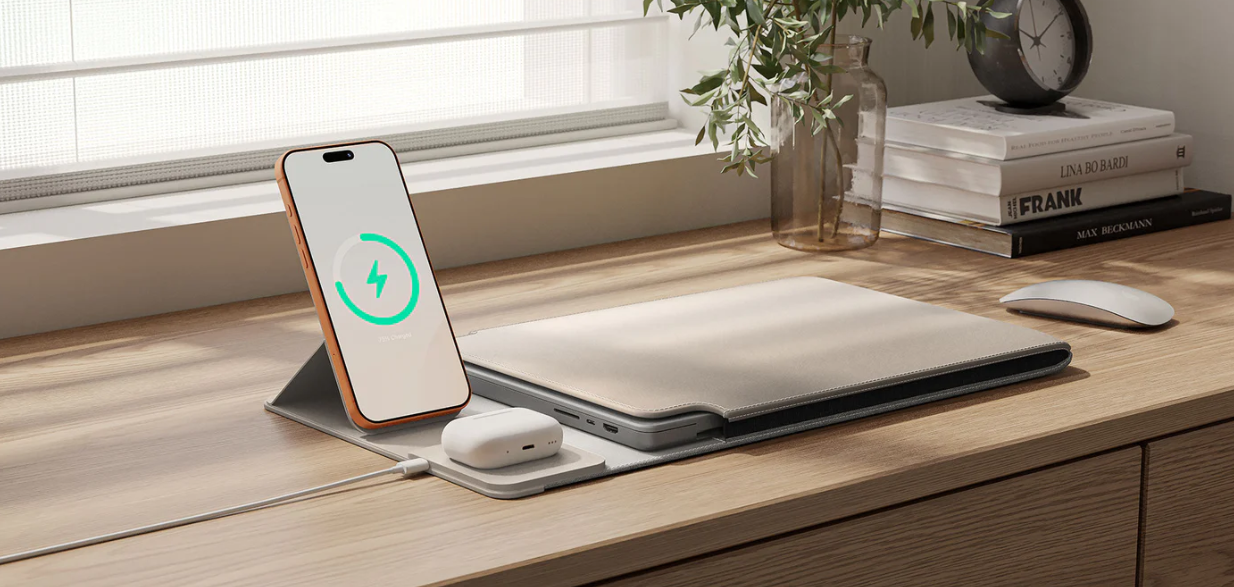
Twelve South, an innovative designer of tech accessories, today launches PowerBug – a unique magnetic charging puck that transforms a standard plug socket into a minimalist wireless charging station that also serves as a dock for devices.

Designed for wall-mounted power outlets at waist height or higher, users simply snap their MagSafe compatible iPhone (12 or newer) or Qi2 smartphone to this sleek magnetic wireless charger, freeing up desk or counter space and removing the need for trailing cables or freestanding wireless chargers.

PowerBug also supports iOS StandBy mode, so iPhones can be used as an intuitive display for checking the time, weather, making video calls, streaming shows and sport or even following a recipe in the kitchen. It can also be used to easily control smart home devices.

PowerBug delivers up to 15w of fast, wireless power for MagSafe and Qi2 devices, while an additional USB-C PD Port enables fast wired charging of a second device. When both charging functions are used, the USB-C PD port offers 20w power, or 35w if the wireless charging function isn’t in use.

It’s ideal for use in kitchens, where counter space is often at a premium, home offices, gaming dens and even offices and co-working spaces, where plug sockets are often located atop desks. PowerBug can easily be transported too, thanks to its compact design, light weight (less than 1kg) and folding prongs.

Available now in white/dune or slate/black exclusively from twelvesouth.co.uk for UK customers, it is priced at £49.99.

See our twelvesouth reviews

Codex launches pioneering neuroinclusive workplace range

Codex, Ireland’s leading B2B provider of office supplies and solutions, has launched a new range of neuroinclusive workplace products designed to help Irish employers provide a more inclusive working environment for employees.

The ‘Thrive by Codex x AsIAm’ product range consisting of 34 Autism friendly products, were developed and tested in collaboration with AsIAm, Ireland’s  Autism charity in real workplace settings and were launched on the opening day of the Autism Europe Congress in Dublin, of which Codex is a platinum sponsor.

With the launch of its new neuroinclusive product range, Codex has become a leading advocate for the acceptance of neurodivergent employees and the need for more inclusive working environments. The company published a report earlier this year – ‘Neuroinclusion in the Workplace’ – which highlighted some of the daily challenges for neurodivergent employees including sensitivity to noise and light as well as issues with communication and social interaction.

With the findings from the report and the research that was carried out,  Codex has been working with AsIAm to launch its new range of products designed to foster a more inclusive and adaptive working environment. The centrepiece of the new range are bespoke,  AsIAm endorsed  ‘Balance Booths’ that allow employees to physically remove themselves from the noise and bustle of the work environment while remaining connected to their teams. ‘The Balance Booths’ have been designed with unique sensory features to provide further regulation opportunities, including tactile ridged dots on the underside of the table for sensory input, a fresh air feature, and coloured lights.

Other items in the new range include an acoustic lounge chair that provides a private, semi-enclosed space for employees who need to detach from the busy work environment and a range of office seats, stools and chairs including the ‘Swopper’, Numo Task chair and Variable kneeling chair that promote movement, which is vital to cognitive development and can also help employees to regulate and maintain focus.

The full neuroinclusive workplace product range is on display at the Autism Europe Congress in the RDS, which is being hosted by AsIAm and Autism Europe and where Codex is a platinum sponsor and exhibitor. Attendees at the 3-day event can try out the new pods and chairs for themselves and talk to members of Codex’s speciality Furniture and Interiors team about the products.

“We’re proud and excited to launch this groundbreaking range of neuroinclusive products that will help Irish employers and companies to build truly inclusive workplaces for their employees,” said Patrick Murphy, CEO of Codex and a keynote speaker at this week’s Autism Europe Congress in Dublin’s RDS.

“The new range has been developed in response to our own research, which found that many traditional workplace designs and social expectations can create unnecessary barriers for neurodivergent employees,” Mr Murphy said. “We were also delighted to be able to consult with our partners at AsIAm, who provided real-world insights and experience that helped to shape the new product offerings.

“We hope these new products will help pave the way for employers and employees to have a positive conversation about workplace inclusivity, starting here at the Autism Europe Congress,” Mr Murphy added.

Codex is already trusted by a range of organisations including universities and private sector companies to deliver products that support neurodivergent people. The company’s ‘Neuroinclusion in the Workplace’ report highlights ways in which employers can improve the everyday experience for neurodivergent employees or students.

“We welcome the launch of Codex’s neuroinclusive workplace range and are proud to have contributed to the development of these products, which are accessible and inclusive by design,” said Adam Harris, CEO of AsIAm “It is fitting that the new product range is being launched here at the 14th International Autism Europe Congress in Dublin and I’m sure ‘The Balance Booth’ and other products will be a big talking point among delegates.”

For more information about the Codex neuroinclusive workplace product range, please visit www.codex.ie

See our sit/stand desk reviews