Amazon launches ‘Think Big Circle’ to connect Irish students with peers worldwide

Today, 25 students from Gaelscoil na Giúise in Tallaght will join 130 schools from over 30 countries to compete in the Coding4Mandela Tangible World Cup.

Sponsored globally by Amazon, the event marks the official launch of the Amazon Think Big Circle, a global collaboration platform designed to connect and empower Amazon Think Big Spaces worldwide.

The Tangible World Cup is an annual online competition that brings together learners to solve engaging, never-before-seen Tangible Coding challenges. This unique unplugged approach teaches key problem-solving and coding skills using physical grids, tokens, and mobile devices.

Following the launch, the Amazon Think Big Circle will become the central hub for continued collaboration, supporting the co-creation of programmes, peer-to-peer learning, and innovative global events that inspire creativity and build community impact.

Opened in 2022, the Amazon Think Big Space in Tallaght was the first of its kind to launch in Europe, and was created in collaboration with South Dublin County Council (SDCC) and South Dublin Libraries to provide a place beyond the classroom for students to explore and cultivate an interest in Science, Technology, Engineering, and Maths (STEM) and STEM-related careers.

The facilities were thoughtfully designed to ensure that students and the wider community have access to high-quality resources to learn about cloud computing and technology in an equitable way. To achieve this, AWS has donated interactive screens, tablets, VR headsets and other resources to furnish the Amazon Think Big Space, and create an immersive, hands-on approach to learning.

Joanne Reynolds, Regional Community Engagement Manager at AWS in Ireland, said: The launch of the Amazon Think Big Circle marks an exciting new chapter for the Amazon Think Big initiative, and global learning and collaboration. We are delighted to have Tallaght’s very own Gaelscoil na Giúise representing Ireland among over 130 schools participating in the Tangible World Cup today globally. This initiative demonstrates what’s possible when we empower young people with the tools, space, and confidence to solve problems together, regardless of their location. It’s not just about coding skills, it’s about breaking down barriers, building connections, and inspiring the next generation to think big!”

For the learners in Tallaght, the event is about more than just a competition, it is a chance to connect with peers across the globe, experience the excitement of a live international challenge, and develop skills that will help address both the digital divide and the social divide.

Ellie Nì Mhaonaigh, aged 12, a participant from Gaelscoil na Giúise said: “The coding is like a puzzle, and I love working with my friends as a team to solve the different levels. It was also cool to see schools from other countries.

The Tangible World Cup is supported as a part of Amazon’s global investment in STEM education and community development, ensuring that students everywhere – from rural villages to major cities – have the opportunity to build skills needed for the future.

For more information:
Website: https://aws.amazon.com/about-aws/global-infrastructure/community-engagement/

Appeals Centre Europe’s First Transparency Report Shines Light on Social Media Mistakes

The Appeals Centre’s first Transparency Report (covering November 2024 to August 2025) highlights the urgent need for independent review of social media decisions. The report shows that where platforms make mistakes, people pay the price: from unjust account suspensions cutting people off from family and friends, to vital health information being removed, or hate speech against vulnerable communities being left online.

More than three-quarters of our decisions overturned Facebook, Instagram, TikTok or YouTube – either because we disagreed with their decision after reviewing the content, or because the platform did not send us the content and we ruled in the user’s favour. The majority of these decisions promoted freedom of expression by recommending that a user’s content or account be restored. 

Across the EU people are standing up to social media companies by challenging their decisions:

  • We received nearly 10,000 disputes about decisions by Facebook, Instagram, Threads, TikTok and YouTube.
  • These came from every single EU country, covering content in more than 50 languages.
  • Of these, more than 3,300 disputes were within our scope, for which we have already issued 1,500+ decisions, with the rest expected in the coming weeks.
  • Since November we have expanded to account suspensions and new platforms (Instagram, Threads, Pinterest) to allow more people to use our service.
  • We received the most eligible disputes from Poland, followed by France and Italy.
  • We saw an upwards trend in case numbers, with the number of eligible disputes received increasing by more than 500% from December 2024 to August 2025.

Under EU law (the Digital Services Act), social media platforms must engage in good faith with dispute settlement bodies like the Appeals Centre and tell their users about this new option.

  • Today, however, dispute settlement bodies are Europe’s best-kept-secret. Most people don’t know we exist and some platforms seemingly want to keep it that way. This needs to change. Social media platforms should clearly tell their users about this new option on a dedicated help-page and as part of their internal appeals process.
  • More generally, co-operation with platforms has been mixed. Progress with YouTube, in particular, has been very slow. We have received no content from the company, meaning that – by the end of August – we had made decisions on just 29 of the more than 340 eligible YouTube disputes submitted to us. As such, we are concerned that people and organisations using YouTube in the EU are being denied meaningful access to out-of-court dispute settlement.

The CEO of Appeals Centre Europe, Thomas Hughes, said:

“Decisions by social media companies have very real consequences: from denying people a say in important debates, to cutting off a crucial source of income. But – as our Transparency Report shows – they don’t always get it right. If you’re in the EU, you can challenge the platform’s decision free-of-charge to the Appeals Centre and get an expert, impartial review.”

Twelve South launches matching iPhone 17 Case and Apple Watch Band collections

Twelve South, an innovative Apple accessories designer, today launches a new collection of iPhone 17 cases and matching Apple Watch Bands. Both made from premium liquid silicone with a soft-touch finish, the iPhone 17 cases provide everyday protection and Apple-ready features, while the light, soft and easy-to-clean watch bands promise all-day comfort and style. Available in Coastal Blue, Dune and Slate from www.twelvesouth.co.uk, the cases and watch bands pair perfectly.

Twelve South iPhone 17 cases


Crafted from silky liquid silicone with a soft-touch finish and microfibre lining, the new durable hard-shell iPhone 17 cases feel as refined as they look. Featuring a slim profile with reinforced edges and a precision frame around the iPhone camera to keep it protected, Twelve South is providing everyday defence without the bulk.

Buttons are protected but remain responsive and easy to use while the camera control button is protected by scratch resistant glass for smooth sliding. The matte finish of the case ensures a secure grip at all times. Additionally, the new cases work seamlessly with MagSafe chargers and accessories for effortless power and pairing.

The new Twelve South iPhone 17 case collection is available now for £49.99 from www.twelvesouth.co.uk. Available for iPhone 17, iPhone 17 Pro and iPhone 17 Pro Max in Coastal Blue, Dune and Slate.

Twelve South Apple Watch Band

Crafted from premium liquid silicone with tonal hardware and subtle dual-colour accents, the new Twelve South Apple Watch Band balances style with all-day comfort and everyday durability. Lightweight with a silky soft finish, it feels soft and flexible on the wrist, moving comfortably with the user, whatever they are doing. Durable, water and sweat-resistant and easy-to-clean it’s perfect for workouts but also stylish enough for the office or weekend wear.

The Twelve South Apple Watch Band is available now for £39.99 from www.twelvesouth.co.uk. Sizes include 38mm-42mm and 44mm-49mm. Designed to coordinate seamlessly with the new iPhone 17 cases, they come in Coastal Blue, Dune and Slate.

See our Twelve South Reviews

Garmin unveils the versatile eTrex Touch to guide every outdoor adventure

Garmin today introduced the rugged eTrex Touch GPS handheld navigator – ­purpose-built for all types of outdoor adventures with a new high-resolution colour touchscreen that allows users to easily swipe and zoom in on their routes. Designed to guide adventurers through a wide variety of activities, the eTrex Touch features preloaded TopoActive Europe maps for roads and trails, and the option to add an Outdoor Maps+ plan for access to additional premium mapping content. With up to 130 hours1 of battery life, adventurers can go on entire excursions without needing to recharge.

“No matter the outdoor adventure, the new eTrex Touch will be your essential companion through it. Featuring a bright color touchscreen that lets you tap, swipe and zoom, the eTrex Touch puts advanced mapping and navigation at your fingertips. Combined with rugged durability and dependable battery life, it allows you to enjoy all of your outdoor activities even more.”

–Susan Lyman, Garmin Vice President of Consumer Sales & Marketing

Explore confidently


  • Slender design: Light and easy to carry, the newest Garmin handheld navigator boasts a bright, 3-inch, high-resolution touchscreen and fits in the palm of the user’s hand.
  • Preloaded maps: View TopoActive Europe Maps for roads and trails, and see terrain contours, topographic elevations, points of interest and more.
  • Long battery life: Out of the box, the device offers up to 130 hours of battery life – and up to 650 hours when switched to expedition mode – so outdoor enthusiasts can enjoy activities even longer. When needed, easily recharge with the included charging cable.  
  • Outdoor Maps+: Add an Outdoor Maps+ plan (sold separately) to receive premium mapping content, including high-detail elevation contours, high-resolution satellite imagery, Topo Pro, night lights and more.
  • Durable build: Purpose-built to withstand weather and rugged conditions, it has an IP67 dust/water rating and an impact-resistant to MIL-STD-810 specifications design.
  • Superior accuracy: Multi-band GPS support provides superior location accuracy, allowing explorers to know exactly where they are on their journey.
  • Plan ahead: Connect with the Garmin Explore™ smartphone app for seamless trip planning, or manage waypoints, courses and activities. Users can also see upcoming climbs on their route, when they will occur and how steep they will be.

Available now, the Garmin eTrex Touch has a suggested retail price of £389.99. To learn more, visit garmin.com/outdoor.

Xiaomi Unveils Xiaomi 15T Blending Outstanding Optics

Xiaomi has unveiled its latest flagship lineup,  Xiaomi 15T, in Ireland. This launch marks a bold evolution of Xiaomi T Series from  flagship photography and cutting-edge technology built for modern trendsetters to  advanced mobile technology, elevated imagery and a refined design.  

Outstanding optics for next-level imaging  

Built for elevated image quality, Xiaomi 15T Series features an advanced triple camera  system co-engineered with Leica, consisting of a main, ultra-wide, and telephoto  camera on Xiaomi 15T. The camera system is designed to deliver impressive results  across a wide range of scenarios. For versatile composition, Xiaomi 15T offers multiple  focal lengths for choice, spanning from 15mm to 92mm across its three rear cameras,  enabling users to frame wide vistas or close in on details with precision.  

At the heart of Xiaomi 15T Series’ 50MP main camera lies a Leica Summilux optical  lens, which captures exceptional detail with an ƒ/1.7 aperture on the base version and  an ƒ/1.62 aperture on the Pro variant. Alongside intricate detail, vivid colours and high  contrast can also be produced even in low-light environments.  

Working alongside the series’ cutting-edge camera hardware is Xiaomi AISP 2.0, the  brand’s next-generation computational photography platform. With features such as  PortraitLM 2.0 and ColorLM 2.0, Xiaomi AISP 2.0 helps to refine images by enhancing  depth perception, tonal range, and colour fidelity, resulting in more natural, lifelike  photography with minimal post-editing required on both variants.  

This is especially helpful for Master Portrait, which builds upon the previous  generation’s portrait capabilities to introduce all-new bokeh effects for background  light, such as Wide and Bubbles, while also giving users the ability to individually adjust  aperture effects and focal length. Meanwhile, for capturing spontaneous moments,  Leica street photography mode enables quick capture from the lock screen. It provides  users with access to iconic focal lengths of 28mm, 35mm, 50mm, and 75mm.

Regarding videography, Xiaomi 15T Series delivers pro-level capabilities for creators. The device supports 4K 30fps HDR10+ recording across all focal lengths, thereby  maintaining consistent vibrancy and contrast regardless of the lens used. For post production, 4K 60fps 10-bit Log recording with LUT input is provided, thereby offering  ample flexibility. 

From photography to videography, Xiaomi 15T Series’ camera system offers a  complete solution for users who want effortless control and memorable results,  whether capturing spontaneous moments or creating carefully composed narratives. 

Breakthrough connectivity, combined with a brand new operating system 

Beyond imaging, Xiaomi 15T Series introduces a leap in mobile connectivity,  redefining how users stay connected in various environments. At the heart of this  innovation is Xiaomi Astral Communication, a suite of advanced technologies,  including the global debut of Xiaomi Offline Communication with Xiaomi 15T Series.  This enables direct voice communication between Xiaomi 15T Series devices over  distances of up to 1.3km for Xiaomi 15T, even without cellular or Wi-Fi signals. It is  ideally suited for open environments such as jungles, deserts, or remote hiking trails,  adding an essential extra layer of reliability when traditional networks are unavailable. 

For stable and adaptive connectivity across various conditions, Xiaomi Astral  Communication also includes Xiaomi Surge T1S Tuner, which flexibly utilises GPS,  Wi-Fi, Bluetooth, and cellular signals. This works in tandem with the Super Antenna  Array, which features a high-performance antenna that improves overall cellular  performance and AI Smart Antenna Switching to maximise signal performance.  Consequently, whether users are streaming, navigating, or gaming, this integrated  system helps to ensure connections remain strong and stable. 

Aside from communication technology, Xiaomi 15T Series will also receive the latest  in software with Xiaomi HyperOS 3. Driving an elevated user experience, Xiaomi  HyperOS 3 will make its global debut in Xiaomi 15T Series and roll out with enhanced  multitasking capabilities, quicker app launches, and redesigned interface elements,  including lock screens, wallpapers, icons, widgets, and even a brand new notification  design. Additionally, system-level intelligence from Xiaomi HyperAI and enhanced  interconnectivity across devices will help increase productivity, enabling users to share  and sync content seamlessly. 

Bigger, brighter, and more immersive display 

Complementing Xiaomi 15T Series’ powerful hardware and connectivity is a clear,  vibrant, and the largest display yet among Xiaomi Series smartphones. This expansive 

6.83-inch display is designed to elevate content creation, reading, and entertainment  with immersive visuals. Furthermore, with a peak brightness of up to 3200 nits, the  display maintains clarity even in bright light, helping to ensure visibility across a wide  range of environments. Beyond that, its sharp 1.5K resolution renders scenes with  exceptional vibrancy and tonal accuracy, bringing photos, videos, and graphics to life  in stunning detail. 

Xiaomi 15T supports a smooth refresh rate of up to 120Hz for fluid scrolling. To further  enhance eye care, it incorporates 3840Hz PWM dimming, which effectively reduces  screen flicker, making the display more comfortable for prolonged viewing, especially  during nighttime reading or in low-light environments. 

Power meets endurance 

A powerful display experience calls for equally capable internals. Xiaomi 15T Series  delivers robust performance and efficient thermal management to meet the demands  of today’s users. Inside Xiaomi 15T is a 5500mAh battery, providing sustained power  within a slim chassis. Xiaomi 15T features 67W HyperCharge to help ensure users  can top up quickly without long wait times. Furthermore, built for longevity, the battery  can retain up to 80% capacity even after 1600 charging cycles. It can power on in  under four seconds when the battery is flat, after a charger has been connected.  

Xiaomi 15T is powered by the MediaTek Dimensity 8400-Ultra. Its processor delivers a boost in CPU and GPU performance over the respective previous generation,  ensuring smooth execution across a wide variety of tasks.² 

Alongside strong performance, a stellar thermal management system is essential to  help ensure long-lasting comfort during extended sessions. In Xiaomi 15T Series, this  is where Xiaomi 3D IceLoop System plays a critical role. Unlike conventional passive  cooling systems that slowly transfer heat from internal components to the phone’s  surface, Xiaomi 3D IceLoop System efficiently separates vapour and liquid, featuring  a specially designed 3D bulge for the CPU. This design helps to direct heat away from  core sources such as the SoC, and evenly distribute it across the device’s surface.  Users can therefore experience sustained optimal performance and a more  comfortable hold, even during demanding tasks. 

Flagship design and durability 

All of this cutting-edge performance is housed in a refined, premium design that  reflects Xiaomi’s continued pursuit of elegance, durability, and comfort in hand. Xiaomi  15T Series’ unified glass fibre back and battery cover form a seamless exterior, while 

the flat frame aligns with modern design principles. Slightly rounded edges contribute  to a more sophisticated aesthetic, offering a comfortable grip.  

Not only does Xiaomi 15T Series come with a premium look and feel, but it also offers  added durability for increased peace of mind. This begins from the Corning® Gorilla® Glass 7i display, which provides 100% improved scratch resistance compared to the  previous generation and further extends to a durable glass fibre back, blending style  with durability. Xiaomi 15T has been upgraded to now withstand depths of up to 3  meters of freshwater,² coming with an IP68 water and dust resistance certification.

Xiaomi 15T will be available in Black, Gray, and the standout Rose Gold¹⁰, a colour  crafted for users who value fashion-forward expression and subtle elegance. 

Ireland pricing and availability¹⁴ 

Xiaomi 15T is available in Black and Rose Gold, with 12GB+256GB, priced at  €649.  

The device will be available through authorised retailers with the following promotional  offers (all offers are limited and available on a first-come, first-served basis): 

  • Harvey Norman Ireland – Available from 24 September 2025 (both colours). Comes with a free Xiaomi Smart Projector L1.  
  • Tesco Mobile Ireland – Available from 25 September 2025 (both colours). Orders include a €200 Tesco Mobile Ireland voucher to spend on any products.  
  • Vodafone Ireland – Available from 26 September 2025 (both colours). Includes  a free Xiaomi Smart Projector L1.  
  • Eir – Available from 01 November 2025 (Black only). Includes a free Redmi 15C  5G.  

Xiaomi Reviews 


CHERRY XTRFY launches ultra-fast low-profile mechanical gaming keyboard

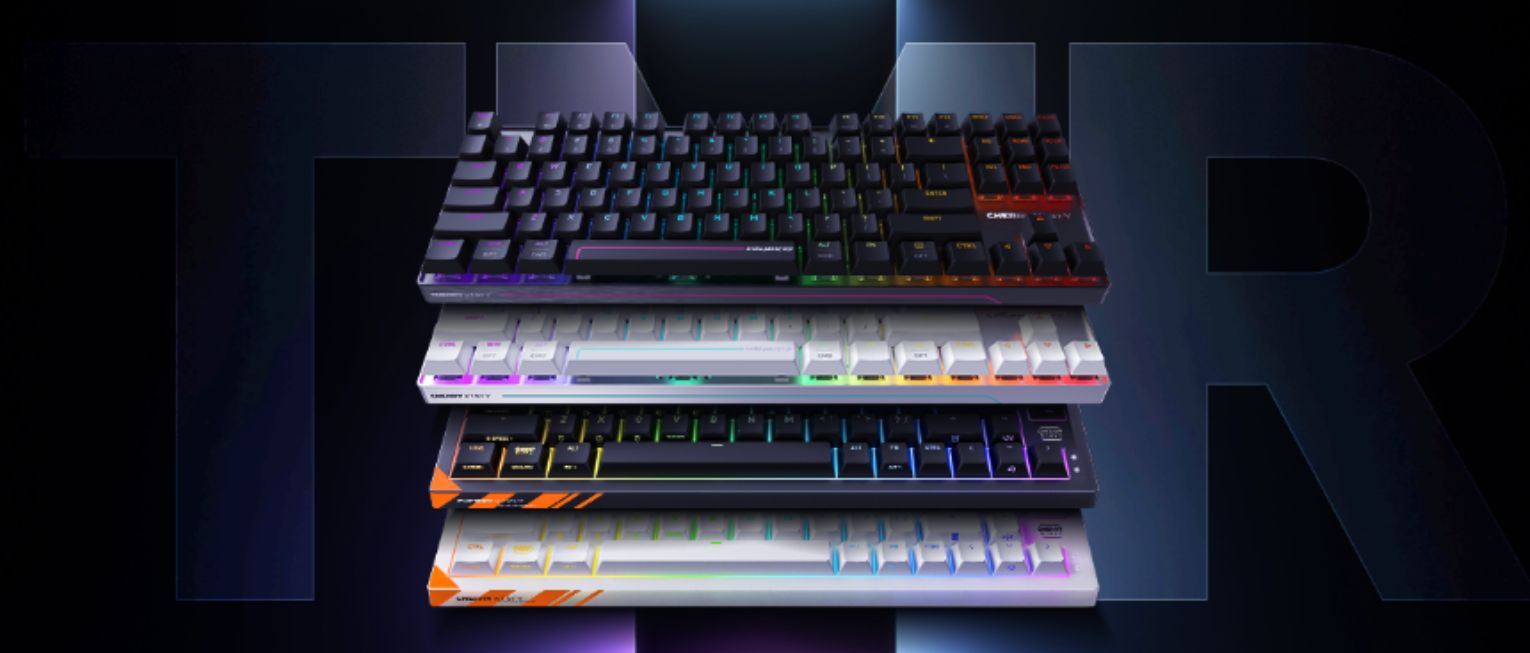
First revealed at CES 2025, the CHERRY XTRFY MX 10.1 Wireless mechanical gaming keyboard is now ready for launch. With a slim aluminium design, CHERRY MX LOW PROFILE 2.0 switches, rotary knob and LCD display, the keyboard delivers a smooth, ultra-fast typing experience.

Gamers can now outpace their opponents thanks to 4000 Hz wireless and 8000 Hz wired polling rates. The CHERRY XTRFY MX 10.1 reports up to 8 times every millisecond and enables faster response times with every keystroke.

Joakim Jansson, Head of Product & Portfolio at CHERRY, said: “We’re thrilled to launch the MX 10.1 Wireless. With this release, we’re taking low-profile keyboards to the next level in every aspect: extreme speed, premium typing feel, a convenient display and rotary knob, and a super-solid aluminium build. It fits the most demanding competitive gamers, as well as anyone who spends their day typing”.  

CHERRY XTRFY MX 10.1 Wireless – The ultra-fast low profile gaming keyboard with full-size layout

Gamers can now experience speed and comfort like never before. The all-new CHERRY MX LOW PROFILE 2.0 switches with PBT keycaps deliver a smoother, faster typing experience. The refined switch design with precisely applied premium-grade lubricant improves acoustics and offers a lifespan of over 100 million keystrokes with no loss of input quality. Combined with the robust aluminium housing for extreme durability, this keyboard will deliver consistent performance for a long time to come. The slim design enhances comfort and makes the keyboard more portable, while still offering a full-size 100% layout.

Multi-device wireless connectivity

The CHERRY XTRFY MX 10.1 Wireless offers triple connection modes for an immense amount of flexibility. Players can either use the 2.4 GHz wireless dongle, USB cable or pair with up to three different devices through Bluetooth®. The rotary knob next to the convenient display allows for an easy switch between paired devices.

Display and rotary knob for absolute control

Gamers can adjust the RGB lighting, access media controls, view battery status and typing speed, and set up three different customizable profiles with personalized settings. The LCD display and rotary knob allow for quick and easy adjustments, without the need to dive into software for every change.

The premium full-size CHERRY XTRFY MX 10.1 Wireless mechanical keyboard offers per-key customizable RGB, full N-Key rollover, Anti-Ghosting and a 4.000 mAh battery for up to 900 hours* of battery life via Bluetooth®, and up to 50 hours* via 2.4 GHz wireless connection with 4.000 Hz polling rate.

*Depending on illumination and display settings

The CHERRY XTRFY MX 10.1 Wireless will be available in stores on the 25th of September 2025 for a recommended retail price of £179.

Vodafone Ireland partners with the OGCIO to trial next-generation communications technology for emergency services

Vodafone Ireland has partnered with The Office of the Government CIO (OGCIO), within the Department of Public Expenditure and Reform, to trial next-generation communications technology to transform emergency services in Ireland.

The new technology is being showcased this week at an international event in Co. Mayo, attended by both Irish and International Public Protection Disaster Relief (PPDR) agencies, including An Garda Siochana, the Irish Coast Guard, Irish fire services, civil defence, Revenue (Customs Service) and the HSE/National Ambulance Service.

The event is supported by the Department of Rural and Community Development and the Gaeltacht and Mayo County Council.

Next-generation Mission Critical Communications Technology 

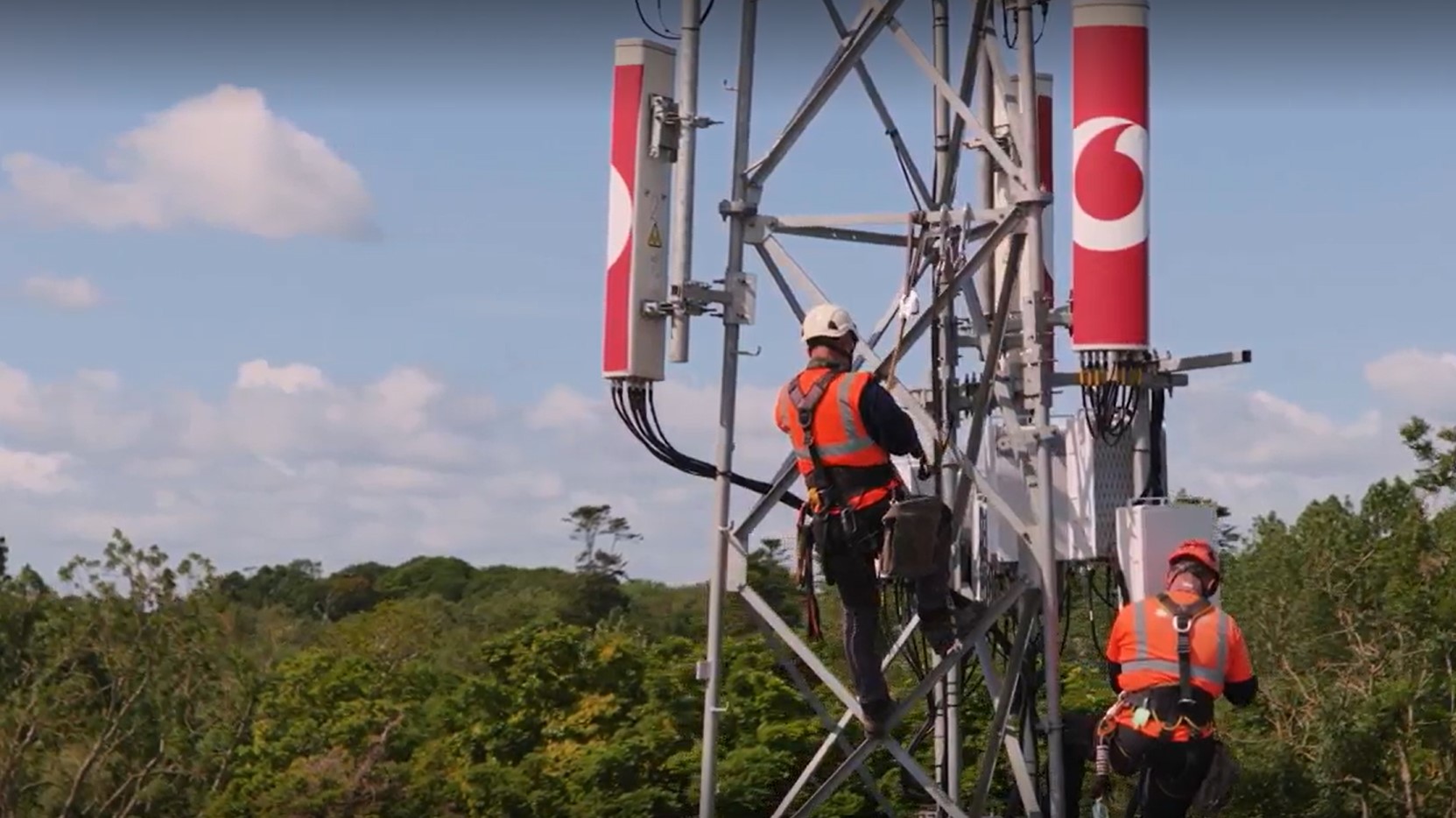
Vodafone Ireland’s Mission Critical Communications (MCx) network is the first of its kind for PPDR agencies in Ireland. Built specifically for emergency responders, MCx provides priority access on mobile networks, enabling teams to talk, share data, and coordinate instantly – even when networks are congested.

This marks a major step in moving from legacy voice and text services to secure, high-performance digital tools, in line with international standards for PPDR communications.

Vodafone Ireland’s solution will combine roaming on its national 4G and 5G networks with direct-to-device satellite connectivity in the future. This will allow anyone, on any network, to reach 112 or 999 during emergencies, even in remote or weather-affected areas. Similarly, in the future, PPDR agencies will be able to access direct to device satellite when mobile networks are unavailable.

Westport Event

The Westport event features a proof-of-concept trial of the new technology. Over two days, staged simulations will replicate complex, evolving incidents, training first responders on new communication capabilities while testing interoperability and operation procedures across multiple agencies.

Participants include local agencies such as Mayo Fire, Mayo County Council Emergency Plan, Public Health Nurse, and local GP, alongside international experts and PPDR representatives from Scotland, Iceland, Norway and Sweden.

The trial builds on Vodafone’s critical national infrastructure network, with government agencies now able to access Vodafone’s 4G/5G network via roaming services. This opens the door to cross-border cooperation, enabling European PPDR agencies to coordinate more effectively during international emergencies.

Strategic Importance

The trial is being observed by European PPDR agencies and European Commission department DG HOME’s EuCCs initiative as part of broader efforts to establish a pan-European mission-critical communications platform, enhancing cross-border emergency communications.

A key highlight of the event includes a situational reenactment of the MV Matthew interdiction in Cork (2023), demonstrating how enhanced communications can improve situational awareness, operational efficiencies, and response times. Several of those involved in the original operation are contributing their experience and insights to the exercise.

Comments

Minister for Public Expenditure, Infrastructure, Public Service Reform and Digitalisation Jack Chambers said: “This trial is a vital pillar of Ireland’s digital transformation, and a crucial step forward for our emergency services and emergency management. It demonstrates how intergovernmental collaboration between the Department of Public Expenditure and Reform, the Office of the Government CIO, and partners like Vodafone is driving innovation in public safety. By modernising our emergency communications infrastructure, we’re ensuring that first responders have access to secure, high-performance tools that will save lives and strengthen community resilience.”


Sabrina Casalta, CEO Vodafone Ireland said: “Ireland is showing real leadership in how we modernise emergency communications. This trial is not just a milestone for Vodafone Ireland and the Irish Government; it marks the first time a mission critical communications system of this kind has been deployed in Ireland. It is proof that we are leading the way in Europe by building resilient, future-proof systems for public protection and disaster relief. We’re proud to partner with the OGCIO to deliver trusted connectivity in innovation that will save lives.”


Sheila Kavanagh, Network Director, Vodafone Ireland said: “Vodafone has been supporting the build out of the Irish Government’s National Low Latency Platform for the past three years using our fibre network. We are delighted to build upon this work by enabling national roaming for PPDR agencies on our mobile network through Vodafone Roaming Services. Crucially, Vodafone Ireland can integrate our direct to device satellite technology as part of our NLLP strategy in the future, delivering the reliability our first responders need from a communications platform.”

Klearcom establishes US office with 20 new jobs

Klearcom, a leading provider of global contact centre testing solutions, today announces that it has established its first physical base in the US with the opening of a new office in Boonton, New Jersey. To facilitate this growth, Klearcom will hire 20 new team members in the US. The announcement has been welcomed by Peter Burke, Minister for Enterprise, Tourism and Employment of Ireland.

Headquartered in Waterford, Klearcom is currently pursuing aggressive growth in the US market. The new base will enable Klearcom to acquire more US-based customers and strengthen relationships with existing clients, such as Google, Mastercard and Visa. This will help the company to grow its share in the interactive voice response (IVR) market, currently valued at $5.9BN and growing at a rate of 7% per annum.

The new hires, to be appointed across sales and customer service over the next 12 months, represent a significant investment from Klearcom. They, and the New Jersey base, will be central to enhancing service delivery and providing on-the-ground support to Klearcom’s growing US customer base.

As the IVR market continues to grow at pace, the expansion will ensure Klearcom stays ahead of market challenges and seizes new opportunities. At the same time, Klearcom will continue to deliver reliable and quality testing for businesses’ automated voice systems, especially within critical customer service channels. The expansion will facilitate faster onboarding, greater support and a more personalised service, enabling the company to align more closely with US business priorities, time zones and escalation needs.

Mark Rohan, co-founder and chief operating officer, Klearcom, said: “The US market is vital to Klearcom’s growth strategy. As such, this announcement is not only a mark of our success in the US to-date, but also our commitment to businesses there. And, while this is our first office in the US, it will not be our only one.

“For us, the expansion comes at the perfect time as businesses increasingly demand cutting-edge technology over outdated legacy systems. Our AI-driven IVR testing is the fastest in the world, enabling enterprises to quickly identify and resolve issues within their telecom system infrastructure, and cementing our position as the leading provider of contact centre testing solutions.

“Our US office doesn’t just mean faster response times – it means being on the ground, right where our customers need us most.”

Peter Burke, Minister for Enterprise, Tourism and Employment of Ireland, said: Klearcom is a prime example of an Irish company whose ambition has driven impressive growth on the global stage. This next step in the company’s journey will open the door to exceptional opportunities within the United States, which have the potential to take the business to new heights. I look forward to watching the team’s progress as they grow their footprint in this important market.”

Why Tech Companies Are Taking Control of Their Communications

The disconnect between Ireland’s world-class tech sector and its telecommunications infrastructure has reached a critical juncture. While Dublin’s docklands host the European headquarters of Google, Facebook, and Microsoft, and Cork houses Apple’s only wholly-owned manufacturing facility in Europe, many tech companies still struggle with communication systems that fail to match their operational sophistication. Yellowcom, serving Irish businesses from their Dublin office, reports that technology companies achieving the best performance gains are those taking direct control of their communication infrastructure rather than accepting standard business packages.

The irony is palpable. Irish tech companies building cutting-edge software solutions often rely on communication systems that wouldn’t look out of place in 2010. This infrastructure lag doesn’t just affect startups in Galway co-working spaces or scale-ups in Limerick’s tech clusters—it impacts established firms across Dublin, Cork, and Belfast that assumed their business phone systems and business broadband would naturally evolve with their needs. The reality proves far different, with many discovering that generic business communications packages severely constrain their operational capabilities.

The Technical Debt of Traditional Telecoms

Ireland’s tech sector faces a unique paradox. Companies capable of building complex distributed systems, implementing sophisticated DevOps practices, and managing global cloud infrastructure often tolerate communication systems they wouldn’t accept in any other operational domain. This technical debt accumulates not through ignorance but through focus—engineering teams prioritise product development over internal infrastructure, assuming telecommunications is a solved problem.

The assumption proves costly. Traditional telecoms providers, even when offering “business-grade” services, rarely understand tech company requirements. A software company’s communication needs differ fundamentally from those of traditional businesses. API access for automation, programmatic control of call routing, integration with development workflows, and granular analytics aren’t nice-to-have features—they’re operational necessities.

Dublin’s tech companies particularly suffer from this disconnect. Despite the city’s status as European tech capital, many firms operate with communication infrastructure that creates friction at every interaction point. Engineers cannot programmatically provision phone numbers for testing. Support teams lack integration between phone systems and ticketing platforms. Sales teams juggle multiple disconnected tools because their CRM doesn’t properly integrate with voice systems.

The problem extends beyond pure software companies. Ireland’s growing ecosystem of tech-enabled businesses—from medtech firms in Galway to agritech companies in Cork—require communication systems that support their hybrid physical-digital operations. Traditional telecoms solutions force these companies into awkward workarounds that reduce efficiency and increase complexity.

Why Standard Business Packages Fail Tech Companies

The mismatch between standard business telecommunications and tech company needs stems from fundamental differences in operational philosophy. Traditional business packages assume predictable usage patterns, fixed locations, and hierarchical communication flows. Tech companies operate with variable demand, distributed teams, and network-style communication patterns that break these assumptions.

Consider authentication and security. While traditional businesses might accept username-password authentication for phone systems, tech companies require SSO integration, multi-factor authentication, and granular permission controls. Security isn’t just about preventing unauthorised access—it’s about maintaining compliance with SOC 2, ISO 27001, and customer security requirements that demand comprehensive audit trails and access controls.

API accessibility represents another crucial gap. Tech companies expect to automate everything, from user provisioning to call routing rules. Traditional business phone systems might offer basic APIs as an afterthought, but tech companies need comprehensive, well-documented APIs that enable deep integration with existing tools and workflows. The ability to programmatically control communications becomes essential for maintaining operational efficiency at scale.

Scalability requirements differ dramatically too. A traditional business might grow predictably, adding employees gradually. Tech companies can experience explosive growth, doubling or tripling headcount within months. Communication systems that require manual provisioning, hardware installation, or contract renegotiation for scaling become operational bottlenecks that constrain growth.

Data analytics expectations highlight another divide. Tech companies accustomed to comprehensive metrics from every system find traditional telecoms reporting laughably basic. They need real-time dashboards, custom metrics, data export capabilities, and integration with business intelligence tools. Communication data should flow into the same analytics platforms as other operational metrics, enabling holistic performance analysis.

The Hidden Costs of Communication Friction

The true cost of inadequate communication infrastructure extends far beyond monthly service charges. For tech companies where talent represents the primary asset and productivity drives valuation, communication friction creates compound negative effects that impact everything from recruitment to customer satisfaction.

Developer productivity suffers when engineers spend time managing communication workarounds rather than building products. A Dublin software company might lose dozens of engineering hours monthly to communication-related issues—time that could otherwise advance product development. When senior engineers earning €80,000-€120,000 annually waste time on communication problems, the opportunity cost becomes substantial.

Customer support quality deteriorates when communication systems don’t integrate properly with support infrastructure. Tech companies pride themselves on responsive, high-quality support, but disconnected phone systems create information silos that frustrate both agents and customers. The inability to automatically log calls, screen-pop customer information, or route based on technical expertise degrades service quality and increases resolution time.

Sales efficiency plummets when communication tools don’t support modern sales processes. Tech company sales cycles involve multiple stakeholders, complex demonstrations, and careful relationship management. Communication systems that don’t integrate with CRM platforms, support call recording for training, or enable sophisticated routing rules handicap sales teams competing against well-equipped competitors.

Remote collaboration challenges multiply with inadequate communications. Irish tech companies increasingly compete globally for talent, building distributed teams across multiple time zones. Communication infrastructure that only works properly from Irish offices limits talent acquisition and reduces team effectiveness. The best engineers have options—they won’t tolerate inferior tools.

Building Communications for Scale

Successful tech companies recognise communication infrastructure as critical technical architecture requiring the same attention as product infrastructure. They’re moving beyond traditional telecoms toward platforms that align with their operational philosophy and technical requirements.

Cloud-native architecture becomes non-negotiable. Tech companies already operating in AWS, Google Cloud, or Azure expect communication systems built on similar principles. This means horizontal scalability, API-first design, infrastructure as code capabilities, and seamless integration with existing cloud services. Traditional on-premise PBX systems or hybrid solutions feel anachronistic to teams accustomed to cloud-native operations.

Programmable communications enable the automation tech companies expect. Whether provisioning numbers for new employees through HR systems, updating call routing based on on-call schedules, or triggering customer notifications through communication APIs, programmability transforms communications from static infrastructure to dynamic capability.

Integration depth matters more than feature breadth. Tech companies prefer communication platforms that integrate deeply with their existing stack rather than attempting to replace it. This means native integrations with Slack or Microsoft Teams, webhooks for event processing, and SDKs for custom development. The communication system should enhance existing tools rather than creating another silo.

Geographic flexibility supports Ireland’s distributed tech workforce. With engineers in Dublin, designers in Cork, and support teams potentially anywhere, communication systems must provide location independence. This goes beyond simple remote access—it means consistent experience regardless of location, device, or network conditions.

The Irish Tech Ecosystem’s Response

Leading Irish tech companies are pioneering approaches to communication infrastructure that others can learn from. Rather than accepting telecommunications as unchangeable overhead, they’re treating it as solvable technical challenge worthy of engineering attention.

Dublin’s scale-ups are building internal platforms that abstract communication complexity from end users. Engineering teams create custom interfaces that integrate voice, video, and messaging into unified experiences tailored to specific roles. Support agents see communication options embedded in their ticketing interface. Sales teams access everything through their CRM. Engineers interact through CLI tools or Slack commands.

Cork’s tech cluster benefits from collaboration between companies facing similar challenges. Informal knowledge sharing through meetups and online communities helps smaller companies learn from larger ones’ experiences. This collective intelligence accelerates the adoption of modern communication approaches across the ecosystem.

Galway’s medtech companies, with their unique regulatory requirements, demonstrate that sophisticated communications can coexist with compliance demands. They’ve proven that cloud-based systems can meet strict quality and security requirements when properly configured and validated.

The rise of Irish communication tech companies creates additional options. Local providers understanding tech company needs offer alternatives to international platforms that might not fully grasp Irish market requirements. This competitive pressure drives innovation and improvement across the sector.

Practical Implementation Strategies

Tech companies successfully modernising their communications follow patterns that others can replicate. The key lies in approaching communications as technical project rather than procurement exercise.

Start with technical requirements gathering, not vendor comparison. Define API requirements, integration needs, security standards, and scalability parameters before evaluating solutions. This prevents being swayed by irrelevant features while missing crucial capabilities.

Assign technical ownership to engineering or technical operations teams rather than traditional IT or facilities. Communications increasingly resembles software infrastructure more than traditional telecoms. Teams managing cloud infrastructure often have better context for evaluating and implementing modern communication platforms.

Implement gradually through proof of concept deployments. Start with single team or use case, validate the approach, then expand. This reduces risk while building internal expertise. Many tech companies begin with engineering or support teams who can provide technical feedback before broader rollout.

Build abstraction layers that insulate users from underlying complexity. Whether through custom applications, browser extensions, or API integrations, create interfaces that match existing workflows rather than forcing workflow changes.

Measure everything from the start. Establish baseline metrics before migration, track throughout implementation, and continuously monitor post-deployment. Tech companies excel at data-driven decision making—apply the same rigour to communications.

The Competitive Advantage of Superior Communications

Irish tech companies with modern communication infrastructure report competitive advantages extending beyond operational efficiency. Superior communications become a differentiator in talent acquisition, customer satisfaction, and market expansion.

Recruitment benefits materialise immediately. Engineers evaluating opportunities increasingly consider tool quality alongside compensation and culture. Companies offering modern, integrated communication tools signal technical sophistication and operational maturity. The ability to support truly flexible working—not just “work from home with a laptop and mobile”—attracts talent with options.

Customer experience improvements follow naturally. When support teams have complete context, sales teams respond instantly, and technical teams collaborate seamlessly, customers notice. In competitive markets where product features converge, service quality becomes differentiator. Superior communications enable superior service.

International expansion becomes feasible when communications don’t constrain operations. Irish tech companies targeting European or global markets need presence without infrastructure. Modern communication platforms enable local numbers, regional support, and follow-the-sun coverage without physical offices.

Innovation acceleration occurs when communications become programmable platform rather than fixed infrastructure. Tech companies build custom applications on communication APIs, creating unique capabilities that competitors cannot match. This transforms communications from cost centre to innovation enabler.

Conclusion: Taking Control of Technical Destiny

The gap between Ireland’s tech sector sophistication and its communication infrastructure represents both challenge and opportunity. Tech companies accepting traditional business telecommunications handicap themselves unnecessarily. Those taking control of their communication infrastructure gain operational advantages that compound over time.

The transformation doesn’t require massive investment or disruption. Modern communication platforms designed for tech companies offer consumption-based pricing, gradual migration paths, and immediate benefits. The primary requirement is recognition that communications deserve the same technical attention as other critical infrastructure.

Irish tech companies have proven they can compete globally across every dimension—talent, innovation, execution. They shouldn’t let communication infrastructure become the limiting factor. By applying the same technical rigour to communications as they do to product development, they can eliminate this constraint and accelerate their growth.

The tools exist, the knowledge is spreading through the ecosystem, and early adopters are demonstrating the benefits. For Irish tech companies ready to treat communications as solvable technical challenge rather than immutable overhead, the opportunity to gain competitive advantage awaits. The question isn’t whether to modernise communications, but how quickly you can eliminate this unnecessary friction from your operations.