EV Platform Monta Partners with Nevo to Provide Smart Charging Solutions for Apartment Residents

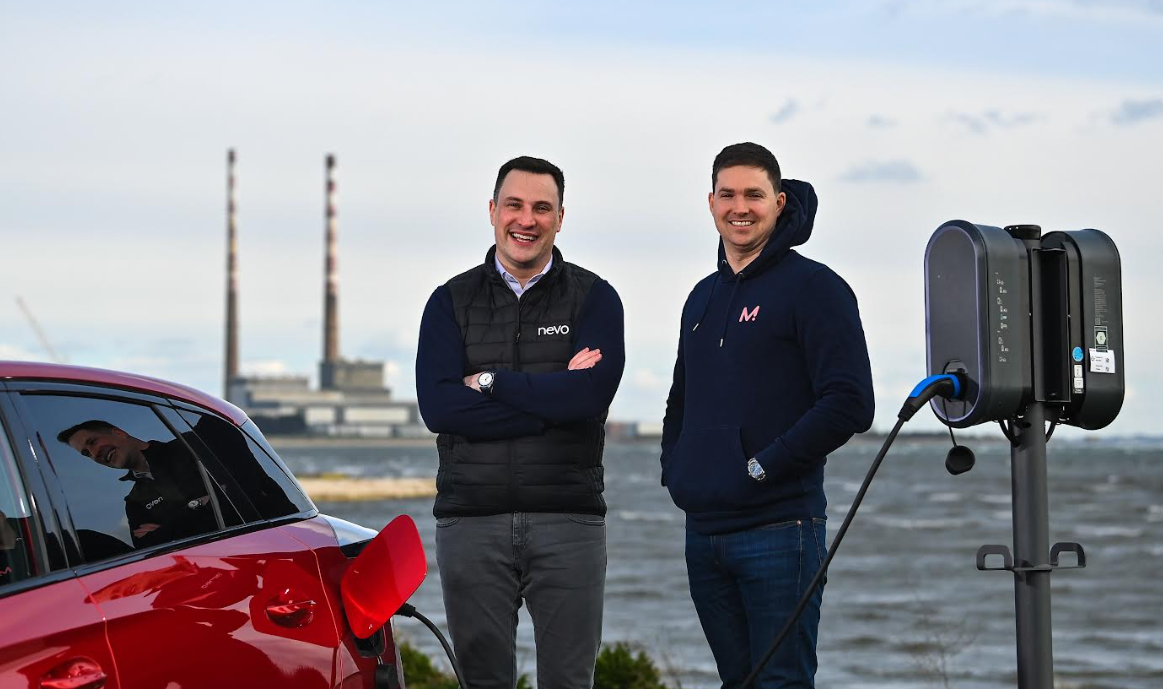
(EV) charging platform Monta, today announced a new partnership with Nevo, Ireland’s dedicated EV marketplace. The partnership will provide smart charging solutions at different residential and commercial sites, with the first installs happening at two separate residential apartment blocks in Dublin. Nevo will use Monta’s platform to manage the charge points allowing end users to benefit from pricing flexibility, accessibility, billing and utilisation features such as queueing, reservations and scheduling. 

Monta’s announcement today comes as Nevo plans to manage and install hundreds more charging points across Ireland in 2023 in response to experiencing a surge in demand for smart charging solutions from apartment complexes, workplaces and fleets across the country.  

Commenting on the announcement, Ricky Hill, Country Manager for Monta in Ireland said: “Monta looks forward to working with Nevo in building a seamless user experience for EV drivers and stakeholders across the country. This partnership marks an important step in providing equal access to prospective EV drivers no matter where they reside or live in the country. Being a European market player, we understand the need to service different residential locations such as apartment blocks. By joining forces with Nevo, Monta will be the one stop shop for EV drivers and charge point owners.” 

Monta’s app and charge point management systems will help with Ireland’s EV transition by eliminating the need to connect with multiple providers, thereby improving the overall user experience. As part of the partnership Monta and Nevo plan to offer their integrated EV solutions to benefit companies, fleets, county councils and utilities with the install and management of their charging stations.  

Also commenting on the partnership, Derek Reilly, General Manager at Nevo said: “Monta’s integrated software solutions are a stand-out USP for the EV market here in Ireland that will allow charge point owners the opportunity to better manage their installs giving end users more options and flexibility when plugging in their EVs to charge points across the country. We are excited to roll out our joint EV platform solutions to apartment residents in Dublin and expect to see the partnership grow to service commercial sites, fleets and rentals.”  

Monta and Nevo both launched in the Irish market last year. Nevo lists every available full-electric and plug-in hybrid vehicle on sale in Ireland alongside its install service for EV charging points. Monta’s EV platform is designed to enable easy management and monitoring for charge point owners, while on the front end its app for EV drivers will allow anyone to top up via Google Pay and Apple Pay.    

Wireless Charging Electric Vehicles Is Safer Than Plugging In, Reports IDTechEx

The most common method of Wireless Power Transfer (WPT) used today is accomplished via low to high-frequency (30 kHz to 30 MHz) time-varying magnetic fields. This may also be referred to as ‘inductive WPT’ or ‘magnetic field WPT’. Wireless chargers operate far below the radio frequencies which are present all around us. Unlike high-energy (ionizing) radiation, electric and magnetic fields (EMFs) in the non-ionizing part of the electromagnetic spectrum cannot damage DNA or cells directly.

At the frequencies used for wireless EV charging, magnetic fields are impervious to air, water, ice, concrete, wood, plastics, and other common non-metallic materials. They pass through these objects and the human body without any interaction or causing any harm whatsoever. This also allows for hermetically sealed designs that are safer and more robust than are possible with contact-based or wired charging. A wireless system also minimizes the risk of electrocution and trip hazard. The latest report from IDTechEx includes detailed coverage of the standards and safety features around wireless EV charging systems.

Author – Shazan Siddiqi – Technology Analyst IDTechEx


Active Shielding Methodologies

Shielding is important for the safe operation of wireless EV chargers. The following problems may occur without shielding: the magnetic field may interfere with the EV or other objects, cause battery heating, and circulate current in metallic parts. There are two basic methods for shielding against low to medium-frequency magnetic sources, which includes the use of ferrites to provide magnetic flux directionality and aluminum plates to minimize field leakage. IDTechEx research interviewed various players in the industry and found that shielding is mainly added under the transmitter pad and above the receiver pad. The report finds that instead of radiating EMF, players are recycling the magnetic field and containing it within the pads because it is resonant, highly coupled, and shaped.

Foreign Object Detection (FOD)

The safety of wireless EV chargers is further enhanced by using foreign object detection (FOD) and living object protection (LOP) systems. These systems identify any metallic objects between the transmitting and receiving pad and can suspend power transfer. This is important as metal items, even small objects such as paper clips or coins may heat up and pose a burn risk. FOD can be achieved in a number of ways. For example, capacitive sensors in the pad can be used to monitor the performance of the coils. A metal object on the pad changes the capacitance, allowing its presence to be detected. That does not necessarily detect organic objects, such as an animal on the pad in a garage, though. Optical sensors around the edge of the plate using infrared LEDs and photodiode detectors or even Lidar can be used to detect both metal and organic objects on the pad and switch off the charging process if an obstruction is detected.

Categories of FOD methods used in wireless EV charging systems. Source: IDTechEx

IDTechEx research finds that it is important for players to be mindful of interoperability, electromagnetic compatibility (EMC), and safety from the early stages of the development process. Knowing the requirements and standards in place is essential to ensuring that products are compliant and that product redesign and testing time and the cost is minimized. The report “Wireless Charging Market for Electric Vehicles 2023-2033: Technology, Players and Forecasts” provides insights on the industry R&D status along with the outlook for future developments.

Ireland ranks joint lowest of 13 countries on readiness to transition to renewable energy

A new independent report from The Association for Renewable Energy and Clean Technology (REA) has ranked Ireland joint lowest of 13 European countries, on its readiness to make the transition to renewable energy.  

The Energy Transition Readiness Index 2022 sponsored by Irish-headquartered global power management company, Eaton, and global law firm Eversheds Sutherland, analyses the readiness of Ireland’s energy market to support the progression towards net zero, comparing it to other key European markets. The report ranks countries on a scale of 1-5. Higher ranking countries scoring ‘5’ and ‘4’ have effective energy transition policies which encourage technological innovation and market access; while lower ranking countries present barriers to investment through existing policies and rules which are complex and slow to evolve. 

While the same report published last year awarded Ireland a score of 4 – showing that the country had a proactive approach to decarbonising electricity – this score has since fallen to 3, meaning that Ireland has been ranked joint lowest of all countries surveyed. Among other causes, the report cites the country’s failure to allow low or zero-carbon projects to connect to the national grid as a factor which is delaying the transition to renewable energy, noting that the situation is “becoming increasingly critical”.  

The report has also shown that the percentage of newly registered electric vehicles (EVs) in Ireland remains significantly lower, compared to its European counterparts. EVs accounted for 5% of all newly registered vehicles in Ireland in 2021, compared to 12% in the UK, 20% in the Netherlands and 65% in Norway. On EV charging specifically, Ireland has received a score of 2 – together with Poland, this the lowest score of any surveyed country. While acknowledging that “few commercial barriers exist”, the report nonetheless notes that the rollout of EV charging infrastructure across Ireland has been “slow” and “limited”. The widespread adoption of EVs is viewed as an essential component of Ireland’s plan to decarbonise the transport sector. There are approximately 1,900 charging points installed across the country at present. The EU expects that 3 million public chargers will be needed to service its overall target of having 30 million EVs on the road by 2030 – per the same calculation, Ireland would therefore need to install 100,000 chargers within the next eight years. 

One positive outcome, is the progress that has been made on smart meter penetration. A smart meter is a device that accurately measures electricity usage – eliminating the need for estimated bills and allowing households and businesses to become energy efficient and save on costs by shifting their usage to times with lower unit rates. While just 4% of Irish households had smart meters installed in 2020, the Energy Transition Readiness Index 2022 shows this figure is now closer to 34% – a marked improvement. 

The main barriers in Ireland include: 

  • Reduced confidence in the timely development and deployment of policies to implement the transition.  
  • Weakened political and public consensus for the energy transition owing to affordability/current energy crisis 
  • Delays in the deployment of renewable generation owing to the current energy crisis  
  • Grid accessibility constraints  
  • Slow electric vehicle and charging infrastructure rollout  


Dr Nina Skorupska CBE, CEO of Association for Renewable Energy and Clean Technology (REA), said: As ETRI 2022 makes clear, despite impressive progress from a number of European countries, warm words from many Governments around Europe are not being matched by action when it comes to preparing for the energy transition. We now need to see significant action to remove the barriers facing our industry: proper long-term planning; prioritising and accelerating market reforms; and urgently addressing current investment barriers – all are desperately needed to help put us on the right path.” 

Ms Phil Kane, Country Manager at Eaton Ireland, said: “While there is broad support for advancing the energy transition, ETRI 2022 demonstrates that there is a clear disparity between ambition and action. As a global power management company, we know that businesses around the world are embracing the opportunities presented by net zero and accordingly, they are investing in renewable energy technologies. Yet, in Ireland, this palpable enthusiasm must now be matched with practical policy solutions – such as allowing zero-carbon, energy efficient assets to connect to our national grid, without delay. This is especially true in the case of EV charging where it is imperative that both industry and Government works collaboratively to create a robust regulatory framework, that will unlock much-needed investment and boost consumer confidence in green mobility”. 

Mr Mark Varian, Partner & Head of the Construction, Projects & PPP Group at Eversheds Sutherland LLP said: “In a challenging economic and political environment this report shines a light on where opportunities lie for the savvy business operator. As the leading global law firm, we are seeing more large industrials stepping into these markets and more funds wanting to invest in this area. There are also many interconnectors between countries in development and having that flexible demand will be crucial across all jurisdictions to achieve a Net Zero future. Ireland has made good progress in the clean energy sector. We now have an output target of 55% renewables for 2030 so major investment in variable and flexible low-carbon electricity resources are needed to achieve this energy transition target, provide energy security and save consumers money. But in order for investment to continue, we need a speedier role out and implementation of policies and regulatory frameworks that support access to market sectors such as offshore wind. There are huge opportunities here and implementing the recommendations set out in this Index could make a big difference. 

Volkswagen ID. Buzz Takes Irish Car of the Year Title for 2023

At an awards ceremony today at the Westin Hotel in Dublin, the Volkswagen ID. Buzz was named as the 2023 Irish Car of the Year in association with Continental Tyres.

Members of the Motoring Media Association of Ireland (MMAI), the grouping that brings together some 32 of Ireland’s most experienced motoring journalists, hosted the awards event attended by Ireland’s leading car brands, importers and distributors. The awards are voted on by the members of the MMAI who individually assess each new car model that is launched in Ireland each year.

Volkswagen took the top award with its latest all electric ID. Buzz model and, the van version, the ID. Buzz Cargo, won the Irish Van of the Year title at the same ceremony, a first in the history of the awards.  It is the third time that an electric vehicle has taken the award as Kia EVs also won the 2022 and 2020 Irish Car of the Year titles with the all electric EV6 and e-Soul respectively.

Chairman of the MMAI, Joe Rayfus: “The Volkswagen ID. Buzz is a really worthy winner of the Irish Car of the Year title, it is a truly stand-out vehicle.  As the third electric vehicle to win the title, it really does confirm the onward march in Ireland towards an electric motoring future.  Just look at our field of runners for this year’s awards, more than half of the contenders are available as either partial or full electric vehicles”. 

Tom Dennigan of awards sponsor, Continental Tyres said: “After the Covid disruption that impacted on the Irish Car of Year awards over the past couple of years, we are delighted to be back with these awards for 2023.  The MMAI jurors provide a great service to Irish motorists in providing a really helpful insight into the broad range of increasingly sophisticated car models that are launched here each year.  No doubt, the Irish Car and Irish Van of the Year titles will be a huge boost to the popularity of the ID. Buzz in the new vehicle market in January and throughout 2023.”

The all electric ID. Buzz uses the same 77kWh battery as the Volkswagen ID.4 and delivers a 420km range from a single charge.

The Irish Car of the year category winners:

  1. Irish Small Car of the Year: Fiat 500e
  2. Irish Compact Car of the Year: Opel Astra
  3. Irish Compact Executive Car of the Year: Mercedes-Benz C-Class
  4. Irish Compact Crossover / SUV of the Year: Kia Niro
  5. Irish Medium Crossover / SUV of the Year: Kia Sportage
  6. Irish Large Crossover / SUV of the Year: Citroen C5X
  7. Irish MPV of the Year: Volkswagen ID. Buzz
  8. Irish Luxury Car of the Year: Mercedes-Benz EQS
  9. Irish Large Executive Car of the Year: Mercedes-Benz EQE
  10. Irish Performance Car of the Year: BMW i4 M50

The Future of Autonomous Vehicles

Work on developing the technology behind autonomous vehicles began in the 1970s, and it continues apace. The idea behind these vehicles is that they can sense the environment around them and don’t require any human involvement to drive and control them. There are six stages to creating this type of autonomous vehicle. Read on to learn more about these stages, see which stage we’re currently at, and discover the positives, negatives, and challenges of developing autonomous vehicles.

How are autonomous vehicles being accepted by the public?

Public perception is one of the major challenges in developing autonomous vehicles. According to a 2021 American Automobile Association (AAA) survey, only 22% of respondents thought that manufacturers should focus on developing autonomous vehicles. The story is similar in the UK. A 2021 YouGov survey found that only 23% of respondents would be happy to sit in an autonomous vehicle, and 67% said they would be unhappy driving on the same roads as autonomous vehicles. People are also concerned about potential data protection issues and the probable high purchase costs of these vehicles.

It’s important to note that autonomous vehicles have several benefits, such as 360° vision, interconnection between vehicles, and enhanced access for people with disabilities. Despite these advantages, overcoming public mistrust is a significant obstacle that developers and manufacturers face.

The levels of autonomous vehicles

The autonomy of vehicles is categorised by six different levels as follows:

  • Level 0 – no automation present.
  • Level 1 – driver assistance present – hands on or shared control.
  • Level 2 – partial driving automation present – hands off.
  • Level 3 – conditional driving automation present – eyes off.
  • Level 4 – high level of driving automation present – mind off.
  • Level 5 – full driving automation present – optional steering wheel.

Currently, we are at level 2, with level 3 not far away. Level 4 is expected to be reached by the middle of the decade, and optimistic predictions suggest that level 5 will follow soon after. Once autonomous vehicles are at this level, it will be possible to do many other things while you are driving.

It will be possible to access entertainment which is a significant improvement on having to concentrate while navigating miles of long boring roads or motorways. For example, you could use your tablet or smartphone to watch a movie or play a game at Platincasino Ireland and keep yourself entertained during long journeys. Also, if you are travelling to an event, you could get ready during your journey, which is a big time saver.

Safer and reliable mobility

There’s still a long way to go before full vehicle automation is safe and reliable enough to be available on public roads. Technology is still evolving and testing is underway. The main problem with testing is getting enough mileage on roads to demonstrate the reliability of self-driving cars. So, other testing methods are being considered, such as simulation and closed courses. On-road testing has to be the last step for safety reasons.

Collaboration in the industry

There are substantial challenges facing automotive companies and tech companies looking to produce self-driving vehicles. In the case of automotive companies, these challenges are caused by the need for hardware and software, while tech companies face the challenge of producing safe and reliable vehicles. Companies will likely need to collaborate to benefit from their respective strengths and overcome these challenges.

Conclusion

Fully autonomous vehicles will allow us to play games, watch movies, and even get ready for a night out while travelling. However, these benefits are still a few years away. Full automation is categorised as level 5, and we’re currently at level 2. To progress further, developers and manufacturers must overcome public reluctance and ensure the safety and reliability of self-driving vehicles. Work is underway to do this.

image source

SSE Airtricity launches nationwide EV charging network

SSE Airtricity has today announced plans to develop a nationwide EV charging network.

The initiative will see SSE invest €35m to install 30 ultra-rapid electric vehicle (EV) charging hubs across Ireland over the next four years, all of which will be powered by 100% green electricity from SSE Airtricity.

As part of the EV infrastructure rollout, it has been confirmed that the first hub will open at the Lough Sheever Corporate Park in Mullingar, Co. Westmeath next year. The site will be publicly accessible and designed to accommodate long-wheelbase vehicles and buses, as well as cars and fleet vehicles.

As part of Phase One of the project in 2023, and subject to planning permission, additional hubs with 10 charging bays will be installed in Blanchardstown Business Park and Greenogue Industrial Estate in Dublin.

It is expected that a total of six sites will be operational by the end of 2023, with a further 10 coming online in 2024. Each ultra-rapid bay will have charging capabilities of up to 150 kilowatts (kW), sufficient to deliver 12.5 kms of range per minute of charging.

The announcement follows the Electric Vehicle Summit 2022 at the RDS in Dublin this week, where SSE Airtricity was a headline sponsor.

Kevin Welstead, EV Director Sector SSE, said: “At SSE, we have extensive experience in the development and rollout of EV charging infrastructure. From our network in the UK, we understand that when it comes to charging people just want to be back on the move on in the shortest amount of time possible.

“We’re delighted to launch our first EV charging hubs in Ireland, and we’re really excited about the network we are going to develop over the coming years. In building out this infrastructure, we want to ensure peace of mind for all EV drivers – domestic, car fleet, commercial – that when they show up at one of our facilities, they can plug in to a working, high power charger as soon as they arrive, and that they can be back on the move within the shortest amount of time possible.”

Klair Neenan, Managing Director SSE Airtricity, said: “SSE Airtricity has a long-standing commitment of delivering green energy and green energy solutions to our customers, and we’re delighted to take that a step further with the announcement of the SSE Airtricity EV charging hubs.

“With COP27 underway in Egypt, today’s announcement is fitting as we renew our commitment to supporting Ireland’s climate change targets and support Government’s Climate Action Plan and EV transport targets.”  

SSE has committed to installing 300 ultra-rapid charging hubs powered by traceable, renewable energy across Ireland and the UK over the next five years. The very first hub, on Castlebank Street in Glasgow, went live at the end of September.

A 2021 study by the UK’s Association for Renewable Energy and Clean Technology found that Ireland ranked joint-last in terms of implementing charging infrastructure. The Government’s 2021 Climate Action Plan has set a target of one million EVs on the roads by 2030, including private cars, heavy goods vehicles, small public service vehicles, and larger public transport vehicles.

Figures released last month by the UK’s Department for Transport revealed that Northern Ireland has the lowest level of charging device provision in the UK (18 devices per 100,000).

In addition to announcing this nationwide infrastructure across Ireland, SSE has also just completed a deal with pan-European portfolio company, M7 Real Estate, to install charging hubs at the 20 locations the company manages in the United Kingdom.

Actavo launches new EV Charge Division

Actavo, a leading international infrastructure operations partner, headquartered in Dublin, has launched its first-ever direct-to-consumer offering, Actavo HomeCharge, specialising in the installation of electric vehicle (EV) chargers in homes. The new service is available to customers nationwide and leverages Actavo’s over 40 years of experience in managing In-Home installations for leading brands, as well as its expertise in installing EV charge points in Ireland and the UK.

All of the chargers offered by the company are smart EV chargers, which allow consumers to manage their car charging from a mobile app and avail of the best tariffs. In addition, all of the EV chargers in the Actavo HomeCharge product range qualify for the Sustainable Energy Authority of Ireland (SEAI) grant of up to €600 for home charging units, which is available to homeowners regardless of whether they currently own an electric car.

Actavo’s In-Home team of over 500 service engineers, customer service staff, and technicians, currently carries out over 40,000 home visits per month under household brands such as Sky, SIRO, Virgin Media, and Prepay Power.  In a new departure, under the Actavo HomeCharge brand, a nationwide team of highly experienced electricians is being deployed to roll out this new service directly to consumers across the country.

Brian Kelly, CEO of Actavo said: “Actavo is delighted to launch its new EV Charge division, HomeCharge. This is an exciting opportunity for the company in the rapidly growing market for Electric Vehicle chargers. We will be leveraging the talent and expertise of one of the country’s largest and most experienced in-home installation teams, in our first-ever direct-to-consumer offering.

As electric vehicles become more and more ubiquitous, the demand for the installation of smart EV chargers in the home will increase at a fast pace in the coming years. We believe this offering will benefit consumers as it provides a fast, reliable, nationwide service from an expert team and it also speaks to Actavo’s commitment to operate sustainably, as we increase our focus on sustainable practices and services.”

According to the Central Statistics Office, In the first seven months of 2022, 21% of all new cars licensed for the first time were electric or plug-in hybrid electric vehicles compared with 14% in the same period in 2021.

Actavo HomeCharge will facilitate the installation of a wide range of EV chargers, compatible with all major electric car brands.

EV charging startup Monta secures €30m Series A+ for EU expansion

Monta, the only all-in-one EV charging management platform, today announced it has closed an additional EUR 30 million as part of a Series A+ round led by Energize Ventures, a leading global investment manager accelerating digital innovation for energy and sustainability, with participation from returning investors Creandum, Pale Blue Dot, byFounders, and Headline. The latest financing brings Monta’s total to EUR 50 million.

While 2021 European EV sales increased by more than 65% compared to 2020, the lack of EV charging infrastructure is still one of the biggest hurdles to mass adoption. Not only do nearly 3,000 new public charge points need to be built each week for Europe to reach its target of operating one million charge points by 2025, but the customer experience is often hampered by a highly fragmented ecosystem of charge point operators and owners. 

Led by a team of seasoned entrepreneurs with experience managing large software development organizations, Monta is delivering an all-in-one EV charging platform that simplifies and streamlines deployment, use, and management of EV charging infrastructure. Via the Monta platform, charge point owners have full visibility into charge point use, pricing, access, and transactions. For EV drivers, Monta provides reservation, virtual queuing, and payment features under one platform as well as access to public charge points. 

We are aiming to fully digitalize the EV ecosystem to tackle all the immediate challenges within the industry and build toward a more transparent and flexible future. By partnering with hardware OEMs we can deliver new features straight out of the box, like our new feature that allows operators to set a percentage on top of the spot price in order to follow the market fluctuations and automatically offer a fair price for charging, ” says Casper Rasmussen, Monta CEO. “The investment from Energize and our returning investors is a strong vote of confidence in our vision, team, and software as the cornerstone of the mobility infrastructure of the future.”

Monta’s EV charging management platform is used by notable utility, aviation, and transportation industry companies such as Vestas, CPH Airport, and PostNord as well as wholesalers, who are leveraging Monta to upskill installers. Since the company’s latest financing in January 2022, Monta has secured strategic partnerships with hardware manufacturers to launch its Powered by Monta (PBM) program in multiple markets. Key partners include Garo, CTEK, and ABB which each boast a range of charge points in Europe as well as Zaptec, which recently launched Zaptec Park, a co-branded app for its users.

“The market penetration of electric vehicles is climbing sharply as economic, regulatory, and climate levers accelerate EV adoption – and deployment of charging infrastructure has to keep pace. We expect more than 1.6 million public chargers and 20 million private charging stations to be deployed in the U.S. and Europe by 2025,” said Juan Muldoon, Partner at Energize Ventures. “As the market for charge point hardware grows and commodities, Monta offers a software solution that enables a consistent, improved charging experience for players throughout the EV charging value chain – from installers to drivers. We’re thrilled to partner with the Monta team as they pave the way for a more scalable and sustainable EV infrastructure.”

Monta will leverage the additional investment to open up new markets including North America, while consolidating its position in Scandinavia, the UK, and Germany, all of which have legislation in place slated to ban new ICE vehicle sales by 2025, 2030, and 2035 respectively. To further support the needs of the EU and the US – which has set a goal for 50% of its car sales to be EVs by 2030 – Monta will ramp up its product innovations and develop critical features to help EV drivers and charge point owners seamlessly navigate the industry.

Looking further ahead, Monta seeks to expand its product development to include grid management services amid challenges as more EVs hit the roads. Ultimately, the company expects to facilitate the sale of excess power back to the grid (V2G), manage interoperability with other zero carbon technologies (V2H, V2X), aid in the creation of local energy markets, and empower end users with ownership over their energy consumption. 

The ability to take advantage of these new opportunities requires changes in information flows among grid devices as well as innovations in communication and coordination tools that increase the observability, predictability, and controllability of the grid. The societal impact and environmental potential of these technologies are massive. Monta is at the forefront of developing the systems needed to monitor and reward this flexibility to create an equitable energy solution for all EV drivers,” said Casper Rasmussen. 

The deal is expected to close later this year, subject to regulatory approval.

Electric vehicle owners believe the Government is not doing enough to facilitate the adoption of EVs

New snapshot research undertaken by Energia and the Irish Electric Vehicle Owners Association has found that while large numbers of EV purchasers are driven by environmental concerns (40%), almost as many are enticed by the financial savings offered by electric charging (39%).

More than half of respondents to the survey, which took place in June 2022, are paying less than €5 to charge their car, a clear illustration of the cost benefits of EVs versus traditional petrol and diesel vehicles. Furthermore, the number of people charging their electric vehicle daily has dropped by 7%, with charging 1-3 times a week the most common response.

The survey also found that electric vehicle owners feel the Government is not doing enough to promote electric vehicles, with 87% of respondents stating so. Almost a third (28%) lack confidence that the government’s target of 1 million EVs by 2030 would be reached.  However, respondents were positive about the available SEAI grant, with nearly a fifth stating that they wouldn’t have purchased a home charge point without it.


91% of respondents charge their electric vehicles at home. Free chargers, such as those provided by a third of survey participants’ employers, along with range anxiety, were the main reasons stated by the 9% who do not charge at home.

In terms of charging technology, most home charge points continue to come from charge point installers (47%) despite a decrease of 19% since 2021. Being able to connect their home charge point to their solar panels was of importance to 31% of respondents, an increase of 18% since 2021. There has been a 3% increase since 2021 in those using public chargers.

Ciara Moane, Electric Vehicle Product Owner with Energia commented: “We know that the environment is the most important factor for those deciding to buy an electric vehicle, and as Ireland’s greenest electricity supplier, we take pride in providing 100% renewable energy to our customers with charge points located at their home. Over the past year, the number of home charge points we have installed has increased tenfold. With one in five cars licensed so far this year being electric or plug-in hybrid, we are confident that we will see these numbers continue to grow significantly, along with the numbers of customers on EV specific tariffs. Energia’s EV offers include reduced night rates and tariffs bundled with discounted home charge points. We are delighted to be energy partners with some of Ireland’s largest electric car manufacturers including Hyundai, Kia, Opel, Honda, FIAT and Citroën. Energia are very proud to play our part in assisting customers to make cleaner energy choices and help them on their exciting journey to owning an EV.”

Kevin Dowling, Chair of the IEVOA added: “Over the past few years we have seen the shift to EVs accelerate, and from this research we know that Irish people’s deep concerns about their carbon footprint and their household running costs are prompting this. Being able to charge at home is a huge benefit for owners and alongside public transport, walking, and cycling, switching to an EV becomes low hanging fruit for households to play their part in efforts to reach net zero.”