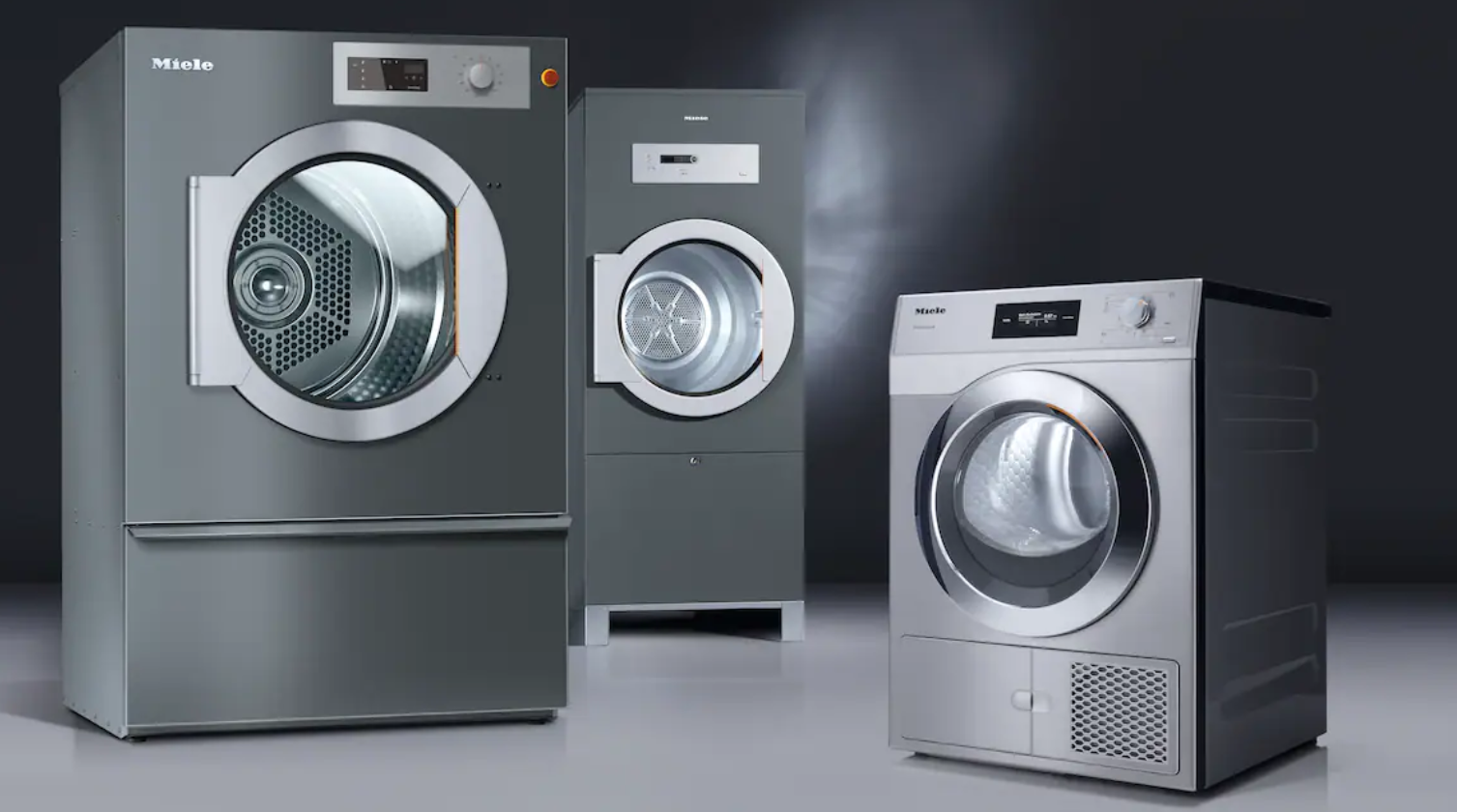
Irish energy bills have climbed sharply over the past few years. The laundry room is where those costs quietly add up. A standard condenser or vented dryer can consume between 4 and 5 kWh per cycle, which translates to a meaningful expense across a year of regular use. More families are asking whether a heat pump dryer makes financial sense as appliance technology catches up with rising electricity prices. The short answer is: quite a lot, and the savings compound over time in ways that make the upfront cost far more justifiable than it might first appear.
How Heat Pump Dryers Reduce Energy Consumption
Heat pump dryers work on a completely different principle from conventional models. A traditional dryer heats air, passes it through the drum, then exhausts it. But a heat pump dryer recycles that warm air instead, which means it needs far less electricity to maintain drying temperature. If you’ve been browsing energy-efficient dryers in Dublin and wondered why they carry a higher price tag, this is the reason: the technology inside them is more sophisticated, and that sophistication pays you back in reduced running costs over the appliance’s lifespan.
The A+++ Rating and What It Actually Means
EU energy labels rate dryers on a scale, and heat pump models dominate the top tiers. An A+++ rated heat pump dryer typically uses around 1.5 to 2.0 kWh per cycle, compared to 4.5 to 5.0 kWh for a C-rated conventional dryer. Irish electricity prices sit at roughly €0.30 to €0.35 per kWh in mid-2026 (according to the SEAI); that gap becomes financially significant very quickly. For a household that runs the dryer five times per week, the difference between a C-rated and an A+++ model works out to roughly 2.5 to 3.0 kWh saved per cycle. That amounts to between €195 and €270 saved annually on electricity alone.
How Cycle Frequency Affects Your Annual Savings
The more frequently you use a dryer, the more a heat pump model benefits your budget. A family of four in Ireland might run the dryer six to seven times per week across the wetter autumn and winter months, and three to four times per week during summer. Across a full year, that averages out to roughly 260 to 300 cycles. At those volumes, the annual electricity saving against a standard condenser dryer sits comfortably between €200 and €300, depending on exact cycle length and load size. Larger families who use the appliance daily could see savings at the higher end of that range, and potentially beyond it if electricity prices continue their upward trend.
The Real-World Payback Period for Irish Homes
Heat pump dryers typically cost €100 to €300 more than equivalent conventional models at the point of purchase. That gap can feel off-putting. But it shrinks considerably once you factor in the energy savings outlined above. A household saving €250 per year on electricity will recover a €250 premium in roughly twelve months. A €300 premium at the same savings rate pays back in just over a year. The payback period isn’t theoretical; it reflects the real kilowatt-hour difference that Irish households experience under actual Irish electricity tariffs, not lab conditions or overseas pricing benchmarks.
SEAI Grants and How They Shorten the Payback Period
The Sustainable Energy Authority of Ireland runs grant schemes that cover a range of home energy upgrades. Some heat pump dryer purchases may qualify for support under broader appliance or home energy programmes. Even without a direct grant on the dryer itself, households that combine the appliance switch with broader home energy improvements can access SEAI funding that offsets related costs. Check the SEAI website directly for the latest grant categories, as schemes are updated periodically. Any reduction in upfront cost compresses the payback period further; your household reaches net positive territory faster than simple arithmetic suggests.
Long-Term Savings Over a Ten-Year Appliance Life
Dryers tend to last between eight and twelve years with regular maintenance. Take a conservative ten-year lifespan and a modest annual saving of €220; the total electricity saving across the appliance’s life reaches €2,200. At €260 per year, that figure climbs to €2,600. Subtract the purchase premium of, say, €250, and the net financial benefit to an Irish household over a decade lands somewhere between €1,950 and €2,350. These figures assume no further rise in electricity prices, which given recent trends is conservative. If tariffs increase even modestly, the long-term saving grows proportionally because heat pump dryers simply use less of whatever electricity costs at that future point.
Practical Factors That Affect Your Actual Savings
Not every household will achieve textbook savings figures. Load size matters: a half-empty drum is less economical than a properly loaded one, regardless of the dryer technology involved. Spin speed on your washing machine also plays a role; clothes that leave the wash at 1400 rpm rather than 800 rpm carry less residual moisture, which shortens drying time and reduces energy use further. Heat pump dryers do run longer per cycle than conventional models, typically 20 to 30 minutes longer, so if your household has tight scheduling around laundry, that’s worth factoring in. The energy saving per cycle still stands regardless of cycle length. But the time trade-off is a genuine lifestyle consideration for busy families.
Choosing the Right Capacity for Your Household
Dryer capacity is measured in kilograms of dry laundry; getting this right directly affects performance. An undersized drum forces extra cycles, which erodes savings. An oversized one may cost more upfront than necessary. For a couple or small family, a 7 to 8 kg heat pump dryer is generally well suited. Families of four to five people benefit from a 9 to 10 kg model. Larger households or those with high laundry volumes should look at 10 kg and above. Matching capacity to actual household need means the appliance runs fully loaded more often, which is the operating condition where heat pump technology delivers its best performance.
Conclusion
The savings available to Irish households from switching to a heat pump dryer are real and measurable. Annual electricity savings of €200 to €300 are achievable for a typical family, with the purchase premium recovered in one to two years under normal usage patterns. Across a ten-year appliance life, the net financial benefit can comfortably exceed €2,000. Households that match capacity to their laundry load and use the appliance effectively will see results at the stronger end of those estimates. For anyone asking how much can Irish households save with a heat pump dryer, the evidence points to a straightforward financial case, one that strengthens further if Irish electricity prices continue their current direction.