Tech Review – JISULIFE Portable Neck Fan Pro1

Neckfans might not be for everyone but I have tried a few here over the years and believe me they work, they may be cumbersome however it is a trade-off to keep you nice and cool, this one however is one of the lighter non cumbersome models I have tested and works really well with plenty of cooling power for the hot weather and during my testing of this model and the portable hand fan I had the perfect weather to try these out and they work a treat.

With two simple controls on the device one being the power button and one being the speed it is simple to use and you can set the desired power you need, there is an LCD display on the same side as the power button which tells you your battery life and the speed the fan is at so it could not be easier to use..

It is comfortable to wear for hours on end and does not feel weighty like others I have tried and this could also be packed into your travel bag too as it is not particularly large in size, in fact around the same size as a standard pair of headphones. It also comes in several colours too which is nice and overall a simple effective product that is not too expensive either and you can be cool all you like at the speed you like.


Specs

Brand JisuLife

Color Moonlight/Sakura/Deep Ocean

Electric fan design Wearable Fan

Power Source Battery Powered

Product Dimensions 9.13″D x 2.64″W x 11.02″H

Material Plastic

Item Weight 11.64 Ounces

Special Feature Breathable Neck Collar, 100 Speeds Turbo Air Duct, LED Display, Stepless Knob

Features 

  • Industry Pioneer: 100-speed stepless hurricane technology, personalized wind power, adjustable as you like.
  • Healthy Wind: Four air ducts to supply air in different areas, with a soft wind feeling like clouds.
  • Super Battery Life: Power and wind conditions are always informed.
  • Stylish and Lightweight: Mini fashion design, 322g ultra light and no burden.
  • Product link:
    Amazon- https://amzn.to/3pvJPzS
    Official website- https://jisulife.com/en-sg/products/neckfan-pro-1 (20% coupon – JISU20PRO)

Video Review

Google Maps launches Immersive View in Dublin.

Google Maps is expanding Immersive View to new cities and landmarks, introducing a simpler way to navigate, and updating Recents on desktop Google Maps. The great news is this includes Dublin and for those who will now begin their holidays or those who will travel to Dublin should check the latest update out, check out the news below.

In many parts of the world, summer is here  —- which often means time for trip planning and exploration. Today, we’re sharing three new updates from Google Maps to help you make the most of your summer adventures.

Immersive View: rolling out to new cities and available for 500+ landmarks around the 

Earlier this year, we launched Immersive View to transform the way you explore — using AI to fuse together billions of images and create a multidimensional view of the world with trusted information layered on top. Today, we’re starting to roll out Immersive View in four new cities: Amsterdam, Dublin, Florence and Venice — and are expanding it to over 500 iconic landmarks around the world, from Prague Castle to the Sydney Harbour Bridge on Android and iOS.

So if you’re planning a trip to Boston and want to see the historic Faneuil Hall, you can get a jump start on familiarizing yourself with the area before you visit. Just search for it in Google Maps and tap on the first video to virtually soar over the building and find places nearby. With the time slider, you can see what the weather will be like at different times of day and how crowded it will be so you can plan ahead. And where we have data available, you can peek inside of restaurants and cafes to help you decide whether you want to make a reservation — thanks to an advanced AI technique called neural radiance fields, or NeRF — which was developed right here at Google.

Track your trip progress with glanceable directions, which start rolling out this month

While we love the rich details of Immersive View, we also know that sometimes less is more — especially when you’re somewhat familiar with your route and just need to see when the next turn is. That’s why we’re launching glanceable directions in Maps, helping you easily track your trip progress right from your lock screen or route overview.

Once you opt in, just request directions to your destination and get going. You’ll see updated ETAs and where to make your next turn — information that was previously only available in comprehensive navigation mode. And if you decide to take another path, we’ll update your trip automatically. Glanceable directions start rolling out globally this month for walking, cycling and driving modes on Android and iOS.

Stay organized and plan trips with new updates to Recents on desktop 

One of the most difficult parts of planning a trip is keeping track of all the places you want to visit — especially if you’re visiting multiple cities. We built Recents on desktop to help with just that. It automatically organizes places you’ve researched into a handy highlight on the left side of your screen when you open Maps.

Now, with new updates rolling out globally next month, we’ll save places in your Recent highlights even after you close your Google Maps window — so you can take a break from planning and come back to it later without ever losing your progress. You can remove places you’ve viewed, plan multiple trips at once and share a selection of places — like attractions or hotels — with your travel buddy to get their thoughts. Once you know where you want to visit, select three or more destinations, click “directions,” and Maps will even create a custom route that hits all your stops and saves it to your Recents. Who’s up for a summer road trip!

Whether you’re hitting up local gems, a national park or flying halfway around the world, let Google Maps be your ultimate travel companion this year.

GoMo World Release Top Destinations as an Estimated 420,000 People Prepare to Travel Abroad Easter Weekend

With the Easter bank holiday fast approaching, it has been estimated that 420,000 people will travel abroad from Ireland over the Easter holidays. According to data released today from the GoMoWorld team, the most popular destination for Irish based GoMoWorld travellers is the United States of America. In second position are European destinations where ‘roam like home’ is not available, such as the United Kingdom and Switzerland, followed by the United Arab Emirates.

Ahead of the busy travel weekend, GoMoWorld, the revolutionary new roaming app, is helping people prepare with an incredibly simple to use, one app that unlocks a world of connected travel. Data is pre-purchased for the user’s selected destination ensuring that there will be no ‘bill-shock’ to ruin Easter travel with no subscriptions or hidden fees.  To help, GoMoWorld has added a free trial option so that customers can try before they fly!

Launched earlier this year GoMoWorld is unique; by downloading one simple app travellers can automatically connect to the best available mobile networks, including 5G, across more than 160 countries. In recent weeks far flung destinations such as Belize in Central America and Guinea Bissau in West Africa have been added to the ever expanding GoMoWorld global list.

Eoghan Corry, Irish Travel Expert: “Coming out of the pandemic the world is ready and eager to travel again, and this year we will see some of the busiest moments for travel. Leaving through Dublin alone will be over 380,000 people, with an estimated total of 420,000 people travelling abroad this weekend, with the USA obviously still a favourite for Irish people looking for an Easter break.”

Heloise Abraham, Director GoMoWorld: “With Irish people looking again to explore the world, we have had an exciting start to the year introducing GoMoWorld. Its popularity is gaining momentum quickly, particularly across the United Kingdom, in the wake of Brexit and the removal of EU roaming agreements by many operators. We see downloads increase significantly during special occasions such as big sporting events and peak travel times like Easter mid-term. Our GoMoWorld customers want to share their experiences with loved ones at home and with access to the best available networks, and the best value prices, there is no reason to limit what you share.

GoMoWorld is the latest innovation from the world of entrepreneur and telecom operator Xavier Niel, the owner of Monaco Telecom, Salt Mobile SA and eir Ireland. We have brought together the very best of our telco network expertise to create GoMoWorld. Created for people who have a passion for travel, for connections and exploring the world! Incredible roaming value is just one app download away.”

The user experience is seamless, harnessing the power of the embedded eSIM, a function of recent smartphone devices users can change mobile network carrier, data, or service plan through software, without the need of a new SIM or mobile phone. Customers can ‘roam like home’ simply, by downloading the app, choosing a planned destination and activating the eSIM. GoMoWorld provides customers with a range of great value prepaid data plans with entry level from just €3.99. GoMoWorld is available to download now on the Apple App Store or the Google Play Store.

To see GoMoWorld destination availability visit: GoMoWorld.com/Howitworks

Devices compatible with GoMoWorld include the following, with new devices and countries being added all of the time:


– Apple iPhone 11 series

– Apple iPhone 12 series

– Apple iPhone 13 series

– Apple iPhone 14 series

– Apple iPhone XS

– Apple iPhone XR

– Apple iPhone SE (2020)

– Apple iPad Air (3rd Generation) WiFi + Cellular

– Apple iPad Pro (3rd Generation) WiFi + Cellular

– Apple iPad Mini (5th Generation) WiFi + Cellular

– Samsung Galaxy S21 series (except FE)

– Samsung Galaxy S22 series (except FE)

– Samsung Galaxy Z Flip

– Samsung Galaxy Z Fold2 5G and above

– Google Pixel 3 & 3 XL*

– Google Pixel 3a & 3a XL*

– Google Pixel 4, 4a, & 4 XL

– Google Pixel 5

– Google Pixel 6, 6a & 6 Pro

– Google Pixel 7 & 7 Pro

– Oppo Find X3 Pro

– Oppo Reno 5A

– Oppo Find X5 & Find X5 Pro

– Fairphone 4

Consumers prioritise experiences and travel, new card spend data from Revolut says

The latest monthly consumer spending report by Revolut, the global financial super app with more than 2 million customers in Ireland, reveals that the average consumer in Ireland is spending 15% more, year on year, with inflation and relaxed covid restrictions contributing. Looking at the average customer, travel spending increased 20.3%, shopping spending increased 9.1%, and entertainment spending increased 9.5% year on year.

New data from Revolut shows that supermarket spending increased by 18.9% compared to last year. The data also reveals that many are looking to cut costs down by shopping at discount stores, which saw an 13.9% increase in the number of customers, and where the average customer spent 6.8% more.

Similarly, Revolut’s data shows that spending on petrol increased by 19.5%, as compared to last year. However, bus companies saw a 36.4% increase in customers and a 36.7% increase in customer spending, year on year.

Furthermore, discretionary spending was up. In travel, customers of cruise lines (+109.3%), airlines (+30.8%), hotels (+14.3%), and travel agencies (+116.5%) all increased their spending, year on year.

In retail, discretionary spending was also up. The average consumer spent more at clothing stores (+12.5%), cosmetics stores (+26.8%), department stores (+14.6%), and furniture stores (+26%).

In entertainment, spending on digital goods, including media, books, films, shows, and music, declined 15%, year on year. Furthermore, the number of customers paying for these services declined by 22.4%, suggesting that many have cancelled their subscription services.

However, physical entertainment has increased significantly. Spending at aquariums increased by 65.1% and footfall increased by 54.5%, spending at museums increased by 58.1% and footfall increased by 47%, spending at theatres increased by 50.3% and footfall increased by 37%, year on year. However, despite awards season, the number of customers going to the cinema decreased by 5.6%.

Looking at month on month data, comparing February 2023 to January 2023, Revolut data gives insight into how people stuck to their New Year’s resolutions last month. For those looking to get fitter, the number of gym customers declined by 0.7%. For those looking to read more, book shop customers declined 8.9%. However, for those looking to find a partner this year, Revolut data suggests some may have succeeded, as the number of people spending on dating apps decreased by 15.7%, month on month.

A Revolut spokesperson said: “The periods of lockdown gave many consumers a new perspective on their priorities. The new priorities include travel, where spending on hotels and airlines continue to increase, and activities for days out, such as museums and theatres.”

“These new priorities suggest a continued desire to be around others and get out of the home.”

Irish consumers look to jet off as new Revolut data suggests the revival of the travel agency

The latest monthly consumer spending report by Revolut, the global financial super app with more than 2 million customers in Ireland, reveals that the average consumer in Ireland is spending 17.8% more, year on year.

The relaxation of covid restrictions and a surge in holiday bookings led to strong performances across travel (67.7%), entertainment (15.8%), and shopping (22.6%). However, the rate of inflation also saw spending on utilities increase by 15%, year on year.

Despite the rise in the cost of living, consumers in Ireland have boosted their generosity. Donations to charity increased by 14.6%, and 8.9% more people gave to charity in January 2023, compared to January the previous year.

In January 2023, supermarket consumer spending increased 14.3%, year on year. The rise in supermarket consumer spending is even more significant in the context of last year’s covid restrictions. Furthermore, bakeries continue to grow in popularity, as the number of customers increased 43.3%, year on year, and consumer spending increased 47.6%.

Restaurants saw a 32.5% increase in consumer spending, as the number of transactions increased 30.4%, year on year. Fast food restaurants saw a more modest increase in consumer spending of 19.1%, year on year.

Additionally, takeaway delivery services saw a 30.9% increase in consumer spending, year on year, despite the average customer not spending more in this year in comparison to 2022. The rise in consumer spending can be attributed to the rise in the number of customers, which has increased by 33.3%, year on year.

In entertainment, museums increased their number of customers by 70.2%, year on year, and saw consumer spending increase by 120.4%. Cinemas (28.3%) and theatres (59.6%) saw increases in the number of transactions, and consumer spending increased by 35% and 45.3%, year on year.

Despite the rise in spending on entertainment outside of the home, spending on digital entertainment including films, tv and music also increased by 13.8%, year on year. However, spending at book shops decreased by 17.2%.

Revolut travel data suggests the resurgence of the travel agency. In January, the number of customers booking holidays with travel agencies increased by 178.3%, year on year, and consumer spending increased by 158.1%. Additionally, spending on hotels (35.8%) and airlines (55.5%) increased, year on year. Spending on cruises increased by 144.5% and saw a 39.9% increase in the number of customers making bookings.

The January sales helped to increase shopping, as clothing stores saw a 23.5% increase in consumer spending, and 20.5% more transactions, year on year. Similarly department stores saw a 14.9% increase in spending, and furniture stores saw a 21.5% increase. Furthermore, it was cosmetics stores that saw the biggest increase, with spending up by 40.8% and transactions up by 38.9%, year on year.

Stores that didn’t fare so well were florists which saw spending decrease by 2.5%, and sweet shops where spending decreased by 11%, year on year.

A Revolut spokesperson said: “Despite inflation boosting the rise in consumer spending, the relaxation of covid restrictions has contributed to the increased number of customers and transactions across several industries.

“From trips to the theatre, refreshing wardrobes in the January sales, and dining out, it’s encouraging to see that consumers are finding ways to budget for treats and experiences. Furthermore, January saw a huge rise in travel spending and the revival of the travel agency.”

Top autumn destinations revealed, as Irish holidaymakers get €100K in cashback from Revolut Stays

Today is World Tourism Day (27th September), Revolut, the global financial superapp with 2 million Irish customers, and 20 million globally, released its Revolut Stays Register for Autumn 2022, to reveal its top 10 most in demand destinations of the season.

The Register, based on Revolut Stay’s pre-booked trips, shows that while summer travel is coming to an end, the appetite for travel continues. Since its launch, Revolut Stays has given over €2M in cashback to its customers globally, of which its customers in Ireland have received over €100K in cashback, the equivalent of over 1000 free nights.

Revolut customers get up to 10% instant cashback, depending on the customer’s Revolut plan, on their accommodation booked with Stays – based on a customer’s average holiday spend, that’s an extra €50. Additionally, Revolut Stays offers exclusive rates, doesn’t charge booking fees, and customers can pay nothing until they get to the property. From hassle-free bill splitting to great exchange rates, Revolut Stays has everything holiday-goers need to supercharge their accomodation.

Christopher Guttridge, General Manager of Lifestyle Products at Revolut, said: “As summer comes to an end, it’s the perfect time of year to go for a weekend city break, or continue your summer with a week spent in autumn sun. This quarter’s Revolut Stays Register shows that  customers in Ireland are doing exactly that, with the bookings to Amsterdam, Barcelona, and Salou already stacking up for the next few months.

“With Stays, you can save more of your money to spend when it matters – when you’re actually on holiday. We’re delighted to have given over €2 million in cashback to our customers globally, since our launch in July last year – the equivalent of 13,000 free nights.”

The latest Revolut Stays Register reveals the top destinations of the upcoming season, top rated accommodation suggestions, and how you can spend that cashback on exciting experiences.

Revolut Stays Register, IE – Top Autumn 2022 destinations

Based on pre-booked trips


  1. London, England

    • Highly-rated hotel: Sea Containers London

    • What to do: London Cocktail Week, October 13th – The capital’s best bars are taking part, creating cocktails for October. It gives you the chance to do a cocktail crawl or just slope into top spots.

  2. Amsterdam, Netherlands

    • Highly-rated hotel: Hotel Estheréa

    • What to do: Amsterdam Music Festival, October 22nd – A fun electronic dance music event, with this year’s confirmed acts including Afrojack and Tiësto.

  3. Paris, France

    • Highly-rated hotel: Hôtel Francois 1er

    • What to do: Nuit Blanche, October 1st – The contemporary all-night art festival takes place across the city’s streets and monuments. You can engage with sculptures, projections, concerts and spectacular installations by national and international artists around the city.

  4. Barcelona, Spain

    • Highly-rated hotel: W Barcelona

    • What to do: Sitges Film Festival, October 6th – The festival specialises in fantasy and horror films, and airs a selection of the best ones and also awards prizes to actors, filmmakers, and films. Attendees make the most of the occasion by dressing up in their goriest costumes.

  5. New York, USA

    • Highly-rated hotel: Roxy Hotel New York

    • What to do: Macy’s Thanksgiving Day Parade, November 24th – Drawing thousands of spectators to New York City, the parade boasts balloons, floats, clowns, marching bands, cheerleaders, and even celebrities.

  6. Salou, Spain

    • Highly-rated hotel: PortAventura Hotel Gold River

    • What to do: PortAventura World, attracting around 3.5 million visitors per year, is the most visited theme park in Spain and the sixth most visited theme park in Europe.

  7. Berlin, Germany

    • Highly-rated hotel: 25hours Hotel Bikini Berlin

    • What to do: Festival of Lights, October 7th – Many landmarks, historical places, streets, squares, trendy neighbourhoods and interesting places of recent Berlin history will be spectacularly illuminated for ten days.

  8. Manchester, England

    • Highly-rated hotel: The Lowry Hotel

    • What to do: Manchester Science Festival, October 21st – From family-friendly games and tinkering to after-hours adult events, there’s something for everyone, including inspiring experiences and entertaining events.

  9. Glasgow, Scotland

    • Highly-rated hotel: Hotel du Vin & Bistro Glasgow

    • What to do: GlasGLOW, October 26th – The show is an ‘epic dinosaur adventure into The Land That Time Forgot.’

  10. Tias (Lanzarote), Spain

    • Highly-rated hotel: 5 Suites

    • What to do: Timanfaya National Park – A breath-taking stretch of volcanic land that covers a quarter of the island, was created over six years of near-continuous volcanic eruptions.

Google is making sustainable travel an easier choice this summer as cycling increases by 40% worldwide

Climate change is a global issue as well as local and personal. As people are looking to travel to their holiday destinations, questions like “How to travel sustainably” are on everybody’s minds.

Google committed to empower 1 billion people through our products, to make the sustainable choice an easier choice. At the individual level, these choices may seem small, but when people have the tools to make them at scale, they equal big improvements.

Here’s how Google products help you get from A to B more sustainably this summer


  1. Getting to your holiday destination – The first step towards more sustainable holidays, is more sustainable planning. If you are going to a destination you can only reach by flying, Google Search helps you understand the CO2 emissions associated with each potential trip directly in Google Flights. A green badge next to the emissions number to help you sift through your options more easily, and you can filter all flights by “CO2 emissions” to easily find and book the flight with the lowest footprint.
    To produce these estimates, we’re combining data from the European Environmental Agency with the flight-specific information we get from airlines and other providers such as aircraft type, trip distance and the number of seats in each seating class. In collaboration with the Travalyst coalition, we are helping to develop an open model for calculating carbon emissions from air travel and promote standardisation across the travel industry using this framework.


  1. Sleeping sustainably – Google Search helps you find hotels that have made significant commitments to green practices. This includes hotels that are certified for meeting high standards of sustainability from certain independent organisations, like Green Key or EarthCheck, will have an eco-certified badge next to their name. This helps you understand their eco-friendly practices, from waste reduction to energy efficiency or water conservation measures.


  1. Hop on your bike – Over the past few months, cycling has increased by more than 40% worldwide – which is no surprise given that the warmer weather and high petrol prices have people opting for more sustainable transportation choices. Google Maps has provided cycling directions for over 12 years thanks to AI paired with data from cities, trusted cartographic partners and feedback from the Google Maps community. Now, with our new cycling route information, you can easily compare bike routes and see even more granular details (when this data is available) to prepare for the ride ahead.


Just get cycling directions to any destination. In addition to seeing the elevation along your route, you’ll also know if you’ll encounter heavy car traffic, stairs or steep hills. You’ll also be able to get a highly detailed breakdown of the route itself so you can know at a glance what type of road you’ll be biking on – like a major road vs. a local street. Gone are the days of unknowingly pedaling up a strenuous hill or on a route with more car traffic than you’re comfortable with.


  1. Charge your EV easily – If you have an electric vehicle, Google Maps can help put your range anxiety at ease. Just search for “ev charging station” to see all of the stations nearby, along with helpful details, like the business where the station is located, port types and charging speeds. And for some stations, you can even see if a charger is available in real-time – helping you avoid the line and save valuable time. With cars with Google built in, Maps will even help you take that EV road trip, automatically helping you find stations along your route.


  1. Transit information – By tapping on the transit tab in Directions on Google Maps, you get directions to any place by bus, train, subway, and even ferry. When available, you can see real time arrival and departure times, transfer points, and any upcoming service delays. And, Google Maps gives you all the information you need to be prepared for your ride. Not only can you see how crowded your transit ride will be – so you can know if you’re likely to get a seat – but you can see helpful information, like whether there’s security on board, what the temperature is like, and if there are wheelchair accessible routes available

Reshaping the e-scooter – introducing bo

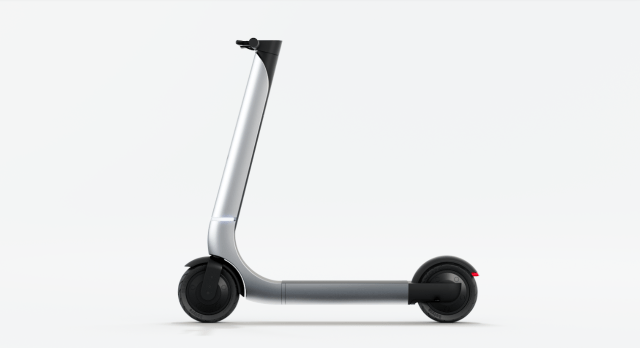
Today, UK micromobility startup bo announces its first product, the bo M. bo M is a radical rethink and total redesign of the e-scooter, introducing the single biggest innovation leap in scooter technology: Safesteer™.

With electric scooters traditionally seen as unsafe and unreliable, bo exists to set new standards in safety, comfort and design. bo M is the world’s first electric scooter focused on empowering people to transition out from their cars.

“We spent 3 years developing the bo M for everyone who can see the potential of the e-scooter, but who finds today’s scooters too unsafe, impractical for daily use, or simply not well designed” says Oscar Morgan, bo CEO. “Our mission has been to develop game-changing features and safety enhancements such as Safesteer, whilst using our experience in automotive design to build a scooter people feel proud to own and ride. 

Grounded in safety, bo M features Safesteer™ riding stabilisation alongside the 360 degree Light Halo system. For unrivalled comfort the bo M uses Airdeck and refined vehicle geometry with a generous wheelbase, optimised steerer angle and wide handlebars. Finally, challenging traditional scooter design, the unique bo Monocurve chassis and seamless feature integration combine to deliver an exceptional commuting experience.

The new safety standard  | SafesteerTM    

A world first in electric scooters, bo is introducing active riding stabilisation with SafesteerTM  technology, setting the benchmark for control and confidence.

The technology stabilises and smoothes the steering across bumps, dips and potholes to keep the rider in perfect control.
This fundamental shift in vehicle dynamics means the single greatest concern of new and experienced e-scooter riders is eliminated.

Light Signature  | 360 Light Halo
360 degree Light Halo and high power headlight for forward visibility

bo’s distinctive Daytime Running Light (DRL) wraps around the Monocurve chassis to create Light Halo, a world first in the sector: 360 degree light visibility. This signature design dramatically increases road presence and awareness from other road users.

Alongside Light Halo, a powerful secondary headlight illuminates the road ahead, while a wide-angle high-lumen rear light keeps you seen from behind, flashing brightly when users brake.

Comfort | Airdeck

Searching for an optimised solution to ride comfort led to bo M’s engineered elastomer Airdeck, based on the same material technology found in high performance running trainers. The lightweight deck panel is tuned to remove road vibrations – removing the need for complex and ineffective suspension systems.

With 50km of range, all day riding comfort is the priority: Airdeck, plus wide pneumatic tyres keep the road bumps out. Additionally, the bo M geometry is optimised for stability and ergonomics, including wider handlebar at 580mm, a generous 930mm wheelbase for more standing room, and a 76 degree steering angle for naturally controlled dynamics.

Punctures are a common commuter concern, so the bo M is specified with high quality tubeless pneumatic tyres – eliminating pinch punctures and maximising grip on the road.

The shape of things to come | Monocurve chassis

Reshaping the electric scooter with bo’s unique Monocurve chassis represents a foundational shift in vehicle design and engineering – the single greatest sector advancement since electric scooters arrived in our cities.

Alongside strength and reliability, bo M’s aluminium chassis has been designed to enable every innovation, from Safesteer to Lock and Load, Light Halo to Airdeck, without adding complexity for the user.

The unbroken Monocurve chassis is the first structure in this sector designed to true automotive principles, seamlessly combining function with design

Harry Wills, bo CTO added, “Aware that to some it is controversial, we made a conscious decision to eliminate the fold, launching bo M with an unbroken Monocurve chassis.

“bo M is designed for commuters travelling home to work who value exceptional ride, safety and reliability above all else. Creating this new category, between a traditional e-scooter and an e-bike, our research discovered that the majority of people seldom or never use the fold. It represented a point of weakness, so that directed us to this final design”

Bags of potential | Lock and Load

E-scooter riders no longer have to be restricted to a backpack. The bo Monocurve chassis does not twist as you steer, keeping luggage hooked on the two secure load hooks stable and swing-free while you ride.

The hidden, built-in steel dual mount system doubles as a locking point – making it simple to secure the bo M with confidence using a standard D-lock. For full peace of mind should the owner lose sight of their bo M, the bosecure system of GPS tracking, motor locking, loud anti-tamper alarms and mobile notifications kick in.

The bo M is available for pre-order from bo.world. RRP £1,995 or £69 p/m. Shipping Spring ‘23

How a ham and cheese sandwich got its own algorithm

If you are not yet familiar with Ryanair, here are a few facts: The company operates one of the world’s most-visited travel websites, it is the largest low-cost air carrier in Europe, and—as reported by The Economist—Ryanair’s finance director reckons it is the “largest seller of ham and cheese panini in Europe” (someone approves all those ham and cheese bills).

It is also an Amazon Web Services (AWS) customer, using the cloud across its operations to lower costs, reduce food waste, cut carbon emissions, and ultimately, deliver the best possible experience for its passengers.

“Your holiday starts on the aircraft,” said Aoife Greene, Ryanair’s deputy director ancillary and head of retail, who decides exactly what food, beverages, and other items, and in what quantities, each jet should load every morning. “People want their gin and tonic. They want their ham and cheese panini. They want to sit back and relax. They don’t want to hear, ‘no, that’s not available.’ It’s our job to make sure no one is disappointed.”

What few Ryanair passengers realize as they bite into their sandwiches is that the trollies rolling down the aisle are serving more than snacks. The trollies are a vital source of information about what’s being requested and sold, which is fed into a machine learning tool (nicknamed the “panini predictor”) built using AWS that’s helping the airline forecast precisely which products to put on which plane. But why?

As much-loved as Ryanair’s ham and cheese paninis are, calculating just how many people will opt for one on any given flight is a mightier challenge than first appears. The company has more than 500 aircraft and runs 2,900 flights a day, with a single plane traversing multiple routes across multiple countries. Each plane has limited space—exactly five trollies’ worth—and can only be stocked once every 24 hours.

Previously, Greene’s team relied on written logs and their own observations to forecast demand from very different sets of travelers going everywhere from Athens to Budapest, Lisbon, London, Marrakech, Rome, and Tel Aviv. Unsurprisingly, this was an enormous manual task that encompassed 80 loading bases across the Ryanair network and required employees to review records of what had (and hadn’t) been consumed on previous flights to determine what to load the following week.

“I often joke that my colleagues who manage fuel consumption have an easy life,” said Greene. “They know where a particular plane is going, and they know how long it will take to get there. I have no way of knowing whether we’re going to have 100 ballerinas or 100 rugby players on board.”

While the panini predictor isn’t yet at a stage where it can tell Greene if she’ll be dealing with a Swan Lake troupe or rugby scrum, the tool with its custom-designed algorithm does analyse data such as demand, consumption, flight duration, time of day, season, departure location, destination, passenger nationalities, and number of children on board. This data helps Greene be far more accurate about what’s likely to be popular on a flight.

Ryanair’s Chief Technology Officer John Hurley said the tool is proving particularly useful when deciding on product lines for a new route or adding a new loading base. He added, “Importantly, it has improved customer satisfaction, cut our waste in half, and boosted our sales.”

According to Hurley, ideas like the panini predictor have “been in the background” for a long time. In the last year or so, the technology and the company’s ability to employ it have come together in a way that Ryanair is now exploring other ways to use the cloud to innovate across its business. Other initiatives the company is working on with AWS include:

A new predictive maintenance tool

The tool being designed to forecast when different parts of a plane might be due for maintenance. The tool is a machine learning model, built using AWS and trained to recognize patterns in existing information that are precursors of an issue. This will generate reports for engineers, recommending areas for them to investigate. Thousands of sensors across the entire Ryanair fleet are gathering information on variables in the system, with each flight generating from 5 million to 60 million data points per hour. Fleetwide, that’s a whopping 3 billion data points every hour. So far, it’s been able to demonstrate potential to foresee problems up to four days in advance. The long-term goal is to develop the solution so it can predict issues across a number of the aircraft’s essential systems, preventing as many disruptions to the flight schedule as possible.

A project that allocates the most fuel-efficient aircraft for each route

Ryanair’s fleet are all Boeing 737s, sharing the same style of fuselage but with different engine configurations. When a pilot takes off in the morning, they must have enough fuel to fly the route, an amount that’s calculated based on factors such as distance, altitude, and headwinds. Feed those same calculations into a program that can crunch the data, and it’s possible to make recommendations on which of the company’s aircraft would be the most fuel efficient for a particular journey—optimizing fuel consumption, cutting C02 emissions, and saving millions of euros in the process.

A customer service chat bot

The new chat bot built by Cation Consulting, an AWS Partner, that can converse in seven languages—English, French, German, Italian, Polish, Portuguese, and Spanish—handles more than half a million conversations in any given month.

A digitized document initiative

The initiative removes paper from several systems that traditionally used printed documents in the airline industry. For example, the development of Ryanair’s electronic flight plan has saved 20 million sheets, or 90 tons, of paper a year. A “paperless cockpit” plan that replaces hardcopy manuals with digital versions has reduced paper by 15 kg (33lbs) per cockpit, a total of 16 tons per year, which results in a fuel burn savings of more than 600 tons annually.

A COVID-19 wallet

The COVID-19 wallet helps customers upload necessary documents required for travel. At the height of the pandemic, Ryanair developed the solution using AWS and rolled it out in less than three days as part of its existing app.

For a home-grown Irish airline that developed into one of Europe’s busiest, Ryanair has always had big ambitions. Today is no different. Working to a 25-minute turnaround time—getting everybody off the aircraft to refuel and then reload in under half an hour—speed, flexibility, and passenger satisfaction are as crucial to its success today as they were when the airline relaunched as a low-cost carrier in 1990. The only difference now is in the possibilities that technologies such as cloud computing offer to help Ryanair improve its customers’ experience while lowering costs and reducing waste and carbon emissions.

“When AWS came on board, it sort of lit the torch paper to get us going,” said Hurley. “We’re testing these projects, analysing all this data, getting the results back, and, for the most part, just saying, ‘Wow.’ It’s a major opportunity to be even more future-focused and efficient.”