SJCAM Unveils SJ30: An 8K Dual-Lens Action Camera

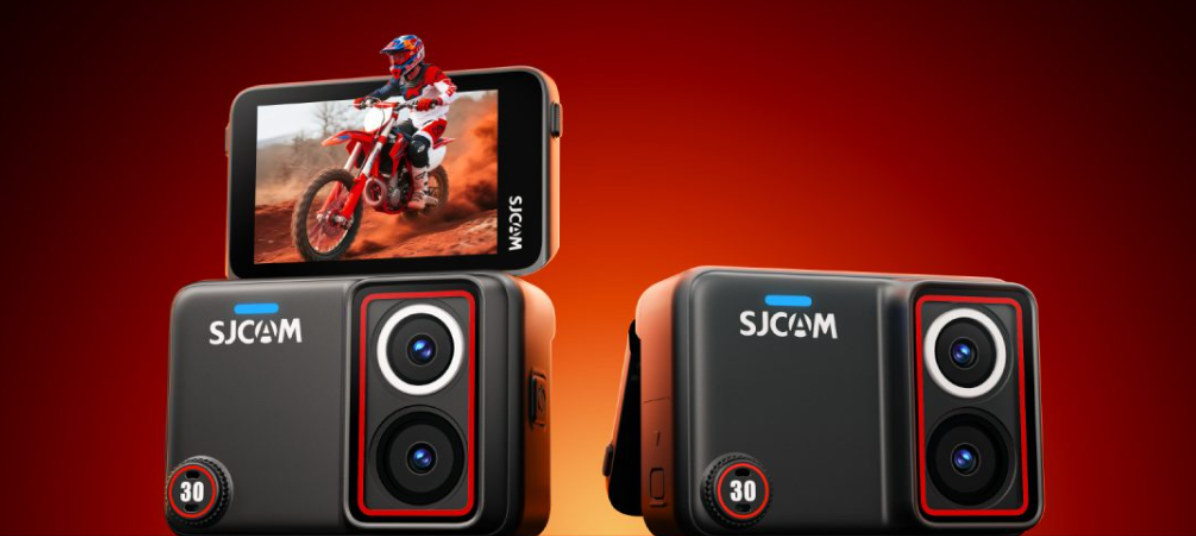
SJCAM today unveiled the SJ30, a powerful 8K dual-lens action camera built to bring high-quality recording into everyday life. Designed around the idea of a true “daily recording camera,” the SJ30 prioritizes what users actually need—exceptional image quality, clear audio, reliable battery life, strong low-light performance, and effortless usability. 

Packed with practical innovation, the SJ30 delivers stunning 8K video, seamless lossless vertical shooting for social content, and an upgraded dual-lens system for greater creative flexibility. Despite its advanced capabilities, both the camera and its companion app are engineered for simplicity—so users can start shooting straight out of the box without hassle. 

While many action cameras focus on extreme sports and come with steep learning curves, the SJ30 is purpose-built for real life—from commutes and travel to family moments and everyday content creation. Its true plug-and-play design removes friction, letting users capture moments instantly. By combining strong core performance with an accessible price point, the SJ30 opens the door for more people to create and share high-quality content every day. 

From Daylight to Night Time: Dual-Lens Imaging 

At the heart of the SJ30 is an advanced dual-lens imaging system which combines a 1/2.0-inch daylight sensor with a 1/1.8-inch starlight sensor. This intelligent design enables the camera to capture consistently clear, detailed footage across a wide range of lighting conditions—delivering markedly improved performance in low light, where traditional action cameras often fall short. 

Supporting up to 8K at 20fps and 4K at 60fps, the SJCAM SJ30 produces high-resolution video with exceptional clarity and detail, whether capturing vibrant city scenes at night or expansive landscapes in daylight. 

Built for Solo Creators and Travellers 

The SJ30 is designed with solo creators in mind, featuring a 2.51-inch flip touchscreen that rotates up to 180 degrees for easy self-framing. Paired with intuitive voice control, it enables true hands-free operation—ideal for travellers, riders, and independent content creators capturing moments on their own.

With support for native vertical video up to 5K, the SJ30 makes it easy to create content optimized for social platforms—without the need for cropping or compromising image quality. 

Stable Footage for Any Journey 

Engineered for smooth performance in motion, the SJ30 features SteadyMotion 2.0 stabilization powered by a six-axis gyroscope. The system effectively minimizes shake and motion blur, delivering steady, professional-looking footage across a range of activities. 

A built-in 45-degree horizon lock further enhances stability by keeping footage level—even when riding, cycling, or navigating uneven terrain. 

Designed for Long Recording 

Built to keep up with extended journeys, the SJ30 is equipped with a 2000mAh internal battery and supports an optional power handle for added endurance. Together, they deliver up to seven hours of continuous recording at 4K, making the camera ideal for long rides, travel days, and uninterrupted capture. 

Clear Audio and Simple Operation 

For improved sound quality, the SJ30 includes a detachable wind guard and supports the SJCAM M4 wireless microphone resulting in clearer voice recordings in outdoor or high-motion environments. 

A magnetic quick-release mounting system further enhances usability, enabling fast attachment and removal irrespective of the activity. 

A Camera Built for Real Life 

The SJ30 is built around a simple idea: most users don’t need complex camera systems—they need a reliable, high-quality camera that fits seamlessly into everyday life. Whether capturing a weekend ride, a family trip, or a personal vlog, the SJ30 is designed to make recording those moments effortless. 

Built to handle a wide range of environments, the SJ30 features an IPX8 waterproof rating and is waterproof up to 16 ft (5 m) right out of the box, making it ready for rain, splashes, and shallow water shooting. With the optional waterproof case, it supports dives of up to 98 ft (30 m) for underwater exploration. Designed for durability in extreme conditions, the camera operates reliably across a temperature range of -20°C to 60°C

With its combination of high-resolution imaging, enhanced low-light performance, extended battery life, and user-friendly design, the SJ30 is designed to redefine the action camera category—not just as a tool for extreme sports, but as a versatile camera for capturing everyday life. 

Price & Availability: 

Now available for $264 / £195 / 224 Euros from www.sjcam.com/cameras/action-cameras/sj30 /

See our SJCAM reviews

How Wearable and Portable Tech Is Reshaping the Outdoor Recreation Industry

The outdoor recreation industry has always been shaped by equipment innovation – better materials, lighter frames, more durable construction.

But the integration of wearable and portable technology into outdoor pursuits over the last decade represents something different in kind, not just degree. It’s changed what people can do outdoors, how they do it, and how they understand and share the experience afterward.

Cameras and the Documentation of Experience

The shift in how outdoor adventures are recorded and shared has been dramatic. Where photographers once needed heavy, dedicated equipment to document serious outdoor pursuits, action cameras now deliver high-resolution footage in a package small enough to mount on a helmet, a chest harness, or the end of a pole.

This has changed recreational culture as much as technology. Documenting a climb, a ski run, or a mountain bike descent has become a normal part of the activity for many participants, not an afterthought.

The footage serves personal memory, skills analysis, and increasingly a social function – trail communities, climbing clubs, and ski touring groups share footage in ways that build connections and attract new participants to the sport.

GPS and Navigation Technology

Dedicated GPS devices and GPS-enabled smartwatches have substantially reduced the barrier to entry for navigating complex terrain.

Apps like Gaia GPS and Komoot, combined with cellular and satellite-connected watches, give recreational users access to detailed topographic mapping that previously required significant expertise to interpret and use.

This democratization of navigation has real benefits: more people can explore more complex terrain with greater confidence. However, it also creates risk if users rely on devices without developing underlying navigation skills.

Battery failure, hardware damage, and signal loss in complex terrain remain real vulnerabilities, and experienced outdoor instructors consistently argue that map and compass skills remain essential regardless of what technology someone carries.

Fitness and Health Tracking

Wearable fitness technology – smartwatches, heart rate monitors, and GPS running watches – has transformed how outdoor athletes train and recover. The ability to track elevation gain, heart rate zones, sleep quality, and training load in real time gives recreational athletes access to data that was once the exclusive domain of professional sports programs.

There are now products specifically designed for outdoor use, with multi-day battery life, barometric altimeters, and dedicated activity profiles for skiing, trail running, mountaineering, and more.

The data these devices generate has helped many recreational athletes train more intelligently, reduce injury risk, and hit performance goals that once seemed out of reach.

Safety Technology

Perhaps the most consequential development in outdoor portable tech has been in safety. Satellite communicators like the Garmin inReach and SPOT devices allow backcountry users to send GPS coordinates and emergency alerts from anywhere on the planet, regardless of cellular coverage.

In genuinely remote terrain, these devices have saved lives in situations where traditional emergency contact systems would have failed.

How Tech Is Expanding Who Goes Outdoors

One underappreciated effect of portable and wearable technology is its role in expanding who participates in outdoor recreation. Navigation apps with detailed trail information, fitness trackers that make progress visible and motivating, and cameras that allow people to share their experiences have all lowered the psychological and practical barriers to getting started.

First-generation outdoor participants – people who didn’t grow up in families that hiked, climbed, or skied – often cite digital tools as part of what made outdoor activity feel accessible.

The social dimension is particularly significant: being able to share footage and connect with communities online creates a sense of belonging that encourages continued participation.

The Balance Between Technology and Skill

The outdoor recreation industry has had ongoing debates about the appropriate role of technology in traditionally skills-based pursuits. Guide associations, mountain rescue organizations, and outdoor educators generally take the position that technology supplements but should not substitute for fundamental skills and judgment.

This is a reasonable position. A GPS watch doesn’t replace the ability to read terrain. A satellite communicator doesn’t substitute for the decision-making that avoids the need for a rescue in the first place.

The most effective outdoor participants use technology to enhance their capability, not to bypass the process of developing genuine competence.

What Comes Next

The trajectory of wearable and portable tech in outdoor recreation points toward greater integration, longer battery life, and more sophisticated data analysis. AI-assisted route planning, real-time weather overlays, and health monitoring systems that flag early signs of altitude sickness or heat stress are all areas where development is actively ongoing.

The outdoor industry has always found ways to absorb new technology while maintaining the essential character of being outside, moving through terrain, and testing yourself against the environment. That balance seems likely to hold, even as the devices themselves continue to evolve.

A Sport Still Defined by the People in It

Technology has genuinely changed outdoor recreation, and mostly for the better. It has made activity more accessible, more safe, and more connected to broader communities of practice.

But the qualities that draw people outdoors – challenge, solitude, physical effort, and the particular satisfaction of moving through landscapes under your own power – remain fundamentally unchanged. The gear is better. The human experience it supports is the same one it’s always been.


How technology is reshaping the sports industry in Ireland

The way Irish people experience sports has changed dramatically over the past decade. What used to be a simple affair of showing up at the stadium or turning on the telly has evolved into something far more complex and, frankly, more interesting. Technology has seeped into every corner of the sports world, and Ireland is no exception to this global shift that’s transforming how we play, watch, and engage with athletics.

From grassroots GAA clubs using performance tracking apps to Premier League fans streaming matches on their phones during lunch breaks, the digital transformation is everywhere you look. It’s not just about watching anymore. It’s about engaging, analysing, and participating in ways that weren’t possible even five years ago. The technology has fundamentally altered the relationship between fans and the sports they love.

Data analytics changing how teams compete

Professional sports teams in Ireland have embraced data analytics with open arms. The days of relying purely on a manager’s gut feeling are fading fast. Today, decisions about player selection, tactical approaches, and even transfer targets are increasingly driven by numbers and algorithms that process thousands of data points.

Rugby teams like Leinster Rugby have invested heavily in performance analysis departments. Every training session is recorded, every match dissected frame by frame by analysts looking for patterns and opportunities. Players wear GPS trackers that monitor their movements, heart rates, and fatigue levels throughout matches and training. Coaches receive detailed reports that help them tailor training programmes to individual needs and identify potential injury risks before they become serious problems.

This data-driven approach has filtered down to amateur levels too. Club managers now have access to affordable tools that would have seemed like science fiction a generation ago. The democratisation of sports technology means that a Sunday league team can analyse their performance with similar methods to professional outfits, albeit on a smaller scale and budget.

The streaming revolution

Traditional broadcasting is facing serious competition from digital alternatives. Irish sports fans increasingly prefer the flexibility of streaming services over conventional TV packages that lock them into fixed schedules. Being able to watch a match on your tablet while commuting or catching up on highlights during a coffee break has changed consumption patterns significantly across all demographics.

The GAA’s decision to stream more matches online opened up access for the diaspora scattered across the globe. An emigrant in Sydney can now watch their home county play championship football in real time, something that was impossible just a decade ago. That connectivity matters, both emotionally for fans abroad and commercially for the organisation. It keeps people engaged with Irish sports regardless of where life has taken them.

Fan engagement in the digital age

Sports consumption has become increasingly interactive in recent years. Fans don’t just watch passively; they comment on social media in real time, participate in fantasy leagues that require careful analysis, check live statistics on their phones, and follow sports betting markets in Ireland to see how odds shift during matches. The second screen experience, where viewers engage with their phones while watching on television, has become completely standard practice for most fans.

Clubs have adapted by building their digital presence substantially. Social media accounts, dedicated mobile apps, and regular online content keep fans connected between matchdays. The relationship between supporters and their teams now extends far beyond the ninety minutes on the pitch. It’s a continuous conversation that technology has made possible and that fans have come to expect.

Wearable technology and athlete performance

The gadgets athletes wear have become increasingly sophisticated over the years. Heart rate monitors, sleep trackers, and recovery apps give both professional and amateur athletes insights into their bodies that previously required expensive laboratory testing. Irish athletes competing at international levels rely heavily on this technology to optimise their preparation and recovery.

Even recreational runners training for the Dublin Marathon use GPS watches and training apps that provide personalised coaching advice. The technology adapts to your performance over time, suggests workout adjustments based on your progress, and tracks improvement over weeks and months. What was once available only to elite athletes is now accessible to anyone with a smartphone and the motivation to use it.

The integration of technology into Irish sports will only deepen in coming years. Virtual reality experiences that put fans pitchside from their living rooms, artificial intelligence that predicts match outcomes with increasing accuracy, and ever more sophisticated performance tracking are all on the near horizon. The challenge for sports organisations will be embracing these innovations while preserving what makes live sport special in the first place: the unpredictability, the atmosphere, and the shared human experience of supporting a team through good times and bad.

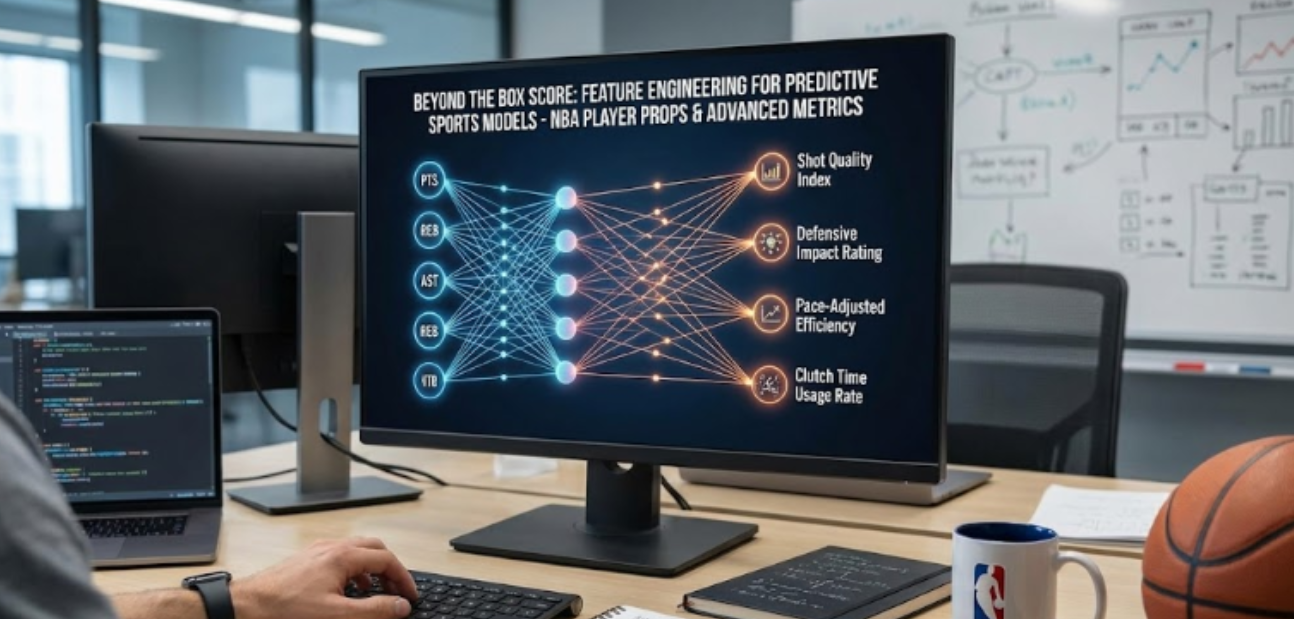
Beyond the Box Score: Feature Engineering for Predictive Sports Models Focusing on NBA Player Props and Advanced Metrics

Basketball analytics has experienced a revolution that is just as big as the industrial revolution. What we have moved away from is a cottage industry of manual tabulation and have gone to a high-fidelity, automated surveillance state. To data scientists and hardcore bettors who have to design predictive models for NBA Player props, this transition is a complete change in the unit of analysis. We have left the discrete and retrospective, the simple box score, behind and entered the continuous and probabilistic world of the spatiotemporal tracking.

Bookmaker algorithms are very efficient in the new betting ecosystem. Using “Macro-Level” statistics, such as the Points Per Game (PPG), is a clear drawback in competition. The exploitable edge, the Alpha, has been moved to the Micro-Level data, the X, Y, Z position of the players recorded at 25 frames per second. This paper outlines the theoretical models and operational procedures necessary to create state-of-the-art feature engineering pipelines to predict individual players’ performance beyond the box score by modeling the process, not just the result.

The Data Ecosystem: Building the Foundation

A predictive engine is based on the infrastructure of its data. To the NBA Player Prop modelers, the ecosystem is hierarchical, whereby disparate data sources must be combined based on their latency and granularity differences. The knowledge of this order is the initial step to creating a model that will be able to outperform the market.

The Hierarchy of Data Granularity

The modern data pipeline processes three distinct strata of information, each offering unique insights and requiring specific engineering approaches:

  1. Box Score Data (Structured/Low-Latency): This forms the foundation of historical analysis. It tells us what happened—LeBron James scored 25 points—but not how. Although it would work well with ground truth targets, its predictive capability is restricted by the fact that it is retrospective.
  2. Play-by-Play Data (Sequential/Event-Based): This layer provides a chronological sequence of events. It is essential in converting the so-called contextual features, including lineup-specific usage rates. With substitution logs, it is possible to compute the performance splits of a player when particular teammates are on or off the floor, which is an essential part of nullifying projections when receiving breaking injury news.
  3. Tracking Data (Spatio-Temporal/High-Volume): This forms the frontier of analytics. This data is originally offered by SportVU and currently by Second Spectrum and is a set of coordinates of every player and the ball. It enables one to calculate velocities, accelerations, and inter-player distances.

The Alignment Problem

One of the ongoing engineering challenges is the “Alignment Problem. There are usually inconsistencies between manually recorded timestamps in Play-by-Play (PBP) logs and tracking data generated by the machine. To generate reliable training sets (such as training a model to predict whether or not a shot will be successful based on the distance of the defenders), these streams need to be synchronized via the use of fuzzy matching algorithms or by detecting the abrupt change in the ball velocity to identify the frame of a shot.

Temporal Dynamics: Modeling Time, Fatigue, and Schedule

In NBA Player Props, the basic assumption of the performance of a player being independent and identically distributed (i.i.d.) is incorrect. Performance is a time-series phenomenon that is heavily affected by biological limitations of the human body and logistical strictness of the NBA schedule.

The Mathematics of “Recent Form”

The reason why static season averages are not good predictors is that they fall behind in the position or physical shape of a given player. Recency should be given priority in feature engineering, coupled with stability in the sample size.

  • Exponentially Weighted Moving Averages (EWMA): EWMA does not use an ordinary moving average but rather uses exponentially decreasing weights for the aged observations. This is better at identifying the breakout players whose position has permanently changed because of a change in the lineup or coaching decision.
  • Rolling Window Variance: In addition to the mean, the variance of a player is a very important feature. A player whose variance in shooting splits is large is a more dangerous bet to place on an over bet, but can be of huge value in an alternate line market where tail outcomes tend to be inefficiently priced.

Circadian Biology and Schedule Fatigue

The NBA schedule is a complicated variable, which creates physiological strain. It is necessary to encode this stress in smart models in order to predict diminished performance.

  • Rest Matrices: There is a statistically significant negative Effective Field Goal Percentage (eFG%) and Defensive Rating on 0 days rest (Back-to-Backs), and it has been observed to be especially true among high-usage veterans.
  • The “3-in-4” and “5-in-7”: Binary flags on schedule density (3 games per 4 nights) are used to define schedule losses, where player output is minimized in all parts of the board.
  • Altitude Adjustment: Aerobic capacity is affected by games that are played in elevated areas such as Denver or Salt Lake City. This attribute has to be heavily incorporated in predictive models of 4th-quarter props because starters tend to have fewer minutes or reduced efficiency in the later parts of games.

Advanced Box Score Derivatives: Deconstructing Efficiency

In order to forecast the amount of production (Points, Rebounds, Assists) in NBA Player Props, it is necessary to know the quality of the role and efficiency of the player. There is no more data, the artifacts of these underlying drivers, which are raw box score counts.

True Shooting and Shot Selection

Field Goal Percentage (FG%) is a very primitive statistic that considers all shots equal. Current-day modeling is based on derivatives such as the True Shooting Percentage (TS%), which uses both free throws and 3-pointers. TS percent is very predictive since it reflects the capability of a player to produce points in the line, which is a skill that is not as fluctuating as jump shooting. It is common to identify players with large TS% and small recent point totals as a good opportunity to buy, since their efficiency predicts that point totals will be recovered positively when volume returns to normal.

Usage Dynamics and The “Wally Pipp” Effect

Usage Rate (USG%) approximates the level of team plays utilized by a player on the floor. But there is not enough historical usage when the injuries strike. The concept of the redistribution of opportunity, as a result of an injury to a starter, due to which the opportunity is lost, is called the Wally Pipp effect. Dynamic Usage Projections should be a part of feature engineering. In case of a high-usage star being sidelined, his/her holdings are forced to be taken up by other players who are left on the roster. With/Without query features are used by the models to forecast the new hierarchy, and lineup-level data is processed to compute usage differentials, player-specific.

The Physics of Basketball: Optical Tracking Features

Quantified Shot Quality (qSQ) is, perhaps, the most powerful predictor of regression. This measure utilizes the XY-intercepts of the shooter and all the defenders to determine the likelihood of a shot being made, regardless of the eventual outcome.

Quantified Shot Quality (qSQ) and Expected Points

Luck can be detected by determining the Shot Quality Delta (Actual eFG% – Expected eFG%). A very positive delta is an indication of a player who is running hot (taking unsustainable shots), which indicates a Sell or Under bet. A negative delta is a bad omen on good shots, representing a “Buy” or an Over bet.

The Geometry of Rebounding

Rebounding has been considered as an effect of effort, but tracing data indicates that it is, in most cases, an effect of geometry.

  • Voronoi Tessellation: The court is divided into areas depending on the location of players. The most common theoretical probability of the rebound will be the player who currently has the biggest Voronoi region around the rim when he or she misses the ball.
  • Deferred Rebound Rate: This is a measure of how the percentage of uncontested rebound opportunities a player passes to a teammate.
  • Adjusted Rebound Rate: This measure isolates the Contested Rebound Rate. Proficiency in this area means that the players will be able to resist difficult playing situations compared to stat-padders, who are dependent on board space.

Potential Assists and the “Passer’s Bias”

Assists are obnoxious since they are based on the receiver’s shooting. The process of playmaking is measured by Potential Assists, which are a pass that results in a shot attempt. When a player has a high potential assists and low actual assists, then his or her conversion rate is probably experiencing variance. Their future help would be projected by a predictive model and regressed to the mean, with this detecting that the box score is missing.

Quantifying Defense: The Holy Grail of Context

The most important contextual variable in prop prediction is modeling the defense of the opponent. Nonetheless, such standard measures as Opponent Points Allowed are not enough. We have to design functions that pick out a certain matchup dynamics.

Hidden Markov Models for Matchup Estimation

We cannot just assume positions guard positions (e.g., PG guards PG). Currently, defenses change and cross-match. Hidden Markov Models (HMM) are the models used to predict the player who will be guarding the target player. The hidden variable is the defensive state, and the observable emissions are the spatial locations of the players. This then enables us to build a weighted Matchup Difficulty Score, which is player-specific.

Scheme Identification

Defenses employ different tactical schemes (Drop, Hedge, Blitz, Switch).

  • Aggression+: A metric of the frequency with which a defense uses two defenders on the ball.
  • Variance+: Quantifies the frequency of a change in coverage of the defense. Terms of interaction are important here. A ball handler, with high turnover, against a high “Aggression+” defense is a good indication of “Over Turnovers” props. On the other hand, a pull-up shooter compared to a drop coverage scheme is considered more efficient by projection.

Machine Learning Architectures and Feature Selection

These features are complicated and demand advanced techniques of modeling, as they will prevent over-fitting and non-linear interactions.

  • Dimensionality Reduction: As tracking data produces millions of data points, compressing data on trajectories into understandable ways that can be interpreted requires methods such as Principal Component Analysis (PCA) and Non-Negative Matrix Factorization (NMF).
  • Gradient Boosting (XGBoost/LightGBM): They are the industry standards of tabular sports data, and do well with the non-linearities, and offer metrics of feature importance.
  • Graph Neural Networks (GNNs): An innovative strategy that constitutes the court as a graph, with the players being the nodes and the interactions being the edges. GNNs can uniquely be learned on tracking data, learning complicated dynamics of chemistry and spacing.

The Betting Market: Execution and Strategy

The predictive model can only be useful to the extent to which it has been applied to the market. The last step will be locating inefficiencies and controlling your bankroll.

Market Inefficiencies

  • The “Under” Bias: There is a psychological bias among people towards Overs (rooting against action). As a result of this, lines are usually overstated by bookmakers. Models will tend to have a higher Expected Value +EV on “Under” bets, especially when it comes to role players whose mileage is shaky.
  • Rotation Risk: The minutes distribution is not normal. Depending on the score of the game (blowout risk), starters may play 35 minutes or 28 minutes. It is important to model the distribution of the minutes and not just the mean.

The Kelly Criterion

Bet sizing must be Kelly-based (betting by the Kelly Criterion) to maximize long-term growth, which is computed by the Kelly Criterion based on your edge and odds. Since NBA Player Props are highly varying, practitioners frequently apply the strategy of the fractional Kelly (e.g., bet half of the recommended value) in order to eliminate the effect of a volatile bankroll and, nevertheless, gain the benefit of the model.

HAYLOU Announces Solar Lite 2 Smartwatch First Look

HAYLOU, a consumer-focused smart wearable brand dedicated to accessible technology and everyday comfort, today announces the upcoming introduction of its latest smartwatch, Solar Lite 2. Designed around real-life needs, Solar Lite 2 combines refined aesthetics with practical smart functions to support a lighter, more effortless daily lifestyle.

Rooted in the philosophy of “Light as You Live,” Solar Lite 2 represents a significant evolution in HAYLOU’s smartwatch design — focusing less on complexity and more on balance, ease, and reliability.It is designed for users who want technology to quietly support their routines, rather than demand constant attention.


  • Slim Design That Feels Weightless

With a slim 9.8mm profile and a carefully balanced structure, Solar Lite 2 is designed to feel natural on the wrist from morning to night.The lightweight form minimizes physical and visual presence, allowing the watch to blend seamlessly into workouts, commutes, and relaxed moments.From the soft-touch strap to the overall ergonomics, every detail is shaped to reduce pressure, heat buildup, and distraction — so comfort stays effortless throughout the day.


  • A Display That Stays Clear, Indoors and Out

HAYLOU Solar Lite 2 features a 1.43-inch AMOLED display with a sharp 466×466 resolution and smooth high refresh rate, delivering vivid colors and refined details at a glance.Even under bright outdoor sunlight, users can easily read notifications, check data, and enjoy watch faces with exceptional clarity.


  • Sleep Smarter, Feel Better

Solar Lite 2 includes a sleep scoring feature designed to support everyday awareness of sleep habits.By offering simple feedback, it encourages users to pay more attention to rest and recovery.


Designed for everyday freedom, Solar Lite 2 delivers up to 17 days of battery life on a single charge, minimizing interruptions and reducing the need for frequent charging.With support for over 150 sports modes and 1ATM water resistance, it adapts easily to workouts, changing weather, and daily activities such as handwashing or light rain.Together, these features allow users to stay focused on movement, routine, and rest — without adjusting their day around the watch.

  • Availability

HAYLOU Solar Lite 2 is scheduled to launch in the middle to late part of January 2026 and will be available on AliExpress and Shopee. An introductory promotional offer will be available during the initial launch period.


Smartwatch Essentials: HAYLOU Solar Lite 2


Product Type: Slim smartwatch for everyday wear

Design:9.8mm slim minimalist design

Display:1.43″ AMOLED display, 466×466 resolution

Connectivity: Bluetooth 5.4

Battery Life:Up to 17 days

Sports Modes:150 sports modes

Health Features:Sleep scoring and sleep stage analysis

Water Resistance: 1ATM 

BUY

Other HAYLOU Reviews

Unboxing and first look

SlingTV Box S5 Max Express 4K review

Meet the latest addition to the SlingTV Box family, the SlingTV Box S5 Max – a true entertainment powerhouse. Packed with 4GB of DDR and 128GB eMMC storage, it ensures uninterrupted performance. Embracing the advanced Android 12, the SlingTV Box S5 Max enhances your viewing experience.

With WiFi 6 and dual external antennas, your connectivity soars to new heights, ensuring seamless streaming. Plus, the upgraded voice command system and Bluetooth remote control simplify your streaming experience. Prepare for an immersive journey into a world of endless content, all elegantly packaged within the sleek and sophisticated design of the SlingTV Box S5 Max.

We have been testing the latest TV box and given the constant media attention here with such it is another option to check out despite the constant fear mongering around dodgy boxes yet alone the rising costs of subs here and a forced TV licence it is down to you the user who wants to see what is out there and what is on offer and there is no fees here once the SlingTV Box S5 is purchased.

SlingTV Box S5 Max Packed with 4GB of DDR and 128GB eMMC storage, it ensures uninterrupted performance. Embracing the advanced Android 12, the SlingTV Box S5 Max enhances your viewing experience.

15,000+ HD Live premium channels and PPV:SlingTV Box allows you to watch local and top cable channels without cable. Network TV, Regional Locals, Sports Networks, 24/7 channels, PPV Events, NBA, MLB, NFL, NCAAF, NHL, Canada (English & French), Latino (Spanish) Philippines. It includes live news(sports, politics entertainment, etc.) and TV shows. Check all updated channels listed HERE

Check out the Video below for more and what to expect

Product Overview

Model: Sling TV Box S5 Max

Operating System: Android 12.0

Processor: Quad-core ARM Cortex-A53

GPU: Mali-G31 MP2

RAM: 4GB DDR

Storage: 128GB eMMC

WiFi: WiFi-6 supported

Ethernet: 1000Mbps Ethernet

Bluetooth: 5.2

Video Decoder: H.265 6K@60fps

Power supply: Dc 5V/2A

Output Interface: HDMI 2.1 *1, USB 3.0 *1, Optical Audio Output


BUY

Video review


Amazon Alexa’s most asked questions of 2025 in Ireland

Alexa is always ready to help and has once again been on hand to answer the questions posed by inquisitive customers in Ireland. Revealed today are this year’s ‘Alexa’s Most Asked Questions’ covering an array of the hottest trends and topics in 2025.

In the year Liverpool became Premier League champions and Taylor Swift dominated our radios with The Life of a Showgirl, users have been asking how much Elon Musk is worth and checking the value of Bitcoin.

Celebrities piqued a lot of curiosity, with Irish Alexa users keen to learn more about their favourite famous faces, with “How tall is Sabrina Carpenter”, “Who is Ed Sheeran married to” and “What is MrBeast’s net worth?” coming in as some of the top celebrity questions.

Users also turned to Alexa for insights on general knowledge, with “What is the population of the Earth?” and “How long do you boil an egg for?” coming in as some of the most asked questions.

Alison Dunn, Country Manager, Amazon Ireland said: “We’re delighted to see how Alexa has become such an integral part of daily life for Amazon.ie customers across Ireland. From settling debates about celebrity heights to helping with cooking times and satisfying curiosity about everything from the population of Earth to the latest Bitcoin values, Alexa is there to help with life’s big and small questions alike.”

Football also dominated the Irish conversation in 2025, with Liverpool the most talked about team, closely followed by rivals Manchester United. “How much is Roy Keane worth?” also found itself in the top 10 celebrity net worth questions.

You can find the full list of ‘Alexa’s Most Asked Questions’ for 2025 below:


  • The most asked about sports team:Liverpool
    1. Manchester United
    2. Arsenal
    3. Manchester City
    4. Chelsea
    5. Tottenham Hotspur
    6. Real Madrid
    7. Barcelona
    8. Aston Villa
    9. Newcastle
    10.  
  • The most asked about celebrities:Cristiano Ronaldo
    1. Taylor Swift
    2. Lionel Messi
    3. Elon Musk
    4. Sabrina Carpenter
    5. Elvis Presley
    6. Ed Sheeran
    7. MrBeast
    8. Eminem
    9. Michael D. Higgins


  • The most asked about estimated net worths:Elon Musk
    1. MrBeast
    2. Cristiano Ronaldo
    3. Taylor Swift
    4. Jeff Bezos
    5. Rory McIlroy
    6. Kevin De Bruyne
    7. Lionel Messi
    8. Bill Gates
    9. Roy Keane


  • General knowledge question highlights:What is the population of the earth?
    • How long do you boil an egg for?
    • How long do you cook chicken for?
    • Where is Leeds?
    • What is the population of the Republic of Ireland?
    • What is the value of Bitcoin?
    • How old is Donald Trump?
    • What is the population of the Republic of Ireland?
    • How long do you cook a potato for?
    • How old is Michael D. Higgins?


  • The most asked about heights:Taylor Swift
    1. Sabrina Carpenter
    2. Lionel Messi
    3. Cristiano Ronaldo
    4. Peter Crouch
    5. Barron Trump
    6. Michael D. Higgins
    7. Tom Cruise
    8. Harry Kane
    9. Sultan Kösen


  • The most asked about spouses:Ed Sheeran
    1. Donald Trump
    2. Katy Perry
    3. Celine Dion
    4. Eminem
    5. Henry VIII
    6. Elon Musk
    7. Cristiano Ronaldo
    8. Lionel Messi
    9. Taylor Swift


*Lists based on IE customer interactions 

ugee FreSound Inspiration Open-Earbuds Review

The Ugee FreSound Inspiration Open-Earbuds  provide comfortable, all-day audio that keeps you connected to your environment. These earbuds have no ANC like any Open-Ear earbuds but thes look great and come in a really nice case and looks like a premium product out of the box.

These are comfortable, Utilizing an open-ear, air-conduction design, the FreSound rests lightly on the outside of your ear, delivering sound without blocking the ear canal. This eliminates the pressure, discomfort, and ‘stuffed-up’ feeling associated with traditional in-ear models.

At just 8.7 grams per earbud, they are exceptionally lightweight. The key to their stability is the flexible, full-wrap liquid silicone ear hook, which feels soft and skin-friendly. They stay securely in place during vigorous activities like running and gym workouts (assisted by an IPX5 sweat-resistant rating), making them a fantastic option for athletes who prioritize situational awareness.

The audio experience is dictated by the open-ear design, which delivers unique benefits and expected trade-offs.

  • Clarity and Detail: The FreSound has a 12mm high-amplitude driver and a custom-tuned frequency curve. It delivers excellent mid-range clarity and crisp highs. These earbuds particularly excel with podcasts, no tinny sound when maxed out on volume
  • Bass and Volume: As is typical for open-ear models, the bass is present—it’s tight and rhythmic enough to motivate a workout—but it lacks the deep, chest-thumping sub-bass found in sealed earbuds. This is normal for this style of earbud
  • Calling: Call quality is strong thanks to AI Call Noise Cancellation, which helps your voice cut through moderate background noise effectively.

The lack of a companion app or customizable EQ means you are reliant on the factory tuning, which some users find a bit too bright or sharp with certain amplified genres like rock and pop but overall they deliver decent audio and for me could use anytime.

The FreSound offers reliable, all-day power:

  • Single Charge: Up to 8 hours of continuous listening.
  • Total Playback: Up to 30 hours using the charging case.
  • Connectivity: Bluetooth 5.3 ensures fast pairing, stable connection, and minimal latency, which is appreciated when watching videos. The added multipoint connection feature for dual-device pairing is a convenient bonus.

The Ugee FreSound Inspiration Open-Earbuds are a compelling choice for a specific audience. They successfully deliver a perfect balance between audio enjoyment and environmental awareness, making them an ideal daily driver for safety-conscious users, fitness enthusiasts, and professionals who need to hear colleagues or surroundings while they work.

They trade deep bass and noise isolation for unparalleled comfort and safety. While the sound tuning might be divisive for heavy rock listeners, their secure fit, great battery life, and clear mid-range make them a strong, budget-friendly contender in the growing open-ear category.

These are ideal forRunners, cyclists, commuters, and people who find traditional in-ear buds uncomfortable and want the best of both worlds hearing what is going on around them and they deliver here with this and adio in general. Check the video below for a detailed look.


Features

  • Seamless Comfort: Our Inspiration Open Earbuds use full-wrap liquid silicone for a soft, ergonomic fit all day.
  • Open-Ear Design: OWS open-ear headphones deliver great audio while keeping you aware outdoors or on the go.
  • Pure Sound: Expertly tuned custom frequency curve ensures crisp, balanced wireless earbuds performance.
  • All-Day Power: Up to 8 hours of continuous playback per charge and 30 hours of standby time with the case.
  • IPX5 Waterproof: Sweat, rain, and splash resistant for active lifestyles.

BUY

Other Open-Earbud Reviews

Video Review

Garmin announces Bounce 2 Kids smartwatch

Garmin has announced Bounce™ 2, its reimagined smartwatch for kids with LTE connectivity1 that makes staying in touch even easier. Bounce 2 allows parents and caregivers to talk to and locate their child thanks to two-way calling, text messaging and real-time location tracking. Featuring a bright, colourful display, kids can also use the smartwatch to track their activities, play fun games, listen to Amazon Music2 and more.

“We are thrilled to introduce Bounce 2, a smartwatch for kids offering the perfect solution for families facing the decision to give their child a smartphone. The watch’s transformed design has a stylish look kids will want to wear, while the connectivity features give parents peace of mind knowing where their kids are 24/7.” 

–Susan Lyman, Garmin Vice President of Consumer Sales and Marketing

Connectivity features parents will love

When using the Garmin Jr. app on a compatible smartphone, parents and parent-approved contacts can communicate with and keep track of their child. 


    • Two-way calling and voice messaging: With the built-in speaker and microphone, kids can call their parents and send voice messages directly from their watch. From the app, parents can answer or call their child’s Bounce 2.
    • Text messaging: Parents can send text messages to their child’s Bounce 2; kids can respond or create their own messages using a full keyboard directly on the watch.
    • Voice message transcriptions: While in a work meeting or in an area where listening isn’t possible, read transcriptions of voice messages sent from the watch.
  • Real-time location tracking: Whether it’s a trip to the park or visiting a friend’s house, parents can see their child’s location in real-time and be notified when they enter or leave a parent-defined area with new temporary geofencing. 

Fun features for kids

  • Built-in sports apps: Kids can track a variety of activities like running, walking, bicycling, pickleball, jump roping, team sports and more. 
  • Immersive designs: Enjoy on-screen animations, watch faces and colour themes. 
  • Amazon Music: Download songs from Amazon Music directly to the watch (Amazon Prime or Amazon Music Unlimited subscription required) to listen to tunes out loud on the watch or through compatible headphones. 
  • Voice commands: Phrases like “call mum”, “start a timer” and more can be activated right from the watch.

Kid-friendly design

Built for all-day play, Bounce 2 features a round, vivid 1.2-inch AMOLED display, giving the watch a sleek look, while the swim-friendly design provides protection during all kinds of activities. And with two side buttons and a touchscreen, it’s easy for kids to navigate between screens and type out text messages on their watch. 

Available now, Bounce 2 offers up to 2 days of battery life3 and has a suggested retail price of £259.99/€299.99.  It comes in three colour options, including light purple, turquoise and slate grey. Kids smartwatch plans are managed by Garmin and are available for £9.99/€10.99 per month. To learn more about the suite of fitness, wellness and activity features available on Bounce 2, click here. 

Engineered on the inside for life on the outside, Garmin products have revolutionised the health and wellness industry. Committed to developing smartwatches and health measurement tools that help people of all activity levels lead healthier lives, Garmin believes every day is an opportunity to innovate and a chance to beat yesterday.

See our smartwatch reviews