Facial recognition systems: applications, benefits and service providers

Facial recognition  technology (FRT) has been around for years now. However, with the technology rapidly evolving, including AI-based solutions, FRT is becoming even faster and better at analysing unique facial features. So, in this article, we’ll look into how this technology actually works, where it can (and is) used, as well as who are currently the key players in the industry.

How does facial recognition work?

At its core, facial recognition technology uses sophisticated AI, particularly machine learning (ML) and deep learning algorithms. The process begins with detection, where the system identifies and isolates a human face within an image or video. Next is analysis, also known as feature extraction, which involves mapping out the unique facial landmarks of your face.

For example, things like the distance between your eyes, the shape of your nose, the contour of your jawline, or the subtle differences in your eyebrows all make up who you are. This is also referred to as a “faceprint” or the biometric template of your face. Once this information is processed, it’s usually converted into a numerical code, which is matched with the one associated with you. The accuracy and reliability of facial recognition heavily depend on the quality of the database and the sophistication of the algorithms.

Diverse applications of FRT

Facial recognition’s applications are already extensive and growing daily. For instance, it’s already a critical tool in security and law enforcement. Agencies can use it to identify suspects from a vast database of CCTV footage, scan large crowds for a person of interest, secure access to sensitive facilities, and so on. You’ve also most likely run into it at the airport passport check, where the machine verifies your identity against your passport. In fact, many people believe your face will become your boarding pass at the airport in the future.

In commercial and consumer applications, FRT brings a lot of convenience. One of the most familiar uses is to unlock our smartphones and laptops just with a glance. Online retail shops are also increasingly offering personalised experiences to customers, using the same technology. Contactless payments can also now be authorised using facial verification instead of passwords. On social media, photo tags are automatically recommended, as platforms can recognise the people associated with you, based on the names you’ve provided.

Moreover, the healthcare sector is where we see a lot of important applications. Facial recognition technology can help prevent various medical errors by accurately identifying patients as well as streamlining hospital check-ins. Experimental systems are even aiming to monitor patient conditions, like diagnosing rare diseases or assessing their pain level, all by analysing their facial dysmorphology.

The benefits of facial recognition implementation

The implementation of facial recognition technology offers numerous incredible benefits across various different industries. Foremost is enhanced security – FRT enables proactive threat detection and more effective crime prevention, improving both public and private safety. Beyond security, it drives improved efficiency and automation. Processes like identity verification, employee check-ins or physical access control are streamlined, reducing the need for manual monitoring.

Of course, FRT brings many benefits to our day-to-day lives too, by making different tasks more seamless. We have quick, contactless, intuitive interactions with our technology, from unlocking a phone to entering a building. Modern systems boast impressive accuracy and speed, quickly becoming the new normal in our homes and workplaces.

Key players in the FRT services

If you are looking to implement facial recognition in your organisation, partnering up with a reliable company will be here. Here are some of the best service providers in the industry today:

Digital Sense

Using the DSBio Face Recognition System (FRS), Digital Sense aims to turn complex projects into simple solutions. Their technology boasts 99.76% accuracy, allowing for reliable identification and verification of faces in real-time.

NEC Corporation

Based in Japan, NEC Corporation is a global biometrics leader, offering high-accuracy facial recognition technology NeoFace. These are widely adopted by law enforcement, border control, and enterprises for robust identity verification and enhanced security.

Clearview AI

Clearview AI primarily serves law enforcement with a controversial, vast database from public internet sources. Its powerful search is a game-changer in police investigations, with 99%+ accuracy, although it has sparked some debates over data collection and privacy practices.

Thales

Thales excels in digital identity and security. They offer biometrics for government programs, enterprise access, secure IDs, aerospace, and advanced border management systems incorporating facial recognition.

The future of face recognition

Facial recognition technology can be absolutely transformative across many sectors, particularly as it keeps getting even faster, more precise, reliable, and powerful. However, despite all of its advantages, the technology is increasingly challenged with privacy concerns, as vast amounts of public data are collected to train it for security purposes. There are also rising worries regarding potential identity theft crimes, as AI face recognition is fast becoming widely accessible to everyone. Ultimately, the positives outweigh the negatives, and with enough transparency and accountability, it can continue to serve individuals and the public safely.

AR tool could give cyclists ‘sixth sense’ and improve self-driving vehicle safety

A new tool which can rapidly prototype augmented reality experiences has given researchers new insights which could allow cyclists to safely share the roads with self-driving cars.

Researchers from the University of Glasgow developed the tool, called CycleARcade, which uses augmented reality headsets to enables cyclists to see and interact with simulated autonomous vehicles as they ride in real-world environments.

The team used CycleARcade to explore how new gear could equip cyclists with a ‘sixth sense’ to help them be more aware of self-driving cars’ intentions. They also examined how cyclists from different countries may expect different behaviours from autonomous vehicles on their local roads.

Unlike traditional simulators which use stationary bikes surrounded by computer screens to mimic real-world situations, CycleARcade enables a more realistic experience, where cyclists ride freely in open spaces with graphics of virtual vehicles displayed in their headsets. The system provides researchers with precise control over the virtual vehicles, allowing cyclists to safely test out immersive scenarios which could be dangerous on real roads with actual cars.

The team’s research builds on previous work they have conducted on how autonomous vehicles can communicate effectively with cyclists to replace the complex set of nods, waves and eye signals which human drivers and riders have developed to signal their intentions to each other. Their CycleARcade research will be presented as two papers later this month at the CHI Conference in Japan.

The first paper outlines how the Glasgow team used CycleARcade to test new designs for interfaces which could alert cyclists to nearby autonomous vehicles and provide information about the cars’ intentions.

With the help of a focus group of 20 cyclists, they developed and tested three virtual displays which would give riders information about vehicles around them in different road scenarios where some cars would yield to the cyclists while others would not.

One prototype, RoadAlert, displayed signals about the cars’ intentions directly onto the road surface and played spatial audio beeps which got louder as vehicles approached. A second, called reARview, gave riders a virtual rear-view mirror through augmented reality glasses. The third, named Gem, used handlebar-mounted displays to communicate the virtual vehicles’ movements.

Ammar Al-Taie, of the University of Glasgow’s School of Computing Science, is the paper’s lead author. He said: “Technology offers an opportunity to augment cyclists’ awareness of the roads around them, providing a kind of ‘sixth sense’ to help them navigate safely.

“What we found in this study is that you don’t need to alert cyclists about all vehicles equally. Cyclists need focused awareness of vehicles that pose the greatest risk, like those approaching from behind or vehicles that won’t yield, while being able to maintain attention on the road ahead. RoadAlert was the design that brought those qualities together most effectively for our study participants.

“It’s important to emphasise, though, that we’re not expecting cyclists to have to adopt this kind of technology in order to stay safe on the roads in the future. Instead, we’re expanding the toolbox for cyclists who want additional support or awareness, who could choose to buy devices specifically designed to do so.”

In the second paper, computing scientists and psychologists from the University of Glasgow and colleagues from the KTH Royal Institute of Technology in Sweden show how they used CycleARcade to probe the road safety expectations of cyclists in three different countries, with very different levels of cycling infrastructure.

They gave CycleARcade kits to cyclists in cities in Sweden, Oman and Scotland and asked them to ride in simulated road conditions with computer-controlled projections of autonomous vehicles displayed in their headsets.

In Stockholm, where cyclists are used to having their own space in dedicated cycle lanes, riders wanted to know exactly where the self-driving car was located around them. They preferred to take their time to judge its intentions by watching its driving behaviour.

In Muscat, where cyclists regularly navigate busy shared roads and make fast-paced decisions about their next move, riders were more likely to quickly trust direct signals from the vehicles.

Cyclists from Glasgow, which has a limited number of dedicated bike lanes, took a more balanced approach. They reported that they wanted to see both location information and clear signals about the vehicle’s intentions.

Mr Al-Taie added: “These findings clearly show that cyclists learn to share the roads with cars differently from country to country, which suggests that self-driving cars might need to adapt their communication methods to better speak the language of the local roads. Humans often do this naturally when driving abroad, but autonomous vehicles may need to have their programming tweaked to take local driving culture into account when they start rolling out around the world in the years to come.”

The paper has been selected by the conference for an Honorable Mention award, which are presented to the top 5% of papers submitted to CHI 2025.

CycleARcade is the latest development in research led by Professor Stephen Brewster, of the University of Glasgow’s School of Computing Science, which focuses on how cyclists can communicate with self-driving cars in the years ahead.

Professor Brewster said: “Ultimately, we’re aiming to thoroughly explore the ways in which cyclists and autonomous vehicles can speak the same language on the roads to keep both as safe as possible. Human drivers and riders have developed a sophisticated series of signals to help decide who has the right of way or who has priority in a change of lanes, for example, and it’s vital that cyclists can have the same level of trust and understanding with self-driving cars.

“CycleARcade is a powerful tool to help explore how that new language can be developed, using real bikes in real physical spaces, with virtual elements that can be tweaked or replaced in real-time. We’re continuing to work on research in this area, and we hope that our insights will help influence the design of future generations of autonomous vehicles.”

The team’s papers, titled ‘Around the World in 60 Cyclists: Evaluating Autonomous Vehicle-Cyclist Interfaces Across Cultures’ and evARything, evARywhere, all at once: Exploring Scalable Holistic Autonomous Vehicle-Cyclist Interfaces’, will be presented at the CHI Conference in Yokohama, Japan, on Monday 28th April and Wednesday 30th April respectively.

Video


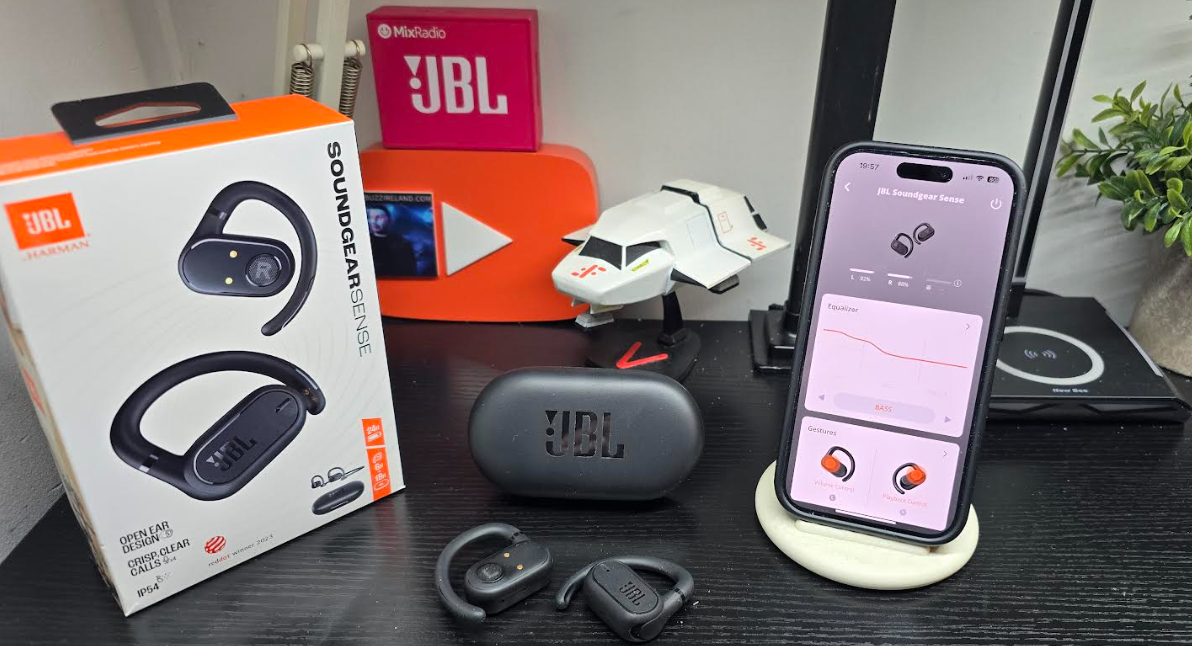
Tech Review – JBL Soundgear Sense

The JBL Soundgear Sense are an open ear design pair of headphones which are now a trend and we have checked out about 20 different pairs now and look forward to testing JBLs offering,.

Like any open ear headphones these just sit on your ears rather than in them and loop around you ear to keep a secure fit these also come with an additional neck strap which is similar to other open ear headphones with no loop around the ears so I see what they did there.

These are clean and typical from JBL with a nice clean look and come in two colours so you decide amongst yourselves which suits you best. Unlike their headphones and earbuds the colours are limited but it is the same for all these open ear headphones.

They are secure and comfortable once on either with or without the neck strap so these are ideal for those into fitness, the gym jogging and any sport. Anyone can wear these in fact not just sports folk.

They have simple to use touch controls and and ergonomic design to suit most ears out there and these have an extra pivot point I have not seen yet on other offerings out there having three level adjustment rather than two that most have.

Sound is great here given the open ear design and for most this will be a new experience, they are not as loud as I would like however that is just me but they still deliver on the audio with decent highs lows and mids and testing an all genres they done pretty good, there is video mode too which gives you a better experience for watching movies videos and even gaming where no lag latency was noted nor tinny sounds on full volume.

You will not get the same quality of audio as you would in headphones or earbuds here but these do a great job overall there is no ANC as expected and that is one drawback of these kind of headphones but they also let you hear what else is going on so for cyclists joggers and gym goers they are ideal.


JBL Headphone App


Product Features:
  • JBL OpenSound technology
  • Enhanced dynamic sound
  • Up to 24 hours of battery life, plus speed charge
  • JBL Headphone App
  • Touch Control
  • Water Resistant
  • IP Code: IP54
  • Charging cable
  • Voice Assistant integration
  • Built-in Microphone
  • Hands Free Call
  • Sweat Proof
  • Speed charge
  • Rechargeable battery

BUY

Video Review

#IFA2023 – JBL launches Soundgear Sense: Hear the world around you with first-ever JBL air conduction earbuds

JBL introduces its first-ever true wireless open-ear earbuds, JBL Soundgear Sense. Featuring JBL OpenSound Technology with air conduction, the new earbuds transform the listening experience and set a new standard for audio quality in this form factor.

JBL Soundgear Sense introduces a breakthrough in audio technology by providing listeners with JBL’s Signature Sound quality while maintaining a natural connection to their surroundings. With uniquely designed 16.2mm drivers and a bass-enhancing algorithm, JBL Soundgear Sense takes open-ear sound quality to the next level. Hear the world around you while enjoying every beat of your favourite tracks. Enjoy punchy bass and clear vocals from playlists and calls.

With unrivalled flexibility, the ear hooks offer rotation and size adjustments for truly personalised, all-day comfort. Designed to enhance your daily routine, the air conduction earbuds rest comfortably on the curve of your ears without obstructing the ear canal. They also use the unique design and shape to reduce sound leakage and protect your privacy.

JBL Soundgear Sense ensures a secure yet relaxed fit for extended wear, making them ideal for outdoor activities, office use, or exploring the city. Earbuds that fit as comfortably into your life as they do on your ears, In addition to delivering impressive sound, JBL Soundgear Sense boasts multi-point connectivity for seamless connections with all your devices. Switching and reconnecting is a thing of the past. With four integrated microphones, JBL Soundgear Sense delivers great call quality, no matter the environment. Seamlessly integrating into your active lifestyle, the IP54 rating guarantees resistance to sweat, dust, and rainfall. The detachable neckband provides an added level of security during those heavy workouts.

“Features such as Ambient Aware are so popular in our TWS earbuds that we wanted to take this to the next level and create a naturally open design that provides a true connection with the outside world. Developing Soundgear Sense challenged us to produce JBL’s renowned audio quality in air conduction earbuds. I am delighted with the results. Thanks to our incredible audio know-how, our class leading JBL OpenSound Technology ensures that even in this new form factor, we deliver the exceptional sound experience that JBL is known for,” said Carsten Olesen, President of Consumer Audio at HARMAN.
Stay connected, stay aware, and immerse yourself in legendary JBL sound quality with JBL Soundgear Sense.

The JBL Soundgear Sense will be available in Black and White from end of August 2023 on uk.jbl.com for £129.99/€149.99 in packaging made from FSC-certified paper and printed with soy ink.

JBL Soundgear Sense features:

● Bluetooth 5.3 with LE audio support*
● JBL OpenSound Technology with 16.2mm drivers
● 4 microphones for crisp, clear calls
● Up to 24 hours of battery life (6 hours in the earbuds plus a further 18 hours from the
case)
● Speed charge – a quick 15-minute charge gives you 4 additional hours of music
● IP54 sweat, splash, and dust resistant
● Hybrid design with optional neckband
● Touch control and JBL Headphones App for personalization and EQ adjustments

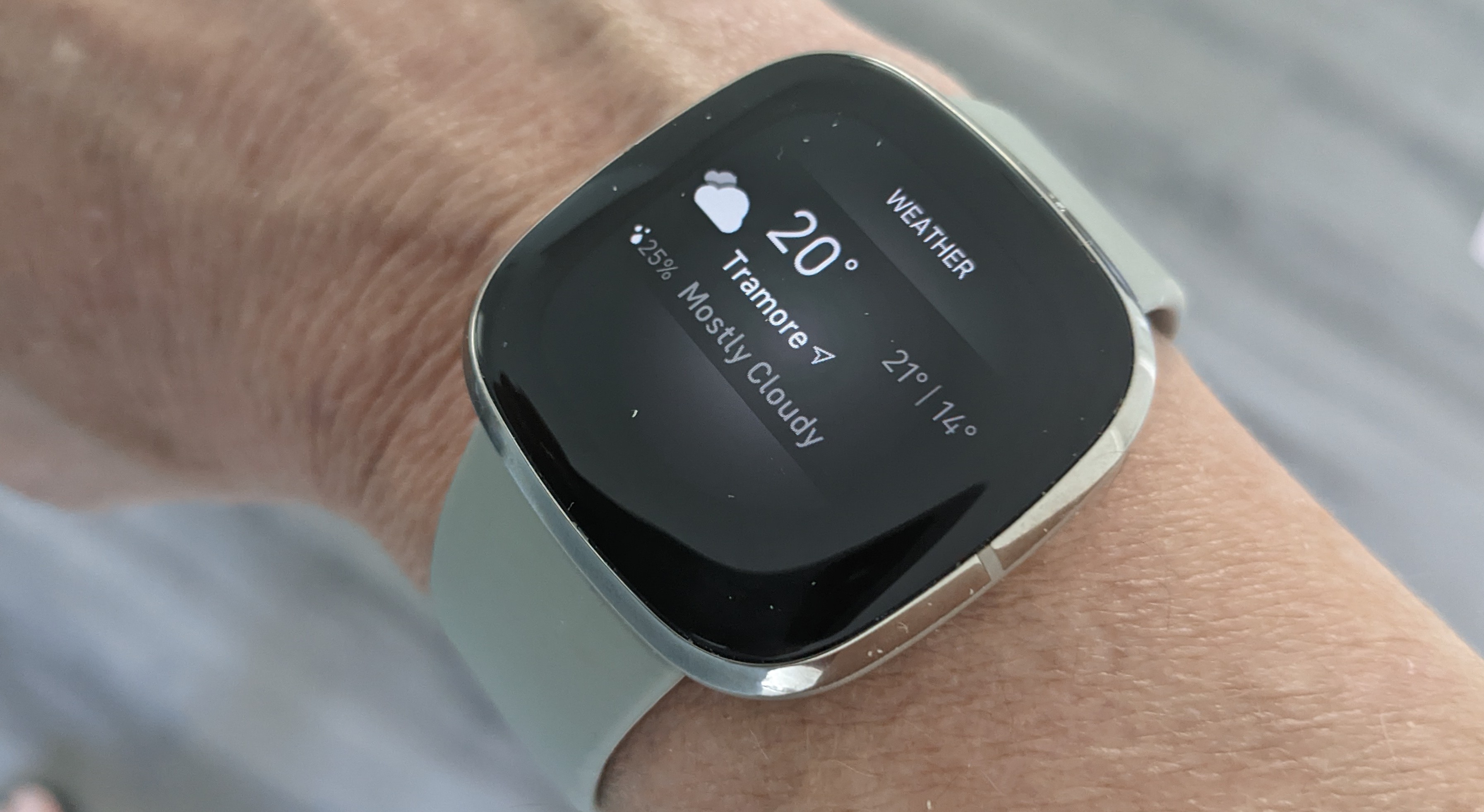
Tech Review – Fitbit Sense

I have several smart watches or as some call them “wearables” and to rub it in more they are called data trackers which in fairness is true and like any product you buy the same words are used and regardless the thoughts and the facts you are always the product which also applies to apps but in recent time we have seen how much smart watches and similar products are now taking more information and it is not just to serve you ads but that is life today and only you can take control of this.

I do like to have a nice watch on my arm and for the most do so if not bought by myself or sent for review as in this case and it is a rare occasion when I say I will buy this later which applies here given this is not a fully fledged wearable that can keep you away from your phone, it is a fitness tracker all the same and not sold as a fully featured wearable which I am more use to wearing.

As mentioned in the unboxing this is actually my first fitbit and people have asked why this is the case, well I never asked for one or looked for one given we should have been on their radar but again it is what it is and that has changed and I am glad I had the opportunity to test this one out taking into account what is missing from what I am used to having on my wrist but I do have other similar products here that offer even less and it gives me a better look at what is on offer here and what people can pick from which is more than ever now on how products are targeted on people these days.

Ok so a few weeks ago I did a quick unboxing of the Sense blended in with the new sleep profile which you can see here and while I am here on the sleep matter I never wear a watch to bed no matter how good it is or how it looks so for me it was not really an option for me to use I did opt in for the 6 months premium trial whilst testing again not much of benefit to me but can see how it would be ideal for others as most of my friends wear fitbits or Apple watch and as mentioned I have several and being frank never get the full potential due to my wearing habits.

First thing I will say the design is great and the watch itself is a superb build and took to me more than expected and with the colour strap on my review unit,many people asked including my fitbit fanatics and they were also impressed with this model and the strap and as a first time fitbit user it grew on me each day with its looks and its simple UI and the build quality and it is something I would recommend for those who need such or intend to up their game or fitbit device as none have this model here bit those slim ones or cheaper options available. So for the 4 weeks I tested it you can see the results below.

Now I am a bit of a lazy git and like all watches do not put them on first thing in the mornings and work from home alot now and not out that much which is probably not the best route in life to take but I earned few badges during the time I tested alongside the countless emails you get from them but you can opt out but as testing you have to see what is in store and not only that it is good for pushing you too if you want to change your lifestyle or goals..

As mentioned the UI is simple and so the app is also great for getting things done and keeping an eye on things and of course setting your own personal goals which mostly for me is steps and keeping an eye on my heart rate etc, I do cycle quite a bit and do some exercise some of which not recorded here as you can see some half day recordings noted and as mentioned again I often forget to put the watch on no matter what watch but I will not hide the fact either.

The app has lots on offer and I found it great for basically recording everything so you can keep track of what is going on and what needs to be done, some might find it intrusive and nosey with your location data as said at the top of the review but that is how things work and being honest there is only so much even will lend to these companies and that is a personal choice but I think many would agree too.

Now again I did not fill in everything every day as I find that tedious personally but you get the idea of what is on offer here and as said the UI is easy to use and there is much more, You can avail of a get active programme  challenges and adventures even get fit bingo you have assessments and reports then you also have the expected clocks and apps section to play around with to customise you watch which is essential for me and workouts there is also mindfulness options Nutrition and guided programmes along with get more sleep, now I always had a sleeping issue and nothing really works for me and I have to live with that myself and there is a community tab plus then your premium features much of which is mentioned above.

Now you have ECG on this device too which is a great addition to have, you also have skin sensors stress management and breathing sensors and of course fitbit pay all competing against other similar products but you pay much less here compared to Apple watch for example.

The battery is another thing to point out here which is one of the best out there beside withings scanwatch which I currently use, I did have the Apple watch series 7 but that was woeful on battery it must be said although a nice watch and here with the fitbit sense which this is competing with I find more value for less money although short of notifications on your wrist and taking calls but this watch is not aimed at that and the price justification for Apple is still not acceptable and I guess different strokes for different folks as the saying goes but fitbit could and can do more I think in this department and still costing much less than its rivals.

There is enough information at a glance here but when it comes to notifications it was the bare minimum like you would find on cheaper watches but again I accept who this watch is for and from trying many watches I get it but would like to have seen more in this department which keeps me off my phone which I practice alot these days. You do have options to do quick and voice replies which is not so bad. And I do like the Amoled corning glass 3 display.

Overall there is more to like about the fitbit sense than dislike if you are into certain features or require them even for me that wanted more being use to having it settled for it over time and it grew on me and it also looks great which is an important factor for me and has everything fitness you need to keep an eye on your health.


Fitbit adds Premium Sleep Profile and we check out the Fitbit Sense

Fitbit have launched a new feature which is the Premium Sleep Profile and what a great to to test out their Fitbit Sense which has just arrived and our first time to check out the brand on site which we look forward too, on first look at the device it feels premium and has more features than I had expected in comparison to some other similar products I have here in for review and I quite like it.

With health and fitness being a daily part of people’s lives now people want more features and Fitbit have launched a new option which is great for those who track their sleep never mind the stress something which I both lack and have an abundance of so for me an ideal time to check out what is on offer here.

This new Fitbit Premium feature offers a new longitudinal analysis of your sleep patterns. It also makes your sleep data even easier to interpret with fun animal characters, so you can take steps to improve your sleep quality and, in turn, your overall health.

How does it work?

Wear your Fitbit device to sleep for at least 14 nights per calendar month to receive an assessment. The more you wear the device to sleep, the more precise the evaluation. Sleep can vary significantly from night to night, so it’s helpful to analyze your sleep data over a longer period from your own sleep environment to uncover more insights into your habits and how you can improve.

As a Premium member you will see your Sleep Profile, including your sleep animal and monthly sleep analysis, on the first day of every month. Animals can change from month to month, and data collected throughout the month will inform the next animal you receive the following month. There is no “ideal” animal – each one can be used to better understand your sleep patterns and how you can improve your sleep quality.

Read the full story HERE

First look at the Fitbit Sense