Why Remote Tech Teams Still Need a Physical Base in Dublin

There is no doubt that even up to this day, Ireland still holds the title of being one of Europe’s most dynamic technology hubs. This is made even more evident by the fact that global companies like Google, Meta, Microsoft, and Amazon maintain major operations in Dublin. Plus, there are quite a lot of startups and scale-ups that are building products from across the country.

These days, remote work has become more prominent than ever before. Remote work has completely changed the way that teams operate these days. After all, everyone from developers to engineers can collaborate despite not being in the same continent.

And yet, even with the growing popularity of remote work, there are still companies that maintain a physical presence in Dublin. This is completely reasonable, seeing as Dublin is a powerhouse filled with global opportunities. Plus, remote flexibility and physical base perfectly complement one another these days. After all, there will eventually come a time when companies who have remote workers will need a physical presence for important meetings with investors, stockholders, and partners.

The Rise of Remote Tech Teams in Ireland

It was the COVID-19 pandemic that made remote work adoption accelerate quickly. Even after the pandemic ended, a lot of companies still retained flexible working policies.

Because of remote work, companies in Dublin were able to recruit talent beyond Dublin’s city limits. This is very convenient, especially since there is no need for hired talent to relocate to fulfill their roles and responsibilities. As a result, most remote teams in Ireland now consist of professionals who are spread across multiple regions.

Sure, remote setups have plenty of advantages. For instance, there is easy access to a wider talent pool that allows companies to recruit specialists who might be unavailable locally. Plus, remote operations do not require a huge overhead. This can be very important for companies that are just starting out.

And yet, there are also some challenges that come with remote setups. These challenges must be anticipated by businesses to make sure they can still thrive despite possible hiccups.

Why Physical Meeting Spaces Still Matter

There is no denying that nothing beats face-to-face interaction. Sure, platforms like Slack, Zoom, and Microsoft Teams make it very easy to collaborate remotely. But of course, there are times when physical meetings are needed.

Some instances where face-to-face interactions might be necessary include strategy sessions, product design workshops, and investor presentations. When participants are in the same physical environment, there is a higher chance that productivity is better.

This is the reason why a lot of distributed companies plan for periodic in-person meetings in serviced offices Dublin. This way, they can plan for sessions, onboarding, or collaboration days in person. Flexible spaces are a huge help for these instances since they provide temporary but professional environments that support hybrid teams without a huge overhead.

In a way, these serviced offices serve as meeting points instead of daily workplaces. Employees can still work remotely most of the time and then just gather occasionally for key milestones or project reviews.

Collaboration and Culture in Hybrid Teams

It’s important for all members of an organization to be able to feel comfortable with one another. But since remote work means different people from different cultures can work together, there is a need to set aside a time to get to know each other’s cultures to foster better communication and collaboration.

It’s best if casual conversations, spontaneous brainstorming, and informal mentorship can happen naturally in person once in a while. This way, companies will be able to strengthen team relationships and align employees around shared goals.

These interactions can significantly improve communication and productivity despite the geographical restrictions that exist within an organization.

The Future of Work in Ireland’s Tech Sector

Since remote work has become established in today’s world, there is a very small chance that Ireland’s technology sector will go back to fully office-based work. Therefore, organizations must embrace all the advantages and disadvantages that come with the remote work setup and deal with them as efficiently as possible.

Sure, remote work is a very convenient and flexible setup. And yet, there will always be a need for in-person meetings and interactions; regardless of whether the purpose is to boost morale or collaboration or to brainstorm ideas and solve problems more effectively. Luckily, there are spaces like serviced offices Dublin that companies can pay for just for occasional meetings.

Remote work and occasional in-person meetings are a good combination. While there is no denying that the remote work setup is very convenient, nothing beats the advantages that come with meeting people in person. After all, interactions feel more natural. Plus, there is more room for building rapport and improving relationships.

As Ireland’s technology sector continues to grow, this balance between flexibility and physical presence will likely define how remote tech teams Ireland operate in the years ahead.

Ecofil Expands into Hospitality Market

Ecofil, Ireland’s leading provider of sustainable bottle filling stations, has officially announced its expansion into the hospitality sector with the launch of a new premium range of bottle coolers and water dispensers, unveiled at the Irish Hotel Federation (IHF) Showtel 2026 Conference which took place last week in Killarney.

The new range marks a strategic evolution for the Irish water solutions provider, which has spent recent years establishing its market-leading outdoor brand, Iconic V. Today, the Iconic V bottle-filling station is recognised as the number one outdoor hydration solution on the island of Ireland, with more than 20 local authorities selecting Ecofil as their preferred supplier of public water equipment.

Peter Wynne, Managing Director of Ecofil, said, “Following the success of Iconic V in the outdoor environment, we are now bringing that same focus on sustainability, design and reliability to the hospitality and wider business sectors. This new range allows us to deliver tailored, high-performance water solutions that meet the specific operational needs of hotels, restaurants and commercial clients.”

During his visit to Showtel, Mr Wynne travelled to the historic Garnish Island, where Ecofil has recently installed another Iconic V outdoor water station. The installation forms part of an ongoing collaboration with the Office of Public Works (OPW) to help eliminate single-use plastic bottles from protected heritage sites.

Mr Wynne added, “Working with the OPW on treasured locations such as Garnish Island is both a challenge and a privilege. These projects reflect our commitment to sustainability and to protecting Ireland’s natural and historic environments.”

Ecofil confirmed that additional innovative products will be introduced in the second half of 2026, further strengthening its position as a leading Irish provider of sustainable water solutions. Ecofil continues to invest in innovation, sustainability and Irish manufacturing as it expands across both public and commercial sectors.

As part of the ERG Group, Ecofil will also benefit from ERG’s long-established reputation within the Irish hospitality sector. With a trusted customer base of over 1,000 clients, ranging from independent pubs to large hotel groups, ERG provides Ecofil with immediate access to established relationships where credibility and service standards are already recognised.

CCPC calls on Government to open up Irish taxi market

New research from the Competition and Consumer Protection Commission (CCPC) highlights a supply shortage in the taxi sector as four in 10 people who tried to get a taxi in December reported difficulties doing so.

With a significant share of taxi users wanting the choice of ride-hailing (49%), the CCPC is calling for the removal of regulatory barriers to facilitate entry of these services. Ride-hailing platforms, such as Uber or Bolt, connect private drivers to passengers via apps. This would mean allowing these private drivers to provide services using their own cars, subject to appropriate regulatory safeguards.

According to the research, 57% of those who expressed an opinion believe that there are not enough taxis available in their area. However, there are stark differences across geographical locations.

While 56% of those living in Dublin believed there are enough taxis in their area, only 28% of those outside of Dublin agree. This drops to 21% for those living in Connacht or Ulster.

Participants were asked whether they would like the choice of accessing ride-hailing services, subject to regulatory requirements.

While 49% of taxi users surveyed would like the option of ride-hailing services, this figure rose to 57% for those who believe there are not enough taxis in their area.

When asked whether they would prefer a fixed fare or a metered fare, 60% said they would support a fixed fare option.

The research also found that 53% of respondents surveyed tried to get a taxi in December 2025. Two in five who tried to get a taxi in December experienced problems, with 27% saying they had to stop looking as no taxis were available.

The research comes ahead of the National Transport Authority’s (NTA) regulatory assessment of the licensing of dispatch operators, which is due to begin later this year.

Brian McHugh, CCPC chair said: 

“Regulatory barriers in the taxi market have failed to facilitate innovations that have flourished in other countries and consumers are suffering as a result. Our research shows a clear preference for more choice among consumers who are not getting the service they need.

“This is not about abandoning oversight or regulation.  Any new entrants could and should be regulated to maintain high service and safety standards. Consumers and businesses deserve an innovative, functioning taxi sector that provides choice. Consumers shouldn’t be faced with long waits or the possibility of staying home due to a lack of taxi availability.

“The CCPC is calling on the Government to remove key regulatory barriers in the taxi market so that it can be more responsive to consumer needs and align better with how transport systems are evolving all over the world. The goal is to achieve a balance that protects consumers and ensures access, while also allowing competition and innovation to improve the market. We look forward to engaging with the NTA in their consultation process and to exploring all solutions that might increase capacity and choice.

See more 

“Sustainable Refrigeration for Hotels & Restaurants”

The hospitality industry stands at a pivotal moment in its environmental journey. With refrigeration systems typically accounting for 15-25% of total energy consumption in hotels and restaurants, the transition to sustainable cooling solutions represents one of the most impactful steps operators can take towards carbon neutrality, whilst simultaneously reducing operational costs.

Traditional refrigeration systems rely heavily on synthetic refrigerants with high Global Warming Potential (GWP) and energy-intensive operations that contribute significantly to both direct and indirect carbon emissions. However, the emergence of natural refrigerants, energy-efficient technologies, and integrated sustainable cooling solutions now provides hospitality businesses with compelling alternatives that deliver superior environmental performance alongside exceptional operational benefits.

The convergence of tightening environmental regulations, rising energy costs, and increasing guest expectations for sustainability makes the transition to eco-friendly refrigeration not just environmentally responsible but strategically essential for competitive hospitality operations. Properties that embrace sustainable refrigeration today position themselves advantageously for the low-carbon future whilst enjoying immediate operational benefits.

At EnviroFWA, our extensive experience implementing sustainable refrigeration solutions across the hospitality sector has demonstrated their remarkable potential to transform both environmental impact and operational economics. These advanced systems represent far more than equipment upgrades—they’re strategic investments in sustainable competitiveness that deliver measurable returns through reduced energy consumption, enhanced efficiency, and improved environmental credentials.

Understanding Refrigeration’s Environmental Impact

Modern hospitality refrigeration systems contribute to environmental impact through two primary pathways: direct emissions from refrigerant leakage and indirect emissions from energy consumption. Traditional systems using synthetic refrigerants such as hydrofluorocarbons (HFCs) can have Global Warming Potentials thousands of times higher than carbon dioxide, making even small leaks environmentally significant.

The F-Gas Challenge and Opportunity

The EU F-Gas Regulation phase-down schedule is progressively reducing the availability of high-GWP refrigerants whilst driving up their costs. This regulatory pressure creates both compliance challenges and opportunities for forward-thinking hospitality businesses to transition to sustainable alternatives before regulatory deadlines force reactive responses.

Commercial refrigeration services that incorporate F-Gas compliance planning help hospitality businesses navigate this transition strategically whilst optimising both environmental and economic outcomes.

The phase-down schedule means that high-GWP refrigerants will become increasingly expensive and scarce, making early adoption of natural refrigerant systems a hedge against future cost inflation whilst providing immediate environmental benefits.

Energy Consumption and Carbon Footprint

Beyond direct refrigerant emissions, refrigeration systems’ energy consumption represents their largest environmental impact. Traditional systems often operate at efficiencies well below modern standards, consuming excessive energy while contributing to grid-based carbon emissions.

Sustainable refrigeration systems can reduce energy consumption by 25-40% compared to conventional systems whilst providing superior temperature control and reliability. These efficiency improvements translate directly into reduced carbon emissions and lower operating costs that compound over the system lifetime.

The integration of sustainable refrigeration with renewable energy systems creates opportunities for near-zero operational carbon emissions whilst providing exceptional economic returns through reduced energy costs and enhanced sustainability credentials.

Natural Refrigerant Technologies: The Sustainable Solution

Natural refrigerants including carbon dioxide (CO2), ammonia (NH3), and hydrocarbons offer zero or minimal Global Warming Potential whilst providing excellent thermodynamic properties for efficient refrigeration operation. These proven technologies eliminate the environmental concerns associated with synthetic refrigerants whilst often delivering superior energy efficiency.

Carbon Dioxide (CO2) Refrigeration Systems

CO2 refrigeration systems provide exceptional environmental performance with a Global Warming Potential of just 1, compared to thousands for traditional HFC refrigerants. Modern CO2 systems deliver excellent energy efficiency whilst providing superior temperature control across diverse hospitality applications.

Transcritical CO2 Systems represent the cutting edge of sustainable refrigeration technology, operating efficiently across all climate conditions whilst providing both refrigeration and heating capabilities through heat recovery integration. These systems excel in applications requiring multiple temperature zones such as large hotel food service operations.

The reliability and safety of CO2 systems make them particularly suitable for hospitality applications where system downtime can immediately impact guest services and revenue streams. CO2 systems require minimal safety precautions compared to toxic refrigerants whilst providing exceptional operational reliability.

Hydrocarbon Refrigeration Solutions

Hydrocarbon refrigerants, including propane (R290) and isobutane (R600a), offer exceptional energy efficiency with zero Ozone Depletion Potential and minimal Global Warming Potential. These natural refrigerants provide excellent thermodynamic properties whilst being readily available and cost-effective.

Propane Systems deliver outstanding energy efficiency for commercial refrigeration applications whilst requiring smaller refrigerant charges than traditional systems. The reduced charge quantities minimise both environmental impact and system costs whilst providing superior performance.

Safety considerations for hydrocarbon systems focus on proper installation and maintenance practices that prevent refrigerant accumulation in enclosed spaces. Professional installation and regular maintenance through planned maintenance programmes ensure safe operation whilst maximising efficiency benefits.

Energy Efficiency Technologies: Maximising Performance

Sustainable refrigeration encompasses not just natural refrigerants but also advanced technologies that maximise energy efficiency whilst reducing operational costs. Modern systems incorporate variable speed compressors, advanced controls, and heat recovery capabilities that dramatically improve overall performance.

Variable Speed Drive Technology

Variable Frequency Drives (VFDs) on refrigeration compressors enable precise capacity modulation that matches cooling demand whilst eliminating the energy waste associated with on/off cycling. VFD technology can reduce compressor energy consumption by 20-35% whilst providing superior temperature control.

The integration of VFD technology with advanced control systems enables refrigeration systems to respond dynamically to changing load conditions whilst optimising energy consumption across all operating conditions. This capability is particularly valuable in hospitality applications where cooling loads vary significantly with occupancy patterns and seasonal conditions.

Smart Control Integration enables refrigeration systems to coordinate with other building systems including HVAC, lighting, and renewable energy generation to optimise overall facility energy consumption whilst maintaining optimal food storage conditions.

Heat Recovery and Integration

Advanced refrigeration systems can capture and utilise waste heat for domestic hot water production, space heating, and other thermal applications. Heat recovery can improve overall system efficiency by 15-25% whilst reducing the energy required for water heating and space conditioning.

Integrated Heat Pump Systems combine refrigeration and heating functions in single systems that provide both cooling for food storage and heating for domestic hot water or space heating. This integration maximises energy efficiency whilst reducing equipment requirements and installation costs.

The coordination of heat recovery systems with air conditioning systems creates comprehensive thermal management that optimises energy utilisation across all building systems whilst maintaining optimal environmental conditions.

System Design and Integration Strategies

Sustainable refrigeration implementation requires a comprehensive system design that considers both immediate operational requirements and long-term sustainability objectives. Effective design integrates refrigeration with broader building systems whilst optimising performance across diverse operating conditions.

Load Matching and Right-Sizing

Proper system sizing ensures optimal efficiency whilst avoiding the performance penalties associated with oversized or undersized equipment. Hospitality refrigeration loads vary significantly with occupancy patterns, seasonal variations, and operational schedules, requiring careful analysis to optimise system capacity.

Modular System Design enables capacity matching through multiple smaller systems rather than single large units. This approach provides redundancy for critical applications whilst enabling more precise load matching and improved part-load efficiency.

The integration of refrigeration load analysis with broader energy management enables comprehensive optimisation that considers all building systems whilst prioritising critical food safety requirements.

Temperature Zone Optimisation

Modern sustainable refrigeration systems can serve multiple temperature zones efficiently through cascade systems or CO2 transcritical applications that provide excellent performance across diverse temperature requirements. This capability enables comprehensive food storage solutions whilst maximising energy efficiency.

Centralised vs. Distributed Systems require careful analysis to optimise both energy efficiency and operational reliability. Centralised systems offer superior energy efficiency and maintenance accessibility, whilst distributed systems provide redundancy and flexibility for diverse applications.

The selection between system architectures should consider both immediate operational requirements and long-term expansion plans whilst prioritising energy efficiency and environmental performance.

Maintenance and Operational Optimisation

Sustainable refrigeration systems require specialised maintenance approaches that preserve both environmental and efficiency benefits throughout their operational lives. Proper maintenance maximises system efficiency whilst ensuring compliance with environmental regulations and safety requirements.

Preventive Maintenance for Sustainability

Sustainable refrigeration maintenance focuses on preserving refrigerant integrity, maintaining heat exchange efficiency, and optimising control system performance to ensure continued environmental and operational benefits. Regular maintenance prevents refrigerant leaks that compromise both environmental performance and system efficiency.

Refrigeration servicing programmes tailored for sustainable systems address the specific requirements of natural refrigerant systems whilst ensuring optimal performance throughout system lifecycles.

Leak Detection and Prevention becomes even more critical with sustainable systems where refrigerant costs may be higher and environmental stewardship requires absolute minimisation of emissions. Advanced leak detection systems enable proactive maintenance that prevents losses whilst maintaining system performance.

Performance Monitoring and Optimisation

Continuous monitoring of sustainable refrigeration systems enables ongoing optimisation that maintains peak efficiency whilst identifying opportunities for further improvement. Modern monitoring systems track energy consumption, temperature performance, and system efficiency in real-time.

Data Analytics enable the identification of performance trends that indicate maintenance requirements, optimisation opportunities, or operational adjustments that improve both efficiency and sustainability outcomes.

The integration of refrigeration monitoring with broader building management systems creates comprehensive energy management that optimises performance across all facility systems whilst maintaining critical temperature control requirements.

Financial Analysis: The Business Case for Sustainable Refrigeration

The transition to sustainable refrigeration delivers compelling financial returns through multiple benefit streams, including energy cost reduction, refrigerant cost savings, maintenance optimisation, and operational improvements. Comprehensive financial analysis demonstrates the strong business case for sustainable technology adoption.

Energy Cost Savings and Payback

Sustainable refrigeration systems typically reduce energy consumption by 25-40% compared to conventional systems, delivering immediate operational cost savings that continue throughout the system’s lifetime. For a typical hotel with comprehensive food service operations, annual energy savings often exceed £5,000-£12,000 depending on system size and operational patterns.

Payback periods for sustainable refrigeration upgrades typically range from 3-6 years for complete system replacements and 1-3 years for major component upgrades or retrofit applications. Government incentives and grants for sustainable technology adoption can significantly improve payback periods whilst reducing initial investment requirements.

The avoided costs of high-GWP refrigerant purchases as F-Gas regulations drive price increases provide additional financial benefits that improve the business case for natural refrigerant adoption.

Operational and Maintenance Benefits

Sustainable refrigeration systems often provide superior reliability and reduced maintenance requirements compared to conventional systems. Natural refrigerants eliminate many of the complications associated with synthetic refrigerant handling whilst providing excellent operational characteristics.

Extended Equipment Life results from the superior thermodynamic properties of natural refrigerants and the reduced stress on system components from efficient operation. Sustainable systems often achieve 15-25% longer operational lives whilst maintaining peak performance throughout their service periods.

Reduced refrigerant costs and simplified regulatory compliance provide ongoing operational benefits that compound over system lifetimes whilst reducing administrative burdens associated with synthetic refrigerant management.

Implementation Strategy: Transitioning to Sustainable Cooling

Successful sustainable refrigeration implementation requires systematic planning that addresses technical requirements, operational considerations, and regulatory compliance whilst minimising disruption to ongoing operations. Phased implementation approaches enable a gradual transition whilst building expertise and optimising outcomes.

Assessment and Planning Phase

Comprehensive sustainable refrigeration programmes begin with detailed assessments of existing systems, operational requirements, and sustainability objectives. Professional assessment identifies optimal technologies whilst evaluating implementation strategies that maximise benefits whilst minimising disruption.

Energy Audits quantify current refrigeration energy consumption whilst identifying specific opportunities for efficiency improvement and environmental impact reduction. Detailed analysis enables prioritised improvement programmes that deliver maximum benefits with available resources.

Regulatory compliance analysis ensures that sustainable refrigeration programmes address current and anticipated F-Gas requirements whilst positioning properties advantageously for future regulatory developments.

Technology Selection and Design

Sustainable refrigeration technology selection requires careful evaluation of operational requirements, environmental conditions, and integration opportunities with existing building systems. Professional design ensures optimal technology selection whilst maximising both environmental and economic benefits.

Natural Refrigerant Selection depends on specific application requirements, safety considerations, and operational preferences. CO2 systems excel for larger applications with diverse temperature requirements, whilst hydrocarbon systems provide excellent efficiency for smaller applications.

System design integration with electrical systems ensures optimal power quality and reliability whilst supporting variable speed operation and advanced control capabilities that maximise sustainable system benefits.

Installation and Commissioning

Professional installation of sustainable refrigeration systems requires specialised expertise in natural refrigerant handling and system commissioning. Proper installation ensures optimal performance whilst maintaining safety requirements and regulatory compliance.

Staff Training on sustainable refrigeration operation and maintenance ensures that efficiency benefits are maintained throughout system lifecycles whilst building internal expertise that supports ongoing optimisation efforts.

Commissioning procedures verify optimal system performance whilst establishing baseline measurements that support ongoing monitoring and optimisation programmes.

Regulatory Compliance and Future-Proofing

Sustainable refrigeration implementation must address current regulatory requirements whilst anticipating future developments that may affect system selection and operation. Proactive compliance planning ensures long-term viability whilst avoiding reactive responses to regulatory changes.

F-Gas Regulation Compliance

The F-Gas Regulation phase-down schedule creates both compliance obligations and strategic opportunities for hospitality businesses. Early adoption of natural refrigerant systems eliminates future compliance concerns whilst providing immediate operational benefits.

Quota System Implications mean that high-GWP refrigerants will become increasingly expensive and scarce as phase-down targets reduce availability. Natural refrigerant systems eliminate exposure to these cost increases whilst providing stable long-term operating costs.

Professional regulatory compliance planning ensures that sustainable refrigeration programmes address all relevant requirements whilst optimising both environmental and economic outcomes.

Future Regulatory Trends

Emerging environmental regulations increasingly focus on comprehensive lifecycle impacts, including energy efficiency, refrigerant environmental impact, and overall system sustainability. Sustainable refrigeration systems position properties advantageously for future regulatory developments whilst providing immediate benefits.

Carbon Pricing mechanisms increasingly make energy efficiency and low-carbon refrigeration economically compelling beyond their direct operational benefits. Sustainable systems provide a hedge against future carbon costs whilst delivering immediate environmental benefits.

Industry sustainability standards and certification programmes increasingly recognise sustainable refrigeration as an essential component of comprehensive environmental management programmes.

Case Study: Sustainable Refrigeration Transformation

A prominent Scottish hotel and conference centre recently implemented a comprehensive sustainable refrigeration programme that demonstrates the transformational potential of natural refrigerant systems. The 150-room property with extensive food service operations replaced aging HFC systems with advanced CO2 refrigeration throughout.

Results achieved within the first 18 months included:

  • 38% reduction in refrigeration energy consumption compared to previous systems
  • £8,500 annual energy cost savings across all refrigeration applications
  • Complete elimination of high-GWP refrigerant emissions and associated compliance costs
  • Improved temperature control consistency that enhanced food quality and safety
  • Achievement of environmental certification that strengthened sustainability marketing

The comprehensive system upgrade paid for itself within 4.2 years through energy savings alone, whilst avoiding future refrigerant cost increases and regulatory compliance costs provided additional financial benefits.

Guest feedback highlighted the property’s environmental leadership, with sustainability credentials becoming key factors in corporate event bookings and conference selections.

Integration with Renewable Energy Systems

Sustainable refrigeration systems integrate exceptionally well with renewable energy installations to create comprehensive sustainable cooling solutions. The combination of efficient refrigeration with clean energy generation provides near-zero operational carbon emissions whilst delivering exceptional economic returns.

Solar-Powered Refrigeration

The integration of sustainable refrigeration with solar energy systems creates synergistic benefits where peak cooling demands align with peak solar generation periods. This natural alignment maximises renewable energy utilisation whilst reducing grid electricity consumption.

Battery Storage Integration enables solar-powered refrigeration systems to continue operating during low solar production periods whilst providing energy security for critical food storage applications. Combined systems provide exceptional sustainability credentials whilst reducing long-term operating costs.

Energy management systems can prioritise renewable energy for refrigeration applications whilst coordinating with other building systems to optimise overall energy utilisation and cost-effectiveness.

Staff Training and Operational Excellence

Sustainable refrigeration systems require staff understanding and engagement to ensure optimal performance whilst maintaining the efficiency and environmental benefits throughout their operational lives. Comprehensive training programmes address both technical operation and sustainability awareness.

Technical Training Requirements

Natural refrigerant systems require specialised knowledge for safe and efficient operation. Training programmes should cover system operation, safety procedures, and maintenance requirements specific to sustainable refrigeration technologies.

Safety Protocols for natural refrigerant systems focus on proper handling procedures and emergency response requirements whilst emphasising the superior safety profiles of natural refrigerants compared to synthetic alternatives.

Ongoing training updates ensure that staff remain current with evolving technologies and best practices whilst building internal expertise that supports continuous optimisation efforts.

Sustainability Awareness and Engagement

Staff engagement in sustainability objectives enhances the overall effectiveness of sustainable refrigeration programmes whilst building organisational culture that supports environmental excellence. Training should connect individual actions with broader sustainability outcomes whilst highlighting the business benefits of sustainable practices.

Performance Monitoring Training enables staff to identify optimisation opportunities and efficiency improvements whilst taking ownership of sustainability outcomes that benefit both environmental and operational objectives.

Conclusion: Strategic Investment in Sustainable Competitiveness

Sustainable refrigeration represents a fundamental transformation in hospitality cooling that delivers compelling benefits across environmental, operational, and financial dimensions. The convergence of regulatory pressure, technological advancement, and market demand for sustainability makes sustainable refrigeration essential for competitive hospitality operations.

The most successful hospitality businesses recognise sustainable refrigeration as strategic investment that provides competitive differentiation whilst delivering measurable returns through reduced operating costs, enhanced efficiency, and improved environmental credentials. By implementing comprehensive sustainable refrigeration programmes, operators achieve long-term competitive advantages whilst contributing to broader environmental objectives.

At EnviroFWA, our comprehensive approach to sustainable refrigeration helps hospitality businesses navigate the transition to eco-friendly cooling systems whilst maximising both environmental and economic benefits. From initial assessment through system selection, installation, and ongoing optimisation, we provide the expertise and services needed to achieve sustainable refrigeration excellence that supports long-term business success.

Ready to transform your refrigeration costs whilst achieving your sustainability objectives? Contact our team today to discover how sustainable refrigeration technology can enhance your operational excellence whilst delivering measurable environmental and financial benefits.

Irish energy sector’s digital transformation to be accelerated with new partnership

NeoDyne, a leading provider of advanced power and automation solutions, has become the first company in Ireland to join leading technology company Siemens’ grid+ Partner Programme.

The partnership brings together Siemens’ industry-leading grid technology with NeoDyne’s 25 years of specialist expertise in electrification and automation, marking a significant milestone in the digital transformation of Ireland’s energy sector.

The partnership comes at a crucial time as the energy sector undergoes rapid transformation, with increasing demands for grid resilience, renewable integration and digital capabilities. Through this collaboration, customers will benefit from comprehensive expertise in digital substation solutions, grid automation systems and advanced protection technology, supporting customers’ transition to more efficient energy systems.

The Siemens grid+ Partner Programme enables carefully selected partners to deliver comprehensive solutions for substations, industrial power networks and power generation projects. This collaboration will particularly benefit customers in the energy, renewables and rapidly expanding data centre sectors in Ireland.

As a solution partner, NeoDyne will gain enhanced access to the Siemens SIPROTEC 5 predictive analytics platform, the Siemens REYROLLE 5 digital protection relays, and Siemens SICAM 8 automation and power quality technology, unlocking cutting-edge protection, automation and power quality management for customers.

Together, these technologies create a digitally-enabled grid infrastructure where connectivity enhances predictive maintenance, machine learning improves fault response accuracy, and automation capabilities enable sophisticated data analytics for operational optimisation. This integrated approach delivers enhanced grid reliability, improved operational efficiency and future-ready infrastructure that adapts to evolving energy demands.

Jon Turner, Head of Electrification & Automation at Siemens UK & Ireland, said: “NeoDyne’s appointment as our first grid+ Solution Partner in Ireland reflects both the business’ technical excellence and our shared commitment to accelerating digital transformation in the energy sector through the development and adoption of digital technology. NeoDyne’s proven expertise in delivering innovative solutions aligns perfectly with our vision for a more resilient and sustainable grid infrastructure.”

David O’Sullivan, Associate Director of PowerGen & Utilities at NeoDyne, added: “Being the first company in Ireland to achieve Siemens grid+ Partner status is a great accomplishment for us. This partnership empowers NeoDyne to provide our clients with best-in-class substation solutions, ensuring grid resilience, efficiency, and seamless integration of power generation and energy storage systems.”

The collaboration between Siemens and NeoDyne demonstrates both companies’ commitment to driving innovation in the energy sector while supporting the transition to a more sustainable and digitally-enabled grid infrastructure. Together, they will work to accelerate the digital transformation journey in a sustainable manner, leveraging their combined expertise to serve the fast-growing sectors within the Irish market.

More information about the Siemens grid+ Partner Programme can be found here: https://www.siemens.com/global/en/company/partners/partner-programs/program-partners/gridplus.html

Choosing the Right IT Partner for Your Business: 5 Essentials Everyone Should Know

If you’re looking to make the investment of partnering with an IT provider, this can be a big step forward for your business, but only if you choose the right one. The wrong one will leave you feeling frustrated, and before you know it, you’ll be wanting to switch. 

Making the right call is very important, but how do you go about doing this confidently, and knowing what to ask? This quick guide will outline five essential areas to consider. 

1. Look for an understanding of your unique industry and sector

There are plenty of generic managed IT support providers out there. However, finding one that understands the specific pressures faced in your sector makes a significant difference in the impact the partner can have. The benefits include far quicker response times, as the partner will likely have come across and have specialisms in the unique equipment and software you use. As well as gaining expert insight into new technologies and solutions, designed to solve challenges that industries in your area often face. 

And just because they claim to work with people in your industry, it doesn’t necessarily mean their experience is extensive, so be sure to ask for specific examples. 

2. Ask about their approach to businesses that are experiencing growth 

Your business today won’t be the same in a few years time. You need a partner who can grow with you, whether that means onboarding new staff simply and quickly, or helping you migrate to smarter cloud solutions. Ask for real examples of how they’ve helped clients to scale.

3. Check their communication style

IT is technical. And most likely your Team isn’t. A good IT partner will know how to explain their services and solutions in a way that makes sense to you. Pay attention during early conversations: Do they use technical jargon, or do they make things clear? That tells you a lot about what your day-to-day support will feel like once they become your partner. Over time this lack of clear communication will leave your Team feeling frustrated and unsupported.

4. Understand their approach to cybersecurity

If you speak to an IT provider that isn’t prioritising cybersecurity, this should instantly be a red flag. Anyone working in the IT services sector will understand the importance of having at least an essential level of security in place for businesses. If they’re not raising this in your conversations, it should be a signal that they’re a provider who isn’t going to look out for your company’s best interests. 

5. Demand transparency in service and performance

It’s easy to promise “fast support,” but what does that mean? Ask about service-level agreements, average response times, and how the provider is tracking performance. A good one will show you the numbers without hesitation, not just make big claims.

The takeaway message

Getting this decision right can have a big impact on your business, and making the decision based on the cheapest price or whose website wowed you the most isn’t going to result in you finding a long-term partner.

Finding a IT Team that understands your business’s unique needs and truly has your best interest at heart is crucial for a successful relationship. So keep these five key areas in mind when you’re next looking into managed IT services for your business 


Tech sector emissions, energy use grow with rise of AI

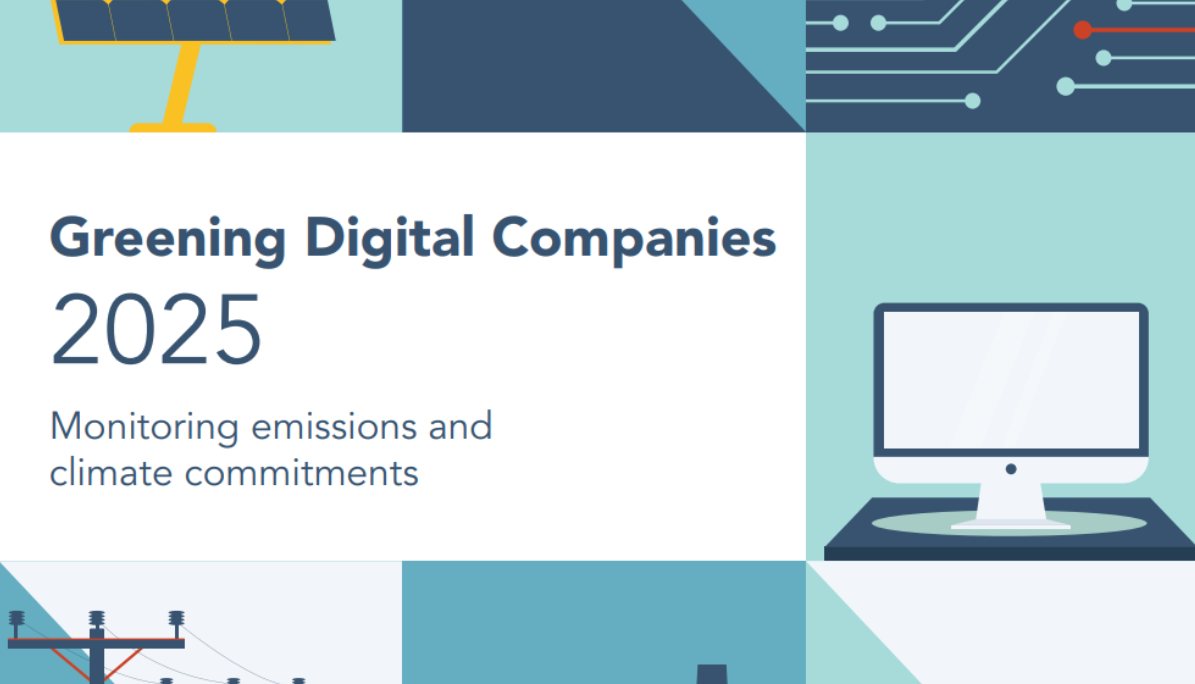
Tech sector carbon emissions continued their rise in recent years, fueled by rapid advances in artificial intelligence (AI) and data infrastructure, according to Greening Digital Companies 2025.

The report, produced by the International Telecommunication Union (ITU) and the World Benchmarking Alliance (WBA), tracks the greenhouse gas (GHG) emissions, energy use, and climate commitments of 200 leading digital companies as of 2023, the most recent year for which full data is available.

While the annual report calls on digital companies to address their growing environmental footprint, it also indicates encouraging progress. Worldwide, more companies had set emissions targets, sourced renewable energy and aligned with science-based frameworks.

“Advances in digital innovation — especially AI — are driving up energy consumption and global emissions,” said ITU Secretary-General Doreen Bogdan-Martin. “While more must be done to shrink the tech sector’s footprint, the latest Greening Digital Companies report shows that industry understands the challenge — and that continued progress depends on sustaining momentum together.”

Global AI expansion fuels energy demand

According to the latest edition of the report, electricity consumption by data centers — which power AI development and deployment, among other uses — increased by 12 per cent each year from 2017 to 2023, four times faster than global electricity growth.

Four leading AI-focused companies alone saw their operational emissions increase in the reporting period by 150 per cent on average since 2020. This rise in energy that is either produced or purchased – known as Scope 1 and Scope 2 emissions – underscores the urgent need to manage AI’s environmental impact.

In total, the amount of greenhouse gas emissions reported by the 166 digital companies covered by the report contributed 0.8 per cent of all global energy-related emissions in 2023.

The 164 digital companies that reported electricity consumption accounted for 2.1 per cent of global electricity use, at 581 terawatt-hours (TWh), with 10 companies responsible for half of this total.

“Digital companies have the tools and influence to lead the global climate transition, but progress must be measured not only by ambition, but by credible action,” said Lourdes O. Montenegro, Director of Research and Digitisation at WBA. “This report provides a clear signal to the international community: more companies are stepping up, but emissions and electricity use continues to rise.”

Progress amid rising challenges

Although emissions continued their rise, Greening Digital Companies 2025 highlights steps taken by many tech firms that suggest a strengthening of transparency and accountability.

Eight companies scored above 90 per cent in the report’s climate commitment assessment on data disclosure, targets and performance. This is up from just three in last year’s report.

For the first time, the report includes data on companies’ progress toward meeting climate targets and realizing stated net-zero ambitions. Almost half of the companies assessed had committed to achieving net-zero emissions, with 41 firms targeting 2050 and 51 aiming for earlier deadlines.

Other trends among the 200 digital companies featured in the report include:

  • Renewable energy adoption: 23 companies operated on 100 per cent renewable energy in 2023, up from 16 in 2022.
  • Dedicated climate reporting: 49 companies released standalone climate reports, signaling greater transparency.
  • Scope 3 consideration: The number of companies publishing targets on indirect emissions from supply chains and product use rose from 73 to 110, showing increasing awareness of industry impacts.

A call for bold, collaborative and immediate action

Highlighting how the tech sector can ensure long-term digital sustainability, the joint ITU-WBA report recommends that companies:

  • Strengthen data verification, target ambition and climate reporting, including by publishing climate transition action plans.
  • Disclose the full environmental footprint of their AI operations.
  • Foster cross-sector collaboration among tech firms, energy producers and environmental advocates, alongside industry initiatives to drive accelerated digital decarbonization.
  • Keep accelerating renewable energy adoption.

The Greening Digital Companies report has become a vital tool in tracking the climate footprint of the tech sector,” said Cosmas Luckyson Zavazava, Director of ITU’s Telecommunication Development Bureau. “Despite the progress made, greenhouse gas emissions continue to rise, confirming that that the need for digital companies to adopt science-aligned, transparent, and accountable climate strategies has never been greater. ITU’s work in monitoring the environmental impact of the sector is a crucial step towards achieving a sustainable digital transformation.”

ITU’s Telecommunication Development Bureau is working with regulators, statisticians, academics, and industry experts to define indicators that support national GHG monitoring and data-driven action through the Expert Group on Telecommunication/ICT Indicators.

As the COP30 UN climate conference approaches, ITU’s Green Digital Action aims to ensure that updated climate pledges and adaptation plans will fully reflect the complete impacts of digital technologies.

When Is the Right Time to Buy High Dividend Stocks?

Investing in high-dividend stocks has been a popular strategy for those who require regular income from their investment portfolio for some time now. These stocks are shares of ownership in businesses that distribute part of their earnings to shareholders as dividend payments, usually paid quarterly. The popularity of high dividend stocks goes beyond the regular dividend income- they are usually shares in established businesses with proven business models and consistent cash flows. This combination of income and stability makes them particularly attractive during certain economic conditions and for specific investor objectives.

Investors use high dividend stocks in their wealth-building plan, valuing the twin advantages of likely price appreciation and periodic income. Reinvested dividends can substantially add to overall returns using the leverage of compounding. For retirement planning, passive income creation, or merely diversifying your investment strategy, knowing when to buy high-dividend stocks can maximize your outcomes.

Market Downturns Open Up Opportunities

The most favorable time to add high-dividend stocks to your portfolio is when there’s a broad market correction or even a bear market. When market declines are meaningful, even those high-quality businesses with long, reliable dividend payers will experience a decline in the value of their shares. This creates a situation where the dividend yield—calculated by dividing the annual dividend payment by the current stock price—increases even if the actual dividend amount remains unchanged. Essentially, you can potentially buy the same income stream at a discount.

Market declines typically pose emotional hurdles for investors, as they find it challenging to invest capital when the price is going down. However, such a psychological hurdle presents an opportunity that can be advantageous for long-term dividend investors. Successful investors often make it a habit to gradually build up their holdings in dividend stocks during market declines, taking advantage of quality companies with sustainable payout ratios and sound balance sheets that are capable of surviving economic downturns.

The long-term historical trend of market recoveries after declines adds another layer to this strategy. By buying high-dividend stocks on market weakness, investors can reap increased yields and ultimate price recovery when the market improves.


Interest Rate Environments Matter

The environment of interest rates plays a major role in determining the relative appeal of high dividend stocks. In low or declining interest rate environments, investments offering dividends are more attractive than fixed income investments such as bonds or certificates of deposit. Investors searching for yield have fewer high-yielding alternatives when rates are low, so the yields from high dividend stocks are comparatively more desirable.

On the other hand, increasing interest rate environments can cause high dividend stocks to face headwinds in two respects. One, as freshly issued bonds have progressively more attractive yields, some income-oriented investors will move capital away from dividend stocks into fixed-income assets. Two, several firms with high dividend stocks have higher levels of debt, and increasing rates have the potential to raise their borrowing costs, thereby putting pressure on profitability and dividend viability.

This sensitivity to interest rates provides potential timing opportunities. Times when rates are seen as peaking or turning down could be good entry points for dividend-paying stocks with high yields. Also, when market commentators are unduly worried about rates rising, the dividend stock prices could provide overreactions that present value opportunities to contrarians.

Sector Rotation Creates Selective Opportunities

The stock market tends to undergo sector rotation, times when capital moves from one industry group to another due to shifting economic expectations or sentiment. Rotational cycles can produce selective opportunities in high-dividend stocks when specific dividend-heavy sectors temporarily lose favor.

For instance, utility firms, real estate investment trusts, and consumer staples companies habitually provide among the market’s richest dividend yields. As investors as a whole turn their attention to more growth-oriented industries, such dividend leaders might show price weakness, which is unrelated to their underlying business trends or dividend durability. These times can present a great opportunity for dividend-oriented investors to buy high-dividend stocks at discounted valuations.

Instead of attempting to time these sector turns, most successful investors have lists of high-quality, high-dividend stocks that they would prefer to own. They then opportunistically buy when overall market movements make valuations favorable in these individual companies or industries, adding on over time.

Outside of broad market or sector issues, individual company events more frequently provide optimal entry points for high-dividend shares. Short-term business setbacks, isolated earnings disappointment, or a change in management may reduce share prices while the fundamental dividend capability persists. These opportunities must be carefully evaluated, but they can offer some of the most attractive opportunities to purchase high-dividend shares at desirable prices.

When contemplating such scenarios, examine if the problem plaguing the company is indeed transitory or reflects a structural alteration in the business model. Look for firms upholding their dividend payouts even in the face of short-term setbacks, as this reflects management’s faith in the strength of the underlying business. Firms possessing low debt levels, healthy cash flows, and sustainable payout levels are in the best position to hold out their dividends during run-of-the-mill periods of difficulty.

The best time to invest in high-dividend stocks also varies based on your financial circumstances and investment goals. Life changes, such as nearing retirement, often mark suitable times to raise exposure to income-generating investments. As your investment objectives move from growth only to income generation, incrementally adding positions in high-dividend stocks can assist in this process.

Similarly, windfalls from inheritances, bonuses, or other income streams offer natural occasions to set up or add to high-dividend stock positions. Instead of attempting to make the perfect entry time at market, most money planners advise a dollar-cost averaging strategy—investing a fixed amount every time period to mitigate the effects of short-term market movements.

Conclusion

The most critical timing consideration with high dividend stocks is having a long enough investment period. The compounding ability of reinvested dividends rears its head most obviously over long time frames. Research repeatedly demonstrates that much of the stock market’s overall return is due to dividends and their long-term reinvestment.

The proper time to purchase high-dividend stocks is really a matter of mixed market conditions, individual situations, and personal goals. When you know these and set out with a careful strategy for dividend investing, you can create an income-generating portfolio that meets your financial requirements across multiple market cycles.


Launch of APM Regional Network in Ireland Marks Major Milestone for Project Management Sector

The London-based Association for Project Management (APM), the chartered body for the project management profession, announced the establishment of its Regional Network in the Republic of Ireland. This significant expansion reflects APM’s ongoing commitment to international growth and follows the successful launch of a new Regional Network in Dubai, UAE, in recent weeks.

Celebrating Growth and Development: The project management sector in Ireland has seen remarkable growth over the last few years, in tandem with the current economic growth and the broad range of public and private infrastructure projects undertaken right across the country.

APM’s Regional Network will support growth and professional development in Ireland through a range of events and activities including CPD (Continuing Professional Development) sessions workshops, networking events, and conferences, as well as hosting volunteer opportunities that support specific focus areas like education outreach, corporate engagement, and emerging professional activities. APM is partnering with leading companies and organisations across industries such as finance, IT, construction, and pharma, to drive engagement and facilitate knowledge sharing, with the aim of strengthening industry collaboration in Ireland

Professor Adam Boddison OBE, Chief Executive Officer at APM, stated: “We are delighted to launch our Regional Network in Ireland, making it easier for project management professionals here to broaden and deepen their skills in the sector and to achieve Chartered status within the profession.  Using our knowledge and experience, combined with key stakeholders in the country, we will also look to collaborate at a government level to ensure that Chartership is a mandated standard on significant public projects, thus improving the overall process and contributing to more successful project completions.”

Supporting Ireland’s Ambitious Future: APM’s new Regional Network in Ireland aligns with the Irish government’s “Project Ireland 2040” strategy, which combines the National Planning Framework (NPF) and the National Development Plan (NDP) to guide the country’s future development. This strategy includes €165 billion in capital investment for key areas of the economy, addressing sectors such as public infrastructure, energy, transport, and construction.

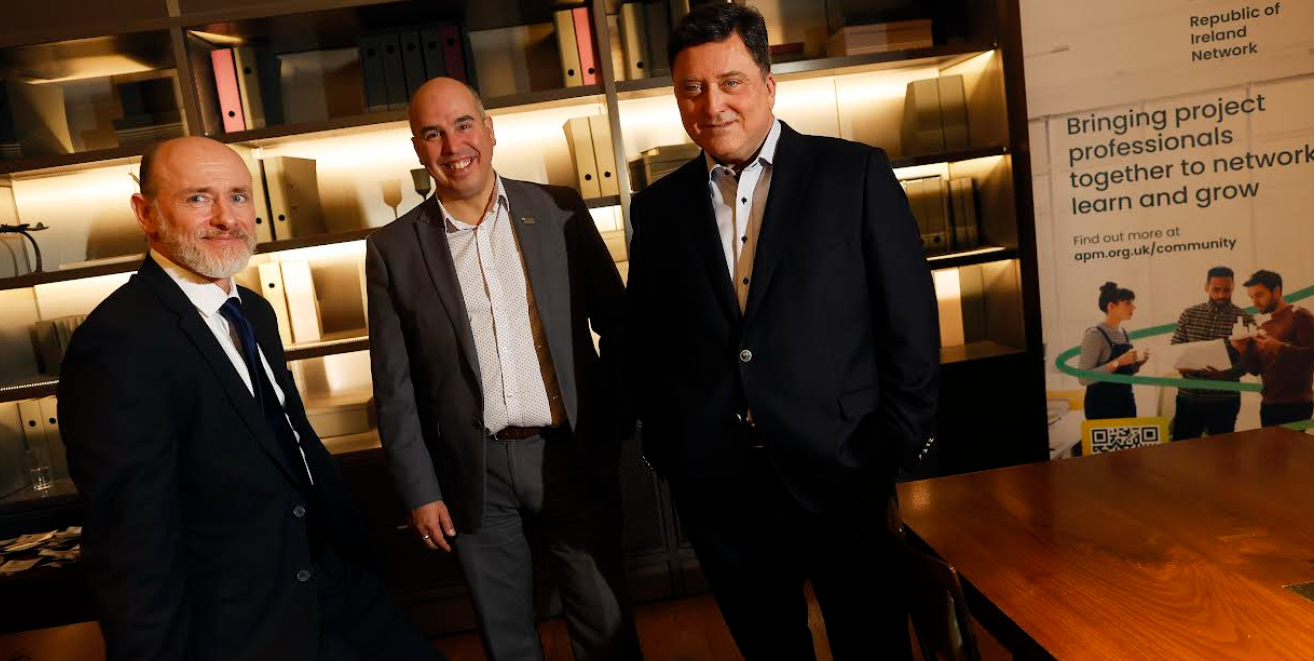
Anthony McCarthy, Director at Dublin-based construction and property consultancy, Cogent Associates, will lead the Ireland Regional Network, supported by Deputy Lead, Ricardo Santos, Programme Manager with Iarnród Éireann. Their leadership will ensure the network supports local engagement and professional development through best practices across all sectors.

Mr. McCarthy commented: “Project management, in its many forms, in Ireland is going from strength to strength and offers a varied and rewarding career for professionals across a broad swathe of sectors.  Myself and Ricardo are really excited about playing our part with the Irish Regional Network of the APM in contributing to and developing ever higher professional standards within the project management sector in Ireland”.

How APM’s operational excellence in project management helps to deliver

With more than 50 years of expertise in developing and applying best practice to the project management sector, the APM is at the forefront of the latest developments in project management theory and practice.

The APM Regional Network is arriving at a crucial point in the development of the project management sector in Ireland.  In recent years, the integration of digital technologies is reshaping project execution and management throughout Ireland. Tools such as Data Analytics, Internet of Things (IoT), and Artificial Intelligence (AI) are becoming essential in project planning and operations. The use of Digital Twins – virtual replicas of physical systems – is being explored to optimise urban planning and infrastructure management throughout the country. It is now common to see the use of Data Analytics in risk management and cost estimation, as well as the use of Artificial Intelligence in flood modelling and asset management, amongst others.

The APM Regional Network in Ireland will help to accelerate these developments and contribute to more successful management of projects here, including large scale, multi-faceted ones, some of which, in the past, have run over schedule in terms of both costs and timings.

Anthony McCarthy added: “With the launch of the APM’s Regional Network for Ireland, the Irish economy, and, indeed, project managers like myself who work here, will greatly benefit from the increase in professional standards that the APM will bring.  The Irish Regional Network is hitting the ground running as we already have a number of meetings, workshops and information evenings scheduled for over the coming months”.

Anyone interested in finding out more about the APM or those who want to join the vibrant community of Chartered Project Managers dedicated to addressing Ireland’s pressing challenges and shaping the future of project management here, can contact the Association by email on: volunteers@apm.org.uk or visit apm.org.uk/community/republic-of-ireland-network/