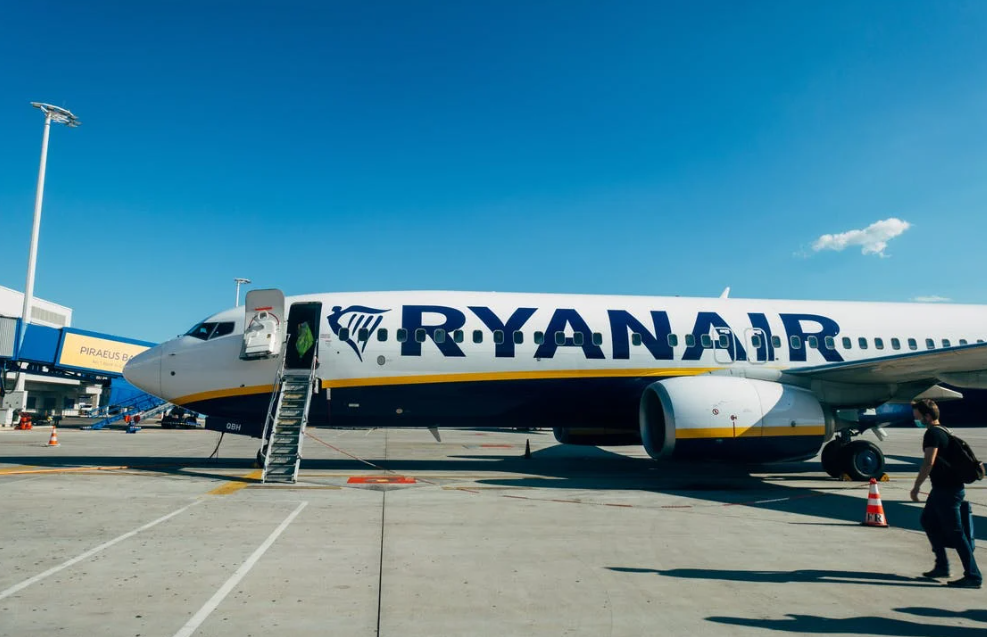
Ryanair and CarTrawler announce strategic partnership

Today, CarTrawler, the leading B2B technology provider of car rental and mobility solutions to the global travel industry, announces a new car rental partnership with Ryanair, Europe’s No. 1 airline.

Ryanair operates one of the most extensive short-haul networks in the world, carrying 207 million passengers per year. Its relentless focus on low fares and high efficiency has made it the most commercially important airline in European aviation.

Ryanair customers can enjoy exclusive rates, top-tier car rental options, market-leading customer service and a fully integrated booking experience through Ryanair’s website and on the myRyanair App.

Ryanair CEO, Eddie Wilson, said: “We’re pleased to announce our new partnership with CarTrawler. CarTrawler delivers great value with an outstanding range of car rental options at competitive prices, fully integrated into the Ryanair booking journey. Ryanair passengers already enjoy the lowest fares in Europe and this new product will offer them the best value with our price match guarantee.”

Powered by CarTrawler’s Connect Platform, the company’s proprietary cloud-based technology, the service makes it easier for travellers to secure the right car at the right price as part of their overall journey, an experience that keeps car hire aligned with the airline’s low-fare promise and supports its broader commercial strategy.

Peter O’Donovan, Chief Executive at CarTrawler, commented: “Ryanair’s decision to partner with CarTrawler is a powerful endorsement of our industry-leading Connect Platform, which delivers unparalleled results for our airline partners. We’re delighted to be reuniting with Ryanair to build a long-term, mutually successful partnership and to provide their customers with world-class car rental offers and exceptional value.”

Unlike many travel technology providers that divide their focus between consumer and business channels, CarTrawler operates solely as a B2B partner, focused on enabling its customers to succeed. Every innovation and investment in its platform is designed to strengthen partner brands and drive measurable commercial growth.

Building on this foundation, CarTrawler is evolving the platform into a wider ecosystem, integrating Insurtech and new ancillary products designed to boost partner revenues and traveller loyalty. This multi-year agreement enhances Ryanair’s ancillary offering and reinforces both companies’ commitment to delivering outstanding value and choice for millions of Ryanair passengers every year.

CCPC publishes its 2024 annual report

The Competition and Consumer Protection Commission (CCPC) has today published its 2024 Annual Report, detailing the investigations, enforcement actions and public awareness campaigns carried out last year. 2024 also marked a significant milestone as the CCPC celebrated its 10th anniversary, marking a decade of work promoting competition and enhancing consumer welfare.

Key highlights from 2024:

•    Blocked daa’s purchase of the former QuickPark car park site at Dublin Airport to prevent a monopoly in that market

•    Cleared 71% of merger determinations within 13.3 days, under a simplified process, despite merger notifications increasing by 21%

•    Opened five new investigations for suspected breaches of competition law

•    Carried out dawn raids on two premises as part of an ongoing cartel-related investigation in the home alarm industry, and assisted the Italian competition authority with an unannounced search of Ryanair’s headquarters in Dublin as part of an ongoing Italian competition investigation

•    Recalled, withdrew or prevented 178,596 unsafe products reaching the Irish market

•    Launched proceedings against several nationwide retailers for breaches of new sales pricing laws

•    Undertook 205 consumer protection inspections

•    Responded to over 44,000 helpline contacts and received 1.8 million visits to ccpc.ie

Among its highlights include the CCPC’s successful intervention to prevent a potential monopoly in car parking at Dublin Airport, blocking the daa’s attempted purchase of the former Quickpark site. The deal was stopped due to findings that it would lead to higher prices, less choice and lower service quality for consumers, and facilitated the entry of a new competitor to the car park market at Dublin Airport. Recent analysis conducted by the Commission shows evidence of consumers benefiting from increased competition for car park business at the airport.

Over 178,000 unsafe products removed or prevented from reaching the Irish market

Following consumer complaints, referrals from European networks, proactive investigations and work with Revenue Customs, the CCPC recalled, removed or prevented almost 180,000 unsafe and non-compliant products from reaching the Irish market. Recalls included almost 10,000 babies’ sleepsuits and over 2,400 toy construction trucks, in addition to compliance inspections across hundreds of products.

Enforcement and legal actions

Work to protect Irish consumers from breaches of consumer protection law continued at pace with more than 200 inspections undertaken, 47 fixed penalty notices and 23 compliance notices issued. Successful prosecutions were brought against five retailers, with Tesco Ireland pleading guilty to two sample counts of failing to comply with the law in how they displayed the price of products offered on promotion to Clubcard holders.

Dawn raids

The CCPC carried out dawn raids on two premises as part of an ongoing cartel-related investigation in the home alarm industry. It also assisted the Italian Competition Authority, the Autorità Garante della Concorrenza e del Mercato (AGCM), in an unannounced search of Ryanair’s headquarters in Dublin as part of an ongoing Italian competition law investigation.

CCPC Chairperson Brian McHugh commented:

“2024 marked a major milestone for the CCPC — ten years of championing consumer rights and fostering competitive markets in Ireland. Open, fair markets are the backbone of our economy’s success, ensuring that whether consumers are making small everyday purchases or major financial decisions, their interests are protected.

“Our Annual Report highlights the vital role the CCPC plays across all sectors of the economy, from enforcing consumer law on retail pricing, to advocating proactively for reforming the legal sector to better serve the interests of Irish businesses and consumers. As we look ahead, it is clear that the CCPC’s work is more important than ever and our vision for open and competitive markets where consumers are protected and businesses actively compete, remains at the heart of everything we do.

“Following a year of notable achievements and a decade of progress, our focus remains on delivering transparent outcomes, empowering consumers with knowledge of their rights, and being a leading voice for competition and consumer welfare across Ireland.”

For more information, read the CCPC’s 2024 Annual Report.

Editor’s Notes

The Competition and Consumer Protection Commission (CCPC) is the statutory body responsible for enforcing and promoting compliance with competition, consumer protection and product safety law, with new and expanding roles in digital and data regulation. We make markets work better for consumers and empower consumers to make informed choices.

Other CCPC reports for 2024 that may be of interest include:

–    The Contacts Report which breaks down the sectors, issues and traders detailed by consumers who contacted the CCPC for information on their rights in 2024.

–    The Annual Mergers and Acquisitions Report which provides details of the mergers and acquisitions notified to, and reviewed by, the CCPC throughout 2024.

–    The Consumer Protection List which details the CCPC’s consumer protection enforcement activities in 2024.

Ryanair launches Prime Subscriber Service for €79

Ryanair, Europe’s No.1 airline has launched its “Prime” service – a new subscriber discount scheme which allows members who fly 12 times per year to save up to 5 times the €79 “Prime” subscription cost. Costing just €79 for a 12-month subscription, member benefits include free reserved seats, free travel insurance and access to 12 annual (1 each month) member-exclusive seat sales, ensuring that “Prime” members bag the best flight bargains all year-round. “Prime” members who fly 12 times per year will save up to €420 (more than 5 times the €79 “Prime” subscription fee). Even members who only fly 3 times per year will save €105 – that’s more than the €79 cost of becoming a “Prime’ member.

Ryanair “Prime” is limited to 250,000 members on a first come/first served basis, so sign up today at ryanair.com now.

Ryanair’s CMO, Dara Brady, said:

Ryanair has been delivering the lowest fares (and the best services) in Europe for the last four decades, and we’re now extending our price leadership with the launch of our exciting new subscriber discount scheme – Ryanair “Prime”.

Ryanair “Prime” is a new subscriber discount scheme for frequent flyers that want to fly regularly but don’t want to break the bank to do so. Costing a modest €79 for a full 12-month subscription, Ryanair “Prime” members will benefit from access to 12 exclusive annual seat sales (1 each month), free reserved seats, and free travel insurance every time they fly with Europe’s No.1 airline. This will deliver great savings of €420 for members who fly 12 times per year, but even “Prime” members who only fly 3 times per year will still save €105 – more than the €79 cost of becoming a “Prime” member.

So, if you like flying regularly while also saving money, then Ryanair “Prime” is a no-brainer. This exciting new subscriber discount scheme is limited to just 250,000 customers on a first come/first ser

How a ham and cheese sandwich got its own algorithm

If you are not yet familiar with Ryanair, here are a few facts: The company operates one of the world’s most-visited travel websites, it is the largest low-cost air carrier in Europe, and—as reported by The Economist—Ryanair’s finance director reckons it is the “largest seller of ham and cheese panini in Europe” (someone approves all those ham and cheese bills).

It is also an Amazon Web Services (AWS) customer, using the cloud across its operations to lower costs, reduce food waste, cut carbon emissions, and ultimately, deliver the best possible experience for its passengers.

“Your holiday starts on the aircraft,” said Aoife Greene, Ryanair’s deputy director ancillary and head of retail, who decides exactly what food, beverages, and other items, and in what quantities, each jet should load every morning. “People want their gin and tonic. They want their ham and cheese panini. They want to sit back and relax. They don’t want to hear, ‘no, that’s not available.’ It’s our job to make sure no one is disappointed.”

What few Ryanair passengers realize as they bite into their sandwiches is that the trollies rolling down the aisle are serving more than snacks. The trollies are a vital source of information about what’s being requested and sold, which is fed into a machine learning tool (nicknamed the “panini predictor”) built using AWS that’s helping the airline forecast precisely which products to put on which plane. But why?

As much-loved as Ryanair’s ham and cheese paninis are, calculating just how many people will opt for one on any given flight is a mightier challenge than first appears. The company has more than 500 aircraft and runs 2,900 flights a day, with a single plane traversing multiple routes across multiple countries. Each plane has limited space—exactly five trollies’ worth—and can only be stocked once every 24 hours.

Previously, Greene’s team relied on written logs and their own observations to forecast demand from very different sets of travelers going everywhere from Athens to Budapest, Lisbon, London, Marrakech, Rome, and Tel Aviv. Unsurprisingly, this was an enormous manual task that encompassed 80 loading bases across the Ryanair network and required employees to review records of what had (and hadn’t) been consumed on previous flights to determine what to load the following week.

“I often joke that my colleagues who manage fuel consumption have an easy life,” said Greene. “They know where a particular plane is going, and they know how long it will take to get there. I have no way of knowing whether we’re going to have 100 ballerinas or 100 rugby players on board.”

While the panini predictor isn’t yet at a stage where it can tell Greene if she’ll be dealing with a Swan Lake troupe or rugby scrum, the tool with its custom-designed algorithm does analyse data such as demand, consumption, flight duration, time of day, season, departure location, destination, passenger nationalities, and number of children on board. This data helps Greene be far more accurate about what’s likely to be popular on a flight.

Ryanair’s Chief Technology Officer John Hurley said the tool is proving particularly useful when deciding on product lines for a new route or adding a new loading base. He added, “Importantly, it has improved customer satisfaction, cut our waste in half, and boosted our sales.”

According to Hurley, ideas like the panini predictor have “been in the background” for a long time. In the last year or so, the technology and the company’s ability to employ it have come together in a way that Ryanair is now exploring other ways to use the cloud to innovate across its business. Other initiatives the company is working on with AWS include:

A new predictive maintenance tool

The tool being designed to forecast when different parts of a plane might be due for maintenance. The tool is a machine learning model, built using AWS and trained to recognize patterns in existing information that are precursors of an issue. This will generate reports for engineers, recommending areas for them to investigate. Thousands of sensors across the entire Ryanair fleet are gathering information on variables in the system, with each flight generating from 5 million to 60 million data points per hour. Fleetwide, that’s a whopping 3 billion data points every hour. So far, it’s been able to demonstrate potential to foresee problems up to four days in advance. The long-term goal is to develop the solution so it can predict issues across a number of the aircraft’s essential systems, preventing as many disruptions to the flight schedule as possible.

A project that allocates the most fuel-efficient aircraft for each route

Ryanair’s fleet are all Boeing 737s, sharing the same style of fuselage but with different engine configurations. When a pilot takes off in the morning, they must have enough fuel to fly the route, an amount that’s calculated based on factors such as distance, altitude, and headwinds. Feed those same calculations into a program that can crunch the data, and it’s possible to make recommendations on which of the company’s aircraft would be the most fuel efficient for a particular journey—optimizing fuel consumption, cutting C02 emissions, and saving millions of euros in the process.

A customer service chat bot

The new chat bot built by Cation Consulting, an AWS Partner, that can converse in seven languages—English, French, German, Italian, Polish, Portuguese, and Spanish—handles more than half a million conversations in any given month.

A digitized document initiative

The initiative removes paper from several systems that traditionally used printed documents in the airline industry. For example, the development of Ryanair’s electronic flight plan has saved 20 million sheets, or 90 tons, of paper a year. A “paperless cockpit” plan that replaces hardcopy manuals with digital versions has reduced paper by 15 kg (33lbs) per cockpit, a total of 16 tons per year, which results in a fuel burn savings of more than 600 tons annually.

A COVID-19 wallet

The COVID-19 wallet helps customers upload necessary documents required for travel. At the height of the pandemic, Ryanair developed the solution using AWS and rolled it out in less than three days as part of its existing app.

For a home-grown Irish airline that developed into one of Europe’s busiest, Ryanair has always had big ambitions. Today is no different. Working to a 25-minute turnaround time—getting everybody off the aircraft to refuel and then reload in under half an hour—speed, flexibility, and passenger satisfaction are as crucial to its success today as they were when the airline relaunched as a low-cost carrier in 1990. The only difference now is in the possibilities that technologies such as cloud computing offer to help Ryanair improve its customers’ experience while lowering costs and reducing waste and carbon emissions.

“When AWS came on board, it sort of lit the torch paper to get us going,” said Hurley. “We’re testing these projects, analysing all this data, getting the results back, and, for the most part, just saying, ‘Wow.’ It’s a major opportunity to be even more future-focused and efficient.”

Ryanair said to trial Wi-Fi and inflight entertainment this year. by @jimboireland #Ryanair #WiFi

Ryanair ,the no frills airline is said to bring passengers some inflight entertainment and Wifi this year by way of trials,since other airlines are already offering these services this does look bad on the company regardless especially in todays world when the technology is available and i’m sure with a fleet as huge as Mr O Learys this could be made affordable at best,we have seen some airlines charge people silly money for using Wi-Fi on board their planes but now in a tech driven world this could easily become a sustainable extra for passengers..


Since a pledge last year by Chief Executive Michael O’Leary to stop “unnecessarily pissing people off”, Ryanair has slashed penalty charges, overhauled its web site, tripled its marketing budget and launched business class fares.

While Ryanair has long been synonymous with levying extra charges for services offered free on more established airlines, it says it may offer both of the new services for free, Chief Technology Officer John Hurley told journalists on Tuesday.

Improvements to its much maligned customer service has helped the airline boost ticket fares and increase passenger numbers by 10 percent this year and sent its share price to an all-time high last week.

Ryanair, which made a failed attempt to rent out inflight entertainment devices a decade ago, will try again with a system that streams films and television shows to customers smartphones and laptops on flights to holiday destinations this summer.

The service, launched by several U.S. airlines recently, may be offered free of charge, subsidized by advertisements for companies operating in the destination city, Hurley said.

Wifi will likely be trialed later this year on routes frequented by business travelers, a key focus for the airline which launched a flexible business ticket last year.

Pricing has not yet been decided, but light use for emails may be free, while heavier usage would be more expensive, he said. The service is unlikely to be offered on all planes.

Source

#Ryanair Clears Use of Mobiles During Take-Off and Landing #mobiletech #JTB

Ryanair has announced that it will ease restrictions on the use of electronic devices and allow their use on all its flights during take-off and landing.

The decision comes as Ryanair is in the middle of a major public relations campaign to change people’s perception of the budget airline, which until now has not been exactly positive.

Ryanair follows British Airways’ lead in allowing electronic devices to be used during take-off and landing, with BA having become the first European airline to permit the use of devices like mobile phones, tablets, laptops, mp3 players and ereaders throughout the duration of the flight.


Customers’ love

In a statement, Ryanair said: “The IAA [Irish Aviation Authority] is one of the first regulatory authorities in the world to approve this measure and we wish to commend them for their initiative.

“We are working hard to improve our service to all customers and today’s PED [Personal Electronic Device] approval is the latest in a series of changes which we know our customers will love.”

In November, the European Aviation Safety Agency (EASA) ruled that smartphones and tablets can be safely used during take-off and landing, a decision which followed the release of a report from the Federal Aviation Authority (FAA) in the US suggesting the rules could be relaxed.

All passengers will be able to keep their electronic devices switched on as long as they have flight mode switched on, a setting which disables the devices’ ability to connect to wireless networks.

Safety briefings

The budget airline stressed that passengers will still need to listen to the safety briefings before take-off, especially in relation to the proper use of electronic devices on board.

In October of last year, following a series of high-profile PR disasters and investor concerns, the controversial Ryanair boss Michael O’Leary announced a range of new measures aimed at improving the public’s perception of the company.

These included a more customer-friendly website, relaxed baggage allowances and the introduction of ‘quiet flights’ before 8am and after 9pm where no PA announcements would be made during the flight.

Ryanair carries more than 80 million passengers every year to destinations across Europe.