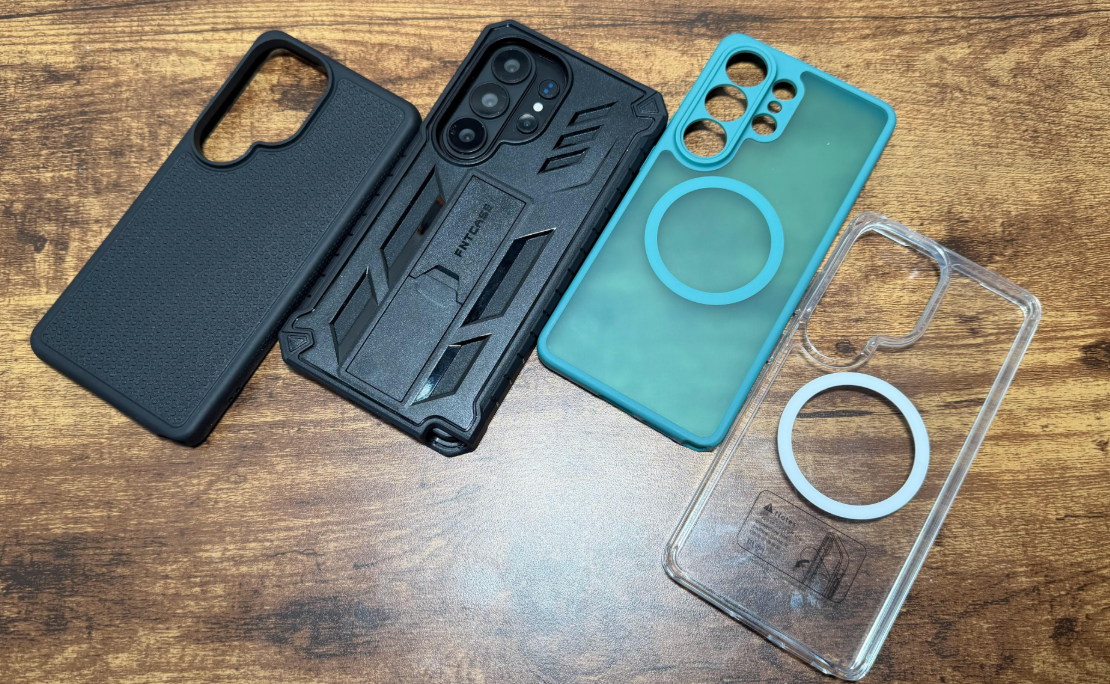
FNTCASE Samsung Galaxy S26 Ultra cases review

The FNTCASE Samsung Galaxy S26 Ultra cases have arrived for us to check out and again the company has you covered with a vasr range of cases and colours to suit all pockets and sytles at affordable prices, Recently reviewed was the Google PIxel 10a case range and this range is similar to those for you very expensive Samsung Galaxy S26 Ultra.

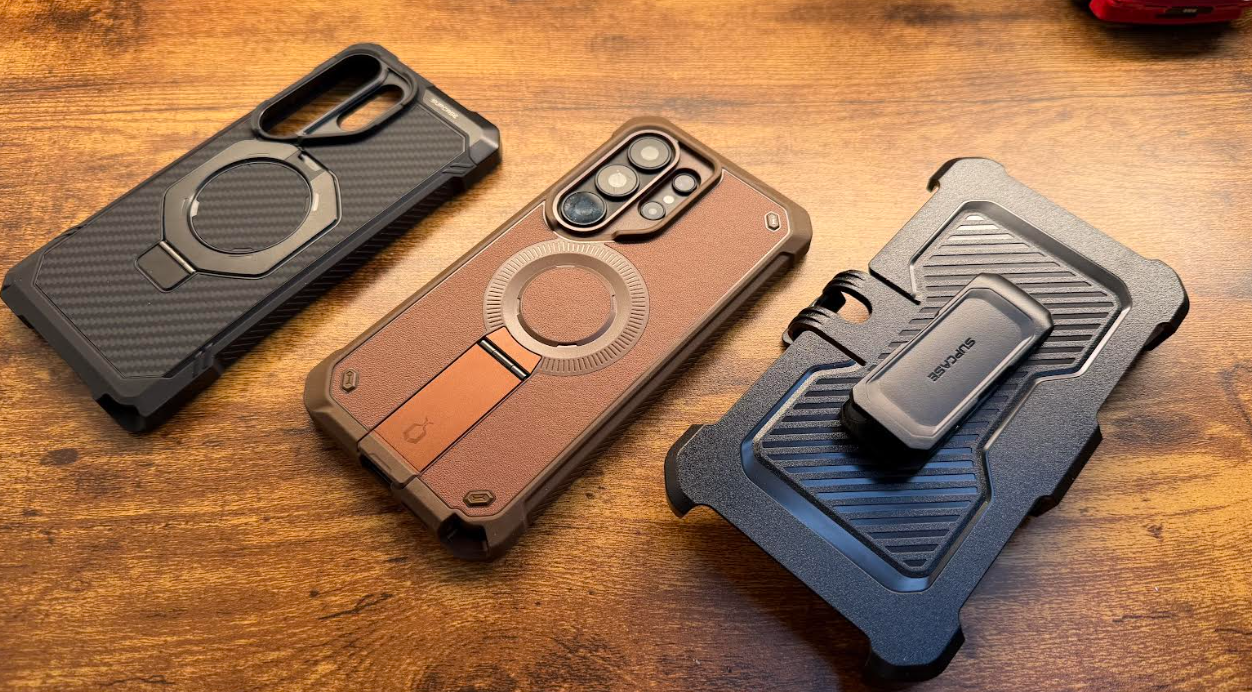
With the range of cases on offer here there is a case for all with several different styles and the best magnets in the business different textures and finishes too all giving you phone the best protection in one place.

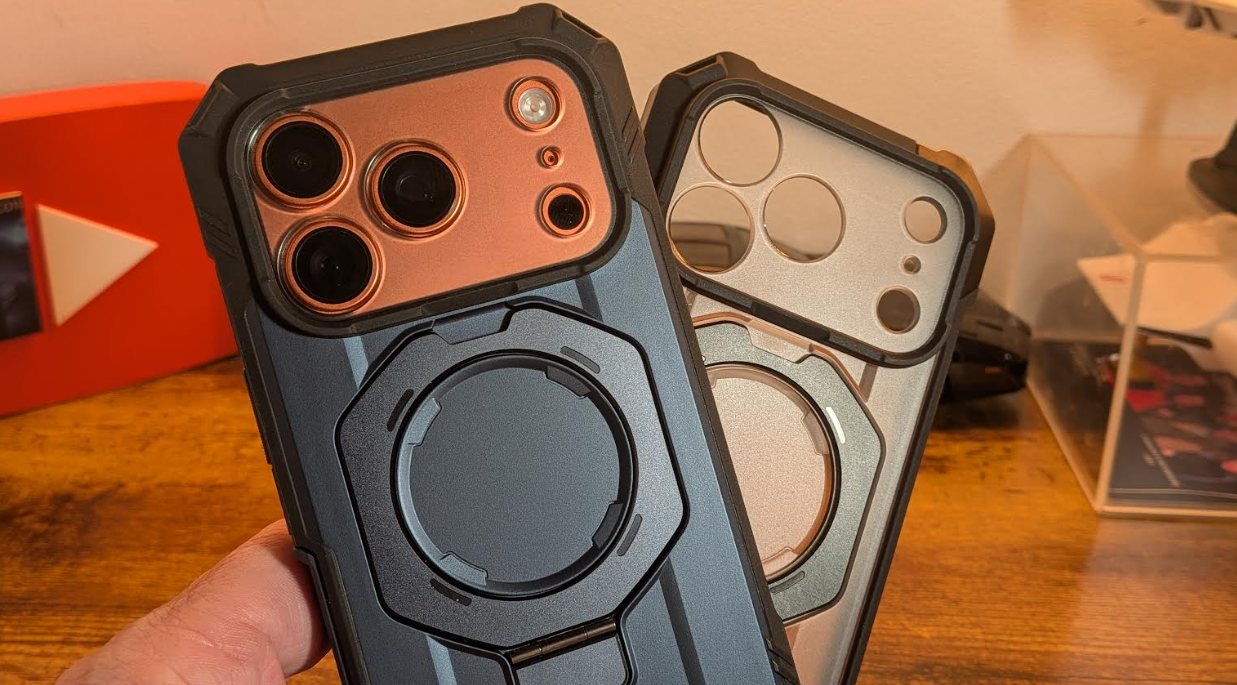
There is shockproof cases clear cases Magsafe cases and much more, all cases provide better grip keep your camera area safe and the screen with a lip around the edge, the buttons are tactile and work well and all ports accessible and overall keeping your phone out of harms way.

We check these out in the full hands-on video review below with a dummy model as we are waiting on the device to arrive with more cases and will be doing a another video with all the cases we have soon so stay tuned..

Samsung Galaxy S26 Ultra Shock Protection Cell Phone Case Sturdy Cover with Non-Slip Texture

  • Two Piece Durable Hybrid Covers: soft TPU inner cases – shock absorbing; hard PC back outer shell – strong impact resistant. Double guard protection with a reinforced corner, specially designed to protect your new mobile.
  • Upgraded Slip-Proof Texture Design on Side and Back: sturdy armored phone case with hexagon grip rear shield prevents your smartphone from an unexpected drop. Also, simple, classic & stylish.
  • Enhanced Camera Protect & Raised Bevel for Scratch Resistance: Each camera lens is 360 fully surrounded and protected. A 1.5mm (0.06 inch) lifted bezel on the screen and 2.0mm (0.08 inch) on the camera lens can prevent daily scratches when you put your cell phone face down.
  • Precious Cutouts & Flexible Tactile Buttons: All the holes fit perfectly. What’s more, the Honeycomb design inside for heat dissipation and cooling is breathable to guarantee your telephone works normally. Functional design & vivid colors that brighten your mood. Multicolours for choices, suitable for everyone.

BUY


Samsung Galaxy S26 Ultra Clear Phone Case: Magnetic Charging Shockproof Magsafe Support

  • Compatibility: Only for Samsung Galaxy S26 Ultra (6.9 inch). Please carefully confirm your phone model before making a purchase. Precise cutouts and tactile buttons ensure quick access and response, and full access to all ports
  • Strong Magnetic: The built-in powerful N52 magnets with 2400 gf of holding force make it easy to attach all kinds of Magnetic Charging accessories like wireless car chargers, wireless chargers, battery packs, etc. Even if you vigorously shake your phone, it won’t easily fall off
  • Yellow Resistance: This Galaxy S26 Ultra phone case is made of anti-yellowing PC and TPU materials, making the case transparent for long periods and effectively resisting sweat and stains, clearly showing the original color of your phone
  • Full Protect: This case provides double protection for the phone screen from cracks and scratches
  • Military Grade Full Body Protection: 4 Air-cushioned corners for added drop protection, which provide excellent cushioning impact from accidental bumps and drops. The raised lip design provides enhanced scratch protection for the screen and camera

BUY


Samsung Galaxy S26 Ultra Clear Magnetic Case – Anti-Yellowing, Magsafe Compatible, Rugged Shockproof Protective Bumper

Strong Magnetic Array for Effortless Accessories & Charging
Fully compatible with Magsafe and all Qi wireless chargers with zero signal interference. The case features 38 precisely aligned N52 super magnets, delivering an exceptional 2400 gf magnetic force for a secure hold on chargers, mounts, and magnetic accessories.

Permanent Clarity with Advanced Anti-Yellowing Technology
Made from premium Bayer ultra-clear TPU and PC materials to showcase your Galaxy S26 Ultra’s original design. The nano anti-yellowing coating and anti-fingerprint coating effectively resist stains, sweat, and oxidation, ensuring long-lasting clarity without discoloration.

10FT Military-Grade Shockproof Protection
Certified to withstand drops from up to 10 feet. The hybrid construction combines a rigid polycarbonate backplate with flexible TPU bumpers and four corner airbags to effectively absorb and dissipate impact energy from all angles.

360° Raised Edges for Screen & Camera Protection
Features 2.5mm raised camera lips, 1.5mm raised screen bezels, and 0.5mm back lip to comprehensively protect against scratches and damage when placed on flat surfaces. Every edge is designed for maximum defense.

Perfect Fit with Secure, Comfortable Grip
Designed exclusively for the Samsung Galaxy S26 Ultra. Offers precise cutouts for full access to all ports, buttons, and functions. The textured edges provide an excellent non-slip grip, enhancing handling safety and comfort.

Samsung Galaxy S26 Ultra Case with Built-in Screen Protector and Kickstand – Military Rugged, 2 Front Frames, Drop Proof Protective Cover

Compatibility: Designed exclusively for the Samsung Galaxy S26 Ultra (6.9-inch, 2026 release). It will not fit any other phone models. Please verify your phone model before purchase to ensure perfect compatibility.

Built-in Kickstand: Features a convenient, built-in foldable stand that supports both vertical and horizontal viewing angles, freeing your hands for other tasks. This sturdy holder also provides excellent support for stable, effortless photography with your large-screen device.

Built-in Screen Protector: The integrated screen protector offers excellent light transmission and highly responsive touch performance, allowing full access to your phone’s features while guarding against scratches and scuffs. This built-in design eliminates the hassle of applying a separate screen protector yourself.

2 Front Frames for Personalized Needs: In addition to the main frame with the built-in screen protector, we include an extra replacement front frame without a screen protector. This gives you the freedom to choose your preferred setup based on your personal habits, delivering a truly customized protection experience.

Comfortable & Full Protection: The case combines a non-slip textured grip on the sides with matte-finish edges that resist fingerprints and oils, keeping it clean and providing a secure hold that’s less likely to slip from your hand. The raised TPU bezel helps keep the screen and camera lifted off surfaces and absorbs shock from accidental drops. Together, the rugged case and integrated protection provide comprehensive, military-grade defense for your Galaxy S26 Ultra.

BUY

See more FNTCASE reviews 

Video Review 

How Teachers Can Integrate AI Tools in Irish Classrooms Without Formal Training

The gap between AI adoption and teacher preparedness in Irish schools is striking. Recent research from Microsoft and 3Gem found that 83% of Irish teachers lack formal training in AI, yet 72% support increased use of AI tools in their classrooms. This disconnect leaves thousands of educators wanting to use AI but uncertain where to start. The good news: you don’t need formal certification to begin using AI tools effectively in your teaching. What you need is a practical framework, sensible boundaries, and the confidence to learn alongside your students.

Irish classrooms are already among Europe’s most digitally advanced, with Ireland’s digital education transformation positioning schools ahead of many European counterparts. Teachers already use digital technologies to improve productivity and personalise learning—87% report using digital tools to optimise classroom time. AI represents the next step in this progression, not a complete departure from existing practice.

Why Formal Training Isn’t Always Necessary

Waiting for formal AI training before using these tools means missing opportunities that benefit students right now. AI tools designed for education are increasingly intuitive, with interfaces built for users without technical backgrounds. The same teachers who learned to use interactive whiteboards, learning management systems, and video conferencing during the pandemic can learn AI tools through similar approaches: experimentation, peer support, and gradual integration.

The Microsoft research reveals an interesting pattern: schools that adopt AI quickly report less concern about training gaps than slower-adopting schools. In fast-adopting institutions, only 32% cite insufficient training as a major barrier, compared to 67% in schools slower to adopt. This suggests that hands-on experience reduces perceived training needs—teachers who start using AI tools build confidence through practice rather than waiting for formal instruction.

“Technology in education should support teachers rather than replace their expertise,” notes Michelle Connolly, founder of LearningMole and former teacher with over 15 years of classroom experience. “The best approach is starting with simple applications that solve real classroom problems, then building from there.”

Starting Points for AI in Irish Classrooms

The most effective entry point for AI in teaching isn’t the most sophisticated application—it’s the one that saves you time on tasks you already do. Begin with administrative and planning tasks before moving to student-facing applications.

Lesson Planning and Resource Adaptation

AI tools can generate lesson plan outlines, suggest differentiation strategies, and adapt existing resources for different ability levels. A teacher preparing a history lesson on the Great Famine might use AI to generate discussion questions at varying complexity levels, create simplified text versions for struggling readers, or suggest extension activities for advanced learners.

The key is treating AI output as a starting point rather than a finished product. Review everything, adjust for your specific class, and add the contextual knowledge only you possess about your students. AI doesn’t know that Seán struggles with reading but excels in oral discussion, or that your Third Class has particular interest in local history. You add that expertise.

Feedback and Assessment Support

Writing individualised feedback consumes enormous teacher time. AI tools can help generate initial feedback drafts that you then personalise and refine. For a set of 30 creative writing pieces, AI might identify common issues across the class, suggest specific praise points, and flag pieces needing closer attention—reducing a three-hour task to one hour of focused work.

This application works particularly well because you remain in control of final communication with students and parents. AI handles the time-consuming initial analysis while you make professional judgements about what feedback each student actually needs.

Differentiated Resource Creation

Creating multiple versions of worksheets and activities for mixed-ability classes traditionally requires significant preparation time. AI can generate variations of resources at different reading levels, with varied scaffolding, or with alternative question formats—all from a single source document.

For Irish teachers managing classes with wide ability ranges, this capability transforms planning. Instead of choosing between teaching to the middle or spending hours creating differentiated materials, you can generate appropriate resources for each ability group efficiently.

AI Tools Suitable for Irish Primary Classrooms

Not all AI tools suit educational contexts. Teachers need applications that are age-appropriate, safe for school use, and aligned with Irish educational values around child protection and data privacy.

Text-Based AI Assistants

General AI assistants like ChatGPT and Claude can support lesson planning, resource creation, and administrative tasks. These work best for teacher-facing applications rather than direct student use in primary settings. Use them to generate quiz questions, explain difficult concepts in child-friendly language, or brainstorm creative approaches to teaching challenging topics.

When using these tools, avoid inputting student names, personal information, or sensitive data. Frame requests around general classroom scenarios rather than specific children.

Educational Platforms with Built-In AI

Some educational resource platforms now incorporate AI to personalise learning pathways and provide adaptive practice. LearningMole offers curriculum-aligned video content and teaching resources that teachers can use to supplement AI-assisted planning, providing quality-assured materials that work alongside AI tools.

These platforms offer safer environments for student interaction because they’re designed with educational safeguarding in mind. Content is curated, age-appropriate, and aligned with curriculum expectations.

Image and Presentation Tools

AI image generators can create custom illustrations for teaching materials, though teachers should review all output for appropriateness. Presentation tools with AI features can help structure content logically and suggest visual improvements.

For Irish teachers, these tools prove particularly useful for creating materials with local relevance—images depicting Irish landscapes, historical scenes, or cultural contexts that generic stock imagery often misses.

Practical Implementation Framework

Moving from occasional AI experimentation to systematic integration requires a structured approach. This framework helps teachers build AI use gradually without overwhelming themselves or their students.

Week One: Personal Productivity

Start with applications that don’t involve students at all. Use AI to draft parent communications, generate meeting agendas, or summarise long documents. This builds familiarity with AI interaction patterns—how to phrase requests effectively, how to evaluate output, how to iterate toward better results.

Keep a simple log of what works and what doesn’t. Note which types of requests produce useful output and which need significant revision. This personal experience base informs later classroom applications.

Weeks Two and Three: Planning Support

Expand to lesson planning support. Use AI to generate activity ideas, discussion questions, or assessment criteria. Compare AI suggestions against your professional judgement and existing resources. You’ll quickly identify where AI adds value and where it falls short for your specific teaching context.

Try having AI adapt existing resources for different ability levels. Take a worksheet you’ve used successfully and ask for simplified and extended versions. Evaluate whether these adaptations actually suit your students’ needs.

https://www.youtube.com/watch?v=Oi-6WQyUgaY 

Week Four and Beyond: Selective Student Applications

Only after building personal confidence should you consider student-facing applications. Start with highly structured uses where you control the interaction—perhaps displaying AI-generated discussion prompts or using AI-created differentiated materials.

For older primary students, supervised AI use might include generating research questions, creating writing prompts, or exploring “what if” scenarios in history or science. Always preview AI outputs before student exposure and frame AI as a tool that makes mistakes, requiring critical evaluation.

Addressing Common Concerns

Teachers hesitating to use AI often cite specific concerns that, once addressed, become manageable rather than prohibitive.

Data Protection and Privacy

Irish schools operate under GDPR and specific DES guidance on data protection. AI tools raise legitimate questions about where data goes and how it’s used. The practical response: never input personal student data, names, or identifying information into AI tools. Frame all requests around anonymous, general classroom scenarios.

For teacher-facing applications, this restriction rarely limits usefulness. You can ask AI to help plan a lesson on fractions without mentioning any student names. You can generate differentiated resources for “a mixed-ability Third Class” without identifying specific children.

Academic Integrity

Concerns about students using AI to complete work dishonestly require age-appropriate responses. In primary settings, direct AI misuse is less common than in secondary and higher education. Focus instead on building critical evaluation skills—teaching children that AI can be wrong, that it doesn’t understand context, and that human judgement matters.

When students do use AI-supported tools, frame this as appropriate use of available technology rather than cheating. The goal is developing skills to work effectively with AI, not pretending it doesn’t exist.

https://www.youtube.com/watch?v=w0PuL73lMQc 

Quality and Accuracy

AI tools produce confident-sounding output that may contain errors, outdated information, or cultural assumptions that don’t fit Irish contexts. Teachers must review all AI-generated content before use, just as they would review any external resource.

This requirement isn’t unique to AI—textbooks contain errors, websites become outdated, and imported resources assume different educational systems. The teacher’s professional role includes evaluating and adapting all materials, regardless of source.

Over-Reliance

Some teachers worry that AI will deskill the profession or make teaching impersonal. The opposite proves true when AI is used appropriately: by reducing time on administrative tasks, AI frees teachers to focus on the relational, creative, and responsive aspects of teaching that no technology can replicate.

AI cannot read the mood of a classroom, notice that a child seems withdrawn, or adjust a lesson because the energy is different today. These human skills become more valuable, not less, as AI handles routine tasks.

Building Confidence Through Peer Learning

Formal training programmes exist—the Microsoft Dream Space Teacher Academy offers free AI skills development for Irish teachers—but peer learning often proves more immediately useful. Teachers learn best from colleagues who’ve solved similar problems in similar contexts.

Staffroom Sharing

Informal conversations about AI successes and failures accelerate collective learning. When one teacher discovers an effective way to use AI for report writing, sharing that approach benefits the whole staff. Schools might designate brief time in staff meetings for AI tool sharing, creating space for practical exchange without requiring extensive formal development.

School-Based Champions

Some teachers naturally embrace new technologies and can support colleagues’ learning. Without creating additional workload, schools might recognise these informal champions and create opportunities for them to share expertise. A ten-minute demonstration of AI-assisted planning might inspire colleagues to experiment independently.

Online Communities

Irish teacher communities on social media and professional networks increasingly discuss AI applications. These spaces offer access to broader experience than any single school provides, with teachers sharing specific prompts, workflows, and cautionary tales from their own practice.

Curriculum Connections

AI integration works best when aligned with existing curriculum goals rather than added as separate technology instruction. The Irish Primary Curriculum’s emphasis on skills development provides natural connections.

Critical Thinking

Evaluating AI output develops critical thinking skills explicitly valued in the curriculum. When students assess whether an AI-generated text is accurate, well-written, or appropriate, they practice analysis and evaluation skills transferable across subjects.

Communication

Using AI effectively requires clear communication—precise requests produce better output. Students learning to interact with AI develop skills in clarity, specificity, and iterative refinement that support writing and speaking development.

Creativity

AI tools can support creative work by generating starting points, suggesting alternatives, or providing constraints that spark imagination. A student stuck on a story opening might use AI-generated prompts as inspiration while maintaining ownership of their creative choices.

The Role of Quality Teaching Resources

AI tools work best alongside high-quality teaching resources rather than replacing them. AI can generate rough content quickly, but polished, curriculum-aligned, pedagogically sound resources require human expertise and careful development.

Platforms offering structured educational content complement AI tools by providing reliable starting points that AI can help adapt and extend. When planning a science unit, a teacher might use video resources from established educational platforms for core instruction, then use AI to generate extension activities, differentiated worksheets, and assessment questions aligned with that content.

This combination—curated resources for core content, AI for adaptation and extension—offers efficiency without sacrificing quality. Teachers maintain professional control over what students learn while reducing time spent on routine resource creation.

Moving Forward Responsibly

AI in Irish education will continue developing regardless of individual teachers’ choices. The question isn’t whether to engage with AI but how to do so in ways that benefit students while maintaining professional standards and educational values.

Starting small, maintaining critical oversight, and building gradually from personal productivity to classroom application provides a manageable pathway. Teachers who begin this journey now, even without formal training, position themselves and their students well for an educational landscape where AI literacy becomes increasingly expected.

The 83% of Irish teachers lacking formal AI training aren’t failing—they’re facing a professional development system that hasn’t kept pace with technological change. By taking initiative to learn through practice, these teachers demonstrate exactly the adaptability and commitment to improvement that makes Irish education strong.

Frequently Asked Questions

Do I need formal AI training before using AI tools in my classroom? No. Many AI tools are designed for users without technical backgrounds. Start with simple applications for personal productivity, build familiarity through practice, and expand gradually. Hands-on experience often reduces perceived training needs more effectively than formal courses.

What AI tools are safe for use in Irish primary schools? Teacher-facing tools like ChatGPT and Claude work well for planning and resource creation when you avoid inputting student personal data. Educational platforms with built-in AI features designed for school use offer safer options for student-facing applications, as they’re built with appropriate safeguards.

How can I use AI without compromising student data protection? Never input student names, personal information, or identifying details into AI tools. Frame all requests around anonymous, general scenarios. For example, ask for resources suitable for “a mixed-ability Third Class” rather than naming specific children or their characteristics.

Will using AI make me a less effective teacher? Used appropriately, AI makes teachers more effective by handling routine tasks and freeing time for the relational, creative, and responsive work that defines excellent teaching. AI cannot replace professional judgement, classroom presence, or understanding of individual students.

How do I evaluate whether AI-generated content is suitable for my classroom? Review all AI output before use, checking for accuracy, age-appropriateness, and alignment with Irish curriculum expectations. Apply the same critical evaluation you’d use for any external resource. AI content is a starting point for professional refinement, not a finished product.

What’s the best way to start using AI as a teacher? Begin with personal productivity tasks that don’t involve students: drafting communications, generating meeting agendas, or summarising documents. Build familiarity with AI interaction patterns before moving to planning support and eventually selective student-facing applications.

Conclusion

Irish teachers don’t need to wait for formal training to begin benefiting from AI tools. The practical framework outlined here—starting with personal productivity, expanding to planning support, and eventually incorporating selective student applications—provides a manageable path for any teacher willing to experiment and learn.

The gap between AI enthusiasm and training provision in Irish education creates an opportunity for teachers to lead their own professional development. By engaging thoughtfully with AI tools now, building critical evaluation skills, and maintaining focus on educational values, teachers prepare themselves and their students for an educational future where AI literacy matters increasingly.

Quality teaching resources, professional judgement, and human relationships remain at the heart of excellent education. AI tools enhance rather than replace these fundamentals—when used by teachers confident enough to experiment, critical enough to evaluate, and focused enough to keep student benefit central to every decision.

Twelve South BookBook for iPhone 17 Pro Review

The Twelve South BookBook for the iPhone 17 Pro is more than just a case for your phone it makes a statement and is luxury all in one and will have people talking if out and seen placed on a table.

Crafted from premium, genuine full-grain leather this also doubles as a wallet and phone protector, it however will add bulk to your phone but for those who want something different this is it and it looks great feels premium and will protect your phone regrdless.

The BookBook can be split into two pieces ie a standalone case and a wallet which can hold up to 4 cards and a slot for cash underneath, this is not RFID protected so keep this in mind. You can still charge via MagSafe  (inner case) and also watch content without removing the device from the folio designed case.

Twelve South are known for high end goods and their cases no difference and with this case you can be sure your device is protected and it will look good no matter where it is placed especially if you are in a library where you would never know what was inside the case itself.


Key features of the MagSafe design:

  • Two Cases in One: The shell can be instantly detached from the outer leather wallet. This allows you to use your iPhone with a slim, protective case when you don’t need the wallet folio (e.g., at the gym, or for car mounting).
  • Charging Compatibility: The removable shell ensures flawless compatibility with MagSafe chargers, stands, and accessories without having to deal with the bulk of the full folio.
  • Viewing Stand: The folio also folds into a stable, hands-free viewing stand, perfect for watching videos or making FaceTime calls in both landscape and portrait orientations.


Features 

  • Full-grain leather wallet + iPhone case
  • Removable MagSafe compatible shell
  • Holds ID, cards, and cash
  • Folds into a hands-free stand

Questions

Is BookBook compatible with MagSafe?
Yes. The included inner shell works with MagSafe chargers and accessories when removed from the wallet folio.
Can I use the wallet and phone case separately?
Absolutely. The phone shell is fully removable and attaches magnetically. Use it on its own or together with the wallet.
What materials is BookBook made from?
BookBook is crafted from full-grain leather and finished with hand-stitched details. Each case will develop a unique patina over time.
Which models are available?
iPhone 17 Pro and iPhone 17 Pro Max.
How many cards can it hold?
BookBook is designed to hold up to 4 cards and some folded cash. Enough for daily carry, without the bulk
Does it have RFID protection?
No. BookBook focuses on form, function, and timeless design. If RFID protection is essential, we recommend using a separate card sleeve.

Twelve South Matching Apple Watch Band & iPhone 17Pro case review

The Twelve South Matching Watch Ultra Band and iPhone 17Pro case are a duo all owners of both devices should have and I have been a long time fan of such making my own matching cases and straps over the years now Twelve South are doing it for me and also comes in several colours.

The Strap is Crafted from premium liquid silicone with tonal hardware and dual-color accents, this band balances all-day comfort with everyday durability. Lightweight, soft, and easy to clean, it transitions seamlessly from workouts to weekends and also has a nic texture to it like the case, the strap seems like it will last unlike others have done from other brands I have tested over the years.

Features of strap

  • Soft-touch comfort
  • Durable, water- and sweat-resistant
  • Subtle dual-tone accents
  • One size fits most wrists

The Matching case again is made from premium soft-touch silicone, this slim case blends a soft, elevated feel with durable protection. Reinforced edges, MagSafe compatibility, and Camera Control delivers polish and performance and feels good to hold and most mportantly will protect your expensive phone.

Features of case

  • Silky-soft shell with microfiber lining
  • Matte finish provides secure grip
  • Slim profile with reinforced edges
  • MagSafe compatible
  • Pairs with our Watch Bands

Check the video review down below for more and let us know what you think

BUY CASE

BUY STRAP

Other Twelve south reviews

Video Review

How Solar Technology is Revolutionising Residential Construction in Ireland

The Irish residential construction sector is undergoing a remarkable transformation, driven by an unprecedented shift towards renewable energy solutions. At the forefront of this revolution is solar technology, which has evolved from a niche consideration to a fundamental component of modern home design. As Ireland commits to ambitious climate targets and homeowners grapple with escalating energy costs, solar panels and associated technologies are reshaping how we conceive, construct, and inhabit residential properties across the Emerald Isle.

This transition represents more than a mere trend; it signals a fundamental reimagining of sustainable living in the Irish context. Despite the nation’s reputation for cloudy skies and frequent rainfall, advances in photovoltaic technology and supportive government policies have positioned solar energy as a practical and economically viable solution for Irish households. From Cork to Donegal, solar installations are becoming increasingly commonplace, heralding a new era in residential construction that prioritises energy independence, environmental responsibility, and long-term cost savings.

  • The Evolution of Solar Technology in Irish Residential Settings

Ireland’s journey with solar technology has been relatively recent but remarkably swift. Historically, the country’s overcast climate was perceived as an insurmountable barrier to solar adoption. However, technological breakthroughs in photovoltaic efficiency have shattered this misconception. Modern solar panels can generate electricity even on cloudy days, harnessing diffuse sunlight with remarkable effectiveness. This capability has proven particularly significant for Ireland, where direct sunshine may be limited but ambient light remains abundant throughout much of the year.

The past decade has witnessed dramatic improvements in solar panel efficiency, with contemporary systems converting upwards of 20% of captured light into usable electricity – double the efficiency of panels available just fifteen years ago. Simultaneously, manufacturing advances have reduced costs by more than 80% since 2010, transforming solar from a luxury addition into an accessible option for mainstream homebuilders and renovators alike. This convergence of improved performance and affordability has catalysed widespread adoption across Ireland’s residential sector.

  • Government Initiatives Driving Solar Adoption

Ireland’s regulatory landscape has evolved considerably to encourage renewable energy adoption in residential construction. The Sustainable Energy Authority of Ireland (SEAI) administers several grant schemes that significantly reduce the upfront costs of solar installations. The Solar PV Grant scheme offers homeowners substantial financial support, covering a considerable portion of installation expenses for qualifying systems. This initiative has proven instrumental in accelerating solar uptake, particularly amongst middle-income households for whom the initial investment might otherwise prove prohibitive.

Beyond direct financial incentives, Ireland’s revised Building Regulations now incorporate stricter energy performance standards for new constructions. The Nearly Zero Energy Building (NZEB) standard, mandatory for all new homes since 2020, effectively necessitates renewable energy integration to achieve compliance. Solar photovoltaic systems represent one of the most straightforward pathways to meeting these requirements, consequently becoming a standard consideration in contemporary residential design rather than an optional extra.

The Microgeneration Support Scheme, whilst still developing, promises to further incentivise solar adoption by enabling homeowners to sell surplus electricity back to the grid at favourable rates. This feed-in tariff arrangement transforms solar panels from purely cost-saving devices into potential income generators, fundamentally altering the economic calculus for prospective installers like MMK Solar.

  • Integration into New Build Construction

The most profound impact of solar technology is evident in new residential developments, where integrated design approaches enable optimal system performance and aesthetic coherence. Forward-thinking developers now incorporate solar considerations from the earliest planning stages, orienting properties to maximise southern exposure and designing roof profiles that accommodate panel installations without compromising architectural integrity.

This holistic approach extends beyond simple panel placement. Modern developments increasingly feature coordinated systems where solar generation interfaces seamlessly with battery storage, heat pumps, and intelligent home energy management systems. Such integration enables unprecedented levels of energy self-sufficiency, with some new Irish homes achieving 70% or greater independence from grid electricity during warmer months.

Building Information Modelling (BIM) technology has facilitated this integration, allowing architects and engineers to simulate solar performance during the design phase. These predictive capabilities enable optimisation of panel placement, system sizing, and electrical infrastructure before construction commences, reducing installation costs and maximising long-term performance. Consequently, solar systems in new builds typically deliver superior returns compared to retrofit installations, as the entire property ecosystem is designed around home renewable energy from inception.

  • Retrofit Applications in Existing Housing Stock

Whilst new builds benefit from integrated design, the majority of Ireland’s housing stock predates modern energy standards, presenting both challenges and opportunities for solar retrofitting. Older properties often feature suboptimal roof orientations, structural limitations, and outdated electrical systems that complicate solar installations. Nevertheless, technological advances and innovative installation techniques have made solar retrofitting increasingly viable across diverse property types.

Lightweight panel designs now enable installation on roofs previously deemed unsuitable due to load-bearing constraints, whilst micro-inverter technology allows systems to function efficiently despite shading or non-ideal orientations. For properties where traditional rooftop installations prove impractical, ground-mounted arrays and solar tiles offer alternative pathways to renewable generation.

The economics of retrofit installations have improved markedly, with typical payback periods now ranging from eight to twelve years depending on system size and household consumption patterns. When combined with available grants, many homeowners achieve energy cost reductions of 40-60%, providing compelling financial incentives alongside environmental benefits. This economic attractiveness has stimulated a thriving installation sector, with hundreds of certified installers now operating across Ireland.

  • Battery Storage and Energy Independence

The integration of battery storage systems represents perhaps the most transformative development in residential solar technology. Traditional grid-tied systems without storage can only utilise solar generation instantaneously, necessitating grid electricity during evenings and overnight periods when consumption typically peaks. Battery systems fundamentally alter this dynamic, enabling households to store surplus daytime generation for evening use, dramatically increasing solar self-consumption rates.

Modern lithium-ion battery systems offer storage capacities ranging from 5kWh to 15kWh or more, sufficient to power typical Irish homes through evening peak periods and overnight. Combined with adequately sized solar arrays, these systems can deliver energy independence rates exceeding 80% during spring and summer months, with meaningful contributions throughout winter.

Beyond economic benefits, battery storage enhances energy security, providing backup power during grid outages – an increasingly pertinent consideration given climate-related disruptions to electricity networks. This resilience aspect is particularly valued in rural areas where service restoration may require extended periods following severe weather events.

  • Environmental and Economic Impact

The cumulative environmental impact of Ireland’s residential solar revolution is substantial and growing. Each installed kilowatt of solar capacity reduces annual carbon emissions by approximately 0.5 tonnes, collectively preventing thousands of tonnes of greenhouse gases from entering the atmosphere annually. As installations multiply, this contribution towards Ireland’s climate obligations becomes increasingly significant, complementing larger-scale renewable projects like offshore wind farms.

From an economic perspective, widespread solar adoption reduces pressure on the national grid during peak demand periods, potentially deferring or eliminating the need for costly infrastructure upgrades. At the household level, solar installations provide hedge against future energy price volatility, offering predictable, low-cost electricity generation over system lifespans typically exceeding 25 years.

The solar sector itself has become a notable employer, with installation, maintenance, and related services supporting thousands of jobs nationwide. This growth in green employment aligns with broader economic development objectives whilst contributing to the low-carbon transition.

  • Challenges and Future Prospects

Despite remarkable progress, challenges remain. Grid infrastructure in some areas requires upgrading to accommodate high penetrations of distributed generation, whilst planning regulations in certain contexts can complicate installations, particularly in conservation areas or protected structures. Ensuring installer quality and consumer protection as the market expands requires ongoing regulatory attention.

Looking forward, continued technological advancement promises even greater possibilities. Emerging technologies including perovskite solar cells, bifacial panels, and building-integrated photovoltaics may deliver efficiency gains and aesthetic improvements that further accelerate adoption. As battery costs continue declining and vehicle-to-home technology matures, the integration of electric vehicles into home energy systems presents exciting possibilities for enhanced self-sufficiency.

  • Conclusion

Solar technology has unquestionably revolutionised residential construction in Ireland, transforming renewable energy from aspiration to mainstream reality. Through supportive policies, technological advancement, and growing environmental awareness, solar systems have become integral to modern Irish homes, delivering economic, environmental, and energy security benefits that extend far beyond individual households.

As Ireland continues its journey towards carbon neutrality, the residential sector’s embrace of solar technology represents a cornerstone of success. The revolution is not merely technical but cultural, reflecting a fundamental shift in how Irish society conceptualises sustainable living. With each installation, Ireland moves closer to a future where clean, renewable energy powers our homes, strengthens our economy, and safeguards our environment for generations to come.

Emerging technologies for online casino platform operations and security

Online casino platforms aren’t evolving by halves, the pace of digital change is relentless, influencing nearly every corner of how these sites operate and protect themselves. Payment methods and user interfaces are only the tip of the iceberg. Underneath, new tech frameworks, AI, biometrics, blockchain, are quietly driving safer, livelier online spaces for players everywhere. Industry signals are clear: integrated technology is rapidly becoming the backbone of leading platforms; for those who want to stay on top, digital overhaul isn’t optional, it’s the game itself. Point solutions don’t cut it anymore. Everyone is focused on big, connected systems that adapt and safeguard as they grow.

Artificial intelligence shaping player interactions and risk management

Artificial intelligence and machine learning are now embedded at the heart of online casino operations. According to 2025 trend analyses, AI enables deep personalization, analyzing millions of gameplay records to recommend tailored offers, bonuses, and preferred titles. Operators deploy machine learning to predict user behavior, optimizing game layouts and bonus triggers in real time. Everything is built to maximize engagement without sacrificing fairness. Beyond user interaction, AI supports robust risk management.

Fraud detection models continuously monitor transactions for suspicious behavior, card counting, collusion, money laundering. These models flag anomalies within seconds, a process orders of magnitude faster than manual review. In addition, AI assists with customer service. Automated agents resolve common issues instantly, supporting seamless gameplay across time zones. Data suggests chatbots now handle 70% of support queries for leading operators. AI’s multi-role presence is set to expand, centralizing both interactions and risk oversight under automated, adaptive systems.

Blockchain advancing security and transparent gameplay

Blockchain technology is driving reliability at every level of casino operations. The entire transaction process shifts from black box to public ledger, creating an undeniable record of bets and transfers. Each transaction, payment, or game result gets a digital fingerprint. Manipulation becomes nearly impossible because every event is independently verified on decentralized, tamper-proof ledgers. For online casino users, this means increased trust and provable fairness.

Operators benefit from lower chargeback risk and smoother dispute resolution, as all game activities are auditable. Security also advances. the distributed storage model disperses data across nodes, eliminating traditional central server vulnerabilities. Hacking player financial information now requires breaching an entire blockchain network, not just a single company’s database. Cryptocurrency payments introduce instant, low-fee transfers, crucial for global platforms with diverse player bases. Blockchain transparency and digital currencies together are redefining key pillars of trust and efficiency across the industry.

Biometric authentication strengthening account protection

Identity checks aren’t what they used to be. Today’s verification is venturing past the tired routine of passwords and security codes. Biometric authentication, face scans, fingerprint swipes, takes seconds and keeps things moving. The latest mobile casino apps, especially those launched in 2023 and beyond, routinely offer biometric sign-in as the first option. Sure, this means less hassle for users, but it’s not just about convenience. When credentials are unique to your face or fingerprint, fraudsters have a much tougher climb.

Often, operators stack biometrics on top of device approvals for big transactions, slashing the odds of account hijacking. That helps with regulatory demands, particularly for age checks and location rules. Customers get locked out less, with vanishing password complaints. Security, in this space, works almost invisibly, players just tap and play, their accounts that much safer.

Mobile-first design and cloud gaming redefining platform delivery

Mobile-first isn’t just a buzzword anymore, it’s the new default. Most online casino brands now build for smartphones and tablets before anything else. Game studios, too, shape their creations for swipes and taps, shrinking menus and supersizing options for small screens. Desktop versions lag behind, playing backup. In this landscape, cloud gaming is the secret sauce.

Players skip downloads, jump into games instantly, and move sessions between devices with nothing but a swipe. Lower bandwidth? No problem; all the heavy lifting happens on remote servers. With pandemic habits sticking around, these features have practically become expectations. The result: anyone, anywhere, can pick up and play, leveling the field for both casino operators and players worldwide.

Conclusion about responsible gaming

Emerging technology is changing online casino operations, yet responsible gaming must remain the foundation. AI tools now help monitor user behavior, identifying risky patterns early. Biometric and blockchain solutions verify player age and location with precision, supporting regulatory compliance.

As immersive interactions and frictionless access expand, operators should double down on robust support resources and clear limits. Gamers should stay vigilant, use parental controls, and tap into responsible gaming tools provided by most regulated platforms. Technology brings new opportunities and risks; a balanced, responsible approach keeps entertainment safe for all.

He earns $8,150 a day by mining on CryptoMiningFirm using only a mobile phone—you can too!

San Francisco, California — 34-year-old Ethan Miller never imagined he could earn a stable $8,150 a day using only his mobile phone.

No complicated equipment, no technical skills required, and no need to be glued to a computer 24/7. All he did was download the CryptoMiningFirm cloud mining app, register an account, select a contract, and let the system work automatically.

His account balance grew from 0 to $244,500 in just two months. This change almost overturned all his original understanding of “making money with your phone”.

A Story of an Ordinary IT Engineer’s Counterattack

Ethan was originally an IT engineer, but he lost his job due to company layoffs. Pressure, mortgage payments, and expenses weighed heavily on him. “I had to find a new opportunity, or I’d be bankrupt,” he said.

One evening, he saw a discussion about CryptoMiningFirm cloud mining on a tech forum:

“Just use your phone, no need to buy mining rigs, no technical required, automatic mining and automatic settlement every day.”

He was skeptical, but still registered and tried it out. After registering, he received a $51 newcomer bonus, and the next day he started seeing earnings deposited into his account.

On day one, he earned $55.4.

On day three, he earned $236.

On day seven, he earned $2,870.

A month later, his daily earnings exceeded $8,000.

After confirming the platform was legitimate and secure, he upgraded his contract—and the rest is history. His highest daily earnings reached $8,150, and his monthly earnings exceeded $240,000.

He said, “I’m not an expert, I just took the first step earlier than others.”

How does CryptoMiningFirm achieve this?

Unlike traditional mining, which requires expensive mining rigs, CryptoMiningFirm offers cloud-based mining:

Users simply access the platform via their mobile phone or computer. The platform handles the mining rigs, maintenance, power, and computing power management.

Profits are automatically distributed to the user’s account daily. What Ethan finds most unbelievable is that even when his phone is off, the earnings continue to arrive.

More importantly, it features:


Dual regulation by the UK and the EU (MiCA model)


Full security protection with Cloudflare + McAfee


Green energy mining farms (USA/Canada/Nordic/Southeast Asia)


AI intelligent computing power scheduling improves mining efficiency by 35%


Supports mining of multiple cryptocurrencies including BTC, ETH, XRP, DOGE, and SOL


This makes mining no longer exclusive to “professional players,” allowing ordinary people to easily participate.

Real-world earnings examples for Ethan


Contract Type Cost ($) Duration (days) Daily Rate ($) Total ($)
Antminer T21 100$ 2 4$ 108$
Iceriver KAS KS7 550$ 5 7.15$ 585.75$
ETCMiner E11 2500$ 10 35$ 2850$
MicroBTWhatsMiner M66S++ 5000$ 15 77.5$ 6162.5$
Antminer S21 XPHYD 10000$ 25 175$ 14375$
ANTSPACE HW5 50000$ 38 975$ 87050$
ANTSPACE MD5 80000$ 45 1640$ 153800$


Ethan said:

I’m not a financial expert, nor a trader. I just seized an opportunity that ordinary people could participate in.”

Start earning money like Ethan in three easy steps:

Step 1: Free Registration – Complete in 30 seconds

Visit the CryptoMiningFirm website or download the app.

After registration, receive $10–$100 in free computing power rewards – start earning now without a deposit!

Step 2: Choose a Cloud Mining Contract

From beginner to advanced contracts, the system automatically allocates optimal computing power.

Step 3: Wait for your earnings to roll in

Daily profits are automatically settled and can be withdrawn or reinvested at any time to increase your returns.

It’s that simple.

Why are more and more people joining CryptoMiningFirm like Ethan?

Because this is no longer just “investment,” but a new type of intelligent passive income model:

No need to monitor the market

Unaffected by market fluctuations

No need for learning

No need to spend time

Earn money 24/7

In the era of AI + computing power economy, mastering computing power means mastering wealth.

Your wealth can start working for you—every single day!

Imagine this: every digital asset in your wallet earning daily income, and all it takes is a single smartphone.
If you don’t start now, you’ll never see your first profit. Hesitation means missing out on hundreds—even thousands—of dollars every single day. Ethan never imagined that a smartphone could completely transform his financial future.

But he did—and so can you.

Take control today: Download the CryptoMiningFirm App and turn your phone into a personal cloud mining powerhouse.

Don’t wait—every second you delay is money left on the table. Let your assets start earning for you right now!

Official Website: https://bestcryptocurrencytrading.com

Free App Download (iOS / Android): https://bestcryptocurrencytrading.com/xml/index.html#/ap