Salesforce ODBC Connectivity: Best Drivers for Reliable Data Access

Companies use Salesforce ODBC drivers to connect Salesforce data directly to BI, reporting, ETL, and analytics tools. ODBC eliminates the need to write custom API integrations and allows Salesforce objects to be queried using SQL from standard data platforms.

In practice, ODBC drivers enable teams to:

  • Connect Salesforce to Power BI, Tableau, Qlik, Excel, and ETL platforms 
  • Run SQL-based reporting on Salesforce objects 
  • Automate scheduled data exports and incremental refreshes 
  • Join Salesforce data with on-premise or cloud databases 
  • Centralize analytics without building custom middleware 

For analytics teams, ODBC drivers convert Salesforce’s API-based model into a relational-style interface that standard BI tools understand. For IT teams, they provide a managed, repeatable connectivity layer with defined authentication and configuration options. For data engineers, they reduce integration complexity while preserving control over refresh behavior, security, and performance parameters.

Reliable connectivity matters because Salesforce is often a core CRM system feeding dashboards, executive reports, finance models, and operational pipelines. A driver is not just a connector—it becomes part of the data infrastructure stack.

Salesforce ODBC Drivers Compared

Below are four established commercial drivers frequently used in BI and enterprise data environments.

1. Devart ODBC Driver for Salesforce

Positioning: Balanced SQL coverage + cross-platform + bulk-oriented workloads

Devart focuses on delivering extended SQL support over Salesforce objects while maintaining OAuth-based secure connectivity. It supports Windows, macOS, and Linux, making it suitable for mixed desktop and server environments.

Key characteristics:

  • OAuth authentication over HTTPS 
  • Extended SQL support (joins, grouping, filtering) 
  • Cross-platform (Windows/macOS/Linux) 
  • Batch updates for handling larger data modifications 
  • Broad compatibility with BI and ETL tools 

Devart is typically positioned for teams that need strong SQL ergonomics and flexible deployment across different operating systems while maintaining performance during larger refresh jobs.

  1. Progress DataDirect ODBC Driver for Salesforce

Positioning: Enterprise-scale performance and bulk operations

Progress DataDirect emphasizes high-performance connectivity and large-volume data processing. It is often selected in environments where Salesforce data refreshes are heavy and SLA-driven.

Key characteristics:

  • Focus on performance optimization 
  • Transparent bulk operations 
  • Enterprise multi-platform support 
  • Designed for high-volume data movement 
  • Common in centralized IT deployments 

This driver is typically associated with organizations running large, scheduled refreshes and centralized BI environments where performance under concurrency is critical.


  1. Easysoft ODBC-Salesforce Driver

Positioning: SQL and SOQL flexibility + Windows-heavy deployments

Easysoft provides both SQL-oriented and SOQL-oriented driver options, which is a structural difference compared to most competitors.

Key characteristics:

  • Separate SQL and SOQL driver modes 
  • OAuth support (Windows) 
  • Strong compatibility with Office-based reporting tools 
  • Integration scenarios involving local databases 

Easysoft can be relevant where teams require SOQL-like behavior or primarily operate in Windows reporting environments.

  1. Simba Salesforce ODBC Driver (insightsoftware / Magnitude)

Positioning: Standardized ODBC connectivity across data ecosystems

Simba drivers are widely embedded or referenced in many analytics platforms. The Salesforce driver is known for conventional ODBC configuration patterns and documented OAuth connection string support.

Key characteristics:

  • OAuth 2.0 connection string configuration 
  • TLS-secured communication 
  • Commonly referenced in BI tool documentation 
  • Structured DSN and DSN-less deployment options 

Simba is frequently selected where standardized ODBC configuration and documentation alignment with analytics platforms are priorities.


Structural Differences Between the Drivers

Instead of feature checklists, the real differences appear in architecture and operational focus.

Driver Core Strength Architectural Focus Deployment Style Volume Handling
Devart Extended SQL + cross-platform flexibility SQL translation depth Desktop + server mixed Batch updates, balanced performance
DataDirect Enterprise performance Bulk optimization engine Centralized enterprise IT Strong at large-scale extracts
Easysoft SQL vs SOQL dual model Query-mode flexibility Windows-heavy Moderate workloads
Simba Standardized ODBC implementation Conventional ODBC architecture BI ecosystem alignment Standard analytics loads


Summary: Differences That Matter

All four drivers provide commercial, production-ready Salesforce connectivity via ODBC. The differences lie in architectural emphasis rather than basic capability.

  • Devart emphasizes SQL flexibility, cross-platform availability, and balanced bulk handling. 
  • Progress DataDirect emphasizes enterprise-grade performance and large-scale bulk optimization. 
  • Easysoft differentiates with dual SQL/SOQL driver models and Windows-focused reporting compatibility. 
  • Simba emphasizes standardized ODBC configuration widely documented across analytics platforms. 

Salesforce ODBC connectivity is not a commodity layer when analytics pipelines, scheduled refreshes, and reporting environments depend on it daily. The practical differences between drivers emerge in performance under load, SQL behavior, authentication management, and deployment environments.

Each of these tools serves a distinct operational profile. The right choice depends on infrastructure structure, query patterns, security policies, and expected data volume—not on marketing claims.


JOURNEY – ARIA 3-in-1 Wireless Charging Station Review

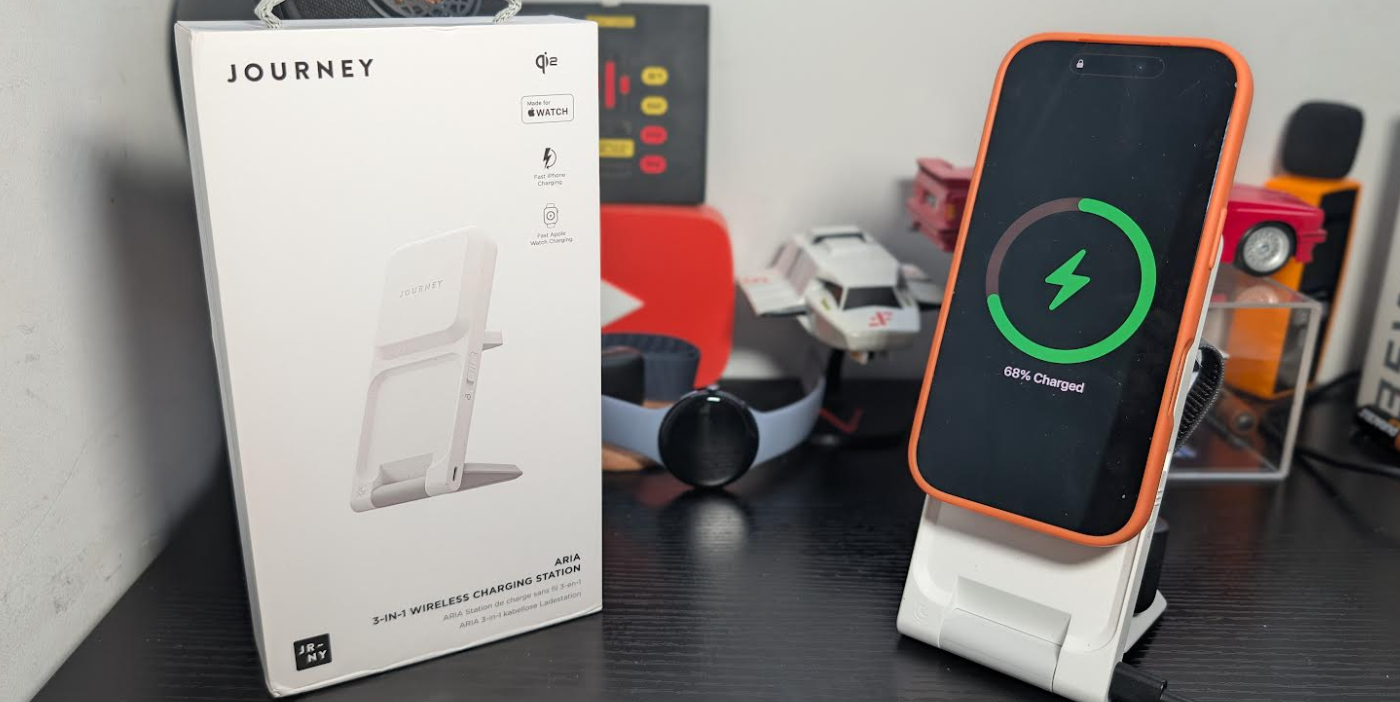
The ARIA 3-in-1 Wireless Charging Station is the latest Qi2-certified charger from Australian consumer electronics brand JOURNEY. No stranger to 3-in-1 wireless chargers which we hace covered countless models of this is the latest one to hit the market and we have been testing it out.

ARIA, a follow-on from SWIV, GLYDE, and other portable JOURNEY chargers, features a distinctive hinged build that endows it to freely pivot between flatlay and phone stand mode.

In flatlay mode – within which ARIA folds into a fraction of its fullest size – the Apple-certified charger simultaneously fast charges a phone and AirPods together.

In phone stand mode, it flips out to vertical architecture, standing a phone, and delivering fast wireless charging to three devices – phone, earbuds, and an Apple Watch.

The flagship fast charger includes faster charging speeds (up to 15W for Qi2-certified iPhones and other phones), precise magnetic alignment for more efficient energy transfer, more user-friendly manual charging experiences, and enhanced safety.

Check out our hands on review down below for more.

Features

  • 3-in-1 fast wireless charging for iPhone, Apple Watch, and AirPods
  • 15W Qi2-certified charging for iPhone and other Qi2-enabled devices
  • Fast Apple Watch charging for quick power-ups on the go
  • Qi2-certified and Made for Apple for optimised charging performance
  • Foldable, travel-ready design for easy portability
  • Touch-control ambient light adds a soft glow when needed

Other 3-in-1 charger reviews

BUY

Video Review

JOURNEY ALTI LIFT Wireless Charging Desk Mat Review

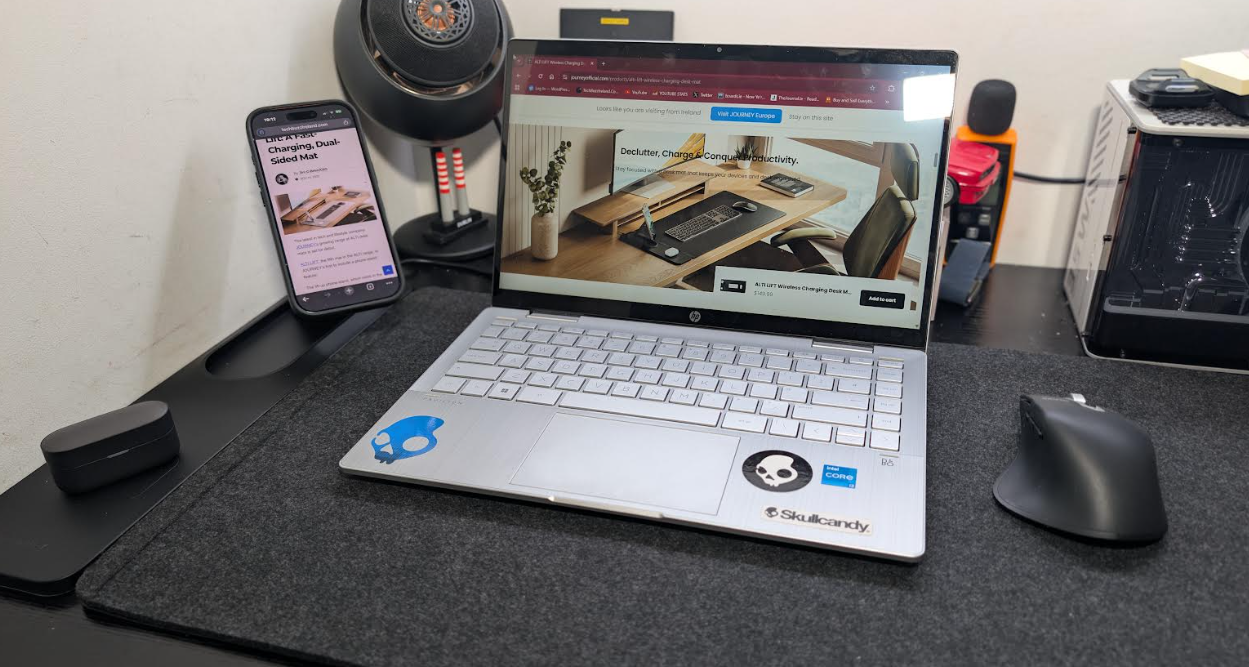
The JOURNEY ALTI LIFT Wireless Charging Desk Mat  is a premium kit to have at your home or office desk set up taking up less space making things more comfortable and requiring less cables and giving you fast wireless charging for two devices.

ALTI LIFT features a double-sided surface (felt and vegan performance leather), an interior hideaway pocket for loose documents, and black and beige colour varieties. This can be set up either side or for left and right handed people which is also excellent giving you a choice of surface to work on both are better than an oak desk like what I use.

Its Qi2-certified wireless charging panel, which attaches to either side of the mat, simultaneously delivers up to 15W to Qi2-certified iPhones (including iPhone 12 onwards) and 5W for AirPods. this will also work on other compatible phones and earbuds it must be noted and not specific to Apple and was tested with several products.

You can charge your phone on the flat portion if you like but it is cated towards earbuds however the phone stand is where it is at as this can be place basically any way you see fit and can also be used closed it also serves a second screen for the likes of watching your social media emails or perhaps watching videos whilst keeping less tabs open on your laptop or PC.

Overall this is really nice kit to have in your set-up and it is high quality compared to some similar offerings I have seen, check the video below for more.

BUY

Other JOURNEY news and Reviews

Video Review

Ookla Shares Analysis of Storm Éowyn’s Impact on Telecoms Infrastructure

The UK and Ireland are in recovery mode after Storm Éowyn wreaked havoc on electricity and telecoms infrastructure in recent days. With record wind gusts exceeding 180 km/h recorded in Ireland and a ‘major incident’ declared on the Isle of Man, the storm has been historic in both its strength and the extent of the damage caused across the islands.

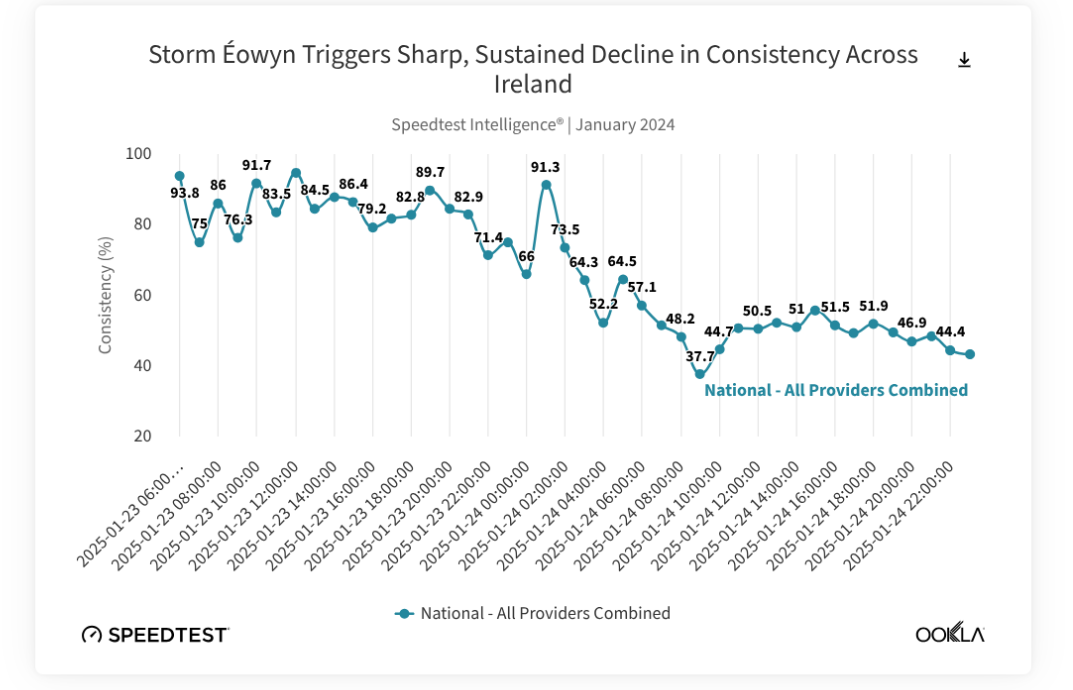
Today, Ookla Shares Analysis of Storm Éowyn’s Impact on Telecoms Infrastructure severe and sustained decline in mobile performance across all operators in Ireland and parts of the UK on a scale not seen before.

On the day the storm made landfall (24th January), median mobile download speeds in Ireland (10.04 Mbps) were 78% lower than the preceding 7-day average of 47.43 Mbps, while median latency was 23% higher at 47.6 ms. In Scotland and Northern Ireland, mobile download speeds at the 10th percentile—a critical metric reflecting the poorest network performance—dropped significantly on the same day, falling by 63% to 2.19 Mbps and by 74% to 1.31 Mbps, respectively, compared to the 7-day average.

The unprecedented scale of impact on telecoms infrastructure serves as the latest and most high-profile call to action for hardening networks against increasingly frequent and severe storms in the UK and Ireland.

You can find the full analysis and Speedtest Intelligence® data here: https://www.ookla.com/articles/storm-eowyn