Microsoft employees charity cycle raises over €300,000 for LauraLynn

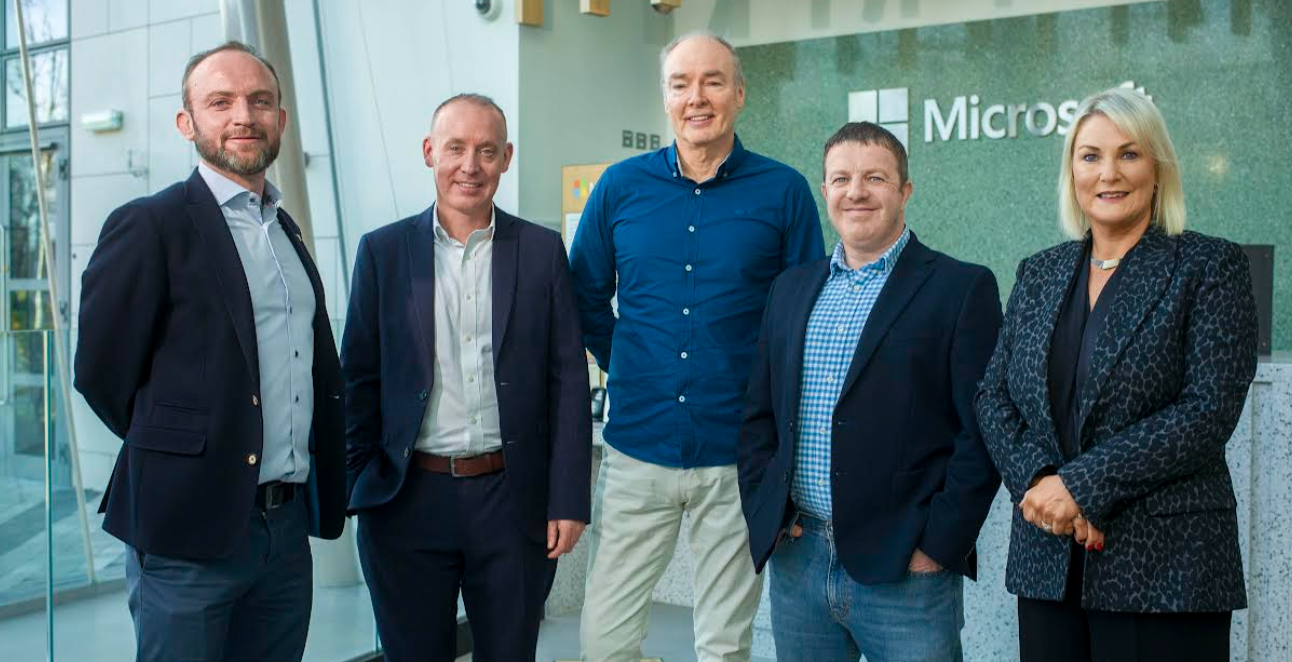
Microsoft Ireland employees have completed the final 360km stretch of the Wild Atlantic Way as part of their annual charity cycle, raising more than €300,000 – the most they’ve ever raised in a single year – in support of LauraLynn, Ireland’s only children’s hospice.

The charity cycle, which began in 2014 with just 10 cyclists, has grown into a major annual fundraising event. This year, 100 cyclists and support crew took on the three-day and 360kms cycling challenge from Letterkenny to Buncrana, County Donegal, battling wet weather, steep climbs, and winding roads – all in the name of supporting children with life-limiting conditions and their families.

Over the course of the last 12 years, the Microsoft team have raised more than €1.7 million for LauraLynn, having cycled more than 4,560km.‌‌ The funds raised go directly to LauraLynn to help provide care in the Hospice, symptom management, short breaks, emergency and end-of-life care, as well as family supports and bereavement care to children with life-limiting conditions and their family units across Ireland.

In 2024 alone, LauraLynn supported 670 families across Ireland, with 119 new referrals accepted to its hospice service providing 1,677 nights of care to those who need it.

This year’s cycle is particularly significant as it coincides with Microsoft’s 40th anniversary in Ireland, reflecting the long-standing commitment of its employees to giving back and making a meaningful impact in their local communities.

James O’Connor, Site Lead at Microsoft Ireland and Corporate Vice President Microsoft Global Operations Service Centre, said: “We are so proud of our employees and supporters who continue to give their time, energy, and resources to the annual charity cycle. Completing the Wild Atlantic Way this year is a remarkable achievement and a fitting way to mark 40 years of Microsoft in Ireland, supporting NGOs and the communities we operate in.

“LauraLynn is a close neighbour and a cause that is very close to our hearts. We are continually inspired by the incredible work they do to provide care, comfort, and support to children with life-limiting conditions and their families. Taking part in this cycle allows our employees to give back in a meaningful way and support the important work undertaken by the LauraLynn team. To have raised €305,923 by way of this year’s cycle and €1,742,091 since the cycle began is truly an incredible achievement.”

Kerry McLaverty, Chief Executive at LauraLynn, added: “Every year, the Microsoft Ireland team shows up not just with bikes and gear, but with compassion and care. What they’ve achieved through wind, rain, and relentless hills is nothing short of inspiring. This year was especially meaningful, marking the final leg of their journey along the Wild Atlantic Way, a challenge they’ve taken on piece by piece over six years. Their commitment goes far beyond fundraising; it’s a message to the children and families we support that there is a huge community standing with them. This partnership is built on something special. A huge congratulations to everyone who took part.”

To learn more about LauraLynn, visit: https://www.lauralynn.ie/.

83% of teachers say they lack formal training in AI

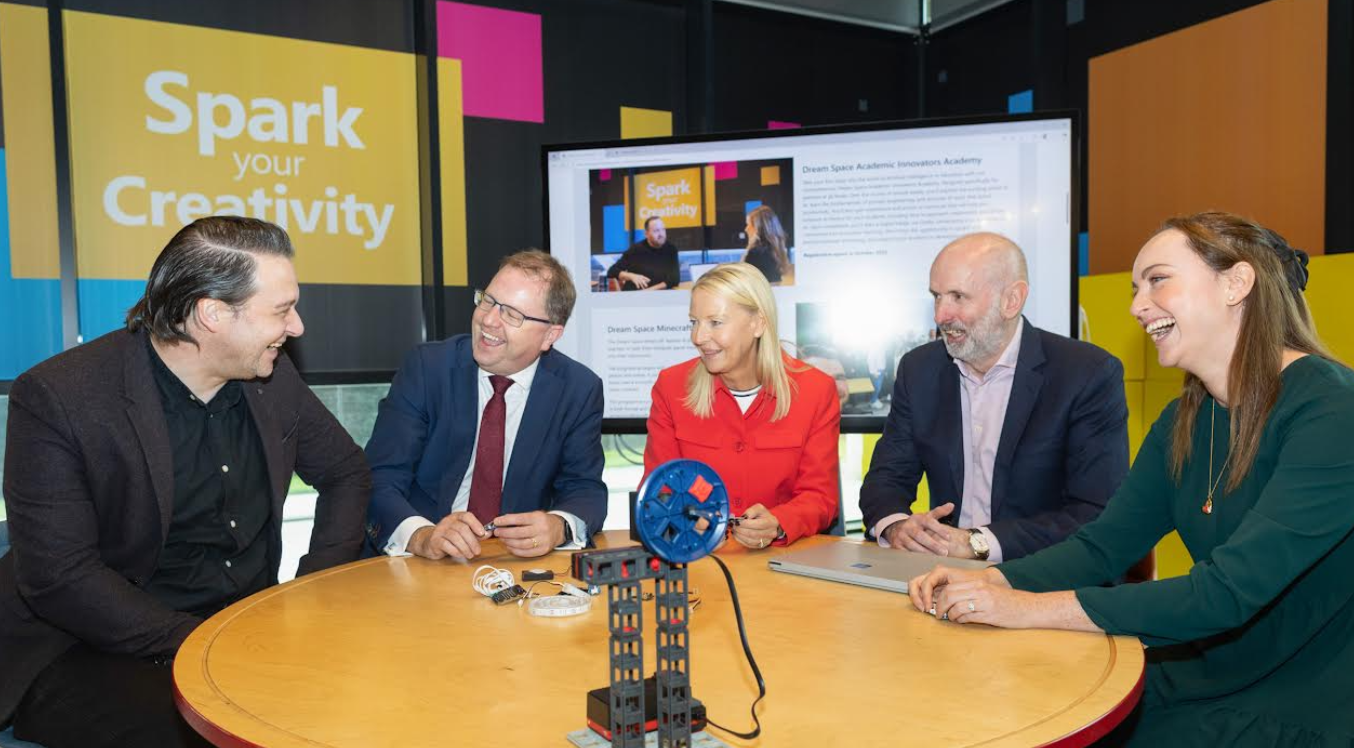
Minister for Further and Higher Education, Research, Innovation and Science James Lawless TD joined Microsoft Ireland to unveil research on the use of digital technologies and AI in Irish classrooms, and to announce the expansion of the Microsoft Dream Space Teacher Academy, a free programme designed to empower teachers with the skills to effectively and responsibly use AI and digital technologies in the classroom.

Powering new teaching models
The research entitled, ‘Digital Learning in the Era of AI’, reveals how AI and digital technologies are helping to enhance learning and engagement in the classroom. Conducted by 3Gem for Microsoft, the survey of 201 educators across Ireland found that:

·      87% use digital technologies to improve productivity and optimise classroom time

·      86% say apps and platforms help personalise teaching to meet students’ needs

·      81% report stronger student engagement when digital tools are used

·      72% support increased use of AI tools in the classroom

·      83% say they lack formal training in AI


While AI is one of the key technologies that teachers are embracing to enhance education and 64% of teachers believe it will positively transform education, adoption varies across the island of Ireland. In Northern Ireland, 74% of teachers report rapid uptake of generative AI, compared to 33% in the Republic.

Digital Tools and AI in Classrooms: Opportunities and Challenges

When asked about ways to bring technology and AI into the classroom, the top three suggestions agreed on by teachers include collaborative learning (49%), student-led initiatives (47%), and project-based learning (41%), approaches that are at the centre of the approach taken by the Microsoft Dream Space team.

The research also highlights a growing integration of digital tools in classrooms, from online worksheets to interactive quizzes, with more experienced teachers using a broader range of tools compared to newer teachers. However, adoption is uneven, especially in schools slower to embrace AI. While 83% of surveyed teachers agree they have not received adequate training to use tech and AI tools effectively, this issue is more pronounced in schools slower to embrace AI, where 67% cite insufficient training as a major barrier, compared to just 32% in faster-adopting schools.

Most educators report student use of laptops, tablets, or computers during lessons. In digitally advanced schools, 40% say devices are used in most teaching, compared to just 15% in slower-adopting schools. Overall, 26% of teachers report high usage (over 75% of teaching), while 51% report moderate use.

Generative AI has seen the fastest growth among digital tools in the past year, marking a shift in teaching approaches. Adoption also varies by location: 64% of urban educators describe their school’s digital transformation as fast or very fast, compared to 45% in suburban and 34% in rural schools. Teachers who use digital tools extensively are more likely to report rapid adoption (74%) than those who use them rarely (30%).

Despite these advances, confidence gaps remain, particularly among non-STEM teachers – only 18% feel fully equipped to use digital technology effectively in the classroom. Even among STEM educators, many report that a lack of ongoing support has limited the impact of their training.

In fact, 81% of teachers say they are lacking formal training in AI, and there is strong consensus among school leaders (92%) that AI training should be a mandatory part of both initial teacher education (ITE) and continuing professional development (CPD).

Microsoft Dream Space Teacher Academy*
To help address the research findings and support teachers to leverage AI and digital technologies to enhance learning and engagement in the classroom, Microsoft today announced the expansion of its Dream Space Teacher Academy for the 2025/2026 academic year. This free, multi-week programme is designed to help primary and post-primary teachers begin their journey with AI in education. It focuses on building confidence and understanding, starting with the basics of how AI works and why AI literacy matters.

Teachers will explore how AI can support productivity, learn how to use it responsibly and ethically, and access resources to help students develop their own AI literacy and future-ready skills. On completion, participants will earn a digital badge via Credly, with opportunities for further professional development and accreditation.

Minister for Further and Higher Education, Research, Innovation and Science, James Lawless TD said: Microsoft’s latest research underscores the opportunity for AI and digital tools to enhance teaching and learning, as well as the need to support educators with the right training and support to use them effectively. The new national guidance on AI in schools published by the Department of Education is an important step in that journey, providing a clear framework to help educators adopt these technologies responsibly and confidently.

“This aligns with the broader direction of our education system, including the new primary curriculum’s emphasis on digital literacy and modern skills. Across further and higher education, we remain focused on preparing both learners and educators to thrive in an AI-enabled world. Industry has a vital role to play in this, and I’m delighted to join Microsoft today in announcing this expanded AI skills offering for teachers through the Microsoft Dream Space Teacher Academy.”

James O’Connor, Microsoft Ireland Site Leader and Corporate Vice President of Microsoft Global Operations Service Centre, added: “Microsoft is committed to supporting Irish educators to bring a digital mindset into the classroom to enhance learning and student engagement. This research shows that teachers are ready to embrace AI, but they need the right support to do so confidently and responsibly. As the new guidance on the use of AI in the classroom highlights, it’s not just about having access to digital tools; it’s about understanding how AI works and how to use it in ways that truly benefit students.

“That’s why we’re expanding the Dream Space Teacher Academy and investing further in our ambition to Skill Up Ireland. We are committed to helping teachers build the skills, trust and AI literacy they need to confidently use AI in the classroom. By focusing on responsible use, digital understanding and practical classroom application, we hope to support educators to create more inclusive, engaging and future-ready learning experiences for every student across the island of Ireland.” 

Educators interested in joining the free Microsoft Dream Space Teacher Academy can register their interest by the 13th of November at: Dream Space Teacher Packages.

Jabra Expands Meeting Room Portfolio with Jabra Scheduler

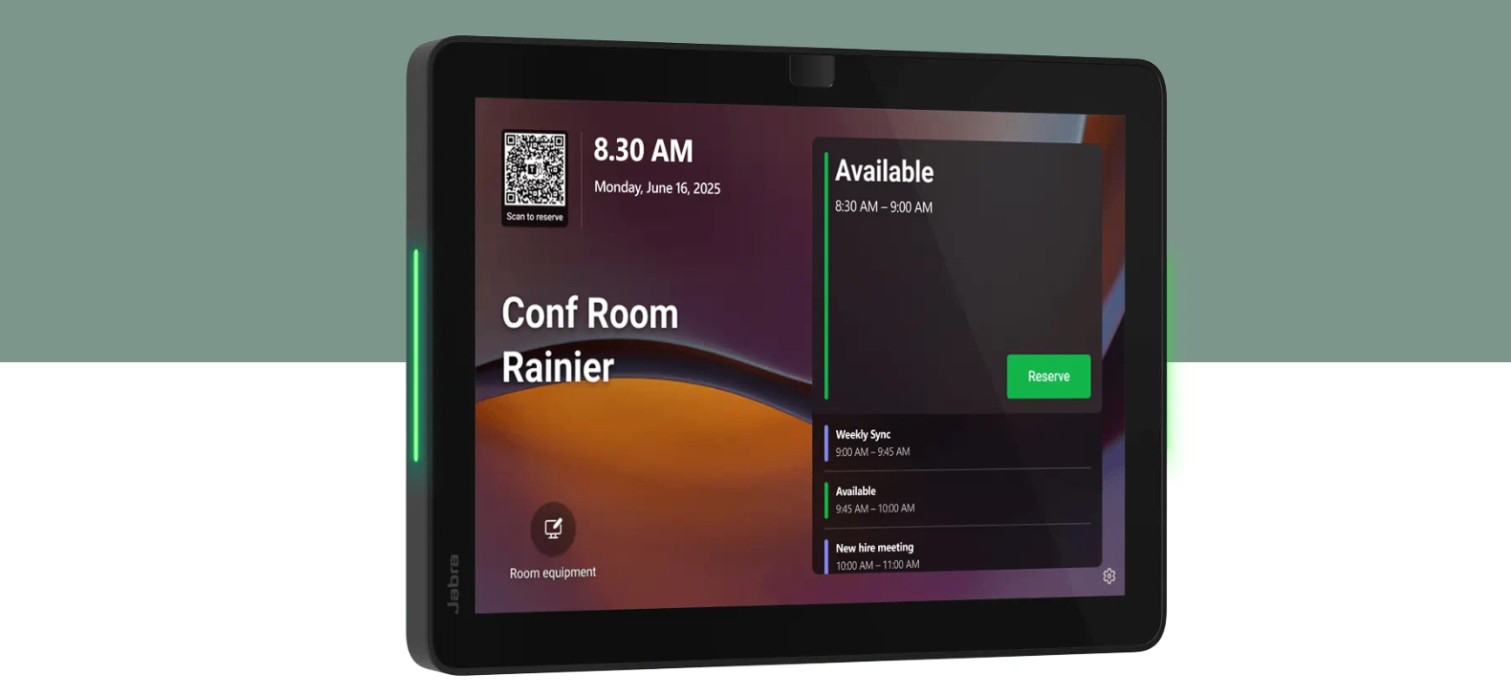
Jabra, a world leader in professional audio and video solutions, today announced the launch of the Jabra Scheduler, a touchscreen scheduling panel that displays meeting room availability and allows users to reserve spaces directly at the room or through their digital calendars. The panel simplifies scheduling by making it easier to find available spaces, prevent double bookings and deliver a seamless experience across Jabra’s meeting room solutions. Made from more than 50% recycled materials, the panel also supports more sustainable manufacturing practices. The Jabra Scheduler will be globally available on November 17, 2025.

A Complete End-to-End Solution

The Jabra Scheduler works seamlessly with both Microsoft Teams Rooms and Zoom Rooms, making it easy to pre-book meetings through a digital calendar or reserve a space directly at the room. Once synced, upcoming meetings appear in real-time on the interactive touchscreen display, showing exactly how long each room will remain available. LED indicators clearly signal whether a space is free or in use, helping reduce interruptions and keep meetings running smoothly.

In addition to complementing Jabra’s audio and video portfolio, the Jabra Scheduler can also be used in environments and rooms that don’t currently feature Jabra devices. This flexibility allows organisations to standardise their scheduling experience across all meeting spaces while still benefiting from Jabra’s high-quality hardware design and integration with leading platforms.

The Right Room for Every Meeting

The Jabra Scheduler makes it easier for employees to quickly find the space that best suits their meeting needs. Its clear touchscreen display shows real-time room availability, helping users see whether a room is available and for how long, reducing interruptions and last-minute confusion.

  • Book ad hoc with confidence: Instantly check if a room is available for the full duration of your meeting.
  • See availability at a glance: The high-contrast display and LED indicators make it easy to spot open rooms.
  • Simplify everyday workflows: Pre-book or reserve on the spot to save time and keep meetings on schedule.

By making it easy to match meeting needs with the right room, organisations can reduce wasted time, avoid double bookings and improve overall meeting efficiency.

Fast, Reliable Deployment

The Jabra Scheduler is designed for quick setup at scale. With integrated cable management, the panel connects directly via a category cable, making installation straightforward once power is in place. It also offers several flexible mounting options, including flat on the wall, angled wall mount, mullion mount or glass, with all hardware included in the box to streamline deployment and minimise complexity.

Devices can be centrally managed through Jabra+, enabling organisations to provision, monitor and update schedulers across multiple locations.

Holger Reisinger, SVP Enterprise Video Business Unit at Jabra, said, “The Jabra Scheduler marks an important expansion of our video and collaboration portfolio, introducing a new product category that completes our meeting room offering. With industry-leading video, professional audio and now intuitive room scheduling, Jabra delivers the full meeting experience from one trusted provider, making it simpler for organisations to deploy, manage and collaborate seamlessly across every space.”

Key Benefits

  • Instant room status – Lightbar and on-screen schedule for quick availability checks.
  • Reliable deployment – Wired connection with easy cable management and plug-and-play setup.
  • Remote-friendly – Spaces can be booked in advance, on-site or off-site.
  • End-to-end integration – Complements Jabra PanaCast portfolio, Microsoft Teams Rooms and Zoom Rooms.

The Jabra Scheduler will be available at an MSRP of £610.

Learn more at: www.jabra.com/jabra-scheduler

See our Jabra Reviews

Irish family-owned Kepak invests in major digital overhaul

Family-owned Irish meat manufacturer, Kepak, has successfully completed a major Microsoft Dynamics 365 F&O across its UK and Ireland estate, marking a significant step in its drive to futureproof business operations. The digital transformation project was delivered by Microsoft ERP, CRM, and Power Platform specialist, Nexer Enterprise Applications.

Kepak sources meat from thousands of farmers across Ireland, the UK and creates products to supply major retailers and foodservice chains including Tesco, Asda, Burger King, and McDonald’s.

Futureproofing the operational systems of a longstanding family business, Nexer replaced Kepak’s legacy Dynamics AX 2012 platform, which was no longer fit for purpose across supply chain, warehouse, and finance processes. This process ensured Kepak’s systems, from suppliers to the final customer-facing transaction, are future-proofed and will grow alongside the beloved, Irish, family-owned company. With Kepak sites already live and the UK rollout of the new systems now complete, the programme is in the final throes of implementation and moving into its post-live hyper-care phase.

Throughout the programme, Nexer consolidated Kepak’s operations by introducing a central billing team to replace site-by-site invoicing, thereby streamlining customer billing across all major accounts. At the same time, supply chain, warehouse and finance workflows were standardised onto a single Dynamics 365 platform, eliminating disparate systems across eight Irish and multiple UK facilities. Underpinning these improvements is a robust solution and production architecture, designed by Nexer’s technical and production architects, which ensures scalability for ongoing growth and future enhancements.

Jeremy O’Callahan, CIO of Kepak Group, commented:

“This transformation has been a true partnership. Replacing our end-of-life AX system with Dynamics 365 through Implement365 gives us the consistency and agility we need to support our farmers and customers alike. Nexer’s strategic support was critical to ensuring the implementation process went as smoothly as possible as business continued around it.”

Martin Burden, Commercial Director at Nexer Enterprise Applications, added:

“With Kepak, we’ve helped to futureproof their ever-evolving supply-chain, warehouse and finance operations through Microsoft Dynamics 365 consolidation. As we move into hyper-care, our focus remains on fine-tuning and ensuring Kepak realises ongoing value from its investment across both Irish and UK markets.”

For more information on Nexer Enterprise Applications, visit: https://nexergroup.com/uk/microsoft-business-applications/

Microsoft Ireland Work Trend Index 2025:

New insights from Microsoft Ireland reveal Ireland’s workforce is navigating a period of transformation. The Microsoft Ireland Work Trend Index 2025 is based on a nationally representative survey of 1,000 Irish workers, conducted annually as part of a general population study, ensuring a demographic balance year-on-year. The results show that AI is emerging as a career catalyst, while job turnover hits a record  38%, according to the respondents who took part in the survey, while workplace satisfaction trends marginally downward.

With AI adoption up 27% year-on-year, 41% of workers say it helps them work smarter. Half (50%) believe AI skills are critically important to remain competitive in the job market, while 54% say having these skills will broaden their job opportunities. Additionally, 40% believe knowing how to use AI at work will help them get promoted faster, and 34% say AI has made them consider other career paths. Yet, this optimism is tempered by uneven access and training gaps, with over half of workers calling for structured or employer-led AI training to help speed adoption.

A Workforce in Flux and Under Pressure – Employees call for Balance

Despite 57% of workers seeing opportunities for growth within their current roles, Ireland’s labour market is in motion. Based on the survey results, turnover has surged from 19% in 2023 to 38% in 2025, positioning Ireland as a market with significant talent volatility. This churn underscores the importance of investing in retention strategies that empower employees to thrive by supporting their well-being, balance, and growth, which in turn help organisations to remain resilient in a rapidly changing workplace.

Ireland’s workforce trends align with global insights that highlight how emotional strains are compounded by the realities of today’s workday, where digital overload and constant interruptions challenge even the most flexible environments. Linking this workforce feedback to Microsoft’s global telemetry, a picture emerges showing the modern workday is increasingly distracted. Workers are interrupted every two minutes or 275 times per day, receive 117 emails daily, and spend 57% of meetings in unscheduled sessions.

AI Eases Employee Strain – But Wider Access and Training is Required

AI offers a practical remedy, helping employees manage their workload, reduce stress, and focus on higher-value tasks. It is increasingly seen as a solution to workplace pressure, with 91% of users in Ireland saying it improves the quality of their work. Additionally, 34% of workers say AI has made them reconsider their career path, highlighting its influence on professional ambition and future career opportunities.

However, AI use remains uneven:

·                Board-level executives: 91% use AI at work

·                Non-managers: Only 39% use AI at work (versus 66% of managers)

·                Gender imbalance: 63% of men versus 47% of women use AI at work

·                Generational usage: 55% of Gen Z (18-24) use AI at work, compared with 62% of younger millennials (25–34), 59% of older millennials (35–44), 47% of Gen X (45-54), and 48% of Boomers (55-64).

These disparities raise concerns about who has access to AI tools and benefits from them, and who risks being left behind. Lower engagement with AI could limit opportunities for efficiency and relief from routine tasks, potentially exacerbating stress levels for employees under pressure.

It’s perhaps no surprise, therefore, that over half (61%) of Irish workers are calling for structured AI training, saying their employer could support adoption by offering more training either in-house or through external providers, and 47% believe they should be given more time to research AI independently.

Commenting on the alignment between Irish trends and the broader global perspective, Microsoft Ireland General Manager, Catherine Doyle said: “Ireland is at a turning point. As AI transforms the world of work, Irish employees and employers are navigating rapid change and new opportunities. The message from workers is urgent and clear: they want the tools, support and skills to adapt. Organisations that embrace AI and invest in inclusive training will be best placed to lead in productivity, innovation, and resilience.

“As leaders, we must respond with empathy and action, making AI training accessible to all workers, at every level, so everyone can enjoy the many benefits and productivity gains that this transformative technology offers. At Microsoft Ireland, we’re committed to ensuring no one is left behind. Through Skill Up Ireland, our education and training programme, we’re widening access to AI skills for all. Now is the time to act to support equal access in the AI era, so together we can unlock new opportunities for our workforce and our economy.”

Dell unveils its first-ever earbuds Dell Pro Plus Earbuds

Dell Technologies today announced the launch of the Dell Pro Plus Earbuds (EB525), the latest addition to its AI-based audio portfolio. Designed for the hybrid workforce, these earbuds combine advanced noise filtering, voice optimisation, and all-day comfort for employees, while offering IT teams simplified deployment and centralized manageability.

As the world’s first earbuds to earn Microsoft Teams Open Office Certification, the Dell Pro Plus Earbuds are engineered to empower effortless communication – whether users are commuting, working remotely, or jumping into a quick Teams meeting. Certified for both Microsoft Teams and Zoom, they ensure flawless compatibility with the most widely used professional collaboration platforms.

Consumer-grade audio gear often falls short in professional settings, where background noise and poor mic quality can derail productivity. The Dell Pro Plus Earbuds address these challenges head-on. With an AI-powered noise-cancelling microphone trained on over 500 million noise samples, adaptive active noise cancellation (ANC), and enhanced transparency mode, they deliver a premium audio experience tailored for the modern workplace.

Built for real-world conditions, the earbuds come with four ear tip sizes (XS, S, M, L) for a custom fit. Seamless multi-device connectivity is enabled through Bluetooth 5.3 and multi-host pairing, while the Dell Pair feature ensures quick setup and smooth transitions. A compact charging case with a built-in Dell Wireless USB-C Audio Receiver adds on-the-go convenience.

For IT administrators, the Dell Display and Peripheral Manager (DDPM) provides a centralised dashboard for easy device configuration, firmware updates, and fleet oversight – streamlining audio management across hybrid teams.

The Dell Pro Plus Earbuds are designed to empower effortless communication, whether you’re commuting, working remotely or jumping into a quick Teams meeting. said Mike Alessi, Senior Director of Global Product Planning & Launch for Collaboration Peripherals at Dell Technologies. “The future of workplace audio isn’t just about cutting-edge technology, it’s about empowering teams to connect, collaborate and thrive. With the Dell Pro Plus Earbuds, that future is here.”

The Dell Pro Plus Earbuds are available through Dell Technologies and authorised partners in Ireland and across EMEA at a recommended retail price of €245.99 including VAT. Find out more at: www.dell.ie.


See our earbuds reviews 

Unlicensed Software Risks: Why It’s Crucial to License Your Microsoft Programs

Let’s be honest: software is what keeps the modern business world turning. We all rely on programs like Microsoft Word to draft documents, Excel to crunch numbers, and Outlook to stay connected. But faced with tight budgets, it can be tempting to cut corners by using unlicensed copies. It might seem like a harmless way to save a few dollars upfront, but that initial saving is an illusion. The reality is that using unlicensed software is a huge gamble, one that can seriously threaten your company’s security, finances, and good name. That’s why ensuring your Microsoft software is properly licensed isn’t just a best practice; it’s an absolute necessity for protecting your business.

The cybersecurity nightmare

Using unlicensed software is like leaving your front door unlocked in a busy neighborhood. Microsoft is continually working to seal security holes that hackers love to exploit, issuing regular updates to keep everyone protected. But if your software isn’t legit, you’re left out of the loop. Your computer and your entire network become a target for malware, ransomware, and data breaches. Think about it: the cost of dealing with just one attack, from lost data and operational chaos to regulatory fines and shattered customer trust, could be astronomical. That “bargain” software suddenly becomes the most expensive mistake you’ve ever made.

Performance and stability issues

Beyond security, unlicensed software is often unstable. The code has usually been tampered with to bypass payment, which means it’s no longer the original product Microsoft built and tested. That tampering leads to glitches, random crashes, corrupted files, and endless frustration. Imagine trying to build a house on a cracked foundation. It’s unreliable from the start. Businesses that rely on pirated versions often end up wasting more time and money fixing issues than they would have spent on proper licenses. By using licensed different versions of Windows Server 2025, you ensure smooth, reliable performance that helps your business reach its goals without setbacks. This gives you peace of mind and makes your business more powerful and competitive.

Legal consequences

Unlicensed software use is not a gray area. It is unlawful and constitutes piracy. Software Asset Management audits are a proactive way for Microsoft and other providers to verify compliance. If your company is discovered, you may be subject to severe penalties, which may include paying the full retail price of each unlicensed copy in addition to other damages. In addition, legal fees and administrative hassles can deplete resources and divert attention from managing your company. The consequences of an audit can sometimes destroy a business.


No support or backup

Buying a legitimate license doesn’t just give you the software; it gives you access to Microsoft’s support and resources. That means if something breaks, you’re not left guessing. You have experts, documentation, and solutions at your fingertips. With unlicensed software, however, you’re on your own. You won’t have a help desk to call or reliable instructions to follow. Instead, you’ll waste valuable time digging through questionable forums, hoping someone else has the same problem and the right fix.

Why licensing is worth it

Licensed Microsoft software is more than a box to check for compliance. It’s an investment in your company’s security, reliability, and long-term success. The risks tied to unlicensed programs, including financial losses, legal disputes, and damaged reputation, far outweigh the cost of doing things the right way. With proper licensing, you gain peace of mind knowing your systems are safe, stable, and fully supported, allowing you to focus on growing your business instead of fighting preventable problems.


How to Find Authentic Windows Keys at Affordable Prices

Whether you’re building a new PC, upgrading from an older version of Windows, or simply reinstalling your OS, one thing you’ll need is a valid product key. But in a market flooded with too-good-to-be-true offers, finding genuine Windows and Office keys that are both legitimate and affordable can be a challenge.

If you’re in the U.S. or anywhere else, you don’t have to pay the full retail price from Microsoft to get a genuine key, but you do need to know where and how to shop smart. In this guide, we’ll walk you through how to find authentic Windows keys without getting scammed, what types of keys are available, and the red flags to avoid.

What Is a Windows Key and Why Is Authenticity Important?

A Windows product key is a 25-character code used to activate and validate your Windows installation. This activation ensures that your copy of Windows is genuine, which unlocks all features, security updates, and support.

Installing Windows without a valid key may still work for a while, but you’ll eventually run into limitations like persistent activation warnings, reduced personalization, or even security risks. More importantly, using unauthorized or pirated keys could lead to software deactivation or potential legal trouble.

Types of Windows Keys Available Online

Before you start shopping, it helps to understand the main types of Windows product keys you’ll come across:

· Retail Keys – These are full-priced licenses sold by Microsoft or authorized resellers. They can be transferred to another computer if you’re switching devices.

· OEM Keys (Original Equipment Manufacturer) – Typically pre-installed on new PCs or sold at a discount. They’re locked to the first device they’re activated on, so they can’t be reused or transferred.

· Volume License Keys – Intended for businesses and large organizations. These are sometimes resold illegally online and should be avoided unless you’re purchasing directly from a verified, authorized distributor.

For most individual users, Retail and OEM keys are the best options. The key is to find a trustworthy seller offering one of these at a reasonable price.

Where to Buy Authentic Windows Keys Without Overpaying

Microsoft Store

Buying directly from Microsoft guarantees authenticity, but it’s also the most expensive option. Still, it’s a good benchmark for comparing prices and ideal if you want the highest level of customer support.

Authorized Retailers

Reputable tech stores offer genuine Windows keys at slightly reduced prices. These keys usually arrive digitally and can be activated right away.

These platforms often provide digital delivery within minutes and include activation guarantees. While they’re not Microsoft-authorized, many users report successful activation. Stick with platforms that:

· Have positive reviews

· Offer secure checkout

· Provide a refund policy if activation fails.

How to Spot a Fake or Gray-Market Key

Not all keys are created equal, and some may not be legal or permanent. Here are the warning signs:

· Extremely low prices (under USD 10) – These often indicate illegitimate keys or those resold from other countries or expired enterprise licenses.

· No contact or refund info – Trustworthy sellers always provide customer support.

· Poor or no reviews – Lack of third-party feedback is a red flag.

· Forced activation workarounds – If you’re asked to use sketchy software to bypass activation, walk away.

A good practice is to check user feedback on platforms like Trustpilot or Reddit before committing to a purchase from unfamiliar sellers.

Understanding Regional Restrictions

Some Windows keys sold online are region-locked. If you’re buying from a global reseller, make sure the key is valid for use in your country. Otherwise, you may encounter an activation error or be forced to use a VPN, which violates Microsoft’s terms of service.

What to Do After You Purchase

Once you’ve received your key, here’s how to activate it safely:

1. Install Windows (if you haven’t already).

2. Go to Settings > System > Activation.

3. Enter your new product key and follow the prompts.

4. Restart your PC and confirm that Windows is activated.

If you run into activation errors, contact the seller immediately. Reputable platforms often provide a replacement key or a refund.

Can You Use Free Alternatives?

Yes, Microsoft allows users to install Windows without activating it. But the unactivated version comes with limitations like:

· A watermark in the bottom-right corner

· No personalization options (themes, colors, wallpaper)

· Potential issues with updates and security features

If you’re just testing a PC, this is fine temporarily. But for long-term use, a genuine key is worth the peace of mind.

Final Thoughts

Finding an affordable, authentic Windows key is all about balance—cost versus credibility. Avoid deals that seem too good to be true, and always verify the legitimacy of the seller. Buying from trusted sources ensures your software is safe, secure, and fully functional.

You don’t have to pay top dollar, but you should always pay smart. With a little research and caution, you can get Windows up and running legally without breaking the bank or risking your system’s integrity.

Microsoft recognises NextGen of STEM and AI leaders at Microsoft Dream Space Showcase

The third annual Microsoft Dream Space Showcase brought together students from across Ireland to demonstrate how their STEM and AI skills developed during the programme can tackle real-world challenges. Held over three days at Microsoft’s Dublin campus, and supported by three additional regional showcase events, the initiative saw more than 800 students present over 110 innovative projects, providing inspiring solutions to many of today’s environmental, health, wellbeing, and accessibility challenges. From earthquake sensors and plant health monitors to food waste trackers and inclusive communication tools, the projects reflect a wide range of creative, impactful ideas developed by the next generation of STEM leaders.

Launched in 2018, Microsoft Dream Space was designed to provide young people with an opportunity to participate in immersive, research-based STEM experiences to enhance their STEM skills and shift their perceptions about the role technology can play in their future careers. Delivered through a mix of in-person, virtual, on-demand, and community-based programmes, today, Microsoft Dream Space is providing every primary and post-primary student*, as well as their teachers, across the island of Ireland with the opportunity to engage in STEM and AI learning experiences that will equip them with the skills that are required to fully participate in the era of AI.

The Microsoft Dream Space Showcase was launched three years ago with the objective of extending access to the programme’s learning content and supports to students and their teachers in rural communities in collaboration with the Department of Rural and Community Development and local county councils.

Since the first event in 2023, student participation in the Microsoft Dream Space Showcase has grown significantly, with a near 200% increase in project submissions highlighting the growing enthusiasm among this young cohort to apply their STEM and AI knowledge in creative and impactful ways. Students and teachers from communities in Longford, Cork, Mayo, Tipperary, Monaghan and Waterford have been the most engaged in the initiative, with the number of communities involved continuing to grow each year.

As part of the initiative, students embark on a year-long learning journey that combines in-class activities, digital resources, and in-person programme engagement. Using content from three Dream Space TV series – Full STEAM Ahead, Code Green, and brAIn_waves – students develop skills in coding, computational thinking, sustainability, and AI, laying the groundwork for their participation in the Showcase.

The learning journey culminates in the Microsoft Dream Space Showcase where students travel to One Microsoft Place to demonstrate the many ways in which their newly developed STEM skills can help solve real-world problems. From climate action to inclusive design, the projects presented at the Showcase address key challenges linked to the UN Global Goals, demonstrating how technology and creativity can come together to drive positive change.

This year, Microsoft is celebrating its 40th year of innovating and investing in Ireland. To mark this milestone, the company gave a special ‘NextGen 40’ award at the Microsoft Dream Space Showcase to 6th class students from St Marys National School in Edgeworthstown, County Longford for their inspiring project, ‘The Eco-town’. Building on the knowledge and skills that the students developed over the past year, the students created multiple micro:bit devices through coding to transform Edgeworthstown into an eco-town. They focused on key areas such as safety, recycling, and solar energy. As part of the project, the students built a prototype of their local town to demonstrate how their micro:bits would function, offering a clear vision of how technology can enhance sustainability in their community and empower them to achieve more.

James O’Connor, Microsoft Ireland Site Leader and Corporate Vice President Microsoft Global Operations Service Centre, said: “As Microsoft celebrates 40 years in Ireland, we are incredibly proud to have students from across the country visit our campus in Leopardstown to showcase the STEM and AI projects they have developed using the digital skills that they have gained throughout their year-long Dream Space journey. With AI transforming how we learn, live and work, it’s vital that every young student, irrespective of their background, can engage confidently in STEM and AI learning.

“The Dream Space Showcase is a powerful reflection of what’s possible when students are given the skills and confidence to explore STEM and AI. This year’s event brought together hundreds of young innovators who used these skills to tackle real-world challenges. Their projects show that the next generation is not just ready to participate in the digital world – they are ready to shape it.

“As we look to the future, Microsoft remains committed to skilling up the next generation. Through Microsoft Dream Space and our broader Skill Up Ireland initiatives, we’re working to ensure that everyone has the opportunity to build the skills they need for the era of AI and is empowered to achieve more.”

Part of the winning team of the NextGen 40 award at this year’s Microsoft Dream Space Showcase, 6th class student Róisin from St. Marys National School in Edgeworthstown, Co. Longford said “We have really enjoyed the Microsoft Dream Space Showcase experience. We loved learning more about STEM and how technology can be used to tackle problems. With my classmates I worked on a project called ’The Eco-town’. For it we used micro:bits to create solutions focused on safety, recycling, and solar energy to make our community more sustainable. It was amazing to see how technology can have a positive impact in the area we live in. We were delighted to win the award.”


Reflecting on the impact of Microsoft Dream Space in her classroom, Shannon Boyle a teacher from St. Marys National School Edgeworthstown, Co. Longford said “Microsoft Dream Space has become a vital part of how we teach STEM in our school. The resources are easy to integrate into our day-to-day curriculum and allow us to connect learning to real-world challenges, helping students see how technology can shape their futures. This year, our students won the ‘NextGen 40’ award at Microsoft Dream Space Showcase for The Eco-town—a project tackling sustainability, safety, recycling, and renewable energy in our community. It’s been inspiring to watch them apply coding and digital tools to create practical solutions for Edgeworthstown. Our school moto is ‘Education for Life’. We live this moto out every day and we’re excited to apply this commitment towards bringing STEM to life for the students in our school.”


To learn more about Microsoft Dream Space or to access the latest learning resources, visit: https://dreamspace.microsoft.com/en-us/dreamspace/ireland