Galway County Council digitally maps the heritage of over 25,000 memorials

Esri Ireland, the market leader in geographic information systems (GIS), today announces that Galway County Council has digitally mapped over 25,000 memorials, monuments, and gravestones using Esri’s ArcGIS system. As part of a community-focused project across the county of Galway, Esri’s technology is being used to create a fully digitised process for capturing information about graveyard memorials and making it publicly accessible online.

Throughout Galway, there are 235 council-owned graveyards with ancient monuments and gravestones that provide invaluable insight into family ancestry and social history. Previously, community groups in Galway have endeavoured to capture this culturally significant information, using pen and paper to manually note memorial inscriptions.

Galway County Council’s interactive map, accessed through the Graveyard Memorial Search App, enables volunteers and heritage professionals to view and capture data and images in real-time on their mobile devices. It provides aerial photography of each graveyard, allowing users to zoom into pictorial maps of graveyards on their devices, and accurately identify each gravestone and record data pertaining to it. It also allows citizens to search for burial records and ancestors’ graves, and many graveyards can be explored in 3D, giving people an immersive, realistic experience of visiting family memorials.

The online map provides a streamlined, cloud-based process for collecting, validating, managing and sharing memorial data. It has made the process ten times faster and delivers more accurate and consistent data, which will help to preserve Galway’s graveyard heritage for future generations.

This is leading to increased community engagement, and more than 50 local groups are now using the solution. It is also being used by historians, archaeologists, genealogists and health researchers, as well as schools.

Already, data on over 35 graveyards is available via the app, providing citizens with easy, online access to ancestry information. With over 30 further graveyard surveys planned or in progress, Galway County Council, with support from the Heritage Council, is rapidly expanding the amount of information available via the app. The technology can also be replicated by other county councils and used by all kinds of community groups going forward.

Barry Doyle, GIS Manager, Galway County Council, said: “Simplicity is key to all of this. Everything is done in one efficient, seamless process where the data is stored and accessed centrally in the cloud. With this ArcGIS process we are enabling community groups to achieve their heritage objectives.

Marie Mannion, Heritage Officer, Galway County Council, said: “Digitising Galway’s graveyard heritage has been a powerful way to enable people to learn about the local and national heritage that can be found in graveyards. People can now search for and find photographs of their family’s memorials online and form a stronger connection with their past. It’s an incredible resource for everyone.”

Jack Ffrench, Account Manager, Esri Ireland, said: “Being able to access local heritage, digitally, for Galway citizens has been a really important project to work on and exemplifies the true power of GIS technology. It is rewarding for us to be able to work with local communities, and bringing this important history to life will ensure that Galway’s past can become part of its present. We are looking forward to continuing to work with Galway County Council and seeing how this use case could be repeated within other councils, as well as a wide variety of community groups, in the future.”

New online election hub set to enhance information accuracy and voter participation in Waterford

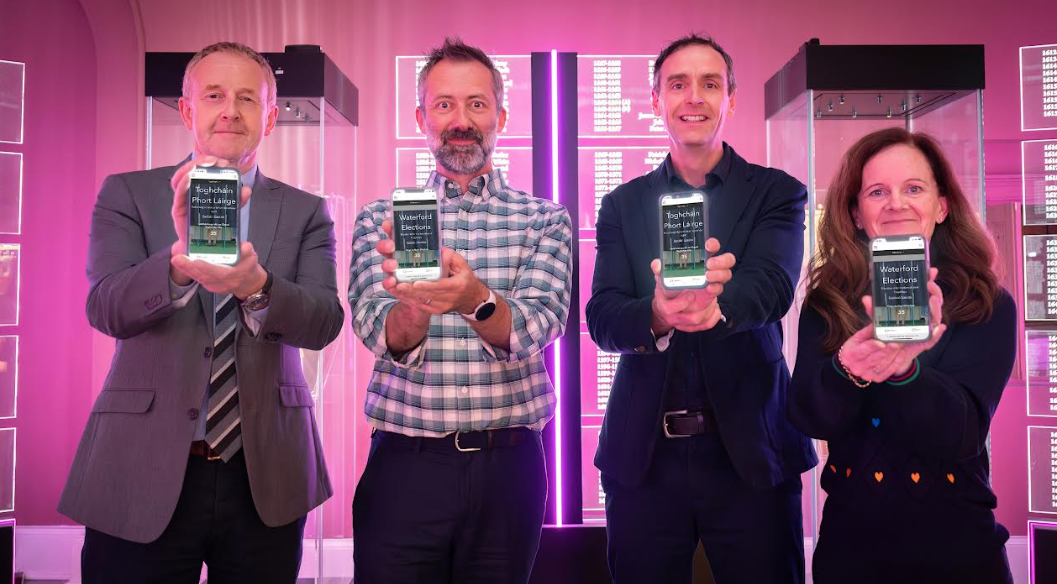
Esri Ireland, the market leader in Geographic Information Systems (GIS), is today announcing that its digital mapping system is being used by Waterford City and County Council to help bring real-time and accurate electoral information to local citizens. It is expected to drive voter participation in the upcoming local and European elections taking place in June.

This is the first dedicated resource of its kind to be rolled out by a local authority in Ireland, and provides information in both the English and Irish languages.

The Election Hub platform, built using Esri’s ArcGIS technology, is providing 127,000 citizens across Waterford with easy access to transparent information about electoral candidates, existing elected representatives, electoral areas, and voting and registration FAQs. Real-time data from the Register of Electors is streamed daily into the hub, creating a one-stop-shop and putting authoritative and accurate information at the fingertips of local voters.

The hub enables citizens to explore and download interactive maps of the six electoral areas within the Waterford region where they can enter their Eircode to find their elected representatives, from local councillors to TDs. Voters can also locate their allocated polling station, and even get directions from their home address.

The Election Hub is also leading to more focused campaigning and representation for electoral candidates. Both new candidates and elected representatives can view the electoral area maps within the hub to improve their understanding of the areas they represent or seek to represent.

The platform also levels the playing field for new and existing candidates in the lead up to elections, giving everyone equal access to information about the electorate. When elections take place, Waterford City and County Council plans to update online dashboards on the Election Hub as the results of each count are declared.

In addition, the use of the technology internally is improving the accuracy of the electoral register. Waterford City and County Council can now easily spot anomalies where clusters of houses may have been assigned to the wrong electoral area or where a voter has entered an incorrect Eircode. The inclusion of a link to the Irish Government’s Check the Register website is also encouraging more citizens to verify their information, leading to more accurate data about households.

Jon Hawkins, GIS Project Lead, Waterford City and County Council, said: “Waterford City and County Council needed to make information about elections more accessible to members of the public, help them find their polling stations, and remove other barriers to participation. Configuring the hub was very straightforward and it was an intuitive and responsive solution to build. The platform aims to educate citizens, inspire public confidence, and support Waterford’s prospective and elected representatives. The easy-to-use hub provides transparent, accessible information for citizens in both Irish and English to promote greater voter participation in elections.”

Dermot O’Kane, Head of Sales, Esri Ireland, said: “This is such an important platform which has not only improved the quality and accuracy of electoral information, but will ultimately encourage more people in local communities to have their voices heard by demystifying the voting process. It also helps local candidates to better connect with households in their electoral areas. Waterford City and County Council is doing invaluable work in this area and we are delighted to support this innovative use of our ArcGIS technology. Our system is flexible and can scale as the council’s capabilities continue to grow.”

National award for innovative Galway Graveyards Mapping Project

Galway County Council has received national recognition for an innovative digital project that mapped over 40,000 graveyard memorial records across County Galway and made them publicly available online.

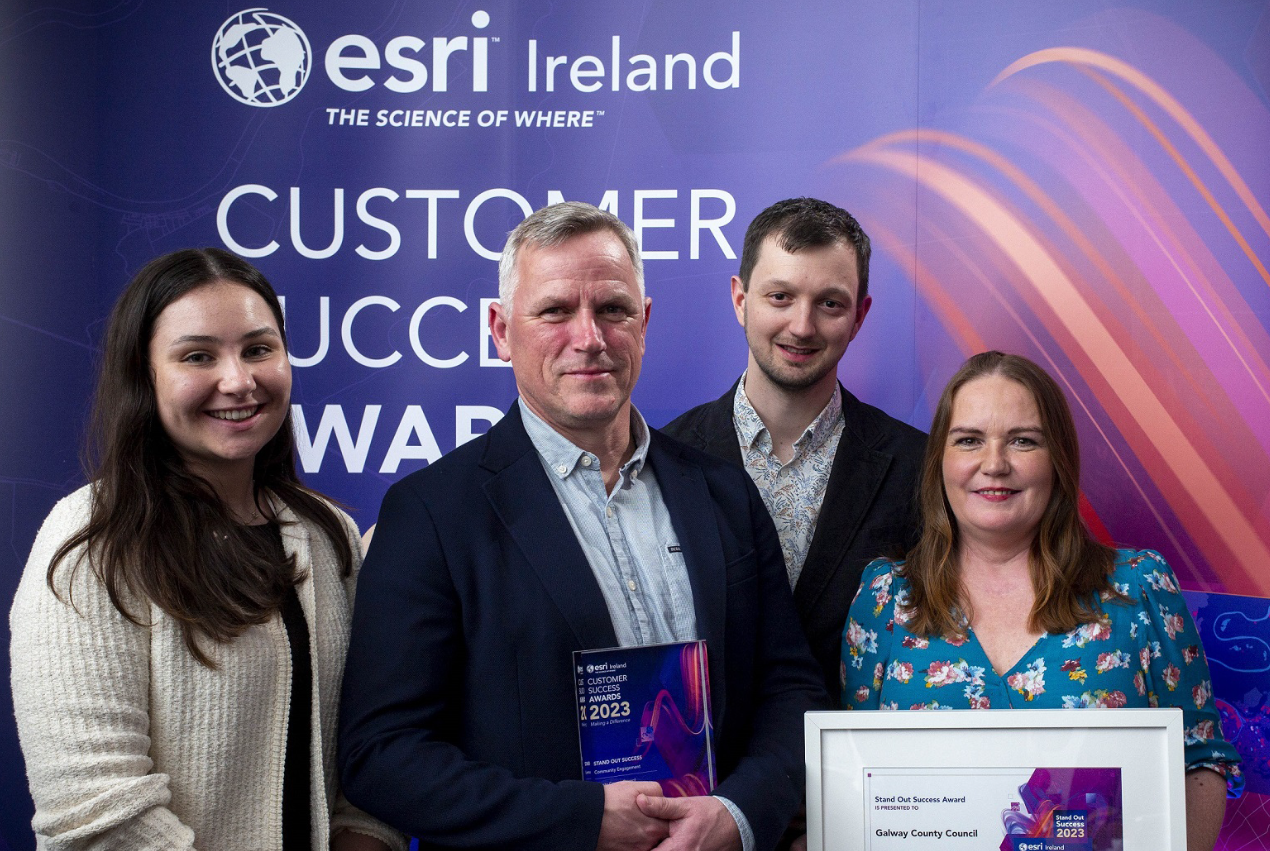
The ‘Digitising Galway’s Graveyard Heritage’ project was last night (Thursday) named overall winner of the ‘Community Engagement’ category of Esri Ireland’s annual ‘Customer Success Awards’ held in Dublin’s Anantara The Marker Hotel.

Working with and supported by Galway Rural Development, Forum Connemara, The Heritage Council, The National Monuments Service and Galway County Community Archaeology Service, Galway County Council provided funding to local groups to employ experts to train local communities to use mobile technology and to undertake drone mapping of graveyards resulting in a public release of 40,000 records from across the county via the Local Authority’s Open Data Portal.

This is the second national award to be picked up by the project after it was named winner at the Public Sector Digital Transformation Awards last October.

Welcoming the award win, Cllr. Liam Carroll, Cathaoirleach of Galway County Council commented, “The success of the Digital Mapping of Graveyards Project is the result of forensic research and cutting-edge surveying work by the Local Authority’s Heritage department and local communities across Galway. This award win is testament to the innovative nature of the project and its benefit to the diaspora and academia at home and abroad.”

Outlining the background to the project, Barry Doyle, Geographic Information System (GIS) project lead for Galway County Council said, “We have been working with various community groups and organisations to collect and collating valuable data relating to those who are buried in various graveyards for several years.”

“Galway County Council, with funding from the Heritage Council, the Open Data Engagement Fund and its own resources developed and made available a mobile app specifically for use by surveyors at the local level for memorial surveys, along with associated data management and validation processes,” he added. “This technology, along with drone technology, was made available to local community groups to expand the number of graveyards in the project resulting in the 40,000 records that are now publicly available.”

Esri Ireland is the global market leader in GIS and their software is used widely in Ireland in both public and private sector organisations, including most local authorities.

The Galway County Digital Mapping of Graveyards Project may be viewed at galwaycoco.maps.arcgis.com and data.gov.ie.

Esri’s technology helping the DURL Project to prevent 13M litres of polluted water from entering Dublin rivers

Esri Ireland, the market leader in Geographic Information Systems (GIS), today announces that its digital mapping system is embedded in the Dublin Urban Rivers LIFE (DURL) Project’s methodology, which is preventing circa 13 million litres of polluted wastewater from entering Dublin rivers annually.

DURL is a joint venture between South Dublin and Dún Laoghaire-Rathdown County Councils, with funding received from the EU LIFE Programme. It aims to improve water quality by finding and removing misconnected household appliances that are expelling polluted water into rivers in two catchment areas – River Griffeen Catchment in the South Dublin County Council area, and Carrickmines Stream and Shanganagh River in the Dún Laoghaire-Rathdown County Council area.

Misconnections tend to occur when homes are renovated or extended, and new appliances are installed. Some washing machines, dishwashers, sinks, and toilets can be mistakenly connected to the rainwater or stormwater drainage pipe instead of the sewage pipe, resulting in polluted water being discharged into local rivers and streams. Using Esri’s ArcGIS system, DURL has assessed over 8,300 homes to date and found over 1,000 misconnected appliances. Householder repairs are helping to improve water quality and aquatic biodiversity in their local rivers with over 85% of the misconnections fixed to date.

DURL’s field-based teams use ArcGIS Field Maps to view maps of the surface water drainage network on their mobile devices. Using this app, they lift manholes in residential areas, record signs of pollution in stormwater drains, and upload their findings directly to a central dashboard.

Data is captured and shared in real-time and all locations of pollution are instantly visible to office-based staff. These teams can then identify the domestic properties that are associated with each polluted drain, using further geospatial analysis and satellite imagery. Appointments, which take 15 minutes, are scheduled with homeowners at ‘high probability’ properties and if a misconnection is discovered, next steps are recommended to remedy the issue.

Using this technology, DURL’s rate of identifying misconnections has doubled, leading to a cost reduction of 50% through the project’s work. The solution is saving time for county council employees, who can focus their efforts on locations that are likely to be causing pollution. The project team has also developed a “Lite” version of the ArcGIS solution that can be used by other urban councils across Ireland and Europe as the basis for their own water quality improvement processes.

Briana Shiels, Project GIS Officer, Dublin Urban Rivers LIFE, said: “The driver for the project is always the quality of the rivers. ArcGIS enables us to find as many houses as possible with misconnected appliances, as efficiently as possible, to help Dublin’s rivers reach a good standard of water quality. Project information is transparent to everyone working on the project, whether in the field or in the office.”

Lorraine Beirne, Project Co-ordinator, Dublin Urban Rivers LIFE, said: “On average, 8% of domestic properties in Dublin have a misconnection and the DURL Project has identified a misconnection rate of greater than 30% in some housing estates as we now have a better system to pinpoint these properties and take action far more efficiently. With ArcGIS, we have built a replicable, standard solution with products that most local authorities in Ireland know and use already.”

Dermot O’Kane, Head of Sales, Esri Ireland, said: “This project is making a huge difference to the water quality and aquatic biodiversity in our Dublin rivers, making it an incredibly important project to work on. This technology is an efficient, digital process for inspecting suspected pollution which is easy to use and resulting in both cost and time savings for these county councils. We designed this solution with the future in mind, and we’re excited to see the technology being used elsewhere to improve the water quality for more rivers and waterways across Ireland and Europe.”

Esri’s digital mapping system delivers savings of €5.8M to Fibrus in NI broadband rollout

Esri Ireland, the market leader in Geographic Information Systems (GIS), is today announcing that its digital mapping system has delivered savings of up to €5.8 million to broadband provider Fibrus as it accelerates broadband rollout in Northern Ireland. Fibrus is providing connectivity to 85,000 rural homes and businesses under the Northern Ireland Executive’s initiative, Project Stratum.

Using its ArcGIS technology, Esri Ireland designed a suite of integrated solutions to streamline processes throughout the entire lifecycle of planning, constructing, and maintaining fibre networks. The technology is improving cost control for Fibrus, as ArcGIS calculates precise costs for new infrastructure plans and optimises the number of potential customers in project areas.

The solution is transforming Fibrus’ operations and resulting in time savings of 500 hours per week for Fibrus, its contractors, and subcontractors. It has enhanced process efficiency by at least 50% and is enabling the company to maintain a steady rate of over 5,000 rural home and business connections every month.

Wherever they’re working, over 1,000 field operatives can view plans on digital maps, collect survey data, record cable and pole installations, and flag any issues. Data is shared in real-time to a central dashboard which is improving workflows and increasing collaboration. This has also improved data accuracy, streamlined time-intensive tasks, and decreased misinformation-related issues, enabling Fibrus to meet targets significantly faster.

Issues such as cut cables or storm-damaged poles are now promptly identified, simplifying maintenance planning and facilitating rapid repairs. Dependence on paper-based maps has been eliminated, and Fibrus also uses data collected and shared via ArcGIS online to validate contractor invoices and approve payments based on the latest construction progress information.

Riain Garcia, Senior Manager, GIS, Fibrus, said: “Esri’s system provides far greater visibility of what is happening on the ground, helping us to improve financial control, traceability, and accountability. We have already seen significant cost savings by using ArcGIS to reduce build revisits and by using dashboards to track progress instead of manual processes.”

“I don’t think we would have accomplished the exceptionally high number of connections needed for Project Stratum as fast as we did without ArcGIS. It gives everyone a one-stop shop for information on everything to do with Fibrus projects.”

Philip McLaughlin, Client Manager, Esri Ireland, said: Fibrus is paving the way towards a more connected future. We’re thrilled to see our technology making a real difference in bringing connectivity to people and businesses throughout Northern Ireland. ArcGIS is a powerful tool which is not only impacting positively on Fibrus and its operations, but is ultimately benefiting and connecting more communities.”

Esri integrates with Microsoft Fabric to deliver leading spatial analytics capabilities

To meet the growing demand for spatial analytics, Esri is extending its long-standing strategic collaboration with Microsoft through a unified analytics platform powered by spatial capabilities. Microsoft Fabric, now in General Availability as announced at Microsoft Ignite, will accelerate time to insights and reveal unexplored patterns, trends, and connections through the integration of spatial analytics from Esri’s ArcGIS software.

Data scientists, data engineers, business analysts, and their executive stakeholders demanding spatial analytics and visualisation within Fabric will benefit greatly from the joint offering. Esri’s ArcGIS integration will allow data to flow across an organisation, whether working from Microsoft OneLake, Microsoft Power BI, or their ArcGIS environment. Fabric users will be empowered with direct access to sophisticated spatial analytics tools and functions, and an extensive library of authoritative and curated spatial data, to produce interactive and intuitive visualisations and maps.

“We are excited by this announcement,” said Eamonn Doyle, CTO, Esri Ireland. “It paves the way for data scientists across the Irish public and private sectors to gain spatial insights that can unlock powerful social, economic and environmental benefits.”

“Integration with Esri allows our Microsoft Fabric customers to gain valuable geospatial insights through access to their powerful spatial analysis technology,” said Arun Ulagaratchagan, Corporate Vice President of Azure Data, Microsoft.

The integration of ArcGIS with Fabric will be available in Q2 2024.

“Esri and Microsoft are key strategic partners to the Met Office,” said Dr. Niall Robinson, Head of Product Futures. “With the development of our next generation supercomputer from Microsoft our data volumes will grow exponentially. Continuing to help people make better decisions to stay safe and thrive will require an even greater use of ML/AI both within our organisation and by our downstream consumers. The addition of Esri’s spatial analytics to Microsoft Fabric is an exciting new development with significant potential.”

To learn more about the new spatial analytics workload for Microsoft Fabric, visit go.esri.com/spatial-analytics-in-microsoft-fabric.

Esri Ireland map tells the story of Irish dance

Esri Ireland, the market leader in Geographic Information Systems (GIS), has created a digital map showcasing the rich history, diverse styles, and vibrant music of Irish dancing to celebrate International Irish Dance Day which falls this Sunday, 17th September.

Using Esri’s ArcGIS digital mapping system, the interactive map charts a captivating journey through the history of Irish dancing, tracing its roots all the way back to 400 AD. Explore pivotal milestones, learn about varying dance styles, hear some lively traditional music, and search for schools to hone your Irish dancing skills across the entire island. From beginners to championship contenders, opportunities to learn and perfect Irish dancing are abound around Ireland.

International Irish Dance Day was launched on 17th September 2020 and is midway to St. Patrick’s Day. It has since grown to unite people worldwide through their shared passion for Irish dance. Each year, individuals and dance schools across the globe showcase their incredible dancing skills by sharing engaging videos online.

This map also comes as preparations are underway to embrace the spirit of Culture Night on Friday, 22nd September. It will bring the timeless allure of Ireland’s traditional dance to life as the country comes together to celebrate culture, creativity and the arts.

Link to maps

Esri Ireland is working with TU Dublin to inspire prospective third-level students to pursue a career in geographic science

Esri Ireland, the market leader in Geographic Information Systems (GIS), is working with Technological University Dublin (TU Dublin) to inspire prospective third-level students to pursue a career in GIS.

GIS is a technology that creates, analyses, and maps all types of location-based data. A degree in Geospatial Surveying opens the door to work in almost every industry and there are exciting jobs in retail, government, engineering, conservation, renewable energy, architecture, space exploration and even the gaming, film and entertainment industries. GIS isn’t just for geographers. The technology can be used to build interactive web or smartphone apps, integrated with emerging new artificial intelligence and machine learning techniques, or used for awe-inspiring 3D visualisations and virtual reality.

In TU Dublin, students have access to Esri’s innovative digital mapping system, ArcGIS Pro, through the BSc in Geospatial Surveying (Geographic Science). Esri Ireland is also spearheading a new mentoring and executive coaching programme as part of the course, to help final year students prepare themselves for working life and growing their careers.

The use of location-based information has grown exponentially in recent years, leading to a global shortage of people with GIS skills. This course has been designed to provide hands-on experience, where students use Topcon surveying equipment to collect data and Esri’s GIS system to analyse and understand that data. The Geospatial Surveying course at TU Dublin has a 100% employment record because graduates enter the workforce with the valuable skills employers are looking for.

CAO applicants can change their course choices free of charge until Saturday 1st July.

Esri Ireland map celebrates history of Pride in Ireland

Esri Ireland, the market leader in Geographic Information Systems (GIS), has created an LGBTQ+ Pride Month digital StoryMap. The map highlights ‘The History of Pride in Ireland’ and features a full schedule of Pride celebrations across the country that will last all summer long.

Using the interactive map, developed with Esri’s ArcGIS digital mapping system, embark on a captivating journey that follows the story of the LGBTQ+ community in Ireland. Discover pivotal historical moments, significant locations, and transformative events that sparked a profound societal shift towards a more diverse and inclusive Ireland. The map also features LGBTQ+ Resource Centres that offer support, guidance, and meetups across the island of Ireland.

As citizens from every corner of the country prepare to unite in a radiant display of rainbow hues, the Summer of Pride Map is your guide to the vibrant tapestry of Pride festivals and parades that are happening around Ireland. This year, the iconic Dublin Pride Festival (19th – 25th June) celebrates the 40th anniversary of the first Dublin Pride Parade. From Belfast to Galway to Cork there will be theatre, live music, quiz nights, rock & roll bingo, parades, and more. To top it all off, this year Laois is making history with its first-ever Pride Festival on September 14-17th.