Why Businesses Are Choosing Express Freight for Tech Shipments Over Standard Shipping

Businesses moving technology products between the UK and Ireland are under growing pressure to deliver faster, reduce risk, and maintain consistent supply chain performance. This is why many are turning to express freight for tech shipments instead of relying on standard shipping methods. From high-value components to critical hardware, even short delays can disrupt operations and impact revenue. Express freight offers a more controlled and time-sensitive solution, particularly on UK–Ireland routes where reliability and transit speed are key. For businesses, the decision is no longer just about cost, but about maintaining efficiency, visibility, and control across the supply chain.

Speed and Reliability: Why Express Freight Is Critical for Tech Shipments

When shipping technology products between the UK, Ireland, and Europe, speed is not just a convenience; it is often a requirement. Delays in transit can disrupt production schedules, delay installations, or impact customer commitments. This is where express freight for tech shipments provides a clear advantage over standard shipping.

Unlike groupage or part load services, express freight typically uses dedicated vehicles, allowing for direct routing and minimal handling. This significantly reduces transit times and limits the risk of delays at consolidation hubs.

Key operational benefits include:

  • Direct delivery routes, avoiding unnecessary stops or cross-docking
  • Faster transit times, often with next-day delivery options
  • Greater scheduling control, with precise collection and delivery windows
  • Reduced dependency on fixed schedules, unlike standard consolidated services

For businesses shipping to Ireland via road freight, this level of control is essential. It allows supply chains to remain agile and responsive, particularly when dealing with urgent orders or critical components. In practice, express freight is often the difference between meeting a deadline and missing it.

Reducing Risk When Shipping High-Value Technology Goods

Technology shipments often involve high-value, sensitive goods that require careful handling throughout the journey. Standard shipping methods, particularly groupage, involve multiple handling points, increasing the risk of damage or misplacement. Express freight reduces these risks by simplifying the transport process.

With fewer touchpoints and dedicated vehicle space, goods remain in a controlled environment from collection through to delivery. This is particularly important for fragile or precision equipment where movement and reloading can lead to damage.

From a risk management perspective, express freight offers:

  • Minimal handling, reducing the likelihood of physical damage
  • Improved load security, with goods kept on a single vehicle
  • Enhanced tracking and visibility, allowing real-time updates
  • Lower risk of loss or misrouting, due to direct transit

Freight forwarders with experience in B2B logistics understand these requirements and apply the right handling procedures accordingly. For businesses moving tech equipment between the UK and Ireland, this approach helps protect both the goods and the wider supply chain, reducing the chance of costly disruptions.

How Express Road Freight Supports UK–Ireland Tech Supply Chains

The UK–Ireland corridor presents specific logistical challenges, including port crossings, customs processes, and tight delivery timelines. Express road freight is particularly well suited to this route, offering a flexible and efficient solution for technology shipments.

By using dedicated vans or vehicles, express services can be aligned closely with ferry schedules, reducing waiting times and ensuring goods move quickly through each stage of the journey. This level of coordination is difficult to achieve with standard shipping, where delays in one part of the network can impact the entire shipment.

Key advantages for businesses include:

  • Flexible routing, allowing adjustments based on urgency or disruption
  • Better alignment with ferry crossings, reducing idle time
  • Faster customs clearance processes, supported by accurate documentation
  • Scalability, whether shipping small consignments or larger part loads

For businesses trading with Ireland, having a freight partner that understands these operational details is essential. Experienced forwarders can manage both the transport and the associated processes, ensuring shipments move efficiently from origin to destination.

Conclusion

The shift towards express freight for tech shipments reflects a broader change in how businesses approach logistics. Speed, control, and risk reduction are now central to supply chain decisions, particularly when moving high-value goods between the UK and Ireland. Express road freight provides a reliable solution that supports tight deadlines and protects sensitive cargo. By working with experienced freight forwarders, businesses can streamline their operations, avoid unnecessary delays, and maintain consistent delivery performance in a competitive market.

Uber scales on AWS to help power millions of daily trips and to train its AI models

Uber, the world’s largest ride-sharing and on-demand delivery company, is expanding its infrastructure and artificial intelligence (AI) capabilities on Amazon Web Services (AWS). Uber is using AWS Graviton instances to support more of its Trip Serving Zones, the real-time infrastructure behind every ride and delivery, and has started pilot training some AI models on Trainium—enabling faster rider and delivery matching, global demand handling, and smarter, more personalized experiences for millions of daily users.

Every time you open Uber and request a ride or delivery, a series of split-second decisions happens behind the scenes. Which driver is closest? What’s the fastest route? How long will it actually take? Getting those answers right instantly—for millions of people at once—requires the right infrastructure for Uber to deliver these capabilities at scale during rush hour and major events.

How Graviton helps power millions of trips in real time

Uber’s Trip Serving Zones are part of the system that makes sure every ride and delivery runs smoothly, which requires making millions of predictions and processing location data in milliseconds.

Now, Uber is expanding its use of AWS compute, storage, and networking to help power real-time operations for Trip Serving Zones. By running more of these workloads on AWS Graviton, Uber can reduce energy consumption while scaling rapidly during demand spikes, both reducing latency and optimizing costs. Graviton’s high performance enables some of the real-time calculations that help match riders with drivers faster—without compromising reliability, availability, or security.

“Uber operates at a scale where milliseconds matter,” said Kamran Zargahi, vice president of engineering at Uber. “Moving more Trip Serving workloads to AWS gives us the flexibility to match riders and drivers faster and handle delivery demand spikes without disruption.”

Improving Uber rides at scale with AWS Trainium chips

Uber has also begun experimenting with AWS Trainium to train some of the AI models that help power its apps. These models analyze data from billions of rides and deliveries to determine which driver or courier to send, calculate arrival times, and recommend the best delivery options to the customer. Training AI at this scale requires enormous computing power—Trainium provides an efficient, cost-effective way to do it. As the models learn from more trips, Uber delivers faster matches, more accurate arrival time estimates, and more personalized recommendations to customers worldwide so they can get where they are going faster and receive their deliveries sooner.

“By starting to pilot some of our AI models on Trainium, we’re building a technology foundation that will make every Uber experience smarter—so we can keep our focus where it belongs: on the people who use Uber every day,” Zargahi said.

“Uber is one of the most demanding real-time applications in the world, and we’re proud to be an important part of the infrastructure powering their global operations,” said Rich Geraffo, vice president and managing director of North America at AWS. “We’re helping Uber deliver the reliability hundreds of millions of people count on today—and the AI-powered experiences that will define ride-sharing and on-demand delivery tomorrow.”

Learn more about how AWS Graviton and Trainium are helping companies build faster, more efficient AI applications.

Maxol announces online delivery service & American style conveyor car wash

The Maxol Group today announced the launch of a new, freshly prepared  meal delivery service, designed to support the growing evening economy.  The latest tech-driven innovation will initially be trialled at three Maxol locations, Donabate, Ardbrae, and Longmile Road. It’s a significant development that will see Maxol evolving its fresh food offering,  meeting changing consumer lifestyle trends through smarter, more connected retail experiences for every time of day.

Using a leading delivery aggregator to fulfil orders, Maxol has signed an exclusive 18-month deal with restaurant platform, Noahs to digitise meal solutions that can be ordered online alongside some of the forecourt convenience retailers’ most popular convenience grocery lines.

Noahs will provide Maxol with leading chefs to advise on new menus,  assist in the design of kitchens and provide comprehensive operating systems to offer a best-in-class solution available from a phone app, online or instore using touch screens.  “We already offer an extensive range of freshly made meal solutions, but this takes our offering to a whole new level and potentially, to a whole new set of customers,” said Brian Donaldson, CEO Maxol. “Our fresh food offering is primarily focused on breakfast through to lunchtime but starting 2026, customers can enjoy cooked-to-order, high quality meals such as pizza, Mexican bowls, burgers and much more, that will be delivered straight to their door.”  This move underscores Maxol’s transformation into a leading convenience food retailer, with non-fuel sales accounting for around 40% the company’s gross profit.

Car Wash – critical to success of the business

With an estimated 784k cars passing through a Maxol car wash in 2025, Maxol is taking steps to redefine what it means to deliver for customers beyond fuel. Car wash has become a critical and growing part of the operation, with Brian Donaldson explaining that it is a core service that strengthens customer loyalty and reputation, while driving repeat visits. Recognising the evolving expectations of motorists, Maxol is rolling out an American-style conveyor car wash technology representing a major leap forward in speed, quality, and customer experience.  This innovative car wash system is already operational at two Maxol stations in Dublin, following the company’s acquisition of sites in Spawell and Coolquay earlier this year.

Planning applications for the conveyor car wash system that combines advanced automation with precision will be lodged shortly for five of Maxol’s existing sites in Limerick, Cork, Dublin, Belfast and Derry.

Looking ahead, 2026 will further mark the next stage of Maxol’s innovation journey with the planned launch of a car wash subscription model, giving customers unlimited access for a simple monthly fee. This approach not only delivers convenience and value for drivers but eliminates individual payments and will offer access to even more loyalty rewards through the Maxol loyalty app. Car wash is one of a number of areas where Maxol is setting new benchmarks for service and innovation within the forecourt sector and Brian Donaldson said: “This expansion underscores our commitment to innovation and customer satisfaction and I believe this will help position Maxol at the forefront of the next generation of forecourt retailing.”

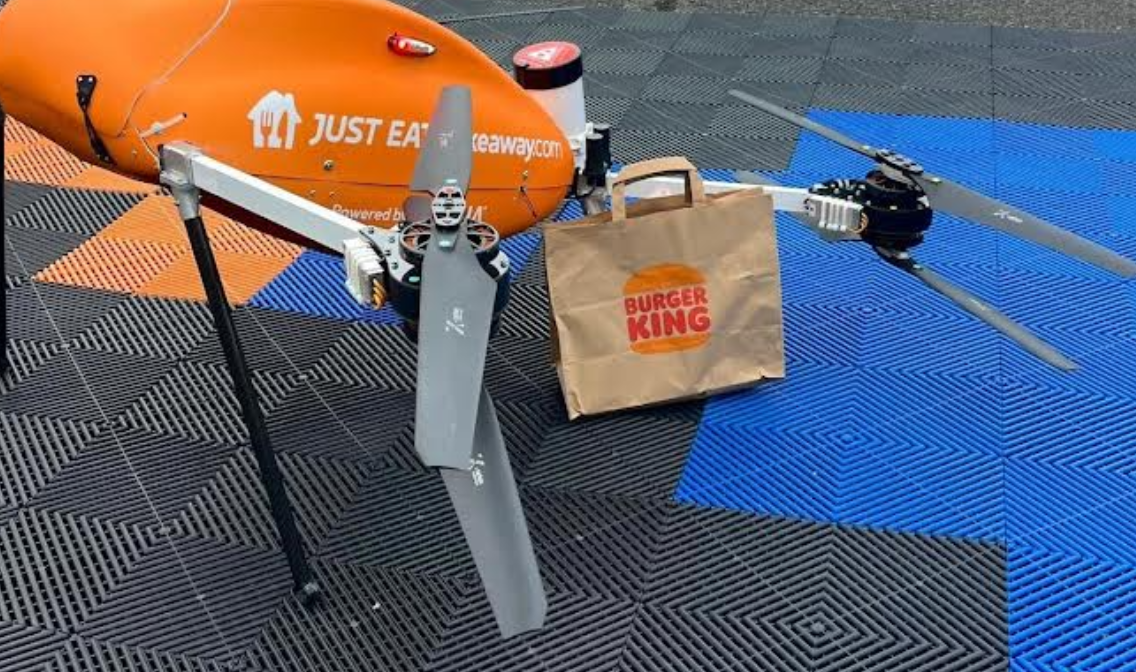
BurgerKing Blanchardstown now deliveirng with drones and Just Eat

Just Eat, Ireland’s leading on-demand food delivery platform, is delighted to announce the expansion of its drone delivery service in Dublin.

Through its partnership with drone delivery operator Manna, Just Eat customers within a 3km radius of Blanchardstown can now order from local restaurant partner and household name, Burger King. Located in the Blanchardstown Centre, Burger King joins Boojum as another partner now flying high with Just Eat in the Dublin 15 area.

Just Eat began working with Manna earlier this year as part of its ongoing mission to empower everyday convenience. At the same time, the platform introduced an AI Assistant to offer an even more innovative way to order. The partnership is designed to complement Just Eat’s extensive rider delivery network, improve operational efficiency during peak times, and provide customers with greater flexibility and convenience in how they receive their orders.

The collaboration marks a significant step forward in revolutionising food delivery in Ireland, combining Just Eat’s commitment to convenience with Manna’s cutting-edge drone technology, which continues to improve in speed, noise reduction, and delivery capacity.

Once the food is loaded onto the drone, customers will receive their orders within minutes. Each drone is equipped with advanced safety features and is continuously monitored by a dedicated dispatcher throughout its flight.

Amanda Roche-Kelly, Managing Director at Just Eat Ireland said: ‘At Just Eat, innovation is at the heart of everything we do. From expanding our drone delivery service with Manna in Dublin to leveraging the power of AI, we’re creating smarter, faster, and more flexible ways to deliver.

Over the past year, we’ve evolved from a single partner drone delivery trial to preparing our platform to support hundreds of restaurant and grocery partners. We’ve also expanded our service across all major consumer platforms, including iOS, Android, and web – ensuring more customers can access these innovations, no matter how they choose to order. We’re looking forward to working with Manna to bring even more partners to our drone delivery service in months to come’.

Eoghan Huston, Chief Operating Officer from Manna added: We’re thrilled to continue building on our partnership with Just Eat to bring the future of food delivery to people in Dublin. Our zero emissions technology is designed to integrate seamlessly with platforms like Just Eat and deliver real impact, not just in speed and efficiency, but by making food delivery even more accessible to the communities we serve.

We’ve worked closely with the Just Eat team to scale this solution and fine-tune the user experience. Together, we’re setting a new standard for innovative delivery in Ireland, and we’re just getting started!’

Derek Mulligan, Director Of Operations from OKR Group: ‘We’re always looking for new ways to deliver the flame-grilled taste our customers love and teaming up with Just Eat and Manna allows us to do that in an incredibly innovative way. It’s exciting to be at the forefront of drone delivery in Ireland, bringing Whoppers and more to the skies over the Dublin 15 area.”

This partnership not only gives our customers more choice in how they enjoy Burger King but also opens new opportunities for us as a brand to reach more people in faster, more efficient ways.’

Plain Concepts and Ardanis Unite to Expand Global Delivery Capabilities

Plain Concepts, a leading technology services company specialising in solving complex problems for businesses worldwide, has completed its second acquisition with the integration of Ardanis into its portfolio. Ardanis is an Ireland and UK based firm renowned for its expertise in AI, bespoke software development and digital solutions.

With this move, Plain Concepts strengthens its focus on cutting‑edge innovation and artificial intelligence as key drivers of business growth. The acquisition also brings Ardanis’ deep expertise in the regulated services sector, particularly in fintech and insurtech, propelling Plain Concepts to consolidate and expand its vertical capabilities in this space.

With its strategic plan to double in size year-on-year, Plain Concepts continues to pursue inorganic growth. By integrating an innovative business such as Ardanis, who share their values and technological DNA, Plain Concepts reinforces its market positioning and broadens its capacity to deliver innovative, high-value solutions on a global scale.

Quique Martínez, CEO of Plain Concepts, said:  

“The acquisition of Ardanis represents a key strategic step for Plain Concepts. We share their technological vision and their commitment to bespoke digital solutions. Beyond this, there is a strong cultural alignment between our companies – a shared passion for customer success, rigour in delivery, and caring for people as the foundation of our business. This cultural fit is, ultimately, the true engine behind this integration.”

The addition adds over 50 talented professionals to the Plain Concepts team and strengthens its footprint in the Irish, UK, Portugese, and other European markets. Supported by new offices and local teams in Dublin, London and Porto complementing its established presence in Spain, the company consolidates its multinational profile and strengthens its delivery capabilities across Southern Europe.

While Spain remains the company’s main market, Europe and the United States continue to grow as strategic regions for expansion.

Ivan Goor CEO at Ardanis, commented:

“I am thrilled that Ardanis has joined forces with Plain Concepts. This represents a significant milestone for Ardanis and for our growth ambitions.

With Plain Concepts, we are expanding and leveraging our combined technical expertise and strength in AI and technology delivery, amplifying our ability to meet the needs of our ever‑growing customer base across Ireland, the UK, and Europe.

Importantly, this partnership is a positive step forward not only for our clients, who will now benefit from an even broader range of skills, solutions, and expertise, but also for our people. It opens up exciting new opportunities for professional growth, collaboration, and innovation within our teams.

We have always succeeded – and will continue to succeed – where others have failed and by uniting with Plain Concepts we are building a technology leader positioned to deliver superlative AI and digital solutions across Europe and beyond.”  

From a technical perspective, this integration broadens Plain Concepts’ expertise in programming languages such as .Net, Angular, React, TypeScript, Python and Node JS, amongst others, significantly strengthening Plain Concepts’ ability to tackle increasingly complex international projects with a deep technical focus and marks an important milestone in Plain Concepts’ journey towards becoming a fully European organisation.

Arrive AI revolutionizing deliveries with AI & smart sensors

By incorporating TOF sensors, Arrive AI aims to tackle one of the biggest bottlenecks in the delivery industry: inefficient pickups. Currently, couriers – human or autonomous – servicing large mailboxes at strip malls or office complexes follow an inefficient process. Each stop requires physically opening boxes to check for outgoing packages. With TOF-equipped Arrive Points, couriers will know in advance which mailboxes hold items and how much truck space is required. The result is fewer wasted stops, lower fuel and battery use, faster deliveries and reduced congestion.

Beyond logistics, the data can highlight courier efficiency, empowering users to choose the most reliable providers for their delivery or return needs.

“Time is money, and even small gains in logistics efficiency add up fast,” said Arrive AI CEO Dan O’Toole. “This is another way we’re improving the product and redefining the delivery experience for everyone.”

Torrey Bievenour, Arrive AI Chief Technology Officer, said Arrive AI’s research and development team will use TOF data and AI to detect patterns regarding package sizes, counts, delivery times, retrieval times and product times to help streamline supply chains.

The TOF sensors will provide low-resolution data that will be analyzed cost-effectively by edge AI. This eliminates the need for bulky cameras and expensive processors within the unit, freeing up more space inside Arrive Points for packages.

“We can do a lot with a little,” Bievenour said.

In 2014, O’Toole envisioned a smart mailbox that could accept drone deliveries and beat giant delivery companies to the U.S. Patent Office to protect his invention. He secured that patent in 2017 and has been refining it ever since. The mailboxes, now called Arrive Points, offer a climate-assisted space for deliveries from any human or autonomous courier that is connected to a platform capable of interacting with IoT devices and issuing emergency alerts.

In addition to the basic design and temperature control element, Arrive AI has secured U.S. patents that cover drone delivery management and tethering, anti-theft mechanisms and intelligent chain-of-custody control. The company has 58 patents pending for its Autonomous Last Mile solution filed across 22 countries and has secured several trademarks. See details at https://www.arriveai.com/intellectual-property .

Over 6,500 Irish SMEs directly helped by National Enterprise Hub in its first 12 months

Over 6,500 SMEs have been directly supported by the all-of-Government National Enterprise Hub (NEH) in the first 12 months since its launch.

The top grants availed of by businesses ranged in value from €3,000 to €7,000 and  focused on supporting businesses with cashflow, expansion and productivity to help them deal with concerns around rising costs, and competitiveness.

The National Enterprise Hub has attracted over 220,000 active online users to its website over the last 12 months and also offers a full-time dedicated phone line, connecting business owners with specialist advisors who can discuss potential grant options over the phone.

The National Enterprise Hub, an initiative of the Department of Enterprise, Tourism and Employment and Enterprise Ireland, brings together information and resources on over 250 Government supports from 30 different Departments and State Agencies. Looking ahead, there will be a continued and renewed focus on simplifying business grant applications for SMEs engaging with the National Enterprise Hub.

The businesses are from a range of industries however the majority fall within Tourism & Hospitality, retail & consumer products, food, health & beauty, professional services and the construction sector. This free service makes it easier and more efficient for businesses to access and avail of supports such as grants, funding, loans and expert advice across a range of sectors.

Minister for Enterprise, Tourism and Employment, Peter Burke, said “With over 6,500 companies engaging in its first 12 months, the National Enterprise Hub has proven effective in streamlining and simplifying access for SMEs to government supports, equipping them with vital digital and sustainability resources to navigate rising costs and stay competitive.

Research from my Department shows that four in five businesses believe sustainability is important. An awareness campaign is currently underway showcasing how the NEH can support businesses in cutting costs through grants such as the LEO’s Energy Efficiency Grant and SEAI’s Business Energy Upgrade Scheme.

My focus now with the NEH is on reducing administrative burdens and red tape for businesses by consolidating multiple grant applications into a single, simplified process. We must redouble our efforts to simplify processes for businesses and make sure that we think about small businesses first. I look forward to its continued growth and positive impact on Irish SMEs.”

Conor O’Donovan, Head of Start-Ups and the National Enterprise Hub, said: “SME engagement with the National Enterprise Hub has met and exceeded our targets to date, supporting 6,500 businesses within our first year of operation. One of the main aims of the Hub was to engage with businesses who haven’t availed of government supports to date and to make the process of availing of government supports faster and easier.”

“We know that Irish SMEs are operating in a complex environment and being able to access grants and supports is more important than ever. Small businesses who are engaging with the National Enterprise Hub are concerned about rising cost of business and competitiveness – that is why a single source of government supports for businesses is important to ensure that accessing the right information is made easier.

The National Enterprise Hub has a team of dedicated advisors who are directing SMEs to the right support that will help them. It’s for every business in the country and we’d encourage every business to go online to neh.gov.ie or pick up the phone and start the conversation around your business needs today.”

Audrey Hughes, CEO ofPrinciple HR said: “Like so many Irish SMEs, we are focused on providing the highest quality of service delivery to our customers, while remaining competitive. Accessing government supports to assist can feel daunting but the National Enterprise Hub made the process so much easier by putting us in contact with the right agency whose support and expertise fitted our needs. Through our initial engagement with the National Enterprise Hub, Principle HR is now an Enterprise Ireland client and in a short period of time our business has been helped through the strategic marketing review support and engagement with their overseas market advisors. With the business environment constantly changing, I’d encourage all SMEs no matter what stage they are on their growth journey to contact the NEH today to learn about what supports could be available to them.”


Top Supports Availed of by SMEs through National Enterprise Hub:

•    Dept of Social Protection: Wage Subsidy Scheme

•    Dept of Social Protection: Jobs Plus Subsidy

•    Enterprise Ireland: Pre-Seed Start Fund

•    Enterprise Ireland: New Frontiers Programme

•    Enterprise Ireland/LEO: Innovation Vouchers

•    LEO: Energy Efficiency Grant

•    LEO: Mentoring

•    LEO: Start Your Own Business Programme

•    LEO: Grow Digital Voucher

•    MicroFinance Ireland: Start-up Loan

•    Revenue: Start-Up Relief for Entrepreneurs SURE

•    SBCI: Growth and Sustainability Loan Scheme

•    SBCI: Leasing and Hire Purchase

•    SEAI: Exceed Grant Scheme

•    Skillnet Ireland: Skillnet Business Networks

•    Skillnet: Mentoring

•    Solas: SOLAS Micro-Qualifications


The Hub team can be contacted through the website (www.neh.gov.ie), email enquiry@neh.gov.ie  or by phone (01 727 2100), where users can engage directly with an advisor.

Client Relationship Management (CRM) for Legal Professionals

In a profession built on trust and reputation, maintaining strong client relationships is essential for long-term success. That’s where Client Relationship Management (CRM) tools come in. Law firms are increasingly using CRM software to organize communications, track interactions, personalize outreach, and improve service delivery. These systems help firms better understand their clients’ needs and respond more efficiently, whether managing one case or a hundred. In today’s fast-moving legal landscape, relying on memory or spreadsheets isn’t enough. CRM tools provide structure and visibility, making it easier for attorneys and support staff to deliver consistent, high-quality client experiences.

What a CRM Actually Does for Law Firms

At its core, a CRM is a centralized platform that stores and organizes client data: contacts, past communication, billing details, case history, preferences, and more. This gives everyone on the team a shared understanding of a client’s journey. For law firms, this means smoother hand-offs between partners and associates, more timely follow-ups, and better visibility into client engagement. Many CRMs also automate tasks like appointment reminders or client check-ins, freeing up time for actual legal work. Whether you’re a solo practitioner or a multi-office firm, a CRM can help streamline your workflow and keep relationships strong.

Improving Client Communication and Responsiveness

Clients today expect quick, professional communication. CRM systems help firms track calls, emails, and meetings, so nothing falls through the cracks. They also make it easier to respond promptly, especially when multiple attorneys or departments are involved. Some CRMs offer integrated email tools or templates to make routine responses faster. Others link with calendars, enabling reminders for follow-ups or court dates. By making communication more organized and consistent, law firms can improve client satisfaction and reduce the risk of misunderstandings. A well-used CRM doesn’t just track relationships. It strengthens them through reliable, proactive contact.

Protecting Client Data in a Digital World

Because CRMs store sensitive client information, security is a top priority. Many law firms now use platforms with built-in encryption, user permissions, and secure cloud storage. In addition to these features, some firms also rely on threat intelligence to monitor potential cyber risks that could expose confidential records or contact histories. Threat intelligence tools help spot suspicious behavior, such as unauthorized access attempts or phishing schemes targeting staff credentials. This kind of digital protection is especially important in legal work, where even a small data breach could damage a firm’s reputation or result in regulatory consequences.

Better Insights for Smarter Business Development

CRM tools can do more than just manage relationships. They can help grow them. Many platforms offer analytics dashboards that track client engagement, referral sources, and communication patterns. This allows firms to identify top clients, spot trends, and understand where to focus their marketing or networking efforts. A CRM can show which types of clients tend to return, what practice areas generate the most interest, and how often follow-ups turn into new matters. With this data in hand, legal professionals can make more informed decisions about where to invest time and resources to strengthen their business.

Making CRM Part of Your Firm’s Culture

For a CRM system to be effective, it needs to be used consistently. That means training team members, setting clear usage expectations, and integrating the platform into daily routines. When everyone logs interactions and updates client records, the system becomes a true source of insight and support. It’s also important to choose a CRM that matches your firm’s size, practice areas, and workflow. From intake to follow-up, the goal is to build a tool that helps, not hinders, your team’s ability to serve clients. Done right, CRM becomes more than software. It becomes a culture of connection.

Deliveroo launches drone deliveries in Dublin

Deliveroo, the on-demand delivery platform, has today launched drone deliveries in Dublin, Ireland.  Through a new partnership with Manna, an established global drone delivery operator, the service is designed to support Deliveroo’s continuous mission to improve the customer experience.
The innovative service is based in Blanchardstown, Dublin 15, with Deliveroo conducting a test phase over the coming weeks. Deliveroo will use the initial weeks to assess how drones can help serve suburban and harder to reach locations, with the ultimate aim of unlocking new customers through super-fast deliveries, complementing its extensive rider network.
Over the coming days, customers in a 3km radius of Blanchardstown will be able to order from leading local restaurants including Musashi, WOWBurger, Boojum and Elephant & Castle – flown to customers in as little as three minutes*. Deliveroo is aiming to expand the service to more restaurants and launch grocery and retail deliveries within the next six months.
In new imagery and a video released by Deliveroo today, a teal drone is seen making one of the first deliveries to a customer, with sushi from Musashi in tow. Whether it’s sushi for lunch, a Friday treat or a family gathering, the ambition is for Deliveroo’s drones to ensure orders arrive at peak freshness.
By bypassing road traffic, drone deliveries can significantly cut wait times and reduce emissions, offering a faster and more sustainable alternative to traditional delivery methods, particularly suited to suburban locations where Deliveroo is looking to increase its presence. The objective is also for Deliveroo drone deliveries to support participating merchants in growing their sales by appealing to and reaching new customers, complementing Deliveroo’s existing delivery network.
Drones will be deployed from Manna’s local delivery hub, flying at speeds of up to 80 km/h with a flight time of as little as three minutes. Upon arrival, the drone hovers and gently lowers the food to the ground via a secure, biodegradable tether, ensuring a seamless and contact-free delivery experience.
Deliveroo is excited by the prospect of expanding the service to its other markets, subject to the benefits to consumer experience, following the launch in Ireland, alongside regulatory evolution in other markets. The company welcomes the UK Government’s £20 million investment to advance commercial drone operations and bring this technology closer to reality for UK consumers.
Carlo Mocci, Chief Business Officer at Deliveroo said: Our mission is to bring local neighbourhood favourites to as many people’s doors as possible, and constantly raise the bar on the experience and service we provide – so I’m thrilled to launch drone deliveries in Dublin today. 
“We’re excited to explore how drones can help us reach new customers, complementing our existing rider model and if successful, the prospect of expanding drone deliveries across Ireland and into other markets.”
Bobby Healy, CEO and Founder of Manna Air Delivery said: “Air delivery is fast, clean, and safe, offering a new avenue for local businesses to reach more consumers. Manna Air Delivery is proud to partner with Deliveroo, a platform trusted by top local restaurants and eateries, to bring this innovative delivery experience to customers.”
Bill Lang, owner of Musashi said: “We have been serving up authentic sushi for years but never thought we’d see it in the sky, delivered to peoples’ doorsteps by drone. Musashi is delighted to extend our partnership with Deliveroo to drone deliveries, helping us to reach even more customers in the Blanchardstown area.”
Manna, which has already completed over 170,000 delivery flights in Dublin 15 and holds full regulatory approvals, will operate the drones. Each drone is equipped with advanced safety features, including backup systems and a parachute, and is continuously monitored by a dedicated dispatcher throughout its flight.
Eligible customers within the correct radius will need to validate their address via the app before it confirms a suitable pin location for a safe drop off, typically a driveway, front or back garden. Once an order is placed, they will be able to track the delivery as usual and will be notified when the drone is nearby so they can receive the order.