Hyper-Converged Infrastructure: Time to Upgrade the Data Center?

Numerous companies are constantly looking for technologies that can help take data centers to the next level. In addition, companies are interested in minimizing costs, increasing productivity, and improving flexibility when using innovative solutions. 

That is why the number of companies that have chosen in favor of a hyper converged data center is now increasing. Most organizations have already moved on to building HCI data centers, or are making every effort to use HCI hyper converged infrastructure

Many experts are interested in the question of what is so unusual and special in such an architecture. We will talk about what HCI is, how traditional data centers work, and what makes this innovative solution stand out. 

Table of Contents:

  • What is hyperconverged infrastructure?
  • One step back to the traditional infrastructure
  • Hyper converged infrastructure to improve data centers
  • Analysis of the costs and benefits

What is hyperconverged infrastructure? 

“Too, over, excessive, beyond” is what the “hyper-” prefix implies. Thus, we can say that this is a completely new level for converged infrastructure. If in CI each component is separate and can be used independently, then HCI is the union of all components into one. Component integration is achieved through software-defined technology. 

By components we mean the following: 

  • Computing power; 
  • Storage; 
  • Servers; 
  • Networks. 

All of them can now be managed using a single interface. This means that there is no longer a need to hire a team of IT specialists since companies need only one system administrator to manage the data center. The hyper-converged infrastructure definition also implies that the scaling process is now achieved simply by adding new blocks as needed, which is easy and fast. 

One step back to the traditional infrastructure 

Each specialist understands what traditional architecture is. This includes the following components: 

  • Server; 
  • Storage; 
  • A group of software components that are used to support a virtual environment. 

Each component of such a data center performs only a specific function. Thus, there is no question of flexibility at all. If you need to do computing tasks, then you need to use a server for this. For example, it is not suitable specifically for storing data. For networking purposes, you need to use completely different equipment that will be used only for this and nothing else. 

Based on this, we observe complete isolation. All isolated layers perform a specific function. This means that you will not be able to manage them in a consolidated way. For each purpose and each piece of equipment, a separate control system is needed. 

Moreover, you cannot limit yourself to only one specialist to manage each component. You need teams of specialists for different purposes because the amount of work is huge. Component management requires people with different skill sets. At the same time, in general, at least three teams of specialists are needed who will be responsible for the operation of all components. Furthermore, other specialists will be needed who specialize in working with virtualization, security issues and policies, and so on. 

Traditional architecture is characterized by being quite challenging in terms of deployment, maintenance, and management. The disadvantages include delays in the provision of IT services, as well as applications. Building such an architecture is inexpensive, but if you need more capacity, then you will run into a whole host of problems. 

Given that you need multiple teams, running all the processes becomes more of a challenge as multiple teams are difficult to coordinate. 

Hyper converged infrastructure to improve data centers 

A radical change from the traditional architecture is that in a hyper converged infrastructure, you no longer need to manage each component individually. That is why this architecture is the new better future of multiple data centers. All components are now combined and connected by one structure. Everything that previously had to be controlled separately can now be controlled using just one program. 

To change the legacy architecture to a more modern one, you need to interact with one reliable supplier who will be responsible for both equipment support and software support. Companies can get a pre-configured platform that meets their needs. That is why the deployment process will not seem like torment for specialists. Thus, costs are significantly reduced, as well as the hassle of equipment compatibility. 

To perform the virtualization process, the system needs to use a virtual machine monitor, a software that creates and runs VMs. In addition, various data services will be installed on the platform, and other third-party applications can also be installed on it. Such a platform is easy to acquire, deploy, and manage. Companies receive increased efficiency and exponential economic efficiency. This infrastructure is ideal for companies that need to reduce the time of market entry and perform complex data calculations more quickly. 

Analysis of the costs and benefits 

There are good reasons to implement such an innovative solution because companies need to know what they will get in the end. The following reasons are confirmation that companies should take a step in this direction: 

Reducing the cost of maintaining the environment 

Such an infrastructure helps companies reduce the cost of maintaining a data center environment. This includes reduced electricity costs, space occupied by servers, a cooling system for servers, and wiring. 

Convenient management 

Since all components are combined and can be managed using software on a single console, the time spent on troubleshooting is reduced. In addition, if you need many specialists with different skill sets to manage a traditional architecture, then you need one generalist to manage such an architecture. 

Scale as needed 

If you need to increase volumes, then it will not be difficult. To do this, you just need to determine the desired capacity and purchase additional boxes that are easy to install. 

For any workload 

This is a universal solution that is suitable for companies operating in various industries. The platforms support a huge number of applications and also different types of workloads. 

Decreased TCO 

By choosing this solution, you can interact with a single vendor that will provide support for both hardware and software. You benefit from a reduction in the total cost of ownership as well as a reduction in both capital and operating costs. 

Conclusion 

HCI, compared to other architectures, has many more benefits for companies in various industries. If this solution suits your specific goals, needs, and workloads, then you should start thinking about how to modernize your data center and increase performance. 

How Can Technology Improve Your Product Packaging

Packaging is an important part of any product. It is the first thing that potential customers see, and it can make or break a sale. That’s why it’s important to make sure your packaging looks good and is effective. In today’s blog post, we will discuss how technology can improve your product packaging. We will look at some of the latest trends in packaging technology and how they can help you create a more effective package for your products!


Technology and packaging – Everything you should know

In the day and age in which we live, technology is an integral part of our everyday lives. We use it for everything, from communicating with loved ones to ordering takeout. And, as you may have guessed, technology has also revolutionized the packaging industry! A good example might be TDI’s vertical form fill seal technology. This technology creates a three-dimensional (TD, or 3D) image of your product that can be used to create a virtual package. The benefits of this are twofold: first, it allows you to create a more accurate representation of your product; and second, it eliminates the need for physical packaging mockups! Therefore, it’s no surprise that this technology is becoming increasingly popular with businesses of all sizes. There is no doubt that technology has improved the packaging industry significantly. With so many options available, there is no excuse for not having an effective and eye-catching package for your products! Finally, this can only help us look forward to the future and what it has to bring.

Adding content to your packaging using Augmented Reality

A trend that is gaining popularity is the use of augmented reality (AR) in packaging. AR allows you to add digital content to your packaging such as videos or interactive games. This can be a great way to engage customers and promote your product in a fun and unique way. Moreover, it can also be used to provide customers with additional information about your product, such as instructions or nutritional information. Even though this technology is still in its early stages, it shows great promise and is definitely worth keeping an eye on! Hence, it’s evident that technology can help you create a more effective and engaging packaging for your product. So, if you haven’t already, now is the time to start exploring all the possibilities that technology has to offer!

Adding content to your packaging using QR codes

QR codes are another example of how technology can improve your product packaging. QR codes are a type of barcode that smartphones can scan to reveal additional information about a product. This information can include anything from nutrition facts to product reviews to your packaging solutions. QR codes are a great way to provide customers with more information about your product without taking up too much space on your packaging. Some companies are even using QR codes to create interactive packaging, such as this one from Coca-Cola. Hence, they can be a great way to let your customers engage with the product, even before they purchase it!

Digital printing

Digital printing is another technology that is revolutionizing the packaging industry. Namely, it allows you to print your packaging designs directly onto the substrate, eliminating the need for costly dies and plates. This means that you can create custom packaging labels and designs without having to worry about minimum order quantities! Digital printing also enables the production of high-quality labels that are printed, offering a flexible and cost-effective way to customize
packaging. Furthermore, digital printing also allows you to print on a variety of different materials, such as paper, plastic, and metal.

This gives you a lot of flexibility when it comes to choosing the right packaging for your product. Another advantage of digital printing is that it is much faster than traditional printing methods. This means that you can get your product to market quicker and start selling it sooner!

Easier communication with customers

Communicating with customers has never been easier, thanks to technology. There are now a variety of different ways to reach out to your customers, such as social media, email, and even SMS. This means that you can quickly and easily get feedback about your product packaging. You can also use these channels to let your customers know about any new packaging designs or changes. Furthermore, you can use them to answer any questions that your customers might have. Finally, if there are things that you would like to change, you can always consult with your customers and hear what they think of it. Luckily, technology has made it easier than ever to communicate with your customers and you can use this to create leverage.


Including sustainability features in your packaging

As consumers become more aware of the environmental impact of packaging, sustainability is becoming an important consideration for businesses. There are many ways to make your packaging more sustainable, such as using recycled materials or biodegradable packaging. You can also include sustainability features in your packaging design, such as easy-to-open features or compostable materials. By including sustainability features in your packaging, you will not only be helping the environment but also showing your customers that you care about their needs! All in all, if you are looking for a sustainable and eco-friendly packaging solution, technology can definitely help you out. Also you could check out another option Metal Marker’s barcoded tags.

The future of technology in packaging

It’s clear that technology is changing the way we package our products. And, it’s also clear that the trend is only going to continue in the future. So, what does this mean for businesses? Well, it means that you need to stay on top of the latest trends in order to stay competitive. It also means that you need to be willing to invest in new technologies, such as digital printing and sustainable materials. But, most importantly, it means that you need to be creative! So, go out there and show the world what you can do!


Technology has definitely improved the packaging industry and there are many benefits of using technology in packaging. Some of these benefits include QR codes, digital printing, easier communication with customers, sustainability features, and more. So, if you are looking for a way to improve your product packaging, be sure to consider using technology! It could just be the thing that takes your packaging to the next level. Thanks for reading! We hope this article was helpful. If you have any questions or comments, please feel free to leave them below. We would love to hear from you!

WiFi 6: What You Need to Know

WiFi 6 is an incredibly revolutionary piece of technology that is waiting for us just around the corner, and when you factor in the number of benefits it is going to be able to bring to the average person, it goes without saying that WiFi 6 is going to be world-altering. 

Although, it seems as though information surrounding this topic is relatively sparse as of late, and in fact, few people seem to even know of WiFi 6’s existence. Well, we intend to change that. In this article, we will be telling you everything you need to know about WiFi 6, as well as going over a few of its most notable upgrades over its predecessors. 

Increased Speed

To cover the question of ‘what is WiFi 6?’ in one quick sweep; WiFi 6 is the classic WiFi you have come to know and love, but better. There are two main advantages that WiFi 6 has over its previous iterations, with perhaps the most notable being increased speed.

Having fast WiFi is beneficial for a variety of reasons, and in reality, you probably already know why having fast WiFi is a good thing. There is not one person on this planet that would be sad to see buffering and slow loading times disappear, and the difference in speed that WiFi 6 is going to be able to give to us when compared to its predecessors is truly incredible.

No longer will you have to wait for your PA online casino sign up bonus to come through or try to skip a part of a film that just never seems to load – with WiFi 6, these issues will become a thing of the past.

Less Congestion

On top of faster speeds, another one of the primary benefits of WIFI 6 is that congestion is now going to be much less of an issue. This is going to be especially beneficial for people that have numerous WiFi users in one house – WiFi 6 is likely going to transform said people’s entire internet experience.

WiFi 6 will practically allow over double the number of people that use a single connection to connect at any given time when compared to its current capabilities, and this is going to do wonders for improving people’s satisfaction with the web. Congestion being less of a problem is huge, and once WiFi 6 rolls out, this is undoubtedly going to be one of its biggest headliners. 

So, are you excited to get your hands on the new WiFi 6? We know we are. The benefits that come with WiFi 6 are just too good to ignore, and we have no doubt that a sizeable portion of you will be overjoyed to hear that your interest speeds may soon be improving astronomically. 

We can’t say for sure when WiFi 6 will become widespread, but it is probably not going to be too far down the line. Either way; it’s going to be more than worth the wait. Have fun.


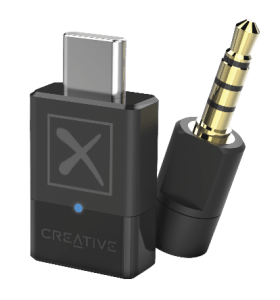
Creative Launches the all-new BT-W4 Bluetooth Audio Transmitter

Featuring the latest aptX Adaptive codec, the BT-W4 is able to monitor connection quality, type of content and optimally adapts the bitrate for the user’s RF environment efficiently – automatically and entirely fuss-free. It also offers high-resolution 24-bit audio streamed at 48 kHz, and along with the reliability of the connection assured with Bluetooth 5.2, users can expect uninterrupted and all-round enhancements in clarity and depth for music, movies and games.

The versatility of the BT-W4 shines through with easy switching between up to four devices at the push of a button, making multi-tasking a breeze. An analog plug-in microphone is included and best used with gaming consoles, so that users can easily banter at will with teammates. Completing the voice chat support is the Hands-Free Profile mode, easily activated when connected to a wireless headset.

Users are able to make the BT-W4 their own with various personalization features. When connected to the Creative app, users are able to remotely switch between the paired devices or reset the pairing list, and tweak their audio with the Equalizer and Sound Blaster’s Acoustic Engine.

Compatible with PC, Mac, Nintendo Switch, PS4 and PS5, Creative BT-W4 is a worthy ally for demanding users, as a competent tool that does it all with simplicity.

Pricing and Availability

Creative BT-W4 is priced at £49.99/€ 54.99/US$49.99 and is available at the Creative online store.

For more information on Creative BT-W4, visit creative.com/BTW4.

Edifier’s STAX Spirit S3 and NeoBuds Pro take 3 prestigious awards at the VGP 2022 awards

The innovative and world-leading audio brand Edifier has picked up three awards at the prestigious Visual Grand Prix (VGP) 2022 in Japan: the brand new STAX Spirit S3 headphones were both a Gold Award and Special Prize Winner, whilst the NeoBuds Pro earbuds received the Grand Prize.

Known as the “Oscar in the Audio Industry”, the Japanese VGP Awards is the largest, most authoritative audio-visual awards in Asia. It is held on an annual-basis by Ongen Publishing Co., ltd., one of the most prominent publishing companies in Japan with an expertise in audio/visual related devices and state-of-art technologies. Launched in 1987, the awards bring together respected reviews from dozens of countries, all to offer an authoritative reference guide for ordinary consumers looking to make informed purchases. The VGPs are often recognised as the highest authority award in Asia’s audio-visual industry and mark a significant recognition for Edifier’s ground-breaking work in the industry.

“It’s always an immense privilege to receive accolades for our products, but receiving awards such as these, from a panel as prestigious as that found at the VGP Awards, is truly rewarding. As a company, we work extremely hard to be at the forefront of the audio-visual industry and our designers, testers and staff are incredibly proud to be recognised for this; especially when it comes from one of the most well-respected awards around,” said Stanley Wen, Edifier’s CTO.

Amongst the winners was the brand new STAX Spirit S3, Edifier’s first premium Hi-Fi headphone designed for audiophiles and the first product in their new STAX Spirit product line – which revives the legendary ‘Stax’ name whilst achieving absolute audio fidelity suitable for Hi-Fi enthusiasts, music lovers, musicians and producers alike. The NeoBuds Pro similarly marks a significant innovation for Edifier; the buds were one of the first Hi-Res certified earbuds in the world and have garnered a sea of overwhelmingly positive reviews from respected press outlets and influencers.

The VGP awards recognise products that make a difference to the industry through state of the art technology and design; Edifier strives for excellence, pushing the boundaries and leading by innovation to ensure people can enjoy the best premium quality audio for personal entertainment and professional use. After another successful year at the ceremony, Edifier will continue to produce an award-winning range of products.

Why use SSD VPS hosting

VPS is an excellent hosting service option, which is chosen by an increasing number of website owners. A virtual private server can be rented at an affordable price, it is distinguished in reliability and several other advantages. But even when choosing a VPS, providers offer several configurations that differ in technical characteristics that determine the performance of the server. One of these varieties is an effective and promising technology called VPS SSD hosting. SSD servers are extremely popular in the IT world. The reason for this is the maximum speed of downloading information they provide. And if the provider offers you VPS SSD hosting, be sure to check this offer. What is interesting about servers running on SSD drives? Let’s see

Traditional HDD storage technologies, their weaknesses and an alternative to SSD

Over the past few years, there has been much progress in the world of computer technology. The engineers managed to reduce the size of processors while increasing their performance significantly. Servers have become smaller in size and simultaneously more cost-efficient. However the storage – the hard disk – has not changed much. Yes, its internal volume has increased, but the principle of operation remains the same. The mechanical magnetic hard disk drive (HDD) rotates, writes data, and outputs them through a movable read head.

Meanwhile, the storage is not only responsible for storing the information, but also ensures the operation of the entire software. After all, program files are stored on the hard disk, and the operating system constantly accesses them. Such accesses, accompanied by the movement of the head from one part of the disk to another, result in reduced performance of the machine.  This may negatively affect the operation of the website hosted on the server. When HDDs are overloaded with I/O requests, data processing speed is reduced and server malfunctions or even mechanical failure can occur. Over time, the hard drive may fail altogether due to the banal mechanical wear of moving parts.

To eliminate such risks, it is recommended to choose a server with an SDD. The technology of operation of this storage device is based on the principles of NAND-Flash memory. The SSD has no mechanical moving parts and uses integrated circuits and binary files for data storage, making for reliable and high-speed operation. 

Advantages of SSD VPS

  • Speed. SSD servers work faster than HDD counterparts. Solid-state drives have an average write time of 3-4 and read times 5-6 times higher than HDD drives. For the owner of a website hosted on a server with a hard disk, this means that they always find themself at a disadvantage against competitors on SSD hosting. 
  • Reliability. There are many mechanical moving parts in a HDD. This causes the disc to wear out quickly. SSDs are based on chips that have a much longer lifespan. Such a drive will last for many years without failures. In addition, many hosters update memory devices frequently, preventing the storage device from getting old. Technology is developing rapidly, with providers rushing to “sell” its benefits. 
  • Size. The mechanical component of the HDD physically takes up a lot of space and has a decent weight. SSD chips weigh no more than 100 grams and are compact. At the same time, the volume of the flash drive can hold up to 8 TB of information.
  • Economy. SSD drives are considered an energy-saving solution. If the mechanical analog of the HDD consumes up to 7 watts per hour, then with an equivalent load, the SSD requires no more than 2 watts. This has a positive effect on the cost of maintenance and the environment.

The only relative disadvantage of SSD is the high price of such a drive. However, in recent years, previously elite technology has become publicly available. And the still existing difference in the cost of hard drives and flash memory almost immediately pays off with the above advantages. 

Comparison of SSD and HDD

Parameter / type of storage device SSD HDD
Size Small size, light weight.  Large size, large weight. 
Economy Low energy consumption. High power consumption, which negatively affects the battery life. 
The speed of writing and reading information  High Low
Reliability The information is securely stored on the chips. The data is stored on round plates. 
Nature of the work There are no moving parts, the disk works without noise and vibration.  It works noisily, vibrations may be observed.
Price High  Low

Who is suitable for SSD VPS?

SSD VPS servers are recommended for owners of web resources that handle large volumes of data. For example, these may be WordPress-based e-commerce websites – popular online stores that face a periodic peak in traffic. Hosts with solid-state drives will provide a high level of interaction with visitors. That is, they are effective if a large number of disk operations are assumed.

SSD VPS servers are more attractive for SEO optimization of electronic resources. After all, search algorithms have made the speed of the site the most important factor for its promotion. Increased page loading speed and the correct display of text and images have a positive effect on conversion and help to reduce bounce. Web resources that use significant amounts of cache will also benefit from hosting on SSD VPS servers, also due to high computing power.

Who doesn’t need SSD hosting?

Owners of websites consisting of static HTML pages should not be overcharged for switching from HDD to SSD. They, as a rule, do not consume a lot of server resources, so there is not much difference (except for the difference in the subscription fee) you will notice. Also, for hosting sites with file archives (sites for long-term storage of rarely changing data) that do not require high download speeds, it is economically more expedient to choose servers with HDD. Budget servers with hard drives are suitable for single-user blogs-sites with a daily number of visitors of one or two thousand people. You won’t gain much if you transfer them to a high-tech SSD VPS host.  

When to choose SSD hosting?

So, for you, as a website owner, high speed, performance, scaling and stability are important. While your resource faces the need to process large amounts of information or daily high traffic. If all this is about your site, then it’s stupid to choose hardware that will work much slower. So, it’s time to choose a VPS SSD. Switching from HDD to SSD hosting, of course, will require certain expenses. But the benefits of such a move are so obvious that they should not be ignored by web resources (online shops, gaming sites, media sites) with growing traffic. For more information on SSDs, please contact the reliable VPS hosting provider HostZealot.


What Is a Residential Proxy and How Can It Be Useful for Business?

The use of residential proxies is a great way for businesses to collect and analyze data, compare prices and products online, and expand their market reach without being noticed or blocked by sites.

There are several advantages to employing a residential proxy, and in this post, we’ll go into greater detail about how services like proxy residential IP can aid businesses.

They Help in Obtaining Real-Time Data from Competitors’ Websites

Competitive intelligence is one of the most well-known uses for a residential proxy. Tracking and blocking requests issued by data center proxies have become easy in recent years. Amazon, Netflix, and Hulu are among several major online services that restrict access to IP addresses belonging to specific providers.

If you use a residential proxy, on the other hand, every request appears to have been sent by a real person. When several requests need to be sent from different IP addresses in different countries and cities, residential proxies allow them to be sent from local ISPs as well as different countries and cities.

They Increase Brand Security

Brand protection and the battle against counterfeiters are two further practical applications of residential proxy technology. For example, the makers of Vicodin may want to combat the sale of counterfeit versions of the drug.

As a general rule, these vendors restrict their websites to nations where the manufacturer has offices. This makes it more difficult to catch counterfeiters and take legal action. Residential proxies could be used to obtain an IP address from the same country as the imitation site and collect all relevant information.

Aids in Performance Analysis and Software Testing

Tests of new features for websites and mobile apps can also be performed using residential proxies. Users from all over the world can observe how their software performs. Utilizing various residential IP addresses to send a large number of queries is also useful for testing software performance under high load.

In addition, this technology can be used to keep tabs on performance. The speed of a company’s website for consumers in a given country is an important consideration for multinational corporations. So, obtaining relevant data is made easier with the use of residential proxies with IP addresses.

They Optimize Marketing and Advertising

To get the best possible results, it is essential to test ad campaigns. Residential proxies can be used to check how specific online adverts appear in search results for people from a specific place, as well as whether or not they are displayed.

If you want to see how effective your local SEO efforts are, you may use residential proxies to see if your website ranks at the top for your target keywords or not.

Using search engine infrastructure to gather data is not something search engines appreciate. Consequently, these businesses are constantly improving their anti-bot systems to make data collection directly from the search extremely challenging.

In contrast, using residential proxies to send several search requests makes it appear that real people in different regions are looking for something. A real user can’t be blocked by a search engine. As a result, the residential proxy is an ideal choice for ensuring that search engine results are accurate.

Residential proxies can also be used to monitor and analyze the success of your competitors’ marketing campaigns. Both in-house marketing departments and external marketing and advertising companies employ this technology.

Content Collection

Since Big Data is everywhere these days, several companies have formed their business models around combining many sources of data into a unified view that can be displayed on their platforms. Residential proxies are needed to keep their databases up to date with the aggregated content. For instance, it would be difficult to maintain current data on prices for a specific commodity on many e-commerce websites without this application. These types of actions are prohibited on these sites because of the potential for exceeding the requests of the company.

For instance, if you want to keep a comparison table of TV prices from 20 websites up to date, you’ll need a bot that visits and refreshes the pages. Anti-bot systems are likely to prevent such queries, but a residential proxy can get beyond these types of data protection measures.

Assists in On-Demand Data Gathering and Analysis

In recent times, there has been an increase in the number of organizations that specialize in on-demand data collection and analysis in recent years. Crawlers scour the web for data that matches specified profiles. It is then possible to market, sell, or gather competitive intelligence using this information.

Residential proxies help web crawlers circumvent filters like anti-spam and content filters.

Conclusion

Businesses can benefit from the ability to replicate requests from real users using a real, local IP address. This technology is frequently employed by businesses to collect data, conduct testing, and gain access to various web resources, among other things.

Edifier revive legendary Japanese audio brand STAX with the new Spirit S3 Planar headphones

Innovative audio specialists Edifier have released the S3, the brand’s first premium Hi-Fi headphone designed for audiophiles and the first product in their new STAX Spirit product line – which brings absolute audio fidelity firmly to the foreground for
Hi-Fi enthusiasts, music lovers, musicians and producers alike. For those who may not be familary, STAX was a legendary Japanese audio brand which Edifier acquired in 2011.

Best known for developing the first ever electrostatic headphones, or “Earspeakers”, the name ‘STAX’ has been at the forefront of every major sonic innovation since 1938. The S3 continues in this tradition, and builds upon the name’s renowned legacy and pursuit of faithfully reproducing a ‘live’ sound.

Inspired by the delicacy of exceedingly more expensive electrostatic technology, the Edifier STAX Spirit S3 achieves a level of audio fidelity previously unheard of at this consumer level ($399). Designed with audio professionals and enthusiasts in mind, the S3 set a high technical threshold using finely tuned Planar technology. Planar combines both the benefits of a Dynamic and Balanced Armature Driver to achieve exceedingly detailed lower frequencies and clearer, more consistent high frequency performance. Utilising a combination of Snapdragon audio technology; three patented planar driver solutions; Hi-Res Audio technology and innovative acoustic-friendly materials, the S3 delivers a truly memorable, lossless and low distortion audio experience.

Spirit S3 Planar headphones

With a total weight of approximately 329g, the S3 are also much lighter than traditional planar headphones and boast a carbon fibre casing to ensure a comfortable fit and extended durability. Adopting the latest in wireless technology, the headphones are equipped with the latest Bluetooth 5.2 which allows for faster, more reliable transmission speeds, and multi-connectivity (with users able to connect two devices simultaneously). And finally, the high-capacity lithium battery holds a mighty 80 hours of battery life – ensuring that you don’t get any unexpected interruptions whilst you’re laid out on your living room sofa or sat upright in your home-recording studio.

Bringing together the ethos and dedication of the legendary audio pioneers STAX with the high performance innovation of Edifier, the S3 and STAX Spirit line achieve an unmatched audio experience for a new generation of sonic lovers.

For a full list of specifications and more information, visit:
https://www.edifier.com/product-s3.html
Features:
● EqualMasstm™ wiring diaphragm
● Uniforce™ magnetic circuit
● Fluxor™ magnetic array
● Fazor™ acoustic module
● Snapdragon audio technology
● Hi-Res lossless high fidelity
● Replaceable ear muffs & replaceable wire design
● Made from sturdy and lightweight carbon fibre material
● aptX™ Voice call NC
● Low latency game mode
● Bluetooth V5.2 Technology (which supports the pairing of two Bluetooth devices) ● Edifier Connect App with multiple EQ options Sensitivity 98dB Bluetooth version V5.2

Language Learning Software Developers Industry in the US

There are language learning programs on the market, and tools like Google Translate have come a long way to bridging the gap between different language speakers. There are even apps where you speak in your native tongue, and it outputs your sentences in a different language. The progress that the industry has made in regards to translation is awesome, but what about those actually teaching the languages? What has become of the developers who are making language learning software?

Learning Vs Translating

Just because the quality of translating has become a lot better, it doesn’t mean that learning programs are in less demand. There is this misguided belief that one day we will have universal translators that translate any language right there, similar to the sort of thing you saw on old Star Trek episodes. However, that day is a long way away, and it is going to be an AI device more than a pure translation device. In this day and age, and for decades to come, people are going to need programs that help them learn new languages. There may already be thousands of learning apps, but they get old and outdated pretty quickly. People still want learning apps and they will still want them in the decades to come.

The Learning Industry is Still Thriving

Was there ever a truer word said. Some people think that the global community is relying on translation software to bridge the gap, but that is not even close to being true. Since China decided it is going to be the world’s manufacturing hub, the sheer number of English-to-Chinese software to come into existence is massive. Companies are building their own, apps are competing, Universities are competing, and learning courses are building their own language-learning software. The world is becoming smaller thanks to easier travel and the Internet, and so people are looking to learn new languages out of necessity rather than simple curiosity or intellectual endeavor.

What Are We Teaching Our Kids?

If you want your child to learn coding because you feel it offers a lucrative career, then you are half right. Coders will always be in demand in the future, but how lucrative the career is may be a matter of discussion. Nevertheless, if you are out looking for books about coding for kids with the hopes your little Jimmy or Jenny will become a language learning software developer, then your child will probably grow up with some valuable and marketable skills.

The Size of the Market

At the moment, the size of the language learning market in the USA alone is about $4 billion. The part that software plays in that is obvious simply by the fact that most schools, colleges, Universities and online learning courses rely on at least some varieties of language-learning software. What makes this interesting for software developers is that at no point is a language-learning course going to turn away good language-learning software. While learning courses exist, so will the desire for language-learning software. Plus, given the sheer number of different platforms for language learn and the sheer number of ways to learn a language, there are always going to be a diverse number of ways for software developers to make an impact. The future is bright for software developers who specialize in language learning apps and software.