The Future of Driving Comfort: Automotive Tech That Keeps Eyes On The Road
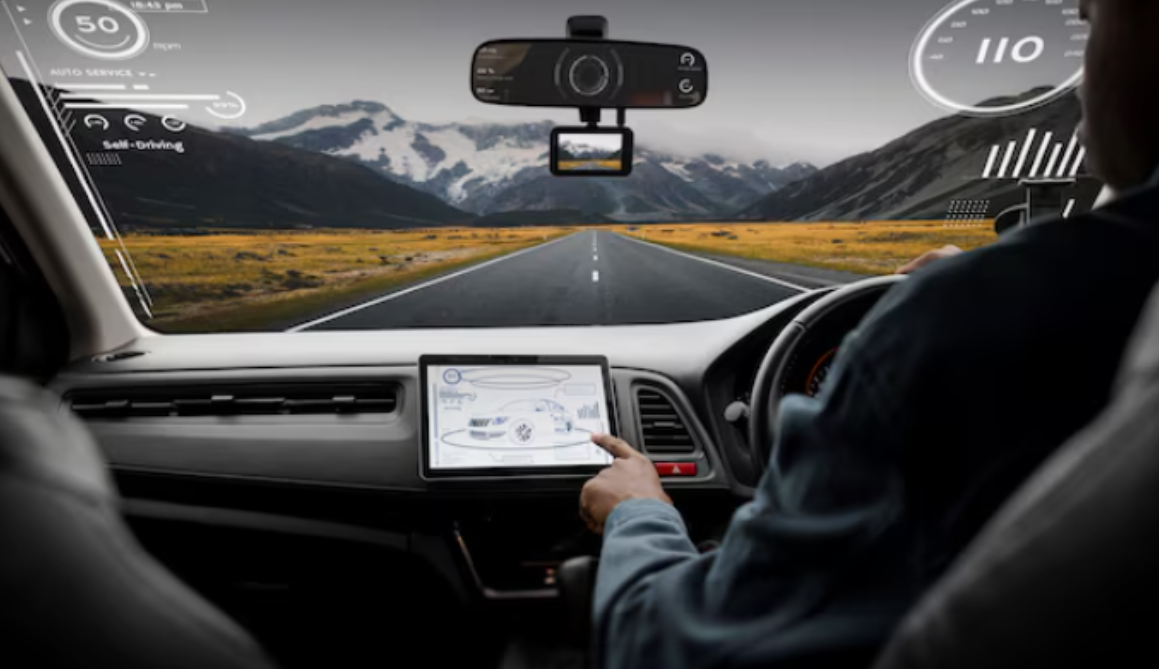
Every year we are provided with the latest automobile technology that continues to improve our safety and also enhance the driving experience. One of the newest features to come out is the head-up display (HUD), a feature designed to project essential information such as speed, RPMs, boost levels, and in some models, turn-by-turn navigation directly in front of the driver. Some cars come with these displays already installed, but there are many aftermarket options for those who want to add them. Find out what a heads-up display is and why it could be a valuable addition to your driving experience.
How Does a Car HUD Work?
A heads-up display is a device that can receive data from your car’s computer and show it to you in various formats. The data is projected onto a little screen mounted in a visible area, or on the windscreen of your car, allowing you to see legible numbers and characters directly as you drive. Some advanced HUD systems even integrate smartphone features, giving you access to messages, GPS directions, and other information.
For cars that don’t come with a head-up display pre-installed, you can easily add an aftermarket system. These devices connect to your car’s computer through the OBD-II port and can be mounted using suction cups or adhesive. Many aftermarket HUDs offer even more features than factory models, letting you see the current music playing, turn-by-turn driving directions, and much more. You can find more information here about how these systems are engineered and the different features they can provide.
Why are Head-Up Displays Fitted In Cars?
Aside from being a popular feature among tech enthusiasts, head-up displays offer a number of benefits to drivers, which is making them a more prevalent feature in cars today. One of the main benefits of HUDs is that they help to keep drivers safer. Studies indicate that HUDs greatly improve safety by decreasing driver distraction, as they require less time for drivers to check important driving information. By having important information in the driver’s sight line, they can concentrate on the road.
Navigating becomes seamless and more intuitive as well. We’ve all experienced that stressful moment when we make a wrong turn and are forced to be distracted and look down at our sat nav directions to get back on the route. A head-up display eliminates the need of using a separate smartphone or GPS device, which minimises missed turns or getting lost.
Conclusion
Head-up displays (HUDs) are changing the game and making a big impact in the automotive industry. If you are in the market for a car, now is the best time to think of a vehicle with HUD technology. While it may seem like a small modification, this upgrade will significantly enhance your driving experience, giving you greater control, information, and safety on the road.
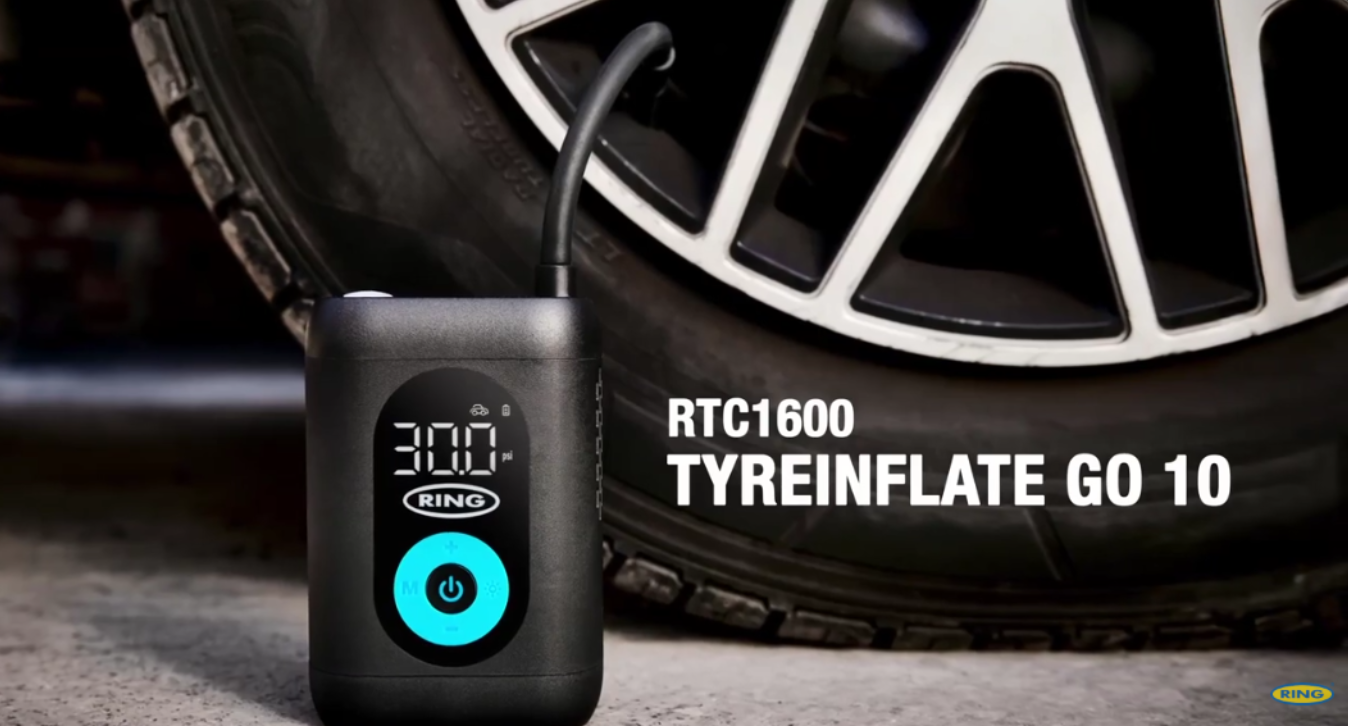
Renowned auto accessory giant, Ring Automotive, is continuing to dominate the tyre care market. After its launch with its TYREInflate range earlier in the year the company has launched the TYREInflate GO 10 (RTC1600) a compact, cordless digital tyre inflator designed to make tyre care quick, simple and affordable.
Within the 20 years that Ring has been in the tyre care marketing, it has curated an award winning and highly respected range of tyre inflators. However, with the cost of living continuing to rise, the business has decided to launch a competitively priced tyre inflator range to ensure everyone has access to help they need for tyre safety.
Lightweight and easy to store, the TyreInflate GO 10 can inflate a 13” tyre from flat to 35PSI in under six minutes. Its cordless rechargeable design, flexible 20cm hose and built-in light make it practical for everyday drivers. The digital display ensures accurate readings, while three included adaptors allow inflation of sports balls and small inflatables. The inflator also comes with a storage bag for convenience.
The cordless design means that users can easily move around a vehicle to inflate tyres without wires getting in the way.
There is also a handy light to illuminate the valve in low light and it comes complete with a storage bag.
Marketing Director, Henry Bisson, commented: “We have been expanding our tyre care range rapidly over the last few years, but we’re conscious of price and wanted to ensure everyone can afford to look after their tyres, which is why we’ve launched our affordable tyre care range.
“We want to make sure people are regularly checking their tyres, as they’re such a safety critical element. Therefore, we’ve created many different models and made them easy to use, but now we want to combine this with the product being cost effective. We’re hoping with the competitive nature of this new range, there’s no reason for drivers not to have a tyre inflator in their car.”
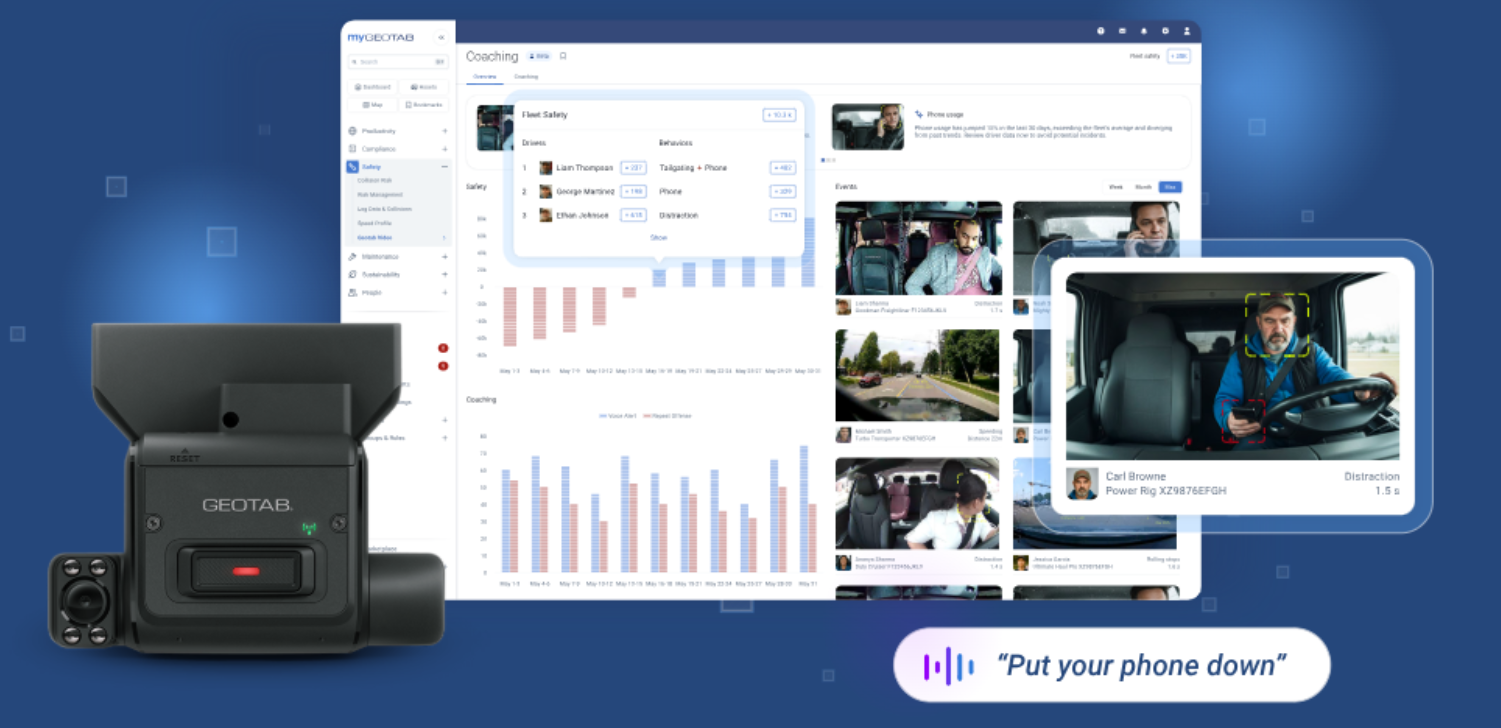
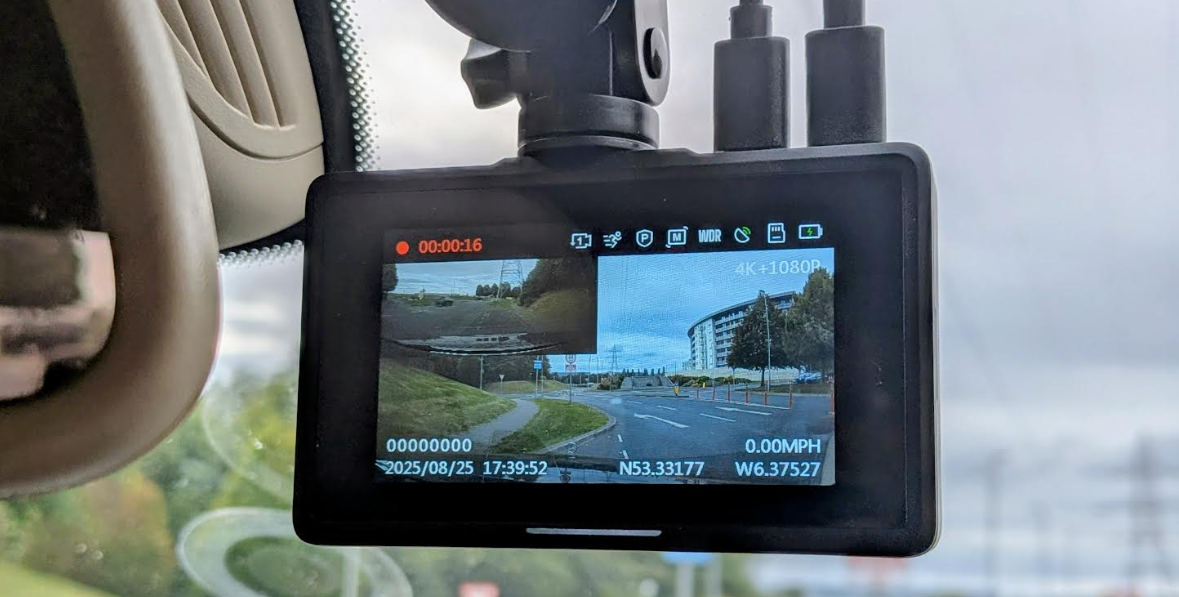
Geotab, a global leader in connected vehicle solutions and asset management, today announced the launch of the GO Focus Plus AI dash cam and its new video intelligence platform. The dual-facing dash cam, which will be available to Geotab’s Irish customers, is designed to address a critical industry need by delivering proactive, in-cab support that helps drivers self-correct risky habits.
In a recent large pilot, the voice coaching functionality helped reduce tailgating by 90% and phone use by 95%. The new solution empowers fleets to improve driver safety by delivering instant, highly accurate voice feedback to drivers, while also providing fleet managers with a new coaching workflow to help deliver targeted and effective training. This system turns every alert into a coaching opportunity, aiming to prevent accidents and create a measurable impact on fleet safety culture.
The transportation industry is at a crucial juncture. In Ireland between 2019 and 2023, HGVs were involved in 11% of all fatal collisions on Irish roads. A recent Geotab survey noted that drivers believe there is an increase in driving accidents, with 66% of Irish drivers having considered leaving the profession in the year prior. Commercial drivers face long hours, unpredictable conditions, stress and wellness challenges, and even unfair blame in incidents. At the same time, fleet managers are dealing with rising costs, the vital need to keep their workforce safe, and the need to protect the company’s reputation. These challenges have a profound human and financial impact, directly affecting driver well-being, business vitality, and the safety of our shared roads.
“We believe the safest fleet is a well-supported fleet,” said Charlie Elliott, Senior Vice President, Marketing & Marketplace at Geotab. “Our new video intelligence platform and the GO Focus Plus AI dash cam are a direct investment in supporting the driver and their safety. By uniting the power of video with Geotab data intelligence, we are providing drivers with an in-cab partner that helps them correct risks instantly. This system empowers fleet managers to move beyond reactive incident review and instead foster a culture of safety that protects their most valuable asset, which is their people.”
Key Features of the GO Focus Plus
Proactive Driver Coaching: The AI dash cam provides instant, in-cab voice prompts to drivers when risky behaviors like distracted driving (e.g., phone use, fatigue) or tailgating, are detected, helping them correct habits.
Targeted Fleet Management: AI-driven video intelligence surfaces the most urgent risks and repeat patterns for quick review, eliminating the need for fleet managers to sort through extensive footage. Each alert includes video and contextual data, enabling targeted and effective coaching.
Seamless Workflow and Safety Culture: The MyGeotab platform allows for a seamless workflow, including the assignment, tracking, and recognition of progress, reinforcing a strong culture of safety within the fleet.
Utilizing AI for precision the Geotab GO Focus Plus minimizes false alerts and streamlines the coaching process for fleet managers
Improve Fleet Safety with Geotab’s Evolving AI Video Intelligence Platform
Geotab’s video intelligence platform is built to continuously evolve. Its advanced AI models refine detection and coaching automatically with every update, ensuring fleets always have the smartest, sharpest tools to stay ahead of risk without extra administrative work. The platform’s open architecture is designed to support a growing family of advanced cameras, with new models and capabilities planned in the coming months.
The new video intelligence platform, with the GO Focus Plus AI dash cam, represents a significant step forward in Geotab’s commitment to fleet safety, uniting driving data and video, to deliver a complete picture of risk and a path for improvement. It marks the next chapter for Geotab, dedicated to helping fleets create safer roads and a stronger, more supportive operation.
The issue of road safety is more relevant than ever in Ireland. In 2024, there were 174 road fatalities, and the transportation sector was one of those with the highest number of work-related deaths, with RSA research showing HGVs were involved in 11% of all fatal collisions between 2019 and 2023.
In fact, according to a study conducted by Geotab, 95% of professional drivers in Ireland believe that the likelihood of having an accident has increased in the last five years. On top of this, we must add the impact of fraudulent claims – more than half of which are linked to automobiles.
In this context, more and more fleets are turning to onboard cameras, known as dashcams, as a tool to reinforce road safety, streamline claims management, and protect both drivers and fleets. While in other countries dashcams are already commonplace – 30% of U.S. drivers use them – in Ireland their adoption is starting to gain momentum. That is why Geotab, a global leader in connected vehicle and asset management solutions, has compiled the key aspects of their use in Ireland.
Legality in Ireland: requirements
To ensure that vehicle sensors capture different risk situations on the road – from sudden manoeuvres to collisions – cameras must operate with systems that store only images relevant for legitimate purposes. Ireland’s Data Protection Commissioner (DPC) establishes that accident footage may justifiably be retained longer (e.g., for insurance or legal reasons), but routine footage should be deleted regularly.
The solution lies in an event-based recording model, storing short-duration segments that are automatically overwritten. For example, when the system or built-in G-force sensor detects an incident – such as an impact, sudden braking, or a risky manoeuvre – the corresponding file is protected and not deleted.
This way, only the critical information of an accident or hazardous situation is retained, while the rest of the trip is not stored, helping ensure both the usefulness of the images and compliance with privacy and data protection regulations.
To promote transparency, best practices is for fleet operators to inform their employees about the existence of the recording system through visible signage, identifying the data controller and the rights of those affected, and maintaining up to date compilation of evidence, use cases, retention periods, privacy statements, privacy & security assessments and other documentation. In addition, the camera must be securely installed and must not block the driver’s view or obstruct the vehicle’s windows.
Privacy and third parties
Fleet managers, in their role as data controllers (i.e., those who decide why and how the data is processed), have full control over the management of recorded videos: they can delete them at any time, schedule automatic deletion, or retain them for a period if there is a legal justification. Data should not be shared with any third parties unless required in accordance with the law.
Uses of dashcams
New-generation dashcams have evolved beyond their initial function of only recording incidents to enable faster and less costly accident management. Thanks to the integration of artificial intelligence and advanced driver assistance systems, they can now detect distractions, signs of fatigue, or misuse of mobile phones, issuing immediate alerts to drivers to correct risky behaviours. They can also provide forward collision and lane departure warnings, helping prevent accidents before they occur. Additionally, the analysis of this data can enable more effective training programs, as it helps identify unsafe driving patterns and strengthen road safety proactively.
Data cybersecurity
Managing the data generated by onboard cameras requires applying cybersecurity protocols that guarantee confidentiality and prevent unauthorized access. Common measures include encrypting information both in transit and at rest, using digitally verified software updates, and implementing role-based access controls to limit who can review the records. This can be complemented by regular security audits and compliance with recognised international certifications such as ISO 27001 or SOC
2. All of this helps ensure that the information collected by dashcams is used securely, protecting both drivers and fleets.
“Dashcams are already a key tool in Europe and are beginning to gain traction in Ireland. They can be an important tool for road safety, as they can help prevent incidents by detecting distractions, fatigue, or risky driving behaviours. Should an accident occur, they can also help exonerate the driver or provide more context to the situation,” says Phil Barnes, Business Development Manager for Geotab Ireland. “Their adoption must always go hand in hand with privacy compliance and data protection regulations, ensuring that drivers’ privacy is fully safeguarded”.
With batteries being the number one reason for breakdown recovery call outs, followed by tyres, a leading automotive supplier is advising drivers how they can solve these issues themselves and avoid a breakdown.
As the colder weather sets in and motorists face darker mornings, icy conditions and the Christmas getaway automotive supplier, Ring Automotive, is urging drivers to invest in tools that will help prevent them from having to call a recovery service.
Data analysed from some of the biggest names in the breakdown recovery industry, including the RAC, AA, Green Flag and Admiral, show that batteries are unanimously the number one reason for breakdown callouts* with the second most common reason being issues with tyres.
In winter, batteries are even more vulnerable, as cold temperatures reduce their performance and cars are often left standing for longer in freezing conditions. A flat battery usually just needs a jump start, so the best thing for a driver to keep in their vehicle is a portable jump starter. This means no need to rely on another vehicle and the driver can rescue themselves in a matter of minutes.
ULTRABOOST 1500 (RJS030) is Ring Automotive’s most advanced jump starter and is capable of jump starting vehicles with up to 6L petrol and 3L diesel engines, which means it’s suitable for most 12V cars, vans, SUVs and LCVs. Included in the jump starter is the ULTRABOOST button, which when pressed delivers enough power to start completely flat batteries.
Another common reason for calling a breakdown service is for a flat or severely underinflated tyre. In autumn and winter the roads become more treacherous with the rain, ice and possible snow, meaning it is more important than ever to optimise grip on the road. While there are many who still go to a fuel forecourt to top up the air in their tyres, savvy drivers are now keeping a tyre inflator in their cars to avoid these problems.
The ULTRAINFLATE 30 is designed for speed and ease of use. It is capable of inflating a tyre from flat in just two minutes**. It has a longer wind up cable at 3.5m and a 70cm long hose with a large brass connector for a secure fit. It has auto stop technology, as well as a large digital display screen.
Marketing Director for Ring, Henry Bisson, said: “We have seen many reasons for people calling a recovery company, but for something like a flat battery or tyre, drivers can solve these issues themselves. We’ve created products that are easy to use and can be used multiple times, so even in a stressful situation, drivers can get back on the road in a timely manner. We encourage everyone to keep a jump starter and tyre inflator in their boot, they’re compact enough that they won’t take up much room and can get you back on the road much quicker than waiting potentially hours for a recovery service.”
Supercar weekend has hit Dublin at the Dundrum Town Centre again and of course we had to pay a visit to see the all the motors on offer new and old and we of course as every year went along to check out the old a new on show, some new cars and old cars on show and you are talking big money motors here like McLarens Aston Martin BMW Porsche and Mercedes to name a few.
The star of the show for most is probably the Ferrari F40 but many more and as a car enthusiast and owner of a sports car it was again a great show with old and new, no so much on the EV front which kind of tells you the tone they have set in recent months and it will be a long time before I ever get one.
We have taken photos of each car in case you missed the show and again it was an excellent lineup of cars old and new if you missed previous events you can see the cars here
The automotive lighting industry has undergone a remarkable transformation in recent years, with LED headlights leading the charge toward safer, more efficient driving experiences. Modern vehicles increasingly feature these advanced lighting systems, and for good reason. LED technology offers significant advantages over traditional halogen bulbs, making them an essential upgrade for drivers seeking enhanced performance and reliability.
The Clear Advantages of LED Technology
Superior Energy Efficiency
One of the most compelling benefits of LED headlights lies in their exceptional energy efficiency. LED headlights consume about 80% less energy than halogen lights, dramatically reducing the strain on your vehicle’s electrical system. This improved efficiency means your alternator doesn’t have to work as hard to generate power, which can extend battery life and potentially improve fuel economy.
For hybrid and electric vehicles, this energy savings becomes even more critical. For a battery-operated car, this reduced energy consumption means the strain on the power source is greatly decreased, and the driving range is increased. Traditional halogen bulbs waste most of their energy by converting it to heat rather than light, making them far less efficient than their LED counterparts.
Extended Lifespan and Reliability
LED headlights have a minimum of 20 times longer lifespan than their alternative halogen headlights. While halogen bulbs typically last between 500 to 1,000 hours, LED lights continue shining for up to 30,000 or more hours. This remarkable longevity translates to years of dependable service.
2000 hours lifespan means that it would need you to spend 60 years behind the wheel to burn out the LED lights. This extended durability reduces maintenance costs and eliminates the frequent headlight replacements that plague halogen bulb users.
LED headlights provide significantly brighter illumination compared to traditional options. Unlike traditional halogen bulbs, which produce a yellowish light, LEDs emit a crisp, white light that closely resembles daylight. This enhanced visibility proves crucial for night driving safety, allowing drivers to spot road signs, obstacles, and pedestrians more effectively.
LED headlight bulbs are capable of emitting an extremely high level of brightness that is much brighter and the light is much more concentrated than other car headlight bulb technologies. The wider and farther range of visibility significantly increases driver safety levels, particularly during adverse weather conditions.
Instant Illumination
Unlike some competing technologies, LED headlights can be on/off instantly, while halogen lights take a moment to reach their brightness even at low beams. This instant response proves vital in emergency situations or when driving in changing light conditions, ensuring optimal visibility when you need it most.
As AUTODOC Blog notes, “Driving safety and comfort largely depend on the headlight brightness. Therefore, every car owner must monitor the condition of their car lights.” LED technology makes this monitoring easier while providing consistently superior performance.
Environmental and Economic Benefits
Reduced Heat Generation
LED lights have unparalleled efficiency when it comes to producing less heat. Halogen bulbs tend to generate a lot of heat besides emitting light, which puts additional stress on your car’s battery. This reduced heat output makes LED headlights safer for both the vehicle’s electrical system and surrounding components.
Long-term Cost Effectiveness
While LED headlights require a higher initial investment, their extended lifespan and reduced maintenance needs make them cost-effective over time. This longer lifespan reduces the number of replacements and keeps maintenance costs low. The energy savings also contribute to overall vehicle efficiency.
Technical Considerations and Installation
Advanced Design Features
Modern LED headlight systems incorporate sophisticated cooling mechanisms to maintain optimal performance. ND LED bulbs can last for a long lifespan of over 50,000 hours thanks to features like dual copper heat pipes and high-speed cooling fans that ensure efficient heat dissipation.
Compatibility and Customization
LED technology offers unprecedented design flexibility. LEDs offer customization options to look more cool. You may change the design of the light and some other functions. This versatility allows manufacturers to create distinctive lighting signatures while maintaining functional excellence.
The Road Ahead for LED Technology
Market Adoption
The automotive industry continues embracing LED technology at an accelerating pace. At Consumer Reports, 55 percent of the 2018 models we tested had LED headlights. Of the 2019 models we’ve tested, 86 percent had LEDs. This rapid adoption reflects both consumer demand and manufacturer recognition of LED advantages.
Safety Improvements
The National Highway Traffic Safety Administration (NHTSA) reported a total of 34,439 car accidents in its latest Traffic Safety Facts report, of which a staggering 51% to 67% occurred at night and during low light conditions. Enhanced lighting technology like LEDs plays a crucial role in addressing these safety concerns.
Making the Upgrade Decision
When considering LED headlight upgrades, drivers should evaluate their specific needs and driving conditions. LED headlights are brighter than halogen and traditional light bulbs, offering better road sign recognition. The combination of improved visibility, energy efficiency, and long-term reliability makes LED headlights an excellent investment for most drivers.
The revolution in automotive lighting technology continues advancing, with LED headlights representing a significant step forward in safety, efficiency, and performance. As these systems become more affordable and widely available, they’re transforming how we approach nighttime driving, making roads safer for everyone while reducing environmental impact through improved energy efficiency.
For modern drivers seeking the best combination of performance, reliability, and long-term value, LED headlights represent the clear choice for illuminating the path ahead.
Certa, which is part of DCC plc, is expanding to 25 HVO fuel sites across Ireland as it responds to soaring demand from thousands of diesel drivers who are choosing the renewable fuel to reduce their carbon emissions while they hold back on switching to an electric vehicle (EV).
Hydrotreated Vegetable Oil (HVO) is produced from waste plant matter and can be used as a direct replacement for diesel without any need for engine modifications to help motorists lower their carbon emissions by up to 90%.
Demand for HVO is being driven by diesel drivers who want to ‘go green’ but who have put off switching to an electric vehicle (EV) for a variety of reasons, including the cost of buying an EV, the lack of charging infrastructure across the country, and not having their own driveway or off-street parking where they can install a home charger.
Certa is expanding its HVO offering at a rapid pace and its new HVO fuel site in Portlaoise, which opens to the public this week, is the 25th such site to open over the past 18 months across 17 counties, marking a significant milestone for the company and the fuel industry in Ireland.
Certa opened Ireland’s first fully fledged HVO fuel station in Liffey Valley in late 2023 at a cost of €1 million. 15 of the 25 HVO fuel sites that Certa currently operates have opened over the past eight months and the company has plans to open five more HVO fuel sites over the coming months.
Certa operates a total of 54 forecourt sites and is now the largest supplier of HVO to motorists across Ireland. Demand for the renewable fuel has also been helped by Certa’s decision to provide the new HVO pumps alongside its diesel and petrol pumps. The fuel is distinguished by a pink nozzle to stand out from the traditional black diesel and green petrol nozzles.
“Certa is delighted to open our 25th HVO fuel site in Portlaoise this week and to continue leading the way in making HVO more widely available to motorists across Ireland. Our goal is to make it easy for motorists to transition to HVO as a renewable alternative to diesel to help them to lower their carbon emissions.
‘Diesel and petrol cars accounts for 84% (2.14 million) of the cars on Irish roads. 17% of all new cars sold in Ireland so far this year were diesel. Diesel drivers are holding off on making the switch to EV driving for a variety of reasons. HVO provides an alternative solution and diesel drivers are switching to this biofuel where it is available to them.
“The demand for HVO has grown as we have opened each new HVO fuel site across our network and our plan is to complete the upgrading of our entire network into next year as we continue our journey towards a net zero future.”
The Certa and Emo forecourts selling HVO include Liffey Valley, Finglas (Clearwater), Dundrum, Clarehall, Tallaght and Greenogue in Dublin; Lee Tunnel in Cork, Corofin in Clare, Letterkenny in Donegal, Ballinasloe in Galway, Maynooth in Kildare, Killarney in Kerry, Portlaoise in Laois, Moyne in Longford, Dundalk in Louth, Ballyhaunis in Mayo, Trim in Meath, Kilcormac in Offaly, Clonmel in Tipperary, Waterford city in Waterford, Athlone and Mullingar in Westmeath, and Castlebridge, Gorey and Wexford town in Wexford.
Dublin City Council is pleased to see the introduction by An Garda Síochána of the first ever static speed camera within the Council area.
The Council worked closely with An Garda Síochána to facilitate the installation and initial operation of the camera.
The Static Safety Camera, which is located in Dolphin’s Barn, will commence operation from Friday 1st August 2025.
Dublin City Council will continue to work together with An Garda Síochána on road safety and measures which can help to improve road safety for all. The camera is located beside the maxol garage with the details below
Current Speed Limits
The default speed limit for most roads within the Dublin City Council area is 50km/h. Speed limit signs are erected at all points where there is a speed limit change. The enforcement of the speed limits is a matter for An Garda Síochána.
Dublin City Council has progressively introduced a 30km/h speed limit to many areas of the city, and Dublin City Council implemented 30km/h speed limits in all the residential areas as per approved Phase 4 – Special Speed Limit Bye-Laws 2020. Please see the map below of our Phase 4 Special Speed Limit Bye-Laws 2020.
What is a static safety camera?
A static safety camera is in one location and measures the motorists speed at that one particular point along the road.
How does it work?
As with GoSafe vans, drivers detected by static safety cameras breaking the speed limit on that road will be automatically issued a fixed charge penalty notice.
Why use static speed safety cameras?
Static safety cameras have been proven internationally to reduce speeding. Speeding is one of the main contributors to road deaths.