
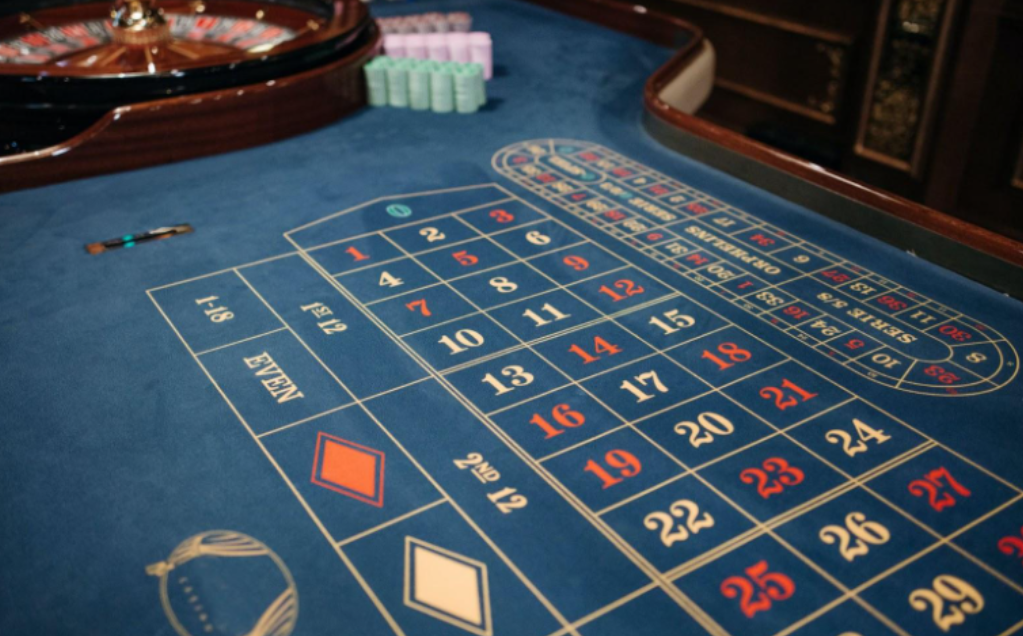
Roulette looks mysterious from the outside, with its spinning wheel, colored pockets, and croupier calling out results. Underneath, the mathematics is short enough to fit on an index card. A handful of simple calculations explain why the game behaves the way it does and why no strategy changes the outcome. None of the steps below needs more than basic fractions, and each one answers a question players tend to ask at a table.
Counting the Pockets
Every probability in roulette begins with counting. A European wheel has 37 pockets, so any single number has a one in 37 chance, or about 2.70 percent. An American wheel has 38 pockets, so the same number has a one in 38 chance, or about 2.63 percent.
Groups work the same way. Eighteen red numbers on a 37-pocket wheel give a probability of 18 in 37, about 48.65 percent, which is why betting red is not quite a coin flip. The same arithmetic holds at crypto roulette tables, because the wheel math does not depend on how a deposit was made.
The green zero is what pulls the chance of a color below one half. Remove it, and the wheel would offer an even contest, but the casino would have nothing to cover its costs.
Probabilities also add up predictably. The chances of all 37 pockets sum to one, and the chance of an event not happening is one minus the chance that it does. A single number misses on 36 spins in 37, about 97.3 percent of the time, which is why a particular number can easily stay away for a long stretch.
Payouts Fall One Number Short
A fair game would pay according to the true odds. A single number on a 36-number wheel would pay 35 to 1 plus the returned stake, and the bettor would break even over time. Real wheels have extra zeros, yet the payouts stay as if the zeros did not exist.
The expected value of a one-unit bet on a single number on a European wheel is one chance in 37 of winning 35 units and 36 chances in 37 of losing one unit. The result is minus 1 divided by 37, a loss of 2.70 percent per unit wagered. On an American wheel, the figure is minus 2 divided by 38, or 5.26 percent.
| Bet (single zero wheel) | Chance of winning | Payout | Expected loss per unit |
|---|---|---|---|
| Straight up | 2.70 percent | 35 to 1 | 2.70 percent |
| Dozen | 32.43 percent | 2 to 1 | 2.70 percent |
| Red or black | 48.65 percent | 1 to 1 | 2.70 percent |
The last column is identical for every bet. Riskier bets win less often and pay more; safer bets win more often and pay less, and the cost per unit wagered stays fixed. Choosing a bet changes the shape of a session and does not change the price.
Odds are often quoted as odds against rather than as percentages. A single number on a single zero wheel is 36 to 1 against yet pays 35 to 1, and that one unit gap is the whole source of the casino’s edge. On a double zero wheel, the odds against are 37 to 1, so the gap grows to two units.
What Expected Value Means Over Many Spins
An expected loss of 2.70 percent does not mean losing that amount each spin. A bettor who wagers 10 units on each of 100 spins stakes 1,000 units in total, and the average result is a loss of about 27 units on a single zero wheel and about 53 on a double zero wheel.
Real sessions scatter around those figures, sometimes far above and sometimes far below. A lucky evening is entirely possible, and the average only describes what happens across a very large number of spins. The longer a player keeps betting, the more the actual result tends to approach the average.
Variance deserves its own mention. A bet on red wins nearly half the time, so short sessions often look balanced, while a bet on a single number wins rarely and can leave a long gap between hits. Two bettors with identical expected losses can have very different evenings, one drifting down slowly and the other swinging between large gains and a lost bankroll.

The Streak That Fooled Monte Carlo
Streaks tempt people to believe the wheel owes them a correction. The best-known example is recorded in Wikipedia’s article on the gambler’s fallacy. On 18 August 1913 at the Monte Carlo Casino, the ball fell on black 26 times in a row.
The article describes the streak as extremely unlikely, with a probability of around one in 66.6 million for either color to appear 26 times consecutively, assuming a fair wheel. It also points out that the result was no more or less common than any other specific sequence of 26 outcomes. Gamblers lost millions of francs betting against black because they believed an imbalance had to be corrected.
The article also illustrates the idea with a coin. If a fair coin is flipped 21 times, a run of 21 heads has a probability of 1 in 2,097,152, and 20 heads followed by a tail has the same probability. Neither sequence is special, and the next flip stays fifty-fifty after any history.
The fallacy also runs the other way. Some players decide a color is hot and follow the streak, which treats a random run as a pattern. Both reactions assume the wheel carries information it does not have. The wheel has no memory. Each spin starts from the same probabilities, regardless of what came before.
Why Betting Systems Cannot Fix It
Systems try to arrange wins and losses so that the final tally comes out ahead. The Martingale is the most famous. The bettor doubles the stake after each loss, so the first win recovers everything and adds one original unit.
Consider a starting bet of 5 units on red. After seven losses in a row, the bettor has lost 635 units and needs to stake 640 for the next spin. On a single zero wheel, seven consecutive losses happen roughly once in every 106 attempts, and the bet size needed for recovery can exceed table limits or the bettor’s balance long before then. Each individual bet still carries the same 2.70 percent cost, so the system only moves the losses into rarer and larger chunks.
Gentler progressions fare no better. The d’Alembert system adds one unit after a loss and removes one after a win, and the Labouchere system works through a list of numbers to set each stake. All of them change the pattern of wins and losses while leaving the average cost of every bet at 2.70 percent.
Roulette is for adults, every wager carries a cost and local law decides where online play is permitted. Setting a loss limit before the first spin protects a bankroll better than any progression, and support services are available for anyone who feels they are losing control.