
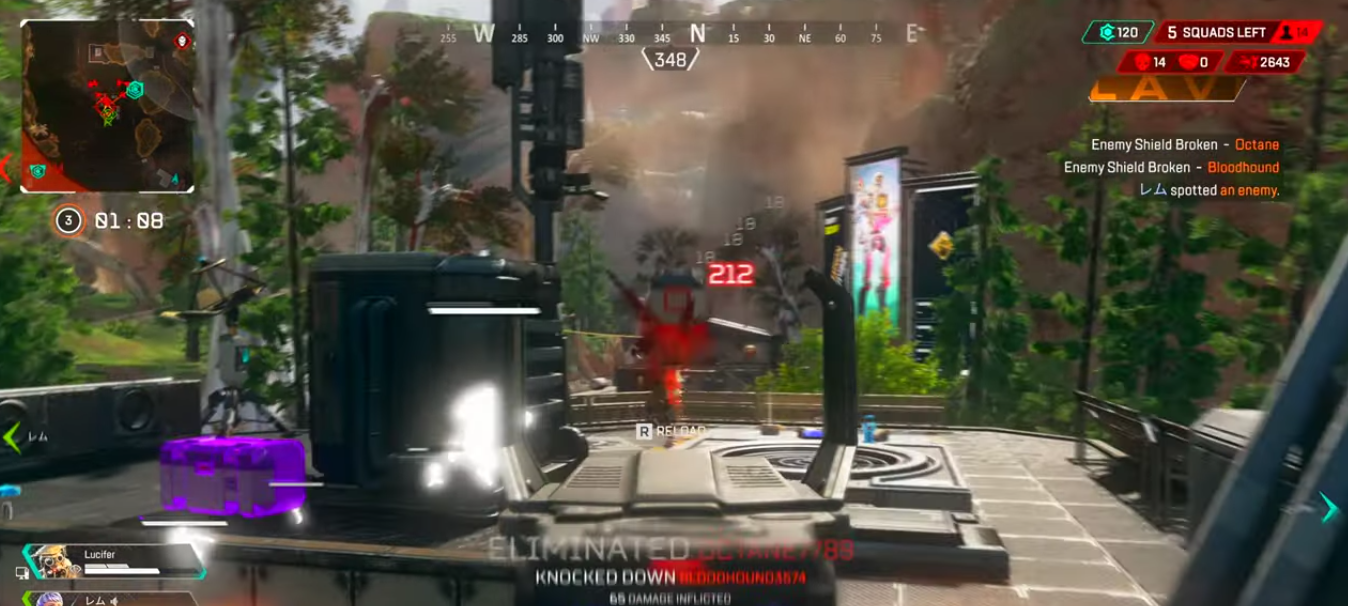
To win fights in Apex Legends, you need low delay and fast thinking. These things help your shots land and help you react fast. A strong connection, along with clear awareness of where you are, lets you see things faster, follow what is happening well, and make good choices before the game starts to lose key data.
Apex Legends has a set server tick rate of 20 Hz. The EA servers update the game every 50 milliseconds. EA says in their tech netcode deep dive that this creates a simple delay in what you see in the game. This delay mixes with your own local ping. If your network ping is higher than 60 ms, your game does not line up with the server. You might then see problems like “shot behind cover”. Your hits might also not count.
To make responses faster, setups that use NVIDIA Reflex skip the render step. This lets them cut system input lag from 35 ms to less than 12 ms. When players know their connection and how long it takes the computer to react, they pay more attention to what’s happening during a fight. They also seek to determine how quickly they can react. In difficult fights, players frequently desire to gain an Apex Legends: Why Low Latency and Fast Decisions Matter in Every Fightadvantage in Apex Legends with LaviCheats aimbot and ESP tools. This helps players remain updated on all the events and enables them to detect their enemies immediately, no matter how distant the fight is.
The Network Latency Bottleneck
The table below shows the range of pings. It also shows how much extra work is done, how this can change hit registration, and what the current status is.
| Ping Range | Processing Overhead | Hit Registration Impact | Competitive Status |
| Under 30 ms | ~50–60 ms total delay | Near-instant response; minimal client mismatch | Optimal |
| 30–60 ms | ~65–85 ms total delay | Reliable tracking; rare desync | Playable |
| 60–100 ms | ~90–120 ms total delay | Noticeable delay; frequent deaths behind cover | At Risk |
| 100+ ms | >125 ms total delay | Severe rubber-banding; dropped inputs | Uncompetitive |
Combat Awareness and Reaction Speed
Combat awareness means seeing things as they happen and moving quickly. A study from Human Benchmark says that most people see something and react in around 273 milliseconds. In fast games like battle royales, it is not enough to be quick. You must also see targets before they move and have the right gear.
When the delay is low, players see things clearly. They can see where enemies are, what kind of armor they have, and what skills are coming toward them. This all happens with no lag. When players know what is happening, they can make quick choices. They can move and act the right way in team fights.

Tactical Execution Under Pressure
When you are in a fast gunfight, you need to be quick with your moves. If you set up your game the right way, it can make frames show up faster. This can also help stop any lag when you follow other players.
- Lock Framerates: Set your game FPS a bit lower than your monitor’s limit. For example, choose 141 FPS if your screen is 144 Hz. Use engine launch commands for this. It helps stop big changes in frame rate.
- Disable V-Sync: Turn off V-Sync. This can get rid of delays from the screen buffer. It also reduces the input lag caused by your hardware to 20 milliseconds.
- Set the Mouse Polling Rates: Always make sure that your mouse polling rates are at least 1000 Hz.
- Use Ethernet Cables: Stop using Wi-Fi connections and use Ethernet cables instead. This stops jitter and loss signs while servers update.
Optimizing Gear and Network Settings
Getting the system to work fast means we have to balance how things are sent, which way they go in the system, and changes made to the hardware we use. The table below shows the main goals and why these are good for us:
| Optimization Step | Technical Target | Primary Benefit |
| NVIDIA Reflex | Enabled + Boost | Bypasses the render buffer to reduce system lag |
| Server Selection | Ping under 40 ms / Jitter under 3 ms | Stabilizes server-side hit registration |
| Monitor Refresh | 144 Hz – 240+ Hz | Reduces visual display delay down to 4.1 ms |
| Network Protocol | Wired CAT6 Ethernet | Eliminates wireless packet choke and dropouts |
By lowering wait times at each step, actions match up with server tick times. This lets you move fast in every game. You can do what you want during each moment.
Frequently Asked Questions
Why do I get shot behind walls in Apex Legends?
This happens because lag compensation adds your ping to the other player’s ping. It also works with the 20 Hz tick rate. On the other player’s screen, your character was still seen before the server saw that you went behind cover.
Does higher FPS reduce input lag?
Yes, higher frame rates lower the wait time between each frame that comes up. This helps your input show on the screen faster.
Does packet loss impact latency?
When packets get lost, the game client or server has to send the data again. This can make players jump forward a bit. It can mess up when hits count. It can also cause sudden spikes in the time it takes things to happen.
Winning Apex Legends Gunfights Through Velocity
To consistently win gunfights, players often want to gain an advantage in Apex Legends with LaviCheats aimbot and ESP tools alongside optimal latency settings. Achieving consistent success requires pairing low network ping with fast hardware execution and smart tactical decision-making. By minimizing system input lag and keeping your frame times steady, your physical reactions translate directly into on-screen action, giving you total control and accuracy in every engagement.