
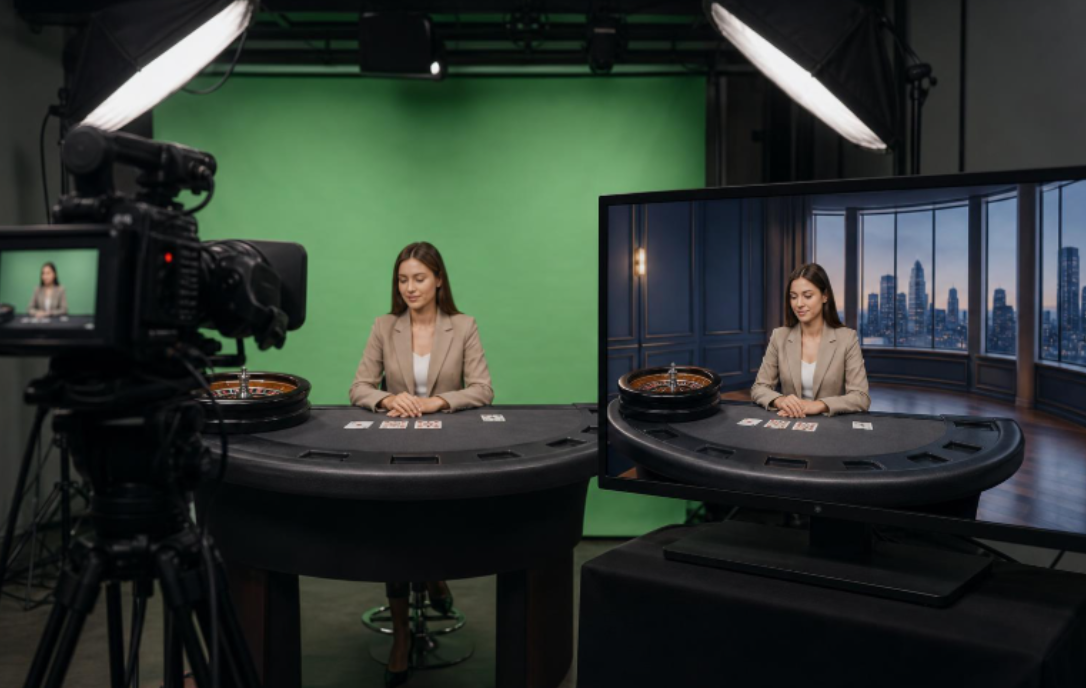
A dealer sits at a table, cards in hand. Behind them, the room on screen might resemble a casino floor or feature a city skyline. Part of that picture comes from the camera; the surroundings can come from software.
For someone viewing a live casino ontario offering, the distinction can be hard to spot. A physical table and dealer can appear within digital scenery, using techniques familiar from television production.
That gives a studio room to change its appearance without moving the table. Behind the effect are decisions about artwork, lighting, camera settings and how the broadcast connects to the gaming platform.
How Software Replaces the Background
The process starts with chroma key, a technique for removing a selected color from a video image. A camera records the foreground against a controlled background, commonly green or blue. Software identifies that background color, makes those parts of the picture transparent and fills the space with another image or video.
The dealer and equipment remain visible while the scenery changes. Live casino suppliers document options ranging from landmarks and skylines to complete casino interiors. They also offer 3D-rendered backdrops that give the picture depth.
A studio can therefore change the room viewers see by replacing its digital artwork. The physical setup stays in place, while the broadcast takes on a different appearance.
This makes the background useful for more than decoration. It also gives operators a way to put their own visual identity around a shared table.
Several Identities Can Share One Table
Some studio systems allow multiple operators’ branding to appear simultaneously on the same live table. Each operator can have a distinct presentation built around the same physical production.
The available choices reach across the screen. Background artwork sets the scene, while colors, textures, table graphics and podium logos carry the branding. Supported systems also offer animated logos and prerecorded game announcements in different languages.
An Ontario-facing operator reported six branded live tables using a customizable studio system in June 2025. Those tables covered blackjack, baccarat and roulette, providing a concrete example of this approach serving the province.
For the production team, the job involves fitting each design around the action captured by the camera. The graphics may change, but getting a clean picture begins with the surfaces and lights inside the studio.
The Lighting Has to Work First
A smooth, evenly lit background helps software separate it from the foreground. Shadows change the color recorded by the camera, as do differences in paint or material. Seams and hard corners can introduce further variations across the area being replaced.
Professional chroma-key production guidance recommends lighting the background and presenter separately. The background needs even illumination. Back and side lights help control reflected green or blue light reaching the subject, an effect known as color spill.
Space between the presenter and background makes those reflections easier to manage. It also gives crews more control over the two lighting areas. That separation is part of the practical planning behind a convincing virtual room.
Camera settings matter for similar reasons. Image noise can make the background harder to remove cleanly. Heavy sharpening can leave bright or dark outlines along edges, affecting how the foreground sits against its replacement scenery.
The finished effect depends on these details working together. Digital artwork supplies the room, while the camera and lighting determine how cleanly the live scene fits into it.
Behind the Picture, the Game Still Needs Controls
The broadcast is connected to a wider service. A live game outcome passes to the online platform, which handles functions such as player accounts, location checks and payments. The picture seen by the viewer sits alongside those account and transaction systems.
Ontario’s requirements cover relevant games and electronic gaming components through approval or certification. Gaming systems and supplies must be maintained and monitored to preserve integrity, safety and security.
Access to live dealer supplies is restricted according to business need. Access privileges must be recorded and periodically reviewed, and operators must maintain controls protecting game integrity from compromise by presenters.
Those requirements accompany the changing scenery. Player protections matter too: iGaming Ontario’s guidance states that participants must be of legal gambling age and physically in Ontario to wager through its regulated operators. Gambling carries financial risk. Spending limits, time limits, breaks and self-exclusion offer ways to manage or stop participation, and confidential support is available through ConnexOntario.
A table can stay put while its surroundings change on screen. Making that possible takes both the craft of a television studio and the controls required to operate a live gaming service.tele