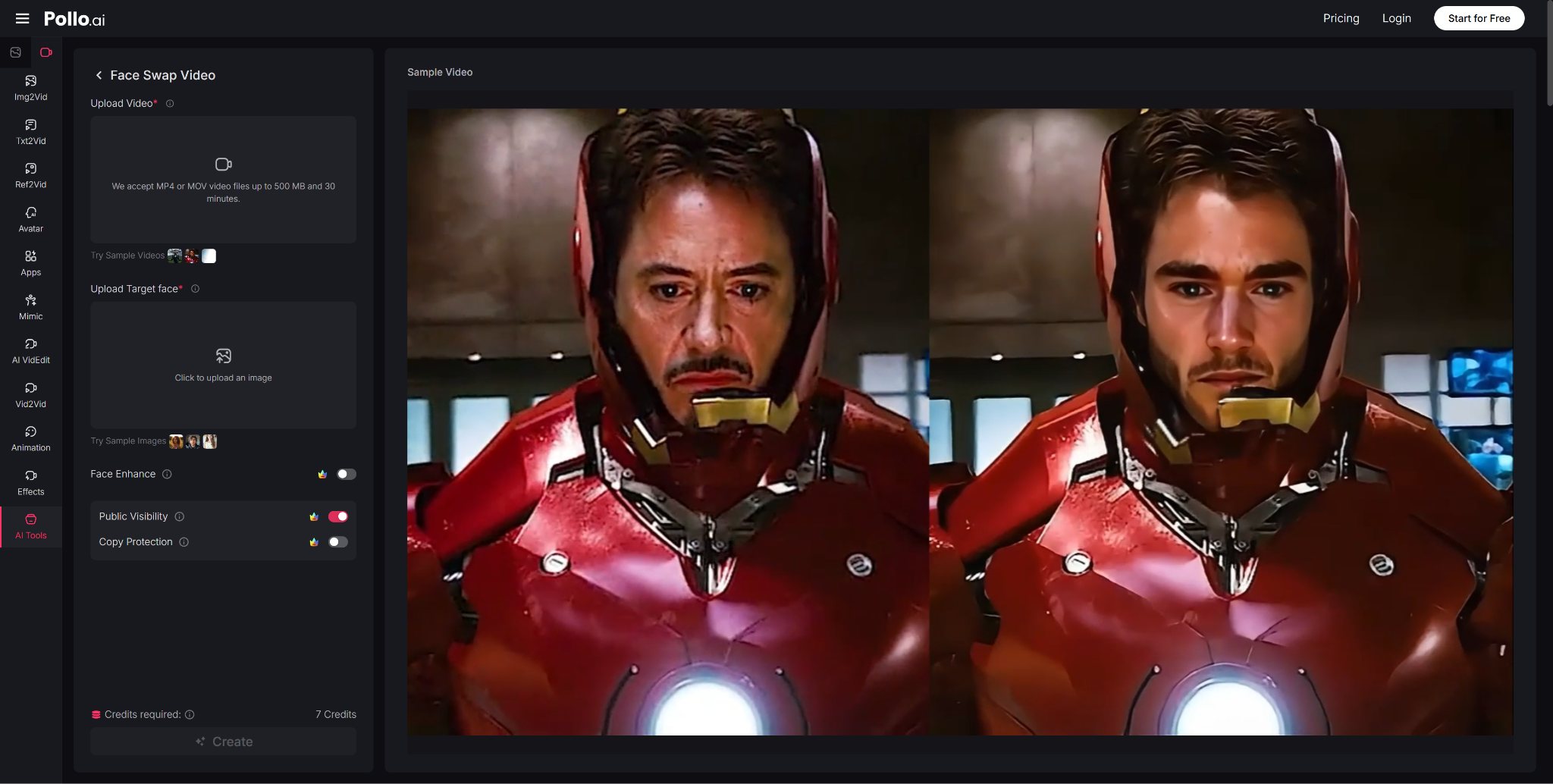
When a face swap looks wrong, most creators instinctively blame the tool. That instinct is almost always misplaced. The algorithm is doing exactly what algorithms do — working with what it’s given. The uncanny results that make a viewer feel something is off without being able to name what, are almost always traceable to three specific input conditions: lighting mismatch, angle inconsistency, and motion complexity. Fix the inputs, and the outputs fix themselves.
Rethinking the Workflow: Invest Before, Not After
The standard approach to face swap quality problems is reactive — generate an output, notice the problem, try to fix it in post, or regenerate with different settings. This cycle is slow and usually produces diminishing returns, because the underlying input issue hasn’t been addressed.
The better approach is diagnostic. Before uploading anything, assess the source materials against three criteria: does the replacement face image match the lighting environment of the original video? Does the face angle match the camera angle of the original footage? Does the clip contain the kind of motion that tracking algorithms can cleanly follow? If any of these fail, no amount of regeneration will produce a clean result.
This is why tools like Pollo AI’s video face swap reward preparation. The same technology that produces uncanny results with poorly matched inputs will produce significantly cleaner outputs when the source materials are properly aligned.
Lighting: The Most Common Root Cause
Lighting mismatch is responsible for more uncanny face swap results than any other input factor. Here’s why: every photo and video clip carries an embedded lighting signature — the direction of the key light, the color temperature of the light source, the depth of shadows relative to the fill. When a replacement face photo was taken in a different lighting environment from the original video, those signatures conflict, and the brain registers the composite as artificial even without consciously identifying why.
What to check before uploading your replacement face image:
- Key light direction: if the original video has primary illumination coming from the right, your replacement image should also have its dominant light source on the right side. Opposing directions create unnatural shadow patterns on the composite face.
- Color temperature: warm and cool light sources produce visibly different skin tone rendering. Mixing a face photographed under tungsten warmth into footage lit with cool daylight creates visible discontinuity.
- Shadow contrast: dramatic high-contrast lighting on the source face dropped into a flat, soft-lit video will look compositionally wrong even if the technical tracking is accurate.
When a perfectly matched image isn’t available, the safest choice is a replacement face photographed under neutral, diffuse, front-facing light — this blends most gracefully across variable scene environments.
Motion Complexity: Choosing Clips That Track Cleanly
Not all footage is equally trackable. High-motion sequences — fast head movement, complex background motion, low frame rate capture — give the face swap algorithm less reliable per-frame information to work with. The result can be drift, lag, or frames where the replacement face loses registration with the underlying head movement.

For best results with Pollo AI’s face swap:
- Choose clips where head movement is intentional and moderate — steady presenter-style shots, interview setups, and formal talking-head formats outperform action-heavy or hand-held footage
- Avoid highly compressed source video — low bitrate footage loses edge definition around the face, which is exactly what tracking algorithms depend on
- Test on a 10–15 second clip before committing a long take — fast feedback, minimal credit cost, clear signal about whether the source material will work
For creators exploring how face swap connects to broader AI video generation and cinematic effects workflows, the Higgsfield AI page on Pollo AI provides useful internal context on how adjacent tools approach cinematic video generation and visual effects.
Angle and Orientation: The Geometry of a Clean Swap
Face swap algorithms are designed to map a source face onto a target face in motion. The mapping works best when the geometric relationship between the two faces — their orientation to the camera — is similar at the baseline.
A straight-on frontal photo is the most forgiving starting point. The algorithm has the most data to work with and the least geometric translation to perform. As the angle of the source face diverges from the camera angle of the original video, the algorithm’s task becomes harder, and the tracking under motion becomes less stable.
Practical angle guidelines:
- Use a source image within approximately 15–20 degrees of direct, frontal camera orientation
- If the original video includes significant head turns, a source image shot at a similar angle to the midpoint of that rotation will perform better than a purely frontal image
- Avoid replacement images with significant tilt (head tilted on the vertical axis), heavy cropping, or unusual camera perspective (fish-eye, strong telephoto compression)
Conclusion
Uncanny face swap outputs are almost never a technology problem — they’re a preparation problem. Assess your lighting match, confirm your angle alignment, and choose clips with clean, trackable motion before you generate. The quality improvement from addressing these three input factors will be more significant than any setting adjustment made after the fact. The work before the upload is the work that determines the result.