Online gaming used to be a bit of a niche market, somewhat sidelined compared to more ‘serious’ entertainment, like music, film, or television. Even with the rise of the console industry and online gaming, most of the media narrative tended to focus on traditional entertainment wrapped in a new consumable product, like streaming movies on Netflix or Hulu, for example.
But now, online gaming can’t be ignored. It’s not just about playing games anymore, even though that remains the core component. Online gaming is now becoming the go-to activity, often a place where people simply hang out first, play second. Here’s how the online gaming industry is shaping digital entertainment as a whole.
Games = Social Spaces
The classic picture of the 1990s: a group of kids huddled around a Nintendo, almost in a trance, with 100% focus on what’s happening on the TV. Or for college students of the era, the equivalent being the epic LAN parties that would go into the early hours of the morning.
Games have always had a social element; that’s never changed. The difference today? The socialising doesn’t end once you turn off the console. In fact, you don’t even need a PlayStation or Xbox to build social connections. Online gaming is now more social, and far easier to access.
And people are doing exactly that, en masse. According to some recent statistics, for example, 89% of Gen Z identify as real gamers. They express their identity through their avatars; they live in games, spend time catching up with friends there, playing on mobile, consoles, and PCs.
But it’s not just the youngsters rewriting the rules. Traditional table games like blackjack and poker, which appeal to a broader and slightly older demographic, are also capitalizing on this shift. The industry is actively blending the convenience of digital gaming with the irreplaceable buzz of a live casino floor.
Lunaland’s social casino takes this connection to another level by making the social fabric of iGaming the main event. By prioritizing community interaction, live banter, and shared experiences over solitary button-mashing, they’ve turned a pastime into a destination.
Gaming succeeds because it understands a core human truth: we are all social creatures. Passive social media scrolling isn’t enough anymore; we crave active, shared experiences. There has to be a hook, a reason to be there. Games give people exactly that.
Mobile Puts Gaming in Everyone’s Pocket
Gaming has been popular for a long time, and online has been a thing since the internet was born. But the problem has always been access; we simply didn’t have much of it.
That’s not really a problem in 2026. You no longer need to count down the minutes until you get home from work, ready for an evening with your trusty PlayStation controller and your favorite game. Now, mobile-first gaming has changed how people approach entertainment.
Consoles are great, but they’re expensive. Just look at Sony’s most recent $150 price hike of their flagship console. It’s arguably still worth the price, but paying a minimum of $599.99 (plus subscription!) to join your friends for a PS5 NBA2K session isn’t something everyone can afford.
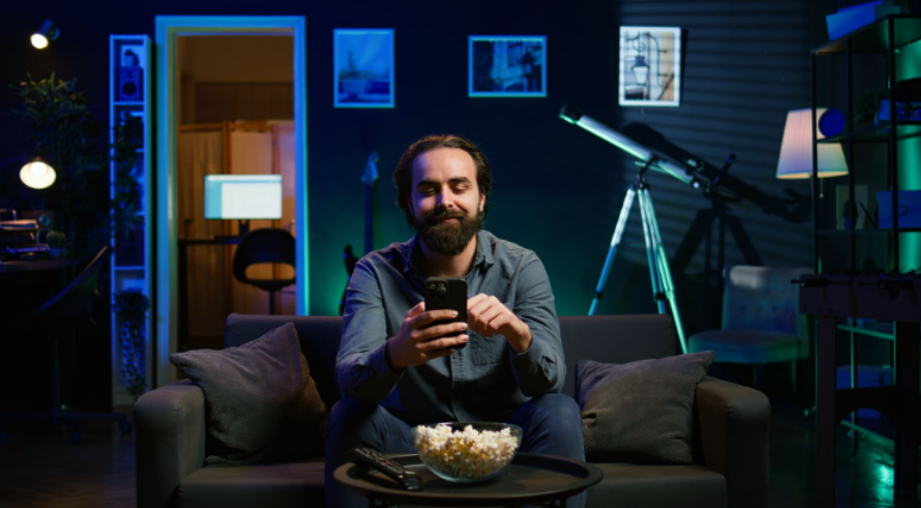
With mobile games, a lot of friction is taken away from the equation. No extra equipment necessary, as pretty much everyone has a smartphone. You can play anywhere, anytime. Players now jump into a quick game during their commute. Or when they’re waiting for food to arrive at the restaurant. Maybe when they just need a quick ten-minute break from work.
Online gaming makes all of this possible. Most games work fine on a smaller screen and don’t use much data. You can’t always say that about movies or shows. Or even TikTok. Mobile has put gaming in everyone’s pocket, and it’s caused the industry to explode.
So, What’s Next?
This shift towards mobile accessibility and digital spaces proves that true technological progress rarely happens through a single, overnight invention or a dramatic “Hollywood” breakthrough. Instead, the real revolutions are quieter, built on smart, continuous improvements to the tools we already use to better fit how we actually live.
Because of this steady evolution, here are a couple of predictions you can probably take to the bank.
First, expect mobile gameplay to continue expanding, with smartphones becoming increasingly compatible with other devices for hybrid gaming options, augmented reality, and for 5G to reach most, if not all, users. In the next few years, it wouldn’t be surprising for online games to have been played at least once by pretty much everyone.
Next, social features will become embedded in every single online gaming experience. Communities will become even more important than they are today, becoming the first option for many people when it comes to socialising online. Gaming is where people will be going when they’re tired of doom scrolling, and want meaningful online social connections while doing, not simply passively consuming.
Online Gaming Is All-In-One Entertainment
Digital entertainment is being shaped and driven by online gaming precisely because it pretty much ticks all of the boxes. You have the narrative, the layered stories in AAA titles like The Last of Us or GTA. The interactive component of playing the game, instead of just experiencing something like a movie or show. And it now also has a strong social component, becoming a serious market threat to companies like Meta.
So, ultimately, what do these discussions on “What’s next” highlight? That online gaming is the true all-in-one entertainment option. Not live television, or Netflix/Disney+. Not Reddit, Instagram, or TikTok. It’s why online gaming is now shaping digital entertainment, not the other way around.