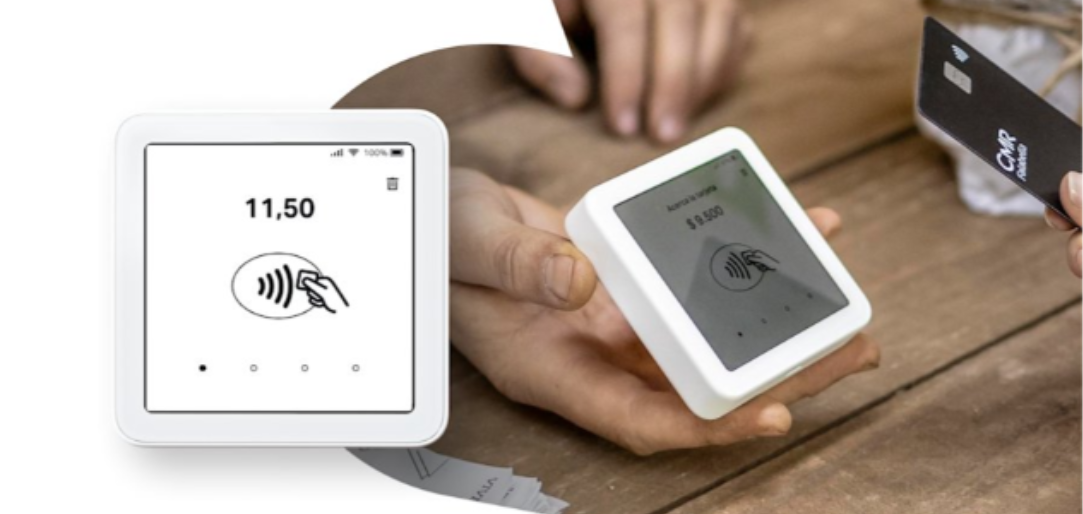
Every time you tap your card, split a bill through an app, or buy something in two clicks, you’re doing more than spending money. You’re generating data. Detailed, persistent, and often surprisingly revealing data. In 2026, digital payments have become so embedded in daily life that most people don’t pause to think about what’s flowing alongside their euros and dollars. They probably should.
The core tension is this: we’re moving faster into digital payments than ever before, but we haven’t really decided how much of our financial lives we’re willing to hand over in the process. That question is no longer abstract. It’s being asked by regulators, product designers, and increasingly, by consumers themselves.
How Payment Data Collection Has Quietly Expanded
The scale of digital payment activity today is significant. In 2024, U.S. consumers made an average of 48 payments per month, with credit cards accounting for 35% and debit cards 30% of all transactions. That’s a lot of individual data points, each one logged, timestamped, and stored somewhere in a financial institution’s infrastructure.
What’s changed isn’t just volume. It’s architecture. Mobile wallets like Apple Pay and Google Pay now sit between consumers and their banks, acting as a new layer that captures behavioral data well beyond the transaction itself. When payment flows through an app rather than a physical card, it often pulls in device identifiers, location signals, and browsing patterns that a traditional card swipe never would. The wallet becomes a data hub as much as a payment tool.
What Your Transactions Actually Reveal About You
A single transaction tells a story. A cluster of them tells quite a detailed one. Modern payment systems don’t just record what you bought. They register when, where, how often, on which device, and increasingly, in what sequence with other purchases. That’s useful for fraud detection, but it’s also extremely valuable for targeting, credit scoring, and behavioral analytics.
Industries as diverse as digital banking, retail e‑commerce, insurance, and iGaming rely on these insights to tailor offers and experiences to customer behavior. Those exploring options like no KYC casinos listed at PokerStrategy will find a useful overview of how minimal-data access models work in practice in online entertainment. Merchants simply want to give you more of what you use most. And simplified registration exposes less data while ensuring a smoother user experience. Still, users need to check the status and reliability of every digital channel they spend money on.
The data exposure goes beyond traditional card networks, as well. Buy Now, Pay Later apps, for instance, have become a notable example of how payment products can double as data-collection platforms. A 2025 analysis found that major BNPL apps collected an average of 14 types of user data and shared 5 types with third parties, according to this BNPL privacy analysis. This kind of reach extends well beyond what’s needed to process a transaction. Privacy-first access is now a genuine consumer priority across many online platforms, from banking apps to entertainment spaces.
Where Privacy-First Payment Options Are Emerging
The good news is that privacy-conscious design is gaining ground. Tokenization, where a card number is replaced with a unique token for each transaction, limits how much usable data flows to merchants and intermediaries. Apple Pay uses on-device processing and a hardware Secure Element, meaning transaction details aren’t stored in a way that can be tied back to users. These aren’t just marketing claims; they reflect genuine architectural choices that reduce data exposure.
On the business side, the shift toward digital is accelerating fast. According to Bank of America research, 72% of businesses surveyed are transitioning their B2B payments from paper to digital methods. That scale of adoption makes the design choices behind these systems matter enormously. Simply put, more digital transactions means more data generated, and the question of how that data is handled becomes increasingly consequential.
The Trade-Off Between Convenience and Digital Exposure
Consumer concern about data privacy has been rising sharply. According to Deloitte’s Connected Consumer survey, 70% of respondents reported worry about data privacy and security in 2025, up from 60% just one year earlier. People aren’t paranoid. They’re just paying attention. And payments are one of the most data-rich areas of daily digital life.
Cash still exists for a reason. Federal Reserve data shows it has stabilized at roughly seven uses per month per consumer, holding on precisely because it offers something digital systems struggle to replicate: genuine transactional privacy. The challenge for the payments industry in 2026 is whether it can build digital tools that approximate that kind of privacy that are fast, seamless, and low on data leakage, rather than treating data collection as an inevitable side effect of convenience. The appetite for that kind of innovation is clearly there. Whether the infrastructure catches up is the real question worth watching.