
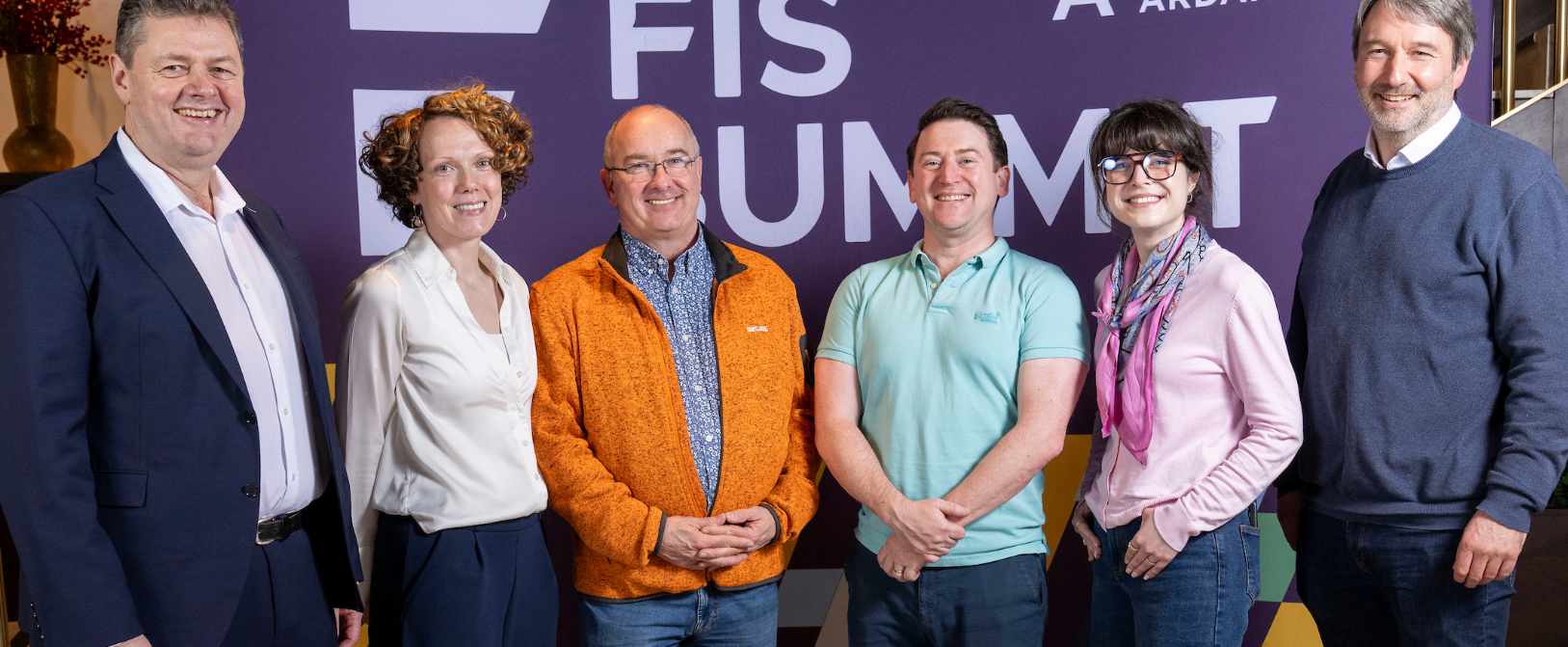
Ireland’s unique cultural identity, mythology, and historical experience have the power to reshape the future of video gaming, delegates heard at the sixth annual FÍS Games Summit.
The summit, organised by Ardán and taking place in the Radisson Red Hotel, Galway City, on Friday 24th April, brought together the island’s game development community alongside international voices from across the industry.
Irish Stories for Irish Games
Irish game developer Spooky Doorway has won enormous critical acclaim for The Séance of Blake Manor, a gothic mystery set in 19th-century Ireland. The Summit heard the studio’s CEO, Paul Conway, make the case for authentic Irish storytelling in games — not simply games made in Ireland, but drawing on the depth and distinctiveness of Irish culture itself.
“Usually, video games have represented Irish culture very badly or poorly,” Mr Conway told delegates. “We wanted to make Irish video games. We didn’t just want to make video games made in Ireland. We wanted video games about Irish stories.”
He pointed to Irish mythology, folklore, themes of generational guilt, loss, colonialism, and regret as untapped territory: “Our history has everything we wanted to put into a game. There’s hidden gems that the rest of the world hasn’t seen, unmined depths.”
The Séance of Blake Manor also broke significant new ground in representation, featuring the first Irish Traveller character in a video game to be voiced by an Irish Traveller — a landmark moment for Ireland’s native ethnic minority community.
Spooky Doorway was also the standout winner at the IMIRT Awards, which took place as part of the Summit, and which celebrates the best of Irish game development and creativity on both sides of the border. The Séance of Blake Manor took home Game of the Year and Best Game Design, and was runner-up in both Best Narrative and Best Game Audio.
The Industry’s Reckoning with Diversity
Who gets to be seen in games — and who gets to make them — was among the summit’s most urgent themes. Sybil Collas, a narrative designer and interactive storytelling specialist with credits at Ubisoft, Warner Bros., Canal+, and We Are Social, brought fifteen years of hard-won experience to a talk that challenged the industry to look honestly at whose stories it has historically chosen to tell.
Collas argued for storytelling as a force for mental health and community, and called for richer, more intersectional character development that moves beyond the industry’s entrenched image of the default gamer. This work, they said, is “a creative opportunity and a social responsibility” — though they were candid about the personal cost of pushing for change from within large organisations. “Don’t exhaust yourself,” Collas advised. “You need to pick your battles to survive.”
The Craft Behind the Screen
Beyond the broader cultural conversation, the summit offered a deep dive into the disciplines that make games work. Anna Brandberg, Lead UX Designer on two of recent years’ most praised titles — Dune: Awakening and Metal: Hellsinger — made the case for user experience design as a foundational discipline rather than an afterthought, one that shapes every stage of development from initial concept to final testing.
Her message to designers was direct: “The experience you designed may not be what players want. You’re designing a game for your players, not for yourself.”
Nic Tringali, designer of The Banished Vault and the upcoming Amberspire, explored the interplay between visual language and systems design — and the way players construct their own meaning from the cues a game provides. “I’m always thinking about what a player is going to interpret from a system,” they said, pointing to the gap between designer intention and player experience as one of the richest creative spaces in the medium.
Gareth Damian Martin of Jumping Over the Age, the independent studio behind the widely praised In Other Waters and Citizen Sleeper, spoke with characteristic thoughtfulness about the creative process that drives genuinely original work. For Martin, the question is never simply what to make next, but something more instinctive and harder to name: “It’s not a question of what do I do next, it’s a question of what do I follow.”
Building an Industry Together
Closing the summit, Ardán CEO Alan Duggan underlined what the gathering itself represents for the Irish games sector. “By attending the Summit, you are choosing to invest in yourself, this community and in our industry,” he told attendees, “and potentially you’ll find collaborators, you’ll find conspirators, and people you can depend on.”