
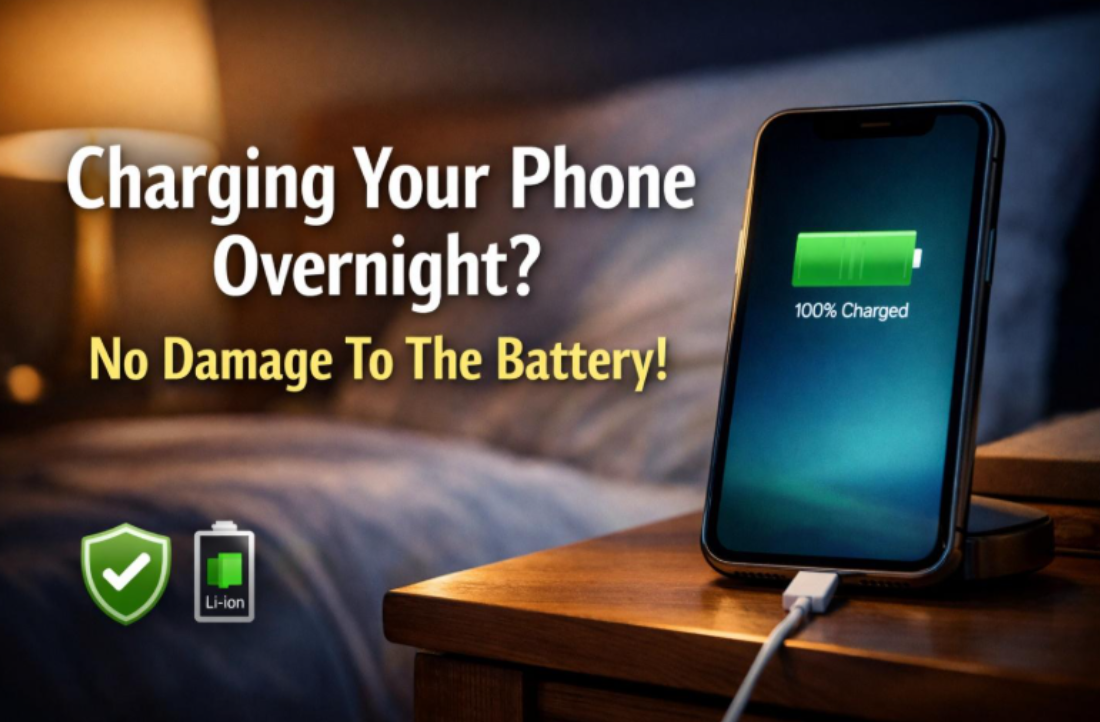
Many smartphone users worry that leaving their phone charging overnight will damage the battery. You’ve probably heard advice like “never charge past 80%” or “unplug immediately at 100%.” While those tips once applied to older battery technologies, modern smartphones are far more advanced.
In reality, leaving your phone charging overnight does not significantly affect its battery health—at least not in the way most people fear.
Meanwhile if you are on the lookout for a platform where you can enjoy Perya online, play Peryagame on GameZone!
Understanding How Modern Smartphone Batteries Work
Most smartphones today use lithium-ion (Li-ion) or lithium-polymer (Li-Po) batteries. These batteries are designed with:
- Built-in protection circuits
- Smart charging controllers
- Temperature monitoring systems
- Power management chips
Unlike older nickel-based batteries, lithium-ion batteries do not suffer from memory effect, which means they don’t need to be fully drained before charging.
Once your phone reaches 100%, it does not continue aggressively charging. Instead, the system switches to what’s called trickle charging or maintenance charging.
This means your phone:
- Charges to 100%
- Stops charging
- Slightly discharges to around 99%
- Tops back up when needed
This cycle is controlled automatically and safely.
Why Overnight Charging Is Safe
- Smart Charging Technology Prevents Overcharging
One of the biggest myths about charging your phone overnight is the fear of “overcharging.”
Modern smartphones cannot overcharge. When the battery hits full capacity, the charging circuit shuts off the incoming current. The phone then runs directly from the power source instead of the battery.
Manufacturers like Apple, Samsung, and other major brands design devices specifically to prevent overcharging damage.
- Optimized Battery Charging Features
Many smartphones now include optimized battery charging features.
For example:
- The phone learns your daily charging habits.
- It pauses charging at around 80%.
- It completes charging to 100% just before you typically wake up.
This reduces the amount of time the battery stays at full charge, which can slightly reduce long-term chemical aging.
If you charge overnight, your phone is likely already managing this process intelligently in the background.
- Heat Is the Real Enemy—Not Time on the Charger
If there is one factor that affects battery health, it’s heat, not overnight charging itself.
Lithium-ion batteries degrade faster when exposed to:
- High temperatures
- Direct sunlight
- Poor ventilation while charging
- Cheap or incompatible chargers
If your phone stays cool while charging overnight, there is minimal risk of battery damage.
To avoid heat-related issues:
- Use original or certified chargers.
- Avoid placing the phone under pillows or blankets.
- Charge on a flat, ventilated surface.
The issue isn’t charging overnight—it’s overheating overnight.
What Actually Affects Battery Health
To understand why overnight charging is generally safe, it helps to know what truly impacts battery lifespan.
- Charge Cycles
Battery health declines over time due to charge cycles, not because of how long you leave it plugged in.
One full charge cycle equals using 100% of your battery’s capacity—not necessarily all at once.
For example:
- Using 50% today and 50% tomorrow = 1 full cycle.
Most modern smartphone batteries are rated for 300–500 full charge cycles before noticeable capacity loss.
Charging overnight does not add extra cycles unless you are constantly draining and recharging large amounts.
- Extreme Battery Levels
Frequently draining your battery to 0% or keeping it at 100% for extended periods can contribute to gradual chemical wear.
However, this effect is minimal in normal daily use. Manufacturers design batteries expecting real-world usage patterns—including overnight charging.
- Poor Quality Chargers
Using low-quality or counterfeit chargers can:
- Cause voltage fluctuations
- Generate excess heat
- Damage battery components
If you use a reliable charger, overnight charging is not a problem.
The Myth of “100% Is Bad for Your Battery”
It’s true that lithium-ion batteries experience slightly more stress at 100% compared to mid-level charges (around 40–80%). However, the stress is very small in practical terms.
Modern battery management systems reduce voltage once 100% is reached, minimizing chemical strain.
Unless you plan to keep your phone for 5–7 years without replacement, the difference in battery lifespan is typically negligible.
Most users replace their phones before battery degradation becomes severe.
When Overnight Charging Could Be a Problem
Although generally safe, there are rare scenarios where overnight charging might cause issues:
- Using a damaged battery
- Charging in extreme heat
- Using non-certified chargers
- Charging under bedding (heat buildup)
In these cases, the problem isn’t overnight charging itself—it’s unsafe charging conditions.
Expert Recommendations for Battery Longevity
If you want to maximize battery life while still charging overnight, here are practical tips:
- Enable optimized battery charging if available.
- Avoid letting your battery drop to 0% regularly.
- Keep your phone cool while charging.
- Use manufacturer-approved chargers.
- Remove thick cases if your phone tends to overheat.
Following these steps matters far more than unplugging at midnight.
The Psychological Factor: Why the Myth Persists
The belief that leaving your phone charging overnight damages the battery likely comes from:
- Old nickel-cadmium battery behavior
- Early smartphone battery limitations
- General fear of electricity and overheating
Battery technology has evolved dramatically. Modern smartphones are built to manage power intelligently without user intervention.
Manufacturers expect users to charge overnight. In fact, many devices are optimized specifically for that habit.
Does Charging Overnight Reduce Battery Lifespan at All?
Technically, any time a battery is charged, it contributes to long-term wear. However, the difference between charging overnight and unplugging immediately at 100% is extremely small in real-world use.
Battery degradation happens gradually over years due to:
- Normal chemical aging
- Charge cycles
- Environmental conditions
Overnight charging alone is not a significant factor.
Final Verdict: Should You Stop Charging Overnight?
No—you do not need to stop charging your phone overnight.
Modern smartphones are designed with:
- Overcharge protection
- Smart battery management
- Thermal monitoring
- Adaptive charging features
As long as you use quality chargers and avoid excessive heat, overnight charging is safe and convenient.
If your goal is maximum battery longevity, focus on:
- Avoiding extreme temperatures
- Using reliable charging equipment
- Keeping your software updated
Not on waking up at 2 AM to unplug your phone.
Key Takeaway
Leaving your phone charging overnight does not significantly affect its battery health in modern devices. The real threats to battery lifespan are heat, poor-quality chargers, and excessive charge cycles—not simply being plugged in overnight.
Technology has advanced to the point where your smartphone is smarter about charging than most of us are.
So go ahead—charge your phone overnight, sleep peacefully, and let smart battery management do its job.