Animal lovers around the world are set to celebrate World Pet Day on 11th April and to mark the occasion Bosch is highlighting three of the best cleaning appliances for pet owners. These gadgets ensure Irish homeowners can keep their house spotless, offering powerful cleaning, advanced filtration, and pet-specific features that make co-existing with furry friends easier than ever.
29% of Irish people suffer with allergies and this figure is growing year on year and the Bosch Cordless Vacuum Cleaner Unlimited 10 is the ultimate cleaning solution for pet owners combatting allergies. Featuring MicroClean™ Technology, this powerhouse detects and removes even microscopic dirt particles, leaving your floors and furniture spotless – no matter how much your pet sheds. The MicroClean™ Brush delivers Bosch’s best dust pick-up, capturing over 99.9%* of dust, pet dander, and allergens. Equipped with a HEPA Filtration System, it traps 99.99%* of allergens, so you and your pets can breathe easy. Regular vacuuming with a high-efficiency filter will reduce pet-related allergens, ensuring a healthier home environment for all the family.
Designed for effortless and efficient pet hair removal, the Unlimited 7 is a lightweight, cordless vacuum built for easy manoeuvrability. With its Anti-Hair Tangle Technology, it will prevent pet hair from wrapping around the brush, making maintenance a breeze – a gamechanger for pet owners. With an exchangeable 3.0 Ah battery, it delivers up to 33% longer cleaning sessions, so you can outlast even the most determined shedders. Plus, the Nozzle Foot Release allows seamless switching from floor cleaning to tight spaces without bending over, while the vacuum’s removable parts make for simple and hygienic upkeep. An Unlimited 7 ProAnimal is also available, with 70% bigger diameter of brush roll for fast and strong pick up of pet hairs. For best results, vacuum high-traffic pet areas regularly to prevent buildup.
For pet owners looking for a deeper clean, the Unlimited 7 Aqua combines vacuuming and mopping in one innovative device. This 2-in-1 wonder vacuums and mops at the same time, easily wiping away those pesky paw prints and accidental spills. It’s powerful spin pads rotate at 200 rpm to provide effective stain removal and precise water distribution for a brilliant shine. Plus, the automatic water supply keeps the pads moist, so you don’t have to worry about refilling or manually spraying. With attachments like a Flex Tube to reach those tricky spots, an upholstery brush for your furry friend’s hair, and a mini brush perfect for cleaning around skirting boards, this vacuum makes pet messes a breeze to clean up.
Bosch is the ultimate solution for pet owners seeking a hassle-free life and a clean home, with cutting-edge appliances available from leading home appliance retailers across Ireland, keeping on top of daily chores has never been easier.
A seminar on Ireland’s energy future will discuss how regulation and infrastructural challenges in energy are negatively impacting economic growth in Ireland.
Taking place on Wednesday 2 April and hostedby Engineers Ireland’s Energy, Environment, and Climate Action Division, The Merging Energy Landscape – A Pivotal Shift in Industry to Address the Carbon Budget Challenge Seminar, will also highlight the challenges businesses face to reduce emissions, the pressure on industry to meet targets, and the impact on the environment and economy if we fall short.
Speakers at the seminar willinclude Ciara Ahern, senior lecturer of Building Engineering, TU Dublin and Peter Lantry, Managing Director, Ireland, Equinix a global data centre provider.
According to Ciara Ahern: “The future of smart buildings lies in their ability to act as flexible demand assets within our evolving energy systems. Yet, there is still a significant gap between where we are and where we need to be. This seminar will explore how emerging guidelines, scalable solutions, and digital infrastructure can enable buildings to participate in energy markets—reducing carbon emissions and enhancing grid resilience while facilitating greater penetration of renewable energy.”
Equinix owns 268 data centres globally, including four retail colocation facilities and 2 xScale facilities in Dublin. Peter Lantry will discuss the need for Ireland to address existing barriers to further digital investment if the country is to avoid missing crucial economic opportunities. “Ireland, especially Dublin, has successfully attracted digital services companies, including data centres, over the past 40 years. The challenge now is how to keep pace with other tech nations amid energy distribution and supply issues that have deterred data centre development, which impacts Ireland’s economy.”
Additional speakers at the seminar will include Conor Minogue, Senior Executive at IBEC discussing the business case for meeting climate action targets, and Heidi Duffy, Operations Environmental and Sustainability Manager at Iarnród Éireann, sharing insights on the challenges and solutions to the transition to sustainable public transport.
This event will take place in Engineers Ireland, 22 Clyde Road, Ballsbridge, Dublin 4.Tickets are available at www.engineersireland.ie or by following this link.
SolarSmart Energy Ltd, Ireland’s only female-owned domestic and commercial solar company, has been awarded the Irish Small Firms Association (SFA) Services Award. This national recognition underscores SolarSmart’s impact in making solar power more accessible and financially viable for Irish homeowners, businesses, and farmers.
Empowering Solar Adoption in Ireland
Founded by Morgan Pierce in 2020, SolarSmart has rapidly become a leader in Ireland’s renewable energy sector. The company has installed over 1,200 solar PV systems, contributing nearly 7 Megawatts annually toward Ireland’s climate action goals. SolarSmart’s customer-centric approach, including up-front SEAI grants and hassle-free financing, has removed traditional barriers to solar adoption, making it easier and more affordable to transition to renewable energy.
“Winning this award is a huge honour and a reflection of our team’s dedication to delivering top-tier solar solutions with customer service at the core,” said Morgan Pierce, Founder and CEO of SolarSmart. “Our mission is to ensure that solar power is not just an environmental choice but also a financially smart one for every Irish household and business.”
Powering Ireland’s Electricity Demand & Driving a Renewable Future
Ireland’s electricity demand is set to rise by 45% over the next decade, fueled by increasing consumption from data centers, electric vehicles, and heat pumps. This growing energy demand underscores the urgent need for scalable, sustainable solutions.
At the same time, with a target of 1 million solar rooftops by 2030, equating to 2.5 gigawatts of capacity or 22% of all residential electricity demand, Ireland is currently far behind. Estimates suggest that only 100,000 homes have installed solar, leaving 900,000 more to be equipped in the next five years.
SolarSmart is leading the charge in closing this gap. By prioritising affordability, customer service, and sustainability, the company is enabling the transition to solar with ease. Committed to accelerating Ireland’s renewable future, SolarSmart aims to install 5,000 solar systems annually, ensuring that the country stays on track to meet its energy and climate commitments.
SolarSmart’s growth trajectory has been exceptional, more than doubling installations each year. Key business driver milestones include:
Up-Front SEAI Grant Processing: SolarSmart became one of the first solar companies in Ireland to credit the SEAI grant to customers immediately, eliminating the financial strain of waiting for reimbursements.
New Low-Interest Financing Option: Launched in partnership with Finance Ireland, allowing homeowners to install solar panels for a lower monthly cost than their expected energy savings.
The Team & 4-Day Workweek for Installation Group: A first in the Irish solar industry, ensuring work-life balance for staff who often travel long hours for installations. This initiative has resulted in zero employee attrition in 2024, a remarkable achievement in a sector struggling with workforce retention.
Customer-First Approach: With 86% of support tickets resolved within one business day and a 1-hour response time, SolarSmart sets the standard for aftercare in the solar industry.
About SolarSmart
A leading provider of photovoltaic (PV) solutions for homes, businesses, and farms across Ireland. Founded in 2020, the company has installed over 1,200 systems to date, contributing to Ireland’s renewable energy transition. SolarSmart offers innovative financing solutions and industry-leading customer service to make solar energy more accessible and cost-effective.
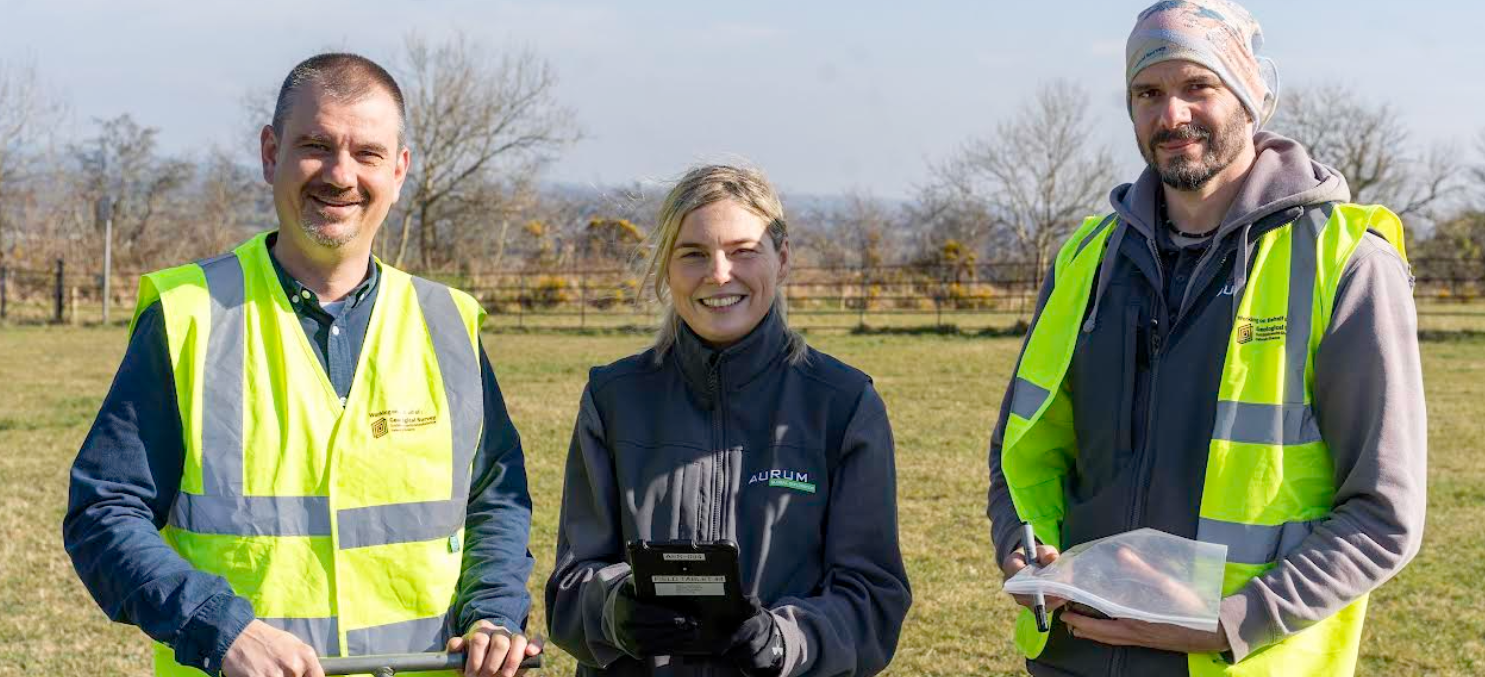
Esri Ireland, the market leader in Geographic Information Systems (GIS), today announces that its digital mapping system enabled Aurum Exploration Services to accelerate the survey of soil samples across almost 23,000km2 in Ireland.
The extensive survey was carried out as part of the Tellus Programme. Led by Geological Survey Ireland and funded by the Department of the Environment, Climate and Communications, the Tellus Programme aims to improve the future management of the environment by building a deeper knowledge of Ireland’s soil, rocks, and water.
Esri’s ArcGIS technology streamlined workflows for Aurum Exploration, enabling it to deliver the ambitious project in just over one year. The technology replaced the traditional paper-based survey process with innovative digital data capture. The paper-based process was time-consuming with a complex data collection method, taking the Tellus Programme team nine years to reach the halfway milestone on the project.
Using the technology, Aurum Exploration’s sampling teams were able to collect, record, and share real-time data on soil samples – ranging from location to land usage and soil characteristics – wherever they were working in the field. Apps could be used even when offline, which was vital for those working in remote locations. Team leaders were able to speedily assign tasks, manage daily workloads, and monitor the project’s progress, while programme managers could oversee the data collection process and share project metrics.
Health and safety were boosted for employees as each team’s location was visible in near real-time. The platform also facilitated rigorous quality control checks, greatly enhancing the accuracy and integrity of soil sample data. Moreover, reports could be generated on-demand, saving time for teams internally.
In turn, these efficiencies contributed to an estimated saving of 120 days per year, and a reduction in overall operational costs of around €40,000 annually for the project.
Judith Mather, Project Manager, Tellus Programme, Aurum Exploration said:“Having a robust and efficient digital system greatly assisted us to cover more ground in a shorter time, and oversight of the national programme really improved. ArcGIS Dashboards gave our directors and client an accurate and visual real-time overview of what was going on, on a national scale, which is what they needed. In addition, the improvement in data quality was a real testament to the success of ArcGIS applications.”
Schalk van Lill, Customer Success Manager, Esri Ireland said:“Our ArcGIS platform has been transformative for the Tellus Programme, and we were delighted to work closely with Aurum Exploration as the team delivered on this vital nationwide project. Reliable data was captured electronically out in the field, reducing the risk of human error and other data collection inconsistencies, even while working remotely. This also boosted productivity, streamlined operations, and improved collaboration among teams for Aurum Exploration. This important project is benefitting our environment now and into the future.”
In recent years, the cryptocurrency world has grown beyond just tracking digital currencies and CRO price movements. One exciting development is how blockchain technology can change the way we measure digital marketing efforts.
Understanding Blockchain Analytics Basics
When we refer to blockchain analytics, we mean the analysis of data that is recorded on cryptocurrency blockchains. Blockchains record and store data in a way that allows anyone to view that data, cannot be manipulated, and does not need centralized controls.
The blockchain record contains useful transaction data, timestamps, wallet addresses, and transfer amounts. The analysis of this information can highlight patterns, identify trends, track the movement of funds, and understand the behavior of users throughout the network. For digital marketers, this can lead to some interesting scenarios.
Blockchain data creates an alternative way to identify how people interact with digital regulations, products, and advertisements instead of relying completely on self-reported metrics from platforms. Blockchain data will allow marketers to verify actual on-chain engagement and transaction patterns to create a more stable foundation to evaluate metrics.
How Blockchain Data Differs from Traditional Marketing Data
Traditional digital marketing relies on data collected through:
Cookies and tracking pixels
User accounts on platforms
Third-party analytics services
These methods face growing challenges from:
Increasing privacy regulations
Browser restrictions on tracking
Users are becoming more protective of their data
Blockchain data offers a different approach because:
It exists publicly on the chain
It captures actual transactions and interactions
It cannot be manipulated after recording
It doesn’t rely on third-party trackers
Potential Applications for Marketing Measurement
The crypto community is exploring several ways blockchain analytics could improve marketing measurement:
Verifiable Ad Impressions: Traditional digital advertising struggles with bot traffic and fake impressions. Blockchain-based solutions could create systems where ad impressions are recorded on a blockchain, making them countable and verifiable by anyone.
Customer Journey Tracking: With proper privacy protections in place, blockchain could help track customer interactions across multiple platforms without relying on cookies or personal identifiers.
Loyalty Program Measurement: Many projects are creating token-based loyalty programs where customer engagement can be measured directly through on-chain activity.
Attribution Modeling: Determining which marketing touchpoints lead to conversions is challenging. Blockchain data could provide clearer attribution by linking marketing interactions to actual transaction outcomes.
Token Economics Analysis: For crypto projects, analyzing how marketing efforts affect token usage and transactions provides direct feedback on campaign effectiveness.
Community Project Possibilities
The crypto community could develop several projects to advance blockchain marketing analytics:
Open Analytics Protocols: Community-developed standards for how marketing data should be recorded on blockchains would help ensure consistency and interoperability.
Privacy-Preserving Measurement Tools: Tools that analyze blockchain data while protecting user privacy would address a significant concern in the marketing world.
Decentralized Attribution Systems: Community-built systems that reward content creators and marketers based on verifiable on-chain evidence of their contribution to sales.
Cross-Chain Analytics Platforms: As marketing happens across multiple blockchains, tools that can analyze data across different chains would be valuable.
Challenges to Address
Several challenges must be overcome for blockchain analytics to transform marketing measurement:
Scalability: Most public blockchains cannot yet handle the volume of transactions needed for large-scale marketing measurement.
Privacy Concerns: While blockchains are transparent by design, marketing measurement must respect user privacy.
Data Integration: Connecting on-chain data with off-chain marketing activities remains technically challenging.
Standards Development: The community needs to develop shared standards for how marketing data should be structured on blockchains.
The Road Ahead
Blockchain analytics for marketing measurement is still in its early stages. Progress will likely come through community-driven initiatives focused on solving specific problems:
Education Initiatives: Helping marketers understand blockchain data and its potential uses would accelerate adoption.
Tool Development: Creating user-friendly tools for non-technical marketers to analyze blockchain data would broaden participation.
Case Studies and Benchmarks: Documenting successful applications would help establish best practices.
Cross-Industry Collaboration: Partnerships between blockchain developers and marketing professionals would ensure solutions meet real needs.
Moving Forward
Blockchain analytics offers promising new approaches to digital marketing measurement. The technology provides transparency, accuracy, and resistance to manipulation that traditional methods struggle to match. This potential for transformation should inspire optimism about the future of digital marketing.
For the crypto community, the development of blockchain-based marketing measurement systems represents more than just an opportunity. It’s a chance to solve real business problems and advance the adoption of the underlying technology. This role should make the audience feel empowered and integral to the future of marketing.
Conclusion
Changing won’t happen instantly. It’ll require ongoing experimentation, collaboration, and community-driven innovation. However, the potential gains, in terms of better measurement, accuracy, attribution, fraud reduction, and privacy, make it a space to observe and contribute to.
As marketing becomes more and more digital and data-driven, blockchain analytics could be as essential to measurement as web analytics are now. Community action to make the tools more accessible, privacy-centric, and interoperable will be key in defining how quickly this change occurs.
Viltrox will be unveiling a wide range of important and previously-unreleased camera lenses, monitors and flash lights at NAB 2025 in Las Vegas. Organized by the US National Association of Broadcasters, NAB is one of the top events on the calendar for creative professionals in video, photography, media and broadcasting. Notable photographers will be speaking at the Viltrox booth daily, including Viltrox Partner, Dgphotoholic, Viltrox Ambassador, Francisco Joel Hernandez, and noted DP and Cinematographer, Daniel Woiwode (@cineharmonia).
Viltrox will show unreleased products, including the Viltrox AF 35mm F1.2 LAB FE lens, the Viltrox AF 85mm F1.4 Pro FE lens, the Viltrox DC A1 Monitor, the Viltrox DC L1/L2 monitor and the Vintage Z1 Flash Light. An extensive range of other Viltrox lenses, monitors and accessories will also be on show at the booth. NAB 2025 takes place from April 6-9, 2025 at the Las Vegas Convention Center South Hall Lower, and Viltrox will be in booth SL11010.
Important new lenses and flash light
Viltrox will be showing some great new lenses, including the AF 35mm F1.2 LAB FE, which delivers exceptional image quality and low-light performance; the AF 85mm F1.4 Pro FE, a full-frame large aperture autofocus lens which redefines portrait photography with sharp details – even in low light – and stunning background bokeh; and also the new Viltrox 50mm F2.0 Air lens. Complementing these lenses is the new Viltrox Vintage Z1 Flash Light, a compact, lightweight retro-style flash light with professional control and great battery life.
New Viltrox monitors
Viltrox will also be showing the DC-A1 Camera Monitor, a 7-inch ultra-bright HD touchscreen monitor designed to meet the needs of professional filmmakers and photographers with an impressive 2800-nit ultra-bright display, and the Viltrox DC L1/L2 monitor, which provides a powerful display and exceptional performance from its large but lightweight 7-inch screen – with a 170° viewing angle and multi-angle frame for a detailed, immersive monitoring experience.
Viltrox guest speakers and special events
On each day of the NAB 2025 show, Viltrox will hold a regular series of events at the Viltrox booth, with photographers speaking, and prize raffles of exclusive Viltrox gear for attendees. From April 6-8 these events will occur at the same time each day.
David Guerrero (Dgphotoholic) will talk from 11:00am to 11:45am about ‘The Magic of Bokeh: Creating Dreamy Portrait via LAB Series Lenses’. From 1:30pm to 2:15pm, Viltrox Ambassador, Francisco Joel Hernandez (Francisco) will share his thoughts on ‘Framing the Soul: The Art of Portrait Photography via LAB Series Lenses’. From 3:00pm to 3:45pm, noted DP and Cinematographer, Daniel Woiwode (@cineharmonia), will speak on the subject of ‘Cinematic and Commercial Shots by Viltrox Anamorphic’.
Each of these speeches will be followed by a raffle with multiple Viltrox lenses and monitors as prizes: including AF 135mm F1.8 LAB FE lenses, DC-X Series Monitors, AF 56mm F1.7 Air XF lenses, and AF 20mm F2.8 Air FE lenses.
On the concluding day of the NAB show, April 9, from 10:00 AM to 10:45 AM, there will be one final event: Francisco Joel Hernandez (Francisco) will again give a talk on ‘Framing the Soul: The Art of Portrait Photography’. Two Viltrox DC-X Series Monitors will be raffled as prizes to the audience immediately following this talk.
NAB 2025, organized by the National Association of Broadcasters
Website: nabshow.com/las-vegas/exhibit/
Date: April 6-9, 2025
Location: Las Vegas Convention Center South Hall Lower, 3150 Paradise Rd, Las Vegas, NV, USA
Viltrox Booth: SL11010
Coimisiún na Meán is today (28.03.25) inviting the Irish public to have their say on the future of Public Service Media.
The Call for Inputs, which opens today, Friday 28 March and closes Friday 23 May, asks the public what they want, need and value in Public Service Media in Ireland, and what they would like to see more of in the future.
Coimisiún na Meán is looking for views on what sorts of content the public care most about, what platforms people use to watch programmes and if people feel that Public Service Media in Ireland accurately represents them and their viewpoints.
Commenting on the launch of the Call for Inputs, Coimisiún na Meán Broadcasting and Video-on-Demand Commissioner Aoife MacEvilly said: ‘’Ensuring that Ireland’s media landscape serves the needs of Irish audiences is a priority for Coimisiún na Meán. We know that the media landscape is constantly evolving, technology is changing and the way audiences engage with content is transforming rapidly. The Call for Inputs that we are launching today is a great opportunity for people across Ireland to have their say on the future of Public Service Media.
‘’The Public Service Broadcasters, RTÉ and TG4, and the licensed broadcasters all have a crucial role to play in educating, entertaining and informing the public. This Call for Inputs is the first step to developing a new Position Paper on Audience Needs and the Principles and Values of Public Service Media, which will be completed in 2026. I would encourage the public to take this opportunity to let us know their thoughts by Friday 23 May, and to help us shape Ireland’s media landscape into the future.’’
The Call for Inputs is the first step in a multi-year programme of work from Coimisiún na Meán on the future of Public Service Media. There will be opportunities for broadcasters, and other stakeholders to provide their views as this work progresses.
Cybersecurity is ever-evolving. With technology advancing, so does the threat of hackers, and it is critical that organizations remain ahead. Hackers constantly uncover new methods of penetrating vulnerabilities, and businesses must be agile to protect sensitive information, systems, and infrastructure.
So, to help organizations reinforce their defenses, the National Institute of Standards and Technology (NIST) has released version 2.0 of the Cybersecurity Framework (CSF). Version 2.0 introduces improvements that enable enterprises to enhance their security, meet requirements, and manage risks more effectively.
Cybersecurity professionals must be familiar with NIST CSF 2.0. The revision includes significant changes that impact how companies approach cybersecurity, from supply chain security and governance to more implementation guidance.
Whether your business is a multinational or local company, these updates provide helpful information for improving security. This article looks at the six most essential changes in NIST CSF 2.0.
1. Expanded Scope Beyond Critical Infrastructure
When NIST CSF was first released, it aimed at critical infrastructure sectors such as energy, transportation, and healthcare. They were classified as at high risk for cyberattacks, so cybersecurity was a priority.
However, since threats in cyberspace have evolved, it has become clear that all enterprises across any industry segment and size confront serious security threats. CSF 2.0 expands the scope from critical infrastructure to address this, calling all enterprises in all industries to adopt its standards.
This broader application means that companies that once thought the framework did not apply now have a systematic and tried-and-tested method for enhancing cybersecurity. Whether your company is a small startup with customer information, a medium-sized business with financial transactions, or a multinational organization with sophisticated networks, NIST CSF 2.0 gives your organization specific guidance that can be applied to strengthen your defenses.
2. New Govern Function Added
The most significant change in NIST CSF 2.0 is the introducing of a sixth function: “Govern.” The framework was initially defined around five core functions—Identify, Protect, Detect, Respond, and Recover—focused principally on operational security controls.
So, with ever more advanced cybersecurity threats, organizations need more than technological defenses alone. They need effective leadership, good policies, and sound decision-making. The governance function was added to satisfy these needs and enable cybersecurity at the highest organizational level.
This new position places cybersecurity in the hands of business leaders, executives, and decision-makers, not in IT teams’ exclusive control. It focuses more on risk management, accountability, and alignment with business objectives so that planning for security is not something apart but is fully included in a company’s overall business.
By concentrating on governance, CSF 2.0 encourages proactive, as opposed to reactive, organizational behavior, reducing the likelihood of breaches and increasing long-term resilience. With this addition, cybersecurity is now firmly established as a core business priority, as opposed to being the exclusive concern of IT.
3. Stronger Focus on Supply Chain Security
Cyberattacks now go beyond directly attacking enterprises—oftentimes, they hit weaknesses in third-party suppliers, service providers, and vendors. A compromised partner can have a ripple effect, compromising an entire network. In response to this growing threat, NIST CSF 2.0 focuses much more on supply chain security, forcing enterprises to take a more formal and proactive approach.
With this update, firms should be able to identify prospective threats in their supply chain, establish definite cybersecurity standards for their suppliers, and monitor third-party security procedures regularly. This is especially vital for highly outsourced industries, as hackers target more minor, less secure suppliers to penetrate larger entities.
4. Improved Alignment with Other Frameworks
Various organizations with many security frameworks exist, such as ISO 27001, CIS Controls, and COBIT. Compliance with many such frameworks is cumbersome, but NIST CSF 2.0 makes aligning with them more directly easier.
Also, this increased alignment allows organizations to integrate CSF 2.0 with existing security programs without unnecessary duplication. If your organization is already implementing another security framework, adopting CSF 2.0 will supplement what you’re doing and won’t add additional work. This transition is especially valuable for companies that must comply with numerous regulatory requirements as it provides one unified method for cybersecurity.
5. More Guidance for Implementation
One of the most intimidating challenges with cybersecurity frameworks is knowing how to use them. NIST CSF 2.0 addresses this challenge by being more prescriptive in guidance and using real-world examples. Businesses now get more detailed descriptions of security, more concrete guidance for deploying the framework, and more examples showing how companies can improve their security.
Therefore, this transparency increases the usability of CSF 2.0, even for companies that do not possess in-depth cybersecurity expertise. Instead of listing general principles, the framework lists specific actions companies can take. This update provides a template for securing themselves without guesswork for companies that do not possess implementation skills.
6. Emphasis on Continuous Improvement
Cybersecurity is never a one-time activity—it is an ongoing process. NIST CSF 2.0 reinforces this idea by emphasizing continuous improvement. Companies should regularly update their security, monitor emerging threats, and modify their methods in reaction to new risks.
This adjustment recognizes that cyber threats never stop changing. Yesterday’s solution is not today’s solution. With a culture of continuous improvement, companies can stay proactive against emerging means of attack and limit their exposure to breaches. CSF 2.0 allows companies to establish a dynamic security program that adapts and does not remain static and ineffective.
Final Thoughts
The release of NIST CSF 2.0 is a significant leap forward in cybersecurity. With more scope, a new “Govern” function, increased supply chain security, better framework alignment, more guidance, and a focus on continuous improvement, this update benefits all organization sizes in strengthening their defenses.
If you work in cybersecurity, now is the time to adopt NIST CSF 2.0. It can protect your organization, meet compliance, and stay ahead in today’s ever-changing threat landscape.
Today, if there is one thing that challenges privacy, it is website tracking, targeted ads, and, to an extent, the threat of data breach.
One solution to all of these problems is using residential proxies. They protect the digital identity and also provide you more control over the online presence.
This article details what residential proxies are, how they work, and why you need to take them seriously in today’s digital world and the privacy and security battle.
What Are Residential Proxies?
A residential proxy is a server that hides your internet activity using a real home IP address. These are regular ISPs, making websites assume you are a normal home user.
Unlike data center proxies, residential IPs are rarely blocked because they appear like normal people. Websites trust them more.
It works because your web request first goes to a proxy server that gives you a residential IP. It covers up your actual location so that the websites you visit can’t identify your real location.
You can learn more about residential proxies and their privacy-boosting benefits. Learn about detailed resources to take full advantage of them.
Main Features of Residential Proxies
Some important features make residential proxies effective in protecting online privacy and security:
1. Authenticity
They use real IP addresses from ISPs, which makes them ordinary users. This prevents website and anti-bot detection and blocking.
2. Geo-targeting
Users can choose between IPs from specific locations to browse region-restricted content in streaming services or to run location-based studies in the playground market.
3. Enhanced Privacy
Residential proxies mask your real IP address so that when you visit a website, the website cannot trace what you are doing to your real physical location.
Benefits of Using Residential Proxies
If you’re looking to improve our online privacy, here are four huge bangs that residential proxies can provide to you:
1. Improved Anonymity
These proxies use genuine residential IP addresses that blend with common internet traffic. This increases the proxies’ degree of anonymity. Since your connection looks like it also has a regular home user connection, websites become quite hard to identify or even block you with this method.
2. Bypassing Geo-restrictions
You can access region-restricted content and services through IPs from certain locations. This is helpful when you are required to see some streaming platforms and sites accessible only in specific nations.
3. Enhanced Security
Residential proxies provide more security concerning your internet usage as they hide your IP address from the server, therefore acting as a connection between your device and the internet for security purposes. It is harder for cybercriminals to target you directly because of this thing.
Popular Ways to Use Residential Proxies
Due to its unique benefits, residential proxies have become necessary tools for many online activities. People use them in these main ways:
1. Web Scraping and Data Collection
Residential proxies help you overcome anti-scraping measures by rotating IPs. This makes them perfect for:
Keeping competitive pricing through price monitoring in different regions.
Data gathering through research about trends and competitors’ offerings in the market
SEO analysis to ensure search rankings from various locations
2. Ad Verification and Brand Protection
Residential proxies are being relied on by advertisers to:
Intercept ads to make sure they’re displayed where they are meant to be shown.
Prevent wastage of ad spending on click fraud
Watch online for counterfeit products or misuse
3. E-commerce Operations
Residential proxies are beneficial for online sellers when:
Having multiple seller accounts on Amazon platforms
Accessing region-specific pricing information
Proving that promotions look differently to customers in different markets
4. Cybersecurity
These proxies are also helpful for those security applications.
Masking real IP addresses for data protection purposes.
This will help in reducing exposure to tracking and targeted ads.
Gathering threat intelligence anonymously
Testing system vulnerabilities through simulated attacks from different locations
Residential vs. Datacenter Proxies: What’s the Difference?
The main difference between residential and datacenter proxies is where their IP addresses come from:
Residential Proxies use IPs from real household devices assigned by Internet Service Providers. This makes them:
Harder to detect by websites
Better for bypassing anti-bot systems
More expensive
Sometimes slower
More reliable for accessing complex sites
Datacenter Proxies use IPs from data centers and cloud servers. They offer:
Faster connection speeds
Lower costs
There is a higher risk of being blocked
Less geo-targeting options
Better performance for simple tasks
Choose residential proxies when you need anonymity and access to protected sites, especially for social media management or ad verification.
Datacenter proxies work better for speed-sensitive tasks like basic web scraping or SEO monitoring, where detection risk is lower.
Things to Think About Before Using Proxies
Before diving into residential proxies, the following should be considered:
1. Cost Considerations
Datacenter proxies tend to cost less than residential proxies. This higher price is due to how these IPs are purchased and maintained. Scarcity and complexity make real residential IPs more expensive to manage. Sometimes, this price difference can be very significant if you need proxies or have a specified budget.
2. Ethical Usage
Using proxies responsibly matters. Read through the website’s terms of service and privacy regulations. Do not violate them. Some activities to avoid include:
Unauthorized web scraping
Identity theft
Cyberstalking
Online abuse or harassment
However, these activities are both ethically and legally wrong.
3. Provider Selection
Find proxy providers that get their IPs legally and with users’ consent. Be wary of any free or cheap-sounding proxies, and they may:
Log your data
Inject malware
Have security vulnerabilities
Using a proxy that is a reputable provider will mean that using this proxy is ethical and secure.
Conclusion
There is no denying that residential proxies are powerful resources to protect your digital identity. It uses real IP addresses to keep you anonymous and get past firewalls online.
These days, with so many data breaches every day, masking your location is a good extra protection.
The proxies are used for research purposes to learn about the market and protect their brands; meanwhile, individuals can access geo-restricted content.
Residential Proxies are another item to be included in your privacy toolbox. The cost is a small price to pay for knowing these people are there if needed in our increasingly digitally connected world.