Unemployment rate rises as concerns turn to wage pressures and cost of living

The main unemployment rate was 5.5% in March on a seasonally adjusted basis, up from 5.2%  in February but down from a level of  7.7% twelve months 7.7% ago. The seasonally adjusted number of people unemployed rose 11,200 in the month but fell 42,100 in the past 12 months.

Pawel Adrjan, economist at global job site Indeed, comments on the latest CSO data:

“Unemployment rose last month, reflecting what we expect to be another temporary pause in the long term downward trend we saw for much of last year. Forecasts over the longer term are for a continued decline, with an unemployment rate of 5% by 2024 forecast by the CBI in its latest quarterly bulletin1.”

Pawel Adrjan

Despite Covid-19 still being with us, from a labour market perspective we have moved into a post-pandemic phase, with the ending by the Government yesterday of any further Pandemic Unemployment Payments (PUP). Remaining recipients, if eligible, will now transition to jobseekers’ payments. They will do so in a jobs environment that looks broadly positive. Indeed’s data continues to show employers very actively hiring, with the level of Irish job postings on Indeed up 60% at 1 April 2022, compared to 1 February 2020 (Fig 1). However, the current geopolitical situation has created uncertainty, as noted in the CBI’s recent forecast  which downgraded their economic growth and employment expectations. 

Of particular concern is the increasing rate of inflation, driven by higher energy costs. With the cost-of-living rising employers are bracing themselves for growing wage demands. In 2021 average earnings growth was 4.8% and in a recent bulletin the ESRI warned that the increased growth in job vacancies is putting upward pressure on wages in 2022.It remains to be seen to what extent workers will look to be compensated for the rising cost of living.”


Central Bank, Quarterly Bulletin, April: https://www.centralbank.ie/docs/default-source/publications/quarterly-bulletins/qb-archive/2022/quarterly-bulletin-q2-2022.pdf

Economic and Social Research Institute (ESRI), Economic consequences of invasion of Ukraine sees consumer prices increase, continuing supply chain disruption: https://www.esri.ie/news/economic-consequences-of-invasion-of-ukraine-sees-consumer-prices-increase-continuing-supply

Tech Review – OneOdio F2 true wireless

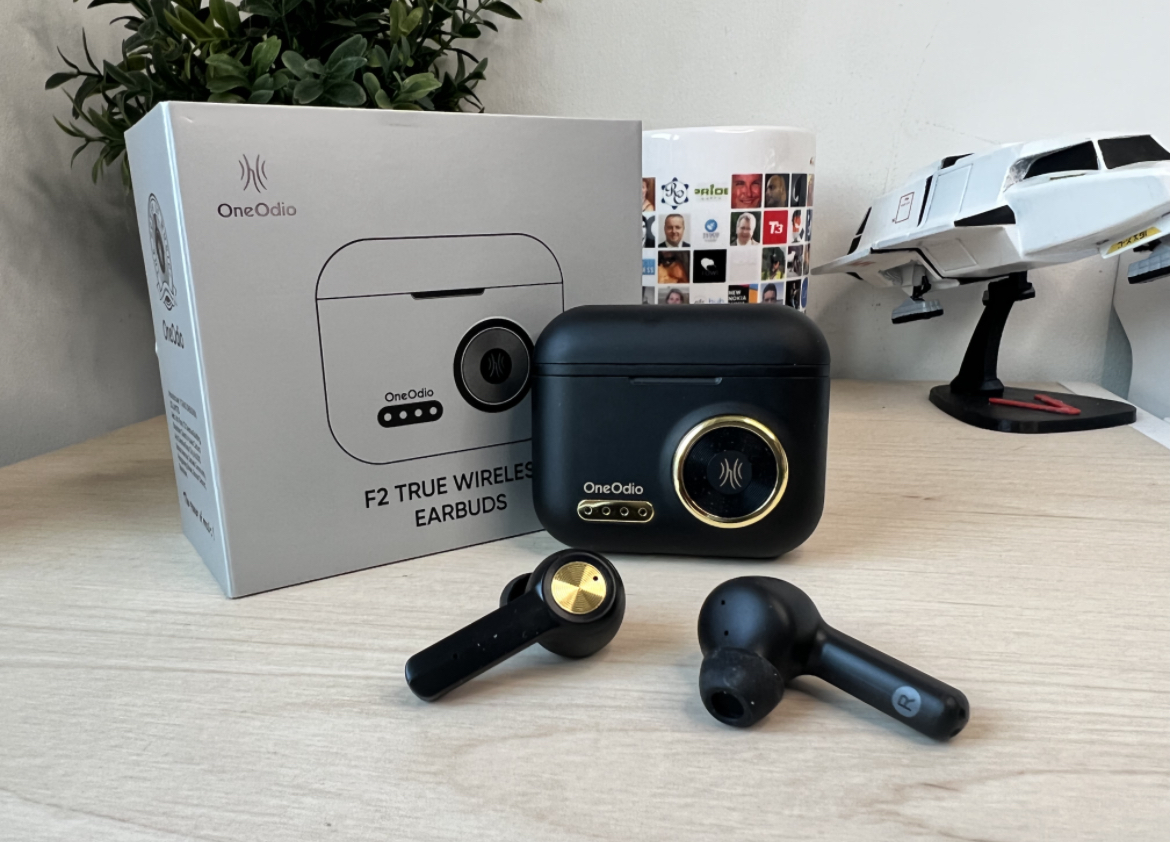
OneOdio is a brand that makes audio products at a really reasonable price and falls into the entry level price range however the goods are not entry level on price we have tested some of their products here in the past and their latest true wireless the F2 have dropped in and these come in a really cool range of colours.

The presentation is also cool with the charging case which looks like a small camera on the front, there is a USB-C port underneath and then some LED lights to give you a charge status beside the logo, there is no wireless charging or app with these but at this price point it is expected.

The earbuds themselves have a stem and sit nicely in the ears once you apply the right tips which you should always do anyway, there is no ANC present but the passive noise isolation works well. To control the earbuds you have a capacitive area in gold which ties in with the theme of the earbuds and these work really well, One Odio are really good at this from testing previous products and it is great to have earbuds that do not have you tapping more than you need to so you can execute the command you want. You can skip/reverse play/pause tracks and more which you can see in the video review below. One other thing to note is these can be used individually ie either side can be in the charging case.

Sound.

The sound is good considering the price here nice volume with a nice level of bass, highs lows and mids are fine and overall they are great for the non audiophiles and pack a punch , there was no distortion when maxed out on volume and I cant complain really. Overall they are worth their price make an ideal gift and even a spare pair to have for out jogging or taking a walk in the park.

Features


  • Full-frequency Fidelity Sonic Quality: F2 inherits the widely acclaimed sound quality of OneOdio’s products. The 10mm neodymium magnet speaker accurately controls the sound of 20-20kHz. It can meticulously deliver every musical detail. The bass is solid, the treble is clear, and the music and vocals are distinct, giving you a sound experience just like in a studio
  • AI Enhanced HD Call: A Built-in industry-leading CVC 8.0 noise reduction chip can intelligently identify your voice and the environmental noises. You can still use F2 to talk clearly in noisy environments such as subways and streets
  • 38 Hours of Playback: F2 wireless earbuds can work for more than 7 to 8 hours on a single charge, and a total of 38 hours of playback with a charging box. A single charge can ensure 3 to 5 days of normal use. And it can automatically shut down intelligently to help you save power
  • Dustproof and Waterproof: F2 wireless headphones have IPX5 protection, which can resist daily splashes, sweat, rain and dust. Great for fitness, workout, running and travel
  • Dainty Retro Design: TWS is like jewelry that you wear on your ear. The appearance is very important. F2 wireless earbuds have a small and dainty retro design to ensure comfort and a convenient touch UI design. The charging box has a battery indicator, which is concise and clear

BUY

Video Link

Google launches Startup School for businesses throughout Ireland

Google For Startups has today announced the launch of its Startup School programme in Ireland. The series of virtual training courses will launch this April and will be available to startup founders and their teams throughout the country.

The initiative aims to provide support to startup founders and their teams by offering a series of free, hands-on virtual courses aimed at helping them to grow and advance their businesses. The interactive sessions will cover a wide range of areas and will feature Google tools and products such as Google Analytics, Google Ads and Google Cloud as well as training around topics such as funding, expanding internationally and becoming an effective founder.

The courses will be offered for free on Wednesdays and Thursdays for six weeks starting on Wednesday 13th April. A number of the training sessions will be led by successful founders  including Pat Phelan, Co-Founder at SISU Aesthetic Clinic, Alison Sheehy, Digital Marketing Lead at GYM+COFFEE and Ryan Scott, CEO of Dropchef. The Google for Startups Startup School is being run in collaboration with Enterprise Ireland and Dogpatch Labs, who will assist Google in reaching startup teams throughout the country.

Paddy Flynn, VP of Geo Operations at Google, said, “We are hugely excited to launch Startup School in Ireland. It’s no secret that Ireland is well known for its entrepreneurial startup culture and building successful startups. We want to continue our contribution to nurturing the startup community and providing free access to this training is one way of doing that. 

“We are very proud of the great work Google has been able to achieve through partnerships with Irish startups and the startup ecosystem, and with the launch of Startup School we hope to reinforce our commitment to helping Irish businesses to grow and succeed.”

Jake Phillips, Ecosystem Development Director at Dogpatch Labs added, “We’ve always been focused on providing a valuable community for startups to support growth, share knowledge and form connections. Google’s Startup School will be another great avenue for startups to access expert knowledge to grow their businesses.”

Google has been successfully running programmes aimed at upskilling startups for several years now and has recently opened its virtual doors at an EMEA level. The Startup School courses in Ireland will be specifically available to and tailored for Irish businesses with the size of each session capped so that all participants have an opportunity to ask questions and interact with instructors.

Startup businesses can find out more and register for the virtual training sessions online at: https://campus.co/global/startup-school/

More than Double the Number of Male to Female Secondary Level Students are Considering a Career in STEM

At secondary level education in Ireland, there are 2.5 male students for everyone 1 female student considering a career in tech, while just 1 in every 2 students can see any opportunities for them in the tech industry. Responding to a survey conducted by Hayes Culleton Group in conjunction with STEM South West, over 600 transition year students from throughout the country voiced their opinions and concerns around their future career prospects. The findings were released on the day of the STEM South West Expo, an industry-run initiative to promote STEM in the region – Wednesday April 6th, 2022. This virtual event is free to Students, Parents/Guardians, Guidance Counsellors, Job Seekers and Career Changers.

Speaking of the results, Marguerite O Sullivan, Chairperson of STEM South West,

Finding out what these young learners are thinking and even more importantly what worries them is so important. It is incumbent on us in the industry to give them as much knowledge as we can so that they can make informed decisions which will have a positive impact on the choices they make for learning and development in the future. That is the exact rationale behind the STEM South West Expo – we wanted to give students an opportunity to see the wealth of possibilities that lie ahead. And I believe the Expo we have put together really delivers on that”.


Other key findings from the Hayes Culleton survey included:

  • 75% of all respondents are worried about their future career (this includes concerns about whether they will love their job and make the right choice to concerns about whether their chosen field and skill sets will eventually be made redundant by technology and their capacity to adapt to that. 
  • Fewer than 15% see the potential for a STEM career in the Environment and Sustainability sector
  • Regional differences were apparent, for example, Cork teens hit more than double the national average in terms of worry expressed about future job, career and employment.


Susan Hayes Culleton, MC at this year’s virtual Expo commented that,

The results demonstrate the timeliness of the Expo and the real need to communicate and engage with all students, but particularly girls, outlining the breadth and range of STEM roles, the impact a career in the sector can have in the context of climate change”.

STEM South West attendees are given the chance to meet with representatives of companies including: Pfizer, Gilead, Johnson & Johnson, Depuy Synthes and more and will be given a chance to discuss career opportunities with people that work within the various industries as well as those in educational institutions who can advise on study paths. 

STEM SW Expo visitors have access to:

  • the Virtual Exhibition to talk with talented people with diverse skills and expertise happy to talk about their jobs and the role STEM has played in their career choice.
  • Speakers Corner which includes Michael Manning, Trackside Engineer with F1’s Team RedBull, Fionnghuala O’Reilly NASA datanaut and more.
  • Industry Panel Discussion on the exciting future for STEM.


Tickets can be booked at https://stemsouthwest22.vfairs.com/en/

Environmental Advantages of Using LNG Energy

Natural gas has numerous environmental benefits compared to oil, other gases, or coal-fired energy. There is a large reduction in CO2 emissions, but there are also other significant environmental benefits. Locally and globally, massive reductions in NOx and near-complete removal of sulfide, dust, and particles help a better climate.
Utility bidder will provide you with a deep insight into the topmost advantages of using LNG energy. They are as follows:

Efficient Storage Solution

LNG is a naturally occurring gas that has been cooled to roughly -162°C (-260°F), at which point it is liquid. As a result of the cooling, the volume of the gas is reduced by 6000 percent, allowing it to be carried and stored in vacuum insulated tanks on vehicles, containers, and ships. As a result, LNG is a more versatile and storage-friendly alternative to pipeline gas or compressed natural gas (CNG).

Less Risk

The risk of ignition is low in the event of a gas leak. Natural gas must have a gas/air ratio of roughly 5-15 percent to be combustible. If there is less than 5% natural gas in the mix, it is too thin to burn, and if there is more than 15% gas, it is too rich. Natural gas also requires a high-energy spark to ignite. The ignition temperature is 540 degrees Celsius (1004 degrees Fahrenheit).

If there is an LNG leak, the fluid/gas will be heavier than air as long as the temperature is below 100 degrees Celsius (212 degrees Fahrenheit). It will immediately vaporize to a gaseous state, rise to the surface, and combine with air to form a non-flammable combination.

In the incident of a leak or an LNG spill, there may be flammable areas above the leak or spill. Other, heavier gases are more likely to fall and remain close to the ground, where they can create a flammable zone. As a result, it’s critical to keep track of all ignition sources.

Lighter Chemical Composition

Other fuels, such as propane and oil products, are heavier and have more carbon atoms in their molecules. Propane (C3H8), for example, has three carbon atoms and eight hydrogen atoms. The more the carbon content of a molecule, the larger the CO2 emissions. Natural gas emits less CO2 than any other hydrocarbon since it is the lightest and simplest hydrocarbon. CO2 emissions will be decreased by about 25% in general.

Non-Toxic Gas

Natural gas is colorless, odorless, and non-toxic. A natural gas leak could still affect the amount of accessible oxygen in a contained space. If someone comes into close touch with the supercooled gas, it could be harmful. Natural gas is generally regarded as a very safe gas, and it is frequently utilized as a residential gas.

Leakage Impacts

With the exception of anything in direct touch with LNG/gas in a supercooled state, a natural gas or LNG leak will have a negligible impact on plant and animal life. Oil spills from shipping, transportation, or oil tanks, on the other hand, have a huge negative environmental impact and can result in significant expenses. Natural gas leaks, however, should be avoided.


Gilead Sciences Opens New Global Paediatric Drug Development Centre of Excellence in Dublin’s North Dock

Gilead Sciences, a global biotechnology company, today announced the formal opening of its Dublin city centre office focused on developing new paediatric formulations for its portfolio of medicines. Development, clinical operations, legal / IP, medical affairs and regulatory teams will work together to create the company’s only Global Paediatric Centre of Excellence, based in the North Dock area of the city centre.

“Gilead’s therapies address some of the world’s most challenging viral diseases, including HIV, viral hepatitis and COVID-19. Our Dublin teams play a critical role in adapting these therapies to treat children. In addition, as Gilead expands its work in oncology, our Irish teams could help to address the urgent challenge of childhood cancers,” said Daniel O’Day, Chairman and Chief Executive Officer, Gilead Sciences. “Ireland has long been a global hub for life sciences and Gilead is proud to have been part of that since 1999. The new Dublin facility is a further investment in our long-term presence.”

An Taoiseach, Micheál Martin said: “I am delighted to join with Gilead Sciences to mark the opening of their new Centre of Excellence for Paediatric Drug Development in the Dublin Docklands and the creation of 33 new jobs – a very welcome and positive announcement for the city. Gilead Sciences is a great example of a business delivering on the global stage, supported by our accomplished and skilled workforce. After over 20 years here in Ireland, this will be Gilead’s fourth facility here, further underlining the leading role this country plays in the company’s operations in Europe. Gilead’s drive and commitment to innovation, and to the highest standards of pharmaceutical technology, is clear to see, and will, I’m sure, continue to bring the company considerable further success in the years ahead.”

Tánaiste and Minister for Enterprise, Trade and Innovation, Leo Varadkar, said: “I’m really pleased Gilead Sciences has chosen Dublin as the location for its new Global Paediatric Drug Development Centre of Excellence, creating 33 new jobs. This announcement reinforces the importance of Ireland globally in the manufacturing of medicines and in particular, the development of paediatric medicines. Our highly skilled workforce continues to attract world renowned companies such as Gilead Sciences to grow their businesses here. After more than 20 years in our country, this new facility is another exciting expansion for Gilead, and I wish the team the very best with this new initiative.”

The Dublin Development office is responsible for coordinating paediatric clinical trials for seven products across 18 countries, with current trials investigating paediatric treatments for HIV, hepatitis B and COVID-19. The company plans to expand the responsibilities of the Dublin operations further, including supporting work on adult studies across its portfolio of approved and investigational medicines. Additionally, a new team to be recruited in the Dublin office will form a core part of a new Artificial Intelligence Centre within the Gilead Development organization.

Reggie Kelly, Vice President, Development, Gilead Sciences, and Dublin site lead said: “Development is a critical stage in the life cycle of a medicine and Ireland is a global life science hub. With the clinical, academic and regulatory expertise available – in addition to industry talent – Dublin was the obvious location. We chose this office carefully, for its location and it’s sustainability credentials, and I’m thrilled to be able to open it to our team and our external partners.”

IDA Ireland CEO Martin Shanahan said: “IDA Ireland welcomes Gilead’s expansion of its Irish operations, establishing in Dublin this global biotechnology company’s first Global Centre of Excellence for Paediatric Clinical Trials outside of the US. It’s a strong vote of confidence in Ireland for investment of this kind and will be a welcome addition to the growing biotech ecosystem here.”

Gilead has been in Ireland for over two decades. Its Cork manufacturing facilities produce 22 different products and its Dublin distribution centre, separate from North Dock, is critical in its global supply chain. In total, Gilead has over 500 employees in the State, its largest operation in the European Union (EU).

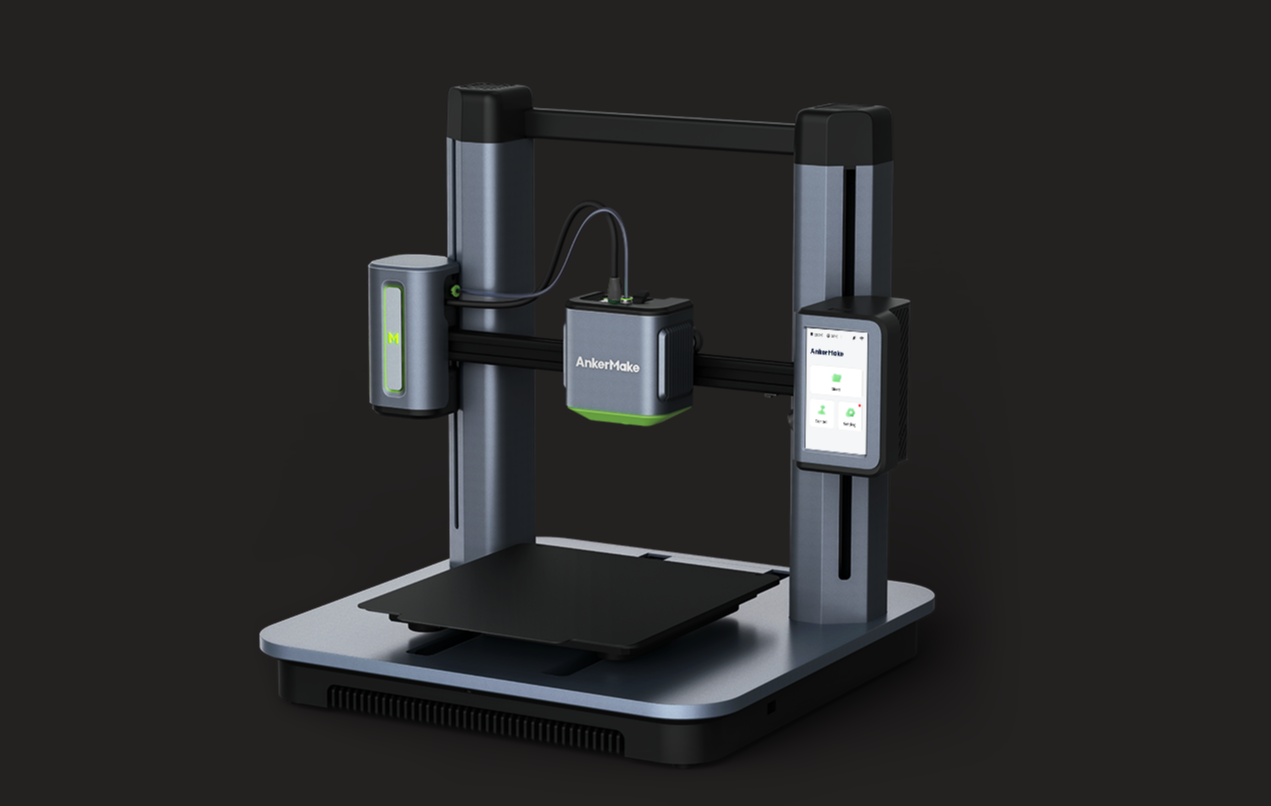
AnkerMake’s New 3D Printer Makes Its Debut with the AnkerMake M5

The first 3D printer designed to improve the user experience by reducing printing time up to 70%. The AnkerMake M5 is available today on Kickstarter.com, starting at a super early bird price of $429.

“3D printers help us imagine a world where ideas and creative concepts can be instantly transformed into physical form. However, the reality is 3D printing can be slow, cumbersome, and difficult to figure out,” said Steven Yang, CEO of Anker Innovations. “AnkerMake is committed to removing these pain points so that artists, inventors, hobbyists and DIY enthusiasts can take advantage of a more practical tool to bring their creations to life.”

The AnkerMake M5 solves the most critical issues that have prevented 3D printing from becoming a more mainstream endeavor. These issues include slow print speeds, the need to constantly supervise printing for errors and a needlessly complicated user experience.

AnkerMake M5 3D printer techbuzzireland

The AnkerMake M5 solves these issues by delivering:

Quick and Easy Assembly

3D printing has never been this accessible. The M5 is designed is easy to set up in just three steps within 15 minutes. Several user-friendly features including 7×7 auto-leveling, PEI soft magnetic printing bed, auto-resume after power outage and printing notifications. These enhancements help the user focus completely on their prints instead of technical aspects and handcrafting.

A New Standard in Print Speeds

Thanks to its new PowerBoost technology, the AnkerMake M5 basic print speed is 250 mm/s, which can be used for printing jobs that require a smoother and more detailed finish. For faster print jobs, perfect for prototyping and less detailed finishes, the M5 can save even more time with an acceleration of the extruder up to 2,500 mm/s². In this print mode, the M5 can reduce the average print times by up to 70% in comparison to other 3D printers.

Stable, Quality Printing

The aluminum alloy die-casting design increases the weight of the base, reducing the center of gravity of the machine. The sleek design makes printing more stable and allows fast speeds and extreme acceleration. The installation error of the base is also reduced, improving the accuracy of the printing tool and surface even at high speeds with 0.1 mm precision.

AI Print Monitoring

The built-in HD camera will monitor print jobs for issues like layer splitting, spaghetti mess or nozzle plugging. When it detects an issue, the AnkerMake M5 will alert users. This feature helps avoid wasting time and valuable printing materials.

Live WebCam View With Time Lapse

Users can view live feeds of their print jobs from anywhere using the AnkerMake mobile app. Time lapse videos are also automatically generated after the printing job is complete. With an adaptive light-sensing algorithm, users can see the printer output clearly, even at night.

Smart, Connected Printing

The AnkerMake M5 can be seamlessly connected and controlled through both the AnkerMake mobile app and AnkerMake slicing software1. Multi-device management and remote messaging notifications enable the user to start printing from their smartphone or computer anytime, anywhere.

Additional Specs:

• 5X industry average print speed (250 mm/s in standard print mode)

• 2,500 mm/s² in accelerated print mode

• Can reduce average print time by up to 70 percent

• AI print monitoring with auto shut-off

• Integrated HD cam with remote viewing

• Supports WiFi and USB connectivity

• Easy filament loading and extraction with heat assist

• Magnetic base for easy removal and cleaning

• Weight: 12.4 kg / 27.3 lb

• Measurement: 502x438x470 mm / 19.76×17.24×18.50 inches

Price & Availability

The AnkerMake M5 3D printer is available on Kickstarter.com starting today for special, limited super early bird price of $429. The normal early bird price is $499

World of Warcraft: The Most Powerful Game Franchise of All Time

Perhaps you’re one of the large numbers of individuals getting a charge out of Overwatch, Blizzard Entertainment’s multiplayer shooter. Or, on the other hand, maybe you’re an eSports fan, fixated on League of Legends or Dota 2. Some of you have gone through hours slouched over your telephones, tapping away at Plants versus Zombies or Clash Royale.

Assuming this is the case, you have Warcraft to thank.

Players and pundits preferred the primary World of Warcraft game. They cherished the second, Warcraft II: Tides of Darkness, and the third, Warcraft III: Reign of Chaos. Its science fiction spin-off, StarCraft, has been known as the best computer game made. The advanced Warcraft-themed game, Hearthstone is turning into an eSports pillar and has roused various impersonations. The Warcraft film even broke film industry records in regions of the planet.

The series’ prosperity has made Blizzard perhaps the most excellent designer. Before Warcraft, Blizzard got by programming ports of others’ games. The organization holds a yearly show committed solely to its intellectual properties.

That is to the point of solidifying Warcraft’s inheritance as one of the leading gaming establishments ever. Yet, the game’s impact goes past an index of side projects and Blizzard’s financial balance. The universe of Warcraft, which transforms Warcraft’s dream setting into a virtual world populated by a vast number of genuine players, characterized the MMORPG classification. Goodness, and the $700 million esports industry? Without Warcraft, it wouldn’t exist.

Everything began in 1994 with Warcraft: Orcs and Humans. Warcraft wasn’t the primary continuous procedure game-the class has been around in different structures since the 1970s, and there’s a ton of Westwood Studios’ Dune II in Warcraft’s DNA. As in most procedure games, Warcraft players gather assets, which they use to construct armed forces. Players send their soldiers out into the wild to vanquish foe bases whenever their powers are adequately considered. The primary side to crush its rival wins.

Warcraft’s essential interactivity was like its ancestors. However, Warcraft added a smoothed-out UI and a convincing storyline, making the game more available. New mission goals, such as finishing attacked towns and killing explicit targets, infused some assortment into the ongoing technique’s deeply grounded equation. Warcraft is brimming with character and humor, which loans a character to the game’s anonymous snorts.

Be that as it may, Warcraft’s most significant advancement was its multiplayer mode. Pre-Warcraft, most technique games were only issues. Warcraft changed that. Utilizing a dial-up modem or a neighborhood, players could interface with one another’s PCs and go up against each other rather than PC-controlled adversaries. Warcraft wasn’t the primary ongoing methodology game to offer internet-based play. Yet, it was the first to hit the standard, and after a short time, the multiplayer battle was the continuous system’s real draw.

Multiplayer was much more vital to StarCraft. At first, StarCraft wasn’t considerably more than Warcraft with a science fiction skin. Patrick Wyatt, Blizzard’s previous Vice President of Research and Development, portrays the main variant of StarCraft as “Orcs in space.” It ran on a similar code as Warcraft II. It was made as a speedy, one-year project intended to connect the time between Warcraft II and Blizzard’s upcoming pretending game, Diablo.

After StarCraft got a tepid reaction at E3, Blizzard rebooted the task, composing another motor without any preparation and extending the game’s degree. At the point when StarCraft, at last, turned out in 1998, Blizzard had Battle.net, its exclusive web-based matchmaking administration. With highlights like channels and leaderboards, Battle.net made it simple to associate with StarCraft players all over the planet, and the contest flourished.

StarCraft got rave surveys, and many players rushed to Battle.net. The game was particularly famous in South Korea, where outsider coordinators began to hold competitions. The contests pulled in onlookers, the best players ultimately became VIPs who acquired enormous compensations, and the cutting-edge eSports model was conceived in a little while.

In any case, StarCraft was only the start. At the point when Warcraft III: Reign of Chaos turned out in 2002, it was transported with both a solitary player crusade and online Battle.net support. It also accompanied a piece of programming called World Editor, which let fans change all aspects of the game.

Past versions of Warcraft included map editors, yet World Editor took things further. With the new model, aggressive players could take the Warcraft motor and use it to make new games. That is the thing they did.

3D printed fingertip ‘feels’ like human skin

A highly sensitive, 3D-printed fingertip could help robots become more dexterous and improve the performance of prosthetic hands by giving them an in-built sense of touch.

Machines can beat the world’s best chess player, but they cannot handle a chess piece as well as an infant. This lack of robot dexterity is partly because artificial grippers lack the fine tactile sense of the human fingertip, which is used to guide our hands as we pick up and handle objects.

Two papers published in the Journal of the Royal Society Interface give the first in-depth comparison of an artificial fingertip with neural recordings of the human sense of touch. The research was led by Professor of Robotics & AI (Artificial Intelligence), Nathan Lepora, from the University of Bristol’s Department of Engineering Maths and based at the Bristol Robotics Laboratory.

“Our work helps uncover how the complex internal structure of human skin creates our human sense of touch. This is an exciting development in the field of soft robotics – being able to 3D-print tactile skin could create robots that are more dexterous or significantly improve the performance of prosthetic hands by giving them an in-built sense of touch,” said Professor Lepora.

Cut-through section of 3D printed tactile skin

Professor Lepora and colleagues created the sense of touch in the artificial fingertip using a 3D-printed mesh of pin-like papillae on the underside of the compliant skin, which mimic the dermal papillae found between the outer epidermal and inner dermal layers of human tactile skin. The papillae are made on advanced 3D-printers that can mix together soft and hard materials to create complicated structures like those found in biology.

“We found our 3D-printed tactile fingertip can produce artificial nerve signals that look like recordings from real, tactile neurons. Human tactile nerves transmit signals from various nerve endings called mechanoreceptors, which can signal the pressure and shape of a contact. Classic work by Phillips and Johnson in 1981 first plotted electrical recordings from these nerves to study ‘tactile spatial resolution’ using a set of standard rigid shapes used by psychologists. In our work, we tested our 3D-printed artificial fingertip as it ‘felt’ those same rigid shapes and discovered a startlingly close match to the neural data,” said Professor Lepora

“For me, the most exciting moment was when we looked at our artificial nerve recordings from the 3D-printed fingertip and they looked like the real recordings from over 40 years ago! Those recordings are very complex with hills and dips over edges and ridges, and we saw the same pattern in our artificial tactile data,” said Professor Lepora.

While the research found a remarkably close match between the artificial fingertip and human nerve signals, it was not as sensitive to fine detail. Professor Lepora suspects this is because the 3D-printed skin is thicker than real skin and his team is now exploring how to 3D-print structures on the microscopic scale of human skin.

“Our aim is to make artificial skin as good – or even better – than real skin,” said Professor Lepora.