Generation consideration: brands must offer more to build loyalty with younger customers.#RicohIreland

The study, which included over 250 Irish respondents, found that third-party reviews and recommendations are of crucial importance to information seeking younger consumers. 43% of 16 to 24-year-olds feel reviews are the most impressive factor influencing their decision to choose a brand, compared to only 20% of over 55s. It was also found that half of the youngest age group surveyed feel frustrated when they are unable to interact with a brand through social media, compared to just over a quarter of over 55s.

A new study from technology specialist Ricoh Ireland has highlighted generational differences in customer service expectations. Older age groups are revealed as being less forgiving of brands, while younger customers expect far more information at the consideration stage, along with deep post-sales interaction to build lasting brand relationships. The survey of 3,600 consumers was conducted by Censuswide across Europe and included more than 250 Irish respondents.

– Ricoh Ireland research shows 43% of 16-24 year-olds view third-party reviews and recommendations as the most important factor in choosing a brand, compared to 20% of over 55s

 – 55% of customers would abandon sales processes that they find difficult, rising to 62% for over 55s and lowering to 43% for 16-24 year-olds

 – 57% of customers spend more with brands that make them feel valued

 – Half of 16-24 year-olds are frustrated when they are unable to contact a brand through social media, while only 26% of over 55s feel likewise

 – Chas Moloney sees “huge opportunities for Irish businesses to connect with, and learn about, their audience”.


The research found that added services, such as the inclusion of third-party reviews and recommendations, are vastly more important to younger consumers than older generations. Some 43% of 16 to 24-year-olds rated this as the factor that impresses them most when choosing to buy from a brand, compared to only 20% of over 55s.

Chas Moloney, director, Ricoh Ireland and UK

Customers also seek streamlined user experiences, with the research finding that 62% of over 55s would walk away from brands with laborious sales processes, compared to 43% of 16 to 24-year-olds. Of all age groups, 55% of customers would abandon a purchase if they found the process difficult.

Older customers were also revealed as being less interested in loyalty programmes and incentives for frequent purchases. Only 19% felt this was an impressive factor in brand selection, compared to 38% of 16 to 24-year-olds.

Chas Moloney, director, Ricoh Ireland and UK, said: “Our research highlights a core challenge facing brands today – how they can navigate a varied set of preferences from customers across generations. Understanding why young people build affinity with a brand is a crucial factor in ensuring future success, while continued attention to other age groups’ needs is integral to customer satisfaction and retention. For those that get it right the rewards are there for the taking, shown by the fact that 57% of customers spend more with brands that make them feel valued.” 

Ricoh’s research also found that customers are increasingly going to great lengths to access information pre-purchase. Younger consumers are more frustrated by not being able to interact with a brand via social media, with 50% of 16 to 24-year-olds saying it irritates them, compared to 26% of over 55s.

Moloney continued: “Brands cannot shirk the responsibility of providing lines of communication for their customers. This is now taken for granted by young consumers, leading to frustration in its absence. It’s paramount that Irish businesses are on social media and fully aware of their consumers’ behaviour. Significant numbers of Irish consumers are using social media to interact with brands prior to purchase. This provides huge opportunities for Irish businesses to connect with, and learn about, their audience.”


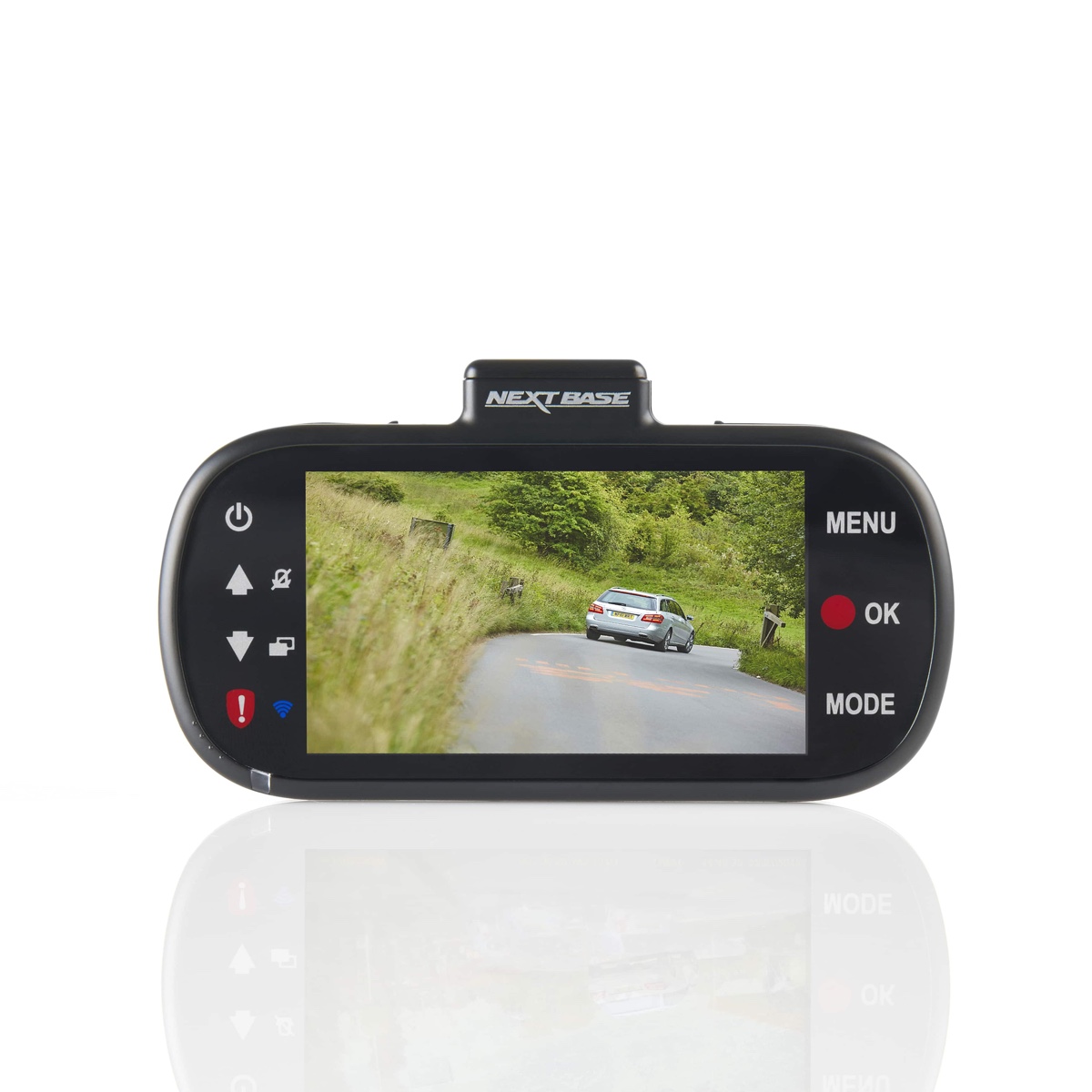
Video Review – Nextbase 512 GW #Motoring #Dashcams #Nextbase

Today we are going to go through the nextbase 512 GW with a video review for a change as we are now moving toward video reviews more so than written, In this review we will go through the unit and show you what features it has along with its fuctions and we also have included a few samples.The 512 GW has a simple set up process and its fully operational out of the box so you jus plug it in and go. The default settings are fine as is but we go through these settings to as there are some features you might want turned on or off.. Any questions fire away..

UNBOXING

Features

  • Updated Sony Exmor R sensor provides unbeatable image quality
  • 1440p Quad HD recording at 30fps and 1080p recording at 60fps
  • Innovative polarising filter to remove windscreen glare
  • Wi-Fi to allow you to share your footage directly to your smartphone or tablet
  • 140° ultra-wide viewing angle for greater road and pavement coverage
  • GPS location and speed data to pinpoint incidents on your journey
  • Click & Go Powered Magnetic GPS Car Mount
  • Intelligent Parking Mode automatically indicates motion for greater safety
  • High Dynamic Range improves the contrast in an image whilst maintaining clarity
  • Wide Dynamic Range image processing ensures clear recordings in bright and dark light
  • 3” LCD screen 960 x 240
  • Time Lapse features for longer journeys
  • Auto Dimming for low light conditions

You can purchase the 512GW HERE 

VIDEO REVIEW


AR Wars, episode II: The return of Glass. #AR #IDTechEx #AugmentedReality

The announcement of the relaunch Glass EE brings Google back in the game it kick started -for all intents and purposes- back in 2013, and this time the AR headset finds itself in a battle of the (enterprise) niches. Major upgrades between the explorer and the enterpriseedition include a modular structure, a better camera (from 5 megapixels to 8), extended battery life, faster Wi-Fi and processor, and a new red light that turns on when recording video. Arguably, there’s not that many differences between the first iteration of Glass some 4 years ago and the new headset. In reality, and most critically, it’s not so much that Glass EE is a new device, it’s the playing field’s rules that are new.

AR in 2013:  a brave new world

Augmented reality (AR), although first demonstrated in headsets in the early 1990’s and implemented in consumer applications insimple ways from the late 2000s/ early 2010s, saw a dramatic rise in awareness of,  excitement, and hype with the launch of Google Glass in 2013. The headset, although criticized at the time of its launch and eventually pulled off the market in early 2015, lead to a precipitation of interest and investment in research & development in the space for AR, with tens of prototypes, demos and products hitting the market in the few years immediately after, with Pokemon Go!, the quintessential “killer app” and the pinnacle of global AR frenzy to date.


As discussed in the IDTechEx report on the topic “Augmented, Mixed and Virtual Reality 2017-2027: Technologies, Forecasts, Players – Headsets, components and enabling technologies for future AR, MR, & VR devices”, the launch of Glass impressed, disappointed andsent waves of alarm throughout the electronics industry all at once: it “forced” competition to launch non-ready, clunky products, for fear of being considered as late arrivals in the AR space. Products with limited functionalities, short battery life, dim displays, that overall offered a dissatisfying user experience were revealed too early to convince consumers of the vision of AR and the capacity to achieve it. Instead, technology developers took severe criticism and a step or two back from the ambition of their initial plans and refocused their efforts onto more achievable goals: niche markets with specific needs, and problems with solutions that can be implemented through an AR headset in sectors where a clear ROI is associated with deploying said solutions.

This oversimplified summary describes the basic process through which Glass EE as well as most other AR headsets came to serve enterprise applications.

Meanwhile in the VR market not that far away…

At the same time the first Glass hit the market in 2013, developers of VR headsets were only just digesting what is considered a seminal discovery for the VR industry: Valve’s discovery and sharing of the breakthrough of low-persistence displays in 2013, which made lag-free and smear-free display of VR content possible.

Today, and only 4 years later, the market for VR is a very different landscape, with over 25 million headsets forecasted to be sold in 2017. And although it’s very true that AR and VR are not quite the same thing, they do have as many similarities as they have differences; a lot of the challenges relating to form factor, ergonomics, power consumption or development of better, lighter componentry have similarities that can lead to a very useful cross feeding of critical breakthroughs, and as IDTechEx forecasts, a convergence in later years that will see headsets being capable of both AR and VR.

According to Jay Kothari’s promotional piece on Glass EE, on the left is an assembly engine manual that GE’s mechanics used to consult. Now they use Glass Enterprise Edition on the right. GE was one of the first businesses to utilize Glass in the workplace. Today the list includes AGCO, DHL, Dignity Health, NSF International, Sutter Health, The Boeing Company, and Volkswagen. Source: Google X

Niches within niches

Until then, AR headset developers are choosing their areas of focus, largely based on the form factor and capabilities of the headsets they’re launching. Some examples include:

  1. Hololens: Comparisons with Microsoft’s visor device are inescapable, but the differences between it and Glass EE almost ensure little competition between the two for the same chunks in the search of “niches within niches”, at least initially. Hololens, with its unusual look will probably remain deployed in indoors applications as it’s too “unexpected” for people walking down the street (that’s not a bad thing necessarily, as it  allows itself constant proximity to grid power and thus, the capability to tackle hjgh processing power tasks without concerns of running out of juice), whereas the diminutive in size EE can be discrete enough for the great outdoors but will probably steer clear of processing power intensive applications due to its small size.
  2. Snapchat spectacles: I love this example for two reasons: first, because it reminds everyone that AR content doesn’t necessarily have to be expensive and complex, but given the right application, it can be fun and engaging, even if it only allows you to film 10-second clips of yourself for your snapchat account. Second, because the spectacles’ marketing campaign and sales model has made them a global sensation and something for the textbooks for generations of marketeers to come.
  3. Oakley Radar Pace: Lastly, Oakley’s headset; a reminder that AR doesn’t have to be about visual content only: if you’re an athlete at the top of your game, you don’t have time to glance at your near eye display to see how fast your heartbeat is, or what distance you have to cover to get to the finish line: so Oakley did away with the power hungry display module and all information is accessed and exchanged with the wearer through voice commands.

So welcome back Glass.  We’ve definitely been expecting you. Let’s see how you fare, 4 years on.For more insights on the AR & VR markets please contact Dr Harry Zervos, principal analyst at IDTechEx Inc. at h.zervos@idtechex.com

Featured image source – Google

Tesco Mobile launches fantastic pay-as-you-go phone offers for students and families

Going back to school can be complicated, but choosing your phone isn’t with Tesco Mobile.

Choosing school subjects can be complicated, but choosing your phone doesn’t have to be, and Tesco Mobile is here to help with great new pay-as-you-go offers, that will make getting back into the swing of school that little bit easier.

 Killian O’Neill, Head of Marketing, Tesco Mobile Ireland said: “It can be complicated getting back into every-day school life, especially after such an enjoyable, warm summer – and we’re just not used to those in Ireland!  But switching to Tesco Mobile is so easy, and we’re excited to be launching our Back to School range of value offers which will remove the hassle out of choosing your phone at least.”

With a range of new sleek and value phones as part of its Back to School campaign on offer from Tesco Mobile, students and families are sure to find the perfect one for them.  The Alcatel Pop 4, which was €99.99, is now €49.99 with Tesco Mobile, and allows users to watch movies on the stunning 5” black crystal display, which is fully laminated to give vibrant colourful images. With an 8MP rear camera with an LED flash, HDR can be used to perfectly expose images, while a video zoom improves the video recording experience and the 5MP selfie camera has a wide angle 84 degrees lens.  The phone has 8GB of internal memory and up to 32GB external memory.

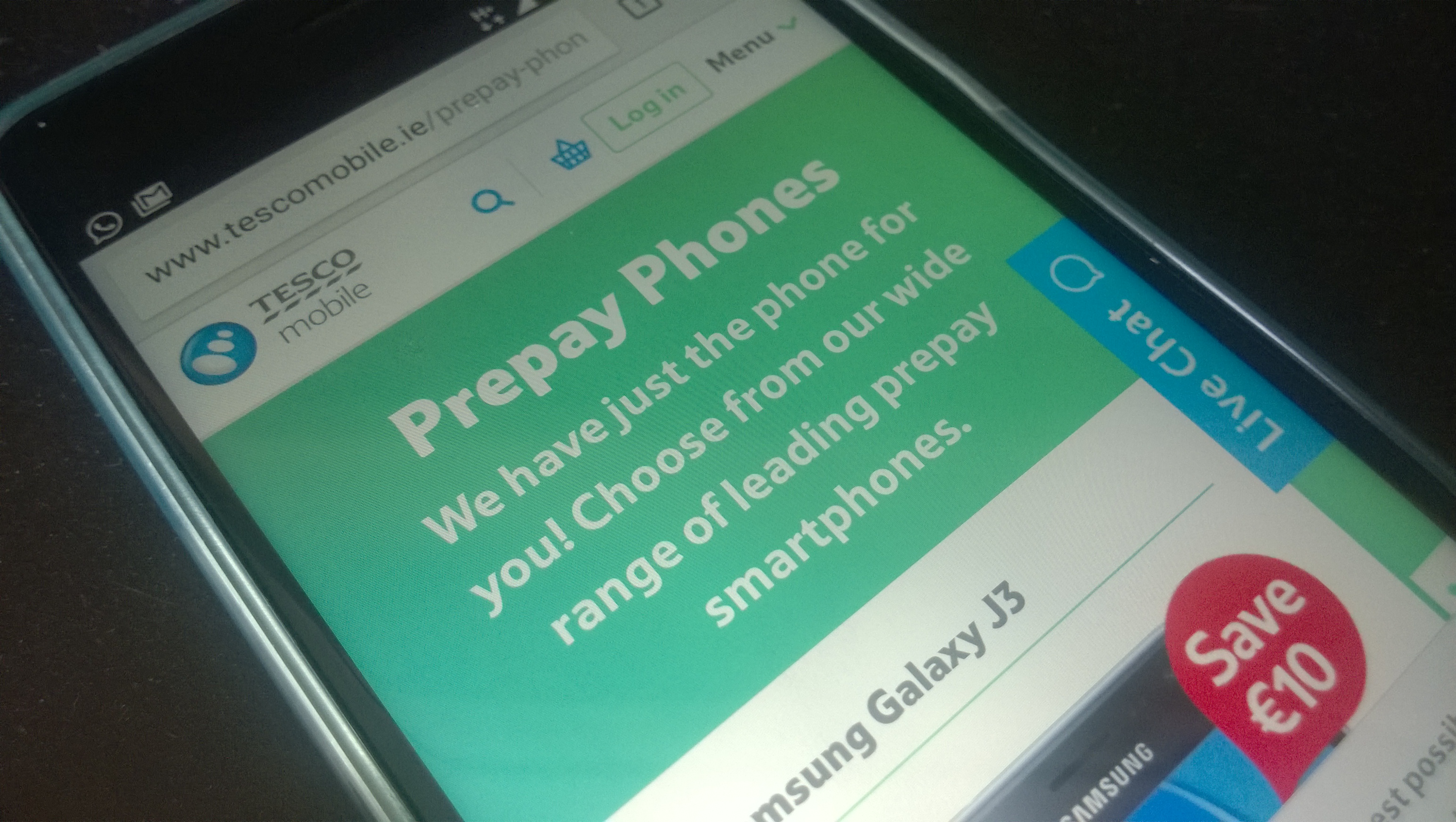
Tesco Mobile is also offering the Samsung J3 for €129.99, down from €139.99, with features including a beautiful new design and large 5″ display, external memory and powerful front and rear camera. The J3 2016 is the latest edition to the J Samsung series family. The phone has 8GB of internal memory and up to 128GB  external memory.

Tesco Mobile is available in the following Tesco Ireland Stores

The Alcatel Pixi 4 4 which was €49.99, is now €39.99 and is the ideal phone for a first-time user. This 4″ Handset offers its owner a smartphone with all the features they need, including a reliable battery, fast connectivity and easy-to-use interface.  Bundled with the Alcatel Move Band that offers motion detection, activities monitoring and unread reminding, this is a ‘no-brainer’ starter pack for a busy student.

 “We have some great mobiles on offer with all the best new features that make the ideal treat for young people and adults alike, as well as perfect Back to School options for first-time users and busy students that need a reliable battery and easy-to-use interface. Summer is also a great time to buy a phone for your kids with them out later than usual enjoying the fine weather, so why not get the best-value mobile phones around to stay in contact and make sure they’re safe. Call our Tesco Mobile customer care team today or drop into one of our 24 phone shops or Talk & Tech shops to find the best Back to School mobile phone deal for you.”

If you are not a Tesco Mobile user, it could not be easier to switch over or join. You can buy a Tesco Mobile phone or SIM card in-store and when set up, register your mobile number and details online with My Tesco Mobile. If you are switching over and want to keep your existing mobile number, you can do this via My Tesco Mobile on www.tescomobile.ie/.

Review – Nextbase – 312GW Dashcam. #Nextbase #Motoring #Dashcams

I like this Dash cam in terms of the colour, as many of the technology providers provide products in black / white aimed generally at the male market. This 312GW Dash Cam can be used by male & female but targeted to females as per the colour which is great to see the inclusion, this model is also available in the standard black also.

UNBOXING

Set up.
The setup is easy, insert SD card, clip on the bracket, plug in and use, the 312GW Dash Cam will work practically straight away the default setting is Miles per hour. ( see video ) Setting Km takes less than a minute. The iN-CAR CAM is set to record video, in files of 3 minutes in length. ( mov format, size approx. 271 MB ) The Time and Date are automatically set upon the camera from satellite data, however it will always set Greenwich Mean Time (GMT). Yom may have to adjust for (GMT+ 1 in the summer ). There are 3 modes of camera operation – Video, Photo and Playback. Video Mode: The default mode when the camera is turned on, for video recording. Photo Mode: Allows you to take still photographs. Playback mode: Allows you to view recorded video or photographs upon the dash cam LCD screen. Setting up the menu is straightforward scrolling through the screens..

Size
⦁ Size H5.7, W9.2, D3.7cm.
⦁ Weight 0.1kg.

Features
⦁ 140 degree wide angle view with full 1080p High Definition recording at 30fps
⦁ Ultra clear 2.7” LED display for ease of playback and menu selection
⦁ Six-Element Sharp Lenses made with 6 layers of glass to provide stunning clear images
⦁ Inbuilt G sensor to record force data
⦁ SOS data protection prevents the impact/event recording from being deleted
⦁ Easy to install with 4m 12v power cable and Click & Go window mount included
⦁ Supports SDHC Micro SD cards up to 32GB

Reset button
I like that there is a Reset button on the bottom of the unit should the CAM become unresponsive, I have not experienced this but good to know its available should I need it.

Powered Magnetic Click&Go Mounting
This bracket is excellent, you can remove the Dashcam from the vehicle without having to disconnect any wires, this can be done with 1 hand and easy fitted or removed.

Wi-Fi built in
This allows you to save footage direct to you phone using the app Cam Viewer app. Unfortunately, this has only got 2.3 out of 5 from reviews out of 282 reviews. This may be due to part, buffering when transferring over files from the dashcam to your phone. The app allows Live View, Playback and Upload. The app is compatible with Nextbase NBDVR312GW, NBDVR412GW and NBDVR512GW. You can also connect to a Laptop via USB cable, or remove the SD card from the Dashcam and place into your laptop via an adapter.

Note the memory card is not included, Nextbase do have an option of a card while most manufacturers cards will work if formatted. If you go down the road of getting a brand from eBay etc, this may be a poor choice as the camera records over the original data after approx. 3.7 hours for a 32 Gb card. Cheaper SD card may work for a week or too but could cause issues on play back due to their quality and should the worst happen, you could have not had footage. Nextbase recommend reformat the memory card every 2-3 weeks.

GPS
The dashcam has recording of 30fps in 1080p High Definition which is of great quality even when viewed on a 46’’ LED TV. but what’s great about this is the Built-in GPS which give accurate location throughout a journey and speed information. Should an accident occur, the speed and location, date and time is clearly displayed for viewing.

A big decision is which one to go for, depending on your budget, features required,
https://www.nextbase.co.uk/dash-cams

Warranty
This is my only gripe with the Nextbase units “Nextbase products players come with a 12-month UK warranty from new” support is available via support@nextbase.co.uk, the product build quality and design is great, but I would prefer Nextbase to stand out from the crowd with a 3-year warranty. Most other brands only give a 1 year warranty also.

We have used dash cams for over a year now, any professional driver would be well advised to use one to cover themselves in the event of an accident. Drivers with L, P, N plates may find it beneficial to review their driving or cover themselves as the instinct would be to blame inexperienced driver for most accidents. Those of you that drive a Motorbike can use the Nextbase RIDE Motorcycle BikeCam .

If money is not an option, Nextbase DUO looks great, (which we have not tested yet!) this has a front and rear dash cam dual lens to offer all round protection on the road. This can view the front like other dash cams, but a second camera has a 50 metre zoom lens and looks back through your rear windscreen to capture details of the cars behind you. This covers you both from the front and back. (Note the storage time drops to 2.4 hours and then records over itself)

I don’t think the decision is getting a Nextbase dashcam rather which one to get. It may be worth purchasing in the likes of Halfords getting the
http://www.halfords.ie/technology/dash-cams/dash-cam-accessories/nextbase-dash-cam-hardwire-kit Nextbase Dash Cam Hardwire Kit €24
This is compatible with 12-24Vdc for car or truck installations, this hardwire kit is permanently wired to into your vehicle which Halfords charge an extra tenner to fit, which is well worth it.

Interesting on the Argos website, they advise regarding the 312GW Dash Cam “97% would recommend to a friend” I certainly would be of that view.

https://www.nextbase.co.uk/dash-cams/312gw-dash-cam RRP Price: £99.99
http://www.halfords.ie/technology/dash-cams/dash-cams/nextbase-dash-cam-312gw
Nextbase Dash Cam 312GW €106.80


ATM crooks up the ante to steal your pin! Naked Security by Sophos. #ATM #Security

When at an ATM, we all zone in on the task at hand. Getting cash. Completely forgetting what those behind us can see and how they might be planning to also access our account. Unlike popular pantomimes, it now seems that worrying about what is behind you is only the tip of the iceberg.

Witnessed in Oklahoma, a wafer-thin infrared device was discovered collecting information from both the ATM itself and video footage of the ATM keypad. Providing the criminal everything required to clone a card and go on a shopping spree at the expense of someone else.

While infrared is not new technology, in fact we use it to control our TV’s and it can even be traced back to the Cold War. It does however indicate that the criminals had to be within line of sight of the ATM to receive the transmission of data.

When we think of infrared technology, our minds go in many different directions at once as we march through the variety of uses for infrared. For those who follow the myriad television crime dramas, their minds no doubt go to the use of infrared photography at crime scenes. For those who are birdwatchers, infrared video can capture the hummingbird’s expenditure of energy. For most us, we think of the remote control which connects us from our couch-potato position to our television.

Well, there’s one more to add to this list – use of infrared video to transmit data captured at your bank’s ATM by criminals wishing to clone and use your bank cards.

The newfangled ATM skimmer was found in Norman, Oklahoma and according to the Norman police department, the device which they discovered in June 2017 was wafer-thin and undetectable by the victim. This skimmer had an antenna attached which served to broadcast the collected information to a tiny camera, which had visibility of the ATM’s keypad.

Security investigative reporter Brian Krebs dug a bit deeper into this skimmer and learned that these criminals had mastered, using infrared technology, to not only transmit the data captured by the skimmer, but also to transmit the accompanying keypad video.

Infrared for data transfer is not new

Using infrared as a means to transmit data has been around for many years and is a highly efficient means to transmit at speeds many magnitudes faster than both Bluetooth and WiFi.

Furthermore, the use of an infrared transmitter greatly reduces the odds of having their transmissions inadvertently detected, when compared to WiFi or Bluetooth, which is present on every smartphone.

The criminals had only placed themselves at risk during time they put the device and video camera in place (Krebs has posted a photo of the two Oklahoma suspects), and when receiving the infrared signal (being in proximity to the ATM).

You’d have thought the criminals were Cold War history buffs, as their use of the concept of collect, store and forward data was previously perfected by the Russians. The KGB doctored several electric typewriters within the US embassy in Moscow in the 1980s which stored the key strokes and then used signal bursts to send the data to listening posts nearby. The implants were, like the ATM skimmers, deeply embedded in the hardware of the typewriter.

Available information doesn’t tell us if these ATM skimmer devices used directed or diffused infrared, a point of interest from a defensive standpoint. If the criminals used directed infrared, then their data collection point was within line of sight of the infrared transmitter – in other words, they would have to see the ATM, and thus could be seen from the ATM.

If their infrared signal used diffused infrared, then their collection point need only be in signal proximity, as the signal is more forgiving to line-of-sight disruption and therefore, a bit harder to observe.

The ever-reducing costs of readily available component parts make these devices essentially throw-away devices. Run the device for as long as the internal battery provides energy, and then move on.

What can the financial institutions do?

  • Review the video at their ATMs with regularity – in this instance, it appears that the criminals were visible on video at the ATM but do not conduct a transaction.
  • Install touchless technology, like NFC (near field communications), which will enable users to use their EMV/NFC debit/credit cards, key fob or smartphone to access their accounts.
  • Or as has recently been implemented in Macau, by the Macau Monetary Authority, “Know Your Customer” technology requires that each ATM use facial recognition technology.

What should we do?

The low-tech solution is to cover your keyboard hand with a newspaper or your other hand when entering your pin codes – which will certainly stop anyone sneakily filming you as you tap in your PIN.

For tips on how you and financial institutions can remain protected while at an ATM, take a moment to review the following Naked Security article.

You Can Now Send Money with #PayPal in the #Skype Mobile App.

PayPal and Skype users in 22 countries – including Ireland – can now send money from PayPal directly in their Skype mobile app. With this new app, people in Ireland can send money ‘in the moment’ to friends and family in Ireland and 21 other countries, including the United States and UK. More than $7 million an hour is sent to family and friends globally through PayPal services.

The partnership with Skype is another example of how PayPal is enabling users to send money in more places and in new contexts, online and on mobile. This year, PayPal has also integrated with Siri for iPhone users, in the Slack messenger app and in email via Microsoft’s Outlook.com.

“At PayPal, we are committed to putting our customers’ needs first. That’s why we aim to provide people with choice and flexibility in how they send or receive money. Over the past year, we’ve partnered with Apple, Slack and Microsoft to enable peer-to-peer (P2P) payments with PayPal and Venmo in more places and in more contexts where people are connecting online and on mobile, such as a voice command with Siri, in chat with iMessage and Slack, and in email via Microsoft’s Outlook.com.

“Today, we’re excited to announce that PayPal is now partnering with Skype to allow users in 22 countries to send money to other Skype users with PayPal via their Skype mobile app. With over one billion Skype mobile downloads to date globally, users will be able to use PayPal directly from their Skype app to seamlessly send money in the moment – like for a gift for a family member across the country or internationally.”

The ability to send money with PayPal on Skype is starting to rollout today to PayPal and Skype users in the United States, United Kingdom, Austria, Belgium, Canada, Cyprus, Estonia, Finland, France, Germany, Greece, Ireland, Italy, Latvia, Luxembourg, Malta, Netherlands, Portugal, San Marino, Slovakia, Slovenia and Spain. The feature will initially be rolled out to Skype customers on the latest version of Skype for iOS and Android mobile devices.

Read more HERE