Enterprise LMS Trends: What’s Shaping the Future of Workplace Training

Workplace training looked very different five years ago. Employees sat through long classroom sessions. They clicked through endless compliance slides. They forgot most of it within weeks. That model is crumbling. The pace of business has accelerated dramatically. Skills expire faster than ever before. A static annual training program simply cannot keep up. 

Organizations need something more agile. They need learning that flows with the work, not against it. A major transformation is underway. The trends emerging today will define the next decade of workforce development.

Why Even an LMS for Manufacturing Companies Must Evolve

Manufacturing floors have changed completely. Sensors cover every machine. Data streams from every production line. Workers interact with complex digital interfaces. Training must reflect this new reality. Traditional approaches cannot handle the complexity. 

Even the most sophisticated LMS for manufacturing companies must adapt constantly. The trends shaping enterprise learning affect every industry. Manufacturing just feels the pressure most intensely. What works on a factory floor will work in any environment. The evolution happening now touches everyone.

AI Moves From Buzzword to Backbone

Artificial intelligence dominated headlines for years. Much of it was hype. That phase is ending. AI now delivers real, practical value in learning platforms. It personalizes content recommendations automatically. It adapts learning paths in real time. It predicts which employees might struggle before they fail. 

No human could perform these tasks at scale. AI makes them possible. The technology fades into the background. It just works. Learners barely notice its presence. They only notice that training feels more relevant and helpful.

Microlearning Becomes the Standard

Attention spans keep shrinking. Workdays keep fragmenting. Long courses no longer fit anyone’s schedule. Microlearning solves this problem elegantly. Short bursts of focused content take just minutes to consume. A three-minute video explains one concept clearly. A five-minute interactive scenario practices a single skill. 

Learners fit these pieces between meetings and tasks. Completion rates soar. Retention improves dramatically. The shift toward smaller units continues accelerating. Organizations now design for micro from the start. Long-form content becomes the exception.

Learning Flows Into Daily Work

Separate learning platforms create friction. Employees must remember to log in. They must navigate away from their actual work. This barrier kills engagement. The solution embeds learning directly into existing tools. A Slack notification suggests a relevant video. A Teams message shares a quick tip. A Salesforce sidebar offers coaching during a live call. 

Learning appears exactly when and where needed. It does not require a separate visit. This “learning in the flow of work” trend dominates forward-thinking organizations. The platform becomes invisible. The knowledge becomes immediate.

Social Learning Comes Front and Center

People have always learned from each other. Formal courses only tell part of the story. Most practical knowledge travels through conversations. Enterprise platforms now embrace this reality. They build robust social features intentionally. Users can ask questions and share discoveries. They can follow experts and form interest groups. 

Popular content rises based on peer activity. This social layer captures tacit knowledge. It makes learning collaborative instead of solitary. It builds community across distributed teams. The platform becomes a living network, not just a content library.

Skills Intelligence Drives Strategy

Tracking course completions offers limited insight. Organizations need deeper understanding. Skills intelligence platforms map competencies across the workforce. They identify gaps before they become problems. They connect learning activities to business outcomes. 

A leader can see exactly which skills exist where. They can plan development strategically. They can measure the impact of training investments. This data transforms learning from a cost center into a strategic driver. It guides hiring and promotion decisions. It reveals where the organization truly stands.

Content Curation Over Creation

Building everything from scratch takes forever. It also duplicates effort across the industry. The smartest organizations now focus on curation. They aggregate existing high-quality content from everywhere. YouTube videos explain technical concepts clearly. Industry blogs share emerging practices. Podcasts feature expert interviews. 

The learning platform becomes a gateway to this external knowledge. Internal teams add context and guidance. They do not reinvent every wheel. This approach scales dramatically. It keeps content fresh without endless production cycles. It exposes learners to diverse perspectives beyond company walls.

Personalization at Population Scale

One-size-fits-all training never really worked. It just felt unavoidable. Technology now enables true personalization for thousands of employees. Every learner sees a unique dashboard. Every learner follows a different path. The system adapts based on role and behavior. It respects individual pacing and preferences. 

This feels respectful and efficient. Learners engage more deeply with relevant content. They waste zero time on material they already know. Personalization drives completion and retention. It makes training feel like a service, not a mandate.

Data Privacy and Ethical AI Grow Critical

Powerful tools bring new responsibilities. Learning platforms collect vast amounts of personal data. They track behavior and performance. Organizations must handle this information carefully. Employees need transparency about what gets tracked. They need control over their own data. 

Ethical AI principles guide how systems make decisions. Algorithms should not reinforce existing biases. Privacy protections must be baked in from the start. This trend will only intensify. Trust becomes a competitive advantage. Organizations that respect learners will win their engagement.

The Takeaway

The future of workplace training looks nothing like the past. It feels personal and flows naturally. It builds community instead of isolation. It provides intelligence instead of just content. 

Organizations that embrace these trends will build more skilled, adaptable workforces. Those that cling to old methods will fall behind. The choice is clear. The time to evolve is now.

Video Analytics Tech That Boosts Security and Performance

Modern security systems are shifting away from simple recording. New tools now help teams understand what happens on camera in real time. These smart features turn standard video feeds into active data sources for safety and operations.

Moving Intelligence to the Edge

Older systems sent every bit of video to a central server for processing. This often slowed down the network and cost a lot in storage. Many modern cameras now use built-in analytics to handle tasks like people counting or line crossing directly on the device.

Processing data right where it is captured keeps the system fast and responsive. One industry report suggested that the global video surveillance market size reached $83.71 billion in 2025. This growth shows how many businesses are moving toward smarter hardware.

Cameras with local processing can keep working if the internet goes down. Using intelligent video analytics is a great way to manage data, and it helps prevent losing important footage during a network crash. Systems that stay online during outages provide much better reliability for high-stakes environments.

Cutting Down on False Alarms

A major problem for security guards is the flood of useless alerts. Shadows or wind-blown trees often trigger alarms that waste time. Smart software uses contextual understanding to ignore these non-threatening events.

By filtering out noise, teams can focus on real risks. A recent study found that workers see a 66% jump in daily task throughput when they use AI tools. This means security teams can do more with their time when the software handles the busy work.

Better ROI for Modern Businesses

Investing in new tech can be expensive at first. The financial benefits often outweigh the initial cost. Some leaders see a return of $10.3 for every $1 invested in advanced generative AI tools.

Better security does not just stop theft; it also improves how a business runs.

  • Heat maps show where customers walk most often.
  • Queue management alerts managers when lines get too long.
  • Automatic license plate recognition speeds up parking lot access.
  • Object detection identifies left-behind bags in public areas.

These functions help more than just the security department. Marketing and operations teams can use this data to make better decisions about store layouts or staffing.

Physical AI in the Enterprise

More companies are bringing physical AI into their daily work. Over half of businesses already use some form of this tech to manage their physical spaces. Experts predict that the total market for physical security equipment and services will hit $500 billion by 2027.

This trend is moving fast because the tech is getting easier to deploy. Many solutions use pre-trained models like YOLOv7 to start detecting objects immediately. These models are very good at picking out humans or vehicles in crowded scenes.

Streamlining Video Storage

High-resolution video takes up massive amounts of space on a hard drive. Preprocessing the video helps optimize the stream for storage without losing the quality needed for analysis. This keeps the data clear enough for the software to read while saving money on disk space.

Another study noted that 80% of companies will likely use physical AI within the next two years. Using these tools early can give a business a head start on safety. It also helps manage the costs of growing a surveillance network over time.

Smart Hardware Advantages

New cameras do not need a massive server room to function. Built-in analytics run directly on the device without requiring servers. This saves on electricity and space for the end user.

Modern hardware can tell the difference between a person and a stray animal. This precision means security teams do not get woken up by a cat walking past a fence. It makes the entire system more trustworthy for the people who rely on it every day.

Faster Response Times

Security events happen in seconds. Sending data to the cloud and waiting for a response takes too long in an emergency. Processing video at the edge helps reduce network congestion and improve system responsiveness.

  • Real-time alerts reach mobile devices instantly.
  • Automated locks can trigger the moment a threat is spotted.
  • Audio talk-back systems can warn intruders to leave.
  • Local backups ensure no evidence is lost during a fire.

Seconds saved by edge processing can be the difference between a prevented crime and a major loss. Quick action is the main goal of any high-quality surveillance setup.

Improving Public Safety

Large cities use these tools to manage crowds during big events. Software can spot a person falling or a fight starting before a human operator sees it. This proactive approach keeps public spaces much safer for everyone.

Technology like this is becoming common in airports and train stations. It helps staff find lost children or identify suspicious packages left in corners. The software works around the clock without getting tired or losing focus.

Long-Term Data Trends

Businesses use video data to see patterns over months or years. They can see if theft goes up during certain hours or if foot traffic changes with the seasons. This long-term view helps with planning for future growth.

Instead of just reacting to the past, managers can prepare for what comes next. Having clear data makes it easier to ask for a budget for more upgrades. Seeing the proof of success helps justify the cost of the system to owners.

Easy System Integration

Modern video tools often play well with other security software. You can link cameras to access control or fire alarms for a complete safety net. This creates a unified way to manage an entire building from one screen.

As software updates come out, the cameras get even better. You do not always need to buy new hardware to get the latest features. A simple firmware update can sometimes add entirely new detection abilities to an existing camera.

Protecting Privacy and Data

Smart systems can blur faces or license plates automatically to protect privacy. This helps businesses follow local laws while still keeping the area safe. Only authorized users can see the unblurred video if a crime occurs.

Data security is built into the latest camera models from the start. Encrypted streams and secure logins keep hackers from seeing your private video feeds. This layer of protection is just as important as the physical locks on the doors.

Future Proofing Your Security

The world of video tech changes every year. Sticking with old, “dumb” cameras leaves a business at a disadvantage. Upgrading to smart tech ensures you are ready for the challenges of 2026 and beyond.

Smart video tech is no longer just for high-security sites like banks. Small shops and large warehouses alike use these tools to protect their assets. The ability to see and understand events as they happen is the future of the industry.

As these tools get smarter, they become more accessible for every type of user. Better performance and higher security are now reachable for any organization willing to upgrade their view. Monitoring a site becomes less about watching screens and more about acting on facts.


Better Logistics For Startups: The Software Edge

Building a new company is an exciting journey full of big ideas and hard work. Many founders focus on marketing or product design but forget the physical movement of goods. 

Moving items from a warehouse to a customer’s front door is a complex dance. Success depends on how well you manage that flow of products from day 1.

Early growth brings a lot of joy but it also brings new problems to solve. You might find that your old ways of doing things are not fast enough for your new goals. Scaling up requires a solid plan for your supply chain and the right tools to back it up.

Navigating Initial Supply Chain Challenges

A small team can usually track everything with a simple list when they first start out. This manual process works fine for a few orders every week. 

Problems start to happen when your brand gets popular and the volume of sales jumps. Those hand-written notes and basic sheets are not enough to keep things moving.

Mistakes in shipping cost money and hurt your reputation with new customers. A single wrong item sent to a buyer can lead to a bad review that lasts a long time. 

Small businesses have to find ways to keep their records accurate without spending all day on paperwork. Digital tools help bridge that gap by doing the heavy lifting for you.

Managing these steps by hand takes a lot of time and energy. You might spend more hours counting boxes than you do talking to your buyers. 

Using modern systems helps you reclaim that time for bigger projects. It allows your team to focus on growth instead of just trying to keep up.

Finding The Right Tools For Your Team

Picking the best technology is one of the most significant decisions a new founder will make. Growing brands find that using something like inFlow Inventory Management Software and other similar ones provides the clarity needed to scale operations without losing track of stock. These digital solutions allow businesses to monitor every item from the moment it arrives until it reaches the buyer.

Using a dedicated system means you can stop guessing about your stock levels. You can see exactly what you have in the back room with just a few clicks. 

This visibility is key to making smart choices about your future orders. It keeps your business agile and ready for any sudden changes in the market.

Investing in software early on sets a professional tone for your entire operation. It shows your team and your partners that you are serious about long-term success. 

Removing Barriers Between Different Departments

Fragmented information creates a lot of confusion when a company starts to grow at a fast pace. One recent article on logistics software for startups highlighted how modern platforms integrate data across many different areas. These systems help finance, sales, and operations teams stay in sync with real-time updates that everyone can see.

When everyone looks at the same data, there are fewer arguments about numbers. The marketing team knows exactly what is in stock before they start a big sale. 

They can plan their ads around products that are actually ready to ship. This keeps your customers happy and prevents the frustration of backorders.

The finance team can track spending on supplies without waiting for a monthly report. Working together on one platform keeps the whole business running in the same direction. 

Gaining Better Awareness Of Stock Trends

Understanding what sells and what sits on the shelf helps you keep your cash flow healthy. A popular industry guide on inventory benefits explained that the right software gives a business a clear view of which items are performing well. This awareness helps leaders decide what to stock up on and what to stop ordering for the next season.

Startups often have limited cash to spend on inventory, so every dollar must count. Buying too much of a slow-moving item can tie up funds that you need for marketing. 

On the other side, running out of a hot item means you lose out on potential profit. Having a clear record of sales trends lets you predict what your customers will want next.

Data-driven choices are always better than gut feelings in the world of logistics. You can spot a trend before it becomes a problem or a missed opportunity. 

Accurate records help you manage $1,000 or $1,000,000 in inventory with the same level of care. It is the best way to make sure your investment in products actually turns into profit.

Improving Reliability For Every Shipment

Reliability is what builds long-term trust with customers who expect their packages to arrive on time. Recent data shows that 63% of manufacturers report on-time delivery improvement above 95% when they use better management tools. Strengthening those bonds with suppliers can even lead to a 20% decrease in unexpected disruptions.

Late shipments often stem from poor communication with your supply partners. Software allows you to send orders to suppliers quickly and track their progress in real time. 

If a delay happens, you will know about it sooner and can tell your customers before they get upset. Better communication makes the entire supply chain feel like a team effort.

Stronger relationships with vendors also lead to better pricing over time. Suppliers like working with businesses that are organized and easy to talk to. 

When you have your data in order, you can negotiate better terms and faster shipping speeds. This gives you a competitive edge that larger companies often take for granted.

Managing Growth Without The Stress

Scaling a startup is hard enough without worrying about lost packages or incorrect stock counts. Automation takes the repetitive tasks off your plate so you can focus on bigger goals. Small teams can do the work of a much larger staff by letting a program handle the math.

  • Faster order processing for every customer
  • Better shipping accuracy across all channels
  • Lower storage costs in your warehouse
  • Clearer financial records for your tax team

Using these automated tools means you spend less time fixing errors. Your team stays happy since they are not stuck doing boring data entry all day long. 

Customer satisfaction stays high when they get exactly what they ordered every single time. It creates a positive cycle that helps your brand grow even faster.

Automation also reduces the risk of human error during the busiest times of the year. During a holiday rush, a simple typo can lead to dozens of angry calls. 

Growing a brand is much easier when you have the right technology supporting every move you make. The right tools help you stay organized and ready for anything. 

Your startup deserves a chance to shine without being held back by manual mistakes. Focus on the future and let the software handle the details.

Consumer Tech Traps: How Storage Scams Trick Users and How to Protect Your Devices

We’re all annoyed by storage alerts, but we still need them to keep our devices running smoothly. Smartphone and computer users see these notifications when space is running low. Most people quickly respond to avoid performance issues. This habit created an opportunity that scammers know how to exploit. 

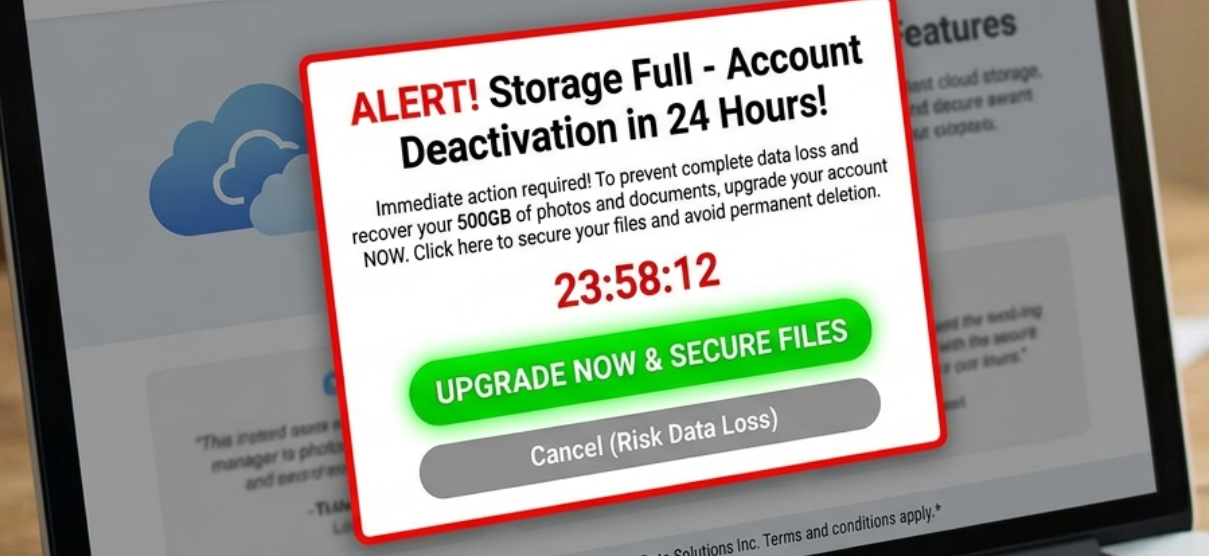
One of the most common tactics is based on a fake “disk full” warning, which appears as a system-like notification or a browser pop-up. The alert imitates real operating system messages, so it’s difficult for most users to recognize it’s fake at first glance. If you engage, you’ll be redirected to a page that promotes a suspicious app presented as a quick fix.

These scams are designed to feel urgent and legitimate. The message pushes you to act immediately, warning you about potential data loss. To understand how storage scams trick users, you must recognize the subtle signs that show you’re not being offered a legitimate tool. Even cautious users can be misled into entering payment details, so everyone needs to improve their phishing awareness.

Why Storage Alerts Work as a Scamming Strategy

Storage warnings are designed to lead to immediate action. When a device is low on space, its performance degrades. Some apps may stop working properly, so the user feels they have to fix the issue as quickly as possible. This sense of urgency is exactly what makes the alerts effective, but also easy to imitate. 

Scammers take advantage of this user behavior. They create messages that look like official system notifications. The alerts copy the design, language, and structure of real operating systems, so they seem trustworthy at a glance. For users who aren’t deeply familiar with system settings, it’s not easy to distinguish between a legitimate and a fake warning. 

Real storage notifications come from system settings. Scam messages, on the other hand, are triggered through web browsers or redirects. Then how can they trick users? These fake messages are designed to look identical to system pop-ups. Many users never notice the difference. 

First Step to Protection: Learn How Storage Scams Trick Users 

When you understand how these fake alerts work, it will be easier for you to recognize them. Although the design varies, most of these scams follow a pattern. 

  • Fake system warning

The process starts with a pop-up or redirect that displays a message. It might be something like “Your disk is full” or “Storage critically low.” These alerts show up while browsing, clicking on ads, or visiting compromised websites. They look like system-level notifications, using familiar icons and phrases.  

  • Redirect to a fake solution

If you interact with the alert, you’ll be taken to a page that offers a quick fix. This may be shown as a cleaning tool or security utility. Yes; there are legitimate apps that can help you deal with storage. But they are never promoted through “low storage” alerts. Fake pages usually include progress bars, scan results, and warnings that make the situation seem serious. 

  • Installation or payment trap

At this stage, users are encouraged to download software or subscribe to a service. Sometimes the app is unnecessary, but harmless. But in some cases, it may track your activity or request payments for features that won’t solve any real issues. 

Trends and Statistics on Storage Scam Messages

Storage scams are a part of a general increase in online frauds. Recent data shows how quickly the problem is growing. According to the Federal Trade Commission, over $12.5 billion losses to fraud were reported in 2024. That’s a 25% increase compared to the previous year. A big part of these scams were through Internet services, and younger people reported losing money to fraud more frequently than older people.  

The FTC also reported that people lost $3 billion to online scams. We’re seeing a decline in frequency for the traditional methods, such as calls and emails. The fact that these scams are becoming more effective is concerning. Phishing and impersonation tactics are strong entry points. Scammers use believable messages that mimic trusted systems. 

Unfortunately, these scams are effective. The increase in the percentage of targets who lost money shows that the messages are convincing. Storage scams aren’t isolated incidents. They are a part of a larger system of phishing attacks that keep evolving. 

Signs of a Storage Scam

Raising awareness about the warning signs of storage scams is important for improving consumer tech security. These messages do look convincing, but there are a few clear indicators that something isn’t right:

  • The alerts look like system messages, but they appear in the browser. The real storage warnings come from your device’s operating system. They won’t show up from a web page or a pop-up. 
  • Aggressive and urgent prompts are always suspicious. Don’t trust messages like “immediate action required.” Their goal is to pressure you into clicking without thinking too much. 
  • Once you engage with the message, an unfamiliar app will be recommended. Real systems don’t push unknown software as a solution to storage issues. 
  • Fake tools produce too-good-to-be-true scan results. They claim to find dozens of issues in an instant, even before they perform a real scan. 
  • Unexpected redirects are a clear sign of a sign. If you’re taken to an external website that is nowhere near the official app store, don’t trust it. 
  • Any demand for payments or sensitive data is suspicious. 

Being able to recognize the signs of an online scam is the only way to reduce the risks. Stay alert and follow basic security practices, so you’ll avoid falling for these threats. 

Telecom Hype vs Reality: 2026 Anti-Trends Reveal What Won’t Deliver

Every year, the telecoms industry finds a new frontier to get excited about. AI will transform operations overnight. Satellites will redraw the broadband map. XR will unlock immersive consumer experiences. 6G will change everything again.

But history suggests that commercial gravity tends to reassert itself.

As we move through 2026, the industry may find that several of its loudest narratives are running ahead of practical returns. That doesn’t mean innovation is misplaced. It means the gap between technological possibility and commercial viability remains stubbornly wide.

Here are five areas where expectation may outpace impact:

Satellites remain supportive, not dominant

Low Earth orbit satellite services have made impressive technical strides. They have strengthened resilience, improved rural connectivity, and introduced new competitive dynamics into fixed broadband markets.

However, satellites still face physical and economic constraints. Capacity remains finite. Costs per delivered gigabyte are materially higher than fibre. Performance can be affected by geography and environmental conditions.

For operators, satellite partnerships may enhance coverage and disaster recovery strategies. But as a mass-market substitute for terrestrial broadband, the economics remain challenging. Fibre and fixed wireless continue to dominate where density allows.

The likely outcome is coexistence rather than displacement, reflecting a broader pattern seen in many telecom technology hype cycles.

Generative AI will increase costs before returns

No technology has captured executive attention more completely than generative AI. Operators are investing heavily in copilots, automation tools, AI-driven customer service, and network optimisation.

While the exuberance around AI remains high, 2025 saw the first signs of the hype cycle cooling, and the financial viability of generative AI relative to the scale of investment required is likely to become one of the central questions for telecom operators in 2026.

Large language models require substantial compute resources, and telecom operators are already facing rising cloud and infrastructure costs associated with early AI deployments. Licensing fees, cloud capacity, integration work, governance frameworks, and new skill requirements all add to the cost base. For many operators, AI may initially increase OPEX before delivering any measurable revenue uplift.

The more sustainable opportunity may lie in targeted, operational use cases such as fraud detection, assurance automation, accelerating product launch cycles, and field service optimisation rather than grand, customer-facing reinventions.

AI will matter. But disciplined deployment may prove more valuable than sweeping transformation narratives.

XR adoption remains limited

Extended Reality continues to generate enthusiasm in vendor ecosystems. Yet mainstream consumer adoption remains limited.

Headsets are improving, but hardware cost, comfort, battery life, and limited everyday use cases constrain mass appeal. Global XR headset shipments remain modest compared with mass-market devices such as smartphones or PCs, limiting the scale of near-term consumer demand. Most compelling deployments today sit in enterprise niches relevant to telcos, such as training, remote assistance, and design collaboration, where ROI for operators can be clearly demonstrated.

Until devices become lighter, cheaper, and seamlessly integrated into daily workflows, XR is likely to remain specialised rather than ubiquitous for telecom purposes.

The promise of immersive connectivity persists. However, the commercial inflection point has not yet arrived.

5G Standalone is slower to deliver value

Standalone 5G was designed to unlock ultra-low latency services, network slicing, and enterprise innovation for telecom operators. Deployment, however, has been slower than early projections suggested, with industry studies revealing that only around 70 operators have deployed 5G SA so far.

While adoption is progressing, monetisable enterprise use cases are still emerging. Many consumer applications do not visibly differentiate between non-standalone and standalone deployments.

The challenge is not technical capability, but demand creation. Without clear vertical solutions or compelling developer ecosystems, advanced network features risk underutilisation.

The industry may need to recalibrate expectations around the pace of monetisation. 5G SA’s value for telcos may unfold gradually rather than explosively.

6G remains a long-term prospect

6G research is accelerating globally, with governments and vendors outlining ambitious visions. Yet commercial rollout remains many years away.

In the meantime, many of the performance gains associated with early 6G discussions, such as improved speeds, lower latency, and AI-driven optimisation, can be delivered through continued 5G evolution, fibre expansion, Wi-Fi advances, and software innovation.

6G will shape the next decade. It is unlikely to define this one for operators today.

Focus on practical fundamentals

None of this suggests innovation is misplaced. Telecom operators depend on forward investment. But as capital discipline tightens across the industry, the focus is shifting from technological possibility to measurable value.

The strongest returns may come not from headline-grabbing breakthroughs, but from expanding fibre intelligently, automating operations pragmatically, investing in skills alongside software, and building sustainable enterprise propositions.

In the telecoms industry, progress is rarely linear. The technologies that ultimately reshape the market are often those that quietly compound value over time.

Hype cycles rise quickly. Commercial reality moves more deliberately.

WHOOP launches AI-powered hormonal insights for women in Ireland

WHOOPthe human performance company, today announced its expanded Women’s Health feature set in Ireland with the launch of Hormonal Symptom Insights and Predictions, a significant update to its Menstrual Cycle Insights and Pregnancy Insights offering. 

For many women, hormonal changes influence far more than just their cycle. Energy levels, sleep quality, mood and training capacity can shift throughout the month. Yet traditional tracking tools often rely on static calendar averages that fail to reflect that variability. 

Within the WHOOP app, menstruating members now receive a personalised model of their cycle that adapts over time based on their unique physiological data and historical patterns. Rather than relying on static calendar tracking, the system continuously learns from longitudinal biometric signals to provide increasingly accurate predictions that evolve as more data is collected.  

Members now have access to key cycle data that enables them to adjust daily routines, fitness programmes and recovery practices with greater clarity and anticipate potential symptoms rather than simply record them. 

New capabilities include: 

·        A dynamic date window for the next period, allowing greater anticipation and planning 

·        Tracked trends in cycle length, period length and variability, flagging irregular patterns before larger issues persist 

·        Analysed individual symptom patterns to anticipate when symptoms are most likely to occur 

·        AI-driven Daily Outlook recommendations that adapt based on menstrual phase, pregnancy stage, recovery metrics and logged symptoms 

The expansion builds on the existing Menstrual Cycle Insights feature from WHOOP, which leverages continuous biometric data including heart rate variability, resting heart rate, skin temperature, respiratory rate and recovery trends to generate personalised cycle predictions with minimal manual input. 

“What makes this powerful isn’t any single data point- it’s how the system comes together,” said Emily Capodillupo, Senior Vice President of Research, Algorithms, and Data at WHOOP. “Women don’t experience their physiology in silos. Hormones influence sleep, sleep affects recovery, and recovery shapes training response. By modeling these interactions over time – across continuous biometrics, lab data, and behavior- we can deliver guidance that reflects the full system, not just a snapshot.” 

Menstrual Cycle White Paper 

WHOOP has published a comprehensive Menstrual Cycle White Paper outlining the research, methodology and validation behind its modelling approach. The white paper demonstrates how continuous physiological monitoring improves prediction accuracy over time, how the system accounts for variable cycles, perimenopause and hormonal birth control, and how prediction windows dynamically widen or narrow based on individual variability. 

In addition to hormonal modelling, the Women’s Health feature set integrates the WHOOP Strength Trainer and Healthspan capabilities. WHOOP remains the only wearable that measures Muscular Load, quantifying the mechanical stress placed on muscles and connective tissue during resistance training. Healthspan calculates WHOOP Age and Pace of Ageing using nine physiological metrics, connecting sleep, cardiovascular fitness and strength to long-term vitality. 

WHOOP is the first human performance and healthspan system to integrate continuous hormonal modelling, predictive symptom insights, muscular load measurement and biological age tracking within a single wearable ecosystem. 

With support from the WHOOP Medical Advisory Board, including Dr Robin Berzin and Dr Hazel Wallace, and in collaboration with Clue, WHOOP continues to advance innovation in women’s health in Ireland. 

See our WHOOP reviews 

Vodafone reveals record-breaking connectivity trends in 2025

Ireland’s appetite for connectivity continues to soar, with Vodafone Ireland’s latest network insights revealing record-breaking data usage, festive surges, and a clear shift in how the nation communicates.
Mobile data usage rose by 19.24% year-on-year, climbing from 445,133 TB in 2024 to 530,794 TB in 2025. The busiest day for data was Tuesday, 9th December, when 1,660 TB was consumed nationwide as Storm Bram swept across Ireland. Evenings remain Ireland’s prime time for digital activity, with 10 PM emerging as the busiest hour for online engagement.
While data demand continues to rise, overall voice traffic fell by 7.83% compared to 2024, reflecting a growing preference for messaging, video calls, and social platforms over traditional voice communication. Yet, calls still matter when it counts. The busiest day for calls in 2025 was Wednesday, 26th March, with 502,273 Erlangs – equivalent to approximately 10 million calls, assuming an average 3-minute duration.

Christmas and New Year’s Day saw millions reconnect. Christmas Day recorded almost 3.4 million calls, while New Year’s Day soared past 4.5 million. Together, that’s over 8 million calls during the festive period, proof that when it matters most, Ireland still picks up the phone.

Beyond everyday patterns, 2025 was marked by extraordinary peaks in data usage during Ireland’s major events. During the Ireland vs South Africa rugby match, Vodafone’s network handled over 15,000 calls. Across last year’s Autumn International home matches, Vodafone Ireland’s network managed over 220 TB of data, the equivalent of streaming 73 million songs. Summer’s biggest music moments drove massive connectivity spikes, with Vodafone’s network handling over 5 TB of mobile data across the Dua Lipa and Lana Del Rey concerts at Aviva Stadium – powered by thousands of photos, live streams, and social sharing.
These insights underscore the importance of staying connected in today’s world. As demand for data continues to rise, Vodafone Ireland is currently in the midst of a €500 million five-year investment cycle to enhance network performance across the country.
This ongoing investment and network upgrades have ensured an increasingly fast, reliable service for customers, and saw that Vodafone Ireland was recognised by independent benchmarking organisation, umlaut, as “Best in Test” for the tenth consecutive year in 2025.
Technology now touches every part of life – from accessing government services and our ways of working to planning journeys on public transport and staying in touch with loved ones. Ireland is more connected than ever before, and 2026 will bring new opportunities and challenges for our networks as our digital evolution continues.

Garmin releases 2025 Garmin Connect Data Report

Garmin has released its 2025 Garmin Connect Data Report, highlighting overall fitness and health trends from customers around the world.  From data trends like average stress and daily steps to an increase in recorded activities, insights from the Garmin Connect community highlight key fitness and well-being trends across a range of demographics, locales and abilities.

Activity takeaways

Garmin users recorded 8% more activities this year than in 2024, with the following activities seeing the largest year over year increase:

  • Racket sports: +67%
  • HIIT: +45%.
  • Pilates: +46%
  • Strength training: +29%
  • Indoor running: +16%
  • Diving: +16%
  • Hiking: +12%


Health and fitness takeaways

  • Women recorded lower average stress scores than men, and Garmin users in Indonesia had the highest stress scores this year while those in the Netherlands had the lowest.
  • Garmin users got nearly 1% better sleep this year, with an average sleep score of 71.
  • Younger Garmin users typically had higher Body Battery energy levels, with 18–29-year-olds averaging 75. Users 40-49 years old averaged 70, while users over 70 years old averaged 64. Those in Portugal recorded the highest average Body Battery levels, while Japan had the lowest.
  • On average, users took more steps per day in 2025. Garmin users in Hong Kong took the most average steps with more than 10,000 per day.
  • Users 18-29 years old did the most outdoor running this year. 50-59-year-olds led the indoor cycling category, while those 70 years and older did the most golfing.

Click here to read the entire report.

What athletes love about Garmin Connect

 “I live a very active lifestyle, from long days surfing to runs and strength work in the gym. Being able to track my recovery, HRV, and overall performance in one place helps me make smarter decisions, stay consistent, and train with real purpose.”

–Brianna Cope, Garmin ambassador

 Garmin Connect is an organised person’s dream. It makes tracking and comparing my performance over time incredibly simple thanks to its clean colour-coded categories and easy-to-read charts. I can instantly spot trends across a week, a month, six months, or even a full year. So, when it’s time to reassess my training, Garmin Connect shows me exactly where I need to dial in my sleep, recovery, and overall workload.”

–Lauren Kalil, Garmin ambassador

“Since coming back to training and racing after having my daughter, I’ve really had to readjust my expectations for training and recovery. Using resting heart rate and HRV trends in the Garmin Connect app has been a huge help to me as I’ve recalibrated what’s normal for me right now. The data helps me know if we are getting the training and recovery load right, or if we need to back down.”

–Skye Moench, Garmin-sponsored triathlete

This year, Garmin Connect+ users can check out their own highlight reel – the Garmin Connect Rundown. Available now in the Garmin Connect app, the personalised annual report includes health, performance and activity stats, including total steps, average sleep score, totals of each activity type and more.

Garmin’s latest smartwatches – like the Venu® 4 and fēnix ® 8 Pro – are packed with popular health and fitness features and seamlessly sync to Garmin Connect, letting users track their activities, analyse their data, compete in challenges and more. Whether you’re chasing a new PR, training for an event or focusing more on overall wellness, Garmin has a smartwatch that’s ready for any goal. Click here to learn more about the latest lineup of Garmin smartwatches.

Engineered on the inside for life on the outside, Garmin products have revolutionised life for runners, cyclists, swimmers and athletes of all levels and abilities. Committed to developing technology that helps people stay active and elevate performance, Garmin believes every day is an opportunity to innovate and a chance to beat yesterday.

Google Year in Search results moments that captured Ireland’s attention in 2025

As the year draws to a close, Google’s Year in Search reveals the questions we asked Google, the people who caught our interest, and the everyday curiosities we wanted to solve.

For a country obsessed with weather it’s no surprise that the record breaking Storm Eowyn, was the most searched term of the year. The storm which hit Ireland in January was one of the most powerful and widespread wind events to hit Ireland since the 1800s. People also turned to Google to find out how to pronounce the storm’s name with ‘How to pronounce Eowyn’ as the third most popular ‘How to’ search term.

Asking Google questions is an everyday occurrence for most people. In a year where Ireland welcomed a new President for the first time in 14 years, the election had a big impact on the most searched lists. People used Google to not only find out more about Ireland’s new President, Catherine Connolly, who was the third most searched overall term and most searched person this year but also the presidential election in general. Ireland’s presidential election featured on the most searched list and in the ‘How To’ list, ‘How to spoil your vote Ireland’ was the second most searched term while ‘How to register to vote in Ireland’ was the fifth most searched term.

2025 was another huge year for sport. The Ryder Cup, in which Europe was victorious, was the second most searched term overall and football and rugby also featured on the most searched list. Champions League is the fifth most searched term, the Club World Cup is the sixth and Ireland v France rounded out the list.

The Top 10 Most Googled recipe list gives us a glimpse into what Ireland has been up to in the kitchen. This year Ireland leaned into comfort and creativity with coffee topping the list followed by the social-media hit, Dubai Chocolate.  Three cocktails bubbled up the chart; the Pornstar Martini, Hugo Spritz and Pimms. Pancakes, Gooseberry Jam and Cupcakes also featured on the list.

2025 was the year of TV shows people couldn’t stop talking about or searching. Monster: The Ed Gein Story and Adolescence were the most searched TV shows and they also featured on the overall most searched list showing their popularity. Google Search also helped people decide what to see in the cinema this year with Nosferatu, 28 Years Later and Superman all featuring at the top of the most searched Movie list.

Everyday questions and timely answers are what millions of people seek on Google every day. From health and wellbeing to social media trends and sports, Search helps Ireland navigate the practicalities of daily life and understand what’s shaping the news .‘What is Listeria?’ topped the ‘What is’ list and other trending questions asked by the Irish public were ‘What is 6 7?’ and ‘What is a tariff?’.

Search can help you find a world of information – and the way people use Search can be a window into the world. Take a closer look at this year’s trending lists at yearinsearch.google

 -Top trending searches refer to queries with the highest amount of traffic over a sustained period in 2025 as compared to 2024.

Top Overall

People

Storm Eowyn

Catherine Connolly

Ryder Cup

Maria Steen

Catherine Connolly

Jim Gavin

Monster: The Ed Gein Story

Belle Gibson

Champions League

DJ Carey

Club World Cup

Alexander Isak

Iran

Garron Noone

Adolescence

Andy Byron

Ireland Presidential Election

Conor Loftus

Ireland v France

Stephen Graham

Losses

Sports

Charlie Kirk

Ryder Cup

Ozzy Ozbourne

Champions League

Diogo Jota

Ireland v France

Gene Hackman

Liverpool F.C

Diane Keaton

Liverpool vs Man United

Hulk Hogan

Ireland v Scotland

Ricky Hatton

India vs England

Michelle Trachtenberg

FIFA Club World Cup

Val Kilmer

Liverpool vs PSG

Robert Redford

Lions

TV Shows

Movies

Monster: The Ed Gein Story

Nosferatu

Adolescence

28 Years Later

House of Guinness

Superman

Traitors Ireland

Happy Gilmore 2

Say Nothing

Minecraft

Mobland

Sinners

Dept. Q

Anora

Severance

Bridget Jones: Mad About the Boy

The Last of Us

One Battle After Another

Squid Game

Weapons

Tech

Recipes

iphone 17

Coffee

Amazon.ie

Dubai Chocolate

Deepseek

Pornstar Martini

Wplace

Pancake

Chat GPT free

Gooseberry jam

Strands

Hugo Spritz

Maths solver

Pork fillet

TikTok banned

Pimms

Grok

Cupcakes

Switch 2

Plum Chutney

What is

How to

What is listeria

How to bottle feed a breastfed baby

What is 6 7

How to spoil your vote Ireland

What is the warehouse

How to pronounce Eowyn

What is adolescence about

How to watch Europa League final in Ireland

What is polytrauma

How to register to vote in Ireland

What is americano coffee

How to watch Club World Cup

What is halal meat

How to clear cache on Chrome

What is Tylenol

How to opt out of organ donation Ireland

What is Tai Chi walking

How to watch Ballon d’Or 2025

What is a tariff

How to make Dubai chocolate