One in Three Older Adults Feel Digitally Excluded

New European research conducted by the Vodafone Foundation among people aged 55+ in Ireland reveals that while daily device use is now widespread among older adults, many lack the confidence and support needed to fully engage in an increasingly digital world.
The survey, carried out in November 2025 across six European countries, was designed to inform the Vodafone Foundation’s Hi Digital programme and explore how older adults access and use digital devices, what barriers they face and how they seek support.
 The research shows that over 90% of respondents now use a digital device every day. However, 22% say they do not have anyone to turn to when they need help.
 Online safety is a major worry, with 72% of respondents concerned about being scammed or tricked online, significantly more than the global average of 55%, while one in four (25%) admit they do not know how to protect themselves, again higher than the global average of 18%.
 Despite high levels of concern, just 18% say they have experienced a bad online incident, on par with the European average, indicating that the fear may be greater than the reality.
 Feeling Left Behind in a Digital World
The findings also highlight the social implications of digital exclusion:
·         35% feel excluded in social situations when services are digital-only
·         51% stated that they don’t understand how certain apps or websites work
·         91% are open to learning digital skills
When it comes to areas where digital skills are most needed, respondents cited topics like Finance and Travel but said that Public Services were their top priority.

Supporting Older Adults and the Sandwich Generation 

This new research also highlights the important role played by the so-called Sandwich Generation; adults in their 40s to 60s who support older relatives with digital tools, communication and online security, while also caring for younger family members.

 With 46% of respondents preferring to learn from friends and family, intergenerational support remains a critical enabler of digital inclusion.

Closing the Confidence Gap in Ireland

Research conducted in 2022 by Deloitte for Vodafone Foundation found that only 19% of older adults in Ireland were digitally literate. Three years later, this latest study shows that while access has grown rapidly, confidence and skills may not have kept pace.

 To address this gap, Vodafone Foundation has developed the Hi Digital programme, a free, step-by-step online course designed to support those who need help developing digital skills, particularly aimed at individuals aged 65+ who may have rarely or never been online.
 To date, over 170,000 older adults have engaged with Hi Digital since its launch in 2021, through the online courses, in-person training, and drop-in sessions available in participating Vodafone stores on Friday mornings, from 10:00-13:00. The programme has now evolved into a free nationwide support programme, combining digital lessons, quick-tip videos, in-store guidance, and collaboration with community organisations delivering local digital inclusion initiatives to help older adults build confidence in everyday life.
 Participants can complete the online course independently or with support from family and volunteer tutors. The programme is also delivered in partnership with organisations, such as Friends of the ElderlyALONE and Society of St Vincent de Paul, as well as through intergenerational initiatives like the Irish Girl Guides and Transition Year programmes in secondary schools nationwide.
 Recognising that access alone is not enough, Vodafone Foundation is also providing practical support to help older adults navigate essential online services. For instance, there is an instructional video demonstrating how to use the Transport for Ireland app, supporting older people to confidently integrate digital tools into their everyday lives.
 Since April 2025, the most popular Hi Digital module is the Introduction to the internet course, followed by Using My Smartphone, with Connecting with Others and Identifying Frauds and Scams close behind. Notably, RIP.ie is currently one of the most visited pages on the Hi Digital platform, reflecting the practical ways older adults are engaging online.
 Speaking about the findings, Liz Roche, Head of Vodafone Foundation in Ireland, said:
“This research shows that while older adults are using digital devices every day, many still lack confidence and feel vulnerable online. No one should feel excluded from essential services or social connections because they don’t feel digitally confident. Through the Hi Digital initiative, we have already supported over 170,000 and our ambition is to extend the reach and keep growing, empowering older people across Ireland with the skills and confidence they need to engage safely and independently in today’s digital world. We are also encouraging families and communities to play their part in supporting loved ones on their digital journey.”
 Drop-In Fridays
In 2023, the programme expanded to include in-person support through a nationwide Drop-In Friday’s initiative in Vodafone stores. Held every Friday from 10am to 1 pm, trained Hi Digital Ambassadors provide free, personalised support with phones and tablets.
Due to strong demand, the service has now expanded to 58 Vodafone stores nationwide. For those unable to attend in person, the free online course at hidigital.ie remains available 24/7.
 For more information go to hidigital.ie

Dublin City Council launches new Electric Waste Vehicles

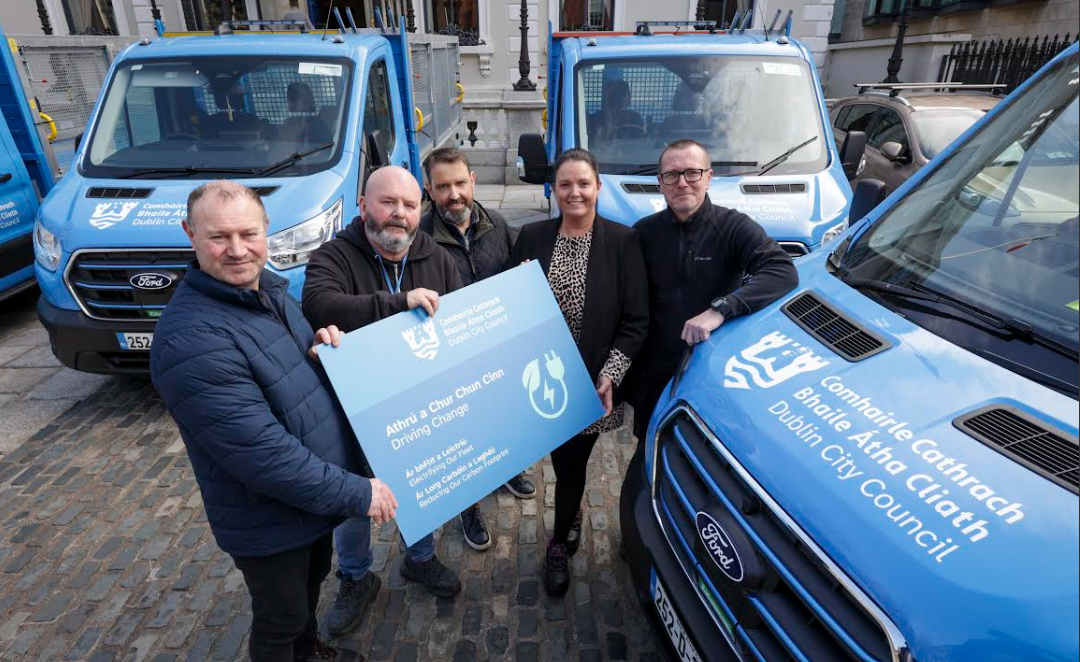
Dublin City Council has launched the first of 30 new electric vehicles to be used by the Waste Management section.

The launch took place on the forecourt of the Mansion House.

The new vehicles are the first Fully Electric Cage Body Vehicles to be used by the Waste Management section and will be rolled out throughout the year.

The Lord Mayor of Dublin, Cllr Ray McAdam, said, “If Dublin is serious about climate action, it must start with how the city itself operates. These new electric waste vehicles are a clear signal that the capital is leading by example, cutting emissions while carrying out the essential work that keeps our streets clean. They will help us build an even cleaner Dublin that we can all celebrate together.”

Dublin is one of 112 cities selected under the EU Mission 100 Climate Neutral and Smart Cities, a pioneering initiative designed to accelerate systems change and deliver climate neutrality by 2030.

In line with national requirements, Dublin City Council’s Climate Action Plan contributes to:

  • A 51% reduction in greenhouse gas emissions by 2030 (compared to 2018 levels)
  • Climate neutrality before 2050, at the latest

Climate Neutral Dublin 2030 responds directly to these commitments with a comprehensive Climate Action Plan (CAP) and associated Investment Plan that sets a clear roadmap for transformative change across the city.

However, the Council emphasises that delivering on these targets requires more than policy, it demands whole-of-society behavioural change. Sustainable choices must become the easiest and most convenient options for residents, workers, and visitors alike.

To make inroads into our targets we are delighted to showcase our brand new Fully Electric Cage Body Vehicles from our Waste Management section. Not only does the Waste Management section keep Dublin physically clean, the vehicles they are using improve the environment by using electric vehicles as part of the operation! Over 50 Waste Management Drivers have already been trained to use these new zero emission vehicles.

Dublin City Council will continue to work with the Department of Transport Zero Emission Vehicles Ireland office to identify funding streams and capacity building measures to support the transition and facilitate the installation of Electric Vehicle chargers.

Dublin City Council will work closely with the ESB and other stakeholders to enable and facilitate an increase in the number of EV charge points across the city.

AI, Data and BEVs Power a New Model for European Long-Haul Transport

Scania Ventures, LOTS Group and JUNA Technologies, together with carrier HAWA, operate one of Europe’s longest electric truck routes, demonstrating that high utilisation, long-haul battery-electric transport is commercially viable already today.

By combining LOTS Group’s AI-based platform Pathfinder with JUNAS’s electrified vehicle solutions and Hawa’s operational logistics expertise, the partners are creating a scalable model for electrified long-distance logistics in Europe. The 1,250-kilometre corridor is already operating in daily commercial service across central Europe. The partnership prioritises operational quality and cost efficiency, demonstrating how intelligent planning, effective asset utilisation, and robust daily operational management can help customers minimise their CO₂ emissions.

LOTS uses Pathfinder to analyse routes, charging requirements and shipment data to design and optimise electric long-haul operations under real-world conditions. This enables the partners to simulate various scenarios, minimise operational risk and adjust routes prior to broader deployment.

At the same time, the setup is designed to be scalable. By analysing operational data over time, the corridor can adapt to new transport flows and be expanded to include additional zero-emission capacity as infrastructure and customer needs evolve.

JUNA provides access to electric truck capacity via a pay-per-use model, thereby reducing barriers to entry for battery-electric long-haul transport. The partners have together created a fully integrated, end-to-end electric corridor that functions in day-to-day operations.

“With Pathfinder, we can design and run electric routes that meet customer requirements and real-world road conditions. The platform enables us to simulate different scenarios, reduce risk and optimise flows before moving into full-scale operations,” says Johan Palmqvist, Managing Director at LOTS Group Europe.

“For JUNA Technologies, this corridor proves that electric long-haul transport is not a pilot project but a viable, day-to-day solution,” says Johan Kjellner, Managing Director and COO at JUNA Technologies. “By integrating our electric truck capacity into a data-driven, AI-optimised network, we can deliver reliable, zero-emission transport at scale”

Electric long-haul road transport is often portrayed as a solution that will only become commercially viable around 2030. This corridor challenges that narrative by demonstrating that heavy battery-electric vehicles can reliably run demanding inter-city stretches with tight delivery deadlines, and ensure year-round utilisation.


Tyndall Driving New Research to Integrate Electric Buses in Ireland

Tyndall National Institute was awarded six projects from SEAI’s National Energy Research, Development & Demonstration (RD&D) Funding Programme, all now underway, to advance Ireland’s energy transition. These significant successes highlight Tyndall’s leadership in sustainable research and its commitment to delivering impactful solutions for Ireland’s energy future.

Among the funded initiatives is BEST-IRE, a pioneering project focused on transforming public transport through the integration of battery electric buses into the transport and electricity systems of Ireland. The project will deliver a comprehensive evaluation and strategic roadmap for electric bus implementation, addressing both investment planning and life cycle cost assessement

The project will present methodology to develop a strategic roadmap for battery electric buses in Ireland, guiding investment decisions and assessing long-term costs. It will also develop a smart decision-making tool to support the planning and placement of charging infrastructure, ensuring efficient integration with Ireland’s transport and electricity networks. This includes optimising bus routing, maximising renewable energy use, and maintaining grid stability through advanced modelling.

In addition, the research team plans to create a dynamic transit charge management system to monitor charging patterns and provide local flexibility for enhanced grid management. The project will also assess how electric buses can improve first and last-mile mobility, propose innovative business models for stakeholders in the transport and energy sectors, and recommend policy frameworks that support electric buses and renewable energy integration. Methodology will be implemented at both the urban and rural community levels to ensure broad replicability.

Dr Pádraig Lyons, Head of Group, International Energy Research Centre (IERC) at Tyndall, said: Electrifying an expanding bus fleet is a huge opportunity to decarbonise Ireland’s transport systems and improve the quality of life for people living in urban and rural areas. The BEST-IRE project will develop innovative methodology and tools to address the challenges to infrastructure, associated with this exciting new technology. 

Tis the Season to Travel: Tips for a Smooth & Relaxed Christmas Holiday

Excited for the busy festive season? Many of us are, even when it feels like last Christmas wasn’t that long ago. As it is one of the busiest times of year for shopping and visiting family, it means many people are planning on venturing out across the country. According to the latest consumer survey data from Fáilte Ireland, 20% of Irish residents intend on taking a short break in Ireland in the next 3 months, with 26% planning on going abroad. If you are planning on taking a holiday at this time of year, you’ll want to ensure it goes as smoothly as possible.

Whilst the season brings plenty of joy, the combination of busy airports, unpredictable weather and last-minute plans can make travel feel more stressful than it needs to be. However, with a little preparation and a focus on comfort, you can set yourself up for a much smoother experience that allows you to enjoy the journey as much as the destination.

Whether you’re heading overseas or travelling within Ireland, here’s some helpful tips to help you along the way.

Planning Ahead for Peak Season Travel

Travelling at Christmas is exciting, but it can get hectic quickly, especially if everything is left to the last minute. Use this simple checklist to stay organised and avoid last-minute stress.

  •   Book early where possible

It goes without saying that booking early will give you the best chance of getting the train or flight times you need, and the ideal accommodation before it books up. You’ll also hopefully find better prices for these by doing so.

  • Compare travel times and routes

Booking early also means you can compare different days and times you can travel. If you can, consider midweek options rather than weekends, as this will help avoid the crowds whilst giving you potentially cheaper tickets. Seek out early morning flight and train times as these tend to be less popular.

  • Review luggage rules before packing

It can be very easy to pack over your baggage limits, so it’s much better to check what your allowances are before travel (you don’t want to be reshuffling your suitcase at the check-in desk!) Also, check all restrictions, especially if you are planning to take gifts with you. Restrictions on liquids and prohibited items still apply to your presents.

  • Consider priority services

One way to help avoid queuing for too long is to consider priority boarding or fast track security where available, and if within your budget. This will help you avoid tedious queuing, especially with children.

  • Avoid wrapping gifts before travelling

A good tip when taking gifts with you is to avoid wrapping them. As per Ryanair’s advice, wrapped gifts may be opened, searched and screened by security, meaning your beautiful wrapping will be all to waste. If you can use gift bags instead or wait until you’ve arrived, this will be the better option.

  • Give yourself time on travel day

No one likes a last-minute rush, so if you can set off early on the day you plan to travel, it’s best to do so. Take advantage of early check-in options at your accommodation so that you can leave with plenty of time and not have to dash. If flying, this will help you have plenty of time to get through security checks and use the departure lounge facilities and shops.

Packing for Comfort and Convenience

Taking a smart approach to packing will go some way to help avoid taking too much with you and ensure all the essentials are covered. Packing isn’t the most fun aspect of going away, but planning will make this job much simpler, especially if you’ve got children’s suitcases to consider too. It will also ensure you have room for any gifts you bring back with you.

  • Having lightweight layers will help you stay comfortable on the journey when moving between cold weather, a warm car, air-conditioned airport terminals and any change in temperature at your destination. It also takes up less space in your luggage, so go for layers that you can combine and take comfortable footwear, a warm jumper and a compact raincoat just in case.
  • Keeping things organised saves time and stress. If you haven’t already, invest in packing cubes or zip bags as these will help separate clothing, toiletries and electronics so you can find items quickly. If you are bringing gifts, avoid anything too bulky and pack these in your hand luggage where possible.
  •  A small kit of travel essentials can make a big difference too. Keep any medication, chargers and important items in your hand luggage so you have them if plans change.

With a bit of planning, you can travel lighter, stay comfortable and enjoy the journey from the start.

Managing Travel Timings and Transport

Travel during the Christmas season often requires more time and patience. It can be extremely busy on the roads, so plan your onward journey so that you can deal with any unexpected travel delays. If you’re heading to Dublin, Cork or Shannon airports, longer queues and slower security checks are highly likely, especially at peak times, so plan to arrive early for a more relaxed start to your holiday.

If you are flying, it’s a good idea to pre-book your airport parking as this will help you save money compared to paying on the day you travel, and ensure you get a closer spot. If using public transport, check timetables as they may change over the holidays, with reduced services likely on Christmas Eve, St. Stephen’s Day and New Year’s Day.

For those travelling by car, planning fuel stops, charging points for electric vehicles, and rest breaks can help make long journeys safer and more comfortable, especially if you are travelling with children or older family members. The more space you build into your journey, the easier it is to stay calm and enjoy the festive experience. Check the gov.ie Be Winter Ready advice pages for road travel safety tips before you set off.

Staying Calm on the Journey

Travel at the best of times can be difficult, especially when dealing with busy roads and airports, and inevitable long queues. Having a calm mindset can make the experience much more enjoyable, even when delays or minor frustrations happen.

Simple things like taking breaks, eating regularly and staying hydrated all help maintain energy levels and prevent stress from building up during the journey. If you are travelling with children, planning small activities can make a big difference. Keep them from boredom with books, colouring sheets, snacks or simple travel games. Above all, be flexible and take your time. That way, you and your family will arrive feeling happy and ready to enjoy your break.

Staying Prepared and Protected on Winter Trips

As the weather in Ireland and across Europe at this time of year can cause sudden delays and changes to your travel plans at very short notice, it’s fair to say Christmas travel comes with its fair share of unpredictability. That’s why building a bit of flexibility into your plans can make a world of difference when things do not go as expected. Simple habits like checking weather forecasts, signing up for delay alerts and giving yourself extra time for travel can help you stay ahead of potential problems without feeling rushed.

Unexpected changes to your plans can have more serious consequences if you live with a medical condition. Winter travel can be tiring, and colder weather or long journeys may make certain health needs more difficult to manage. If you are heading abroad this Winter, having the right support in place is important.

Medical care overseas can be expensive, and accessing it without the correct documents can be stressful. Specific policies that offer travel insurance for medical conditions from providers like Staysure can help you feel much more confident that emergencies, flare-ups or even lost baggage and medication will not turn your festive break into a financial worry.

Disruptions are often unavoidable at this time of year, but being prepared both practically and financially can make them easier to endure. Declaring any pre-existing conditions, reading policy wording carefully and packing essentials with organisation in mind will all contribute to a smoother experience. That way, you can enjoy your Christmas holiday knowing you are ready for whatever winter travel brings.

Ending the Trip on a Positive Note

Returning home after festive travel can feel both comforting and a little overwhelming, especially if you have spent time away from your usual routine. If you can, give yourself a gentle transition back into everyday life by having a day or so before returning to work and other responsibilities. It will make the post-holiday period feel less rushed.

Hopefully, your Christmas travel plans are a positive experience overall, and that you have plenty of new memories to look back on. Returning to work or school is always easier when you carry positive memories with you, so here’s to starting the new year more relaxed and refreshed than before the break.

The Road to Sustainability: How EV Charging Is Transforming Transportation

As the world shifts toward greener solutions, electric vehicles (EVs) are leading the charge in transforming transportation. With the rise of EV charging infrastructure, you are not just changing how you drive; you are redefining your relationship with energy and the environment. Seeing how these advancements pave the way for a sustainable future is exciting.

Imagine a world where charging your car is as simple as plugging in your phone. This isn’t just a dream—it’s becoming your reality. EV charging stations are popping up everywhere, making it easier than ever to embrace a cleaner, more sustainable lifestyle. Join me as we explore how this evolution in charging technology drives the future of green transportation and what it means for you.

The Role of EV Charging Infrastructure in Sustainable Mobility

EV charging infrastructure plays a crucial role in promoting sustainable mobility. It enhances drivers’ convenience, facilitates the transition to electric vehicles (EVs), and fosters an eco-friendly future.

Encouraging EV Adoption

Accessible EV charging stations drive higher adoption rates for electric vehicles. People are more likely to switch to an EV when they see ample charging options in their community. Investments in fast chargers and widespread availability provide a more supportive environment for potential EV users.

Environmental Benefits

EV charging significantly reduces carbon emissions. When powered by renewable energy sources, EVs lower air pollution and dependence on fossil fuels. This shift benefits urban air quality and supports efforts to mitigate climate change, aligning with global sustainability goals.

Emerging Trends in EV Charging Technology

Innovations in EV charging technology are vital for enhancing the adoption of electric vehicles and promoting a sustainable future. Here are some exciting trends driving the industry forward.

Faster Charging Speeds

Faster charging speeds significantly reduce the time it takes to recharge an EV. Advanced battery technology enables various charging options that quickly get you back on the road. With fast chargers delivering up to 150 kW, EVs can achieve an 80% charge in about 30 minutes, making long trips more manageable.

Ultra-fast Charging Networks

Ultra-fast charging networks are expanding across major highways, providing charging stations that deliver over 350 kW. This infrastructure supports long-distance travel and boosts your confidence in considering an EV. These ultra-fast stations make refueling as convenient as traditional gas stations, contributing to higher EV adoption rates.

Bidirectional Charging (Vehicle-to-Grid)

Bidirectional charging allows EVs to send electricity back to the grid, enhancing energy management. This feature benefits you by providing additional income through energy trading while stabilizing the grid during peak demand. Implementing vehicle-to-grid technology maximizes the utility of both renewable energy resources and EVs.

Wireless EV Charging

Wireless EV charging technology eliminates the need for physical plug-in connections, using magnetic fields to transfer energy. This convenience simplifies charging, enabling your EV to charge while parked in designated areas. Wireless charging systems are particularly beneficial in urban environments, where traditional charging stations may be limited. 

CHINT EV chargers offer smart connectivity, allowing users to monitor charging status, track energy consumption, and manage access control remotely via dedicated apps or platforms.

Smart Charging Infrastructure

Smart charging infrastructure integrates EV charging with smart grids, optimizing energy use. These systems adjust charging times based on electricity demand, ensuring cost-efficient energy consumption. A smart infrastructure can also prioritize renewable energy sources, improving the sustainability of EV charging in urban areas.

Integration of Renewable Energy Sources

Integrating renewable energy sources with EV charging enhances sustainability. Solar panels and wind turbines generate clean electricity and power charging stations. This integration decreases reliance on fossil fuels, minimizing greenhouse gas emissions. Using renewable energy for EV charging creates a greener grid, driving a more sustainable transportation future.

Challenges and Solutions in EV Charging Infrastructure

EV charging infrastructure faces various challenges, but solutions exist to enhance its effectiveness.

Infrastructure Deployment

Infrastructure deployment remains a key challenge for widespread EV charging access. Building charging stations requires strategic planning and investment. Local governments and the private sector must collaborate to identify high-traffic areas and integrate charging networks into urban planning. Innovative funding models and incentives can further stimulate installation, making EV charging more accessible.

Grid Capacity and Stability

Grid capacity and stability pose significant concerns as EV adoption increases. Increased charging demand can strain existing electrical grids. Implementing smart grid technologies helps distribute energy efficiently and manage peak loads. Battery storage systems can also store excess energy, ensuring stability during high-demand periods. This approach enhances grid resilience while supporting the growing needs of EV charging.

Integration with Public Transportation

Integrating EV charging with public transportation enhances accessibility and convenience for commuters. Charging stations at bus and train terminals streamline the transition between personal and public transit. This integration encourages EV adoption in urban areas by providing easy access to charging options while waiting for public transport, making sustainable travel the norm.

Conclusion

The future of green transportation is bright and electrifying. By embracing electric vehicles and their charging infrastructure, you are taking significant strides toward a cleaner environment. With the right innovations and collaborations, charging an EV will soon be as effortless as plugging in your phone.

It’s exciting to think about how these advancements will make driving greener and enhance your daily life. By prioritizing renewable energy and smart technologies, you can help create a sustainable transportation system that benefits everyone. We are paving the way for a healthier planet and a more connected future.


45% of Irish commuters stressed by their daily journey

KINTO Join – a provider of sustainable mobility applications – today reveals the findings of its survey which found that 45% of commuters in Ireland find their journey to work or university stressful.

The research – conducted by Censuswide and involving 1,000 people who commute to work or university in the Republic of Ireland – found that more than half (51%) have considered changing their commute method. However, 48% have never tried a different mode of transport for their commute.

Traffic delays and congestion were cited by 44% of commuters as one of their biggest frustrations. The other leading frustrations were fuel costs (30%), the time lost having to commute (30%), the weather (29%), and delays with services (15%).

Driving by car is the most popular primary mode of transport (51%) among commuters. However, only 16% prefer to travel this way. If available, the bus was the most preferred means of commuting (25%), followed by the train (24%) and walking (23%). One in ten (10%) respondents said they would prefer a company or university shuttle.

In urban areas, driving by car and getting the bus were tied for the top spot as the most popular primary mode of transport (at 32% respectively). In terms of generations, almost twice as many Generation X commuters drive by car (63%) than Generation Z commuters (32%).

Of those who commute by car, 91% always or mostly do so alone. Their top reasons for travelling to work or university by car are that it is more time-efficient (48%), it is the only option (43%), and inadequate public transport accessibility (34%).

The study found that the average daily commute time is around 1 hour and 10 minutes, whilst the average daily cost is €10. Train commuters have the most expensive journey to work or university (€13.14). At the other end of the scale, (excluding walkers) eBike commuters have the least expensive commute (€4.71).

As for the average distance of a one-way commute, this is just shy of 17km, with those in Roscommon (30.56km), Wicklow (24.97km), and Westmeath (23.76km) travelling furthest. Meanwhile, respondents in Longford (6.13km), Waterford (9.58km), and Donegal (11km) have the shortest distances to travel.

Patrizia Niehaus, CEO, KINTO Join Ltd, said: “It’s ironic that while so many commuters in Ireland drive alone out of necessity, a significant number would actually prefer not to. They’re frustrated – by traffic, rising fuel costs, and the stress of it all – but don’t feel they have another choice. Of course, large-scale infrastructure upgrades are vital, but they take time. In the meantime, the congestion worsens, and emissions reduction targets slip further out of reach. That’s why action at the micro-level is so critical.

“A large share of short-distance travel happens for work and education. Employers and institutions are uniquely positioned to support more sustainable commuting through initiatives like shared transport schemes, carpooling platforms, or incentives for walking and cycling. When organisations take the lead, they not only support their own sustainability goals, but also drive behavioural change that benefits entire communities — cutting emissions, easing traffic, and giving people what they clearly want: the freedom not to drive alone.”

Surprisingly Useful Apps That Are Completely Free to Use

In today’s app stores, it’s easy to assume that anything genuinely useful will come with a price tag. Many apps start free but quickly introduce limits, paywalls, or subscription models once you’ve settled in. However, several apps are still available that offer impressive features and real value, completely free of charge.

From outdoor adventures and everyday organisation to entertainment and learning, some apps match their paid counterparts and often outperform them regarding accessibility and ease of use. These aren’t just tools with basic functionality—they’re well-rounded platforms that serve a clear purpose without asking for your card details.

Free Entertainment with a Different Approach

Digital games often come with the expectation of in-app purchases or subscriptions, but sweepstakes-based gaming apps offer an alternative. These platforms feature casino-style games like slots and blackjack with all the fun, but use virtual currencies instead of real money. 

They’re legal in many areas where traditional online casinos aren’t and don’t require players to deposit funds. New Sweep Casinos offer a good example of how some free apps are able to deliver premium-style entertainment without upfront costs or commitments—ideal for casual, no-risk gameplay.

Exploring the Outdoors with AllTrails

Apps that encourage time away from screens are equally making their mark. AllTrails is a well-known platform for walking, hiking, and cycling, providing a vast catalogue of trails with map data, difficulty ratings, and user reviews. 

The free version grants access to most of these features, making it a popular choice for anyone exploring nature locally or while travelling. While an optional paid upgrade exists, the free version is fully functional for everyday use and ideal for casual users. Safety and security remain a concern, however, especially concerning tracking and sharing location information so users are encouraged to be cautious when using such apps. 

Borrowing Books Digitally Through Libby

Libby is another excellent example of a service that gives users access to something valuable without cost. It links with your local library account and lets you borrow ebooks and audiobooks digitally. Rather than paying per book or subscribing to a content service, users browse and borrow as they would with a physical library. It’s a seamless way to enjoy books from your phone or tablet, whether commuting, travelling, or relaxing at home.

Design Tools Without the Price Tag

In graphic design, Canva has become a go-to for non-designers looking to create polished visuals. From social media posts and event flyers to CVs and presentations, Canvas’s free version includes a wide selection of templates, fonts, and images. It’s easy to use and requires no previous design experience. While some additional features are available to pro users, most people find the free version more than adequate for everyday projects.

Learning and Discovery with PlantNet

For those interested in the natural world, PlantNet is an app that lets users identify plants by simply taking a photo. The app analyses the image and offers possible matches, drawing on an extensive, community-supported database. It’s used by hobbyists, students, and casual explorers alike, and the entire identification process is available without charge. 

Apps like this are part of a broader trend in tech-driven nature tools, which have seen a surge in popularity in recent years. These platforms are helping people reconnect with the outdoors and foster a more profound curiosity about biodiversity. PlantNet stands out as a simple yet powerful example of technology applied practically and educationally.

Free Language Learning Through Duolingo

Language learning apps often fall under the paid model, but Duolingo is an exception that continues to grow. It offers lessons in more than 30 languages and structures them in a way that encourages daily practice. The gamified format appeals to a broad audience, and while there is an ad-free version for paying users, the whole learning path is free. Duolingo is a strong option for those looking to learn a new language without investing in expensive courses.

Medication Management at No Cost

Healthcare-related apps are also providing practical benefits for free. In the UK, services like Echo allow users to order prescriptions, track deliveries, and set medication reminders. This is particularly useful for people managing long-term prescriptions, and the ability to organise everything through a smartphone app adds absolute convenience. The service is free and contributes to improved medication management without extra fees.

Reducing Food Waste While Saving

Too Good To Go has also gained popularity for its role in fighting food waste. The app connects users with nearby cafés, restaurants, and bakeries offering surplus food at reduced prices. While there is a small fee for purchasing the food, the app itself is free and serves a broader social purpose by helping prevent edible food from going to waste.

Smarter Transport Information

For public transport users, Moovit offers real-time updates and journey-planning tools that are often more accurate than generic map apps. Covering bus, train, and tram services worldwide in many towns and cities, Moovit provides information on delays, alternative routes, and estimated arrival times. Moovit is entirely free and supports more reliable travel planning, particularly in areas with frequent service changes.

From fitness and productivity to entertainment and education, these tools demonstrate that high-quality digital services don’t always come with a cost. For those willing to explore, functional and free apps offering real benefits without requiring a monthly commitment are still possible.


Minister Lawless announces €23.6 million Research Ireland Frontiers for the Future funding

Minister for Further and Higher Education, Research, Innovation and Science, James Lawless TD has today announced €23.6 million to support 23 research projects focused on tackling challenges in AI, healthcare, agriculture, energy, and transport.

The Research Ireland Frontiers for the Future Programme funds high-risk, high-reward research programmes and innovative, collaborative research with the potential to deliver economic and societal impact.

Announcing the awards, Minister Lawless said: “The Research Ireland Frontiers for the Future programme supports the development of world-class research across a range of disciplines. The awardees – spanning 9 research institutions nationwide – have brought forward novel and innovative ideas with strong potential to deliver impactful solutions for major challenges facing society today. The programme itself promotes gender balance and provides opportunities for emerging investigators returning to research. I look forward to seeing the awardees’ progress over the coming years.”

Welcoming the announcement, Celine Fitzgerald, Interim Chief Executive of Research Ireland, commented: “Our Frontiers for the Future Programme is driven by feedback from the research community and represents a strong commitment to developing future talent in key areas. These 23 awards will fund a total of 86 research positions, comprising Postdocs, PhDs, Research Assistants and support staff. I’m very pleased with the opportunities that this targeted investment is creating, and greatly encouraged that crucial research on pressing issues will be facilitated as a result.”
Examples of the initiatives being funded include:


  • AI for diagnostic imaging, with a focus on cardiac MRI (Dublin City University);
  • Investigating long-term effects of COVID-19 on children’s gut bacteria, social skills, and language development (RCSI University of Medicine and Health Sciences);
  • Mining micro-organisms living in seaweed to identify novel compounds with strong potential for crop improvement (Technological University of the Shannon);
  • Machine Learning to tackle complex issues using varied and sensitive data whilst ensuring data privacy and clear communication (University of Limerick).

The Frontiers for the Future awardees are from the following research bodies: RCSI University of Medicine and Health Sciences, Dublin City University, Trinity College Dublin, Teagasc, Technological University of the Shannon, University College Dublin, University College Cork, University of Galway, and University of Limerick.