Half of Generation Z willing to accept short-term economic limitations for a more sustainable future

Nearly half (47%) of Generation Z is willing to accept short-term economic limitations, such as lower GDP growth, for policymakers to invest in a longer-term strategy that promotes more sustainable growth, according to Dell Technologies research.

The research across 15 international locations captures Gen Z adults’ (18–26 years) voice regarding social and economic recovery strategies. Almost two-thirds (64%) of survey respondents believe technology will play an important role in the fight against climate crisis.

With many of Gen Z willing to bear short-term economic limitations, they ranked sustainable energy (42%), enabling a circular economy (39%) and more sustainable public transport (29%) as the top three investment areas for governments to prioritize. A quarter of respondents (25%) also expressed support for greater sustainability education for citizens.

Aongus Hegarty, President International Markets, Dell Technologies, said: Gen Z will arguably be the most impacted by public and private investment decisions taken today and will facilitate and maintain a long-term, sustainable recovery. There is an opportunity to earn the support of Gen Z for longer-term strategies that put sustainability at the core of economic growth strategies.”

Gen Z’s confidence that public sector recovery investments would deliver a flourishing economy within 10 years is split: a third globally (32%) have low or no confidence while 38% are undecided and 29% have high or total confidence.

Understandably, there are geographic differences, with Singapore (56%) and Korea (41%) having the most respondents with high or total confidence. Japan (47%) and Brazil (49%) had the highest number of respondents who had low or no confidence.

Respondents said that this digital future must have a strong cybersecurity backbone. More than half (56%) feel there is a need for robust legislation and higher investment in cybersecurity to protect national infrastructures and ensure private businesses meet tough standards. To make this happen, and to improve trust in governments, 38% of respondents want private and public sectors to work together and hold each other accountable.

Closing the digital skills gap and digital divide

Gen Z recognizes the value of developing the necessary digital skills for their future careers. Three-quarters (76%) consider learning new digital skills essential to increasing future career options or plan to acquire them.

Respondents feel their education could have better prepared them with digital skills. Over two-fifths (44%) said school only taught them very basic computing skills, and around one-in-ten (12%) did not receive any education in technology or digital skills. Over a third (37%) claim school (under 16) didn’t prepare them with the technology skills needed for their planned career.

To help bridge the digital skill gap, a third (34%) of respondents suggested making technology courses at all levels of education more interesting and more widely available. A quarter (26%) believe mandatory technology courses up to 16 years will encourage young people into technology-driven careers.

Hegarty added: “It’s clear that Gen Z see technology as pivotal for their future prosperity. It is now up to us – leading technology providers, governments, and the public sector – to work together and set them up for success by improving the quality and access to digital learning. 44% of Gen Z feel educators and businesses should work together to bridge the digital skills gap and with the speed at which technology continues to evolve this will require constant collaboration.”

In response to their views on where governments should prioritize investments to help close the digital divide experience across different locations, demographics and socio-economic groups, Gen Z sees access to devices and connectivity for disadvantaged groups (33%) and connectivity in rural areas (24%) as the most important focus areas.

The research also found:

  • To support economic growth, improving healthcare services (21%), investing in education to help close the skills gap (11%) and investing in sustainable/green infrastructure (11%) were the top three priorities globally amongst Gen Z.
  • Over half (57%) of Gen Z have low or neutral confidence in their personal data being stored compliantly by healthcare providers.
  • Over half (55%) of Gen Z consider flexible and remote working as an important consideration when choosing an employer.

For more information, visit XX and read our research report.

Research Methodology:

Fieldwork was conducted by market research company, Savanta ComRes, from July-August 2022 across 15 locations.

Base: 15,105 ‘Gen Z’ adults (those aged 18-26), with nationally representative quotas set for gender and region in each market. Locations include:

  • Australia (1,018 respondents)
  • Brazil (1,021 respondents)
  • Canada (1,011 respondents)
  • France (1,014 respondents)
  • Germany (1,020 respondents)
  • Italy (1,063 respondents)
  • Japan (1,021 respondents)
  • Korea (1,020 respondents)
  • Mexico (1,005 respondents)
  • Netherlands (1,013 respondents)
  • New Zealand (811 respondents)
  • Singapore (1,022 respondents)
  • Spain (1,019 respondents)
  • United Kingdom (1,041 respondents)
  • United States (1,006 respondents)

Additional resources

Dell Technologies has unveiled key updates to the company’s concept for sustainable PC design.

Introduced a year ago, Concept Luna illustrates Dell’s vision of how it can reduce waste and emissions, reuse materials and achieve next-level innovation. The concept explores the bigger picture opportunities to change the way Dell tracks, assesses, repairs, refurbishes, supports, and even sells products and devices.

The world produces as much as 50 million tons of e-waste each year, less than 20% of which is recycled. In order to address e-waste, one of the fastest growing global waste streams, technology innovations, recovery and recycling services, scalability and consumer education are needed. Concept Luna provides a future vision of how this could be achieved at scale.

Commenting on the evolved Concept Luna design, Glen Robson, Chief Technology Officer at Dell Technologies, said: “Imagine a future where we don’t simply discard used electronics. Rather, we harvest individual components for a second, third or even fourth life. Once the device itself is truly at the end of life, we refurbish and recycle it to incorporate these same materials into next-generation laptops, monitors or phones. It’s a future where nothing goes to waste and the mountain of electronics discarded every year is dramatically reduced. Not only is technology dematerialized, but the materials we use fuel a robust circular economy. Thereby, reducing the need for new, raw materials.

By marrying Luna’s sustainable design with intelligent telemetry and robotic automation, we’ve created something with the potential to trigger a seismic shift in the industry and drive circularity at scale. A single sustainable device is one thing, but the real opportunity is the potential impact on millions of tech devices sold each year, and optimizing the materials in those devices for future reuse, refurbishment or recycling.”

Driving breakthrough advancements and shaping a more sustainable future for all is what Luna is about”, Robson continues “I am honored to be a part of this journey.”

Having unveiled details of the evolution of Concept Luna, Dell says it Experience Innovation Group engineers have worked over the last year to further refine the modular design of this vision, eliminating the need for adhesives and cables, and minimizing the use of screws.

These refinements make it easier to repair and dismantle a system. Concept Luna could dramatically simplify and accelerate repair and disassembly processes, making components more accessible and expanding opportunities for reuse.

It can take recycling firms more than an hour to disassemble a PC with today’s technology, held together with screws, glues and various soldered components. With the evolved Concept Luna design, Dell says it has reduced disassembly time to mere minutes. The company even commissioned a micro-factory to guide its design team, resulting in a device that robots can quickly and easily take apart.

The telemetry added to Luna also provides the opportunity to diagnose the health of individual system components to help ensure sure nothing goes to waste. Because the way customers use their technology varies, not all components reach end-of-life at the same time. People working from home, for example, may use external components, such as keyboards and monitors. The laptop’s keyboard and monitor have barely been used, even when the motherboard is ready to be replaced. Concept Luna evolution can equip and connect individual components to telemetry to optimize their lifespans.

Google is making sustainable travel an easier choice this summer as cycling increases by 40% worldwide

Climate change is a global issue as well as local and personal. As people are looking to travel to their holiday destinations, questions like “How to travel sustainably” are on everybody’s minds.

Google committed to empower 1 billion people through our products, to make the sustainable choice an easier choice. At the individual level, these choices may seem small, but when people have the tools to make them at scale, they equal big improvements.

Here’s how Google products help you get from A to B more sustainably this summer


  1. Getting to your holiday destination – The first step towards more sustainable holidays, is more sustainable planning. If you are going to a destination you can only reach by flying, Google Search helps you understand the CO2 emissions associated with each potential trip directly in Google Flights. A green badge next to the emissions number to help you sift through your options more easily, and you can filter all flights by “CO2 emissions” to easily find and book the flight with the lowest footprint.
    To produce these estimates, we’re combining data from the European Environmental Agency with the flight-specific information we get from airlines and other providers such as aircraft type, trip distance and the number of seats in each seating class. In collaboration with the Travalyst coalition, we are helping to develop an open model for calculating carbon emissions from air travel and promote standardisation across the travel industry using this framework.


  1. Sleeping sustainably – Google Search helps you find hotels that have made significant commitments to green practices. This includes hotels that are certified for meeting high standards of sustainability from certain independent organisations, like Green Key or EarthCheck, will have an eco-certified badge next to their name. This helps you understand their eco-friendly practices, from waste reduction to energy efficiency or water conservation measures.


  1. Hop on your bike – Over the past few months, cycling has increased by more than 40% worldwide – which is no surprise given that the warmer weather and high petrol prices have people opting for more sustainable transportation choices. Google Maps has provided cycling directions for over 12 years thanks to AI paired with data from cities, trusted cartographic partners and feedback from the Google Maps community. Now, with our new cycling route information, you can easily compare bike routes and see even more granular details (when this data is available) to prepare for the ride ahead.


Just get cycling directions to any destination. In addition to seeing the elevation along your route, you’ll also know if you’ll encounter heavy car traffic, stairs or steep hills. You’ll also be able to get a highly detailed breakdown of the route itself so you can know at a glance what type of road you’ll be biking on – like a major road vs. a local street. Gone are the days of unknowingly pedaling up a strenuous hill or on a route with more car traffic than you’re comfortable with.


  1. Charge your EV easily – If you have an electric vehicle, Google Maps can help put your range anxiety at ease. Just search for “ev charging station” to see all of the stations nearby, along with helpful details, like the business where the station is located, port types and charging speeds. And for some stations, you can even see if a charger is available in real-time – helping you avoid the line and save valuable time. With cars with Google built in, Maps will even help you take that EV road trip, automatically helping you find stations along your route.


  1. Transit information – By tapping on the transit tab in Directions on Google Maps, you get directions to any place by bus, train, subway, and even ferry. When available, you can see real time arrival and departure times, transfer points, and any upcoming service delays. And, Google Maps gives you all the information you need to be prepared for your ride. Not only can you see how crowded your transit ride will be – so you can know if you’re likely to get a seat – but you can see helpful information, like whether there’s security on board, what the temperature is like, and if there are wheelchair accessible routes available

Atom Studios debuts sustainable tech accessories line and announces Three as first UK stockist

Atom Studios, a new smartphone accessories brand  formed by a team of tech and accessory industry experts, has today revealed its debut collection of iPhone cases and innovative accessories. Also confirmed is that these products will be releasing in Ireland soon.

The new line of products, which include iPhone and AirPods Pro cases and charging cables, have been designed with sustainability, longevity and practicality in mind while also being sleek and stylish.

The brand already has an exciting pipeline of accessories for Samsung and other device manufacturers, which will be announced early 2022.

The team behind Atom Studios boasts a strong background in the tech industry, with all having worked for major brands including Bang and Olufsen, Nokia and Panasonic. Their combined passion for innovation and sustainability led them to create an accessories brand that focuses on high quality design, innovation and use of natural, renewable materials.

The debut line includes two different cases for iPhone:

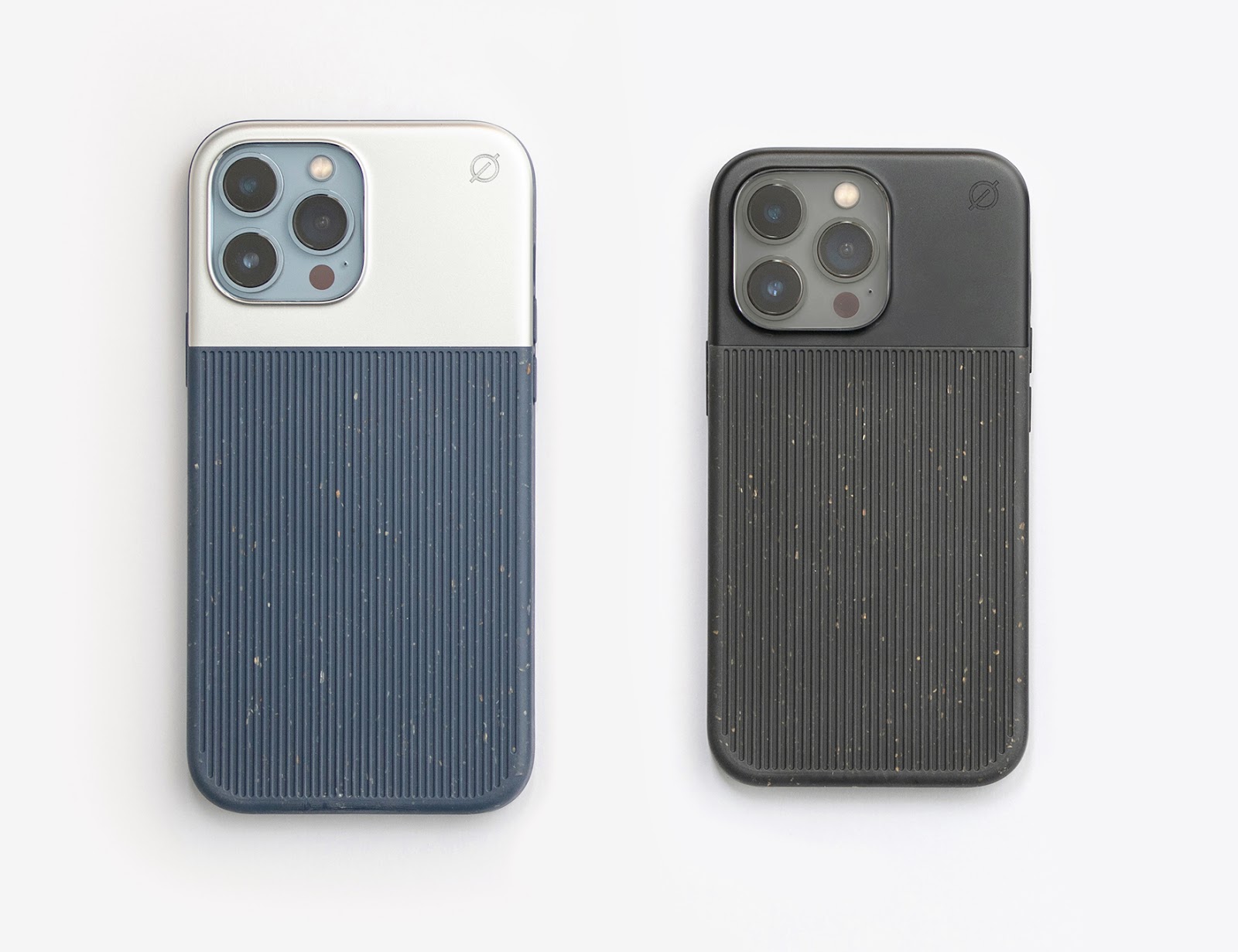
The Split Wood Fibre iPhone cases are made from wood fibre material, specially developed by Atom Studios, which is a combination of recycled wood and cornstarch-based ingredients — a completely unique and sustainable alternative to plastic in phone cases. It has a resilient finish and, unlike plastic, doesn’t show scratches, stains or wear in the same way plastic does. The grade 5052 aluminium used is also used in architecture and aircraft, because it’s slim but durable, it is also anodised which strengthens it further. Anodised aluminium is also infinitely recyclable. The iPhone 13 models are MagSafe compatible with 50% thicker magnets than industry standard for the most secure MagSafe connection.


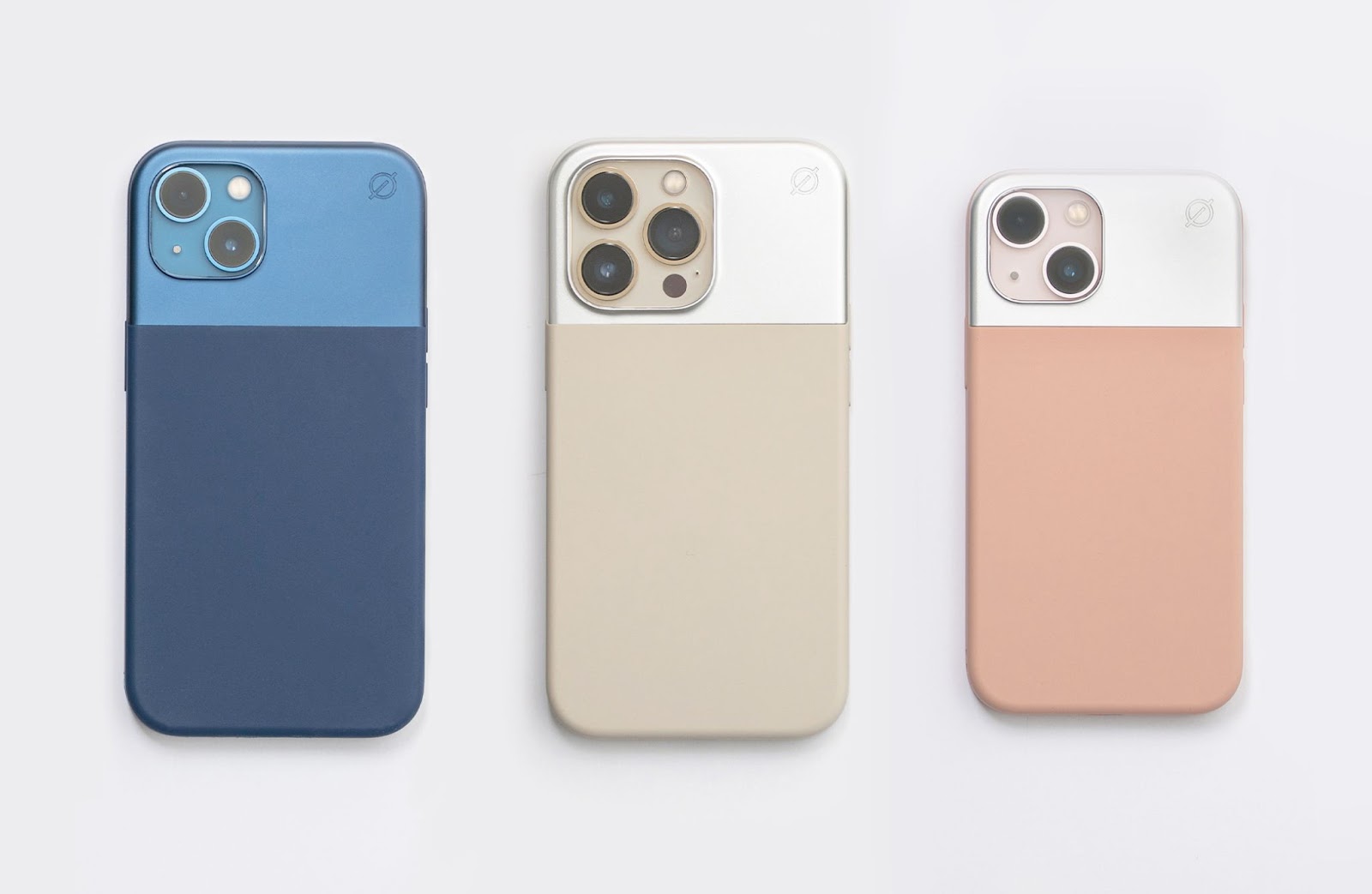
The Split Silicone iPhone Cases contain a combination of infinitely recyclable anodised aluminium and sand-based silicone, offering a stylish and sustainable alternative to plastic. The materials were chosen for their durability — they’re built to last for the life cycle of a phone. The silicone part of the case is soft to the touch while the aluminium has a premium, slim appearance resulting in a distinctive look. The iPhone 13 models are MagSafe compatible and, like the Split Wood Fibre Cases, also have 50% larger magnets than industry standard.


Other products in the launch range include AirPods Pro cases and cleverly designed charging cables to meet any user’s needs.


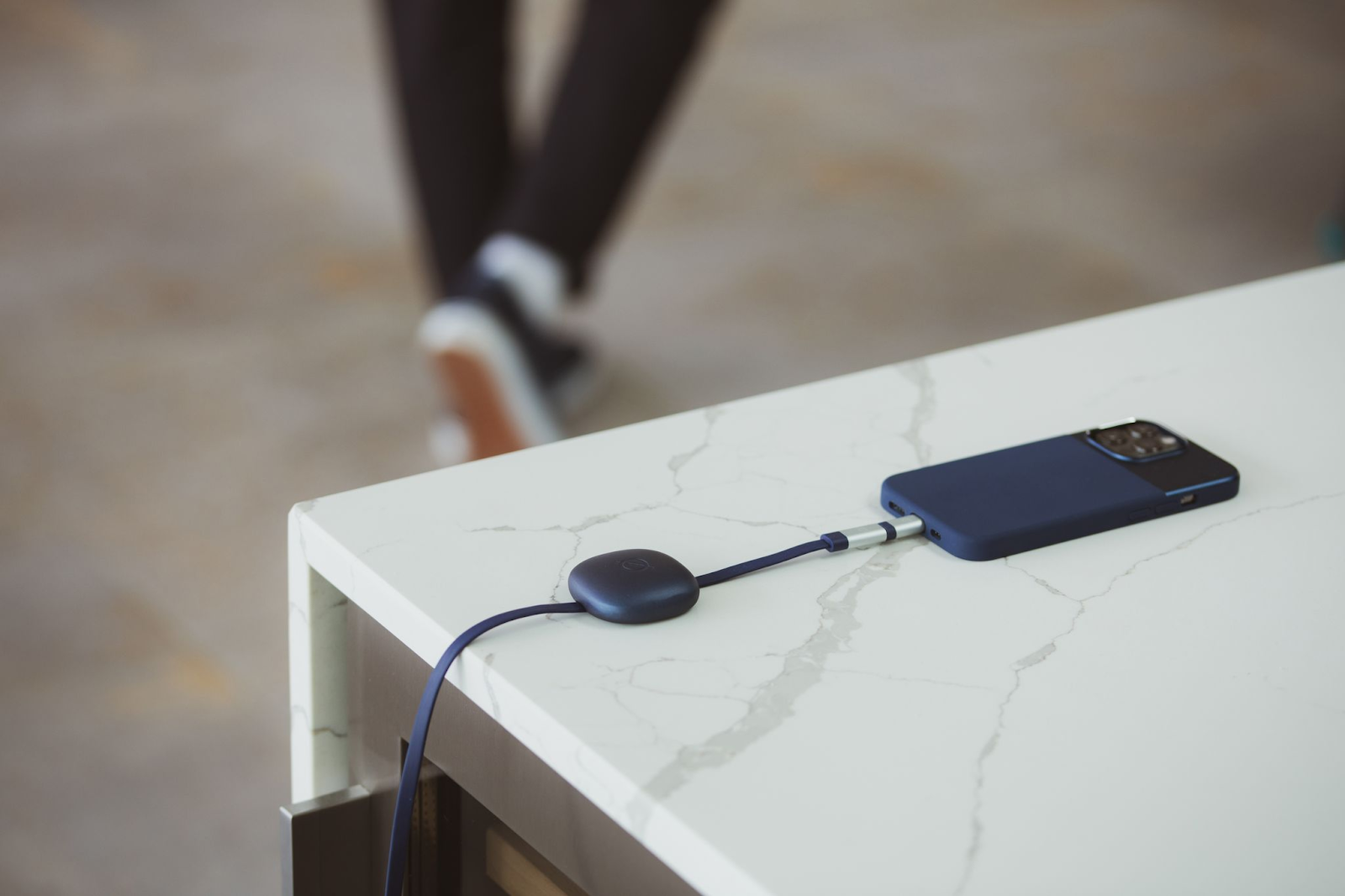
One of those cables is flat + mass, a cable weight (mass) and universal flat, tangle-free charging cable with interchangeable heads, so users only need one cable to meet all their charging needs. Mass holds the cable in place, preventing cables from trailing on the floor and dropping from desks and nightstands when not in use. The interchangeable heads are made from the same infinitely recyclable aluminium.


“We formed Atom Studios with the aim of creating tech accessories that look great, perform brilliantly with smart design details, and really are sustainable,” says Akbar Ali, Creative Director at Atom Studios, “we can see that many accessories out there currently come with a compromise – they are either sustainable but unattractive, fashion focused but made of plastic or very function-led and look like bricks. We wanted to start with smart design and make sure we could deliver it in a sustainably conscious way.”

Sustainability is the primary focus for Atom Studios across all areas of the business. From the long lasting eco materials they choose, to the right production and transportation methods, and also a full life cycle management process in which customers can return their Atom Studios cases when they’ve finished with them, so they can be properly disposed of or recycled.

“We created Atom Studios with sustainability and responsibility in mind,” continues Mr. Ali, “we’re by no means perfect yet in terms of being green, and don’t believe anyone is ,but every business decision centres around social and environmental responsibility.”

The full range of products can be found and purchased via AtomStudios.com or Amazon. Telecoms giant Three also now stocks a range of Atom Studios products in stores throughout the country and online.