New markets for decommissioned machinery: which industries benefit as transmissions in electric vehicles become redundant

The change in mobility and the associated reorganisation of car manufacturers’ production facilities is therefore in full swing. Entire vehicle components are being eliminated or fundamentally redesigned. For example, less complex gearboxes are being installed in electric cars. Other industries can also benefit from the modernisation of car manufacturing. This is because they are still installing gearboxes and the like and can purchase the production machines that have been decommissioned by the car manufacturers at favourable prices.

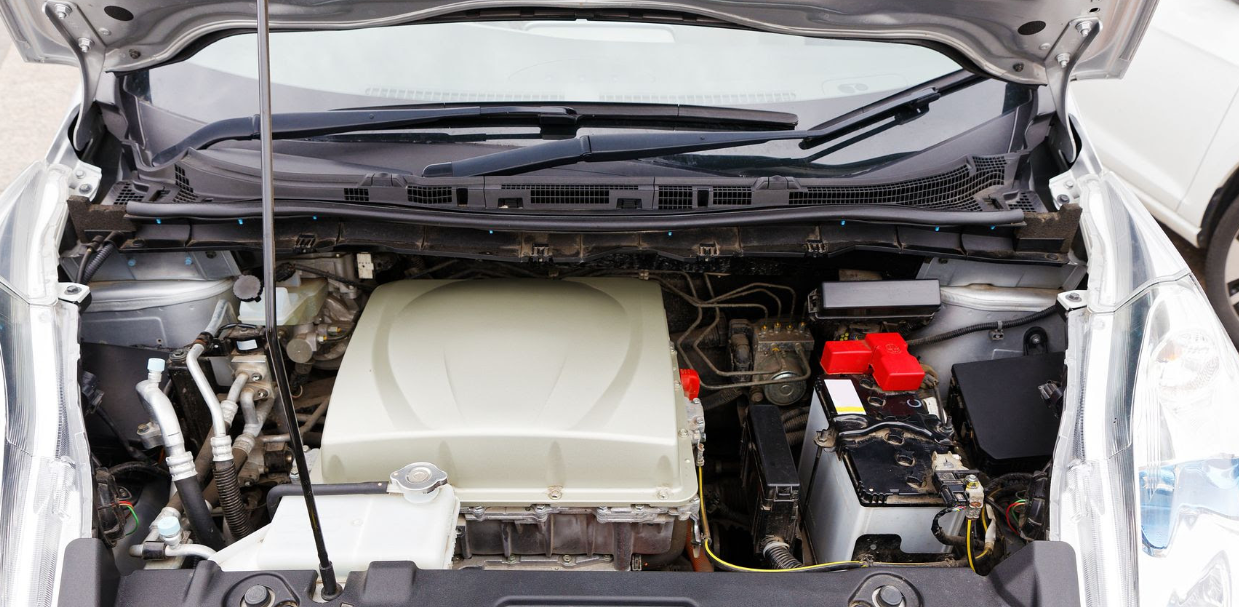
Anyone who has recently purchased a vehicle with an internal combustion engine might think that more gears are fundamentally better. Indeed, the development of transmissions has made impressive progress in recent years. Automatic and dual-clutch transmissions have been continually improved to achieve optimal performance. Some of the latest models even feature up to twelve gears. However, as the switch to electric vehicles increases, the requirements for vehicle production are fundamentally changing. In electric vehicles, traditional engines and transmissions, as we know them, are becoming increasingly obsolete. A modern internal combustion engine with a transmission consists of around 1,400 individual parts. In comparison, the drive system of an electric vehicle consists of only about 200 components.

The transmissions of electric vehicles are far less complex than those in internal combustion engines. Many electric vehicles use a so-called single-speed reduction gearbox, which does not require gear shifting. This fixed gear ratio reduces the high rotational speed of the electric motor to a lower speed suitable for the wheels, enabling driveable speeds. However, there are also electric vehicles, particularly those with higher performance, that feature a two-stage gearbox.

Growing demand for electric vehicles in Europe

Many of the machines and tools traditionally used in automotive manufacturing are no longer needed. Manufacturers and suppliers are therefore in a phase of reorientation, where they are retrofitting or even partially closing their production facilities to meet new market demands. How far the conversion of production facilities has progressed is difficult to say. A recognised indicator is the proportion of electric vehicles sold.

In 2023, the European market for battery electric vehicles (BEV) experienced a strong upswing: sales of over 1.5 million vehicles represent an increase of 37% compared to the previous year. Electric cars thus established themselves as the third most popular drive type in Europe, after vehicles with petrol and hybrid engines, and overtook diesel vehicles for the first time.

Despite growing interest in more environmentally friendly options, petrol and hybrid vehicles remain the popular choice, closely followed by. This indicates that the transformation of production is in full swing. “We also notice this at Surplex,” says Dejan Dučić, Project Manager at Surplex. “In recent months, we have been conducting more and more auctions for and from the automotive industry. And this affects a variety of areas: from robots from a Czech automotive plant to insolvent suppliers and the current partial closure of the engine and transmission works of the German car manufacturer.”

New markets for decommissioned machines from the automotive industry

And who should buy these used machines when most car manufacturers no longer have a use for them? “Even though car manufacturers no longer have a use for these specialised machines, there are numerous other industries that can greatly benefit from the shift in production,“ explains Dučić. “Just because complex gearboxes will no longer be used in cars in the future, it doesn’t mean they are no longer needed. There are still a multitude of other applications.“

The gear grinding machine from REISHAUER was recently part of an auction. It comes from the partial closure of the engine plant of a German car manufacturer in Slovakia. (© Surplex).

For example, gearboxes play a crucial role in energy technology. In wind turbines, special gearboxes are used to efficiently convert the rotation of the turbine into electrical energy. The situation is similar with hydropower. The gearboxes have one thing in common: they must be manufactured with extreme precision to ensure they function reliably and lastingly.

Machines originally used for manufacturing gearboxes in the automotive industry can also find new applications in aerospace and engineering. They can be used to produce complex and precise components for automation and manufacturing plants. The ability of these machines to perform precise and repeatable operations makes them particularly valuable for producing parts used in industrial machinery and robotics.

“With the transformation in the automotive industry, many car manufacturers and suppliers are choosing to sell their high-quality machines through platforms like Surplex,“ explains Dučić. “This provides companies from other sectors with an affordable opportunity to acquire first-rate manufacturing equipment.“

Not just a man’s world – the transformation in the machinery sector

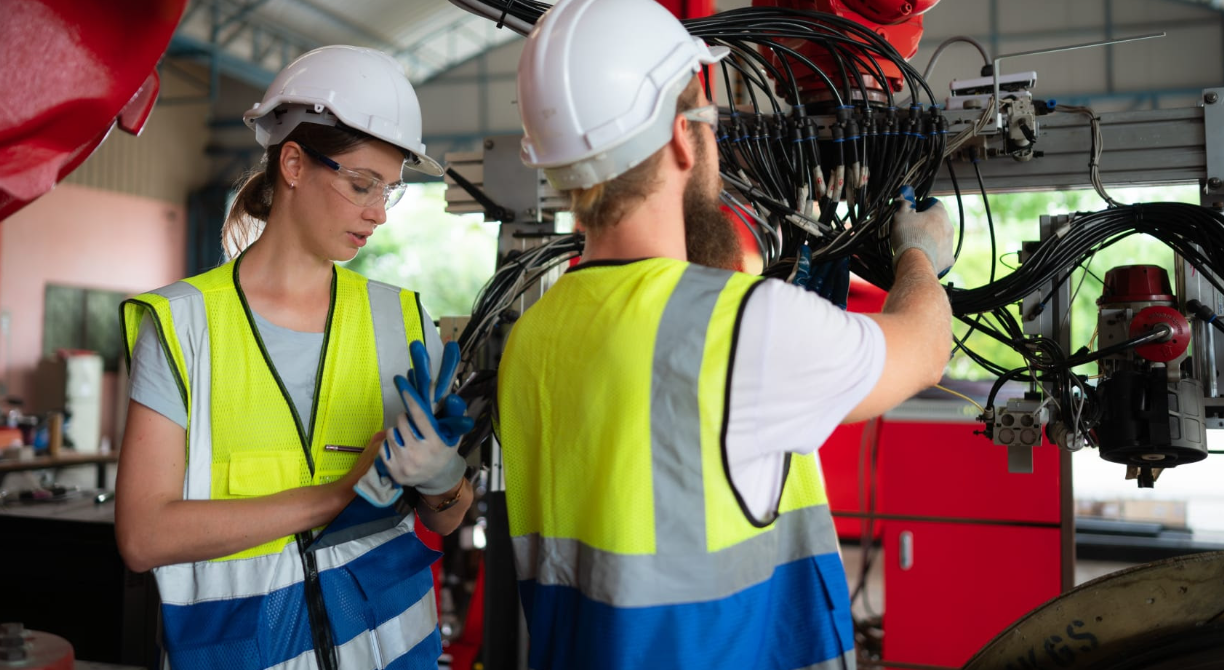
Mechanical engineering, industry, construction, and workshops: These are environments typically associated with men – at least according to the prevailing view in society. This is because women are supposedly not interested in technology and machinery. However, this perspective is outdated, as confirmed by four women in key roles at the industrial auction house Surplex.

The industry and mechanical engineering sectors, long considered male-dominated fields, are on the cusp of significant changes. For decades shaped by traditional gender roles and distributions, the rigid boundaries that hinder women’s access to technical professions and leadership positions are increasingly being broken down. Statistics paint an encouraging picture: The proportion of women in these fields is growing. This development, especially highlighted on International Women’s Day on 08 March, underscores the growing recognition of the importance of diversity in the workplace. Yet, there are still many challenges women often face.

New perspectives: women in technical professions

Surplex, an industrial auction house for used machinery in metalworking, woodworking, and construction, is also a typically male-dominated company. This is reflected not only in the industry but also in the professions: The Surplex project managers and sales managers, often with technical training, are responsible for acquiring machinery and conducting individual auctions, serving as direct contacts for predominantly male providers. Therefore, it is not surprising that two-thirds of Surplex’s employees are male.

However, Karin Schneider, Head of HR at Surplex, sees a positive change in the proportion of women at Surplex. A major problem, however, is the applicants’ experience. “The trend for more women to take up ‘typically male professions’ is still relatively new, so unfortunately, the depth of experience of most female applicants for higher positions is often not sufficient.“

The Surplex management team consists of three people, one of whom is a woman: Ghislaine Duijmelings. “It has been proven that diverse teams lead to better results. Therefore, it is crucial to consciously steer in this direction. In terms of internal labour mobility, we want to directly address women about new opportunities.“ Schneider also adds, “For us, gender is less important than a person’s qualifications. Such attributes should actually be irrelevant in a modern society.“ Despite the suitable working environment, why are there still fewer women in this industry?

Overcoming challenges, reducing self-doubt

“I think it’s due to cultural aspects such as stereotypical gender images, the way education is structured, and there are fewer female role models in these sectors. Also, the image of these sectors as a man’s world can deter women,“ says Duijmelings, echoing Schneider’s argument: How modern is our society today?

The fact that there are few women in this industry is not because they are excluded by men, as Nancy Castañeda, Project Manager for Surplex in Spain, and Kristina Voosholz, Acquisition and Purchasing, know from their own experience. “Of course, there was the occasional remark ‘Do you even know anything about machines?’, but you have to rise above that and charmingly convince the conversational partner otherwise,“ says Voosholz about her experience in the used machinery trade. Her long-standing expertise in the business has given her enough confidence to face sceptical business partners. And Nancy Castañeda feels the same: “Sometimes I felt like I wasn’t in the right place because I was surrounded by men, but I was confident that my work was good enough and I believed in myself.“ Sceptics were quickly convinced, and today she has many very good relationships with her business partners. Both women have not experienced outright rejection during their time at Surplex.

Balancing career and family: a management task

The combination of family and her role as CEO is not always easy, but for Duijmelings, it’s no obstacle. “It’s important to be flexible. I don’t stress when unforeseen circumstances arise. Taking responsibility also means setting priorities.“ And even though her children will always come first, it’s important to her to demonstrate that it’s important to be independent and to fulfil oneself.

Castañeda shares similar challenges between career and family. As a mother, she finds the time away from family the most challenging, an experience she shares with her male colleagues. “But the truth is, I have the support of my husband.“

So, flexibility is key for mothers – not just in technical professions. Surplex actively strives as an employer to create an environment where all employees can combine family and work. Whether through flexible working hours, part-time offers, workation (work & location, i.e. working in a different country than usual), or home office.

Diversity as the key to success

Women bring a new perspective to the market. Studies show that teams with a mix of different cultures, genders, and age groups are the most successful. It sounds like a cliché: Especially a balanced gender distribution leads to better decisions because it balances the extreme risk-taking of men and the excessive caution of women. The most important thing, therefore, is to encourage women to dare to enter technical fields.

For all women considering whether they are cut out for the machinery market or whether they should opt for a different career, Ghislaine Duijmelings has a tip: “My advice to other women: You are exactly right the way you are. Just take your position as a woman! Don’t be intimidated by what you don’t know.“