Tech Industry Alliance Announces TechFest 2025: Tech, AI & Humanity

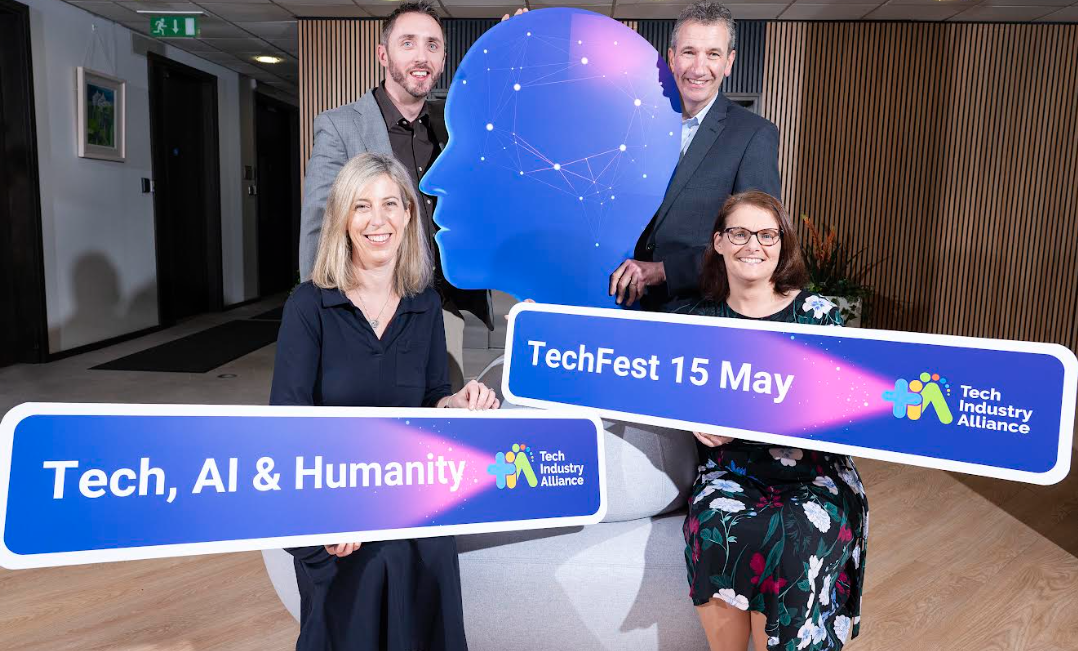
Tech Industry Alliance is proud to announce the official launch of TechFest 2025, the South West’s leading technology conference, bringing together industry pioneers, AI experts, and business leaders to explore how artificial intelligence, space innovation, and tech talent are shaping our future.

TechFest is the Alliance’s annual flagship technology conference and will be held at Rochestown Park Hotel, Cork, from 08:00am on May 15, 2025. This year’s theme, “Tech, AI & Humanity – Shaping Our Future,” will examine the profound impact of AI on society, business, and the workforce of tomorrow. Tickets for the main conference are now on sale at:  https://techindustryalliance.ie/techfest-2025/?doing_wp_cron=1742820112.6130120754241943359375

TechFest 2025 is delighted to welcome internationally acclaimed neuroscientist, broadcaster, and author Dr. Hannah Critchlow as keynote speaker. Named a “Rising Star in Life Sciences” by Nature, Dr. Critchlow is a Fellow at Magdalene College, University of Cambridge, and a respected voice in neuroscience and AI. With frequent appearances on BBC, ABC, and global media, including The Life Scientific, Tomorrow’s World Live, and BBC Radio 4’s Destiny and the Brain, Dr. Critchlow will explore the intersection of neuroscience, AI, and human potential.

Keeping the energy high and discussions insightful, Jonathan McCrea, an acclaimed science communicator and AI master trainer, will guide attendees through the event. Passionate about harnessing AI to drive productivity and innovation, Jonathan will ensure an engaging and thought-provoking experience.

Other expert speakers on the day include Dan Rapp Chief AI and Data Officer – Proofpoint, Dr. Laura Maye – UCC Lecturer specialising in human-computer interaction and inclusive technology design, Rory Fitzpatrick – CEO of the National Space Centre, Cormac O’ Sullivan from Mbyronics,  Dr. Niall Smith – Head of Research at Munster Technological University, Tim Crowe, Co-Founder and CEO of WrxFlo, Emily Brick  – Founder of Athena Analytics, plus many more.

This year’s conference will feature four engaging tracks addressing the biggest challenges and opportunities in tech:

  • Tech, AI & Humanity – How Will Artificial Intelligence Reshape Society?
  • The Future of Tech Talent – What Skills Will Define the Workforce of Tomorrow?
  • Showcasing Evolving Tech Companies – Meet the Innovators Transforming the South West’s Tech Sector
  • Space & the Future of Humanity – Exploring the Next Frontier of Innovation

Gerry Murphy, Tech Industry Alliance Chairperson, commented: “We are delighted to be announcing TechFest 2025, which will feature rare content, rich dialogue, and facilitate real connections. This event would not be possible without the vital support of our sponsors, who all recognise the importance of our sector to the Munster region. Following a highly successful TechFest last year, we are thrilled with this year’s incredible lineup of speakers and the even greater opportunities to network with colleagues and businesses across the South West region.”

With over 400 attendees expected, TechFest 2025 will be an unparalleled opportunity to network, connect, and collaborate. Given the high demand, attendees are encouraged to secure their tickets early, as the event is expected to be a sell-out.

TechFest 2025 sponsors – Tech Industry Alliance Skillnet, AIB, Proofpoint, PepsiCo Ireland,  Skillnet Innovation Exchange, FIT (Fastrack into Information Technology), Barden, Trend Micro, Park Place Technologies, CyberSkills, NetApp, Aspen Grove, Deloitte, Cork City Council, Cork County Council, We are Cork, Kerry County Council, Discover Kerry, Voxxify, MTU, Nimbus

Secure Your Spot Now: TechFest 2025 is THE must-attend event for tech professionals, business leaders, startups, and innovators who want to stay ahead of the curve. Register today and secure your spot:
https://techindustryalliance.ie/techfest-2025/?doing_wp_cron=1742820112.6130120754241943359375

How AI is Shaping the Modern Workplace

The world of work has evolved significantly in our digital age. New technologies have enabled greater connectivity and collaboration between employees whether coming together in-person or working remotely.

The emergence of artificial intelligence (AI) may have the most profound impact yet on the workplace as we know it. AI is a once-in-a-generation technology that provides significant potential to create more agile, flexible, and efficient workplaces in the future.

From enhancing productivity to fostering collaboration and enhancing the security of digital infrastructure, developing a modern workplace with new AI experiences will enhance the user experience today and set organisations up for success in the future.

An AI-enabled workforce

Most businesses in Ireland already recognise the importance of embracing AI in preparing their organisation for the future. Research by IBEC reveals that nearly two in three Irish businesses believe that AI has the potential to enhance productivity and work conditions.

The race to prepare for an AI-enabled future is already well underway across many industries, with substantial investment in AI-related infrastructure. According to the IDC, total global investment in AI is expected to increase to $301.43 billion by 2026.

The potential impact of the technology is significant and wide-ranging across many industries and applications. AI is key to unlocking value within data and thus is becoming one of the most important tools for businesses of all sizes.

Among the workforce, AI has the capacity to automate many routine tasks, freeing up employees to focus on more strategic and value-added productivity. When you automate intelligently, team members can spend less time on repetitive, routine tasks and more on innovation, creative thinking, problem-solving, and collaboration. For example, the use of generative AI (GenAI) tools to create written content or images from prompts can speed up the completion of time-intensive tasks like writing reports creating presentations and proposals, or emails. In the advertising industry, these tools are already being used to quickly develop high-quality assets that may only need minor editing from human designers before being rolled out in campaigns.

AI tools can also be used to enhance collaboration and communication across the workforce. For instance, AI-powered notetaking tools that transcribe and analyse meeting content can be used to ensure better understanding and information sharing across teams saving time on mundane tasks.

The Role of AI powered workstations

As organisations look to advance their AI capabilities, AI-powered workstations are set to be a crucial pillar in ensuring their workforce can harness the power of the technology at scale. The development and deployment of AI technologies on workstations offers significant strategic and operational benefits for businesses from greater flexibility to scaling and simplified implementation.

As the use of AI tools in the workplace rapidly grows and AI models increase in size and complexity, AI workstations can provide a highly scalable infrastructure solution that meets the evolving needs of organisations. Recently launched, Dell’s new range of AI-powered Precision desktop and laptop workstations provide enhanced support for the high level of data processing required to manage AI workloads in the modern workplace.

Each workstation is equipped with a neural processing unit, a specialised processor optimised for handling complex mathematical computations integral to artificial neural networks. This high performance is complemented by large storage and memory to enable the efficient handling of vast amounts of data and speed up the development cycle of AI models.

AI-powered workstations also provide increased flexibility for organisations in the development of AI models. High-end processors and powerful GPUs built into the workstations enable developers to rapidly prototype and fine-tune generative AI models locally in a cost-effective way.

By providing a fully integrated solution for the entire development process of AI models, from data preparation to model training and deployment, these workstations can ensure that your organisation is fully prepared for the future, whatever your use case.

Building a more secure work environment

As organisations face increasing levels of cyber threats, GenAI can be a powerful tool to strengthen cyber resilience in the workplace. GenAI can enhance detection and respond to anomalies and potential threats in real time. If malicious actors do gain access, it can isolate attackers and stop them from spreading further.

With flexible and remote working models becoming standard in many organisations and establishing themselves as a long-term working practice, GenAI can also help to address the endpoint security challenges associated with employees accessing company resources from different locations and devices. By continuously monitoring user behaviour and network activity, GenAI can strengthen the cybersecurity position of the organisation and adjust permissions based on risk assessments.

Preparing for change

AI is set to change the way we work, enhancing productivity and unlocking new opportunities for businesses. As organisations advance on their AI journey, it is important that they take a joined-up approach to the technology.

At Dell Technologies, we’re committed to helping organisations create AI-powered experiences in workplaces across Ireland. From running complex AI workloads on workstations to using day-to-day AI-powered applications on laptops, our extensive range of commercial AI workstations and laptops are tailor-designed to bring organisations and employee productivity into the AI era and unlock the full potential of the technology.

By taking action now, businesses and organisations can create a modern workplace shaped by new AI experiences.

AI and the Future of Work: How Automation is Shaping the Workforce

Artificial Intelligence (AI) has been a buzzword for years now, and it’s impact on the future of work has been a topic of discussion among experts and business leaders alike. With the rapid advancements in technology, automation is now reshaping the workforce and transforming the way we work. In this blog, we will explore the relationship between AI and the future of work, and how automation is changing the workforce.

Automation is the use of technology to perform tasks that would otherwise be done by humans. This includes everything from simple repetitive tasks like data entry, to more complex tasks like diagnosing medical conditions. Automation is changing the workforce by reducing the need for human labor in certain industries and creating new jobs in others. For example, self-driving cars may reduce the need for human drivers, but will create new jobs in areas such as software development and maintenance.

How AI Technology Is Transforming Traditional Jobs

AI technology is transforming the way we work and the types of jobs available in the workforce. With the rise of automation, many traditional jobs are being transformed, making them more efficient and effective. Here are some examples of how AI technology is transforming traditional jobs:

Healthcare:

AI technology is transforming the healthcare industry by improving patient outcomes and reducing costs. For example, AI-powered diagnostic tools can analyze medical images and help detect diseases such as cancer at an earlier stage. An AI-powered healthcare chatbot can also help patients get quick access to medical information and advice, reducing the burden on healthcare professionals.

Customer Service:

AI technology is transforming customer service by automating repetitive tasks and providing faster, more accurate responses. Chatbots and virtual assistants can handle basic customer inquiries and provide 24/7 support, freeing up human customer service representatives to focus on more complex issues.

Finance:

AI technology is transforming the finance industry by automating tasks such as fraud detection, risk assessment, and investment recommendations. AI-powered algorithms can analyze large amounts of financial data and provide insights that can help companies make better financial decisions.

Manufacturing:

AI technology is transforming the manufacturing industry by automating production lines and improving quality control. Robots and machines equipped with AI can perform repetitive tasks more efficiently and accurately than humans, reducing the risk of errors and improving overall production efficiency.

The Benefits & Challenges of Using AI in the Workplace.

AI technology has the potential to transform the way we work, tools for sales and marketing automation are making businesses more efficient and productive. You must think about what is ChatGPT. Chat GPT is an AI language model developed by OpenAI that can engage in conversational interactions, understand natural language, and generate human-like responses. However, the use of AI in the workplace also comes with its own set of benefits and challenges. In this section, we’ll explore some of the benefits and challenges of using AI in the workplace.

Benefits of Using AI in the Workplace

Increased Efficiency

One of the most significant benefits of using AI in the workplace is increased efficiency. AI-powered tools and algorithms can perform tasks faster and more accurately than humans, reducing the time and resources required to complete certain tasks.

Improved Decision Making

AI technology can also help businesses make better decisions by analyzing large amounts of data and providing insights that would be difficult for humans to uncover on their own. This can lead to more informed and data-driven decision-making.

Cost Savings

By automating repetitive tasks and reducing the need for human labor in certain areas, businesses can save costs and allocate resources more effectively.

Enhanced Customer Experience

AI-powered chatbots and virtual assistants can provide 24/7 customer support, responding to customer inquiries in real time and improving overall customer satisfaction and the best llm app platform is where you can start for that.

Challenges of Using AI in the Workplace

Job Displacement

One of the biggest challenges of using AI in the workplace is the potential for job displacement. As AI technology automates certain tasks, some jobs may become redundant, leading to job loss for some workers.

Data Privacy and Security

The use of AI in the workplace also raises concerns about data privacy and security. As AI algorithms analyze and process large amounts of data, businesses must ensure that sensitive information is protected from cyber threats and breaches.

Bias and Fairness

AI algorithms are only as unbiased as the data they are trained on. If the data used to train AI algorithms is biased or unfair, the resulting decisions may also be biased or unfair. This can lead to discrimination and inequality in the workplace.

Ethical Concerns

AI technology raises ethical concerns around the use of autonomous decision-making algorithms and the potential for AI to be used for harmful purposes.

The Future of AI and Automation in the Gaming Industry

The gaming industry has always been at the forefront of technological innovation, and the rise of AI and automation is no exception. In recent years, the use of AI and automation has become increasingly prevalent in the gaming industry, with the introduction of new games like PG Slot, which leverage advanced technology to create an immersive and engaging gaming experience. In this section, we’ll explore the future of AI and automation in the gaming industry, with a focus on PG Slot.


PG Slot is a popular online slot game that has gained a lot of attention in recent years due to its use of AI and automation. The game features an AI-powered algorithm that generates random numbers and determines the outcome of each spin. This algorithm ensures that the game is fair and random, providing players with a genuine and unbiased gaming experience.

Conclusion

In conclusion, the impact of AI and automation on the future of work is significant, and it’s important to consider both the benefits and challenges that come with it. While the implementation of AI and automation may lead to job displacement in certain industries, it can also create new opportunities and lead to improved efficiency, decision-making, cost savings, and customer experience. 

As we continue to explore and leverage the capabilities of AI and automation, it’s crucial to address concerns such as data privacy, bias and fairness, and ethical considerations to ensure that these technologies are used for the betterment of society.