Garmin releases 2025 Garmin Connect Data Report

Garmin has released its 2025 Garmin Connect Data Report, highlighting overall fitness and health trends from customers around the world.  From data trends like average stress and daily steps to an increase in recorded activities, insights from the Garmin Connect community highlight key fitness and well-being trends across a range of demographics, locales and abilities.

Activity takeaways

Garmin users recorded 8% more activities this year than in 2024, with the following activities seeing the largest year over year increase:

  • Racket sports: +67%
  • HIIT: +45%.
  • Pilates: +46%
  • Strength training: +29%
  • Indoor running: +16%
  • Diving: +16%
  • Hiking: +12%


Health and fitness takeaways

  • Women recorded lower average stress scores than men, and Garmin users in Indonesia had the highest stress scores this year while those in the Netherlands had the lowest.
  • Garmin users got nearly 1% better sleep this year, with an average sleep score of 71.
  • Younger Garmin users typically had higher Body Battery energy levels, with 18–29-year-olds averaging 75. Users 40-49 years old averaged 70, while users over 70 years old averaged 64. Those in Portugal recorded the highest average Body Battery levels, while Japan had the lowest.
  • On average, users took more steps per day in 2025. Garmin users in Hong Kong took the most average steps with more than 10,000 per day.
  • Users 18-29 years old did the most outdoor running this year. 50-59-year-olds led the indoor cycling category, while those 70 years and older did the most golfing.

Click here to read the entire report.

What athletes love about Garmin Connect

 “I live a very active lifestyle, from long days surfing to runs and strength work in the gym. Being able to track my recovery, HRV, and overall performance in one place helps me make smarter decisions, stay consistent, and train with real purpose.”

–Brianna Cope, Garmin ambassador

 Garmin Connect is an organised person’s dream. It makes tracking and comparing my performance over time incredibly simple thanks to its clean colour-coded categories and easy-to-read charts. I can instantly spot trends across a week, a month, six months, or even a full year. So, when it’s time to reassess my training, Garmin Connect shows me exactly where I need to dial in my sleep, recovery, and overall workload.”

–Lauren Kalil, Garmin ambassador

“Since coming back to training and racing after having my daughter, I’ve really had to readjust my expectations for training and recovery. Using resting heart rate and HRV trends in the Garmin Connect app has been a huge help to me as I’ve recalibrated what’s normal for me right now. The data helps me know if we are getting the training and recovery load right, or if we need to back down.”

–Skye Moench, Garmin-sponsored triathlete

This year, Garmin Connect+ users can check out their own highlight reel – the Garmin Connect Rundown. Available now in the Garmin Connect app, the personalised annual report includes health, performance and activity stats, including total steps, average sleep score, totals of each activity type and more.

Garmin’s latest smartwatches – like the Venu® 4 and fēnix ® 8 Pro – are packed with popular health and fitness features and seamlessly sync to Garmin Connect, letting users track their activities, analyse their data, compete in challenges and more. Whether you’re chasing a new PR, training for an event or focusing more on overall wellness, Garmin has a smartwatch that’s ready for any goal. Click here to learn more about the latest lineup of Garmin smartwatches.

Engineered on the inside for life on the outside, Garmin products have revolutionised life for runners, cyclists, swimmers and athletes of all levels and abilities. Committed to developing technology that helps people stay active and elevate performance, Garmin believes every day is an opportunity to innovate and a chance to beat yesterday.

Coimisiún na Meán rolls out nationwide campaign on the importance of reporting harmful content online

Coimisiún na Meán has this week launched a new nationwide campaign raising awareness about harmful content online and how to report it, as well as information available to assist the public on Coimisiún na Meán’s website www.cnam.ie. The campaign aims to raise awareness of people’s rights under Ireland’s Online Safety Framework, particularly regarding the protection of children and young people, and will roll out nationally across radio, print and social media. This campaign is supported by the Department of Health.

The campaign will include a series of short videos for users – encouraging them to report harmful material they might encounter online, including cyberbullying and the promotion of eating disorders, self-harm and suicide as well as dangerous challenges. It will also aim to strengthen the public’s understanding of the importance of reporting such content to platforms. Coimisiún na Meán has information on its website on how to report and what to do if you are not happy with a platform’sresponse to that report.

Speaking on the launch of the new campaign, Coimisiún na Meán’s Online Safety Commissioner Niamh Hodnett said: “There are obligations on platforms under the Online Safety Framework to protect the safety of children online and to restrict content which impairs their physical, mental or moral welfare. Our strategy is to focus on key outcome areas which include children, public safety and public health. We are happy to partner with the Department of Health on this important campaign and I’d like to thank the Minister for Health for her support and interest in these issues.

“We want to remind people that they have rights under our Online Safety Framework, and empower them to report harmful content. Harmful online content is never acceptable. We would encourage anyone who encounters it to report it first to the platform where they see it. For how to report and what to do if you are not happy with the response you get, please visit our website www.cnam.ie.”

Minister for Health, Jennifer Carroll MacNeill TD said: “Some online spaces contain harmful, inappropriate or illegal content. This campaign, which highlights the importance of reporting such content, will strengthen understanding and empower people to report it where they see it. We have seen the challenges faced by children and young people as they engage with digital environments and I will shortly publish the Final Report of the Online Health Taskforce which contains a comprehensive framework to help tackle these challenges.”

Minister for Culture, Communications and Sport, Patrick O’Donovan TD said: “Keeping us safe online, in particular, keeping our children and young people safe online is a top priority for me. Don’t stay silent if you see something harmful, inappropriate or illegal online. You can report it to the platform and you have options if you’re not happy with the outcome, Coimisiún na Meán is here to help and support you. We can help each other and our children stay safe by using our voice and exercising our

right to report.”

The campaign will be supported by extensive new website resources, including the How to Report guides and parents’ information pack.

Cyber Threats Could Force 1 in 4 SMEs to Shut Down After a Ransomware Attack

The latest Vodafone Business Cybersecurity Threat Report reveals a stark reality for Ireland’s small and medium-sized enterprises (SMEs), warning that 28% of businesses would be at risk of shutting down after just one ransomware attack, while 94% of Irish SMEs admit they feel unprepared to defend against advanced cyber threats.
With cyber criminals increasingly harnessing artificial intelligence (AI) to launch faster, more convincing and more adaptive attacks, the report warns that no business is immune to risk.
AI: The Game-Changer in Cybercrime
The report highlights how AI is now being used to clone voices, impersonate trusted executives, and create highly realistic phishing campaigns, making it harder than ever for busy SMEs to spot malicious activity. These sophisticated identity hacks can lead to operational shutdowns, exposure of sensitive customer data, and long-term reputational damage to businesses.
The financial impact is expected to surge with cybercrime-related costs projected to rise by nearly 50% over the next three years as AI-driven attacks continue to evolve.
The report highlights the emergence of adaptive AI malware, a type of malicious software that can learn and adapt its tactics to evade detection. Traditional antivirus systems are becoming less effective against these shape-shifting threats, signalling a critical need for stronger, AI-enabled defences.
As Irish SMEs begin integrating AI tools into everyday operations, from automating customer service to analysing data, the research shows that 50% of small and mid-sized enterprises ranked cybersecurity among their top five priorities. However, 69% of SMEs admit they lack the proper cybersecurity measures to deploy these technologies safely. This gap is leaving many businesses exposed to new forms of cyberattacks.
However, Vodafone Ireland, connectivity and technology partner to six in ten Irish businesses, emphasises that there are practical steps SMEs can take to strengthen their cybersecurity, such as employee training, software updates, multi-factor authentication, regular backups, and partnering with expert providers for monitoring and threat detection. These measures can help businesses close gaps without requiring extensive IT expertise.
Speaking on the findings, Sinead Perry, Head of SMB Sales – Small & Medium Business at Vodafone Ireland, warned that no business is too small to be a target:
The scale of AI-powered attacks means no business is too small or too remote to go unnoticed. If you’re online, you’re on the radar. For SMEs, the risk is real – they are big enough to be a target but often don’t have the same security resources as larger firms.”
“Attackers only need to succeed once, while your defences must work every time. Irish SMEs now face two major challenges: defending against AI-driven threats and ensuring their own use of AI is secure.”
“Today, SMEs manage more data than ever before and operate in a complex digital environment that rivals larger businesses. This makes them attractive targets, and with AI in the mix, this threat is evolving fast. SMEs must act now to strengthen their resilience and protect the future of their business. With 2.4 million customers in Ireland, Vodafone is a trusted connectivity and technology partner, uniquely positioned to support SMEs in navigating today’s cybersecurity challenges. This is why at Vodafone Ireland, we are working with leading global technology partners, like Google, Microsoft
and Zscaler, to help SMEs build stronger, smarter defences and protect the future of their businesses.”
The full Vodafone Business Cybersecurity Threat Report is available to download via the V-Hub knowledge centre: https://v-hub.vodafone.ie/knowledge-centre/how-to-defend-smes-from-rising-ai-driven-cyber-attacks.

SETU launches ‘Elevate’ digital resource to support micro-enterprises in the region

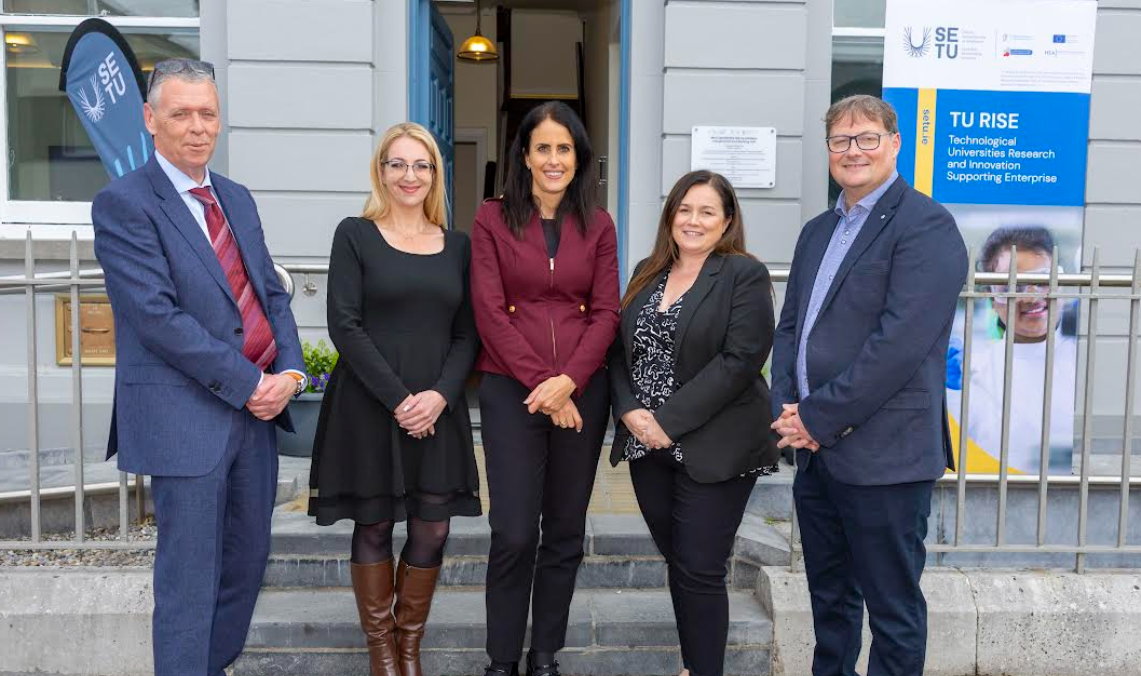
South East Technological University (SETU) has launched a new digital resource to support micro-enterprises in the region. ‘Elevate’ is an online platform that provides entrepreneurs with easy access to practical business assessments that help identify strengths and areas for development across a range of enterprise competencies.

The platform offers free online tools to evaluate digital readiness, sustainability practices, and innovation capacity, and to support succession planning. These tools enable businesses to identify growth opportunities and take clear steps towards development.

A key feature of Elevate is a set of interactive diagnostic tools that help business owners assess and challenge their operations. After completing a short series of questions, users receive a tailored report with recommendations to support future planning and sustainable growth. Each assessment takes only a few minutes to complete and focuses on strategic themes that can be further supported by SETU’s business support team.

The initiative is part of SETU – TU RISE (Technological University Research and Innovation Supporting Enterprise), which is strengthening research capacity and deepening engagement with enterprises across the south east. Elevate complements the activities of SETU’s recently launched Rural Innovation Hubs in Hacketstown, Urlingford, Rosslare Harbour and Dungarvan, giving business owners the opportunity to engage with the university in their locality or online.

Commenting on the new initiative, Brian Ogilvie, Head of Entrepreneurship and Rural Engagement, said, “As part of SETU’s wider activities to foster entrepreneurship and business engagement, Elevate reinforces our commitment to the business community, particularly those in rural locations.”

Ian Campbell, Business Development Manager at SETU, added, “Alongside our four new rural innovation hubs across the region, Elevate provides an accessible pathway for business owners to engage with the university’s supports, including our Technology Gateways. It offers valuable insights to inform decision-making and future planning.”

Visit elevate.setu.ie to begin your business’s journey with SETU.

CCPC publishes its 2024 annual report

The Competition and Consumer Protection Commission (CCPC) has today published its 2024 Annual Report, detailing the investigations, enforcement actions and public awareness campaigns carried out last year. 2024 also marked a significant milestone as the CCPC celebrated its 10th anniversary, marking a decade of work promoting competition and enhancing consumer welfare.

Key highlights from 2024:

•    Blocked daa’s purchase of the former QuickPark car park site at Dublin Airport to prevent a monopoly in that market

•    Cleared 71% of merger determinations within 13.3 days, under a simplified process, despite merger notifications increasing by 21%

•    Opened five new investigations for suspected breaches of competition law

•    Carried out dawn raids on two premises as part of an ongoing cartel-related investigation in the home alarm industry, and assisted the Italian competition authority with an unannounced search of Ryanair’s headquarters in Dublin as part of an ongoing Italian competition investigation

•    Recalled, withdrew or prevented 178,596 unsafe products reaching the Irish market

•    Launched proceedings against several nationwide retailers for breaches of new sales pricing laws

•    Undertook 205 consumer protection inspections

•    Responded to over 44,000 helpline contacts and received 1.8 million visits to ccpc.ie

Among its highlights include the CCPC’s successful intervention to prevent a potential monopoly in car parking at Dublin Airport, blocking the daa’s attempted purchase of the former Quickpark site. The deal was stopped due to findings that it would lead to higher prices, less choice and lower service quality for consumers, and facilitated the entry of a new competitor to the car park market at Dublin Airport. Recent analysis conducted by the Commission shows evidence of consumers benefiting from increased competition for car park business at the airport.

Over 178,000 unsafe products removed or prevented from reaching the Irish market

Following consumer complaints, referrals from European networks, proactive investigations and work with Revenue Customs, the CCPC recalled, removed or prevented almost 180,000 unsafe and non-compliant products from reaching the Irish market. Recalls included almost 10,000 babies’ sleepsuits and over 2,400 toy construction trucks, in addition to compliance inspections across hundreds of products.

Enforcement and legal actions

Work to protect Irish consumers from breaches of consumer protection law continued at pace with more than 200 inspections undertaken, 47 fixed penalty notices and 23 compliance notices issued. Successful prosecutions were brought against five retailers, with Tesco Ireland pleading guilty to two sample counts of failing to comply with the law in how they displayed the price of products offered on promotion to Clubcard holders.

Dawn raids

The CCPC carried out dawn raids on two premises as part of an ongoing cartel-related investigation in the home alarm industry. It also assisted the Italian Competition Authority, the Autorità Garante della Concorrenza e del Mercato (AGCM), in an unannounced search of Ryanair’s headquarters in Dublin as part of an ongoing Italian competition law investigation.

CCPC Chairperson Brian McHugh commented:

“2024 marked a major milestone for the CCPC — ten years of championing consumer rights and fostering competitive markets in Ireland. Open, fair markets are the backbone of our economy’s success, ensuring that whether consumers are making small everyday purchases or major financial decisions, their interests are protected.

“Our Annual Report highlights the vital role the CCPC plays across all sectors of the economy, from enforcing consumer law on retail pricing, to advocating proactively for reforming the legal sector to better serve the interests of Irish businesses and consumers. As we look ahead, it is clear that the CCPC’s work is more important than ever and our vision for open and competitive markets where consumers are protected and businesses actively compete, remains at the heart of everything we do.

“Following a year of notable achievements and a decade of progress, our focus remains on delivering transparent outcomes, empowering consumers with knowledge of their rights, and being a leading voice for competition and consumer welfare across Ireland.”

For more information, read the CCPC’s 2024 Annual Report.

Editor’s Notes

The Competition and Consumer Protection Commission (CCPC) is the statutory body responsible for enforcing and promoting compliance with competition, consumer protection and product safety law, with new and expanding roles in digital and data regulation. We make markets work better for consumers and empower consumers to make informed choices.

Other CCPC reports for 2024 that may be of interest include:

–    The Contacts Report which breaks down the sectors, issues and traders detailed by consumers who contacted the CCPC for information on their rights in 2024.

–    The Annual Mergers and Acquisitions Report which provides details of the mergers and acquisitions notified to, and reviewed by, the CCPC throughout 2024.

–    The Consumer Protection List which details the CCPC’s consumer protection enforcement activities in 2024.

Digital surge in construction: Strong tech uptake but critical gaps in AI training and sustainability

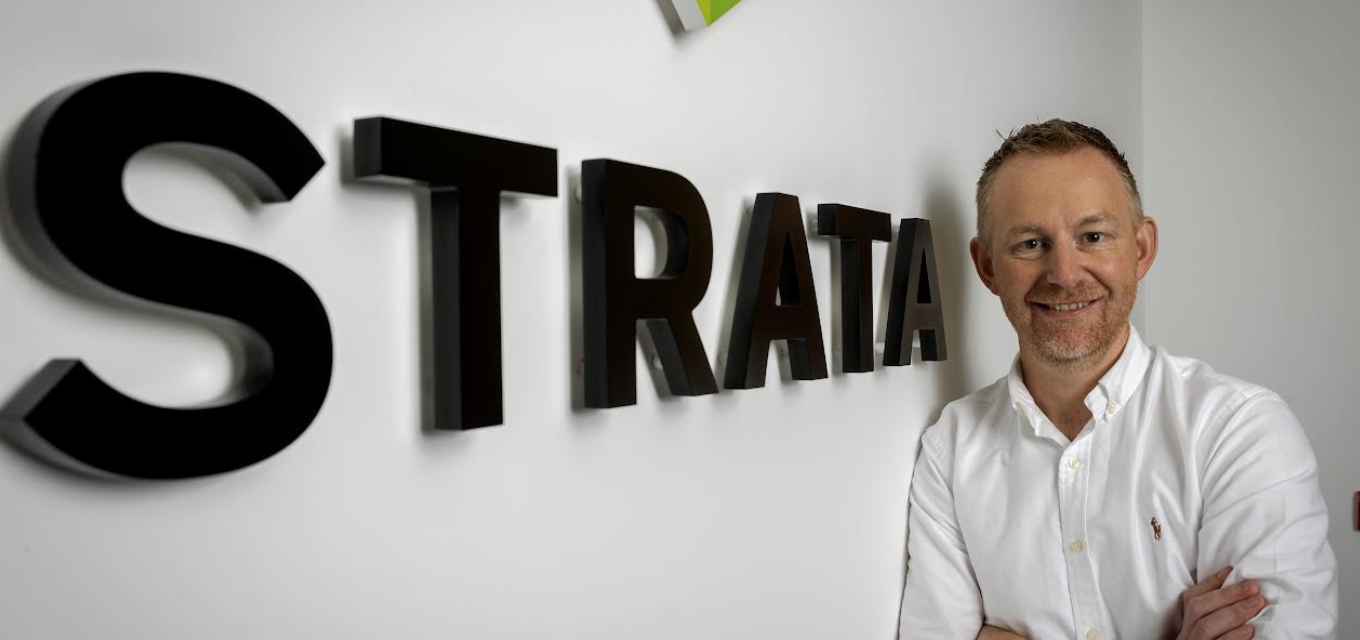
Recent research by Strata, Ireland’s leading provider of construction time management and digital construction services, reveals that 88% of construction and engineering professionals have accelerated their use of digital technologies over the past year. In addition, nearly 70% of respondents are leveraging these tools to drive smarter decision-making and innovation across the sector.

Barriers to digital adoption

The 2025 Strata Report: Digital Transformation in Construction highlighted that siloed workflows are the leading barrier to digital adoption in the sector. Time constraints ranked second, driven by limited capacity for training and the pressure of industry-wide labour shortages. In third place, skillset gaps point to an urgent need for targeted training and the strategic hiring of new digital capabilities to support transformation.

Knowledge of AI

The research found that 81% of construction and engineering professionals report only basic or moderate knowledge of Artificial Intelligence (AI). However, more than 71% of respondents believe AI will be critical in shaping the future of the sector. Despite this strong belief, over half of companies surveyed had yet to implement formal AI training for their teams.

Sustainability in sector

When asked about the importance of sustainability in the sector, 85% of construction and engineering professionals said it will become more important over the next one to three years. This contrasted with just 5% reporting significant progress in utilising digital tools such as carbon calculations and whole-life assessments.

Commenting on the findings, Enda Grimes, Director and Founder of Strata said: “With the Government’s National Planning Framework prioritising accelerated housing delivery, and the Climate Action Plan placing new demands on infrastructure and sustainability targets, meeting construction demand will require greater efficiency and new ways of working. In this context, digitalisation and AI are no longer optional efficiency tools — they are essential levers for delivering on national ambitions.”

“Our research shows that while digital adoption is gaining momentum across the sector, a significant gap in skills and applied knowledge remains in our industry. Addressing this challenge requires collaboration with digital experts who not only bring strong digital capability, but also understand the practical complexities of engineering and construction. As Ireland’s population continues to grow, the need to improve our infrastructure becomes more urgent. By combining deep engineering expertise with digital innovation, we can accelerate delivery and build the resilient infrastructure we need.”

Over 250 construction and engineering professionals, representing over 170 individual companies in Ireland, the UK and mainland Europe took part in the Strata survey in the second quarter of 2025.

For more information visit www.stratadigital.io/ . The 2025 Strata Report: Digital Transformation in Construction report can be sourced here.

Digital News Report Ireland 2025

A majority of Irish people are either extremely or very interested in news, according to the annual Digital News Report Ireland 2025, published today by Coimisiún na Meán. Research for the Digital News Report is undertaken by the Reuters Institute for the Study of Journalism at the University of Oxford and analysis of the Irish data is provided by the DCU Institute for Future Media, Democracy and Society (FuJo).

The Irish Report, which is in its eleventh year, shows that most people in Ireland (56%) across all age groups are interested in news. This represents the highest level of interest in news since 2022, up 3 points from last year, but down from a peak of 70% in 2021, during the Covid pandemic. This enthusiasm for news puts Irish audiences ahead of their UK (39%) and US (51%) counterparts and ahead of the European average (45%).

When asked about trusted sources of news, RTÉ News (72%), local radio news (72%) and local newspapers (71%) emerge as the most trusted brands, underlining the continued importance of both national and local news sources for Irish audiences.

Rónán Ó Domhnaill, Media Development Commissioner at Coimisiún na Meán said: ‘’Coimisiún na Meán is delighted to offer our continued support to the Digital News Report Ireland, which reflects our commitment to a media landscape that consumers can trust, by supporting access to high-quality sources of news and information.

Whether watching, listening, streaming, or reading, the Digital News Report shows that most Irish people can’t get enough of news. It is encouraging to see that interest in news remains high in Ireland when compared internationally, even as the formats used to consume news continue to change. We are heartened to see the continuing trend of the Irish public’s unique and longstanding relationship with radio, which remains a cornerstone of Ireland’s media landscape. It is also important to see the trust Irish people place in local news sources, with local radio and local newspapers among the most trusted brands for Irish audiences.

While the Report gives us cause for optimism about the Irish news sector, considering the public’s strong appetite for news, we recognise that An Coimisiún’s ambition of developing and shaping a media landscape that reflects who we are as a society requires ongoing and sustainable levels of funding for media outlets to support high-quality journalism, and news that people can trust.’’

Key findings from this year’s Report include:

Interest in news – Interest in news in Ireland remains robust compared to other countries. 22% of Irish people say they are ‘extremely interested’ in news, with 34% saying they are ‘very interested’ and 33% saying they are ‘somewhat interested’. Just 3% say they are ‘not at all interested’ in news.

Trust in news – Overall, Irish audiences trust news more when compared to other countries. When asked if they trust the news most of the time, 50% of respondents in Ireland ‘agreed’ or ‘strongly agreed’, compared to 35% in the UK, 30% in the US and 39% for merged data from Europe.

Trust in brands – Traditional news outlets continue to perform well when Irish audiences are asked about their trust in brands. RTÉ News (72%), local or regional radio (72%), and local or regional newspapers (71%) are the most trusted brands. 70% of Irish respondents described the Irish Times as trustworthy, with the same percentage for BBC News, 68% for the Irish Independent and 66% for each of Newstalk, Today FM and Sky News.

Source of News – When asked which platforms you have used in the last week as a source of news, 58% of Irish respondents said television, with the same percentage (58%) citing online media (excluding social media and blogs). 47% say they have used social media as a source of news in the last week, with 36% saying radio, 22% saying printed newspapers, 12% saying podcasts and 5% citing AI chatbots.

Paying for News – The Report shows that 20% of people in Ireland are now paying for news, up from 7% in 2015 and a 3-point increase from last year. When asked if they have had a paid subscription/membership to a digital news service in the last year, the two frontrunners among Irish audiences are the Irish Independent (36%) and the Irish Times (33%).

Radio and Podcasts – In 2025, 11% of Irish respondents say they use radio as their primary source of news, which is significantly higher compared to the UK (8%), US (3%) or the European average (7%). When asked about the use of radio as a source of any news consumed, this figure increases to 36%. Irish audiences are also on-board with podcasts, with 12% listening to podcasts as a source of news in the last week, higher than in the UK (7%) and the European average (9%) but lower than the US (15%).

Artificial Intelligence – Audiences’ attitudes to the use of AI for news are changing. Last year, those ‘very’ and ‘somewhat’ comfortable with news mainly produced by AI with some human oversight were 15%. This has increased to 19% this year, with under-35s almost twice as comfortable as over-35s when considering the same measure.

 Disinformation and Misinformation – When asked for their thoughts about online news, 68% of Irish respondents say they are concerned about what is real and what is fake on online. All age cohorts show concern about fake information online, with the highest rate (72%) among those aged 65+ and the lowest rate (62%) among those aged 18-24.

Commenting on the Digital News Report Ireland 2025, Dr. Eileen Culloty, Deputy Director of the DCU Institute for Future Media, Democracy and Society (FuJo) said: ‘’Local media enjoy strong public trust, an indication of their deep roots in Irish life. But trust alone doesn’t pay salaries or sustain newsrooms. The big challenge is to convert trust into viable careers in local journalism so that local media can continue informing communities.”

Earlier this year, Coimisiún na Meán awarded €5.7 million through new Journalism Schemes, funded by the Department of Arts, Culture, Communications, Media and Sport and which covered Local Democracy and Courts Reporting. These Schemes have to date facilitated over 100 new or enhanced journalism roles in Ireland. By the end of this year, An Coimisiún will have run the second round of those Schemes, as well as two new Journalism Schemes, covering Digital Transformation and News Reporting.

The Digital News Report Ireland 2025 can be found on the Coimisiún na Meán website.

Transpoco’s 2025 Report Exposes Alarming Distracted Driving Trends in Ireland

Transpoco, one of Ireland’s leading fleet management solutions providers, today released its highly anticipated 2025 Distracted Driving Report, the first national survey of its kind, revealing that distraction behind the wheel is becoming one of the most significant road safety threats in Ireland.

The report, based on insights from over 1,000 drivers across all 26 counties, highlights the scale and impact of distracted driving, providing a stark reminder of the dangers facing Irish road users.

Key findings from the report include:

  • Frequent Risky Behaviour: 65% of drivers identified mobile phone use as the most distracting activity, while 45% admitted to experiencing near misses due to distraction.
  • Everyday Distractions: 73.1% adjust music, heating, or other vehicle settings while driving, and 41.3% eat or drink behind the wheel — showing that distractions extend beyond just phone use.
  • High-Risk Groups: Younger drivers (aged 25–34) are more confident but also more prone to risk, often underestimating the dangers of multitasking while driving.
  • Calls for Action: 51% of drivers support stricter enforcement to tackle the issue, and many are calling for simpler in-car technology and stronger workplace policies to reduce pressure on professional drivers.

“We’re at a critical point where distraction has become as dangerous as drink-driving, and the data clearly shows that urgent action is needed to protect lives,” said Jack Manning, CEO. “We need to simplify in-car technology, enforce stricter policies, and encourage safer driving habits to address this growing crisis.”

The report calls for a comprehensive approach to tackling distraction, including tougher penalties, smarter vehicle design, and better workplace support for commercial drivers.

A copy of the report can be downloaded here.

Xiaomi’s New Report Reaffirms Its Commitment to Sustainability and Innovation

Xiaomi is pleased to share the release of its seventh annual Environmental, Social, and Governance (ESG) Report, highlighting the company’s ongoing leadership in accessible technology, climate-change mitigation and adaptation, and circular economy practices.

At COP29 in November 2024, Xiaomi unveiled a new strategy for sustainable development, placing greater emphasis on inclusive products, technology equality, and its “Human x Car x Home” ecosystem strategy, designed to deliver a smart, sustainable lifestyle for consumers. 

 As part of its commitment to a more inclusive digital experience, Xiaomi enhanced its TalkBack feature, enabling accurate recognition and real-time narration of text in images, providing users with visual impairments a more seamless ‘reading’ experience.

In terms of climate action, Xiaomi not only sets greenhouse gas (GHG) reduction targets for its own operations but also requires its smartphone supply chain partners to adopt equivalent GHG reduction measures. By 2030, suppliers must reduce annual carbon emissions by at least 5% (based on 2024 levels) and use a minimum of 25% renewable electricity. By 2050, 100% renewable electricity usage is required.

Xiaomi also carries out electronic waste recycling programs worldwide and plans to recycle a total of 38,000 tons of electronic waste over five years (2022 to 2026) and achieved 95.94% of this target as of the end of 2024.

Xiaomi remains committed to driving innovation and breakthroughs toward a better future through its ongoing pursuit of sustainable development. For further details, view the full report here.