AWS x F1 Launch AI-Powered Track Design Experience

Formula 1 and Global Partner AWS have announced the launch of a brand-new interactive digital experience, ‘Real-Time Race Track’, which allows fans to create, customise, and share their own F1 track design. As part of the experience, they can also enter a sweepstake for a chance to win a trip to the FORMULA 1 BRITISH GRAND PRIX 2026.

Using AI-powered analysis from Amazon Nova, ‘Real-Time Race Track’ enables fans to design an original, custom race track of any shape and length using their computer’s mouse or by tracing their finger on any touchscreen device.

Following the completion of the circuit, each turn and straight on the track is analysed by Amazon Nova, which produces key on-track metrics including top speed and projected lap time, as well as two viable race strategies, further evaluating the optimal pit timing, tyre recommendations and tactical adjustments for various weather scenarios. The detailed level of data across the experience offers fans an insight into the world of Formula 1 team strategists and creates an authentic strategic dimension to each custom circuit design.

After creating and submitting a track, fans can enter a sweepstake to win a trip to the FORMULA 1 BRITISH GRAND PRIX 2026, with the winner being selected at random, providing the opportunity to see first-hand a variety of strategies from the teams across the race weekend. The draw for the sweepstake will close on 16 July, 2025.

The latest experience builds upon the strategic Partnership between Formula 1 and AWS, which began in 2018. Over the past seven years, the collaboration has consistently delivered innovations that elevate the on-track competition, as well as the off-track experience for fans. With more than a million data points per second coming off the cars, the cornerstone of Formula 1’s partnership with AWS is the ability to extract valuable insights from all the data, and the ‘Real-Time Race Track’ experience applies that knowledge combined with AWS’s advanced analytics and artificial intelligence for the benefit of fans.

For more information on the ‘Real-Time Race Track’ experience, click here.

Jonny Haworth, Director of Commercial Partnerships, Formula 1 said:

“Our ongoing partnership with AWS continues to evolve and transform how fans interact with Formula 1. The ‘Real-Time Race Track’ experience exemplifies how we’re using cloud technology and AI to bring fans closer to the sport than ever before. As we celebrate our 75th anniversary, we’re giving fans an inside look at the complexities and innovation of race strategy, using the same technology that helps to power our sport.”

Kristin Shaff, Global Director of Strategic Partnerships, AWS said:

“When we first began working with Formula 1, they presented us with a unique challenge – how to use telemetry data to further engage fans during live races. That vision has since materialized into 23 data-driven F1 Insights that appear during the broadcast to help fans better understand how teams devise strategies. With today’s launch of the Real-Time Race Track experience, we’re taking this approach to a new level of interactivity.  Now anyone can design their own circuit and instantly see how weather conditions, track configurations, pit timing, and tire selection influence performance.”


How Much Does The Irish Horse Racing Sector Contribute To The Economy?

When we talk about horse racing history, what is the first thing that comes to mind? Most horse racing enthusiasts would say England, which is somewhat correct. But horse racing quickly traveled to Ireland, and now we have a country where horse racing is well embedded into their history and tradition.

Horse racing is a huge sector in Ireland. Just browsing through the winners of the most popular races in history, we can see a huge dominance of Irish horses. Even by checking the 2023 Breeders’ Cup odds by TwinSpires, you can see the horse Mostahdaf might be among the contenders.

Now that we know that horse racing is huge in Ireland, let’s dive into the much deeper water and see how horse racing affects their economy by creating jobs, and generating revenue through breeding racing and tourism.

The Impact of the Horse Racing Sector on the Irish Economy

Let’s get one thing straight from the start. The impact of the horse racing sector on a country’s economy cannot be big right?

Wrong.

Ireland is a country where horse racing is well embedded in its roots and traditions. On top of that, the Ireland horse racing industry expanded internationally thanks to breeding and opening doors for tourism.

Research conducted by Deloitte, suggests that the horse racing industry delivered €2.5bn to the Irish economy in 2022, and created more than 30,000 jobs.

But what does this sector cover?

Well, all horse racing activities. From breeding to training and racing and even ancillary activities that can bring a lot of money.

Even though horse racing is huge in Ireland, this number suggests that the industry is still growing. According to this research, the horse racing industry in Ireland has grown by 34% since 2016 in terms of money, and we have 1,500 horse-related jobs more.

If we take the breeding sector alone, we can see that it generates close to $1 billion annually. Everyone wants to have an Irish champion running in their horse bloodlines, right?

But, these are not the only horse racing sectors generating money for their economy.

Betting

Now, let’s talk turkey—money, that is. Betting is at the heart of horse racing economics. The Irish have a penchant for placing bets, and it’s a symbiotic relationship. 

Punters wager their hopes and dreams, and the industry thrives on the adrenaline-fueled excitement. Whether it’s a cheeky bet at the local pub or a high-stakes wager at the racecourse, money flows like a river.

The betting sector in Ireland is also huge. On-course betting is quite popular and tracks like Leopardstown and Gowran are leading with revenue generated from betting. There is no actual data on the impact of betting on the Irish economy, but we can safely assume that this sector alone generates billions of dollars each year.

Employment and Tourism

Let’s talk about employment, shall we? The Irish horse racing sector is a bustling hub of job opportunities. From stable hands who know the quirks of every horse to trainers with an eagle eye for talent, and not forgetting the unsung heroes in the administrative trenches—thousands earn their daily bread thanks to this vibrant industry. It’s like a job fair but with hay and oats.

Horse racing isn’t just for the locals; it’s a global magnet for tourists. International visitors descend upon Irish racecourses like the Curragh and Punchestown, turning race days into vibrant celebrations of sport and culture. It’s not just about winning bets; it’s about creating unforgettable memories in the heart of Ireland.

Global Ambassadors of the Sport

Last but not least, the power of the horse racing industry in Ireland is boosted by all the Irish trainers, jockeys, and horses that travel to international horse racing events and they bring all their prize purses at home.

Their success amplifies Irish racing reputation and attracts many partnerships from all around the world which also can have a huge impact on the country’s economy.

Exploring the Benefits of Technology in Horse Racing

With the rapid advances in technology, horse racing has been able to take advantage of its many benefits to improve the sport. From new training methods and better diets for horses to enhanced safety measures and even more accurate judging systems, technology has enabled horse racing to become a much safer and fairer sport than ever before. Here’s a quick look at how technology and Artificial Intelligence (AI) have affected horse racing over time.

Examining the Impact of Artificial Intelligence on Horse Races

AI has been making its way into the horse racing industry, and it’s having a major impact on how races are run. AI is being used to analyze data from past races, as well as current conditions such as weather and track conditions. This data can then predict which horses have the best chance of winning a race. AI can also identify patterns in the behavior of horses during a race, allowing trainers and jockeys to adjust their strategies accordingly.

Additionally, AI can help with handicapping by providing more accurate odds for each horse in a race, such as the Irish Grand National odds. By using AI to analyze this data, trainers and jockeys can make better decisions about which horses they should bet on or against. Ultimately, this could lead to more successful betting strategies and higher profits for those involved in the horse racing industry.

The Benefits of Using Technology to Prepare for Horse Races

Technology has revolutionized the way we prepare for horse races. With the help of technology, you can now access a wealth of information about horses and their performance in past races. This allows you to make more informed decisions when it comes to selecting your horses and placing bets. You can also use technology to track the progress of your chosen horses throughout the race, giving you an edge over other bettors who may not have access to such data.

Additionally, technology can analyze past performances and identify patterns indicating which horse is likely to win or place in a given race. This helps you make better predictions and increase your chances of winning big on race day. Finally, technology can also monitor weather conditions at the track, helping you determine which horses are best suited for certain types of terrain or weather conditions. All these benefits make using technology an invaluable tool when preparing for horse races.

How Jockeys Can Use Technology to Gain an Advantage in a Race

Technology has become an integral part of the horse racing industry, and jockeys can use it to gain a competitive edge. One way is using data-driven analytics to track their performance in each race. By analyzing past races, jockeys can identify patterns in their riding style that may hinder their success and adjust accordingly.

Additionally, they can use technology to monitor the condition of their horses before and during a race. Wearable sensors can provide real-time information on the horse’s heart rate, respiration rate, and other vital signs that could indicate fatigue or injury. This data can help jockeys adjust their riding strategy accordingly to ensure they get the best performance out of their horse.

Lastly, jockeys can also take advantage of virtual reality simulations to practice different strategies for upcoming races without having to put themselves or their horses at risk on the track. By utilizing these technologies, jockeys can gain an edge over the competition and increase their chances of winning more races.

In conclusion, technology can be a great asset to horse racing and help improve the safety of horses and jockeys while also providing more accurate information on race results.

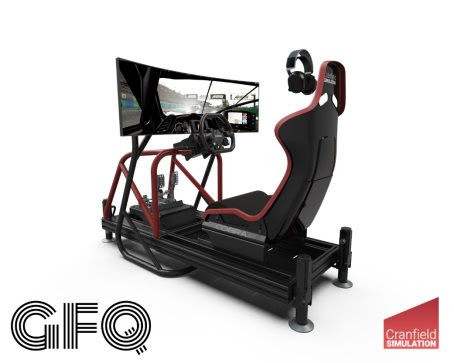
Cranfield Simulation, the makers of “the ultimate home racing simulator”, announce a new entry level premium compact simulator #Racing

The new GFQ Simulator benefits from the partnerships Cranfield Simulation have established over the years with leading component manufacturers, as a result of the reputation in both the top tier of motorsport and military fast jet simulation markets.

“In order to claim the world’s best simulators we have to work with the best components, our team of dedicated engineers have carefully selected every component with feedback from professional racing and esports drivers.”


With a unique combination of both an aluminum extrusion base and steel tubular frame, the new GFQ Simulator is designed to fit through a standard doorway, yet strong enough to handle the toughest endurance race over and over again, without any flex.


Customers can select the best components to most accurately reflect their real-world racing aspirations; and top it off with personal touches such as exterior paint colours and trim options.

The result is a simulator combining leading sim racing components, built to extraordinarily high aerospace-level standards, yet offering staggering value for money when compared with competitor offerings of a similar specification.

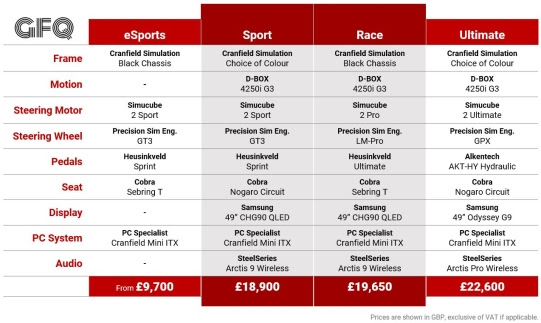
The GFQ Simulator is now available online through a configurator, with a starting price of £9,700. To demonstrate the extent of customisation possibilities, Cranfield Simulation have created example setups to appeal to different users – including Sport, Race and Ultimate.


Driving enthusiasts have the choice of either Heusinkveld or Alkentech pedals, made from CNC precision cut steel or aluminum. Ultra-realistic steering wheels are provided by Precision Sim Engineering, as used by Formula 1 drivers, and attached to a Simucube direct drive wheelbase – as is the case with every simulator to come out of Cranfield’s converted hangar.

A selection of genuine motorsport seats are supplied by Cobra Motorsport, with over 40 year’s experience and a client list including legendary names such as Moss, McQueen and Clark.

Visual options come courtesy of Samsung Electronics, with a choice of ultra-wide curved 49” gaming monitors or link up three 4K UHD displays from their professional QM range.

It wouldn’t be a Cranfield simulator without some movement, D-BOX and Cranfield Simulation have been working together for almost a decade, so there is only one option for a compact haptic system, and the only FIA licensed option available on the market today. D-BOX’s haptic feedback goes beyond crude movement and taps into vibrations and textures such as traction loss and cracks of the racetrack surface.

All of these components come to life thanks to a high-performance, custom-built, “PC Specialist” system, with high-end gaming components including the latest headsets from SteelSeries.