Gadget Shopping Made Easy: How PriceHub Helps You Choose Electronics Smarter and Cheaper

In today’s hyper-connected world, electronics have become an extension of our lives. From smartwatches and wireless earbuds to tablets, laptops, and smart home devices—gadgets power our work, communication, entertainment, and even fitness. But with so many options on the market, how do you choose the right product without overpaying or falling for clever marketing?

That’s where PriceHub, a modern and intelligent price aggregator, steps in. More than just a comparison tool, PriceHub helps you navigate the crowded electronics marketplacesave money, and buy smarter. Whether you’re a tech enthusiast looking for the latest gadget or just need a reliable pair of headphones, PriceHub gives you everything you need to make the best decision—fast.

Let’s dive into how this platform works and how it makes buying electronics online easier, cheaper, and more transparent than ever before.


One Platform. All the Options.

The heart of PriceHub’s value lies in its ability to bring together offers from hundreds of online stores into one easy-to-use website. Searching for a new smartwatch or Bluetooth speaker? PriceHub instantly shows you real-time prices from major retailers like Amazon, Currys, Argos, eBay, and smaller tech shops across the UK.

You don’t have to open 10 browser tabs or manually compare offers—PriceHub does all the heavy lifting, presenting every deal side by side, sorted by price, popularity, or delivery speed. It’s a single source of truth in a sea of digital noise.


Powerful Filters for Precision Buying

Gadget shopping isn’t one-size-fits-all. Someone looking for a powerful gaming laptop needs very different features than someone shopping for a travel-friendly tablet. PriceHub understands that, offering powerful filtering tools to narrow down your search by exactly what matters to you.

You can filter electronics by:

  • Brand and model

  • Technical specifications (processor, storage, resolution, battery life)

  • Customer rating

  • Price range

  • New, refurbished, or used condition

  • Availability of free delivery or warranty

Looking for noise-canceling headphones under £150 with Bluetooth 5.0? Or a 4K drone with a camera under 500 grams? PriceHub helps you pinpoint products that match your needs and budget in seconds.


Detailed Product Comparisons and Tech Specs

One of PriceHub’s standout features is its product comparison tool, which lets you place gadgets side by side to compare specs, features, and pricing. Want to see how the latest Fitbit compares with a Garmin watch? Or how the newest MacBook Air stacks up against a Surface Laptop?

With this tool, you get technical transparency, not marketing fluff. You’ll understand which device has the better display, faster processor, longer battery life, or more reliable connectivity—so you can make your decision with total confidence.


Price History Graphs and Alerts

Prices for gadgets can fluctuate wildly—especially around holidays, seasonal sales, or new product launches. PriceHub includes historical price graphs that show how a product’s price has changed over time, helping you decide when to buy.

Even better, you can set price alerts: just enter your target price, and PriceHub will notify you the moment a product drops to that level. This means you can wait for the perfect moment to make your purchase and avoid overpaying by £50, £100, or more.


Verified User Reviews and Expert Insights

When you’re spending serious money on electronics, you want to know what you’re getting. PriceHub combines user reviews and expert summaries in one place, so you can quickly read what real buyers think—both the pros and the cons.

You can also browse gadgets by popularity, based on user satisfaction and sales data, making it easy to discover what’s currently trending—and why.


Refurbished Tech: Sustainable and Affordable

Not every gadget needs to be brand new. Many electronic items—like tablets, smartwatches, and gaming consoles—are available as refurbished or certified pre-owned, often in like-new condition and with full warranties.

PriceHub makes it easy to find these listings and compare them directly with new versions, so you can choose between saving money and buying new—based on your own priorities.


Why Gadget Lovers Choose PriceHub

Whether you’re shopping for your next GoPro, a smart doorbell, or a robot vacuum, PriceHub helps you cut through the noise. It doesn’t just show you prices—it shows you value. It gives you the tools to compare, the data to buy smart, and the confidence to choose the product that’s right for your lifestyle.

Here’s what sets PriceHub apart:

  • Aggregates all major UK tech retailers

  • Offers smart filters and side-by-side comparisons

  • Tracks price history and sends price drop alerts

  • Includes verified reviews and expert summaries

  • Highlights refurbished and eco-friendly options

  • Helps users save time, stress, and money


Final Thoughts: Your New Favourite Tech Assistant

In an age of digital overload, PriceHub brings clarity. It’s a tool designed not just for bargain hunters, but for anyone who wants to make confident, well-informed decisions about their tech purchases.

Whether you’re buying a gift, upgrading your gear, or just browsing for inspiration, PriceHub turns the complex world of electronics into something simple and enjoyable. It’s not just about finding the best gadget—it’s about finding the right gadget at the best possible price.

So the next time you’re shopping for electronics, start with PriceHub—and finish with a smarter deal.

Boom Collaboration Hails Record-Breaking ISE Success

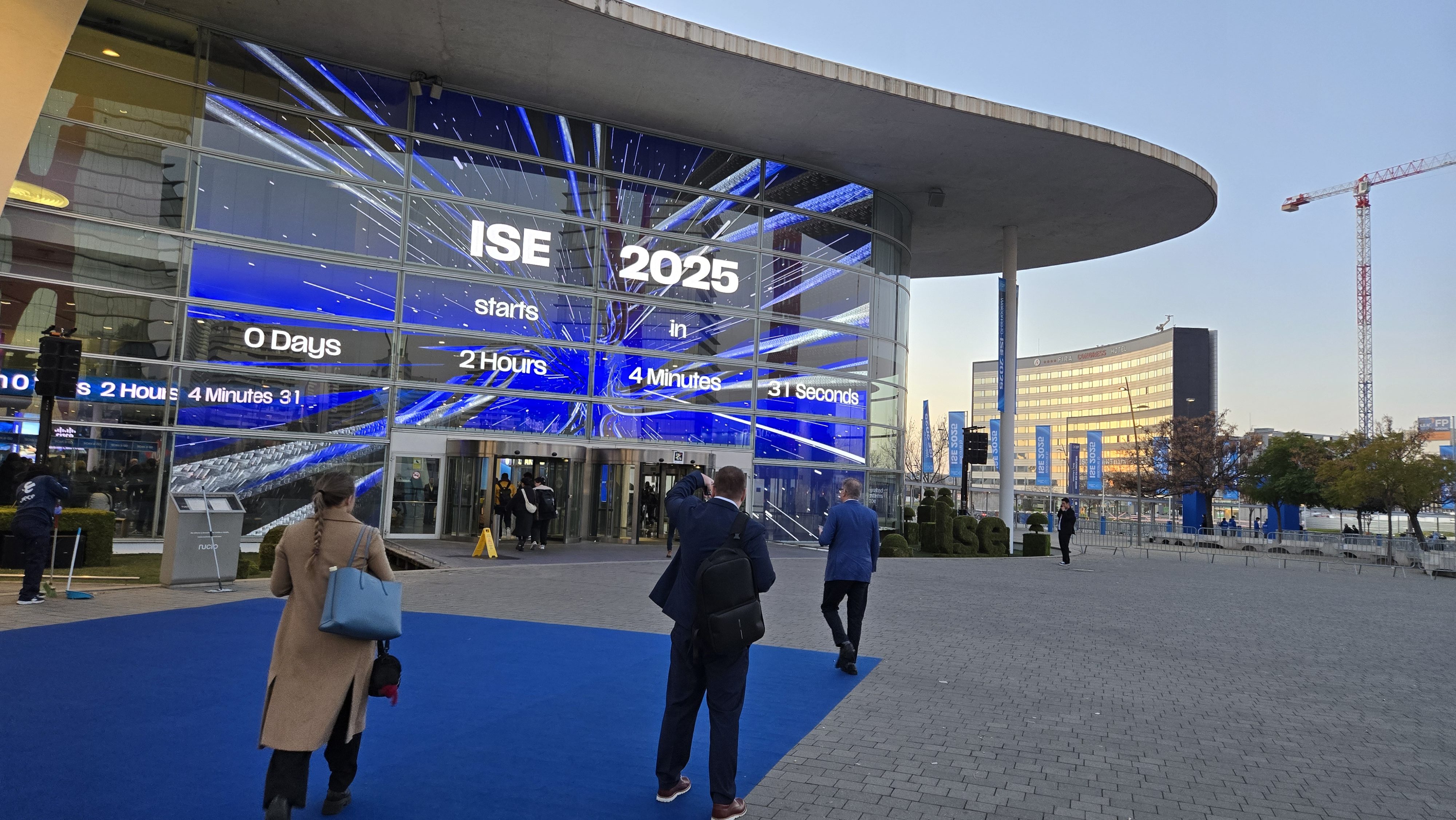
Fast-growing Boom Collaboration is celebrating its best-ever ISE show success, after unveiling a series of new product innovations, designed to ‘raise the game’ in video conferencing.

The Texas-based manufacturer has developed its own dedicated wireless content sharing solution, and masterminded an innovative expandable speakerphone with advanced AI noise cancelling capabilities – that can link up to a further seven devices. 

In addition, Boom showcased a series of connectivity hubs and also launched a ‘meeting room in-a-box’ video kit range, at the four-day Barcelona show. The all-in-one solutions feature video and audio hardware plus a one-cable-connection station – designed to simplify installations and capitalise on high demand for Bring Your Own Meeting deployments.

“The video conferencing world moves fast, and we know we have to move even faster to stay ahead,” says Co-Founder Fredrik Hörnkvist.

“ISE was a resounding success and generated a record number of sales leads as well as huge amounts of interest. Our focus has always been on creating solutions that simplify collaboration while delivering an exceptional experience, based on any device across any platform in any room. ISE was our chance to show just how far we’ve come – and what’s next. These latest innovations are about making conferencing easier and more intuitive for everyone. They were very well received by visitors from all four corners of the world.”

Bigger Stage

Fellow founder Holli Hulett says Boom demonstrated its complete range of video, audio and connectivity solutions, which are also available from boom.co

“Simplicity is our compass. Our meeting room in-a-box kits for example make it easier to choose the right equipment for any space while delivering the high-quality features teams need to work effectively. They’re practical, efficient, and designed to take the hassle out of getting your stuff done.”

She emphasised: “We showcased many new innovations which demonstrated how Boom continues to raise the game in the video conferencing arena.”

Visitors witnessed the company’s HALO videobar which boasts ultra HD 4K performance, a wide angle 120° field of view, AI Auto-framing and speaker-tracking, 10x ePTZ, six digital array mics plus the option of up to 8 additional expandable mics. It’s available in black or white colours.

Hulett added: “This was our fourth year at ISE and every show feels like we’re stepping onto a bigger stage. We’ve worked hard to bring products to market that solve real problems – things like streamlining setups, making BYOM seamless, and making sure every room, no matter its size, delivers the best experience. This year, we proved how Boom is growing as a company and an innovator in this space. There’s even more to come.”

See our Boom Reviews 

Yanmar Unveils “YANMAR PRODUCT VISION” for Future Product Platform

Yanmar Holdings Co., Ltd. has introduced the YANMAR PRODUCT VISION (YPV), outlining the future of its next-generation design. Rooted in the philosophy of “Intrinsic Design,” which focuses on the core functional value and purpose of products, YPV presents Yanmar’s design goals for the future. The company plans to combine the design elements developed through YPV with its established design expertise to create a platform that will be implemented across its product range, including agricultural machinery, construction equipment, boats, and services.

Yanmar HD has been working to cultivate its brand image through designs that resonate with stakeholders, including customers, employees, and the general public, under the concept of “inclusive branding.” This effort has been achieved through co-creation with internal and external partners.

The new initiative, based on the concept of Intrinsic Design, aims to platformize the design elements included in YPV. This approach will not only standardize components and designs but also enhance intuitive operability and comfort with new interfaces designed for future tasks. Additionally, it will contribute to increased development efficiency and cost reductions.

These concepts will be applied to each product within Yanmar’s core business areas of land, sea, and city to contribute to the realization of a sustainable society.

About YANMAR PRODUCT VISION (YPV)

YPV represents Yanmar’s vision for the future, setting out the ideal direction for its business domains in 2035. Rooted in the philosophy of Intrinsic Design, which prioritizes functional value over form, Yanmar describes its design approach as “Gentleness and Toughness,” reflecting its tradition of producing machines that are both user-friendly and durable in demanding environments. By standardizing elements like new design aesthetics, cabin structures, and Human-Machine Interfaces as defined through YPV, Yanmar aims to streamline product development while enhancing functionality from a customer-centric perspective.

YPV in the Land Domain

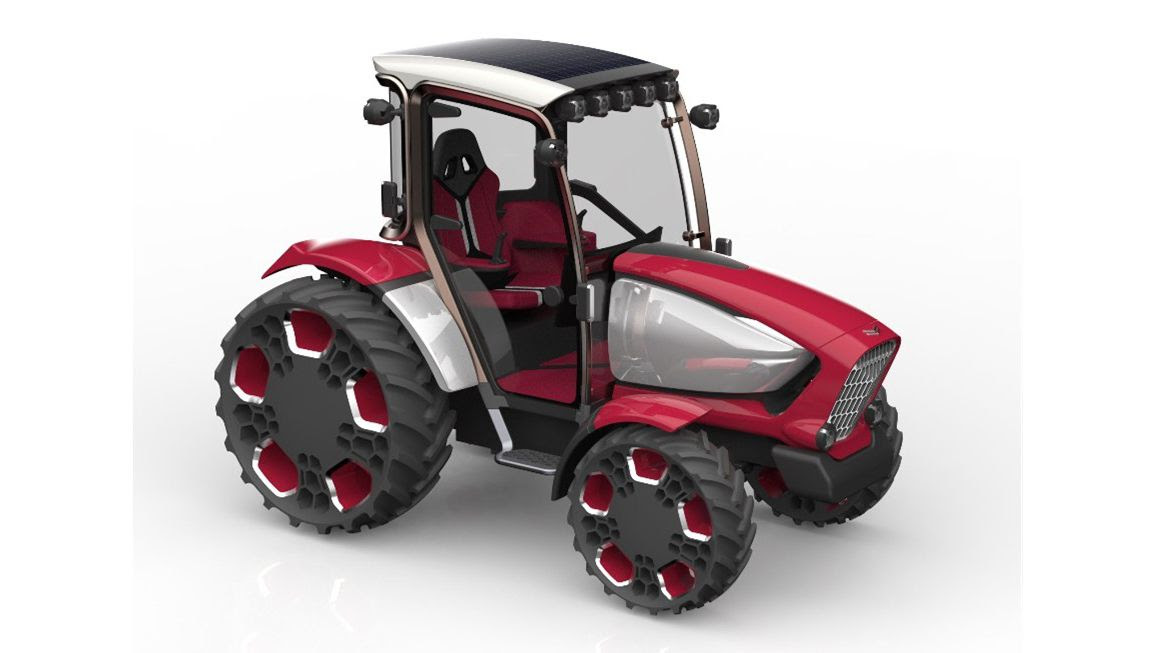
One example of platformization is a redesign of the cabin structure to standardize components between agricultural and construction machinery. The life-sized concept agricultural machine YPV-L (Land), unveiled at the YANMAR DESIGN EXHIBITION held at YANMAR TOKYO from November 8 to 15, 2024, features a large monitor in the cockpit that functions as a command center, controlling other autonomous machines. The cabinless version, designed with full automation in mind, allows for customization based on work location and operator needs.

Unified cabin design and expansion to other business areas (YPV-C)

YPV in the City Domain

YPV-C focuses on the electrification of construction equipment to meet the anticipated increase in indoor work and renovation projects. The concept uses wheels (tires) instead of crawlers to enable swift movement to disaster sites. To address battery life and charging challenges, an autonomous battery vehicle will supply power when needed.

Image of a self-propelled battery vehicle automatically supplying power to electric construction equipment.

YPV in the Sea Domain

YPV-S (Sea) introduces a foiling sailboat that proposes a new marine lifestyle. Drawing on Yanmar’s extensive marine technology and expertise, the design leverages natural forces through foiling, which lifts the boat above the water, and sailing, maximizing the use of wind power to shape both propulsion and onboard experience.

Concept foiling sailboat YPV-S (Sea)

What It Takes to Launch a Successful Food Product Business

Over the past few years, the food industry has seen a remarkable shift. During COVID, there was a massive shift in ghost kitchens, and food delivery (be it groceries or takeout) immediately went on the rise. 

Even to this day, with it being post-COVID, those ghost kitchens are still around; the same can be said for those delivery companies like Uber Eats and Deliveroo. But that’s not the only thing either. Have you noticed in your local grocery store that more brands are popping up that aren’t from Nestle, Unilever, or any of those other giants?

Essentially, more and more small, innovative brands have found their way onto supermarket shelves, standing toe-to-toe with industry giants. For example, there’s Mike’s Hot Honey to Prime by the Paul brothers, and even TikTok-inspired hits like Pink Sauce, it’s clear that starting a food product business has never been more appealing — or accessible. Now, these are all mostly in the US, but it doesn’t really matter where you are though.

There’s the Temptation of It All

There’s something irresistible about the idea of creating a unique product and disrupting the typical grocery store options. It doesn’t really matter if it’s an influencer turning a fan-favourite recipe into a product or a small entrepreneur hoping to change the way people enjoy condiments; the appeal is undeniable, right? Well, with so many of these businesses, they start small, capture attention on social media, and quickly grow into household names. Wouldn’t that alone mean that it wouldn’t take too much to get big?

But while it may seem easy to jump on the bandwagon, breaking into the food industry is anything but simple. Behind the success stories are long hours, unexpected hurdles, and challenges that can derail even the most promising of brands. 

Understanding the nuances of this industry is essential if you want to succeed. Now, it’s not a cakewalk, no matter how many people (influencers or everyday people) jump into this. It takes a lot of time and effort, and of course, there’s the capital that’s needed, too.

Why Getting into the Food Product Business is So Alluring

For many, the appeal of launching a food product business comes from the desire to shake things up. Now, many shoppers are just flat-out tired of the same old brands and products. Most stores seem to be nothing but Nestle and Unilever, which isn’t even good (or ethical) either! People want innovation, better ingredients, and something that feels personal rather than mass-produced. This is exactly why brands like Graza Olive Oil and even influencers like Mr. Beast’s Feastables have caught fire so quickly.

So, just like what was mentioned above, a lot of products, not all, but a lot, tend to blow up in popularity thanks to social media (or the presence prior such as Mr. Beast). But overall, it does play a major role in leveling the playing field. Nowadays, it’s no longer just the established brands that have the loudest voices. A well-placed viral post can propel a product from obscurity to must-have status overnight.

However, while the barriers to entry seem low, this industry is highly competitive, and only the most prepared will make it past the starting line.

Why Consumers are Embracing Small Food Brands

It goes back to what was said above: people are tired of bland, cookie-cutter products from the big names that dominate the shelves. Most of them are unethical, they’re harming the environment, they’re paying low wages, and the quality is garbage.

Its really not hard to see that consumers today crave something different, something that feels personal. But small food brands have a way of connecting with buyers on a human level. Maybe it’s through bold flavours, quirky packaging, or a founder’s story that hits home, these brands offer more than just food—they offer an experience. It’s this authenticity that’s making small brands the cool kids in the supermarket.

There’s a Desire for Authenticity

One reason small food brands have gained traction is the growing demand for authentic, locally sourced, and artisanal products. Shoppers today want to know where their food comes from, and many feel that smaller brands are more transparent than the big players. In a market where personal connection and trust are increasingly important, small brands often have an edge. People love supporting people, not big business.

Innovation and Unique Flavours

Another thing to keep in mind is that smaller brands are also not afraid to experiment with bold, innovative flavours. For example, there’s the spicy hot honey mentioned earlier, but even uniquely blended olive oils (and a fun squeeze bottle). 

So, these products stand out because they break away from the generic options we see every day. However, the ability to offer something new, something different, appeals to consumers looking for novelty and excitement in their food choices.

Challenges When Starting a Food Product Business

While yes, the allure of the industry might be strong, but it’s important to recognise the obstacles that come with starting a food product business. While creativity and innovation are key, so is a solid understanding of the logistics and regulations that govern the food industry.

Scaling Your Product

One of the first challenges many new businesses face is figuring out how to scale their product. While sure, it’s easy to whip up small batches of hot sauce or olive oil in a home kitchen, creating enough to meet supermarket demand is another beast entirely. So, scaling up means larger production runs, working with co-packers or manufacturers, and managing logistics that might be completely new territory for most.

The Cost of Scaling

The cost of scaling is also a significant hurdle. Renting a commercial kitchen, purchasing ingredients in bulk, and maintaining a steady production schedule all require upfront investment. For small entrepreneurs, finding the funding to take their product from small batches to large-scale production can be one of the biggest challenges.

Compliance and Regulations

So here’s the thing, it’s not just about creating a delicious product — it has to be safe and comply with strict food safety regulations. Now, here’s a good example of this, in the UK, the Food Standards Agency ensures that all food products meet safety standards, but if you’re looking to go international (as most businesses will try to do), then compliance with the FSMA, especially if you’re wanting to expand to the US.

So wherever you want to operate (and expand to), you’re going to need to do some thorough research. Honestly, there are a lot of helpful resources online that will help you stay up to date with all of this, such as articles. There’s even the FSMA Friday Webinar Series, where experts break down key updates and changes that could affect small food businesses.

But overall, knowing and enacting regulations and being compliant is non-negotiable. While yes, it’s probably one of the biggest challenges for any new brand, you’ll be putting your reputation and your whole brand at risk through fines, product recalls, or even being shut down. While major brands like Nestle and Ferror get by with this (granted, they shouldn’t), you especially won’t be able to survive.

Building Your Brand Identity

You need to keep in mind that creating a food product isn’t just about the taste—it’s about the story, the vibe, and the connection with your audience. So, your brand should practically leap off the shelf, screaming, “Pick me!” This is where personality comes into play.

Now, major brands don’t have to do the “Pick me” because people already recognise their brands all under their brand umbrella. So you’re at an advantage because you can go about your style far differently if you want. For example, you could go with a quirky name (such as the brand “Hands Off My Chocolate” did), eye-catching design (what most new brands are doing nowadays), or maybe even a feel-good backstory, which can make all the difference. 

You just need to remember that people don’t just buy products; they buy into brands that resonate with them. A strong brand identity is like the secret sauce that gets customers hooked for the long haul.

There’s a Lot of Power of a Strong Brand

So, once you’ve figured out the logistics of producing your product at scale, the next challenge is creating a strong brand identity. In the competitive world of food products, your branding is just as important as the product itself. From your packaging design to your company values, every element of your brand should resonate with your target audience.

Social Media and Marketing Strategies

It was mentioned already, but it deserves to be mentioned again. However, you can expect that most small food businesses have found success by leveraging social media to build their brand. Influencers and viral content have helped propel products like Mr. Beast’s Feastables and Prime Hydration into the spotlight. 

Technically, they are from major influencers (mostly targeting kids), but the Pink Sauce that went viral on TikTok wasn’t from a major influencer, so even that gives proof that you don’t need to be an influencer. Overall, a strong social media presence can create a sense of community around your brand and make it easier to connect directly with consumers.

However, relying solely on social media isn’t enough. A robust marketing strategy that includes a combination of digital marketing, in-store promotions, and public relations efforts is key to gaining traction in a crowded market.


Visual Product Configurator: Transforming Customer Experience and Business Strategy

In the ever-evolving digital landscape, customer preferences are shifting toward highly personalized products and services. Today’s consumers demand more than just a catalog of predefined options—they want to have a hand in crafting the products they buy. Enter the visual product configurator, a game-changing tool for both customers and businesses. By utilizing advanced software, these configurators allow users to view and customize products in real-time using 2D, 3D, and augmented or virtual reality (AR/VR) technologies.

This tool empowers both sales teams and end-users to visualize their products with life-like accuracy, making the process of customization more interactive and engaging. Whether it’s choosing the color of a car or personalizing a piece of furniture, a visual product configurator enables customers to tailor their products to their specific preferences. Let’s explore the various types of product visualization and see how businesses can leverage configurators to enhance customer satisfaction and drive growth.

Different Types of Product Visualization

  1. 2D Visualization: Simple Yet Effective

Though 2D visualization may seem basic in comparison to 3D or AR, its simplicity is exactly what makes it effective in many use cases. For certain industries and customer groups, particularly those that do not require complex customization options, 2D visual configurators offer an intuitive interface.

Non-technical users, such as sales representatives or customers looking for quick solutions, often appreciate the straightforwardness of a 2D model. It cuts down on confusion and makes the customization process faster. Instead of getting bogged down in manipulating complex 3D objects, users can easily select options and proceed with confidence. In scenarios where closing a sale quickly is crucial, a 2D configurator can be the ideal tool to streamline the purchasing process.

  1. 3D Visualization: Enhancing Interaction

As customization options grow more sophisticated, 3D product configurators offer a more detailed, dynamic experience. These systems allow users to view a product from multiple angles, zoom in on specific features, and interact with elements in real-time. More advanced configurators even provide the option to simulate real-world usage.

For example, a customer customizing a car might open doors, examine the interior, or add accessories like roof racks and custom wheels. In more industrial applications, users can manipulate parts of a machine, seeing how different components fit together. This level of interaction allows customers to feel more connected to their purchases and confident in their choices.

  1. Augmented Reality (AR) and Virtual Reality (VR): Immersive Experiences

The cutting edge of product customization lies in AR and VR technologies. These tools create fully immersive experiences, allowing customers to interact with products in a way that goes beyond the screen.

With virtual reality (VR), users can step into a simulated environment where they can explore a product from every angle as though they are physically present. Imagine being able to sit inside a car, turn on the dashboard, and “drive” through a virtual landscape before making a purchase decision. This capability isn’t just an eye-catching novelty—it offers real value by helping customers fully understand the products they are customizing.

Augmented reality (AR), on the other hand, integrates digital elements into the physical world. Customers can point their smartphone camera at their living room, for instance, and see how a piece of furniture would look in real time. This blend of digital and physical realms creates a seamless shopping experience that builds buyer confidence and reduces uncertainty.

Business Benefits of Visual Product Configurator

  1. Elevating the Customization Experience

One of the core benefits of visual configurators is that they simplify the customization process, making it not only more efficient but also more enjoyable for customers. In traditional shopping experiences, customers may have to scroll through endless product catalogs, comparing features and trying to envision what their final product will look like. This process can be time-consuming and frustrating, often leading to lost sales.

Visual product configurators solve this by allowing customers to create their own product variations based on a set of options. This could include selecting colors, materials, styles, or additional features. The ability to see these changes in real-time keeps customers engaged and more likely to complete their purchase. The joy of customization becomes an integral part of the shopping experience, which leads to higher customer satisfaction.

  1. Building Brand Loyalty

Customization goes beyond mere functionality—it fosters emotional connections between the customer and the brand. When users have the power to create something unique, they feel a deeper attachment to the product and the company behind it. This sense of ownership drives loyalty, encouraging customers to return for future purchases and to recommend the brand to others.

Furthermore, when businesses offer personalized solutions, they stand out in the customer’s mind. Personalization sets a brand apart from competitors, helping it become the preferred choice for repeat purchases. As customers create products tailored to their tastes, they are more likely to associate positive emotions with that brand, leading to long-term customer retention.

  1. Reducing Return Rates

Returns are a costly problem for many businesses, especially in e-commerce. Visual product configurators help mitigate this issue by offering customers a clear and accurate preview of the product they are creating. When customers can see exactly what they’re getting—down to specific details like color, size, or texture—they are less likely to be disappointed with the final product.

Moreover, configurators often allow customers to make real-time edits to their designs before completing a purchase. This ability to refine their selections further reduces the risk of returns and refunds. In this way, businesses can cut down on the costs associated with returned merchandise and instead focus on delivering products that meet customer expectations from the start.

  1. Boosting Customer Satisfaction and Word-of-Mouth Marketing

When customers feel involved in the product creation process, their satisfaction levels rise significantly. The customization journey becomes an enjoyable and rewarding experience that turns customers into brand advocates. Satisfied customers are more likely to recommend your products to friends and family, either through word-of-mouth or social media.

This organic promotion is invaluable to businesses, as it expands brand visibility and brings in new customers. Happy customers who are proud of their personalized purchases will often showcase these items online, further enhancing your brand’s reputation.

  1. Opportunities for Custom Pricing

Product configurators offer the added benefit of enabling businesses to implement flexible pricing strategies. When customers customize their products, they understand that unique items often come at a premium. This opens the door for businesses to charge more for personalized products, driving profitability.

For example, certain customization options—such as choosing premium materials, adding additional features, or selecting complex patterns—can carry upcharges. By clearly communicating the cost associated with these choices, businesses can increase revenue while giving customers the satisfaction of designing a unique product that fits their preferences.

  1. Standing Out in a Crowded Market

The competitive landscape of e-commerce requires brands to differentiate themselves in unique ways. Offering product customization through a visual configurator is an excellent way to set your business apart from competitors. In a market saturated with cookie-cutter products, the ability to create something one-of-a-kind is a major selling point.

When customers know they can customize their purchase to fit their exact needs, they are more likely to choose your brand over others. Visual configurators offer a personalized shopping experience that gives your business a competitive edge, ensuring you stand out in an increasingly crowded marketplace.

  1. Increasing Online Engagement

Research shows that customers who use product configurators tend to spend more time on a brand’s website, leading to increased engagement and higher conversion rates. The interactive nature of a visual configurator encourages users to explore different options, fostering a sense of curiosity and excitement.

This extended engagement translates into better brand awareness and a higher likelihood of making a purchase. The longer customers spend on your site, the more invested they become in your brand, creating opportunities for upselling, cross-selling, and repeat business.

Conclusion

Visual product configurators are a powerful tool for businesses looking to deliver personalized shopping experiences that engage customers and drive sales. By offering 2D, 3D, AR, and VR visualization options, businesses can meet the needs of a diverse customer base while standing out in a competitive market. As customization becomes increasingly important to consumers, investing in a robust visual configurator can lead to higher customer satisfaction, lower return rates, and stronger brand loyalty. This technology not only enhances the buying experience but also helps businesses increase profitability and grow in today’s digital marketplace.


Treemetrics and AXA Climate Announce Global Partnership to Launch Innovative Forestry Insurance Product

AXA Climate, a leader in climate risk management, and Treemetrics, a pioneering forest management company, have announced a strategic global partnership aimed at delivering an innovative forestry insurance product.

This new insurance solution is designed to provide comprehensive cover for forestry fires and storms, addressing the escalating concerns of forestry owners and investors about the impacts of climate change.

As the frequency and severity of natural disasters continue to rise, driven by climate change, the need for robust and reliable insurance products has never been greater.

This partnership leverages the expertise of both companies to offer a product that not only provides financial protection but also employs cutting-edge technology and scientific insights to better understand and mitigate these risks.

Enda Keane, CEO of Treemetrics, highlighted the critical timing of this product launch, stating, “Over our past 19 years in business across the globe, we have observed firsthand the ever-increasing rise in catastrophic storms and fires. Our collaboration with AXA Climate aims to address these challenges head-on, providing forest owners with the security and peace of mind they need to manage their investments effectively.”

Quentin Voituron, speaking on behalf of AXA Climate, emphasized the innovative approach of the partnership, saying, “We look forward to partnering with Treemetrics to come up with a  fine-grained product that makes sense to forest owners and forest managers, at the right price!”

This partnership marks a significant step forward in providing comprehensive and technologically advanced solutions to the forestry sector, ensuring that forest owners can protect their assets and invest with confidence in a changing climate.

QDOS launches SnapStand its first ever recycled power product.

QDOS, a global designer and manufacturer of premium cases, screen protection and power, has recently launched SnapStand, its first ever recycled power product.

QDOS’ commitment to sustainability continues with the launch of the new SnapStand, a 3-in-1 portable charger that boasts 100% recycled zinc alloy housing and 60% recycled materials.

What’s more, its high recycled content, coupled with 15W Qi wireless output, will make it the best combined offering of its kind on the market.

The three charge points on the cool, space grey product can simultaneously charge an iPhone, Apple Watch and Air Pods.

SnapStand charges an iPhone 15 Pro Max to 100% in just 3 hours and 30 minutes. Apple Watches are charged with 2.5W Qi wireless output, fully charging the Apple Watch S9 in 3 hours, and AirPods are charged with 5W Qi wireless output.

This charging powerhouse with sleek, easily portable, foldable design, offers a product that simplifies charging, is highly versatile, eco-conscious and is perfect for the office or on the go.

It also aligns with MagSafe and Qi compatible devices and the adaptable design allows for optimal viewing of iPhones for videos, calls or browsing, as well as activating iOS 17 nightstand mode when rotated at 90 degrees.

As with all QDOS products, the packaging is 100% recycled and recyclable and the SnapStand comes with a USB-C cable and user guide.

Available at QDOS, RRP £79.99.

See our QDOS reviews

Boosting Sales and Customer Engagement with the Power of 3D Product Configurators

In the competitive landscape of modern business, capturing the attention and interest of customers is crucial for driving sales and fostering brand loyalty. With the rapid advancement of technology, businesses are leveraging innovative solutions to enhance customer engagement and provide unique shopping experiences. One such powerful tool that is transforming the way businesses operate is the 3D product configurator. In this article, we will explore the benefits and applications of 3D product configurators in boosting sales and customer engagement, and how this cutting-edge technology is reshaping the business landscape.

Creating Interactive Product Experiences

Traditional product images and descriptions can only convey so much to potential customers. However, 3D product configurators take product visualization to a whole new level. By allowing customers to interact with virtual representations of products in real-time, configurators provide an immersive and engaging experience. Customers can rotate, zoom in, and explore every aspect of the product, gaining a comprehensive understanding of its design, features, and customization options.


The interactive nature of 3D product configurators empowers customers to personalize products according to their preferences, selecting colors, materials, sizes, and additional features. This level of customization creates a sense of ownership and personal connection, ultimately leading to increased customer satisfaction and higher conversion rates.

Streamlining the Customization Process

Customization has become a significant trend in consumer preferences. However, implementing customization options in a streamlined and efficient manner can be challenging for businesses. This is where 3D product configurators shine. By providing a user-friendly interface, configurators enable customers to easily customize products and see the changes reflected in real-time.

The configurator seamlessly generates accurate manufacturing specifications, eliminating the need for manual coordination between customers and manufacturers. This not only reduces the margin for errors but also optimizes the production process, allowing businesses to efficiently handle custom orders. The streamlined customization process not only improves customer satisfaction but also boosts operational efficiency and reduces costs.

Showcasing Product Variations and Upselling Opportunities

Product variations and upselling opportunities play a vital role in driving sales and increasing average order value. 3D product configurators excel in showcasing different product options and upgrades. By presenting customers with a wide range of choices and configurations, businesses can tap into upselling opportunities and encourage customers to explore premium features or accessories.

The configurator serves as a visual sales tool, allowing customers to see the impact of each variation on the final product. This visual representation enhances the perceived value of the product and helps customers make more informed purchasing decisions. By leveraging the power of 3D product configurators, businesses can effectively showcase their product range and maximize sales potential.

Enhancing the Online Retail Experience

One of the challenges in online retail is replicating the tactile experience of in-store shopping. However, 3D product configurators bridge this gap by providing a rich and interactive online shopping experience. Customers can virtually try different combinations, visualize the product from various angles, and see how it fits into their desired context.

Moreover, the configurator allows customers to share their customized designs on social media platforms, generating user-generated content and word-of-mouth marketing. This social aspect adds another layer of customer engagement and expands the reach of the brand.

Data-Driven Insights and Continuous Improvement

The integration of 3D product configurators brings valuable data-driven insights to businesses. By analyzing customer interactions and customization choices, businesses can gain a deeper understanding of customer preferences, market trends, and popular product variations. This data-driven approach empowers businesses to make informed decisions in product development, marketing strategies, and inventory management.

Additionally, the configurator serves as a feedback mechanism, providing businesses with valuable insights into customer preferences and potential areas for improvement. By continuously analyzing customer behavior and feedback, businesses can refine their product offerings, tailor their marketing campaigns, and deliver an exceptional customer experience.

Conclusion

The implementation of 3D product configurators has revolutionized the way businesses engage with customers, boost sales, and enhance the overall shopping experience. Through interactive product experiences, streamlined customization processes, showcasing product variations, enhancing online retail experiences, and leveraging data-driven insights, businesses can gain a competitive edge and meet the evolving demands of modern consumers.

By embracing the power of 3D product configurators, businesses can drive sales, foster customer engagement, and establish themselves as industry leaders. As technology continues to advance, we can expect further innovations and refinements in the realm of product configuration, providing even more exciting opportunities for businesses to thrive.

Guinness Microdraught 2.0 has won the world’s most prestigious Red Dot product design award

GUINNESS has been awarded the highly coveted Red Dot Product Design award for the latest evolution of its ground-breaking, plug-and-play beer dispense technology, GUINNESS MICRODRAUGHT 2.0.

Unveiled in front of some of the world’s most celebrated product design leaders at the Red Dot Awards ceremony in Essen, Germany, GUINNESS MICRODRAUGHT 2.0 earned special praise for “defining the next generation of dispense systems” by an independent jury compromising of international design experts. “It is significantly more cost-effective than its predecessor, requiring 60 percent fewer components and eliminating complex electromechanics,” added the judges.

GUINNESS MICRODRAUGHT 2.0 will debut in-pour ultrasonic dispense technology to trade venues and is the result of continuing evolution toward low-energy, low complexity dispense perfection.

Combining a new, customised ‘pull and pour’ valve technology with breakthrough, in-pour ultrasonics introduced on the multi-award-winning, GUINNESS NITROSURGE device, another breakthrough innovation that only Guinness could do, the GUINNESS MICRODRAUGHT 2.0 will deliver effortless, gravity-fed beer dispense.

GUINNESS has now firmly established itself as a product design leader in the drinks industry, and a true innovator in dispense technology by earning its fourth Red Dot award in just two years.

The Red Dot Awards design jury commended the Guinness FutureServe team for their design craft and creativity in the evolution of its award-winning GUINNESS MICRODRAUGHT dispense technology, adding: “Crisp lines contrast with soft, flowing forms to create a confident appearance combined with a simple, elegant, icon-driven user interface designed for global markets.”

With around 20,000 entries per year, the Red Dot Design Award is one of the biggest design competitions in the world. This year, an exceptional portfolio of products were entered from 60 countries in 51 competition categories. Recognising design excellence, product innovation, and distinction: In three disciplines, participants submit products, communication projects and brands as well as prototypes and concepts.

After becoming the first-ever brand to win a Red Dot award for beer dispense, and achieving three breakthrough special innovation prizes for GUINNESS MICRODRAUGHT AND GUINNESS NITROSURGE in 2022, this further recognition reinforces the brand’s relentless commitment to exploring exciting new innovations, and sustainable solutions to bring Guinness to more places and spaces.

Truly disruptive, GUINNESS MICRODRAUGHT dispense technology has enabled pubs, bars and other venues around the world to serve beautiful, fresh Guinness Draught on tap, no matter their size or setup. GUINNESS MICRODRAUGHT 2.0 is the next generation of single serve Guinness dispense, which will launch in markets across the globe later this year.

World-class product dispensing devices

Two years in development, the pioneering GUINNESS MICRODRAUGHT 2.0 dispense technology becomes the latest technological leap for Guinness since the advent of the widget in 1988. The innovation further enables Guinness to be enjoyed at its finest worldwide, in new places and spaces, adding thousands more venues across 150 countries, so that millions more consumers across the globe can enjoy a perfect Guinness serve.